

Eighty years ago, Lucky Luciano traded prison for exile

When New York Governor Thomas Dewey commuted the sentence of imprisoned Mafia boss Charles “Lucky” Luciano 80 years ago, it was widely described as an act of wartime necessity. For Luciano, it proved to be a life sentence of a different kind.

Dewey’s rise to national prominence began in 1935. New York City Mayor Fiorello LaGuardia and Governor Herbert Lehman backed the creation of a special prosecutor’s office to confront racketeering and political corruption that conventional law enforcement had failed to contain. Dewey — young, disciplined and relentlessly visible — fit the moment perfectly.

LaGuardia valued Dewey’s independence and understood the political dividends of a successful crusade against organized crime. Dewey, in turn, recognized that high-profile prosecutions could serve both justice and ambition. His office produced arrests, headlines and convictions. Critics soon noted that Dewey appeared as adept at managing public perception as he was at managing cases.

Dewey’s first major fixation was Arthur Flegenheimer, better known as Dutch Schultz. As Dewey’s investigations tightened, Schultz voiced his hostility within the upper reaches of the underworld, proposing to the Mafia’s ruling body, the Commission, that Dewey be eliminated. The idea was briefly entertained — Albert Anastasia is said to have conducted reconnaissance on Dewey’s routines — before the Commission rejected it outright.

Gangbuster Thomas E. Dewey built his career on prosecuting mobsters in New York City. Courtesy of Cipollini Collection

When Schultz announced he would proceed regardless, his fate was sealed. The bosses could not tolerate a unilateral act that would invite catastrophic retaliation. Schultz was gunned down in New Jersey in October 1935, undone not by Dewey but by his own recklessness.

As Schultz lay dying, detectives recorded fragments of delirious speech, including references to “The Boss” and “John,” interpreted as nods to Luciano and Chicago mobster Johnny Torrio. Whether meaningful or not, the episode further cemented Luciano’s image as the unseen authority behind the syndicate — and a new target for Dewey.

Dewey’s methods of securing a conviction against Luciano remain hotly debated. Although Dewey was successful in indicting Luciano on prostitution-related charges, it was far from an airtight case, as direct evidence implicating Luciano was in short supply. But the outcome is not disputed. In 1936, Luciano was convicted and sentenced by Judge Philip McCook to 30 to 60 years in prison.
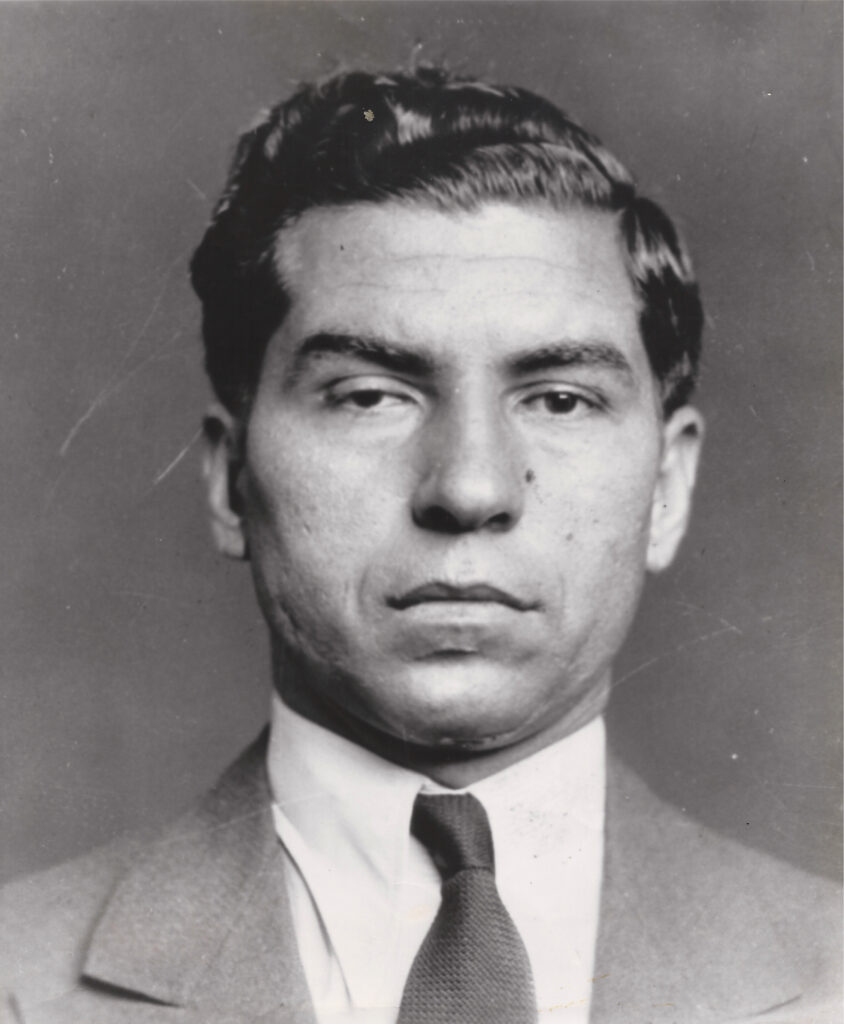
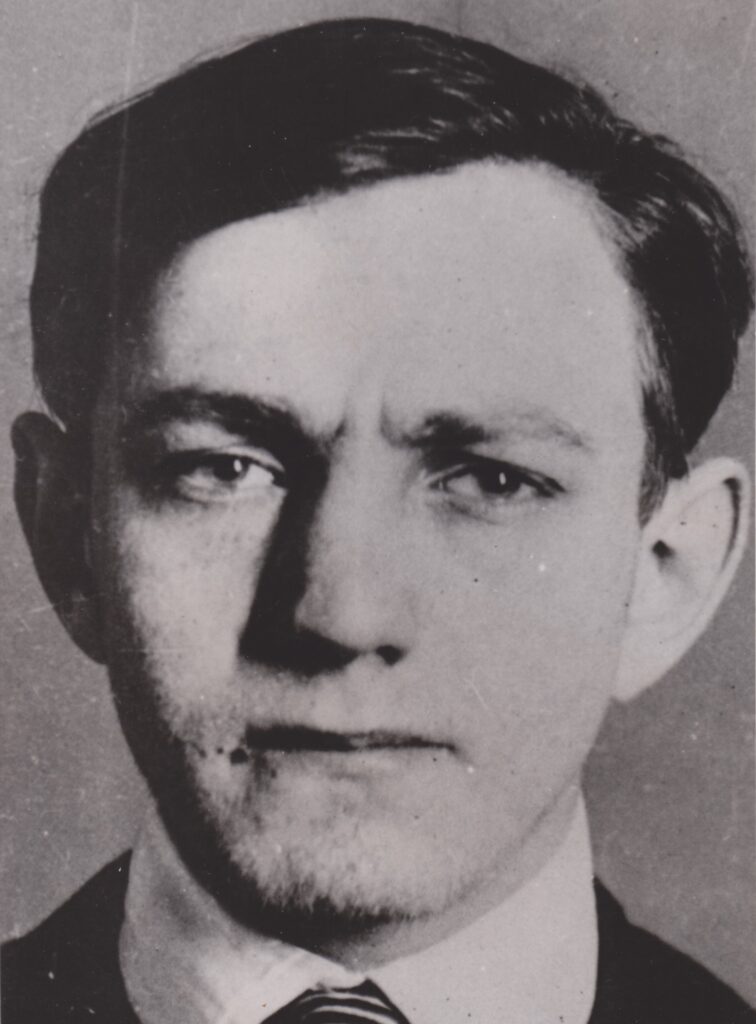
Lucky Luciano’s famous mugshot was taken upon arrival in New York on April 18, 1936, after his extradition from Hot Springs, Arkansas. Courtesy of Cipollini Collection

Luciano was briefly housed at Sing Sing prison before being transferred to Dannemora, aka “Little Siberia,” which state officials believed would be most effective in isolating him. There he remained until global events presented an opportunity.

A waterfront at war

Dewey’s prosecutorial fame propelled him into electoral politics. After losing the 1938 gubernatorial race, he won the office in 1942. At the same time, the United States entered a global war that unexpectedly reconnected Dewey with Luciano.

With the New York Harbor vital to the war effort, military officials feared sabotage and espionage along the waterfront — an area long dominated by organized crime. Those fears intensified in February 1942 after the docked USS Lafayette, formerly the French liner Normandie, caught fire and capsized. Though later deemed an accident, the incident accelerated cooperation between the Office of Navy Intelligence and law enforcement.

Docked at the 48th pier, on February 9, 1942, the French ocean liner Normandie (renamed the USS Lafayette) caught fire and capsized on its side. Courtesy Cipollini Collection

ONI officers, including Captain Roscoe C. MacFall and Commander Charles Radcliffe Haffenden, consulted Manhattan District Attorney Frank Hogan and Assistant DA Murray Gurfein for access to the underworld. They made contact through Fulton Fish Market boss Joseph “Socks” Lanza, who pointed them toward the most influential incarcerated figure available: Luciano.

Luciano’s prison visits soon included a “who’s who” of Mob figures and attorneys. His influence was quietly acknowledged, if rarely detailed, regarding the New York waterfront (and, later, Sicily during the Allied invasion, dubbed Operation Husky).
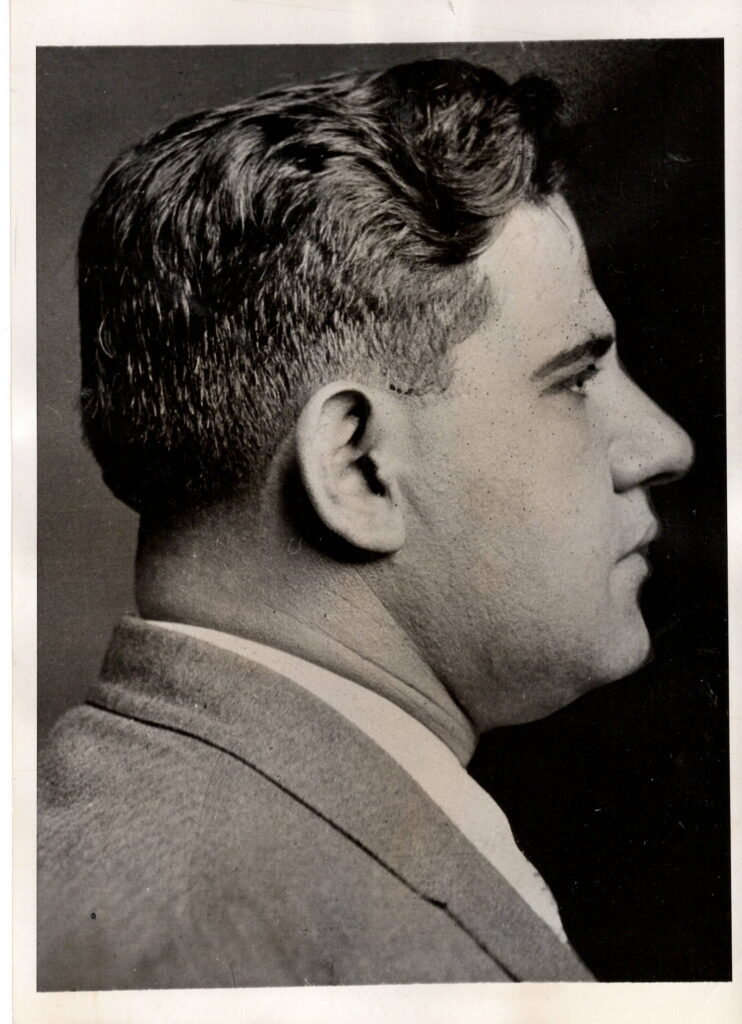
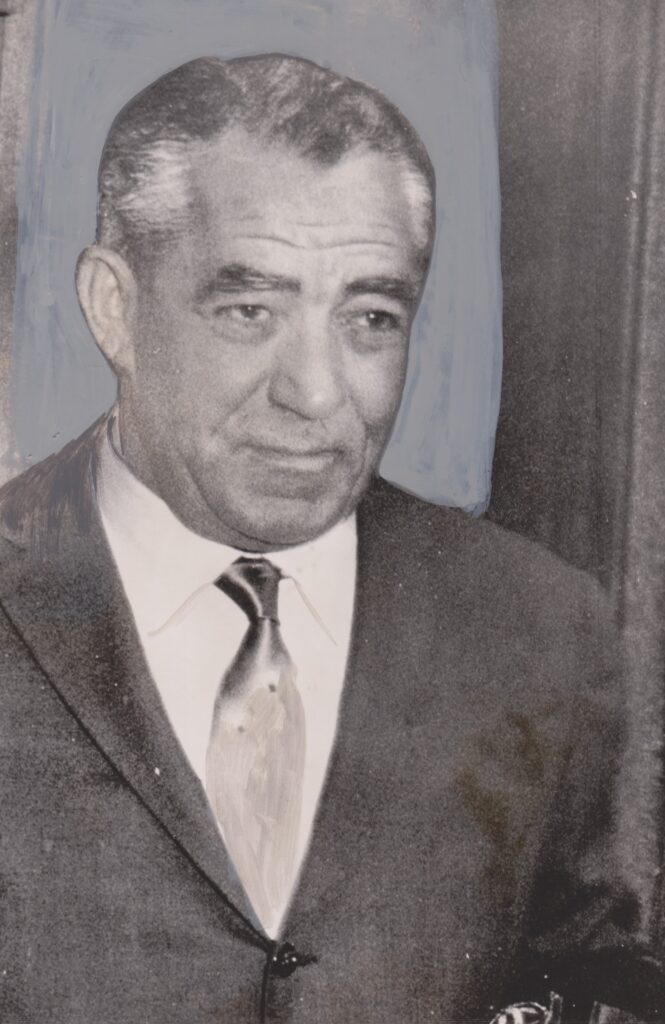
Joseph “Socks” Lanza, boss of the Fulton Fish Market, was the first point of contact between the Mob and naval intelligence officers. Courtesy of Cipollini Collection

The calculation behind commutation

In early January 1946, Dewey acted on a formal recommendation from the New York State Parole Board to commute Luciano’s sentence, with deportation as a condition. The decision was finalized on February 9, setting in motion Luciano’s immediate removal from the United States.

Luciano’s wartime cooperation has often been framed as blackmail or a secret bargain. Historian Thomas Hunt offers a more pragmatic interpretation. Any truly damaging material Luciano possessed, Hunt notes, would likely have surfaced during his appeals. None ever did, and Dewey was well aware that Luciano’s sentence was excessive in the first place.

Instead, Dewey’s decision to commute Luciano’s sentence — on the condition of permanent deportation — represented the most expedient outcome available.

“Dewey’s conditional commutation and deportation allowed him to ensure that [Luciano] was kept out of New York and the rest of the United States permanently,” Hunt explains. “While this is often presented as some sort of win for [Luciano], it actually looks to me like the best possible outcome that Dewey could have hoped for at that moment.”

In February 1946, Luciano was transferred to Sing Sing, then taken to Pier 7 at Bush Terminal in Brooklyn and placed aboard the Laura Keene, bound for Italy.

Charles Lucky Luciano, dressed in prison garb and shying from flash bulbs, is escorted from Great Meadows prison to a train bound for Sing Sing for final deportation processing. Courtesy of Cipollini Collection
Luciano, dressed in prison garb and shying from flash bulbs, is escorted from Great Meadows prison to a train bound for Sing Sing for final deportation processing. Courtesy of Cipollini Collection

Dewey was re-elected governor in 1946 and later ran unsuccessfully for president in 1944 and 1948. His upset loss to Harry Truman effectively ended his national ambitions.

Luciano, meanwhile, alternated between resentment and resignation. “Dewey framed me,” he told columnist Earl Wilson in 1949. “But it was politics. He was ordered to do it, and he stooped to it.” He paused before adding, “But I got out of prison under him … so I got nothin’ against him.”

Depending on his mood, Luciano offered varying assessments of Dewey over the years. “I almost made Dewey president,” he boasted to columnist Leonard Lyons in 1958. “And I almost made Kefauver vice president.”

The commutation resurfaced publicly during the Kefauver Committee hearings of 1950–51, when investigators scrutinized organized crime’s reach into politics. Dewey did not testify, but Commander Haffenden did, later admitting he may have overstated Luciano’s wartime value: “I used the word ‘great,’ which was probably over-evaluating it.”

In 1951, the Gannett News Service, citing what it described as a reliable source within Dewey’s inner circle, outlined the governor’s reasoning for commuting Luciano’s sentence. According to the report, the decision rested on three points:

  1. The commutation was recommended unanimously by the Parole Board.
  2. Luciano had already served 10 years in prison, representing the first of the consecutive terms imposed at sentencing.
  3. The commutation of the minimum sentence was contingent upon permanent banishment from the United States.

“There is no mystery about the case,” Dewey said. “I spent 18 months putting Luciano in jail. The commutation was handled in the same way those matters have been handled by all governors of New York in recent years, with one exception.”

Luciano rarely discussed the specifics of his wartime assistance, preferring generalities colored by mood. Speaking to a Reuters reporter in 1949, his tone shifted from resignation to melancholy. “In 1946, I was pardoned and sent to Italy,” Luciano said. “America wanted to thank me in this way — but at the same time she said, ‘Goodbye, Lucky. Let’s be friends — at a distance.’”

Christian Cipollini is an organized crime historian and the award-winning author and creator of the comic book series LUCKY, based on the true story of Charles “Lucky” Luciano.
Manhunt underway for Ryan Wedding, former Olympian turned accused drug kingpin

A Canadian former Olympic snowboarder accused of cocaine trafficking and murder has landed on the FBI’s Ten Most Wanted Fugitives list — and now is the subject of a planned television true crime docuseries.

Currently dodging authorities, Ryan Wedding has drawn comparisons to narcotics traffickers such as Pablo Escobar, the billionaire South American drug kingpin killed in 1993 at age 44 during a rooftop shootout with authorities in Medellín, Colombia.

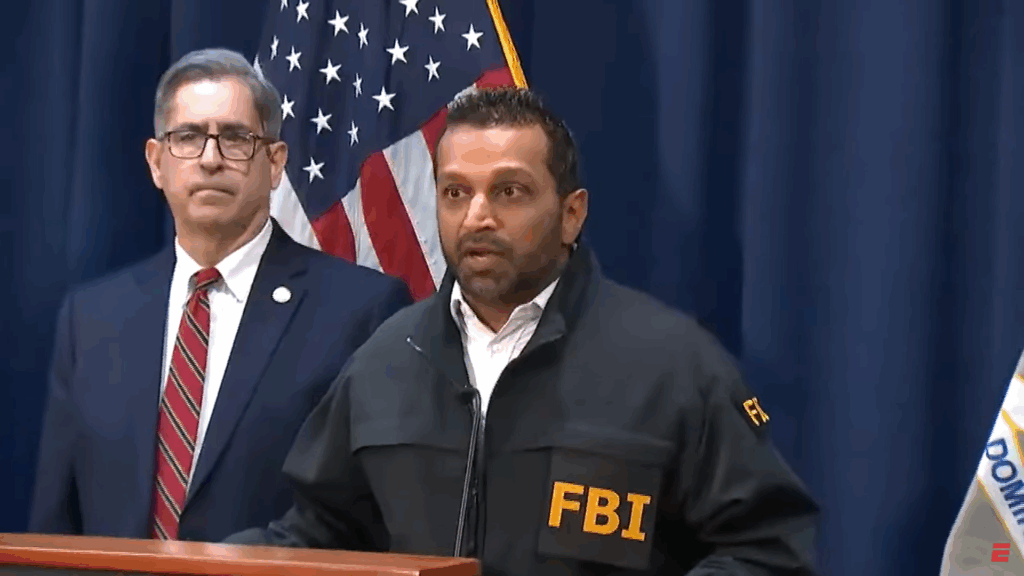
FBI Director Kash Patel described the 44-year-old Wedding as “a modern-day iteration” of Escobar. At a recent news conference, Patel stressed that Wedding, a fugitive from Thunder Bay, on Lake Superior in Ontario, is responsible for engineering “a narco-trafficking and narco-terrorism program that we have not seen in a long time.” The FBI director also compared Wedding to Joaquin “El Chapo” Guzmán, a former Sinaloa Cartel leader from Mexico now in a maximum-security prison in Colorado.

According to the FBI, Wedding is wanted on suspicion of shipping hundreds of kilograms of cocaine routinely from Colombia to the United States and Canada and for orchestrating multiple murders.

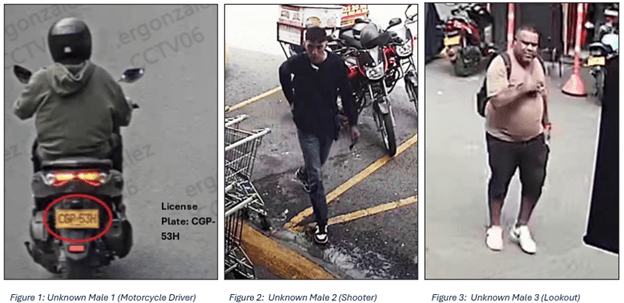
One killing occurred when Wedding tracked down a federal witness in Medellín, said U.S. Attorney General Pam Bondi. The witness was killed while dining at a Medellín restaurant. Wedding had used a Canadian website to post photos of the man and his wife in an attempt to locate them, and he offered a bounty on the witness, hiring shooters to find him, The New York Times reported. The website has been taken down.

The U.S. State Department released these images of the assassins allegedly hired by Wedding to kill a witness in Colombia in January 2025. The State Department offered a reward of $2 million each for information leading to their arrests and/or convictions. U.S. State Department

The U.S. Treasury Department said Wedding uses “highly sophisticated methods” to plan and carry out killings, “demonstrating a level of coordination and ruthlessness that has made him one of the world’s most dangerous fugitives.” 

‘Snow King’

As the hunt for Wedding continues, a proposed docuseries promises to show viewers how he went from “national hero to alleged cartel boss and international fugitive,” according to a social media post from Dogwoof, a London-based production company.

Dogwoof CEO Anna Godas said the company became interested in Wedding’s story after it was called to their attention. Titled Snow King: From Olympian to Narco, the docuseries is a collaboration involving Dogwoof, Visitor Media of Toronto, Rolling Stone Films and others. A run date has not been set.

“When we first came across the story last year,” Godas said, “we instantly knew it could become an incredible series that elevates the true crime genre by going deeper into what drives people to make certain choices, much like Breaking Bad.

As with the schoolteacher in Breaking Bad, a fictional television drama, Wedding’s involvement in the narcotics underworld has an unusual plot twist. In Wedding’s case, the unexpected turn is his background as an Olympic snowboarder in a country where such athletes are held in high regard.

Competing for Canada in the 2002 Salt Lake City Winter Olympics, Wedding finished 24th in the snowboarding parallel giant slalom. When his snowboarding career ended, he turned to a life of crime as a transnational narcotics trafficker, the FBI said. 

Four years after the Salt Lake City Winter Games, while living in British Columbia, Wedding was investigated in connection with a marijuana operation but not charged, The New York Times reported. In 2010, he was convicted of attempting to buy cocaine from a U.S. government agent and sentenced to prison. He was released in 2011.

Since then, criminal allegations against Wedding have continued to pile up. In October 2024, while on the run, he was indicted on charges of trafficking cocaine from California to Canada and three counts of murder, according to The New York Times.

At a recent news conference with other officials, Bondi, the U.S. attorney general, said Wedding’s organization is responsible for importing about 60 metric tons of cocaine a year into Los Angeles from Mexico.

“To put that in perspective, 60 metric tons is approximately 40 cars, the weight of 40 standard cars,” she said.

This seizure, shown by the DEA in October 2024, is just a small fraction of the estimated 60 tons of cocaine that Wedding smuggles from Mexico each year. U.S. Drug Enforcement Administration

During the investigation into Wedding, several people connected to his drug ring have been arrested, Bondi said. Authorities said they have seized cocaine, firearms, ammunition and large sums of U.S. currency and cryptocurrency linked to his suspected criminal network. 

In conjunction with this operation, the U.S. State Department’s Narcotics Rewards Program is offering $15 million for information leading to his arrest or conviction. He also has been added to the FBI’s Ten Most Wanted Fugitives list.

Akil Davis, the assistant director in charge of the FBI’s Los Angeles Field Office, said the effort to capture the former snowboarder means “finding justice for several murder victims — including a cooperating witness — and ridding communities in North America of deadly drugs.”

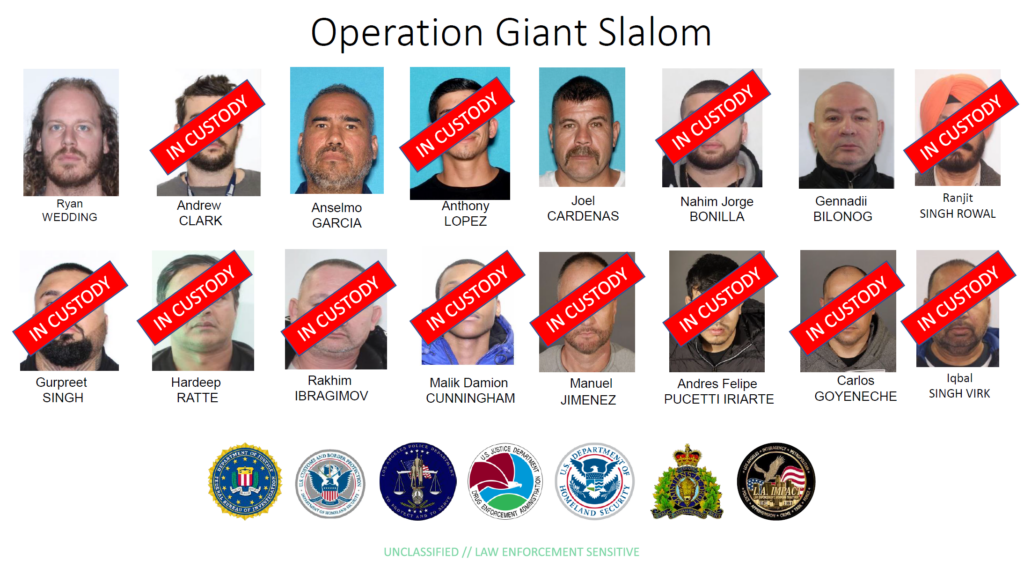
The law enforcement operation is labeled Operation Giant Slalom.

“Ryan Wedding’s athletic drive snowballed into a life of violence and, instead of conquering mountains, he mastered a deadly drug distribution enterprise and will continue to order murders while he enjoys protection by his cartel associates and others,” Davis said.

Links to Sinaloa Cartel

As the FBI’s Davis indicated, Wedding has been tied to the Sinaloa Cartel, once led by El Chapo and still a deadly narcotics trafficking organization based in Mexico. 

Authorities believe Wedding could be in Mexico, but he also might have fled to other countries, including the United States, Canada, Colombia, Honduras, Guatemala or Costa Rica. The FBI warns that the 6-foot-3, 240-pound athlete, known as “Giant,” “Public Enemy,” “El Jefe” and “Jesse King,” is considered armed and dangerous.

In a telephone interview, Steve Murphy, a retired U.S. Drug Enforcement Administration agent, told The Mob Museum he thinks Wedding eventually will be captured.

Murphy and fellow retired DEA agent Javier Peña were the lead U.S. investigators in tracking down Escobar decades ago.Their book, Manhunters: How We Took Down Pablo Escobar, gives an account of that experience. Their involvement also was dramatized in the Netflix series Narcos. Murphy now hosts the Game of Crimes podcast.

Murphy said Wedding could be found in “relatively short order” if Mexican officials allow U.S. authorities in the country to hunt for him.

“Whether we’re talking about special operators from the U.S. military or the U.S. Marshal Service — they’re phenomenal at finding people,” Murphy said. “That’s how a lot of people get captured in the United States, because of the Marshals and their expertise and their experience and equipment and technology they have available to them.”

Most of the individuals targeted by Operation Giant Slalom have been captured, but the top target, Wedding, is still at-large. U.S. Drug Enforcement Administration

In the search for Escobar, Murphy and Peña were sent to Colombia because local officials wanted them there.

“The difference between what we did in Colombia and what’s going on Mexico is that the Colombian government invited us in,” Murphy said.

As the focus on Wedding intensifies, a snitch might come forward, Murphy said, or the Sinaloa Cartel could get fed up with him. Someone’s value to the drug cartel depends on that person’s ability to earn money, the former DEA agent said.

“At what point does the cartel say this guy is trouble to us?” Murphy asked, noting that the cartel has a reputation for excessive violence.

With the unwanted attention Wedding is bringing to them, and if he is no longer much of an earner, an order could come down from a cartel leader to “get rid of him,” Murphy said.

Editor’s note: Since this article was published, Ryan Wedding has been apprehended. On January 23, 2026, Wedding was arrested in Mexico City and transported to Southern California to face federal charges.

Larry Henry is a veteran print and broadcast journalist. He served as press secretary for Nevada Governor Bob Miller and was political editor at the Las Vegas Sun and managing editor at KFSM-TV, the CBS affiliate in Northwest Arkansas. Today, he is a senior reporter for Gambling.com.

Gambino crime family boss Paul Castellano murdered outside Manhattan steakhouse 40 years ago

Forty years ago, a faction of Gambino crime family members orchestrated and executed a brazen coup to permanently remove their contentious boss, Paul Castellano. On December 16, 1985, assailants shot and killed him in the heart of holiday shopping season in Midtown Manhattan.

Born in 1915 in Brooklyn to Sicilian immigrants, Castellano grew up in a world under the influence of local Mafia crime families. That also included his own immediate and extended family. He and Carlo Gambino, his first cousin and future boss, also became brothers-in-law after Gambino married Castellano’s sister, Catherine, in 1932.

Castellano’s criminal life began in the 1930s through low-level rackets, but he quickly distinguished himself with his business-minded approach to organized crime. Unlike many of his contemporaries who built reputations on violence, Castellano cultivated political connections, leveraged legitimate-appearing businesses — particularly in construction, meat distribution and trucking — and positioned himself as a modernizer who understood both street operations and white-collar schemes. His combination of family ties, strategic marriages and financial savvy earned him steady promotions within the crime family.

Castellano’s ascent accelerated under Gambino, who trusted his discretion and intellect. Gambino, who became boss in 1957, eventually promoted Castellano to capo and later used him as a key adviser. By the early 1970s, Castellano controlled lucrative construction and union interests and had become one of the family’s primary earners.

Mounting disdain

There was no single reason for some members of the crime family to dislike Castellano. Instead, multiple factors seemed to have accumulated over time, contributing to the dissonance. Among the most significant criticisms began with Castellano’s appointment as boss in 1976 — a decision that bypassed then-underboss Aniello “Neil” Dellacroce, who was in prison at the time.

Gambino’s dying wish designated Castellano as his successor. However, those loyal to Dellacroce found this choice shockingly unconventional and, worse, disrespectful to the underboss, who was well-liked and respected by most soldiers and captains.

Critics within the organization also felt that Castellano lacked the credibility that comes from experience and was disconnected from the street-level hustle that generated the cash envelopes kicked up to the boss. But not everyone harbored such resentment. Some, including a few of the mutineers-to-be, generally regarded Castellano as respectable, at least for a time.

John Gotti, who headed a crew in Queens based at the Bergin Hunt and Fish Club, maintained a close relationship with Dellacroce. He openly expressed his disappointment over Castellano receiving the top position. By the early 1980s, the divide between Gotti’s crew and Castellano became more pronounced and vocal. Dellacroce acted as a buffer between Gotti and Castellano. However, the situation escalated when rumors of “surveillance tapes” reached Castellano.

Reel-to-reel danger

Beginning in 1981, the FBI recorded a series of conversations, unaffectionately known as the “Quack Quack Tapes.” The recordings revealed that a few members of Gotti’s crew had been dealing dope, including Angelo “Quack Quack” Ruggiero, Gotti’s close friend, as well as Gotti’s brother, Gene. Ruggiero was at the heart of this problem, as the bulk of the audio was recorded on a tapped line in his home. After the government tapes captured Ruggiero’s loose lips in astounding candidness, he and Gene found themselves indicted in a federal narcotics case. This was bad news for the family, but it led to bigger internal problems.

Angelo Ruggiero, second from left, speaks with John Gotti, middle, outside of the Bergin Hunt and Fish Club in 1986. Getty Images / New York Daily News Archive

Castellano became aware of the wiretap recordings when the indictment was revealed in 1983. Ruggiero’s attorneys had access to portions of the surveillance audio tape transcripts.  The recordings featured certain Gambino crime family members discussing drug deals and even mentioning Castellano, including disparaging remarks against the boss.

At first, Castellano did not know much about the actual content of the tapes, except that the indicted members of his crime family may have broken his strict edict — no dope. As bits of information trickled out, his concern and anger grew. He eventually demanded that Ruggiero give up whatever tapes or transcripts he had. Gotti’s crew, however, knew that if Castellano heard the details within those recordings, it would likely result in severe consequences.

The war of attrition placed Dellacroce in a difficult position as he tried to shield Gotti’s crew, who were unwilling to provide the damning evidence, while keeping Castellano’s temper at bay.

The tapes from Ruggiero’s home phone were not the only recordings of notable importance in the lead-up to Castellano’s demise. Foreboding conversations were recorded during a meeting in 1983 at Casa Storta restaurant in Brooklyn on January 23 between Ruggiero and Colombo family capos Gennaro “Gerry Lang” Langella and Dominic “Donny” Montemarano.

Perhaps ironically, the FBI recorded the conversation in pursuit of an entirely different case against Colombo boss Carmine Persico. It just so happened that the casual meeting revealed things nobody put together until after the infamous Castellano hit.

Langella: “Your boss [Castellano] is breaking our ——. This —— is going to —— us. And I’m telling you don’t repeat this because I don’t want anybody to think I’m a wacko. What did I tell you, Donny [Montemarano], after the holidays, what would happen?”

Montemarano: “Neil and Johnny will die.”

Langella: “That’s it. I said I made a prediction, and you know what?”

Montemarano: “Just what you see is going on.”

Ruggiero: “It’s getting worse and worse.”

The trio also discussed a rift between Dellacroce and Castellano, and about Castellano’s frequent tendency to speak ill of “everyone.” Additionally — and possibly without their knowledge at that moment – they subtly hinted at Castellano’s destiny.

Langella: “He ain’t going to get away with it no more, somebody’s gonna—”

Ruggiero: “I know.”

A nearly perfect ambush

Gotti saw a preemptive kill as his only path to survival, but he could not move without broader internal support. Frank DeCicco and Salvatore “Sammy the Bull” Gravano became essential players to get that backing. Through whispered networking, the conspirators gauged the other crime families’ stance on an unsanctioned hit of this magnitude. The consensus was not exactly positive, but wasn’t a hard no either.

But there was a problem: Nothing could be done to Castellano while Dellacroce was still alive. Then Dellacroce lost his battle with cancer on December 2, 1985. Making matters worse, Castellano did not attend the wake, citing his legal troubles and desire to lay low.

DeCicco, though tied to Castellano, recognized the growing resentment and understood that the family was at risk of splintering. Ever pragmatic and ambitious, Gravano concluded that backing the hit was the most realistic way to protect his own crew and future within the family.

It was only after Gotti, DeCicco, and Gravano acknowledged that Castellano’s removal was both unavoidable and manageable that they decided to act. The result was not a cohesive conspiratorial group, but a transient coalition of factions, each convinced it had more to lose by remaining inactive.

The date was set, thanks to DeCicco’s insider information. He was to attend a meeting at the Sparks Steak House with Castellano, his underboss Tommy Bilotti and others on December 16, 1985.

According to Gravano, the job consisted of 11 men: four shooters, a few backups and the getaway drivers. They were all Gambinos, and most were “made” men. The shooters wore beige trench coats and “Russian-style” hats (Gravano recalled in a recent podcast that he wasn’t sure but thinks the fashion was Ruggiero’s idea.)

Gotti and Gravano parked across the street from the restaurant. When they spotted Castellano’s car and visibly confirmed that both the boss and underboss were inside, they radioed the team to move in.

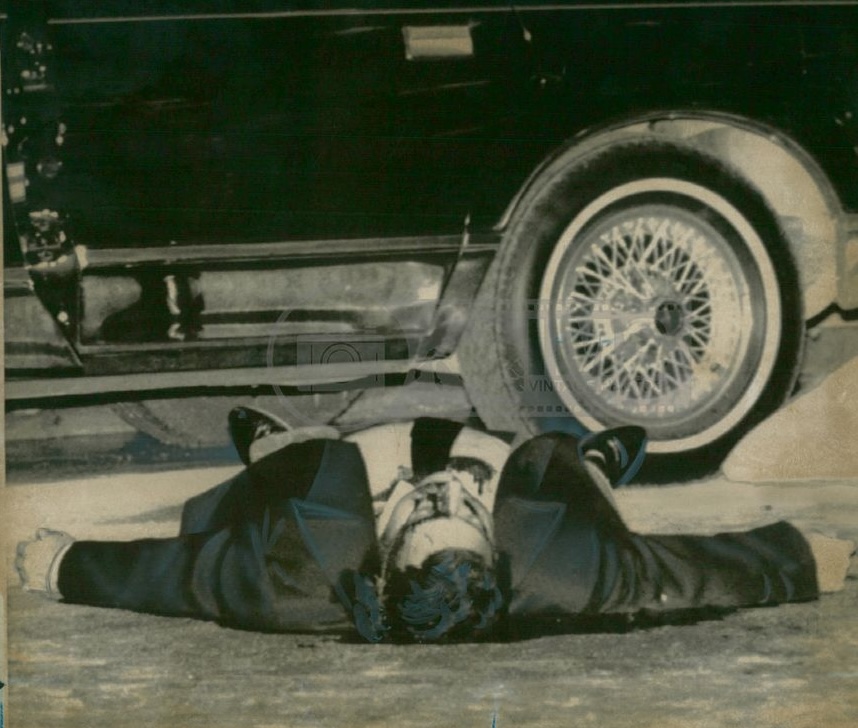
The body of Paul Castellano outside Spark’s Steak House on December 16, 1985. Courtesy of Cipollini Collection

At 5:16 p.m., as Castellano exited from the passenger side of the vehicle in front of the restaurant, he was shot multiple times. Bilotti immediately exited the driver’s side attempting to fire back at the assailants, but he was approached from behind and fatally shot.

This all occurred while hundreds of people were in the area, including on-duty and off-duty cops. But the hit went down so quickly and efficiently that there was little anyone could do. The hitmen had walked off and disappeared among the crowds.

Theories began to surface just days after the shocking murder. Ronald Goldstock, executive director of the state’s Organized Crime Task Force, gave his perspective to a reporter at United Press International: “[Castellano] was facing trials and a lifetime in prison. [The Mob] considered him a liability. … He could only bring them harm.”

Others theorized that the coup had the hallmarks of “young turks” ridding the ranks of the old guard. Regardless of which was the most probable theory, the common thread was Gotti, now the de facto kingpin of the Gambinos.

At the time of Castellano’s assassination, the Gambino crime family was both the largest Mafia clan and generally viewed as the most powerful of the Five Families, even though internal tensions and federal pressure were beginning to destabilize it.

When the shooting started, Tommy Bilotti, Paul Castellano’s bodyguard and underboss, tried to shoot back but was fatally struck and fell onto the street. Courtesy of Cipollini Collection

Fame and fallout

The bullets outside Sparks didn’t simply end Castellano’s reign; they shattered the fragile underworld balance he had tried to maintain. Gotti’s ascent, forged in that blaze of gunfire, became a turning point the entire Mafia would be forced to navigate. His refusal to hide in the shadows, with his tailored suits and swaggering confidence, drew the public’s fascination and the government’s fury in equal measure.

Almost overnight, the new boss found himself as hunted as he was celebrated, while figures such as Vincent “Chin” Gigante watched the spectacle unfold with cold calculation, determined to strike back for the break in protocol.

In the years that followed, the legend of the “Dapper Don” — and later the “Teflon Don” — would emerge from this collision of bravado, media attention and relentless surveillance. But the murder of Castellano remained the event that set the stage for everything.

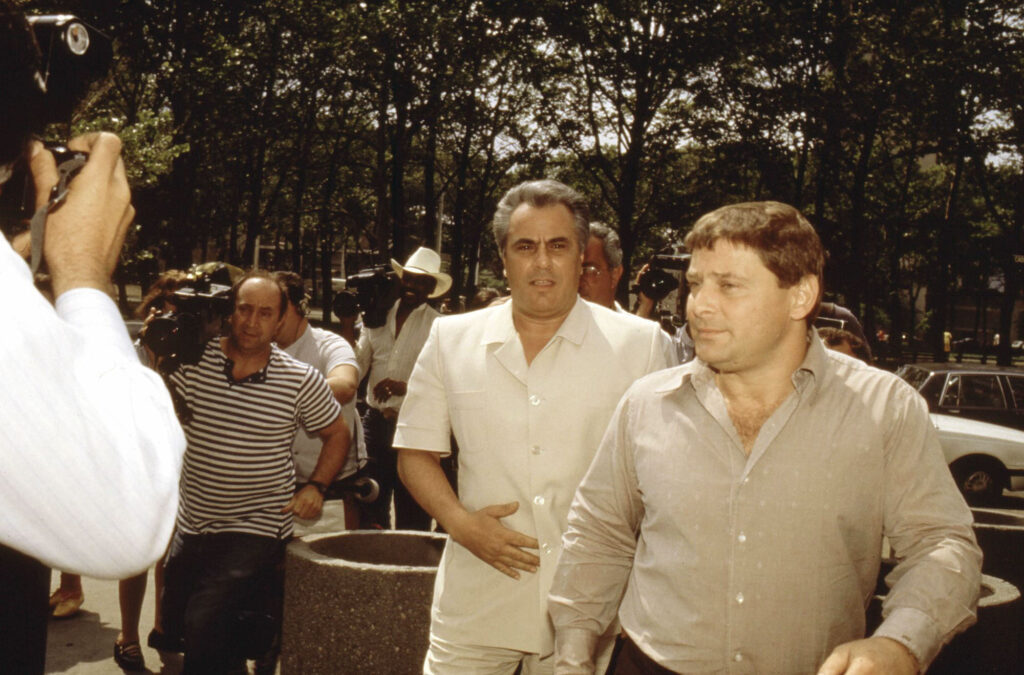
John Gotti, left, walks into a Brooklyn federal courthouse with Sammy “The Bull” Gravano, right, in May 1986. Gravano later testified against Gotti. Getty Images / Yvonne Hemsey

When Gravano broke the code of silence and sat before federal prosecutors, the full machinery behind the hit finally came into focus. His testimony mapped out the conspiracy in stark detail, including the meetings, the surveillance and the shooters positioned around the restaurant waiting for Castellano’s car to roll up.

Castellano’s murder stands not only as the moment that elevated Gotti, but arguably as the spark that set in motion the slow, public unraveling of Cosa Nostra. What followed were investigations that decimated the families, internal rivalries that turned deadly and the collapse of a criminal dynasty that once seemed untouchable.

Christian Cipollini is an organized crime historian and the award-winning author and creator of the comic book series LUCKY, based on the true story of Charles “Lucky” Luciano.
Irish drug kingpin living in Dubai attracts new attention

Irish drug kingpin Daniel Kinahan is back in the spotlight with a magazine story noting that he is living freely in Dubai despite being the suspected head of a major organized crime family.

The 11-page story in the October 27 issue of The New Yorker, written by British reporter Ed Caesar, questions why the 48-year-old Kinahan, reputed leader of the Super Cartel from Dublin, is living freely in the United Arab Emirates, even with a multimillion-dollar U.S. bounty on his head for narcotics trafficking and money laundering. The magazine noted that one money laundering outlet connected to the Kinahan Organized Crime Group has been Hezbollah, “the Iran-backed Lebanese militia” also engaged in “the cocaine trade.”

The Kinahan family and their associates are among criminal suspects who have made Dubai a global base of operations. To some in the underworld, Dubai is considered a hideout affording a luxurious lifestyle — flashy cars, lavish apartments and, for Daniel Kinahan, a hair transplant in Dubai’s “beauty sector.” The Kinahans themselves are thought to be worth $1 billion.

Although the UAE city on the Persian Gulf has become a haven for some criminal suspects, authorities have taken others into custody there. Recently, U.S. marshals arrested former NFL player Antonio Brown in Dubai on an attempted murder charge stemming from a shooting incident in Miami. Brown was extradited to the United States and, according to the Associated Press, released from a Miami jail after posting a $25,000 bond while awaiting trial.

Before being arrested in Dubai, Brown had been posting videos “kind of like laughing at the city of Miami,” said Miami Police Officer Michael Vega, according to WSVN-TV in Miami. “Maybe he thought that we couldn’t extradite from there,” Vega said.

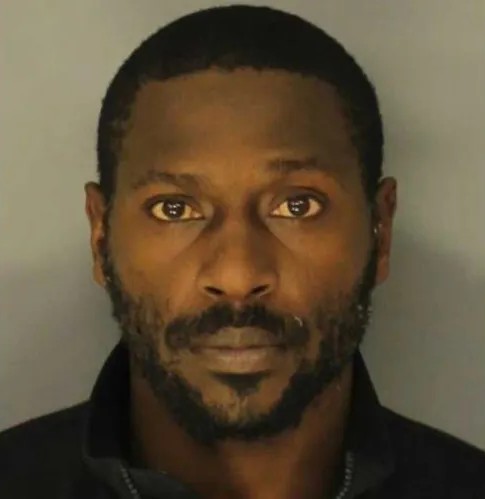
The UAE has become a haven for criminal suspects. Antonio Brown, wanted in the United States for attempted murder, was extradited from Dubai earlier this month. Essex County Correctional Facility

Meanwhile, others on the run, including Daniel Kinahan, have been seen in Dubai but have not been apprehended, much less extradited to Ireland or anywhere else to face justice. A source told Caesar, the magazine writer, that Daniel Kinahan was recently spotted at a mall in Dubai.

Maintaining a low profile does not seem to be a priority for the Kinahans. The family patriarch, Christy Kinahan Sr., 68, has used an alias on social media sites to post restaurant reviews and travel recommendations. On the social media platform now known as X, Christy Sr. expressed admiration for Russian leader Vladimir Putin. There is some speculation the Kinahans might next seek refuge in Russia or Iran.

The Super Cartel

During the 1990s, the Kinahan Organized Crime Group got its start in Dublin under Christy Sr.’s leadership, flooding the city with narcotics. Over time, with rival feuds exploding into deadly open warfare and pressure from Irish authorities, the group relocated to places such as Amsterdam, Spain and Dubai, joining with international narcotics traffickers, according to published reports.

Throughout the years, Kinahan sightings in Dublin became infrequent but sometimes were explosive. One of those occurred in February 2016 when armed members of a rival gang barged into a Dublin hotel, the Regency, where Daniel Kinahan, who also has been a boxing promoter, was present for a weigh-in before an upcoming bout. Kinahan escaped through a window at the hotel, now called the Bonnington, but a lieutenant, David Byrne, was shot to death. This intensified the rivalry between the Kinahans and the local Hutch clan, leading to revenge killings.

The violence and illicit operations associated with the Kinahans have brought them a level of notoriety reserved for the world’s most notorious criminal organizations. The U.S. Treasury Department’s Office of Foreign Assets Control has compared the Kinahans to Mexico’s Los Zetas, Japan’s yakuza and Russia’s Thieves in Law, according to The New Yorker. Daniel Kinahan’s contribution to that reputation has been in building a network that became the Super Cartel. This global cartel is thought by Europol to control a third of Europe’s cocaine trade, which, according to the magazine, is worth as much as $20 billion a year.

These days, even though Christy Sr. remains a fugitive, the real target is the eldest of his two sons, Daniel, the suspected current leader of the transnational organized crime family — and now with a price on his head. The U.S. ambassador to Ireland has announced that a $5 million reward is available for tips leading to the arrest of Daniel Kinahan, his brother, Christy Kinahan Jr., or their father, Christy Sr.

“But, according to a former DEA agent, American law enforcement cared about only one Kinahan,” The New Yorker reported. “As the agent put it, ‘It’s all about Dan.’”

Daniel Kinahan is believed to be at the head of the Kinahan cartel, working alongside his brother, Christy Jr., and his father, Christy Sr. U.S. Department of the Treasury

Whether Daniel Kinahan will be apprehended in the UAE or expelled from there is an open question. According to the magazine, he might feel safe in Dubai as long as there are no formal charges against him.

Currently, Irish authorities are working on criminal charges to offer up to get Daniel Kinahan back to Ireland in chains. Stephen Breen, crime editor of the Irish Sun, told The Mob Museum that authorities in the Irish capital are analyzing hundreds of pages of investigative files, hoping to charge Daniel Kinahan with “a number of offenses,” including those related to organized crime and conspiracy to murder.

“That process is complex and is still ongoing,” Breen said in an email. “There is no time frame on it.”

In addition to his role at the newspaper, Breen is an author whose most recent true crime book, Kinahan Assassins, was co-written with Irish Sun colleague John Hand.

According to Caesar, the New Yorker reporter, the United States appears less focused now on collaring Daniel Kinahan than in smashing cartels closer to home.

“The Trump administration has different drug-interdiction priorities, notably fentanyl and Latin American cartels,” Caesar wrote. “A DEA source told me that the agency currently has little interest in pursuing people like the Kinahans.” However, the $5 million U.S. bounty remains in place for anyone turning him in.

Although the Kinahans are wanted in the United States, the Trump administration has focused more on curbing drug trafficking from Latin American cartels, as evidenced by recent airstrikes on alleged drug-trafficking vessels in the Caribbean. U.S. Department of Defense

Kinahans attract attention

Extracting a criminal suspect from Dubai is not impossible, as was seen with the ex-NFL player, Antonio Brown. However, a former FBI agent told The New Yorker the threshold for removal is high. “Violent crime, in your country or in theirs, anything that’s a threat to tourism, they’ll get rid of you,” the former FBI agent said.

The 2024 arrest of Kinahan associate Sean McGovern at his house in Dubai is another example showing that apprehensions do occur. When McGovern was taken into custody in the UAE, he was wanted in Ireland on suspicion of directing the activities of a criminal organization and killing a rival in Dublin during the Kinahan-Hutch feud.

Caesar wrote that McGovern “did not believe that he was in danger” in Dubai, but he was scooped up last May anyway and is parked in an Irish prison while awaiting a trial likely to begin in 2026.

With people like McGovern in prison, the Kinahan group is not what it once was in Dublin, said Breen, The Irish Sun crime editor.

“This is due to the investigations of the Irish police that has seen nine of their members convicted of murder, high-ranking figures convicted of directing the activities of the organized crime group and dozens of others also jailed for drug trafficking, money laundering and weapons possession,” the journalist said. “Despite this, the group still has key representatives in Ireland who are linked to drug trafficking. Only this time they are working with other transnational groups.”

That’s not to say the public is no longer interested in knowing the latest on the Kinahans. Newspaper stories and podcasts about the crime family pop up all the time. The Irish Sun’s podcast series The Kinahans, released in 2023, is among others in that category.

“The Kinahan name continues to capture the public’s attention in Ireland, especially when many of their key associates are brought before the courts, Breen said. “The public often asks the question around Daniel Kinahan’s possible incarceration, but they have seen the convictions of many key figures both in Ireland and the U.K. The interest has maintained, especially since the extradition from Dubai of Kinahan’s right-hand man, Sean McGovern.”

Hiding out in Dubai is not a foolproof plan. In 2024, Kinahan associate Sean McGovern was arrested there and extradited to Ireland. Interpol

Interest in the Kinahans seems to extend to the family’s next generation as well.

According to The New Yorker, Daniel Kinahan is believed to have at least six children by three mothers. Two of his sons, Sean and Cian, are in their 20s and share some of their father’s interests. Those interests apparently include heavyweight boxer Tyson Fury, known to have been affiliated with their father.

“When Tyson Fury fought Oleksandr Usyk in Riyadh, in May 2024, I was sitting close to the ring,” Caesar wrote. “A few rows away from me was a young man wearing a black T-shirt and a bright smile: Cian Kinahan.” 

To observers of the global crime scene, it is no surprise that people still talk about the Kinahan family and wonder what they’re up to.

“So long as the Kinahan group remains active,” Breen said, “there will always be interest in the name.”

Larry Henry is a veteran print and broadcast journalist. He served as press secretary for Nevada Governor Bob Miller and was political editor at the Las Vegas Sun and managing editor at KFSM-TV, the CBS affiliate in Northwest Arkansas. Today, he is a senior reporter for Gambling.com.

Hollywood fixer Willie Bioff killed in automobile blast 70 years ago

Chicago Outfit associate Willie Bioff rose to power as a corrupt union official, extorting millions from Hollywood studios on behalf of organized crime. In 1955, long after he became a government witness and went into hiding, a car bomb rigged to his truck exploded in the driveway of his Phoenix home, killing him. Although he may have tried, Bioff could not escape from his criminal past.

Born in 1900, Bioff’s family moved from Russia to Chicago when he was a young child. After coming of age, he gravitated toward questionable career paths. He began with pimping and petty hustles in the 1920s but moved into the more profitable labor racketeering by the early 1930s.

Labor racketeer

Bioff teamed up with a pliable union man, George E. Browne, and muscled in on local theater owners using threats of striking projectionists. Their work soon caught the attention of the Chicago Outfit. According to one story, the boss received word about the two when they were celebrating a big score at a club owned by Al Capone’s associate and former bodyguard, Nick Circella, aka Nick Dean. Frank “The Enforcer” Nitti requested a meeting with them, an invitation the pair could not refuse.

In 1997, Vanity Fair writer Nick Tosches offered a different story: Mobster Johnny Rosselli originally schemed to bring in Bioff and Browne.

“At a 1934 Chicago meeting (Browne and Bioff were not invited), Rosselli explained the profit structure of the movie industry, and a plan was laid for a wholesale extortion operation of the major studios” via the International Alliance of Theatrical State Employees (IATSE), Tosches wrote. “Rosselli would operate as the puppet master of Browne and Bioff.”

Backed quietly by the Chicago Outfit, the two discovered a gold mine in Hollywood. Terrified of strikes delaying production, studios would accept any help they could get to keep sets running on time.

As Browne gained influence and power as a recognized figure in the union scene, Bioff, Circella and others took care of the hands-on dirty work of intimidation and extortion. In 1934, Bioff and Browne seized control of IATSE.

George E. Browne pictured in 1934 after being announced the new I.A.T.S.E president. The International Photographer
George Browne pictured in 1934 after being announced the new I.A.T.S.E president. The International Photographer

Their extortion scheme didn’t always produce the desired effect on the first attempt. Some studio heads held out, although briefly. But the pair honed their tactics so that most studios, big and small, inevitably kicked up the cash.

The fix was simple: Pay up or the cameras stop rolling. The moguls, from MGM to Fox, preferred discreet payoffs to union crises. Bioff, a sharp dresser and smooth talker, played his role well, convincing Hollywood he was not a bagman but a businessman.

In the lucrative racket, Bioff extorted large studios for $50,000 and smaller studios for $25,000.

Extortion scheme revealed

All bad things must come to an end, however, and by 1937 the Bioff-Browne endeavor came under public scrutiny. Then, in 1939, syndicated columnist Westbrook Pegler, a vocal opponent of corruption and rackets, revealed Bioff’s old pandering charge and the unusually quick release from jail that followed.

Bioff faced court first in Los Angeles and then was extradited back to Chicago to face charges in early 1940. That, however, was nothing compared with the charges his extortion racket brought.

The federal government handed down indictments on Bioff, Browne and Circella for tax evasion and racketeering. In 1941, the trial began.

“Obedience was never one of Bioff’s strong points,” Alan K. Rode wrote in a piece for Noir City Magazine. “On the stand, he accused studio bosses of bribing him to maintain labor peace — while remaining mute about the Outfit’s orchestration of the scheme.”

The jury didn’t buy it and returned quick verdicts. In November 1941 a jury sentenced Browne to eight years, Bioff to 10, and issued each a $10,000 fine. Circella, who had been laying low, was apprehended on December 1, 1941. He pleaded guilty and was sentenced to eight years.

During the sentencing, prosecutor Mathias F. Correa described Bioff as a “gangster-

racketeer type who could never be rehabilitated to live a useful life in society.”

The events that followed, however, changed some of their minds about cooperation.

All three received various threats, and some were directed at their family members. According to some accounts, Bioff was more angry than fearful. On February 2, 1943, the warnings escalated into brutal reality.

Estelle Carey, the 34-year-old model, dice girl and girlfriend of Nick Circella, was found murdered in her apartment on the North Side of Chicago. She had been bound, beaten and burned. Some theorized it was a message to Circella, Bioff and Browne. Others believed the assailants were searching for an alleged cache of money and valuables, as Carey was Circella’s “banker.” Regardless of the motive, it was clear that the violent scene was the work of Chicago’s underworld.

Stunning both Hollywood and the Outfit, Bioff and Browne decided to flip.

Bioff and Browne sing

The federal government had discovered more theatrical union corruption nationwide involving specific members of the Chicago Mob. Bioff and Browne’s change of heart would help put away some of the biggest names.

At one point during cross-examination, Bioff said of himself, “I was just an uncouth person, a low-type sort of man. People of my caliber don’t do nice things.” His testimony had dire consequences for the underworld.

Their testimony in 1943 reached straight into the Chicago syndicate’s elites. Among those named were Nitti, Rosselli, Paul “The Waiter” Ricca, Louis “Little New York” Campagna, Charles Gioe, Phil D’Andrea and others.

Nitti, facing inevitable conviction, chose suicide instead, as reported by the coroner. The rest served varying stretches in federal prison. Bioff’s cooperation branded him as the betrayer who shut down the Mob’s Hollywood pipeline and broke the code of silence.

Browne and Bioff got out of prison early in 1944, unlike Circella. Historians disagree on whether Circella and/or his girlfriend cooperated with authorities, but he served his full sentence nevertheless.

Nick Circella, aka Nick Dean, mugshot from arrest in Miami 1930.
Nick Circella, aka Nick Dean, in a mugshot from an arrest in Miami in 1930.

In rare praise, Pegler commended Circella’s resolve in a 1953 column: “If you are going to rate gangsters you must proclaim your standards, and all authorities agree that the ideal is a character who keeps a still tongue in his head, never squeals and never begs.”

Circella left prison only to face deportation in 1953. By 1955, initial reports (and many historical accounts since) stated that Circella was shipped off to Argentina. However, Circella ultimately ended up in Mexico and set up operations there. Allegedly, his presence influenced Sam Giancana’s decision to move there after his 1966 release from prison.

According to some sources, Browne, who had a long history of stomach ulcers, slipped into obscurity back in Illinois after his prison release and “drank himself to death” in the early 1950s.

A dynamite finale

After prison, Bioff went to Arizona and lived under an assumed name, William Nelson. He and his wife, Laurie, seamlessly integrated into the state’s social elite. Bioff struck up a friendship with the clever and sophisticated Harry Rosenzweig, a political player with strong connections to the Republican establishment, and even caught the eye of Barry Goldwater, an emerging political figure and department-store heir whose charm and network defined midcentury Phoenix.

Through Rosenzweig, Bioff purportedly donated about $5,000 to Goldwater’s first Senate campaign — a considerable amount back then — and, per contemporary reports, even rode on Goldwater’s private plane. Meanwhile, Bioff’s underworld instincts found a fitting outlet through Gus Greenbaum, the casino operator based in Phoenix and Las Vegas. Greenbaum introduced Bioff to Nevada’s profitable gaming industry, giving him a job as entertainment director of the Riviera Hotel.

On the morning of November 4, 1955, Bioff tended to his usual routine, which included a drive into town to check stock market activity. While his wife watched from the kitchen window, Bioff climbed into his pickup truck and turned the key in the ignition, which triggered a charge wired beneath the seat. He died instantly.

Sheriff’s Lt. D.L. McGovney photographs the crime scene outside the home of Willie Bioff on November 4, 1955. Ted Kazy/The Arizona Republic

No more than 15 minutes after the massive blast shook the neighborhood, reporters and police arrived on scene. His wife had just turned her back from the kitchen window when the explosion launched shards of glass and framing into the house. “He turned to wave,” she told a reporter at the scene. “He always waved. I waved back.”

Pressing further, the reporter asked if she thought he was a victim of foul play or perhaps was suicidal, to which she replied, “Oh God no!” and added, “He didn’t have an enemy in the world.”

The explosion was so violent that officials could not determine immediately if the blast was caused by dynamite, nitroglycerin or some other components combined.

Rumors soon circulated about recent visitors in the Phoenix area, including then-Chicago Outfit boss Tony Accardo. Police were convinced of one thing — it was a Mob hit.

Three years later, Greenbaum would meet his own grisly end in Scottsdale, found murdered along with his wife in what police called a “vicious underworld settling of accounts.” The Arizona desert, it seemed, wasn’t far away enough for either of them.

Christian Cipollini is an organized crime historian and the award-winning author and creator of the comic book series LUCKY, based on the true story of Charles “Lucky” Luciano.
Las Vegas Mob classic ‘Casino’ celebrates 30th anniversary

Three decades after Casino was released in November 1995, screenwriter Nicholas Pileggi says the nearly three-hour film portrays the end of an era in Las Vegas when mobsters controlled casinos.

That era ran from the 1940s into the ’80s, but the movie focuses on a period during the ’70s and early ’80s when Chicago’s Frank “Lefty” Rosenthal and Tony “The Ant” Spilotro were active in Las Vegas.

During a recent telephone interview, Pileggi said the movie and his related book, Casino: Love and Honor in Las Vegas, are “really about the end of the Mob” in Las Vegas and “the taking over of Las Vegas by corporate interests.” The corporate takeover helped push the Mob out of casino front offices and the count rooms where they stole, or “skimmed,” untaxed gambling revenue, Pileggi said.

Dividing his time between New York City and Los Angeles, the 92-year-old author and screenwriter continues to produce screenplays about organized crime, including The Alto Knights, a feature film released in March 2025. Decades earlier, Pileggi, a veteran Associated Press reporter and magazine writer, cemented his reputation in Hollywood by teaming with director Martin Scorsese to co-author two iconic movies, New York-based Goodfellas (from Pileggi’s 1985 book Wiseguy) and Casino.

Fabulous town

This fall, Pileggi’s Las Vegas book and the related movie are celebrating their 30th anniversaries. The book was published in October 1995. The movie came out a month later. 

The book is a nonfiction account of Rosenthal’s troubled relationship with this wife, Geri, a former Las Vegas showgirl from Southern California, and her romantic involvement with Spilotro, the Chicago Outfit’s street enforcer in Las Vegas at the time. The movie follows the same general plot.

During their younger years, Frank Rosenthal and Spilotro were friends in Chicago. As time passed, they ended up together again in Las Vegas, where Rosenthal, a sports handicapper and Mob associate, controlled four Argent Corporation casinos for Midwestern organized crime families that benefited from skimmed gaming revenue. The most notable of those casinos was the Stardust, where Rosenthal built a popular sportsbook that also served as the setting for a celebrity talk show he hosted, featuring guests such as Frank Sinatra.

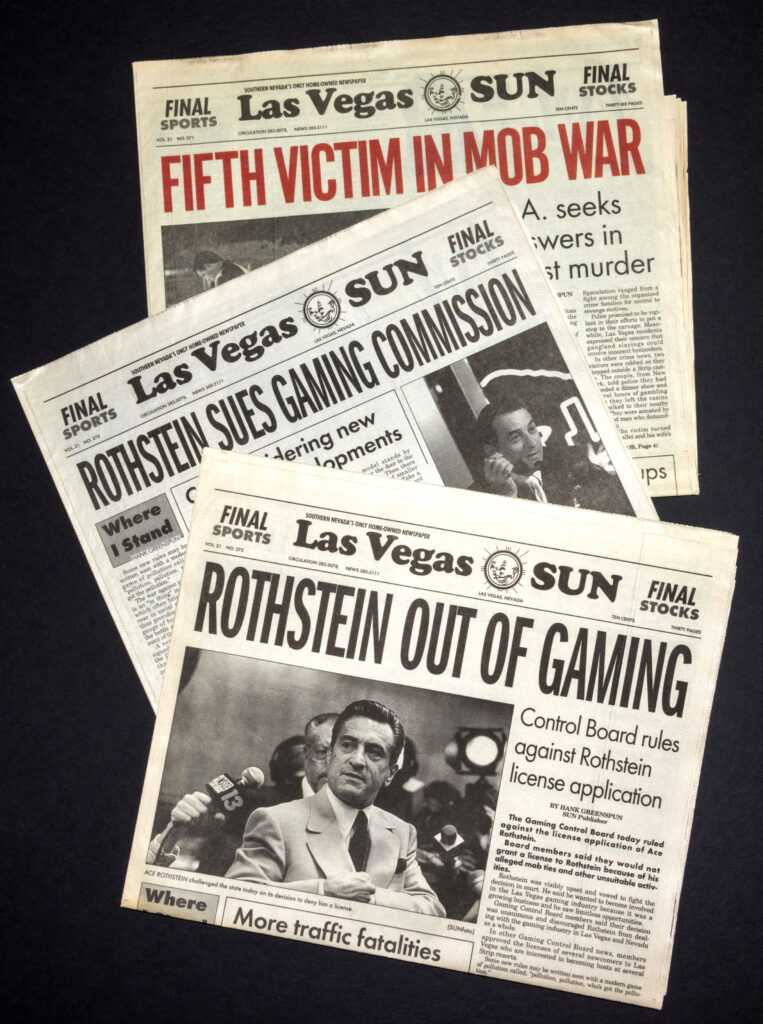
These prop newspapers appeared in the film with Robert De Niro’s character, Ace Rothstein, on the front page. Rothstein is based on Frank “Lefty” Rosenthal, who also sued the Gaming Commission in real life. The Mob Museum Collection

The Rosenthals and Spilotro have died, but as Pileggi’s book and the movie depict, they were well known at one time in the Southern Nevada underworld. Much later, the Las Vegas Review-Journal’s Jane Ann Morrison reported that the Rosenthals had been federal informants, though that was not known publicly during their heyday when the married couple had a home on the golf course at the gated Las Vegas Country Club.

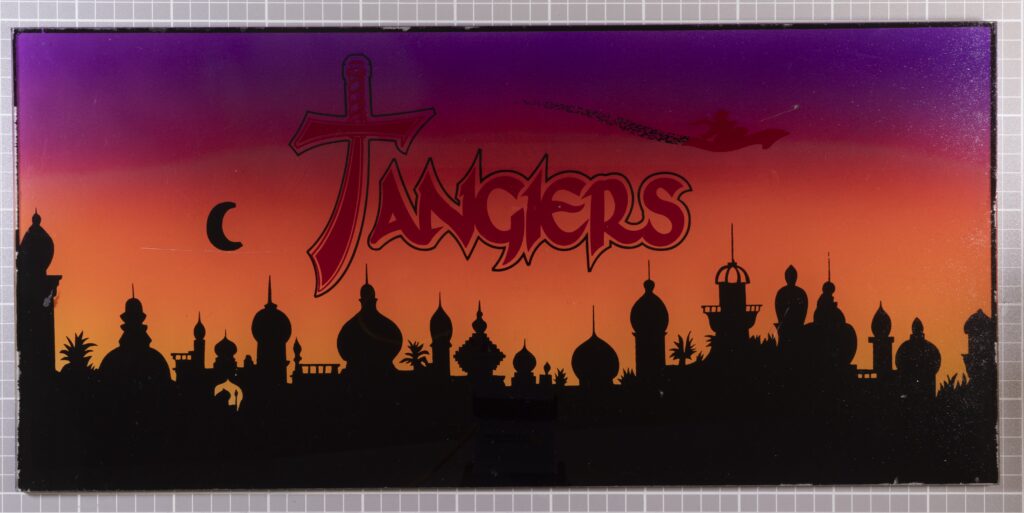
In the movie, the characters’ names and the name of the Stardust were changed to prevent possible legal action, Pileggi said. As a journalistic account, the book could use real names, but the movie is a fictional version that might have led to lawsuits if real names were used, he said. In the movie, Robert De Niro portrays a character based on Rosenthal, with Sharon Stone as his wife. Joe Pesci plays the Spilotro-inspired character. The Stardust was renamed the Tangiers.

Reflecting on the ways Las Vegas has changed, Pileggi said the city now is a “fabulous town” but seems less affordable for the working class. For years, visitors on a tight budget could afford a gambling trip to Las Vegas because food and lodging were inexpensive. But changes began to take place after reclusive billionaire Howard Hughes and major corporations moved in, buying up casino properties, Pileggi said.

The fictional casino-resort Tangiers stood in for the Stardust. The interior casino scenes were filmed inside the Riveira, which was transformed into the Tangiers using props, including this slot machine faceplate. The Mob Museum Collection

Other changes have occurred since then. In 1989, casino developer Steve Wynn opened the Mirage hotel-casino on the Strip, sparking a boom in megaresort construction. That led to the demolition of most Mob-era resorts along the Strip, including the Desert Inn, Riviera, Sands, Stardust, Dunes, Tropicana and Hacienda. In June 2021, Resorts World Las Vegas opened at the former site of the Stardust.

Additional construction also is underway. Where the Tropicana once stood, a Major League Baseball stadium is expected to open in time for the Athletics to relocate from their temporary home in Sacramento to begin the 2028 season. The Mirage is being replaced by a Hard Rock resort now under construction.

‘True magic’

According to Dan Moldea, a Washington, D.C.-based journalist and author, Pileggi took the right approach in the book by focusing in part on Geri Rosenthal. It helped that Frank Rosenthal cooperated with Pileggi for the book, Moldea said.

In a recent post on his Mobology Substack site, Moldea addressed Pileggi’s handling of the story. “In my opinion,” Moldea wrote, “that decision to feature and fully develop the character of Geri Rosenthal, along with Lefty Rosenthal’s cooperation, brought true magic to the content of Nick’s work.”

Moldea added that the Geri Rosenthal character in the movie was “beautifully acted by Sharon Stone, who won a Golden Globe Award for Best Actress, as well as an Oscar nomination.”

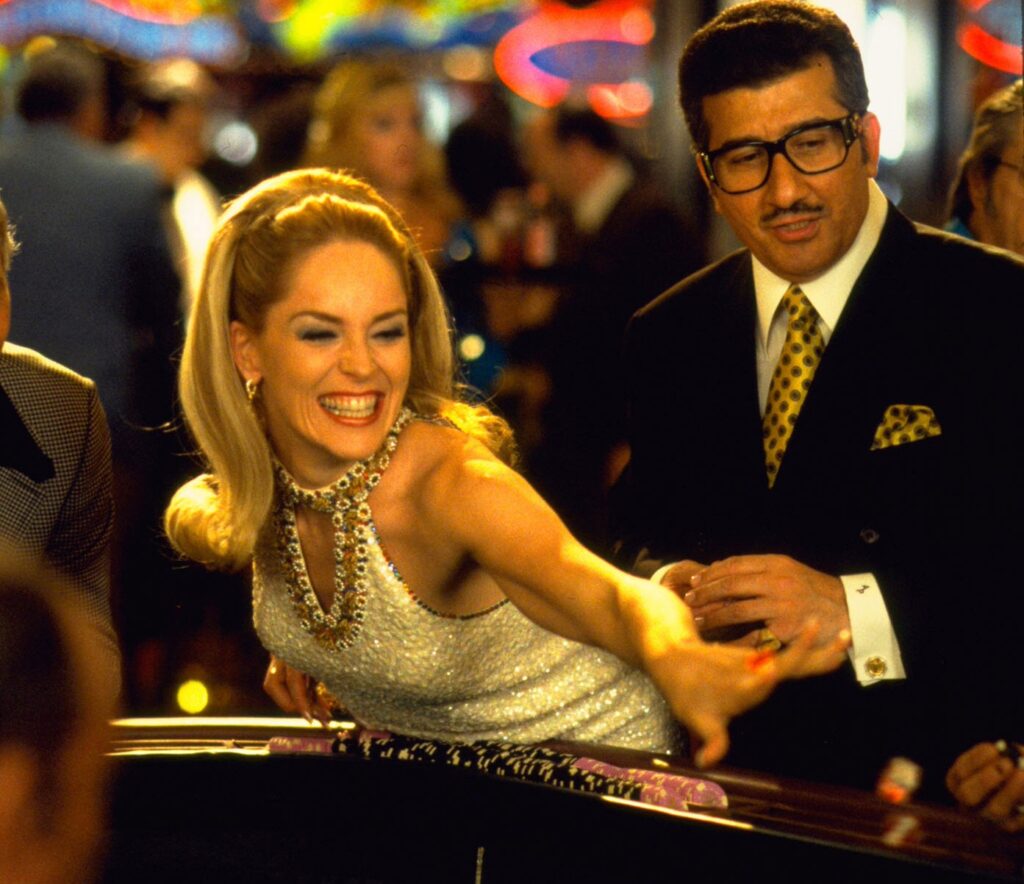
In the film, Sharon Stone plays Geri McGee, inspired by Geri Rosenthal, the love interest of De Niro’s and Pesci’s characters. For her work, she received a Golden Globe award and an Oscar nomination. Photofest / Universal Pictures

“Several outstanding journalists investigated the Stardust skimming caper,” Moldea wrote, “but it was Nick Pileggi who earned the right to call it his own.”

Pileggi said the romantic angle is what attracted him to write the book in the first place. “You had a story beyond just a plain boring story about the casino industry,” he said.

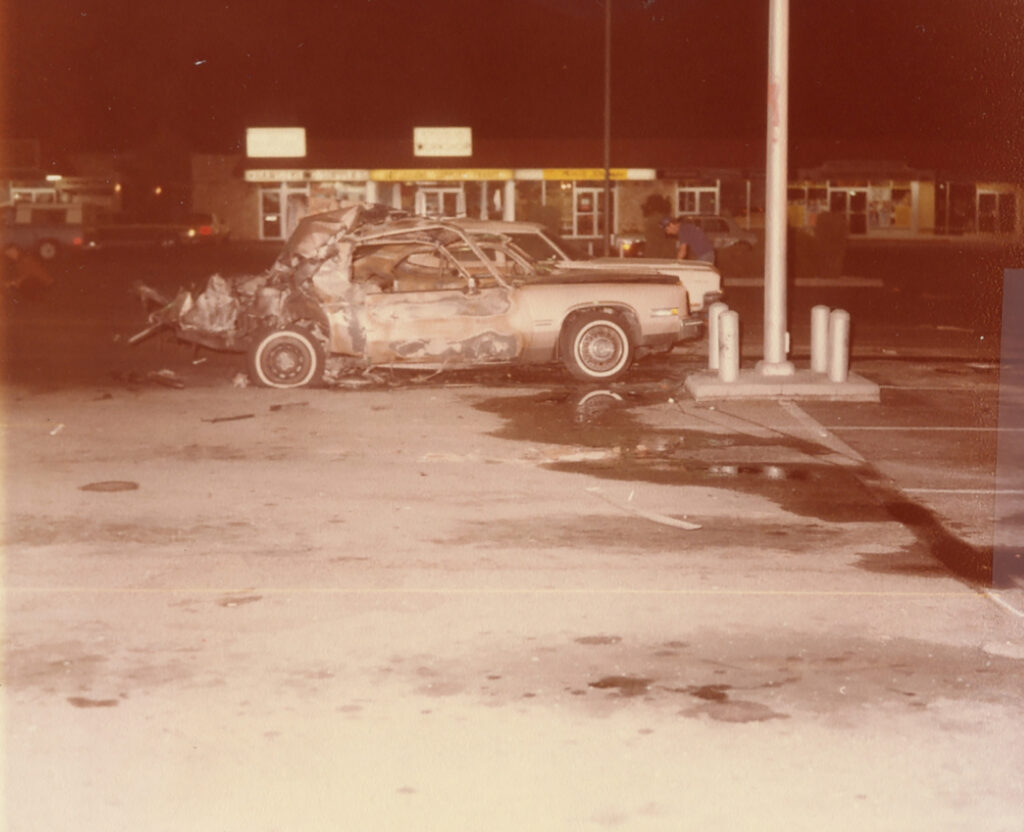
Another thing that made the story interesting is that Rosenthal survived a car bombing in Las Vegas, Pileggi said. The book and movie open with the bombing and then backtrack to fill in events leading up to that incident. As it turns out, Rosenthal left Las Vegas not long after the 1982 car bombing, which occurred only steps from the front door of a Tony Roma’s restaurant on East Sahara Avenue, later the site of a Hustler Hollywood adult novelty store. For the movie, that scene was filmed downtown outside the Main Street Station, not at the restaurant parking lot on Sahara where it actually happened.

Although the film depicted Rothstein’s car exploding in downtown Las Vegas, the real location of the Rosenthal bombing was outside a Tony Roma’s restaurant on Sahara Avenue. This polaroid from police evidence shows the aftermath. The Mob Museum Collection.

The bombing has never been solved. While some people suspect Spilotro was involved, Pileggi said Midwestern mobsters possibly could have learned Rosenthal was an informant and, because of that, attempted to kill him. Criminal charges related to Las Vegas casino skimming later resulted in several mobsters from the Midwest being convicted and sent to prison. Rosenthal was not among those charged or convicted. In 2008, he died in South Florida of natural causes at age 79.

Years earlier, during the 1980s, Geri Rosenthal and Spilotro died in their 40s, her in Los Angeles of an apparent overdose, him from a Mob beating in the Chicago area. 

The Mob’s downfall in Las Vegas halted the illegal practice of sending skimmed gaming revenue to mobsters in places such as Kansas City. Pileggi said Mob bosses had been using that skimmed money to pay themselves a dividend on secret loans for their hidden ownership in Las Vegas casinos.

“That was basically their dividend check for the original cash investment,” Pileggi said.

In the end, as the book and movie indicate, criminals like Rosenthal and Spilotro were too publicly brazen in Las Vegas, ending their lucrative control of casinos and streets rackets.

“It would be the last time street guys would ever be given anything that valuable again,” Pileggi wrote.

Larry Henry is a veteran print and broadcast journalist. He served as press secretary for Nevada Governor Bob Miller and was political editor at the Las Vegas Sun and managing editor at KFSM-TV, the CBS affiliate in Northwest Arkansas. Today, he is a senior reporter for Gambling.com.

FBI indictments link New York mobsters, professional athletes in two cheating schemes

If you thought the traditional Mob was dead, think again.

The FBI on Thursday announced sweeping indictments implicating members of four of the five New York crime families in illegal gambling schemes. Twelve members or associates of the Gambino, Bonanno, Genovese and Lucchese crime families were among those indicted, along with former professional basketball players and others.

New York Mafia members allegedly were involved in operating rigged weekly illegal poker games, including games in Las Vegas.

According to the FBI, the games were operated with the “express permission and approval of” Mafia members and associates. In exchange for a portion of the proceeds, the Mafia members provided support and protection for the games and collected debts using “threats and intimidation.”

FBI Director Kash Patel, right, held a press conference today announcing two indictments related to rigged poker games and NBA game fixing. U.S. Attorney Joseph Nocella Jr., left, gave more details about the case. ESPN / Federal Bureau of Investigation

The poker games were rigged using high-tech devices. According to the indictment:

“The members of the cheating teams … used card-shuffling machines that were purportedly randomly shuffling the playing cards to ensure fairness. However, the rigged shuffling machines were secretly altered to use concealed technology to read the cards in the deck, predict which player at the table had the best poker hand, and relay that information via interstate wires to an off-site operator. The operator then communicated that information by cellular phone to a member of the cheating team seated at the rigged game poker table, referred to as the ‘Quarterback.’”

That person at the table used “secret signaling” to share the information with the other members of the cheating teams playing in the rigged games. The cheating teams used the information from the Quarterback to defraud the victims, who believed they were playing in straight games.”

Other cheating methods listed in one of the indictments include an X-ray poker table, “electronic poker chip trays,” “card analyzers that utilized technology onto decoy cellular telephones,” and marked cards detectable by “specially designed contact lenses or sunglasses.” The use of cutting-edge technology to fleece victims sets this case apart from other recent gambling busts and scams.

Among the high-tech devices used by the cheaters was an X-ray poker table, revealing the hands of unsuspecting players. Department of Justice

Wealthy victims were invited to participate in the games, often by former professional basketball players. According to the indictment, Portland Trailblazers coach Chauncey Billups and former player Damon Jones, who played for 10 different NBA teams, were two of those players.

Other defendants in the case laundered money for the ring by using shell companies, third parties and cryptocurrency.

Although most of the rigged games occurred in New York, some were held in Las Vegas and Miami. Billups was involved with the Las Vegas games in 2019.

Illegal gambling is nothing new for the Mob. This is not even the first time this year that a Mafia gambling ring has made the news. However, the unfair nature of these poker games is unusual. Having a reputation for cheating the clientele makes for bad business. But this case combines two of the Mob’s favorite schemes: illegal gambling and scams.

The New York Post released details about some of the charged mobsters. One of the 12 identified in the indictment is Angelo Ruggiero Jr., son of Angelo “Quack Quack” Ruggiero, who was the late John Gotti’s close friend and crew member. Gambino mobster Lee Fama is known as a poker high roller in Las Vegas. Matthew Daddino, a made man in the Genovese crime family, had only recently “earned his button.”

Although the rigged poker scheme is big news on its own, another indictment went out today that targeted insider information and NBA game-fixing.

Three defendants in the rigged poker case were also named in the NBA gambling indictment: Eric Earnest, Shane Hennen and Damon Jones. Hennen, a Las Vegas gambler, was arrested in January for masterminding a sports-fixing scandal in connection with Jontay Porter, a former Toronto Raptors forward. Jones is accused of selling insider information to bettors, which included unreported news about an injured Lebron James in February 2023.

However, the game-fixing indictment does not list any Mafia members or associates among the defendants. There may be a Mob connection, but it is not apparent at this time.

Director Patel concluded the press conference this morning with a warning to other would-be gambling offenders. “If you’re participating in the legal gambling industry, you’ve got nothing to worry about,” he said. “If you’re participating in illegal conduct, you’ve got everything to worry about. And this case shows it.”

‘Beer Baron’ Dutch Schultz gunned down 90 years ago

On October 23, 1935, Dutch Schultz was shot in a Newark restaurant along with three of his associates. In the hours that followed, the four men succumbed to their wounds, one by one. Schultz, the last to go, held on until the next day. In that time, he muttered a string of strange, rambling remarks. Much of it was incoherent, but a few lines drew attention from detectives at his bedside. Schultz’s lifetime of crime had come to a dramatic end.

Becoming the ‘Dutchman’

Born in the Bronx in 1902 to Russian-Jewish immigrants, Arthur Flegenheimer began his life of crime early. After a stint in prison for burglary, he aligned himself with Arnold Rothstein’s crew and made a name for himself during Prohibition. In 1925, the Bronx Sheriff Edward Flynn deputized him, which didn’t last long. His badge was revoked within six months.

Shortly after, Flegenheimer adopted the alias “Dutch Schultz” and emerged as a violent, fast-rising figure in New York’s underworld. Bootlegging was his first major racket, earning him the nickname “Beer Baron.” After Prohibition ended, he moved into the profitable Harlem numbers game.

His high-profile feuds with Jack “Legs” Diamond and Stephanie St. Clair became part of his legend. However, Schultz’s increasingly reckless disregard for both law enforcement and Mob protocol eventually would bring about his downfall.

An undated mugshot of Dutch Schultz. Courtesy of Cipollini Collection

By the mid-1930s, Schultz’s empire was crumbling under law enforcement scrutiny. He set his sights on eliminating Thomas Dewey, the up-and-coming special prosecutor aggressively going after organized crime. But the Commission — the Mob’s ruling body — voted against it. Killing a prosecutor was bad for business.

Schultz made it clear he would defy that order and kill Dewey anyway, which sealed his fate. The Commission voted to eliminate Schultz before he could bring the heat down on everyone.

Dinner and gunfire

On the night of October 23, 1935, Schultz and his crew were at the Palace Chop House in Newark, New Jersey. The bar area was relatively busy with about a dozen patrons, but Schultz and his men were in the back room. As fate would have it, he stepped into the restroom just before the shooting began.

At least two gunmen entered the restaurant and opened fire. Three of Schultz’s top men — Otto Berman, Abe Landau (misidentified in some papers as Leo Frank) and Bernard “Lulu” Rosenkrantz — were hit. Both sides exchanged gunfire, although accounts vary on who shot whom and when.

Schultz was shot in the restroom and staggered out, collapsing on the floor. All four men were taken to the hospital, while the shooters disappeared into the night.

Meanwhile, across the river in Manhattan, gunmen targeted two more Schultz associates. Martin Krompier and Sam Gold were tracked down in the theater district and shot. Gold recovered quickly, while Krompier suffered multiple surgeries. Both survived.

Back in Newark, police found Schultz’s crew unhelpful in piecing together what happened. Clinging to life longer than his associates, Schultz delivered a strange final performance.

Part of the crime scene at the Palace Chop House at 12 East Park Street in Newark, New Jersey. Courtesy of Cipollini Collection

The deathbed transcript

On October 24, police stenographer F.J. Long arrived at the hospital. Schultz was slipping in and out of lucidity as Sergeant Luke Conlon tried to question him. Their exchange, recorded between 4 and 6 p.m., meandered between surreal and tragic:

Conlon: Who shot you?

Schultz: The boss himself.

Conlon: He did?

Schultz: Yes, I don’t know.

Conlon: What did he shoot you for?

Schultz: I showed him, boss. Did you hear him meet me? An appointment appeal stuck. All right, Mother!

Conlon: Was it the boss shot you?

Schultz: Who shot me? No one.

Conlon: We will help you.

Schultz: Will you get me up? Okay, I won’t be such a big creep. Oh, mama, I can’t go through with it, please. And then he clips me. Come on.

There were other odd mutterings, including references to “John,” possibly Johnny Torrio, and “the boss,” thought to be Lucky Luciano. Cops latched onto those names, even though both Torrio and Luciano had alibis — they were conveniently out of state at the time.

Before his death, Schultz converted to Catholicism and received last rites from Reverend Cornelius McInerney of Jersey City.

Aftermath and fallout

Unlike the usual chaos that follows a major Mob hit, Schultz’s death didn’t spark a war. There was no power vacuum. Instead, his rivals — and some of his friends — quietly absorbed his empire.

But the media frenzy around his death gave law enforcement a new focus: Lucky Luciano. Whether he was involved in ordering the hit, Luciano now became the face of organized crime. Prosecutors needed a headline, and Luciano fit the bill.

Police also investigated a woman reportedly seen with Schultz earlier that evening. Witnesses said she left the Chop House about 45 minutes before the hit. Investigators suspected she may have been a “finger woman,” sent to confirm Schultz’s location for the killers.

As for the triggermen, Newark cops quickly named a suspect: 21-year-old Albert Stern, aka Stein. He was already linked to multiple killings and was thought to be a rising Mob enforcer.

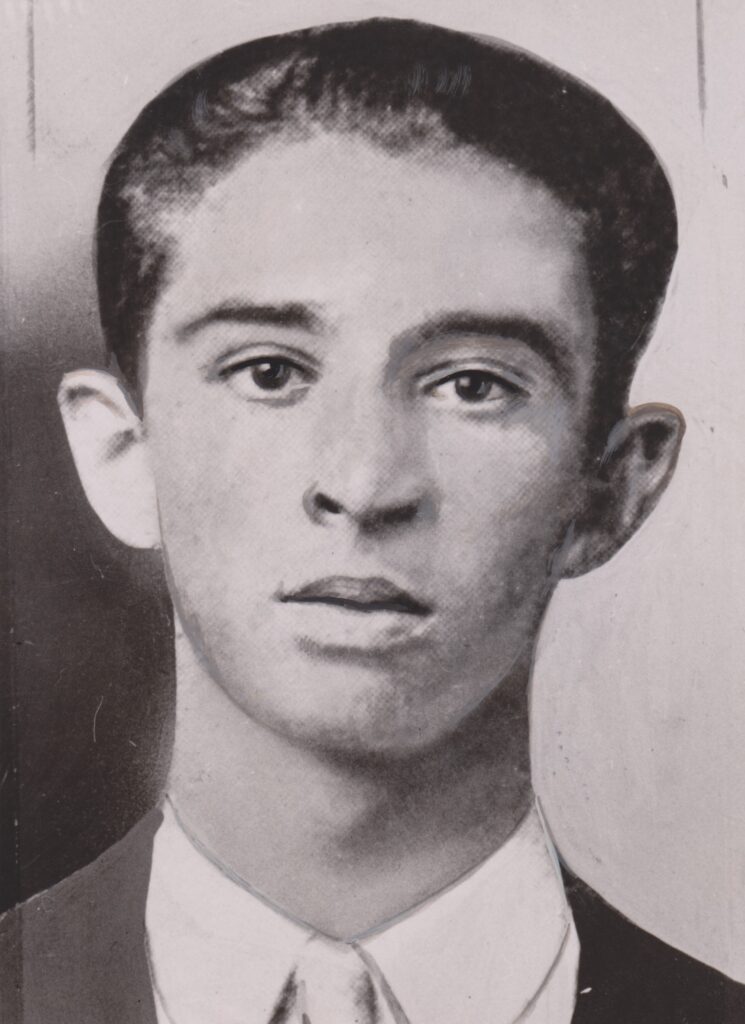
Caption: Al Stern, aka Stein, a 21-year-old suspect in at least eight murders, was the first person of interest police sought in the Dutch Schultz murder investigation. Courtesy of Cipollini Collection
Al Stern, aka Stein, a 21-year-old suspect in at least eight murders, was the first person of interest police sought in the Dutch Schultz murder investigation. Courtesy of Cipollini Collection

Days later, Stern was found dead in a Newark boarding house.

“Stern was in bed,” the Associated Press reported. “His head projected over the headboard. A necktie, knotted tightly about his throat, was tied to an open gas jet.”

The official ruling was suicide, but few believed that. Some thought Stern was a decoy, while others believed he was involved with the Schultz hit and silenced to tie up loose ends. Either way, many suspected mobsters had staged the scene.

Murder Inc. sings

The dead-end Schultz investigation resurfaced in 1940 when the Murder Inc. case exploded in Brooklyn. A string of hitmen turned informants began naming names. Among them were Abe “Kid Twist” Reles and Albert “Tick Tock” Tannenbaum.

Tannenbaum claimed he wasn’t involved in the hit but knew who was. According to his testimony, the team that took out Schultz consisted of Charles “The Bug” Workman, Emanuel “Mendy” Weiss and a getaway driver known only as “Piggy.”

Workman, Tannenbaum said, went into the men’s room and shot Schultz but wasn’t certain who he was shooting. Weiss handled the others. As Weiss fled to the getaway car, Workman doubled back to go through Schultz’s pockets. When he finally exited the restaurant, the car was gone.

Workman escaped on foot and was furious. The hit had gone sideways. During a sit-down with boss Louis “Lepke” Buchalter, Weiss argued that Workman had wasted time and endangered everyone. Lepke sided with Weiss and let it go.

Weiss would later be tried and executed for a separate murder, which left the Schultz hit to fall on Workman.

Indicted in 1941, Workman initially pleaded not guilty but then switched to no contest. He was the only person ever convicted in connection with Schultz’s murder. He served time at Trenton State Prison before being moved to Rahway in 1952.

Charles Workman, by all accounts, was a model inmate. He kept quiet, never testified and never flipped. After 23 years behind bars, he was granted parole in 1964.

Charlie “The Bug” Workman, pictured here following his release from prison in 1964. Courtesy Cipollini Collection

He hoped to slip out of prison quietly, but the press had other ideas. On March 10, 1964, as he walked out of Rahway and approached a waiting blue Thunderbird, he was greeted by a wall of photographers, reporters and onlookers.

“Charlie the Bug walked 10 steps through a crowd of newsmen to the waiting car without smiling, turning his head or talking,” a reporter noted.

Workman lived out his remaining years quietly, surrounded by family. He died in 1979.

Unanswered questions

Despite the testimonies and convictions, several aspects of the Schultz hit remain unsettled.

The identity of the getaway driver — “Piggy” — was never confirmed. In his 1951 book Murder, Inc., prosecutor Burton Turkus wrote, “Rumors have it he is still alive and that he has climbed quite a way up the gangland social ladder.”

Later accounts floated the name Seymour Schechter, said to have been tortured and killed to keep quiet. But no definitive evidence ties him to the case.

The ballistics report also raises questions. Schultz was killed by a .45-caliber bullet, but his associates were shot with .38s. The hitmen reportedly used .38s and possibly a sawed-off shotgun. But Schultz’s men were armed with .45s and fired back.

Could Schultz have been shot by one of his own? Rick Porrello, writing for AmericanMafia.com, finds this plausible. He also questions the oft-repeated story that Workman rifled through Schultz’s wallet, leading Weiss to abandon him.

“First, how could he possibly have had the time with Landau and Rosenkrantz in pursuit?” Porrello writes. “Second, in the ambulance en route to Newark City Hospital, Schultz pulled out his wallet — which contained $725 — and handed it to Bernard Allberg, an attendant.”

Schultz reportedly gave Allberg another $300 at the hospital. Both amounts were later turned over to the police.

Schultz’s death also triggered a treasure hunt that has recently received renewed attention. Some believe that his final words contained clues to an alleged cache of money and other valuables he may have hidden before death.

Christian Cipollini is an organized crime historian and the award-winning author and creator of the comic book series LUCKY, based on the true story of Charles “Lucky” Luciano.
Mathew Bowyer, bookie for baseball star Shohei Ohtani’s interpreter, vows to turn his life around

As he prepared to begin serving a federal prison sentence for booking sports bets illegally, Mathew Bowyer pledged never to engage again in unlawful activity.

A 50-year-old Southern California resident, Bowyer said that he is focused on post-prison goals, including serving as a motivational speaker, cautioning others about the downside of illegal gambling.

In a telephone interview last month, Bowyer said he is becoming a “better version” of himself, vowing he will never do anything illegal “for the rest of my life.”

That personal pledge includes turning away from illegal bookmaking, a livelihood that, though unlawful, provided his family with a lavish lifestyle. This went on for years, bolstered by a large client base, including major bettors who, in some cases, lost millions at a time. According to a statement from the U.S. Attorney’s Office, Bowyer’s unlicensed gambling business was in operation “for at least five years until October 2023 and at times had more than 700 bettors.”

One of those multimillion-dollar bettors was Ippei Mizuhara, the Japanese interpreter for Los Angeles Dodgers star Shohei Ohtani.

Behind bars

Last year, Bowyer pleaded guilty to running an illegal gambling business, money laundering and filing a false tax return, the Associated Press reported. He also was ordered to pay the IRS more than $1.6 million in restitution. According to his lawyer, the IRS payment has been made. He also faces two years of supervised release.

The guilty plea resulted from his operation of what the government said was “an unlicensed and illegal bookmaking business that focused on sports betting and violated a California law that prohibits bookmaking.”

After the plea, Bowyer was sentenced to 12 months and one day in prison, beginning on October 10, at the Federal Correctional Institution in Lompoc, California. That low-security prison is near the Pacific Ocean, about 3 1/2 hours north of Bowyer’s home in San Juan Capistrano.

Mizuhara also was imprisoned in connection with Bowyer’s sports-betting operation. This summer, the 40-year-old interpreter began serving a sentence of four years and nine months at a low-security federal prison in Pennsylvania. Mizuhara was convicted of bank and tax fraud after stealing almost $17 million from Ohtani, the AP reported. Major League Baseball has cleared Ohtani of wrongdoing, indicating he was a victim of fraud.

Shohei Ohtani, left, met interpreter Ippei Mizuhara after he was drafted by the Nippon-Ham Fighters, a Japanese baseball team. When the Los Angeles Angels signed Ohtani, they brought Mizuhara along as his interpreter. AP / Ashley Landis

The collapse of Bowyer’s sport-betting operation ended his previous high-roller lifestyle. A self-described degenerate gambler and now a convicted felon, Bowyer said he has been banned from every casino in the United States. The most prominent of these are on the Las Vegas Strip, where casino hosts once pampered Bowyer, expecting him to gamble, and potentially lose, large sums.

Nevada authorities took note of his visits to Las Vegas. As ESPN reported, state gaming regulators last spring issued a $10.5 million fine against Resorts World Las Vegas on the Strip over allegations of illegal gambling, many of which centered on Bowyer.

“The Nevada Gaming Control Board alleged that Resorts World allowed Bowyer to play 80 separate days over about 15 months, while repeatedly failing to verify his source of funding,” ESPN reported. “Bowyer lost over $6.6 million during that time, while the casino extended gifts, discounts and flights on its private jet, according to the complaint.”

In his 2025 first-person book Recalibrate, Bowyer said he placed, during decades of fast living and high-stakes wagering, more than $1 billion in bets globally, some at casino gaming tables, some with bookmakers.

“It didn’t matter whether it was sports or table games, I loved to gamble,” he wrote in Recalibrate.

Before heading off to prison, he told The Mob Museum that those days are over. “I’m just a better version of myself,” he said.

Generational talent

Recently, as the Mizuhara scandal exploded, Bowyer was thrust onto newspaper front pages when it became evident he was booking millions of dollars in bets illegally for Ohtani’s interpreter.

Over the decades, including currently, stories have popped up about people in the sports world being caught betting, not only damaging their own reputations but threatening to undermine the integrity of the games.

Even so, the Mizuhara episode especially raised eyebrows, considering the staggering amounts he was betting. The Mizuhara story also captured the public’s attention because of Ohtani’s status as a generational talent and global ambassador for Major League Baseball.

Currently, Ohtani is a pitcher and designated hitter for the defending World Series-champion Dodgers, having relocated across town from his previous team, the Los Angeles Angels, at the end of the 2023 season. As a key component of the Dodgers’ championship run in 2024, Ohtani won his third MVP award, becoming the first player ever to hit 50 home runs while stealing 50 bases in a single season. As the 2025 season concluded, Ohtani was among the National League leaders in home runs and runs batted in.

To this day, Bowyer’s home office includes an Angels framed Ohtani jersey hanging on the wall. As a big-time bookmaker, Bowyer fraternized with athletes, celebrities and other major gamblers who valued the personal relationship and discrete betting action that underground bookmakers can provide, allowing huge wagers on credit and without tax implications.

A former commodities trader with polished people skills, Bowyer met Mizuhara while playing Texas hold ’em poker at a Southern California hotel after a baseball game between the Angels and San Diego Padres. Not only were players involved in the private poker game, he said, but also coaches and “random friends of the team.”

“Ippei happen to be there, and that’s when we started the relationship,” Bowyer said. The interpreter was betting with the use of an online app and then struck up a conversation with Bowyer.  “It just parlayed into a relationship from there,” Bowyer said.

That relationship took both down an unlawful gambling path together. According to the U.S. Attorney’s Office, Mizuhara placed at least 19,000 bets with Bowyer’s illegal gambling business from September 2021 to January 2024 “through one of the betting websites Bowyer used for it.”

“During this period, Mizuhara had total winning bets of at least $142,256,769 and total losing bets of at least $182,935,206, leaving Mizuhara owing approximately $40,678,436,” the U.S. Attorney’s Office said in a statement.

The government said Bowyer on a regular basis would increase Mizuhara’s betting limits.

“From February 2022 to January 2024, Bowyer directed Mizuhara to make payments of at least $16.25 million to Bowyer-controlled bank accounts, all of which were proceeds of Bowyer’s illegal gambling business,” the statement said.

Ultimately, Mizuhara admitted to stealing nearly $17 million from Ohtani “to pay off gambling debts and failing to pay tax on his gambling income,” according to the government.

Mizuhara went as far as impersonating Ohtani to steal money from him. According to federal investigators, Ohtani himself was not involved in any of Mizuhara’s gambling. Joe Glorioso/All-Pro Reels for Washington Times Sports / CC BY-SA 2.0

Regarding speculation that Ohtani might have been a bettor himself, possibly using Mizuhara for cover, Bowyer said he never spoke with them about it but added that Ohtani has not been known to be a gambler “at all on any level.”

“The fact that he’s never been known to gamble on anything with anyone kind of tells me that he doesn’t gamble,” Bowyer said.

However, some of Bowyer’s clients were athletes, creating the kind of bond that leads to suspicion that games could be fixed. Bowyer said he wasn’t aware of any player betting on his own team’s games or rigging any of them. He added that the integrity of the game is important to him. “We want to watch a game and know that there’s nothing going on,” Bowyer said.

‘Make better decisions’

One priority now for Bowyer is figuring out how to generate income after being released from prison. In addition to wanting to write books and become a motivational speaker, he is meeting with filmmakers on different projects. Bowyer also is active on social media sites such as Instagram and has a website, mathewbowyer.com, with information about his personal experiences.

Over the telephone, he said his goal is to provide “the best life” for his family, including his wife, Nicole, and five children.

Bowyer said his wife has “been through hell and back,” including being handcuffed during investigations into her husband’s gambling activities and facing state scrutiny as a Las Vegas casino host, also related to her husband’s endeavors.

“I want to continue to give her a good lifestyle for being loyal and being a hard-working woman,” Bowyer said.

Getting set financially again won’t require doing anything illegal, he said.

“That being said, it’s going to be a dog fight because it’s not only that I paid $1.7 million already in restitution, but we’re looking at over almost $10 million in taxes and all kinds of things I have to overcome, so it’s a lot of money,” he said.

Going forward, Bowyer is remaining positive.

“I’m trying to be strong-minded and show my kids and everybody that when you have adversity and you make poor choices, you’ve got to be accountable and you have to learn to look yourself in the mirror and appreciate who you are and what you’ve done and make better decisions,” he said. “It’s not what you do in life. It’s what you do after you make these mistakes that matters most.”

Larry Henry is a veteran print and broadcast journalist. He served as press secretary for Nevada Governor Bob Miller and was political editor at the Las Vegas Sun and managing editor at KFSM-TV, the CBS affiliate in Northwest Arkansas. Today, he is a senior reporter for Gambling.com.

The long con of underworld grifter ‘Count’ Victor Lustig

The sensational exploits of Depression-era con artist Victor Lustig are now underworld legend. But many oft-told tales overlook his surprising involvement with key criminal figures and events in 1930s gangland.

Officially, his name was Robert V. Miller — at least according to law enforcement. But even that is uncertain. His birthplace and date are murky, although most agree he was born in Bohemia around 1890. A scar on his left cheek — allegedly from a jealous husband — was one of the few consistent features across his many disguises.

Throughout his criminal career, Lustig used at least 45 aliases, including Robert Duvall, Robert Wagner, Bert Lustig and, most famously, “Count Lustig.” Fluent in five languages, he refined his trade under the tutelage of notorious con men such as gambler Nicky Arnstein, and eventually settled in the United States after World War I.

Under the alias “Wagner,” Lustig’s 1930 mugshot appeared in the pages of the Buffalo Police Department’s Higgin’s Pocket Gallery of Criminals. Courtesy of Cipollini Collection

Friends in low places

From the early 1920s through the Great Depression, Lustig pulled scams from New York to Kansas City while quietly maintaining a family in the Midwest and conducting affairs abroad. He was frequently arrested but usually talked or bribed his way out of trouble. His criminal network included racketeering gambler Arnold Rothstein, bootlegger Waxey Gordon and St. Valentine’s Day Massacre suspect Gus Winkeler.

In a 1929 incident, U.S. and French agents arrested Lustig and associate William MacSherry for attempting to sell fake stocks. During questioning, the pair claimed to be members of Al Capone’s gang, an assertion quickly denied. When asked by reporters, Capone’s associate Jake Guzik said, “Never heard of them.” Other unnamed gang members echoed the sentiment.

Though best remembered for purportedly swindling Capone (and then returning the money) and “selling” the Eiffel Tower — twice — it was his infamous “money box” scam, in which he sold a phony currency “duplicator,” that cemented his legend. Ultimately, it was counterfeiting that brought him down in 1935. The exposés that followed — many likely fueled by Lustig himself — blurred fact and fiction. Even today, many aspects of his underworld ties remain obscured.

The original dopemen

On July 15, 1930, federal agents raided Manhattan’s President Hotel looking for gangster Jack “Legs” Diamond. They found Diamond meeting with Lustig and an associate, Abraham Leimas. All three were arrested but released shortly after due to lack of witness identification.

That meeting turned out to be a prelude to something bigger. A month later, Diamond left for Europe, allegedly to oversee a $250,000 investment in a liquor and narcotics venture. A Justice Department memo placed Lustig aboard a White Star Line vessel alongside several suspected underworld figures: Charles Green, alias Entratta; Salvatore Arcidiaco, a man identified as Lucania (likely Lucky Luciano); and another known only as Traeger. Aside from Entratta, who wasn’t on the mission, the others — including Lustig — arrived safely in Antwerp.

This long-lost mugshot of Lucky Luciano was taken in Florida six months before his Europe trip with Lustig and Diamond. Miami Daily News

Diamond took a separate ship but was arrested in Germany and sent back to Philadelphia. On October 12, Diamond was shot four times at New York’s Monticello Hotel in a botched assassination attempt.

Suspicions flew. Some blamed Capone, while others pointed to remnants of Arnold Rothstein’s faction (specifically traffickers Oscar Kirshon and Charles Cook). Nearly all theories circled back to cocaine, morphine and money.

Diamond stayed quiet while recovering, but his mistress, Kiki Roberts, did not. She told police that Lustig and Arcidiaco had met with him earlier that day. The pair, along with Diamond’s rival, Dutch Schultz, were briefly detained. Schultz was released quickly, but Lustig and Arcidiaco admitted to being in Europe.

Lustig claimed he had been in Paris when Diamond was arrested and believed the operation had been canceled. Arcidiaco gave vague answers about a failed business venture. Letters later showed Diamond begging Lustig for financial and legal aid. Records confirm that Luciano registered in Antwerp but was never questioned. Still, his name surfaced repeatedly in the press as a possible suspect in the shooting.

On July 15, 1930, Lustig, right, showed up in a police lineup with Jack “Legs” Diamond, left, and Abraham Leimas. Courtesy of Cipollini Collection

Double-crossed by a lover

By 1935 Lustig had accumulated 38 arrests on his record. He also had leveraged his underworld network into his most audacious scam yet: counterfeiting. Allegedly through Capone’s affiliation, Lustig partnered with William Watts, a Nebraskan druggist who crafted currency printing plates. Lustig handled the distribution channels. But the high-quality fake bills soon drew the attention of federal agents.

Lustig’s criminal network was responsible for his rise but also contributed to his fall. One of his connections was Mae Scheible, Pittsburgh’s infamous “Number One Madam,” who ran a high-end brothel in the city’s Oakland district. Pursued by authorities in 1934, she relocated her operation and some of her workers to New York.

Scheible and Lustig had history. He once conned her into buying fake bonds, only to return the money later. Despite the grift, they remained intimately connected. But according to former Secret Service agent Frank Seckler, things soured in 1935 when Lustig borrowed her car to take another woman out (some suggest it was Watts’s wife). Not long after, authorities received an anonymous tip. Another version claims someone mailed a locker key with instructions.

“We always thought Mae Scheible, burning with jealousy, was our informant,” Seckler wrote in 1951.

Agents staked out Scheible’s New York apartment and eventually arrested Lustig nearby. Although he had nothing incriminating on him, the key led to a Times Square subway locker containing printing plates and $50,000 in fake bills.

Lustig escaped federal custody in New York on September 1 by tying bedsheets together and climbing out a third-story window. Authorities suspected that one of Scheible’s associates helped him escape.

On the run for weeks, agents tracked him using wiretaps on Scheible’s phone and an unnamed informer. They traced Lustig to Pittsburgh’s Northside, where he was seen leaving Lane’s Stag Hotel on September 28. He entered a chauffeured car and was arrested a block away.

“His pointed mustache… shaved off, and with adhesive tape cleverly drawn over a livid cheek scar to make him appear smooth faced,” The Pittsburgh Press reported. “Lustig surrendered with a show of violence, shrugging his shoulders and remarking: ‘Well, boys, here I am.’”

He was briefly held in Allegheny County Jail before being extradited to New York.

This is a Department of Justice notice sent to law enforcement agencies nationwide following Lustig’s brazen escape from federal custody in 1935. Courtesy of Cipollini Collection

The Count’s legacy

Lustig and Watts went to trial in December 1935. Lustig refused to name accomplices, but Watts turned state’s witness.

“To hell with it, let’s get it over with,” Lustig told his lawyer. “All I wanted was to see if that rat would really squeal.”

Even his attorney, Charles White, gave up: “This man is a psychopathic case.”

Watts got 10 years. Lustig received 20 and was sent to Alcatraz.

While Lustig faded from headlines, Scheible remained tied to ongoing vice cases. In 1936, she was convicted under the Mann Act and sentenced to four years but jumped bail. She later surrendered in San Francisco. The same year, Luciano was convicted in a sensationalized vice trial and sentenced to 30 to 50 years. Decades later, some — including Seckler — suggested that Lustig, Scheible and Luciano together had been the prostitution racket’s true masterminds.

While in Alcatraz, Lustig filed more than 1,000 medical complaints. Most were ignored — until his health visibly declined. He was transferred to the federal hospital in Springfield, Missouri, and died on March 11, 1947, of pneumonia related to a brain abscess. His death wasn’t publicly confirmed until 1949, when his brother, Emil, appeared on counterfeiting charges in a New Jersey courtroom.

“Do you have a brother known as ‘The Count,’ a notorious swindler?” the judge asked.

“Yes,” Emil replied. “His name was Victor. He was my only brother.”

Agents told the New York Assistant U.S. Attorney’s office, “We do not know how many bills still may be in circulation. We have picked up $2,340,000 he and his agents made and passed.”

The Count’s storied escapades re-emerged in 1950s pulpy crime magazines and tabloids, followed by biographies published in the decades thereafter. However, contemporary efforts to uncover his origins — birthplace, schooling, family, etc. — have yielded little results.

Today Lustig remains what he always was: a charming phantom of crime, wrapped in rumor and illusion.

Christian Cipollini is an organized crime historian and the award-winning author and creator of the comic book series LUCKY, based on the true story of Charles “Lucky” Luciano.