





Las Vegas Mob classic ‘Casino’ celebrates 30th anniversary
Screenwriter Nicholas Pileggi reflects on movie’s impact and changes in Las Vegas since then

Three decades after Casino was released in November 1995, screenwriter Nicholas Pileggi says the nearly three-hour film portrays the end of an era in Las Vegas when mobsters controlled casinos.
That era ran from the 1940s into the ’80s, but the movie focuses on a period during the ’70s and early ’80s when Chicago’s Frank “Lefty” Rosenthal and Tony “The Ant” Spilotro were active in Las Vegas.
During a recent telephone interview, Pileggi said the movie and his related book, Casino: Love and Honor in Las Vegas, are “really about the end of the Mob” in Las Vegas and “the taking over of Las Vegas by corporate interests.” The corporate takeover helped push the Mob out of casino front offices and the count rooms where they stole, or “skimmed,” untaxed gambling revenue, Pileggi said.
Dividing his time between New York City and Los Angeles, the 92-year-old author and screenwriter continues to produce screenplays about organized crime, including The Alto Knights, a feature film released in March 2025. Decades earlier, Pileggi, a veteran Associated Press reporter and magazine writer, cemented his reputation in Hollywood by teaming with director Martin Scorsese to co-author two iconic movies, New York-based Goodfellas (from Pileggi’s 1985 book Wiseguy) and Casino.
Fabulous town
This fall, Pileggi’s Las Vegas book and the related movie are celebrating their 30th anniversaries. The book was published in October 1995. The movie came out a month later.
The book is a nonfiction account of Rosenthal’s troubled relationship with this wife, Geri, a former Las Vegas showgirl from Southern California, and her romantic involvement with Spilotro, the Chicago Outfit’s street enforcer in Las Vegas at the time. The movie follows the same general plot.
During their younger years, Frank Rosenthal and Spilotro were friends in Chicago. As time passed, they ended up together again in Las Vegas, where Rosenthal, a sports handicapper and Mob associate, controlled four Argent Corporation casinos for Midwestern organized crime families that benefited from skimmed gaming revenue. The most notable of those casinos was the Stardust, where Rosenthal built a popular sportsbook that also served as the setting for a celebrity talk show he hosted, featuring guests such as Frank Sinatra.
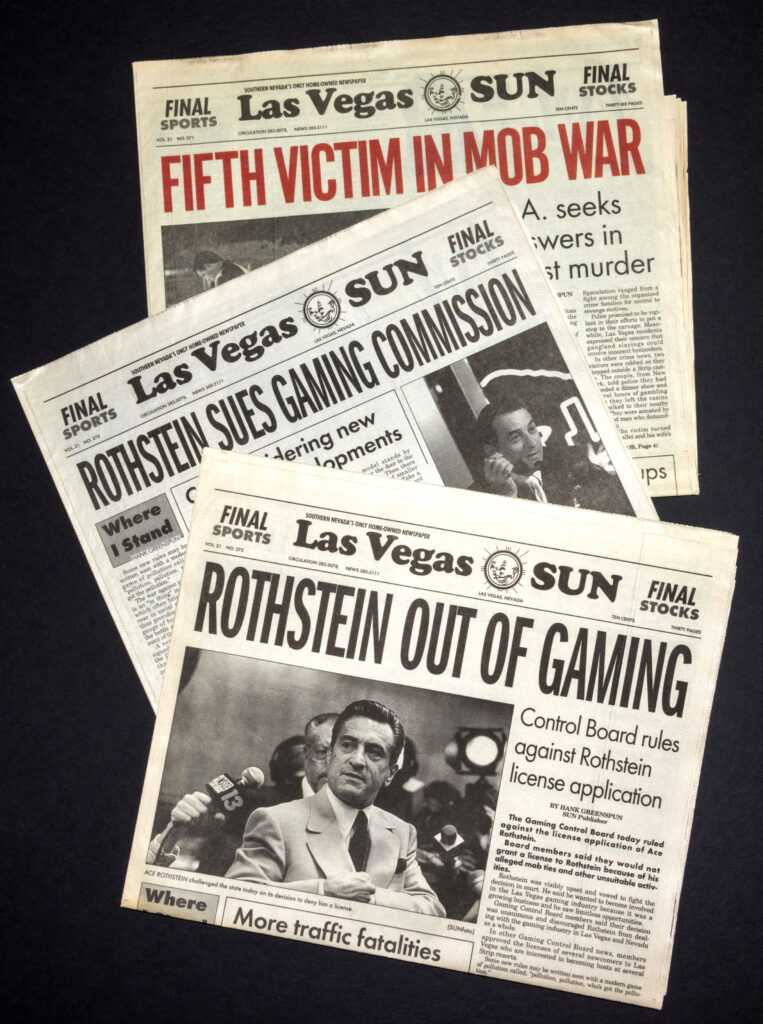
The Rosenthals and Spilotro have died, but as Pileggi’s book and the movie depict, they were well known at one time in the Southern Nevada underworld. Much later, the Las Vegas Review-Journal’s Jane Ann Morrison reported that the Rosenthals had been federal informants, though that was not known publicly during their heyday when the married couple had a home on the golf course at the gated Las Vegas Country Club.
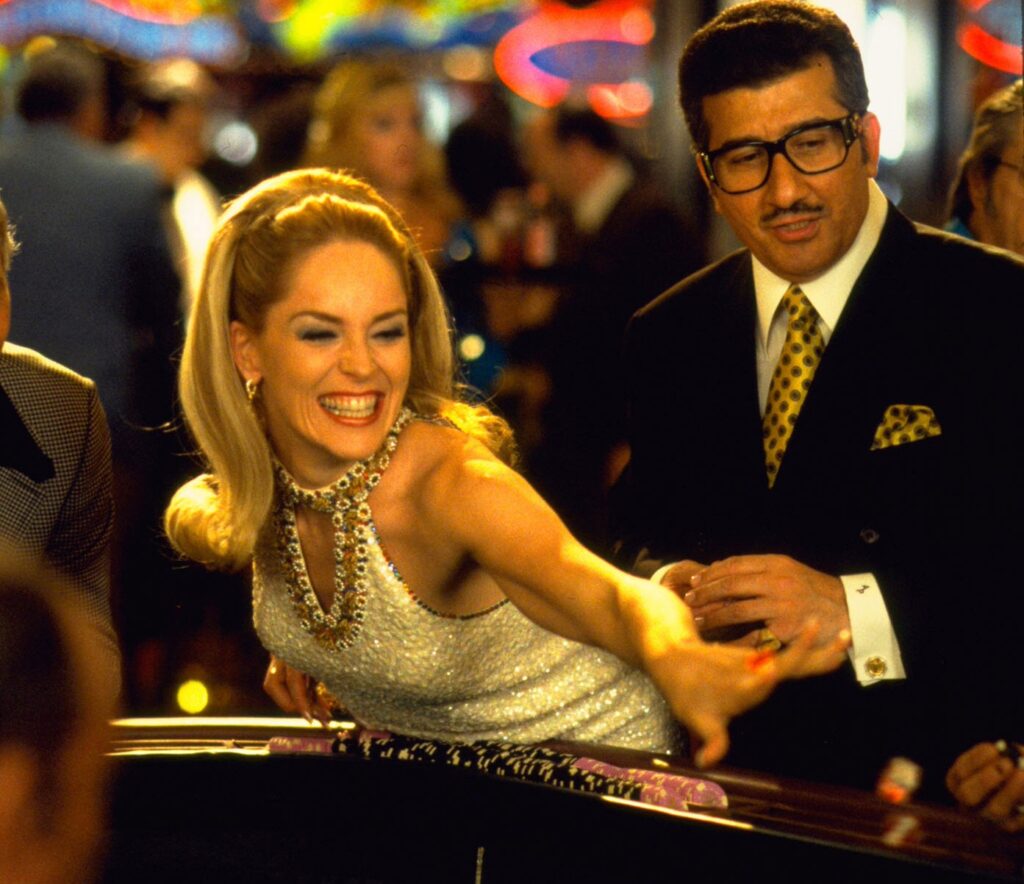
In the movie, the characters’ names and the name of the Stardust were changed to prevent possible legal action, Pileggi said. As a journalistic account, the book could use real names, but the movie is a fictional version that might have led to lawsuits if real names were used, he said. In the movie, Robert De Niro portrays a character based on Rosenthal, with Sharon Stone as his wife. Joe Pesci plays the Spilotro-inspired character. The Stardust was renamed the Tangiers.
Reflecting on the ways Las Vegas has changed, Pileggi said the city now is a “fabulous town” but seems less affordable for the working class. For years, visitors on a tight budget could afford a gambling trip to Las Vegas because food and lodging were inexpensive. But changes began to take place after reclusive billionaire Howard Hughes and major corporations moved in, buying up casino properties, Pileggi said.
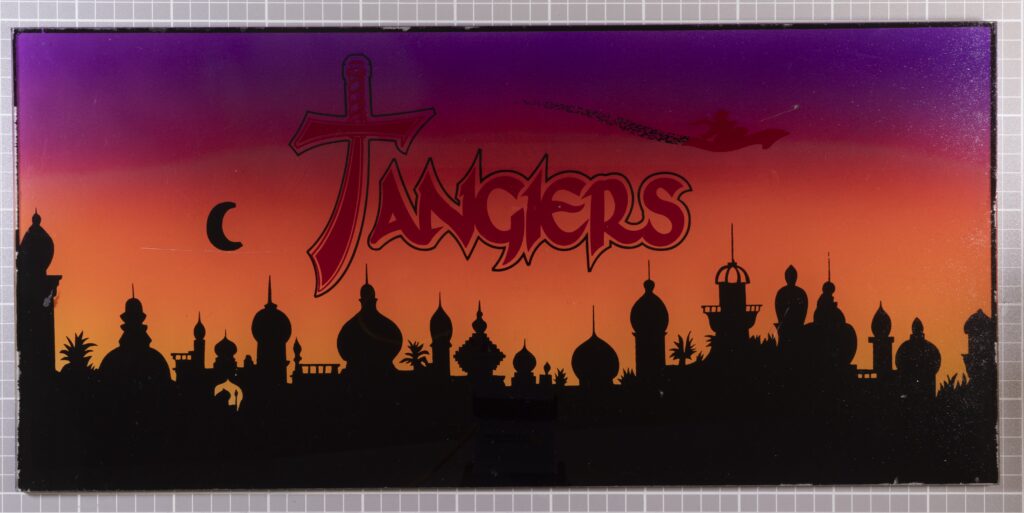
Other changes have occurred since then. In 1989, casino developer Steve Wynn opened the Mirage hotel-casino on the Strip, sparking a boom in megaresort construction. That led to the demolition of most Mob-era resorts along the Strip, including the Desert Inn, Riviera, Sands, Stardust, Dunes, Tropicana and Hacienda. In June 2021, Resorts World Las Vegas opened at the former site of the Stardust.
Additional construction also is underway. Where the Tropicana once stood, a Major League Baseball stadium is expected to open in time for the Athletics to relocate from their temporary home in Sacramento to begin the 2028 season. The Mirage is being replaced by a Hard Rock resort now under construction.
‘True magic’
According to Dan Moldea, a Washington, D.C.-based journalist and author, Pileggi took the right approach in the book by focusing in part on Geri Rosenthal. It helped that Frank Rosenthal cooperated with Pileggi for the book, Moldea said.
In a recent post on his Mobology Substack site, Moldea addressed Pileggi’s handling of the story. “In my opinion,” Moldea wrote, “that decision to feature and fully develop the character of Geri Rosenthal, along with Lefty Rosenthal’s cooperation, brought true magic to the content of Nick’s work.”
Moldea added that the Geri Rosenthal character in the movie was “beautifully acted by Sharon Stone, who won a Golden Globe Award for Best Actress, as well as an Oscar nomination.”
“Several outstanding journalists investigated the Stardust skimming caper,” Moldea wrote, “but it was Nick Pileggi who earned the right to call it his own.”
Pileggi said the romantic angle is what attracted him to write the book in the first place. “You had a story beyond just a plain boring story about the casino industry,” he said.
Another thing that made the story interesting is that Rosenthal survived a car bombing in Las Vegas, Pileggi said. The book and movie open with the bombing and then backtrack to fill in events leading up to that incident. As it turns out, Rosenthal left Las Vegas not long after the 1982 car bombing, which occurred only steps from the front door of a Tony Roma’s restaurant on East Sahara Avenue, later the site of a Hustler Hollywood adult novelty store. For the movie, that scene was filmed downtown outside the Main Street Station, not at the restaurant parking lot on Sahara where it actually happened.
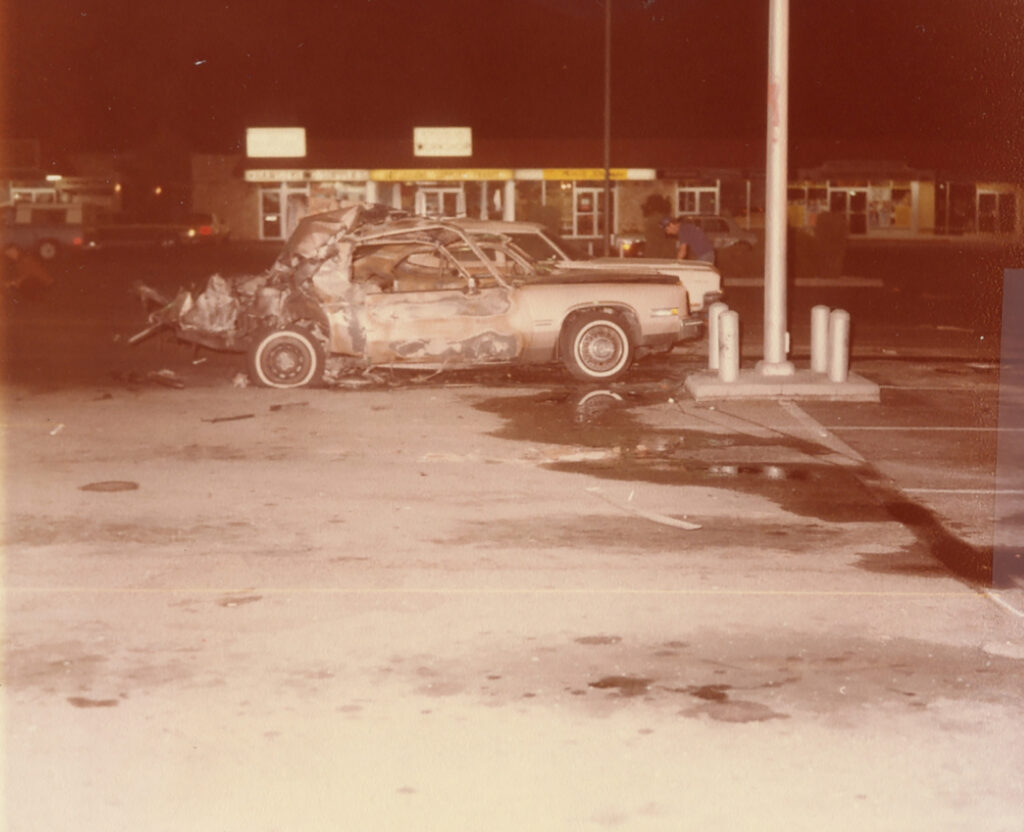
The bombing has never been solved. While some people suspect Spilotro was involved, Pileggi said Midwestern mobsters possibly could have learned Rosenthal was an informant and, because of that, attempted to kill him. Criminal charges related to Las Vegas casino skimming later resulted in several mobsters from the Midwest being convicted and sent to prison. Rosenthal was not among those charged or convicted. In 2008, he died in South Florida of natural causes at age 79.
Years earlier, during the 1980s, Geri Rosenthal and Spilotro died in their 40s, her in Los Angeles of an apparent overdose, him from a Mob beating in the Chicago area.
The Mob’s downfall in Las Vegas halted the illegal practice of sending skimmed gaming revenue to mobsters in places such as Kansas City. Pileggi said Mob bosses had been using that skimmed money to pay themselves a dividend on secret loans for their hidden ownership in Las Vegas casinos.
“That was basically their dividend check for the original cash investment,” Pileggi said.
In the end, as the book and movie indicate, criminals like Rosenthal and Spilotro were too publicly brazen in Las Vegas, ending their lucrative control of casinos and streets rackets.
“It would be the last time street guys would ever be given anything that valuable again,” Pileggi wrote.
Larry Henry is a veteran print and broadcast journalist. He served as press secretary for Nevada Governor Bob Miller and was political editor at the Las Vegas Sun and managing editor at KFSM-TV, the CBS affiliate in Northwest Arkansas. Today, he is a senior reporter for Gambling.com.
Feedback or questions? Email blog@themobmuseum.org