




‘Beer Baron’ Dutch Schultz gunned down 90 years ago
Mobster’s deathbed ramblings one of several mysteries left behind

On October 23, 1935, Dutch Schultz was shot in a Newark restaurant along with three of his associates. In the hours that followed, the four men succumbed to their wounds, one by one. Schultz, the last to go, held on until the next day. In that time, he muttered a string of strange, rambling remarks. Much of it was incoherent, but a few lines drew attention from detectives at his bedside. Schultz’s lifetime of crime had come to a dramatic end.
Becoming the ‘Dutchman’
Born in the Bronx in 1902 to Russian-Jewish immigrants, Arthur Flegenheimer began his life of crime early. After a stint in prison for burglary, he aligned himself with Arnold Rothstein’s crew and made a name for himself during Prohibition. In 1925, the Bronx Sheriff Edward Flynn deputized him, which didn’t last long. His badge was revoked within six months.
Shortly after, Flegenheimer adopted the alias “Dutch Schultz” and emerged as a violent, fast-rising figure in New York’s underworld. Bootlegging was his first major racket, earning him the nickname “Beer Baron.” After Prohibition ended, he moved into the profitable Harlem numbers game.
His high-profile feuds with Jack “Legs” Diamond and Stephanie St. Clair became part of his legend. However, Schultz’s increasingly reckless disregard for both law enforcement and Mob protocol eventually would bring about his downfall.
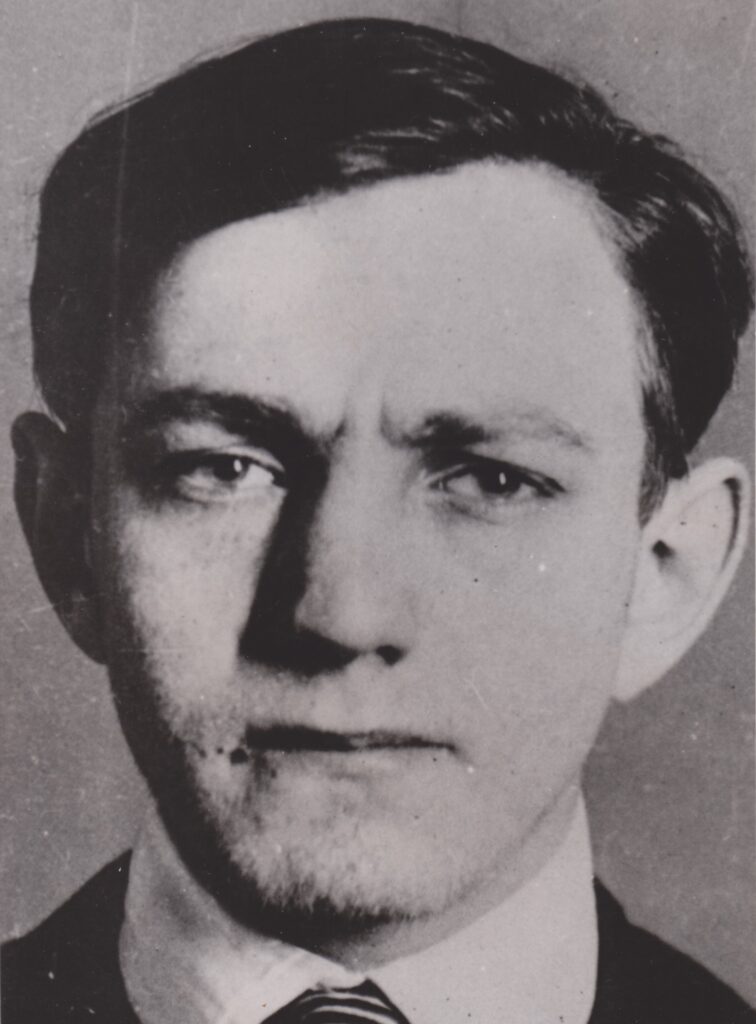
By the mid-1930s, Schultz’s empire was crumbling under law enforcement scrutiny. He set his sights on eliminating Thomas Dewey, the up-and-coming special prosecutor aggressively going after organized crime. But the Commission — the Mob’s ruling body — voted against it. Killing a prosecutor was bad for business.
Schultz made it clear he would defy that order and kill Dewey anyway, which sealed his fate. The Commission voted to eliminate Schultz before he could bring the heat down on everyone.
Dinner and gunfire
On the night of October 23, 1935, Schultz and his crew were at the Palace Chop House in Newark, New Jersey. The bar area was relatively busy with about a dozen patrons, but Schultz and his men were in the back room. As fate would have it, he stepped into the restroom just before the shooting began.
At least two gunmen entered the restaurant and opened fire. Three of Schultz’s top men — Otto Berman, Abe Landau (misidentified in some papers as Leo Frank) and Bernard “Lulu” Rosenkrantz — were hit. Both sides exchanged gunfire, although accounts vary on who shot whom and when.
Schultz was shot in the restroom and staggered out, collapsing on the floor. All four men were taken to the hospital, while the shooters disappeared into the night.
Meanwhile, across the river in Manhattan, gunmen targeted two more Schultz associates. Martin Krompier and Sam Gold were tracked down in the theater district and shot. Gold recovered quickly, while Krompier suffered multiple surgeries. Both survived.
Back in Newark, police found Schultz’s crew unhelpful in piecing together what happened. Clinging to life longer than his associates, Schultz delivered a strange final performance.

The deathbed transcript
On October 24, police stenographer F.J. Long arrived at the hospital. Schultz was slipping in and out of lucidity as Sergeant Luke Conlon tried to question him. Their exchange, recorded between 4 and 6 p.m., meandered between surreal and tragic:
Conlon: Who shot you?
Schultz: The boss himself.
Conlon: He did?
Schultz: Yes, I don’t know.
Conlon: What did he shoot you for?
Schultz: I showed him, boss. Did you hear him meet me? An appointment appeal stuck. All right, Mother!
Conlon: Was it the boss shot you?
Schultz: Who shot me? No one.
Conlon: We will help you.
Schultz: Will you get me up? Okay, I won’t be such a big creep. Oh, mama, I can’t go through with it, please. And then he clips me. Come on.
There were other odd mutterings, including references to “John,” possibly Johnny Torrio, and “the boss,” thought to be Lucky Luciano. Cops latched onto those names, even though both Torrio and Luciano had alibis — they were conveniently out of state at the time.
Before his death, Schultz converted to Catholicism and received last rites from Reverend Cornelius McInerney of Jersey City.
Aftermath and fallout
Unlike the usual chaos that follows a major Mob hit, Schultz’s death didn’t spark a war. There was no power vacuum. Instead, his rivals — and some of his friends — quietly absorbed his empire.
But the media frenzy around his death gave law enforcement a new focus: Lucky Luciano. Whether he was involved in ordering the hit, Luciano now became the face of organized crime. Prosecutors needed a headline, and Luciano fit the bill.
Police also investigated a woman reportedly seen with Schultz earlier that evening. Witnesses said she left the Chop House about 45 minutes before the hit. Investigators suspected she may have been a “finger woman,” sent to confirm Schultz’s location for the killers.
As for the triggermen, Newark cops quickly named a suspect: 21-year-old Albert Stern, aka Stein. He was already linked to multiple killings and was thought to be a rising Mob enforcer.
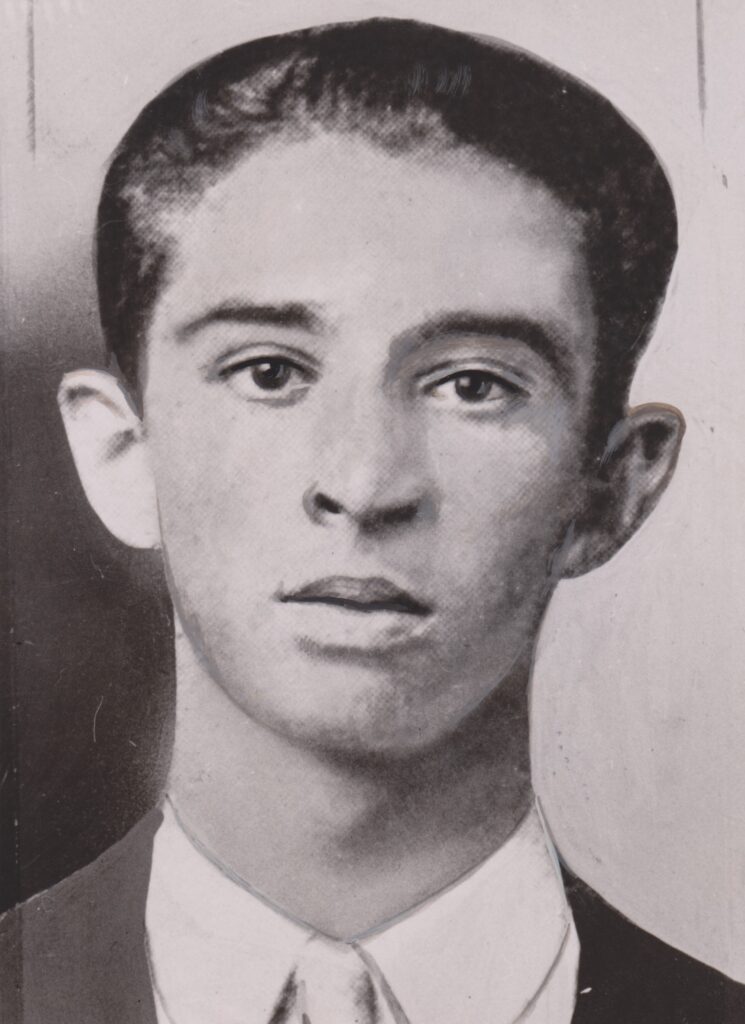
Days later, Stern was found dead in a Newark boarding house.
“Stern was in bed,” the Associated Press reported. “His head projected over the headboard. A necktie, knotted tightly about his throat, was tied to an open gas jet.”
The official ruling was suicide, but few believed that. Some thought Stern was a decoy, while others believed he was involved with the Schultz hit and silenced to tie up loose ends. Either way, many suspected mobsters had staged the scene.
Murder Inc. sings
The dead-end Schultz investigation resurfaced in 1940 when the Murder Inc. case exploded in Brooklyn. A string of hitmen turned informants began naming names. Among them were Abe “Kid Twist” Reles and Albert “Tick Tock” Tannenbaum.
Tannenbaum claimed he wasn’t involved in the hit but knew who was. According to his testimony, the team that took out Schultz consisted of Charles “The Bug” Workman, Emanuel “Mendy” Weiss and a getaway driver known only as “Piggy.”
Workman, Tannenbaum said, went into the men’s room and shot Schultz but wasn’t certain who he was shooting. Weiss handled the others. As Weiss fled to the getaway car, Workman doubled back to go through Schultz’s pockets. When he finally exited the restaurant, the car was gone.
Workman escaped on foot and was furious. The hit had gone sideways. During a sit-down with boss Louis “Lepke” Buchalter, Weiss argued that Workman had wasted time and endangered everyone. Lepke sided with Weiss and let it go.
Weiss would later be tried and executed for a separate murder, which left the Schultz hit to fall on Workman.
Indicted in 1941, Workman initially pleaded not guilty but then switched to no contest. He was the only person ever convicted in connection with Schultz’s murder. He served time at Trenton State Prison before being moved to Rahway in 1952.
Charles Workman, by all accounts, was a model inmate. He kept quiet, never testified and never flipped. After 23 years behind bars, he was granted parole in 1964.
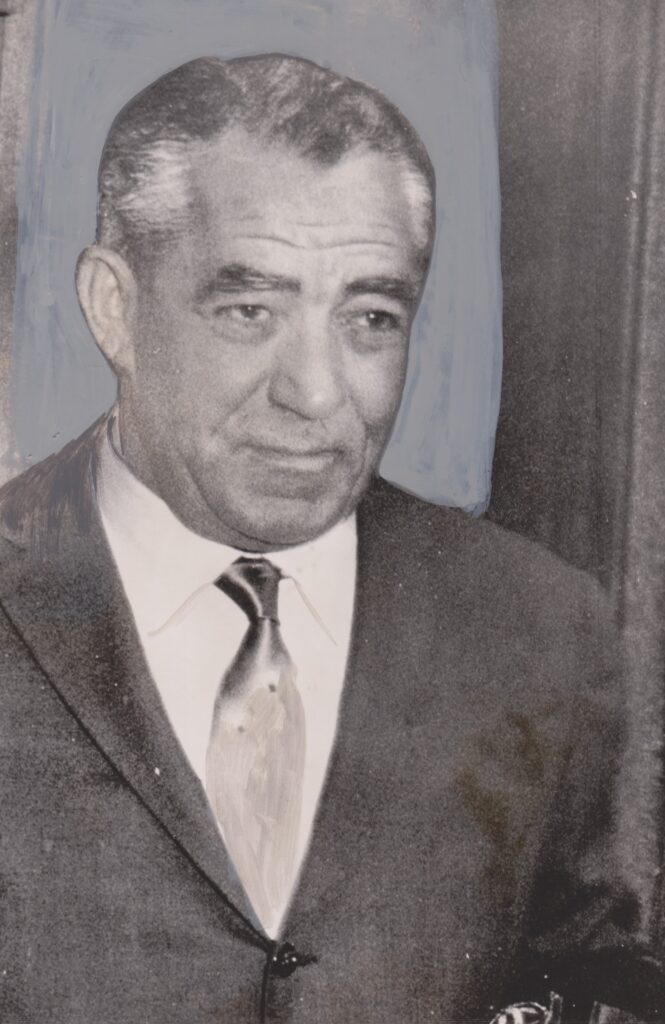
He hoped to slip out of prison quietly, but the press had other ideas. On March 10, 1964, as he walked out of Rahway and approached a waiting blue Thunderbird, he was greeted by a wall of photographers, reporters and onlookers.
“Charlie the Bug walked 10 steps through a crowd of newsmen to the waiting car without smiling, turning his head or talking,” a reporter noted.
Workman lived out his remaining years quietly, surrounded by family. He died in 1979.
Unanswered questions
Despite the testimonies and convictions, several aspects of the Schultz hit remain unsettled.
The identity of the getaway driver — “Piggy” — was never confirmed. In his 1951 book Murder, Inc., prosecutor Burton Turkus wrote, “Rumors have it he is still alive and that he has climbed quite a way up the gangland social ladder.”
Later accounts floated the name Seymour Schechter, said to have been tortured and killed to keep quiet. But no definitive evidence ties him to the case.
The ballistics report also raises questions. Schultz was killed by a .45-caliber bullet, but his associates were shot with .38s. The hitmen reportedly used .38s and possibly a sawed-off shotgun. But Schultz’s men were armed with .45s and fired back.
Could Schultz have been shot by one of his own? Rick Porrello, writing for AmericanMafia.com, finds this plausible. He also questions the oft-repeated story that Workman rifled through Schultz’s wallet, leading Weiss to abandon him.
“First, how could he possibly have had the time with Landau and Rosenkrantz in pursuit?” Porrello writes. “Second, in the ambulance en route to Newark City Hospital, Schultz pulled out his wallet — which contained $725 — and handed it to Bernard Allberg, an attendant.”
Schultz reportedly gave Allberg another $300 at the hospital. Both amounts were later turned over to the police.
Schultz’s death also triggered a treasure hunt that has recently received renewed attention. Some believe that his final words contained clues to an alleged cache of money and other valuables he may have hidden before death.
Christian Cipollini is an organized crime historian and the award-winning author and creator of the comic book series LUCKY, based on the true story of Charles “Lucky” Luciano.
Feedback or questions? Email blog@themobmuseum.org