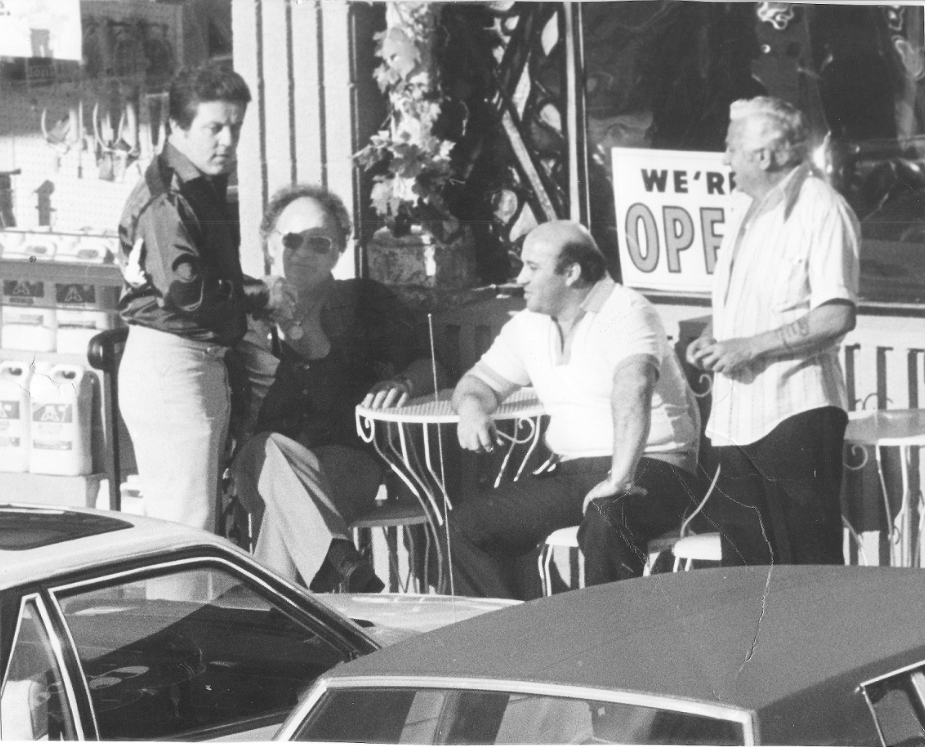


The fall of Salvatore Maranzano, and the rise of the new Mafia

The autocratic reign of self-proclaimed boss of all bosses Salvatore Maranzano came to a bloody end 92 years ago this month.

A progressive faction of underworld gangsters were setting the stage for a violent preemptive strike against the last of two warring criminal overlords. The young turks had already successfully deposed Giuseppe Masseria in April. It was an inside job carried out by members of his inner circle.

Maranzano also had to be dealt with, but the plot took time and careful planning. Maranzano suspected his new minions might contemplate a coup against him, and thus laid down secret plans of his own. But before he could execute the plan, his enemies struck first. On the afternoon of September 10, 1931, a group of between four and six men (witness and informant accounts vary) entered the office building at 230 Park Avenue in Manhattan. They ascended to the ninth-floor office suite of Eagle Building Corporation, the Maranzano headquarters. The assassins entered the waiting area, brandished badges to the secretary, and forced the nine other waiting room guests against a wall. Upon entering Maranzano’s office, a melee ensued. Maranzano’s throat was slashed and his body riddled with bullets. The killers raced to the stairwell and into the history books of great gangland mysteries.

The backstory

Salvatore Maranzano emigrated from the Castellamare del Golfo region of Sicily, settling first in Buffalo, New York, sometime around 1925. He had already been aligned with other Castellammarese Mafiosi living in New York and had every intention of expanding his own power over the Mafia-controlled rackets. By the latter 1920s, he had moved his wife and children to Brooklyn, set up an office in Manhattan and earned a reputation as a Mob power player, particularly in the bootlegging business.

However, that was merely the beginning, because Maranzano had been executing plans to extend his reach into a realm long held by Manhattan’s other big boss, Giuseppe Masseria. Joe the Boss, as he was known around the city, enjoyed a reputation of being both loved and hated, and also earned references to being New York’s version of Chicago’s Al Capone. In fact, Masseria and Capone were in alliance, which isn’t surprising for numerous reasons, including having particular men in the former’s ranks. Some of Joe the Boss’s strongarms, bodyguards and confidants were old friends of Capone dating back to their teen years, Lucky Luciano and Frank Costello among them.
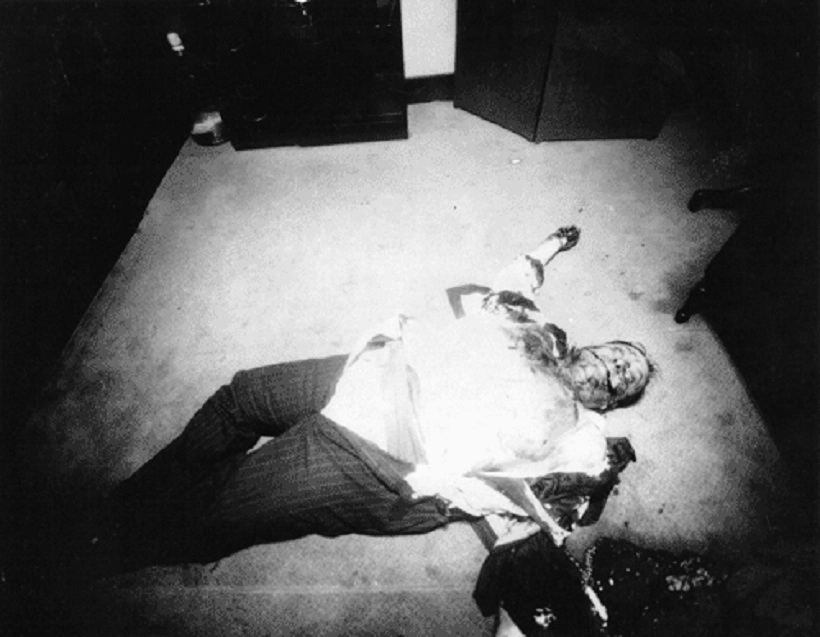
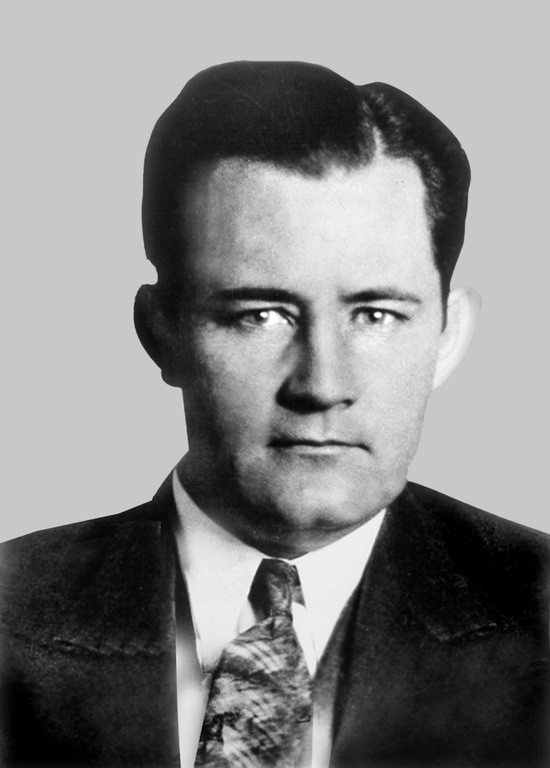
The only known authentic photographs of Salvatore Maranzano are from the crime scene.

Masseria, probably believing his alliances were broad and strong enough to quickly put Maranzano in his place, instigated what would later come to be known as the Castellammarese War. Masseria, however, proved to be the weaker, and his own men began defecting. Some even conspired to kill him. Masseria dined on bullets on April 15, 1931, in a Coney Island restaurant. Maranzano welcomed the plotters into his domain, but never completely trusted them.

The social network

The common denominator between Masseria and Maranzano was an outdated and narrow-minded business philosophy that nearly all their underlings despised. Men of that old-fashioned mindset were quietly referred to as “Moustache Petes” by their younger, forward-thinking subordinates. Such ideology would prove to be the downfall of both egomaniacal bosses. Both assassinations were successful largely because of the organizers’ incredible networking skills. It’s fascinating to think of how coordinated the plotters were in an era long before social media and one in which even neighboring police forces didn’t have the tools or processes for effective information sharing. From Luciano to Capone to Benjamin “Bugsy” Siegel, virtually everyone who was anyone among the new generation of gangsters was aware of plots or directly in on the hits.
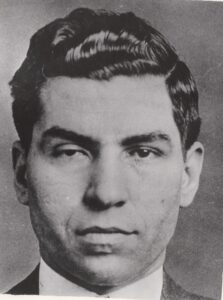
Charles “Lucky” Luciano’s mugshot in February 1931. Courtesy of Cipollini Collection

The immediate reaction to Maranzano’s murder, especially from federal authorities, was to focus on a purported alien-smuggling racket. A reporter discovered one of Maranzano’s address books outside the office building, leading investigators to theorize it was thrown out a window or dropped by one of the killers. The “little black book,” as it was dubbed, contained 30 to 50 names, some of whom were prominent figures, including judges and immigration officials.  Other theories pointed to a narcotics ring, a Capone link (because two of the assassin’s hats were recovered and bore Chicago labels), and/or a liquor squabble.

In similar fashion to the investigation of Masseria’s murder, Luciano remained largely under the radar, except for a brief but critical mention by New York’s contentious and unfiltered police commissioner, Lewis J. Valentine. The day after Maranzano’s death, the Brooklyn Daily Eagle printed an article that paraphrased the commissioner’s comments. Valentine told reporters that while likely rooted in an alien-smuggling or narcotics ring, those were merely still theories. He went on to say police weren’t sure if it was “Lucky Lucciano” [sic] or Maranzano who succeeded the dead Masseria, but they certainly believed a rivalry between the two was apparent. Another report by the paper added:

“Despite the fact that Lucciano [sic] won out, Maranzano, according to Mulrooney, was one of the organizers of a three-day fiesta staged in Coney Island Aug. 1, 2 and 3 to install Lucciano [sic] in proper style.”

As more details of Maranzano’s murder were revealed, the consensus among authorities and the news media was that further gang rubouts were likely. Indeed, their premonition was correct, but was it as grand as the legend claims?

Night of the Vespers

In a passage from the translated memoirs of Nicola “Zu Cola” Gentile, obtained by federal agents, he wrote:

“They hurried to telephones and informed the boys in various parts of New York advising them that they could start the purging operation. Almost immediately with that word there took place the slaughter of the ‘Sicilian Vespers.’ In fact, many of the followers of Maranzano were killed, who were stained with the most atrocious wickedness.”
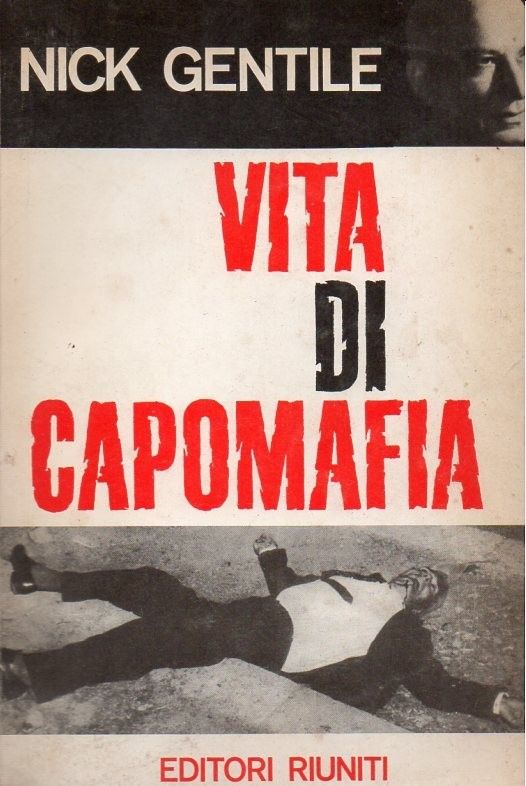
Nicola Gentile’s memoir published in 1963. Courtesy of Cipollini Collection

The story of Maranzano’s murder and the subsequent elimination of his followers got spun into folklore over time via the accounts of four main storytellers: Dixie Davis (former Dutch Schultz attorney), Nicola Gentile, Joe Valachi and Joe Bonnano. Each of these four offered varying degrees of authenticity and corroboration, with Gentile’s account being the most widely accepted. Gentile’s memoir was discovered by (or directly given to) narcotics agents sometime between 1940 and 1960. The translation of these memoirs provided a particularly poetic passage referencing “Sicilian Vespers.” The book version, Vita di Capomafia, released in 1963 by Gentile and editor Felice Chilanti, varied somewhat from the early translated notes, forgoing the melodramatic wording (notably the omission of colorful phrasing such as “Sicilian Vespers”), but essentially kept the core material intact.

The identity of those on the actual hit squad is a subject of speculation, though it’s understood the entourage was comprised of Jewish gangsters, possibly accompanied by one Italian who could positively identify Maranzano. It’s believed Samuel “Red” Levine led the hit squad. Abraham “Bo” Weinberg claimed he was there as well.
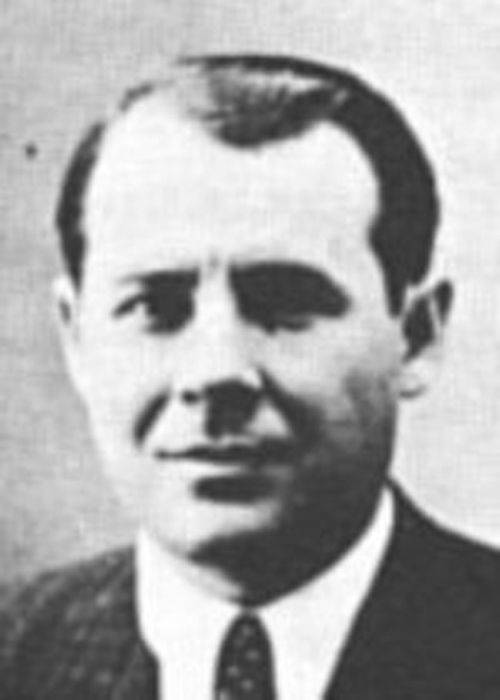
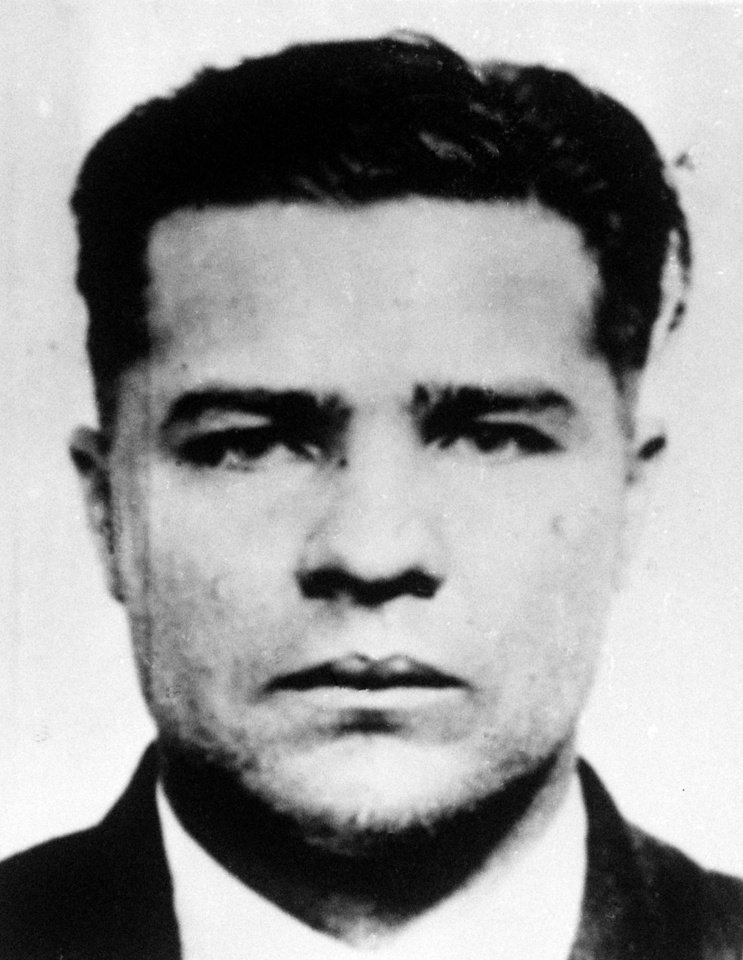
Not Salvatore Maranzano, this widely circulated portrait is actually British gangster Salvatore Messina.

Weinberg’s account also placed Vincent “Mad Dog” Coll at the scene but not as a killer of Maranzano. Coll was allegedly entering the building as the slayers were exiting. Coll was hired by Maranzano to kill Luciano and Vito Genovese, both of whom were scheduled to meet with Maranzano that fateful day. Again to the point of social networking, another account of the plot points to Maranzano underling Tommy Lucchese being the double agent who informed Luciano of Maranzano’s “hit list,” which included the names of Luciano, Costello, Schultz, Capone and more. Armed with that information, Luciano and Genovese knew the scheduled meeting would probably be their demise and thus quickly enacted an already-planned coup.

Because Maranzano would likely be on guard within the presence of his own men, let alone any familiar and/or suspicious-looking Italians, the plotters turned to a Jewish faction led by Meyer Lansky and Ben Siegel. Maranzano wouldn’t easily recognize the selected team of Jewish assassins. Although it’s possible Siegel participated in the hit (as dramatized in the recent Lansky movie), it is unlikely. Siegel was probably too well known or recognizable, therefore he probably limited himself to the planning and post-murder phases.

The murder of Maranzano was not the end of the violence, but rather the beginning of a fabled purge to rid the underworld of hardcore Maranzano loyalists and other Moustache Petes, both in and outside New York. Historians disagree on whether a literal purge ensued or not, though generally are in agreement that other murders took place that year and into the next that could have been related.

Nicola Gentile’s memoir did not offer many specific details beyond his role in immediately traveling to Pittsburgh to assassinate Maranzano ally Giuseppe Siragusa. Dixie Davis relayed the account of Bo Weinberg in a 1939 magazine column, whereby the number of dead reached 90. In the article, Davis expressed some doubt about the high number, but concurred a lot of “greasers” got killed.

Joe Valachi, during his sensational Senate committee testimony in 1963, never stated a specific number of casualties. Murder Inc. prosecutor Burton Turkus (with writer Sid Feder) stated in the book Murder Inc. that “some 30 to 40 leaders of Mafia’s older group all over the United States were murdered that day and in the next forty-eight hours!” Decades later Attorney General Ramsey Clark addressed the subject in his book, placing the number of dead at 40. Most of these estimates and claims were not accompanied by any solid data or supporting evidence. An alternative theory to the so-called purge: It may be more of an abstract, a culmination of all the Mob hits dating back to the Castellammarese War and including the victims associated with Masseria’s downfall.

Parting shots
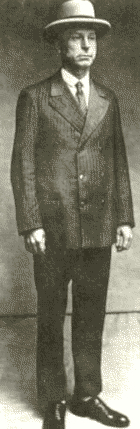
This photo of German serial killer Peter Kurten was also briefly mistaken for Salvatore Maranzano.

Maranzano’s murder remains unsolved and left a legacy of other mysteries as well. Besides the question of a so-called purge, perhaps the most inconclusive element involves Maranzano himself, specifically photos. While it’s true some infamous or camera-shy mobsters left us few visual artifacts, Maranzano left none, as in, we don’t know what he looked like beyond the handful of post-mortem crime scene photos.

There is a portrait of a living Maranzano that’s been circulating for decades, but it’s not him. David Critchley’s article in the July 2009 issue of Informer Journal revealed that the widely accepted photo of Maranzano was actually that of a British criminal named Salvatore Messina. Then, in 2019, a discovery by another researcher uncovered a photo believed to be the real Maranzano. But shortly thereafter, the photo was deemed a case of mistaken identity. The photo was actually German mass murderer Peter Kurten.

Christian Cipollini is the author of Murder Inc.: Mysteries of the Mob’s Most Deadly Hit Squad and LUCKY, a gangster graphic novel.

Ten years ago this month, Whitey Bulger was found guilty on 31 counts, including 11 murders

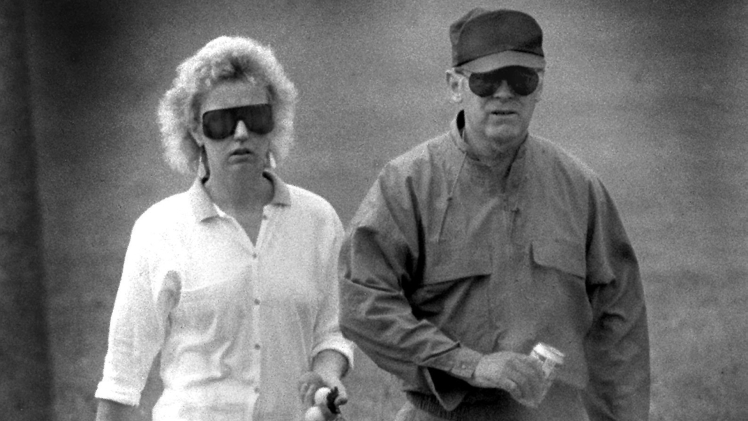
“Have you seen this woman? The FBI is offering $100,000 for tips leading to Catherine Greig’s whereabouts.” Daytime television viewers heard this in a 30-second public service announcement produced by the FBI in 2011. Within days, tips revealed that Greig was hiding out in Santa Monica, California, with her long-time romantic partner and Boston Mob boss James “Whitey” Bulger. The FBI had been searching for the pair since Bulger became a fugitive in 1994. Bulger had risen to the FBI’s Ten Most Wanted list, alongside Osama Bin Laden. Once apprehended, he was extradited to Massachusetts to face trial.

From 1979 to 1994, Bulger was the leader of the Winter Hill Gang, a mostly Irish Mob, based in South Boston. Bulger and his gang dominated Boston’s rackets with unabashed violence for decades. His biggest advantage was his role as an FBI informant, beginning as early as 1974. Bulger edged out his main Boston rivals, the Patriarca crime family, by providing tips to the Mafia-focused FBI about their activities.

Time after time, Bulger escaped prosecution thanks to the intervention of his FBI handler, John Connolly. Connolly also tipped off Bulger about potential witnesses who “knew too much,” a death sentence carried out by Bulger and his hitmen. Bulger paid Connolly more than $235,000 in exchange for information and a free pass to commit crimes. Connolly was convicted in 2008 of second-degree murder for a leak that led to the death of a potential government witness, John Callahan.

When Whitey Bulger was an FBI informant, his handler, agent John Connolly, fed him information in exchange for payments. Bulger’s defense claimed that Connolly wasn’t the only corrupt member of law enforcement who was aiding Bulger. John Tlumacki/Boston Globe via Getty Images

It was Connolly who warned Bulger of his imminent arrest, leading to a 16-year manhunt.

Two weeks after his arrest in Santa Monica, Bulger pleaded not guilty to charges that included 19 murders, extortion and money laundering. He would have to wait another two years for his trial to begin, thanks in part to the successful efforts of his defense team to remove the judge, Richard G. Sterns, from the case because of his relationship with FBI Director Robert Mueller. Presiding in his stead was Judge Denise Casper, the first African American woman appointed as a federal judge in Massachusetts. The trial began on June 12, 2013, with the families of Bulger’s victims filling out the gallery.

Bulger’s defense attorneys did not deny that their client was a prolific racketeer, but they had two main points of contention: Bulger was not an FBI informant, and he was not a killer, particularly regarding the two murdered women, Debra Davis and Deborah Hussey. Being an informant is not a crime and was not among the charges, yet it was a centerpiece of the defense’s argument. The reality was that there was enough evidence to put the mobster away for the rest of his life, so the only thing left to protect was his legacy. Bulger wanted to be seen as Boston’s Robin Hood, a benevolent gangster propped up by government corruption that allowed him to go unchecked for decades.

The defense attempted to claim that the defendant had been granted blanket immunity by deceased federal prosecutor Jeremiah O’Sullivan. In 1978, Bulger was disqualified as an informant because of his involvement in race-fixing at horse tracks. The massive investigation also involved Howie Winter, the Winter Hill Gang boss. FBI agents Connolly and John Morris petitioned O’Sullivan to drop Bulger and his associate Stephen Flemmi from the case because of his information regarding the Mafia. O’Sullivan agreed to drop the two from the case. As a result, Winter was arrested and went to prison, leaving Bulger in charge of the gang.

But Bulger claimed that’s not where the story ends. According to Bulger, O’Sullivan asked the mobster to protect him from assassins in exchange for full immunity over past and future crimes. Judge Casper ruled that the defense would not be permitted to make that argument. In the defendant’s only verbal statement to the court, he said regarding the immunity claim denial, “As far as I’m concerned, I didn’t get a fair trial, and this is a sham, so do what youse want with me.”

Witnesses took the stand one by one as the prosecution chose to focus on the murders. Among the dozens of witnesses were Bulger’s accomplices, including hitman John Martorano, enforcer Kevin Weeks and close associate Stephen “The Rifleman” Flemmi. Martorano testified about the 20 murders that he committed on behalf of his boss. On the stand, Flemmi claimed that he personally watched his partner strangle to death Debra Davis and Deborah Hussey. Afterward, Flemmi pulled out their teeth to interfere with identification. Weeks told the court that he was with Bulger when he murdered Michael Donahue, an innocent truck driver who was caught in the crossfire when giving a ride to Brian Halloran, a drug dealer turned government informant and Bulger’s intended target. As a counter to their testimony, the defense argued that the witnesses were the true killers, merely pinning their crimes on their boss.

This dramatic trial wasn’t without a surprise twist. Five days in, Stephen Rakes was found dead before he could take the stand and testify against Bulger. In 1984, Bulger threatened to kill him if he didn’t sell his liquor store for $33,000 less than what Rakes and his wife spent to open it. Despite suspicions, the untimely death was unrelated to the trial; an indebted business associate slipped cyanide into his iced coffee.

Defense attorneys began calling their own witnesses on July 26. They called former FBI agents to testify regarding Bulger’s status as an informant and corruption within the Bureau’s Boston office. One of the agents, Robert Fitzpatrick, was Boston’s assistant special agent-in-charge from 1981 to 1986. According to him, John Connolly and his supervisor, John Morris, went to great lengths to make Bulger believe that he wasn’t an informant. Morris refused to honor Fitzpatrick’s request to revoke Bulger’s informant status when he brought up the improper relationship between informer and handler. There was even more reason to dismiss Bulger when Brian Halloran became a government witness against Bulger for the murder of World Jai Alai owner Roger Wheeler. The request fell on deaf ears, as did the recommendation to put Halloran in witness protection. Halloran was murdered after Bulger’s FBI handlers leaked his informant status.

When it was the prosecution’s turn to question Fitzpatrick, they aggressively moved to discount the witness by claiming, “You’re a man who likes to make up stories, aren’t you?” Journalist T.J. English observed that the prosecution grilled the former FBI agent with more aggression and accusation than they did Bulger’s partners-in-murder. The assault continued when Fitzpatrick returned to the courtroom in handcuffs, charged with 12 counts of perjury and obstruction of justice from his testimony at the Bulger trial. He pleaded guilty on all counts and landed two years of probation.

Whitey Bulger went on the lam in 1994 with longtime girlfriend Catherine Greig. They were living in Santa Monica, California, when they were discovered by the FBI.

After closing arguments concluded on August 5, the jury deliberated for five days. When they emerged, Bulger was found guilty on 31 counts, including 11 of the 19 murder charges. In November 2012, Judge Casper sentenced Bulger to two consecutive life sentences plus five years in prison. As expected, Bulger would spend the rest of his life in prison. In a separate trial, his accomplice and girlfriend Catherine Greig received eight years in prison and a $150,000 fine for her involvement in aiding a fugitive. (Greig was released from prison in 2020.)

When Bulger arrived at the Coleman II federal penitentiary in Florida, warden Charles Lockett knew that the one-time informant Mob boss had to be separated from the general population for his safety. The warden also met with prominent inmates to ensure they wouldn’t hurt the new resident. However, after Bulger allegedly threatened a nurse by telling her, “Your day of reckoning is coming,” plans were made to transfer the now 91-one-year-old mobster.

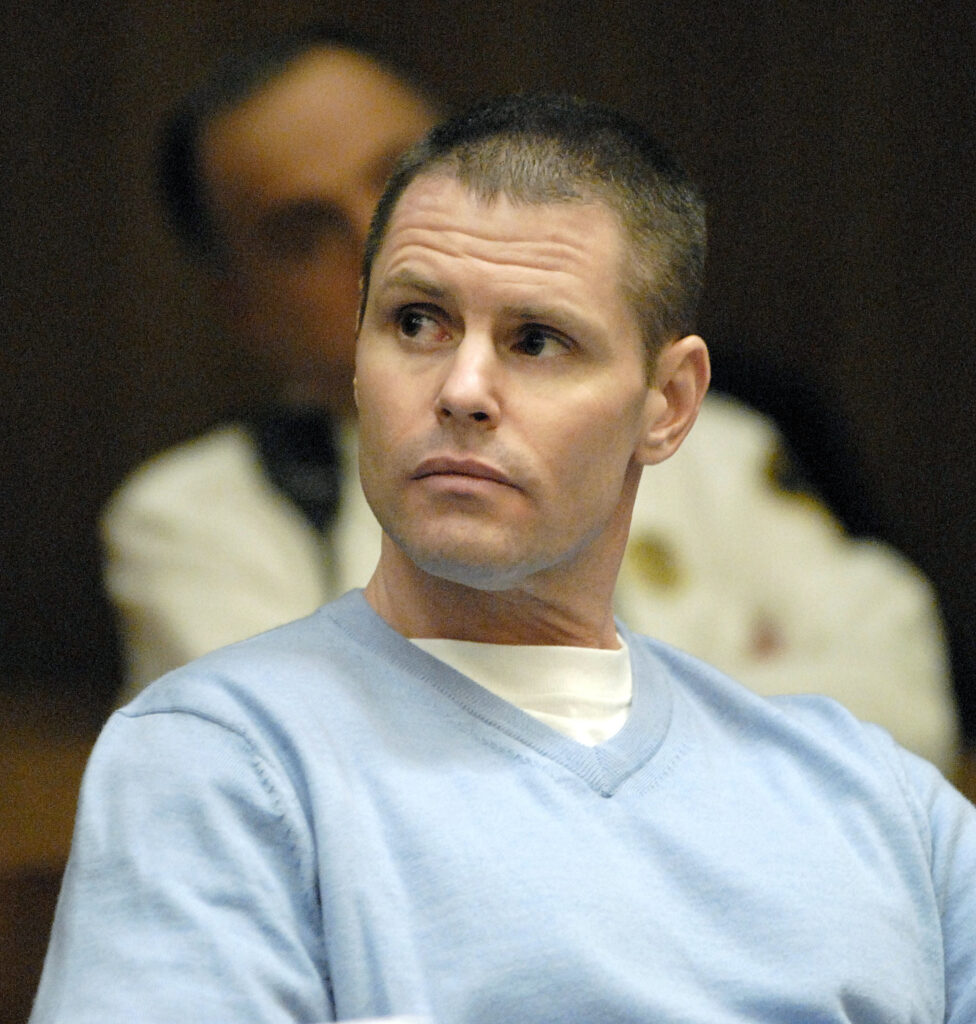
Mob hitman Fotios “Freddy” Geas is one of the main suspects in the 2018 murder of Bulger in a West Virginia federal prison. Geas is serving a life sentence for the murder of Genovese family boss Adolfo Bruno in 2003. Don Treeger/The Republican via AP

In 2018, Bulger was transferred to the Hazelton federal penitentiary in West Virginia. Less than 12 hours after his arrival, a group of inmates allegedly led by Mob hitman Fotios “Freddy” Geas entered Bulger’s cell and beat him to death with a padlock attached to a belt. Geas was already serving a life sentence for killing former Genovese crime family acting boss Adolfo Bruno in 2003. When asked about his client’s involvement, Geas’ attorney Daniel D. Kelly said that he “has a particular distaste for cooperators.” For all of Bulger’s effort at persuading the world that he was not a government informant, his fellow inmates were not convinced, and for that they took his life.

Joseph Valachi’s autobiography reveals Mafia’s inner workings

The Mafia’s early U.S. history has been dramatized in novels and movies but rarely has it been detailed in true first-person accounts. One exception is The Real Thing, an autobiographyby Joseph Valachi, a made member of the Mafia for three decades beginning in 1930.

Valachi hand-wrote the manuscript while in prison before his famous televised testimony in 1963 revealing the Mafia’s inner workings. In 1980, journalist Peter Maas donated Valachi’s manuscript to the National Archives’ John F. Kennedy Presidential Library and Museum.

Maas had interviewed the mobster and used the autobiography as source material to write the best-selling The Valachi Papers, published in 1968. Four years later, the book was made into a movie of the same title starring Charles Bronson as Valachi.

For a long time, Valachi’s original manuscript was available only at the JFK Library in Boston. In recent years, however, Mob historian Thomas Hunt has made it accessible to anyone, free of charge, at the mafiahistory.us website.

The kiss of death

Early in his criminal career, Valachi, born in 1904, was a burglar and getaway driver in New York City with other hoodlums called the Minutemen. The gang’s name referred to the length of time it took for them to pull off a break-in and flee.

Eventually Valachi became a heroin dealer and Mafia hit man suspected of having a role in more than 20 killings. Valachi was a soldier in the Genovese crime family, one of New York’s five Mafia clans. 

During his Mafia years, Valachi survived the Castellammarese War, a bloody battle in 1930-31 for Mafia supremacy in New York City, but finally was imprisoned in his late 50s at the Atlanta Federal Penitentiary on a 20-year narcotics sentence.


At the same federal facility, Mafia boss Vito Genovese, suspecting Valachi of being an informant, applied a “kiss of death” to the subordinate, singling him out to be killed. Or so Valachi believed. Genovese was in prison because he also had been convicted of narcotics trafficking.

Thinking he spotted the inmate assigned to take him down, Valachi beat the man to death with a metal pipe from a prison construction site. It was the wrong person.

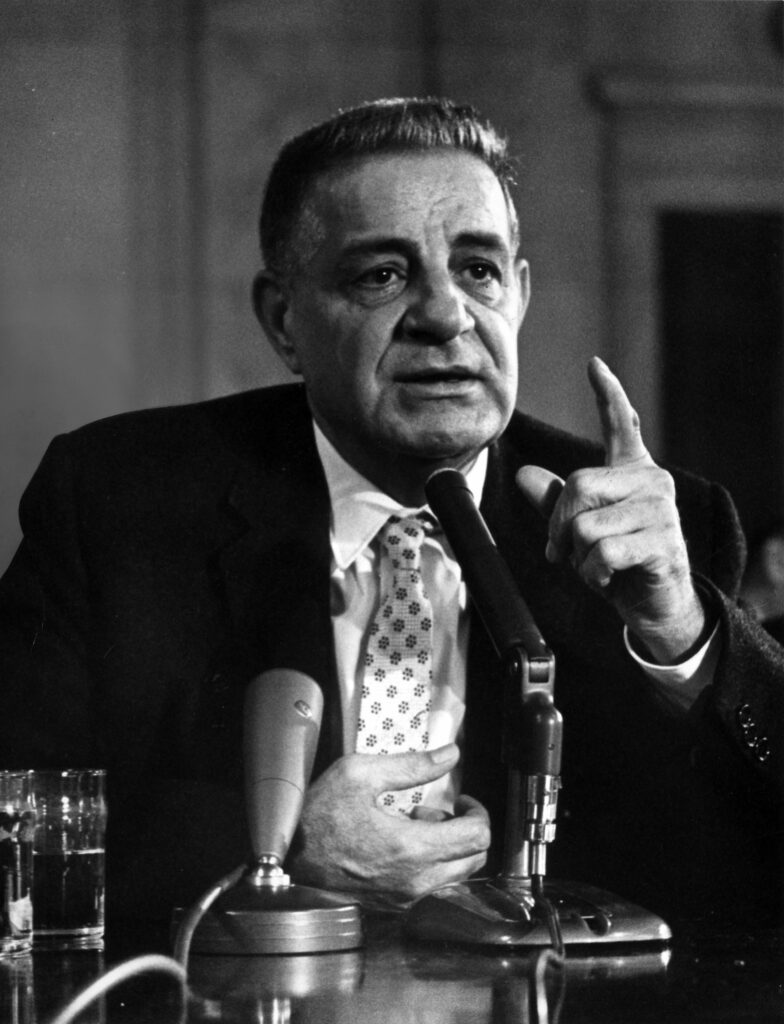
Now with a murder rap adding time to his prison term, Valachi, seeking protection from the Mafia and wanting revenge, agreed to reveal what he knew about organized crime. In 1963, he created a national sensation by testifying before the Senate Permanent Subcommittee on Investigations, led by Arkansas Democrat John McClellan.

In addition to his congressional testimony, Joseph Valachi wrote an autobiography while in prison that is among the few first-person accounts of early Mafia history in the United States. Getty Images

During televised testimony, Valachi became the first made member in a public setting to break an honor-bound code of silence known as omertà. Among other secrets, he revealed that the term “Mafia” was not used by insiders. Instead, those in the know used “Cosa Nostra,” meaning “our thing and our family in English,” Valachi said.

In the nonfiction book Five Families, now-retired New York Times reporter Selwyn Raab noted that Valachi “painted the first clear canvas of life inside the Mafia.”

Wearing a suit and tie and occasionally smoking a cigarette, Valachi laid out an explosive narrative that surprised many Americans.

“He confirmed the existence of the five families,” Raab wrote. “He outlined their organizational structure; he exposed the secret ‘blood’ induction ceremony; he explained the effectiveness of the omertà vow; and he identified the leaders of each family, thereby for the first time attaching a name tag to each borgata.”

‘A very different perspective

Hunt, who administers the mafiahistory.us website, said he posted the autobiography online to make it available for research in an easy-to-read, text-searchable format.

“Those interested in learning the truth about early U.S. Mafia history have very little in the way of primary source material,” he said in an email.

The most accessible account is Mafia boss Joseph Bonanno’s autobiography, A Man of Honor, Hunt said. Another is Nick Gentile’s Vita di Capomafia, but it was published only in Italian and isn’t widely available.

Historian Thomas Hunt has made the Joe Valachi memoir available online after many years when it was available only to those who visited the JFK Library in Boston.

Valachi’s manuscript is the only other major primary source work from the early era, Hunt said.

“Adding enormously to its value, the Valachi autobiography provided a very different perspective than Gentile or Bonanno,” he said.

Unlike other chroniclers of early U.S. Mafia history, Valachi “made no pretense of high social standing or ancient, noble purpose,” Hunt said.

In the manuscript, Valachi describes not only his personal life but the mechanics of rackets such as horse-race fixing, loansharking, slot machines and numbers gambling.

However, most readers probably will be drawn in by Valachi’s account of the Castellammarese War, including the killing of several prominent mobsters during that period, Hunt said.

“As a former aide to top Castellammarese Mafia leader Salvatore Maranzano, Valachi was able to provide an intimate look at that boss and the circumstances that led to his 1931 assassination, without the hero worship found in Bonanno’s book,” he said.

Hunt noted that Valachi had grown up “in a congested New York slum neighborhood.” “He often showed us the reasoning, the misgivings and the principles of a common person, who certainly knew right from wrong and legal from illegal, but grew convinced that living outside the law was the only path available to him,” Hunt said.

The challenges in Valachi’s upbringing come through in the opening sentences of his manuscript. The story begins with his boyhood in “the poorest family on earth.” Valachi said he never got anything for Christmas, not even an apple. Instead, his father would wake him up on that day and offer him a glass of whiskey.

Valachi refused the offer. “It was too strong,” he wrote.

Final years in prison

Years later, after a life of crime, Valachi’s public testimony awakened the nation. Asked what he did for the Mafia, Valachi testified, “I just go out and kill for them.”

Startling remarks like that led to a call for national action. Within several years, federal laws were enacted allowing for court-ordered wiretaps and for informants to be entered into a newly formed federal Witness Protection Program.

Another result was passage of the Racketeer Influenced and Corrupt Organizations Act (RICO), permitting authorities to go after syndicate leaders who might not have directly participated in the crimes involved.

Valachi ended up at the La Tuna federal penitentiary just north of El Paso, Texas, where, according to Raab, the mobster obtained, for his cooperation, “the most comfortable treatment and lavish furnishings the Federal Bureau of Prisons could provide.”

Raab, the author of Five Families, explained that this treatment came after authorities learned from surveillance audio that Buffalo Mob boss Stefano Magaddino said Valachi had to die.

As a result, Valachi was housed in a two-room, air-cooled suite at La Tuna. His large cell, isolated from the general prison population and built specifically for him, had couches and a kitchenette.

At La Tuna, Valachi led a “solitary existence, always alone except for guards,” and once attempted suicide by hanging, Raab wrote.

Valachi’s death would come less than a decade after he appeared before the Senate subcommittee. In 1971, while still in federal custody, Valachi died at age 68 of natural causes. He was buried near Lewiston, New York, north of Buffalo, not far from Niagara Falls and the Canadian border.

Larry Henry is a veteran print and broadcast journalist. He served as press secretary for Nevada Governor Bob Miller, and was political editor at the Las Vegas Sun and managing editor at KFSM-TV, the CBS affiliate in Northwest Arkansas. Today, he is a senior reporter for Gambling.com. The Mob in Pop Culture blog appears monthly.

DEA marks 50th anniversary of fighting drug traffickers at home and abroad

Fifty years ago, a federal agency was created to combat America’s growing drug problem. Officially born in July 1973, the Drug Enforcement Administration has since become the most recognized narcotics enforcement agency in the world.

President Richard Nixon famously declared a war on drug abuse in a fiery 1971 speech, but his call to action took another two years to culminate in what became the DEA. The plan was to merge several federal law enforcement agencies, which, according to critics, were collectively on the losing end of the so-called drug war, largely because the separate agencies had little or no interagency cooperation.

“Right now, the federal government is fighting the war on drug abuse under a distinct handicap,” Nixon said in March 1973. “For its efforts are those of a loosely confederated alliance facing a resourceful, elusive, worldwide enemy.” Nixon said the dysfunction enabled “cold-blooded underworld networks that funnel narcotics from suppliers all over the world into the veins of American drug victims.”

The solution to this disjointed system involved a series of maneuvers, including disbanding some of the agencies that once handled the lion’s share of narcotics crime-fighting, enabling budgets and resources to be shifted to the newly created entity. The move harkened back to the formation of the first centralized narcotics agency in 1930, the Federal Bureau of Narcotics, or FBN, under the leadership of Harry J. Anslinger. The FBN’s origins were similarly a direct result of a growing problem of illicit drugs paired with independent law enforcement agencies that were often not on the same page. Differing from the DEA, which falls under the Justice Department, the FBN answered to the Treasury Department and did so until 1968 when it merged with the Bureau of Drug Abuse Control (within the Department of Health) to form the Justice Department’s Bureau of Narcotics and Dangerous Drugs.

Nixon’s Executive Order 11727 described creation of the DEA:

“Reorganization Plan No. 2 of 1973, which becomes effective on July 1, 1973, among other things establishes a Drug Enforcement Administration in the Department of Justice. In my message to the Congress transmitting that plan, I stated that all functions of the Office for Drug Abuse Law Enforcement (established pursuant to Executive Order No. 11641 of January 28, 1972) and the Office of National Narcotics Intelligence (established pursuant to Executive Order No. 11676 of July 27, 1972) would, together with other related functions, be merged in the new Drug Enforcement Administration.”

Today, the DEA’s official mission statement and purpose “is to enforce the controlled substances laws and regulations of the United States and bring to the criminal and civil justice system of the United States, or any other competent jurisdiction, those organizations and principal members of organizations, involved in the growing, manufacture, or distribution of controlled substances appearing in or destined for illicit traffic in the United States; and to recommend and support non-enforcement programs aimed at reducing the availability of illicit controlled substances on the domestic and international markets.”

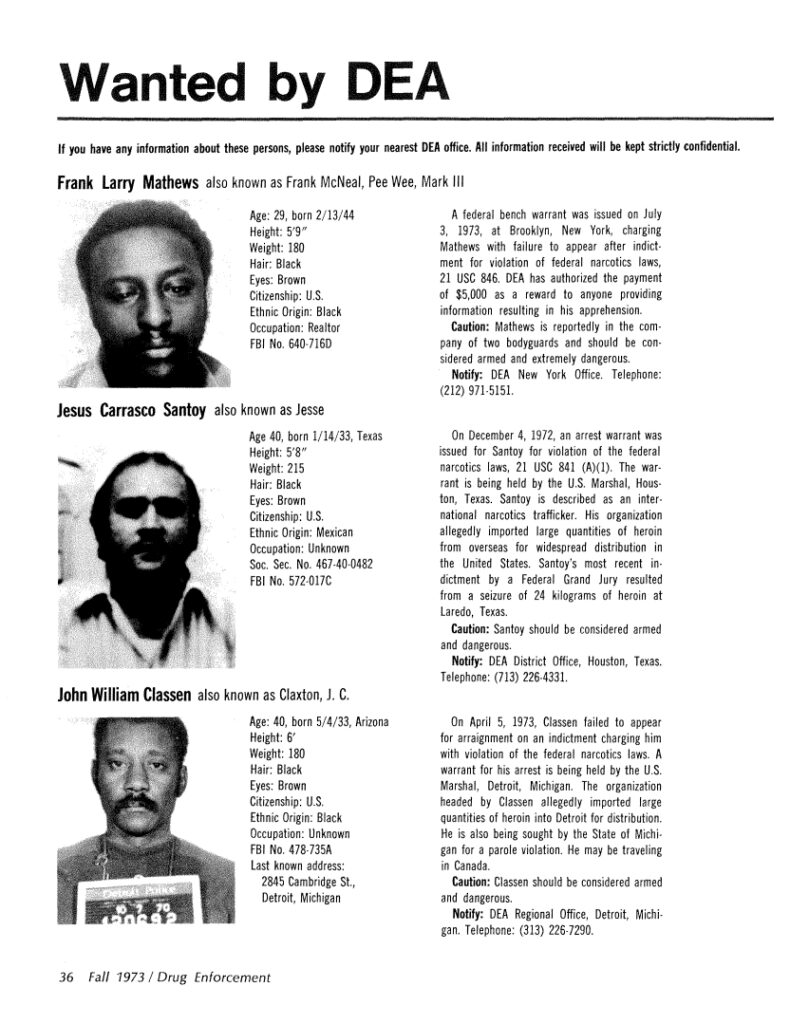
The DEA’s first published “Most Wanted” poster appeared in the 1973 debut issue of the agency magazine. The wanted individual at the top of the poster, Frank Matthews, disappeared in 1973 and was never seen again. Courtesy of the Cipollini Collection

The DEA has a long and storied past. It’s not unusual for new ideas and institutions to shake things up, particularly when it comes to government and policy changes. The DEA’s fledgling years were not immune to the resistance of change. The agency’s infancy faced obstacles. Only a few years after its inception, the DEA had detractors, both from the public and from politicians. Changes within its early leadership added to the growing pains and challenged the DEA’s resolve.

The agency did have proponents and self-determination, though, as demonstrated at one point in 1977 when it was at the center of a controversial idea raised by then-Attorney General Griffen B. Bell. The short-lived and hotly contested plan involved studying the possibility of having the DEA absorbed into the FBI. That wouldn’t be the last time ardent challengers of the agency’s effect and success rate would surface in headlines. It’s the federal government, so naturally squabbles were common and interagency rivalries smoldered. In 1980, less than a year into President Ronald Reagan’s presidency, a delegation of disgruntled Customs officials demanded Congress either reorganize the DEA or abolish it altogether. Despite all the obstacles, the DEA forged ahead into the 1980s, a time that would provide both shining successes and one of the darkest periods in its history.

Any of the past rivalries, internal disruption and political saber rattling was a mere inconvenience when compared with the harsh reality DEA agents faced on a daily basis while simply doing their jobs. The darkest day for the DEA was the brutal torture and murder of agent Enrique “Kiki” Camarena in Mexico in 1985. Those held responsible included leadership of Mexico’s then-dominant drug trafficking organization known as The Federation, or Guadalajara Cartel. Bringing those responsible to justice was a painstaking effort, marred by potential derailment at nearly every turn thanks to systemic corruption within Mexico’s legal and political machines. The mission took time, but eventually the top kingpins were apprehended, and some of them were extradited to stand trial in the United States.

DEA agent Enrique “Kiki” Camarena was kidnapped, tortured and murdered in 1985 by Mexico’s Guadalajara Cartel. Courtesy of Jaime Kuykendall

The 1980s and early ’90s also saw the rise of the “cocaine cowboy” era and put names such as Colombia’s Pablo Escobar into the limelight and the sights of the DEA. In December 1993, working closely with Colombian police agencies, the DEA helped to locate and take down the world’s most infamous and dangerous kingpin of the time. DEA agents Steve Murphy and Javier Pena led the agency’s efforts in taking down Escobar, a story that inspired the popular Netflix series Narcos.

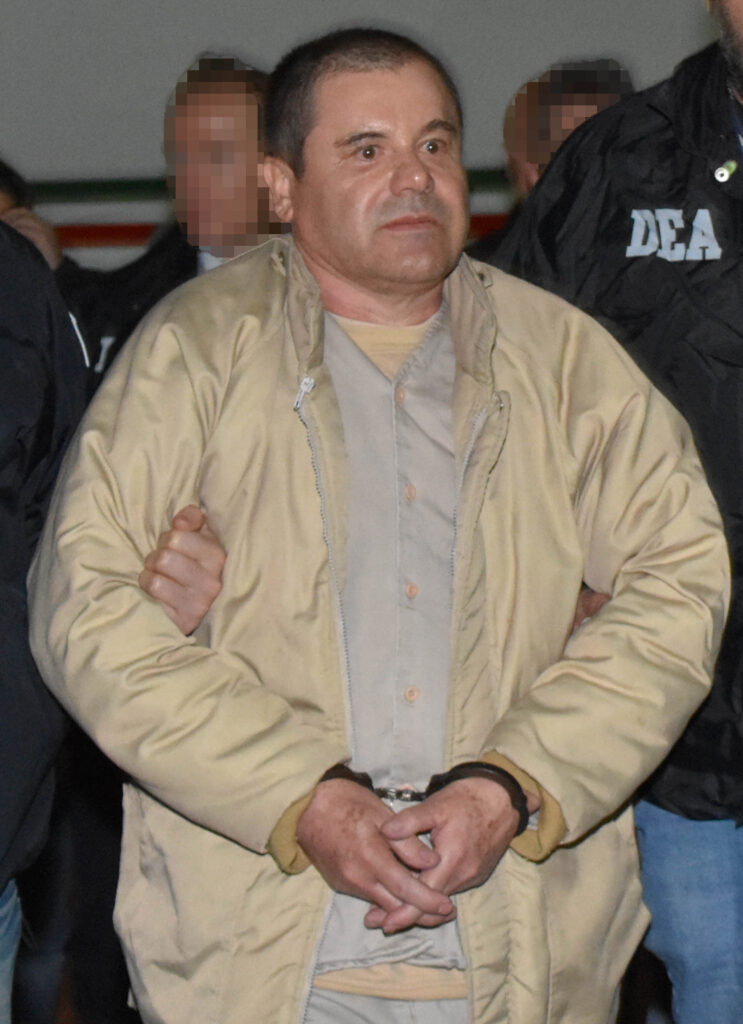
In the 21st century, the DEA has played a critical role in narcotics issues such as fighting the Mexican drug cartels and the fentanyl crisis. The final capture and extradition of Mexico’s most infamous drug trafficker, Joaquin “El Chapo” Guzman, in January 2016 proved to be a profound accomplishment for the DEA and all the cooperating agencies involved. Guzman’s record of escapes and elusion was epic, but his freedom finally ended in 2016, captured in Mexico six months after staging an unprecedented engineering marvel of a prison escape. The Sinaloa Cartel leader was convicted during a three-month trial in New York in 2019 and sentenced to life in prison. He is expected to serve the rest of his life in the supermax prison in Colorado.

Federal agents escort Joaquin “El Chapo” Guzman, who was extradited to the United States in 2017. He went on trial two years later in New York, where he was convicted and sentenced to life in prison. Courtesy of DEA
 

After the sentencing, DEA Acting Administrator Uttam Dhillon said:

“This sentencing shows the world that no matter how protected or powerful you are, DEA will ensure that you face justice. This result would not have been possible without the dedication and determination of so many brave men and women of the DEA, who worked tirelessly to see the world’s most dangerous, prolific drug trafficker behind bars in the United States. This is a huge victory for the rule of law, for thousands of current and retired DEA agents and analysts worldwide, and for all of our law enforcement partners here, in Mexico, and across the globe.”

Today, the DEA has about 10,000 employees with 241 domestic offices and 93 foreign offices in 69 countries.

Christian Cipollini is the author of Murder Inc.: Mysteries of the Mob’s Most Deadly Hit Squad and LUCKY, a gangster graphic novel.
Tentacles of organized crime once had firm grip on Japanese politics

The yakuza, Japan’s premier organized crime group, is becoming more visible in modern pop culture. From HBO’s Tokyo Vice to Sega’s popular Yakuza game series, the influence of these mobsters has moved beyond Japan’s borders onto the world stage. However, the yakuza are not new players in the global network of organized crime. For decades, they have been involved in criminal activity worldwide, including drug trafficking and prostitution, even reaching the shores of the United States. But the yakuza have been running rackets in Japan for centuries.

Japanese organized crime goes back to the 17th century, when roaming bands of peddlers and gamblers spread their trade along the highways of Japan’s feudal society. In fact, one origin of their name is attributed to a losing hand in a popular card game: 8-9-3, or ya-ku-sa. However, modern yakuza originated among the ultranationalists who perpetrated the imperialism that led to war in the Pacific Theater in the 1940s. Some early yakuza bosses were part of the military and political leadership imprisoned as war criminals following the end of the conflict. Since the U.S. occupation, the yakuza have become increasingly involved with government leaders, including as high up as the prime minister.

Despite their past presence in politics, Japanese law enforcement and government bureaucrats have worked tirelessly over the last three decades to expel yakuza influence from their ranks. Yet the footprint of the yakuza continues to be seen in Japanese affairs. Yakuza leaders and their associates have allied with East Asian criminal organizations and right-wing groups that remain in Japan today. One of these associations, with the Unification Church, ultimately led to the assassination of one of Japan’s top officials.

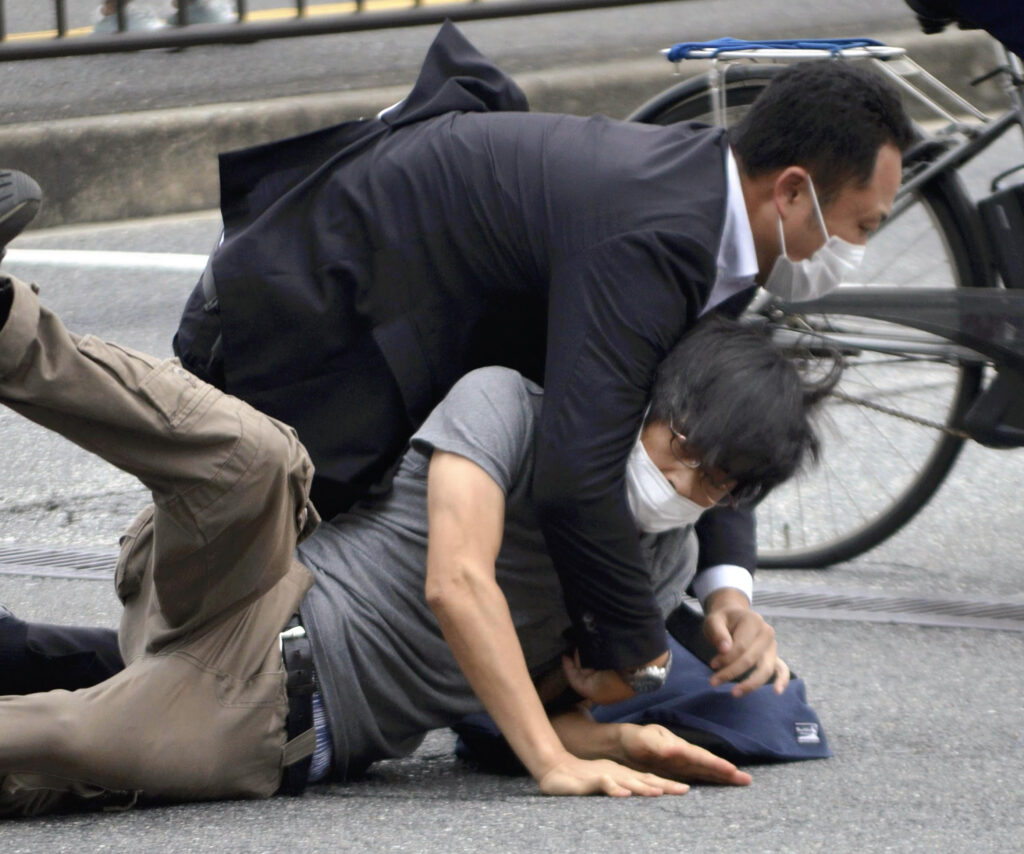
On July 8, 2022, former Japanese Prime Minister Shinzo Abe stood on a podium giving a speech in Nara, Japan. Testuya Yamagami, an unemployed 41-year-old, approached Abe from behind with a makeshift gun made from wood and metal pipes and shot Abe in the back. Five hours later, Abe was pronounced dead at Nara Medical University Hospital.

Police detained Tetsuya Yamagami immediately after fatally shooting former prime minister Shinzo Abe. Yamagami told police that his motive was Abe’s ties to the Unification Church. Katsuhiko Hirano/The Yomiuri Shimbun via AP Images

Yamagami confessed to investigators that his motive for killing the emeritus prime minister was Abe’s ties to the Unification Church. The Unification Church is a Korean religious organization started in 1954 by self-proclaimed messiah Sun Myung Moon. Often called the “Moonies,” the organization is seen by many as a cult. Yamagami told investigators that his mother donated more than 100 million yen (about $735,000) to the church, bringing financial ruin to their family.

Abe’s Liberal Democratic Party denies any ties to the church, and any current politician with ties to the church has either resigned or been removed since the assassination. However, a look into Japan’s postwar prime ministers – including Abe’s grandfather Nobusuke Kishi – reveals many ties with far-right nationalist organizations, including the Unification Church and the yakuza.

After Japan’s surrender brought World War II to a close in 1945, General Douglas MacArthur led the U.S. occupation to rebuild a devastated Japan. The occupying forces repurposed Tokyo’s Sugamo prison to house “Class A” war criminals awaiting trial. However, some inmates were released shortly afterward thanks to shifting priorities in the American intelligence community. Japan’s pre-war extreme right politics proved useful in combating communist ideologies spreading from Russia and China. One of these inmates was Yoshio Kodama, who before the war organized spies in China and created a smuggling operation to sell stolen Chinese goods in Japan for substantial profits. His intelligence network in communist China made him an ally of the CIA. Meanwhile, Kodama wasn’t the only Sugamo inmate with a bright future in Japan’s underworld.

Kodama’s cellmate was Ryoichi Sasakawa, who along with Kodama were known as behind-the-scenes power fixers called kuromaku (literally meaning “black curtain,” a reference to the hidden wirepullers controlling the black curtains in traditional Kabuki theater). Upon his release, Sasakawa built a speedboat gambling empire and became one of the world’s richest men. He and Kodama used their enormous wealth to influence politics, leading to the formation of the Liberal Democratic Party, which still dominates Japanese politics today. Through considerable campaign donations and the CIA’s help, the duo had their pick for LDP leadership. In 1957, another former Sugamo kuromaku and Shinzo Abe’s grandfather, Nobusuke Kishi, became the prime minister.

With the CIA’s support, Kishi and the kuromaku garnered the support of far-right nationalist political parties. Many of these deceptively named “political parties” were, in fact, yakuza gangs. When the fledgling National Police Agency began cracking down on organized crime, the yakuza gangs that ruled the postwar underworld rebranded themselves as rightist organizations. The yakuza were frequently called on to stifle any stirring dissent from leftist groups.

Their number came up when U.S. President Dwight Eisenhower was planning a state visit to Japan amid renegotiations of the U.S.-Japan Security Pact. While the LDP was on board with the new arrangement, socialist groups opposed the deal, including the People’s Council for Preventing Revision of the Security Treaty, “Ampo” for short.

The LDP alone was unable to amass the security necessary to prevent leftist protesters from interfering with Eisenhower’s visit, so they turned to Yoshio Kodama. Kodama, along with Ryoichi Sasakawa and others, organized Zen Ai Kaigi, the All-Japan Council of Patriotic Organizations. The federation of gangs included in its ranks a veritable rogues’ gallery of yakuza bosses. Among them were Kakuji Inagawa, founder of today’s third-largest yakuza group Inagawa-kai; Yoshimitsu Sekigami, fourth chairman of the second-largest group Sumiyoshi-kai; and Kinosuke Ozu, dubbed “Tokyo’s Own Al Capone” by the Saturday Evening Post. Altogether, Zen Ai Kaigi’s forces numbered 38,000 strong. Eisenhower’s invitation was withdrawn, however, after a brawl broke out between Ampo demonstrators and Kodama’s thugs, resulting in serious injuries and one death.

Even though the security pact went through, Nobusuke Kishi resigned in disgrace after the aborted visit. Shortly after, Zen Ai Kaigi dissolved, yet the yakuza retained its connections with Japanese political elites. Kodama and Sasakawa continued to mediate between yakuza groups, and Kodama continued working behind the scenes with the yakuza and the LDP until a major scandal erupted in 1976.

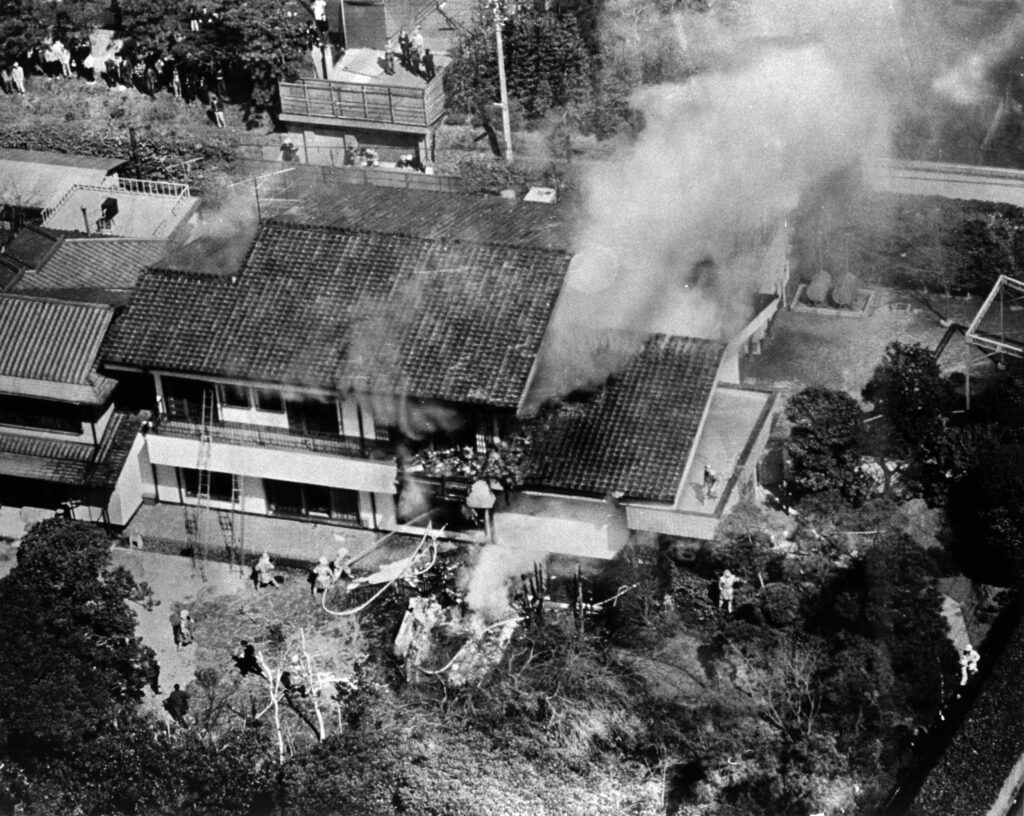
Starting in 1958, Kodama began lobbying on behalf of Lockheed Aircraft Corporation to convince Japanese airlines to buy its airplanes. Over the next two decades, Lockheed spent more than $12.6 million on bribes of Japanese politicians, including a prime minister, Kakuei Tanaka. After this came to light in a 1976 U.S. Senate hearing, the Lockheed scandal became Japan’s Watergate. Kodama’s career was finished, and he was ostracized by the nation. In the aftermath, Kodama suffered a stroke and never returned to organized crime. The culmination of public outrage was demonstrated through the final act of ultranationalist admirer and pornographic film actor Mitsuyasu Maeno. In an over-the-top attempt to assassinate Kodama, Maeno rented a Piper Cherokee plane from a Tokyo airport and crashed it kamikaze style into Kodama’s residence, barely missing the bedridden godfather.

Following the Lockheed bribery scandal in 1976, disgruntled nationalist Mitsuyasu Maeno crashed a plane into Yoshio Kodama’s Tokyo residence in an unsuccessful assassination attempt. The Asahi Shimbun via Getty Images

While Kodama was entrenched in the world of bribing politicians, the other kuromaku were forming their own connections. A self-described fascist and devotee of Benito Mussolini, Ryoichi Sasakawa looked beyond Japan’s border for ultranationalist allies. Sun Myung Moon, founder of the Unification Church, was one such ally. In 1954, Moon started his church, famous for its mass wedding ceremonies, and in his autobiography stated that he needed to “go to Japan and America so that I can let the world know the greatness of the Korean people.” In 1958, the Unification Church established a Japanese branch. Sasakawa became an adviser to the branch in 1963. The two became close friends and together formed the International Federation for Victory over Communism, also called Shokyo Rengo, and Sasakawa became its president. Blaming communist China for forcing his resignation, Nobusuke Kishi found common ground with Sasakawa and Moon and was a regular at Unification Church events.

After Kishi’s death in 1987, his son-in-law, Shintaro Abe, became secretary-general of the LDP. Shintaro continued where Kishi left off in supporting Shokyo Rengo and, by extension, the Unification Church. He reportedly encouraged his party’s politicians to accept support and funding from the church. After Shintaro’s defeat in his run for prime minister, Moon was quoted as saying, “Anyone who wants to become prime minister in Japan needs my support. Abe should have become prime minister.” Picking up where his father left off, Shinzo Abe became prime minister of Japan, first in 2006 and later in 2012. As prime minister, Shinzo continued his predecessors’ trends of associating with organizations linked to the Unification Church and Ryoichi Sasakawa.

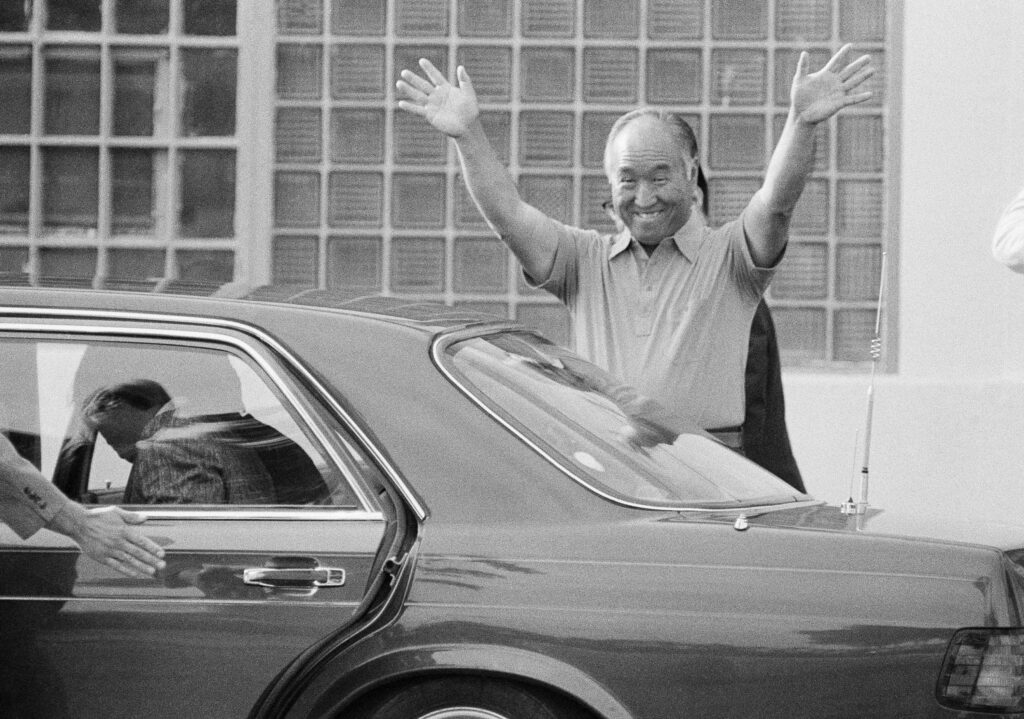
Unification Church founder Sun Myung Moon, who once had substantial influence in Japanese politics, faced tax evasion charges in the United States in 1985. He spent 11 months in federal prison in Danbury, Connecticut. AP Photo/Bob Child

In the 1980s, the Unification Church’s manipulative means of scamming money from victims, called reikan shoho or psychic marketing, increasingly became a concern among left-leaning Japanese politicians. Even today, targets of these scams are convinced that if they don’t donate to the church, they and their kin will be cursed in the afterlife. Unification Church swindlers sold pottery and other “good luck” charms to their victims, claiming the items would break the spells damning their deceased relatives. These are the same schemes that cheated the mother of Abe assassin Tetsuya Yamagami out of hundreds of thousands of dollars. This spiritual extortion is right out of the yakuza playbook, and ultimately led to the fatal shooting of Shinzo Abe. With his death, the Unification Church’s grasp on Japanese politics has all but disintegrated after the purge of all church-affiliated Dietmen.

A new dawn has emerged in Japan’s relationship with far-right criminal groups. While historically Japan’s politicians have maintained a cozy relationship with organized crime, that is not the case today. First in 1992 and then in 2011, Japanese legislators passed strict anti-yakuza laws and exclusion ordinances that have crippled the gangs’ ability to openly engage in Japanese society. Yakuza are now banned from opening bank accounts, signing property contracts and, most recently, driving on toll roads. According to a recent report from the National Police Agency, yakuza membership has dwindled from 87,000 in 2006 to 22,400 in 2022. While Japan has seen many successes in expunging yakuza elements from society, reminders of their infiltration appear from time to time. In 2008, a tabloid in Japan published a photo of Shinzo Abe and then-Arkansas Governor Mike Huckabee posing for a photo with Icchu Nagamoto, a financial broker for the Yamaguchi-gumi yakuza group. Despite his grandfather’s connections, Abe vehemently denied any connections to organized crime.

Mob movie classic ‘The Friends Of Eddie Coyle’ turns 50

The Boston-based movie The Friends of Eddie Coyle was released 50 years ago, in June 1973, introducing viewers to a seamy underworld inhabited by scheming career criminals on a downward spiral.

Based on a novel by George V. Higgins of the same title, the movie features Robert Mitchum as Coyle, a 50-year-old New England gunrunner attempting to avoid a prison sentence.

Earlier, Coyle had been convicted in New Hampshire of transporting about 200 cases of stolen Canadian Club whiskey. Wanting to move away one day to Florida, he then fed information about a different crime to a U.S. Treasury agent, Dave Foley (Richard Jordan). Coyle hopes Foley will put in a good word for him with authorities in New Hampshire before the sentencing.

With a wife and three children at home, the aging Coyle doesn’t want to be behind bars for an expected sentence of up to five years. The Coyles already are struggling to get by, living in a modest house in Quincy, Massachusetts, south of Boston. Coyle worries that a prison sentence might force his family onto welfare.

“I just can’t do any more time,” Coyle tells the Treasury agent. 

Foley eventually implies he will put a real effort into helping with the sentence if Coyle becomes a regular informant. A disappointed Coyle senses the agent is trying to turn him into a “permanent fink.”

“I should have known better than to trust a cop,” Coyle says, adding that even his mother could have told him that.

“Everybody ought to listen to his mother,” Foley says.

Deadly deceit

The betrayals don’t end there for Coyle, giving the term “friends” in the title an ironic twist. As it turns out, Coyle has no friends.

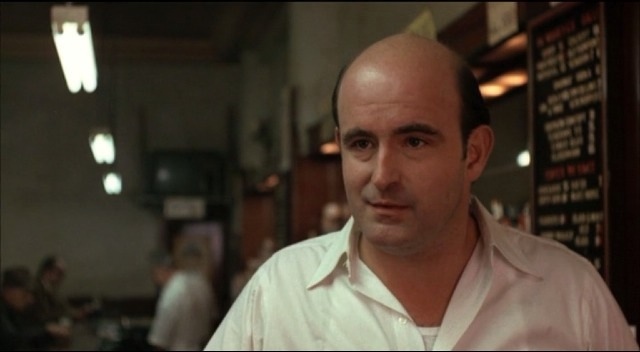
In the end, Dillon (Peter Boyle), a bartender and criminal associate of Coyle’s, invites him to a hockey game between the Boston Bruins and visiting Chicago Black Hawks. Though Coyle doesn’t know it, the bartender is another of Foley’s informants, accepting $20 a week from the Treasury agent for information.

Dillon also is a hit man for an off-screen Mob boss known as The Man. When Dillon learns The Man wants Coyle killed for being a snitch, the bartender accepts the job for a $5,000 payment.

Peter Boyle plays a criminal associate of Eddie Coyle who has accepted an assignment to kill him.

Dillon coaxes Coyle to the hockey game at the Boston Garden. In one poignant moment during the game, Coyle, whose future seems bleak with a pending prison sentence hanging over his head, makes note of young Bruins star Bobby Orr.

“What a future he’s got,” Coyle says to Dillon.

After the game, with the nephew of Dillon’s wife driving the car and Coyle in the front passenger seat, Dillion, sitting in the back, shoots Coyle in the head with a .22-caliber handgun, killing him.

At the movie’s conclusion, Foley, the Treasury agent, thanks Dillon for information that led to the arrest of a bank-robbing crew. Foley lets Dillon know that, as a friend, he won’t demand information about who killed Coyle.

“Thanks,” Dillon says. 

An ‘astonishing’ movie

Gary Jenkins, an attorney and retired Kansas City Police Department intelligence detective, said The Friends of Eddie Coyle, directed by Peter Yates, explores “the gritty relationships between career criminals, their victims, their customers, and organized crime.”

The movie exposes “the dark side of the American dream,” said Jenkins, who hosts the Gangland Wire podcast.

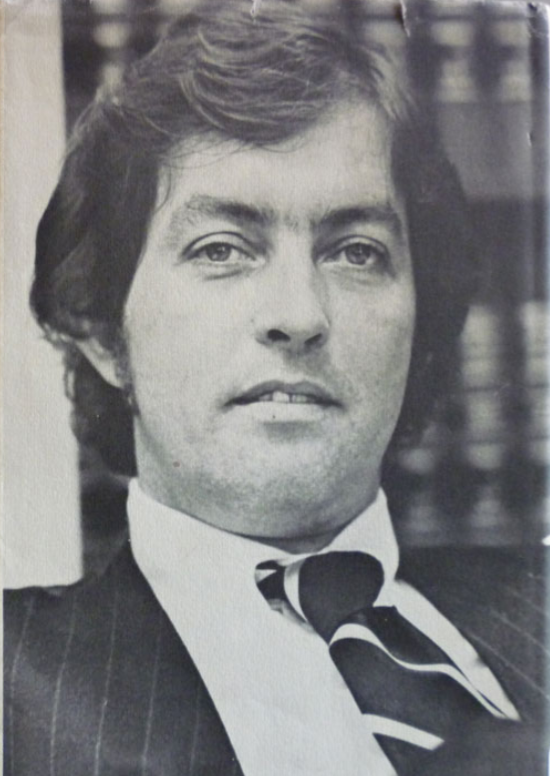
As a newspaper reporter in Rhode Island and Massachusetts, and later as a prosecutor in Boston, the novel’s author, Higgins, came into close contact with people from various walks of life. Working as a private attorney, he also provided advice to political activist Eldridge Cleaver and former Nixon administration official G. Gordon Liddy, convicted of the Watergate burglary. Higgins died of a heart attack in 1999, one week before this 60th birthday.

George V. Higgins, the former reporter and prosecutor who wrote the novel on which the movie is based, had close contact with the types of characters who populate the classic novel and film.

Ward Just, a novelist and former Washington Post reporter, said his friend Higgins “understood the cop and the hit man and the waitress and the petty thief and the guy cheating on his wife and the wife who hated her husband and the very rich and very poor.”

Higgins’ understanding of various people and the way they speak shows up in his many dialogue-driven books, including The Friends of Eddie Coyle, regarded by many as a classic. Novelist Elmore Leonard called it “the best crime novel ever written.” For the movie, screenwriter Paul Monash used dialogue directly from the 183-page novel.

The hanging-by-a-thread criminals in the movie are far removed from the powerful mobsters seen in other films during that period, including The Godfather, released one year earlier, based on a novel by Mario Puzo.

According to Higgins biographer Erwin H. Ford, the hoodlums in Higgins’ novelswere not romanticized like Mario Puzo’s Mob characters.”

Film critic Glenn Kenny, author of Made Men: The Story of Goodfellas, told The Mob Museum that the world Higgins portrayed in the novel, which the movie honored, is “a realistic vision of the grunginess of criminal life” on both sides of the law.

“The cops are as unhappy as the gunmen and bagmen,” Kenny said via email. “Nothing is glamorous, nothing refined. It’s a shadow world. But it’s not mysterious or enigmatic. It’s as plain as grime under your fingernails. The movie makes you feel it, and makes you care about the poor chumps who enact its various horrors.” 

In wanting to understand a character like Coyle, one of the poor chumps, Mitchum met with Boston organized crime figure James “Whitey” Bulger, according to George Kimball, a former Boston Herald sports columnist. Whether Mitchum and Bulger actually ever met is in dispute, though the actor reportedly was introduced to other Boston gangsters.

With Mitchum’s solid performance anchoring the movie, critics have praised its realistic depiction of the Boston underworld, stripped of glamor and sentimentality.

“I think the key to what makes Eddie Coyle so astonishing is its lack of relation to other crime films,” Kenny said. “My friend the filmmaker Kent Jones put it best when he wrote, ‘Young film fans raised in the multiplex era may look back and lament the fact that no one is making movies like The Friends of Eddie Coyle anymore. The truth is that they never did. There’s only this one.’”

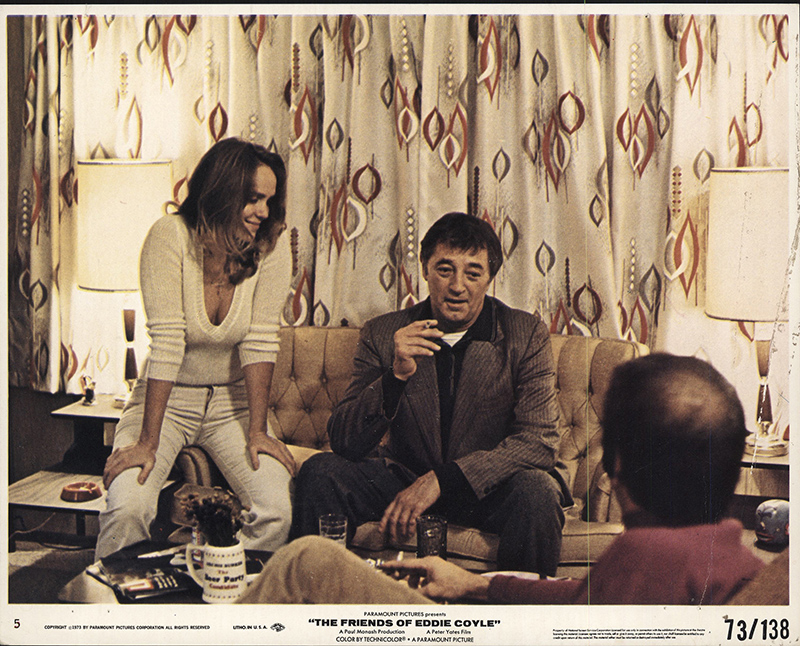
This scene from The Friends of Eddie Coyle was featured in a movie theater lobby card.

Larry Henry is a veteran print and broadcast journalist. He served as press secretary for Nevada Governor Bob Miller, and was political editor at the Las Vegas Sun and managing editor at KFSM-TV, the CBS affiliate in Northwest Arkansas. Today, he is a senior reporter for Gambling.com. The Mob in Pop Culture blog appears monthly.

The Kansas City Massacre prompted legal reforms that bolstered federal law enforcement 

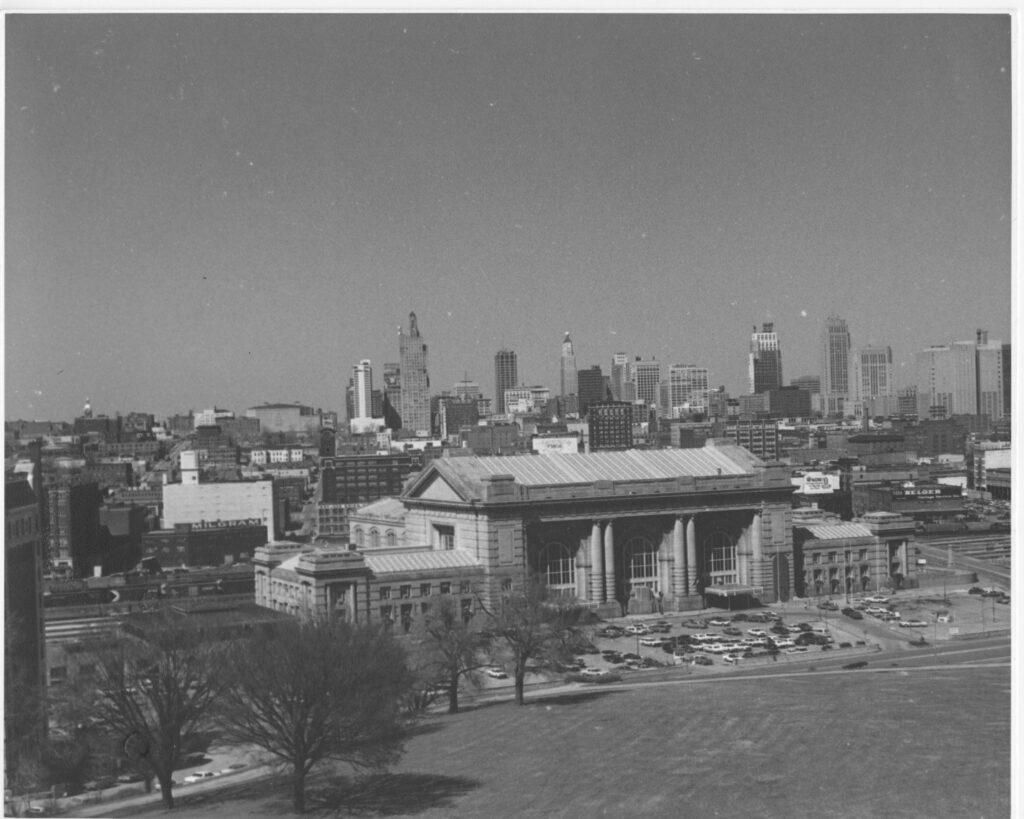
On June 17, 1933, an ambush at Kansas City’s Union Station railroad depot left five men dead and two wounded. An agent of the Bureau of Investigation (later known as the FBI), a police chief and two detectives were among the fatalities. 

The shootout, which came to be called the Kansas City Massacre, spurred Congress to pass a series of crime bills that included the first federal gun control law and a mandate for federal law enforcement officers to carry firearms. It also was the trigger for FBI Director J. Edgar Hoover’s crusade against bank-robbing hoodlums – his “public enemies.” 

After a pardon and a prison escape, Nash was taken into custody for the last time while hiding out in Hot Springs, Arkansas. Missouri State Archives

At the center of the Kansas City Massacre was Frank Nash, a prolific bank robber with a knack for cracking safes using nitroglycerin. After receiving a life sentence in 1913 for shooting his crime partner in the back, he was granted a pardon by enlisting to fight on the Western Front during World War I. 

During his second prison sentence – 25 years this time for burglary using explosives – Nash got out early for good behavior. Once again in prison for train robbery in 1924, Nash remained at Leavenworth until his prison job gave him the opportunity to walk away on October 19, 1930. After he helped seven more prisoners escape the following year, the FBI decided to hunt him down. They tracked him to Hot Spring, Arkansas, and he was apprehended on June 16, 1933. That night, Nash and his law enforcement escorts boarded a Kansas City-bound train set to arrive early the following morning. 

Hot Springs chief of detectives Herbert “Dutch” Akers tipped off Richard Galatas, an associate of Nash in town, that the FBI was en route to Kansas City with their prisoner in tow. Galatas sounded the alarm, and soon Vernon Miller, a bootlegger and former South Dakota sheriff, was tasked with freeing Nash from his captors. An old acquaintance of Nash, Miller couldn’t free his friend alone, so he headed to a Kansas City brothel where he recruited two well-armed fugitive highwaymen: Adam Richetti and Charles Arthur “Pretty Boy” Floyd. Having obtained the manpower – and firepower – he needed, Miller led the trio to Union Station where they waited for their quarry to arrive. 

Bureau of Investigation special agent Raymond J. Caffrey was among the law enforcement officers slain in the Kansas City Massacre. Federal Bureau of Investigation

Escorting Nash on the train were Otto Reed, police chief of McAlester, Oklahoma, and two FBI agents: Frank Smith and Joseph Lackey. Upon arrival, they were met by Special Agent in Charge Reed Vetterli and agent Raymond Caffrey, as well as Kansas City detectives Frank Hermanson and William Grooms. After receiving the all clear, the lawmen led Nash to a Chevrolet parked outside the station. While they were loading the prisoner into the vehicle, two armed men emerged from behind a nearby car and unleashed a hail of bullets. While the lawmen were armed with shotguns and pistols, they were no match for the lethal efficiency of the outlaws’ submachine guns. In the aftermath, the two detectives and agent Caffrey were lifeless on the ground outside the car. Inside, the police chief was dead, as was Nash, betrayed by friendly fire. Having botched their mission, the assailants fled. 


Vernon Miller fled to Chicago first before making his way to the East Coast, hoping to find work with Murder Inc. boss Louis “Lepke” Buchalter. Wherever Miller went, the FBI followed, however, and he became a liability for Buchalter. In November of 1933, Miller’s body was found in a ditch outside Detroit after Miller allegedly killed one of Longie Zwillman’s underlings and was bumped off in retaliation. 

The Bureau of Investigation launched a manhunt for “Pretty Boy” Floyd following the massacre. Floyd was killed in a shootout with a squad led by special agent Melvin Purvis.

“Pretty Boy” Floyd and Adam Richetti fled together and went into hiding, posing with two sisters as couples for cover in New York. In October 1934, they decided to go back to Oklahoma. After a car accident in Ohio, Floyd and Richetti attracted the attention of local police, escalating into a firefight that left Richetti captured and Floyd on the run. Two days later, an FBI squad, led by renowned G-Man Melvin Purvis, tracked down and killed Floyd. In 1938, Richetti was convicted of murder and became the fifth person executed in the Missouri State Penitentiary gas chamber.  

Kansas City’s Union Station became forever linked to the massacre, which spurred Congress to pass new crime legislation, including the first federal gun control law. Kansas City Public Library

Following the Kansas City Massacre, efforts to prevent future tragedies were swift. If the bureau had to go toe to toe with bandits brandishing machine guns, they needed to boost their arsenal. A week after the ambush, Kansas City Special Agent in Charge Ralph Colvin wrote to Hoover requesting more guns: 

“We ought to have one Thompson sub-machine gun, a couple of high-power rifles and about four 45 calibre Colts [sic] Automatic pistols and plenty of ammunition for each. A saw-off shotgun or two would also be useful. I hate to send agents out after these outlaws unless we can meet them on equal footing.” 

Director Hoover promptly wrote back: “I fully agree with you that our men must be afforded every possible facility in dealing with the type of men responsible for the cowardly acts committed at Kansas City.”  

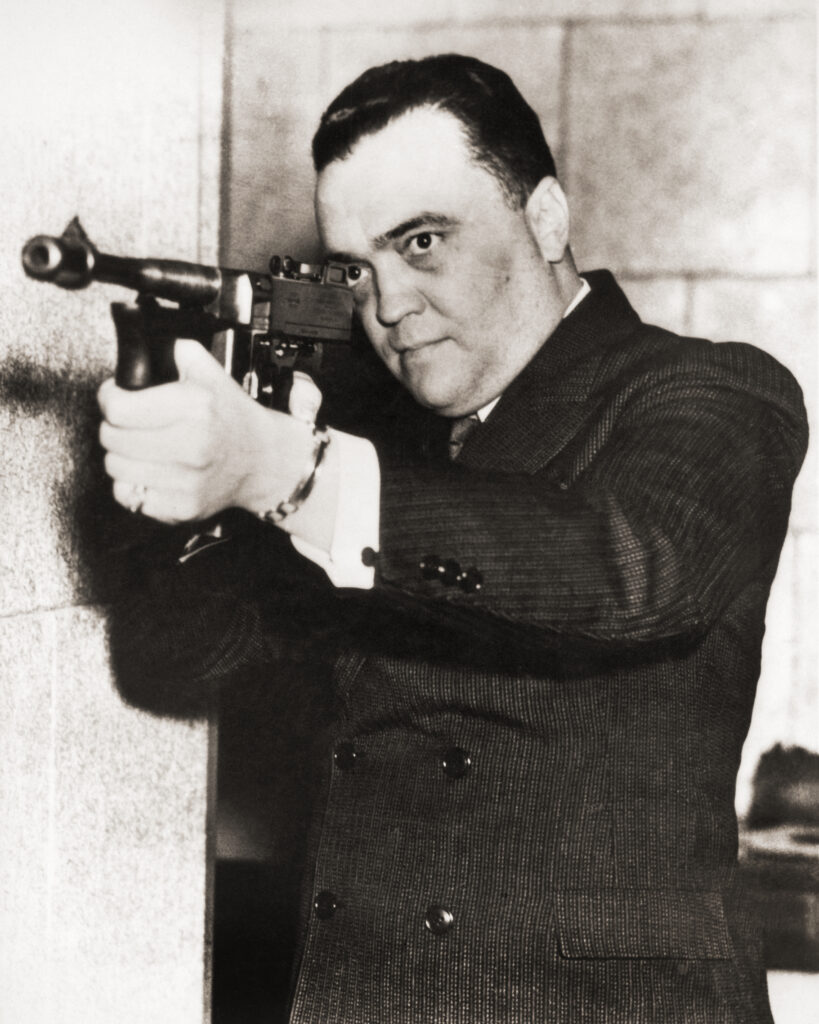
In fact, Hoover was one step ahead of Agent Colvin. On June 20, 1933, Hoover ordered two Thompson submachine guns for delivery to the Kansas City field office. Hoover also organized a committee to determine which firearms equipment would be best to supply to agents across the country. The result was that all field offices would receive .38 Special revolvers, .30-06 Springfield rifles, Remington or Winchester 12-gauge automatic shotguns and Thompson submachine guns. The next step would be to get Congress on board with allowing agents to carry firearms without restriction. 

Contrary to popular belief, federal agents were allowed to carry firearms before the Kansas City Massacre. But the firepower was limited, as wrote Agent Colvin in his plea to Hoover: “We have only the small light pistols furnished by the Bureau and which are entirely inadequate for the purpose.” Without a congressional mandate to override local and state laws, agents had to follow the same rules as private citizens and obtain the requisite permits. This increasingly became an issue as bank robbers with fast getaway cars began speeding across state lines.  

Following the massacre, Bureau of Investigation Director J. Edgar Hoover requisitioned two Thompson submachine guns for the Kansas City Field Office. Getty Images.

In 1934, Congress passed a slew of crime bills that strengthened federal law enforcement. The new laws also brought bank robbers under federal jurisdiction by making it a federal crime to flee across state lines, rob a bank tied to the Federal Reserve and extort or kidnap for a ransom. Congress officially granted the FBI the authority to make arrests and serve warrants for federal crimes and, of course, carry firearms. Lastly, the National Firearms Acts regulated all firearms except revolvers, pistols and rifles and shotguns with barrels more than 18 inches long. The legislation required said firearms to be registered through the Treasury and levied a $200 tax on any transfer to discourage law-abiding gun owners from supplying criminals. That tax is still in effect today, though the fee has not changed since 1934. 

To arm up and fight these gangsters, Hoover needed a proper training facility to instruct agents in handling the newly acquired munitions. In 1934, the Marine Corps invited the Bureau to use its firing ranges in Quantico, Virginia, which would eventually become the FBI training academy. Now, properly armed and trained, agents were ready to take to the field and go after Hoover’s “public enemies.” In 1934, the FBI gunned down John Dillinger and George “Baby Face” Nelson and captured George “Machine Gun” Kelly. Shortly after, the Barker-Karpis Gang was decimated with the deaths of Ma and Fred Barker in 1935, and the capture of Alvin “Creepy” Karpis in 1936.  

The airport shootout and El Chapo’s big arrest

Today, his nickname is universally recognized. It’s a moniker virtually synonymous with contemporary narcotrafficking. But 30 years ago, few outside of regional underworld circles had ever heard of El Chapo. The man called “Shorty” wouldn’t gain global infamy until a series of uncanny events unfolded in the new millennium. 

Born in 1957 in rural La Tuna, Badiraguato, in the Mexican state of Sinaloa, Joaquin Guzman Loera’s path to criminal power bore characteristics similar to those of other 20th century gangsters. He came from humble beginnings, which included early exposure to criminality, unstable economy, unreliable and/or corrupt government, etc.

As an adult during the 1980s and early ’90s, El Chapo was busy making moves within Mexico’s ever-shifting drug underworld. Perhaps one of the most important events that inadvertently paved the way for his ascension was the murder of DEA agent Enrique “Kiki” Camarena in 1985. The subsequent breakup of the Guadalajara Cartel, the criminal organization held responsible for the agent’s death, as a result of American law enforcement’s payback and the mounting pressure on Mexico’s government to crack down, created a power vacuum. Power struggles ensued. By 1989, with a few of the top narcos incarcerated (including Ernesto Fonseca, Miguel Angel Felix Gallardo and Rafael Caro Quintero), some killed and others on the lam, the remaining drug traffickers splintered and restructured.

Empire building and tunnel digging

Guzman was one of several individuals to take the reins of what would come to be known as the Sinaloa Cartel. “To be like Chapo,” says former cartel enforcer and debt collector Jose Martinez, aka El Mano Negra, “You have to grow up with big drug dealers, big drug lords.”

Martinez, who is currently incarcerated in a U.S. federal prison, confessed in 2013 to dozens of homicides over the span of 30-plus years, most of which were cartel-sanctioned assassinations. He claims to have met El Chapo on at least one occasion in 1991, in a most unexpected place – California’s Central Valley, where Martinez lived at the time. He says El Chapo is among an elite few who have risen to such prominence within the drug underworld, and although many aspire to that level, it’s not easy to get there. “Not because you sell a hundred kilos a month can you be like him, hell no.” Martinez credits El Chapo’s tenacity and networking skills. “He went to Central America and talked with [Pablo] Escobar, and all that. That’s why he became who he became.”

El Chapo also was innovative. Using tunnels to smuggle drugs wasn’t something he invented; for decades, smugglers of all sorts have used tunnels to move illicit goods. But what authorities found on May 17, 1990, represented a highly advanced level of tunnel tech. The discovery of a tunnel crossing from Mexico into Arizona left agents in sheer awe. The passageway in Douglas Arizona, hidden in a warehouse’s “false” drain, extended 300 feet and was equipped with lighting, rail and ventilation. The starting point was a house in Agua Prieta. The little house used an even more clandestine system to hide its tunnel entry point. The entrance was hidden beneath a pool table atop a concrete slab, which opened by a hydraulic system – activated by turning a water spigot outside. The tunnel was constructed in 1989 and considered the first elaborate and expensive cross-border underground endeavor credited to El Chapo. This new method of architectural marvel would be adopted by other drug cartels as well, but as history shows us, for Chapo, tunnels became perhaps the most valuable of all his available tools for drug smuggling.

Collateral damage

One of the Sinaloan’s arch rivals at the time was the Arellano-Felix organization, based in Tijuana – another crucial geographic smuggling location. The two groups played a violent game of eye for an eye in the early ’90s until a particularly fateful incident occurred in the parking lot of Guadalajara’s Miguel Hidalgo y Costilla Airport on May 24, 1993, that left several people dead, a Catholic bishop among them. The shootout thrust both cartels and their leaders into the headlines in Mexico and beyond.

Thousands of mourners pay their respects to slain Cardinal Juan Jesús Posadas Ocampo on May 27, 1993. Courtesy of Cipollini Collection

What actually transpired that day is still debated, but the official story says gunmen (some recruited from a subset of San Diego’s Logan Heights street gang) hired by the Arellano-Felix organization were tasked with killing El Chapo, whom they knew would be at the Guadalajara airport. The assassins spotted a vehicle they believed was Guzman’s – a white Grand Marquis – and opened fire. Inside the car was Cardinal Juan Jesús Posadas Ocampo, dressed in full clerical garb, and a driver. Ocampo was riddled by 14 bullets at close range; his driver was hit 11 times.

Sketches of those wanted in connection with Cardinal Ocampo’s murder circulated to the press in May 1993.

El Chapo and his entourage were in their car nearby when one of the bodyguards saw the gunmen. Guzman apparently fled the melee unscathed. Before the hit squad made its quick exit, seven people were left dead. Afterward, an official from Guadalajara’s office of attorney general stated that 20 gunmen were involved, two suspects were captured and a total of 26 rounds hit Ocampo’s vehicle and another 20 rounds hit a nearby vehicle. The Catholic Church wasn’t exactly buying the official version at face value, and controversy still surrounds the murder (Ocampo spoke out against narcos and government collusion). But again, officially, authorities maintained the death was a result of mistaken identity and the violence was driven by the rivalry between the Tijuana-based Arellano-Felix family and the Sinaloan faction led by El Chapo and Ismael “El Mayo” Zambada.

Wanted man

Mexico issued a reward of 15 million pesos for the capture of Benjamin and Javier Arellano-Felix, Joaquin “El Chapo” Guzman and Hector Luis Palma. El Chapo had quickly made his way to Guatemala where he operated under the alias Jose Luis Ramirez. The murder of Cardinal Ocampo and the subsequent manhunt is what propelled El Chapo onto the world stage for the first time, but he wasn’t an entirely unknown figure either. Law enforcement agencies from the U.S., Mexico and Central America had been piecing together the puzzle of his role and control of major drug shipments (for example, El Chapo was secretly photographed by El Salvadoran agents at a bar in San Salvador in April).

Surveillance photos of El Chapo in April 1993 by undercover agents in El Salvador.

The Salvadoran authorities planned to capture El Chapo but Guatemala got to him first. El Chapo, his alleged lover María del Rocío del Villar Becerra, and four other companions were detained near the Mexican border on June 9, 1993. He was swiftly handed over to Mexican authorities and taken to Almoloya “Altiplano” prison, about 50 miles east of Mexico City, where the prisoners were showcased for the news media.

During interrogation, El Chapo admitted to being at the airport when the gunfire broke out and claimed to have seen one or more of the Arellano-Felix members at the scene. He also told investigators that he escaped from the shooting in a taxi, and a few days thereafter drove himself to the Mexican region bordering Guatemala.

On June 10, Chapo, adorned in prison fatigues, stood in a drizzling rain as reporters called out questions. “No, señor,” Guzman replied to the narco accusation. “Yo soy agricultor.” His responses were all brief, denying ever using weapons and insisting he farmed corn and beans.  Later in the month, authorities in El Salvador busted a large cocaine shipment and arrested several of El Chapo’s associates, further connecting the dots of the drug lord’s empire.

Prison life and escape

El Chapo was transferred to Puente Grande prison in November 1995. Some accounts describe his prison life as nothing less than extravagant. According to Mexican journalist Anabel Hernandez, in her book Emma and the Other Narco Women, El Chapo and Hector Luis Palma Salazar engaged in sexual exploits with “prostitutes from outside, and when that was not possible they paid nurses, cleaners and cooks who worked in the penal system.” She also writes about their dining on expensive takeout meals and receiving shipments of Viagra. Chapo’s hedonistic prison lifestyle, she wrote, was enabled by bribes and funded by regular shipments of cash from his cousin, another formidable drug lord – Arturo Beltran Leyva.

The party was about to end, though, in 2001. El Chapo’s first plans of escape were prompted by one word – extradition. Once he learned an agreement between Mexico and the United States was imminent, his plot went into action. On January 19, 2001, he either rolled out or walked out (depending on who’s telling the story) of Puente Grande prison and remained on the lam for more than a decade.

Folk hero

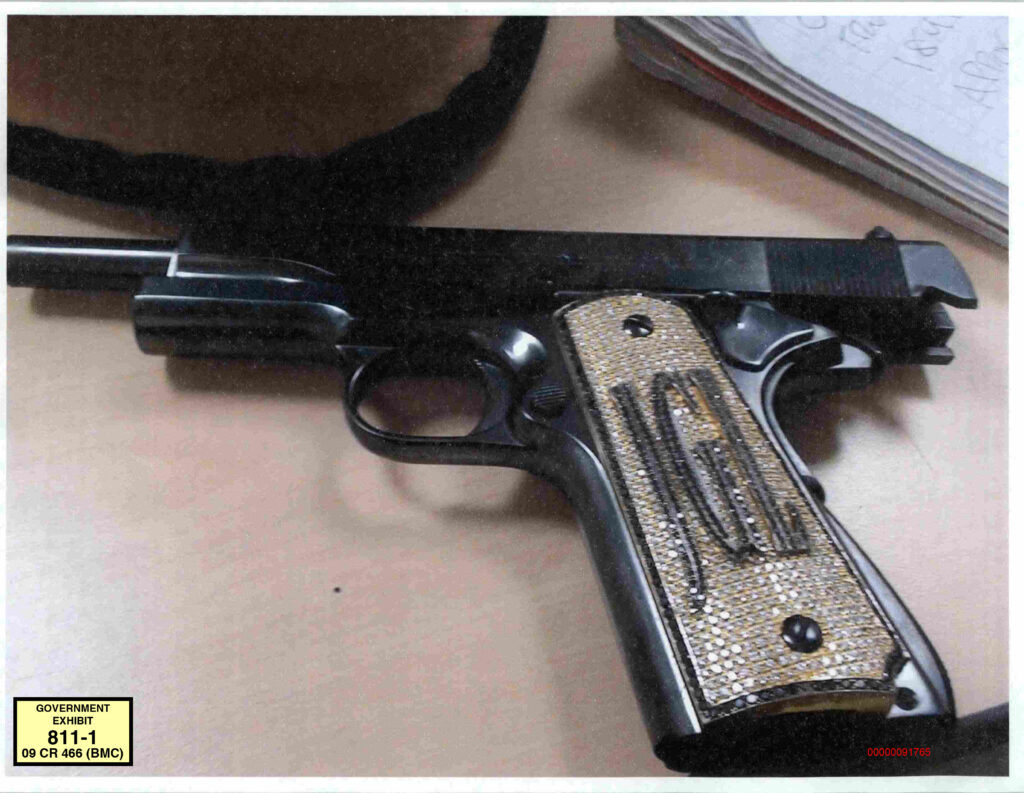
El Chapo’s bejeweled handgun in evidence during his trial in 2019. U.S. Justice Department evidence exhibit

Still, El Chapo was not a widely recognized name. When and how did he become a cultural phenomenon?  Douglas Century, co-author of Hunting El Chapo, says everything changed in 2009. “One of the crucial things to making him a folk hero, larger-than-life figure, was the Forbes list ranking.” Century is referring to March 2009 issue of Forbes when it listed El Chapo number 701 (at $1 billion) on the richest people list. He was again featured in November at number 41 on the list of “World’s Most Powerful People.” The magazine was criticized both domestically and abroad for including El Chapo, but it certainly wasn’t the first time the publication had named a kingpin on one of its lists (Pablo Escobar is a prime example). ”That became well known slang in Mexico,” Century says of the ranking number. “‘To this day if you see people posting on social media ‘701,’ or anything with those numbers, they’re shouting out Chapo by his Forbes ranking.”

El Chapo was recaptured in 2014 and housed in the first prison he spent time in – Altiplano. Again he wasted no time in plotting an escape. A massive feat of engineering created the tunnel of all tunnels. It led directly from the floor of the shower of his prison cell below ground to a house under construction near the prison. He was free for six months and ultimately came face to face again with his biggest fear – extradition. El Chapo was extradited to the United States in 2017, and he was convicted in federal court in New York in 2019. He is serving a life sentence in ADX Florence, the supermax prison 113 miles south of Denver.

Christian Cipollini is the author of Murder Inc.: Mysteries of the Mob’s Most Deadly Hit Squad and LUCKY, a gangster graphic novel.
Body farms unravel mysteries of human decomposition

In May of 1983 in New Jersey, a cyclist stumbled upon a turkey vulture feeding on something in a black plastic bag. Upon closer inspection, it was a human arm. Flies and carrion beetles had long been feasting on the flesh as the medical examiner removed the plastic from the body. Only the wallet and family photos found on the corpse revealed the identity of the victim as Daniel Deppner. Deppner had been poisoned and shot point blank in the head. The body was too far decomposed to give any clue about how long Deppner had been dead. The only clue was when Deppner was reported missing.

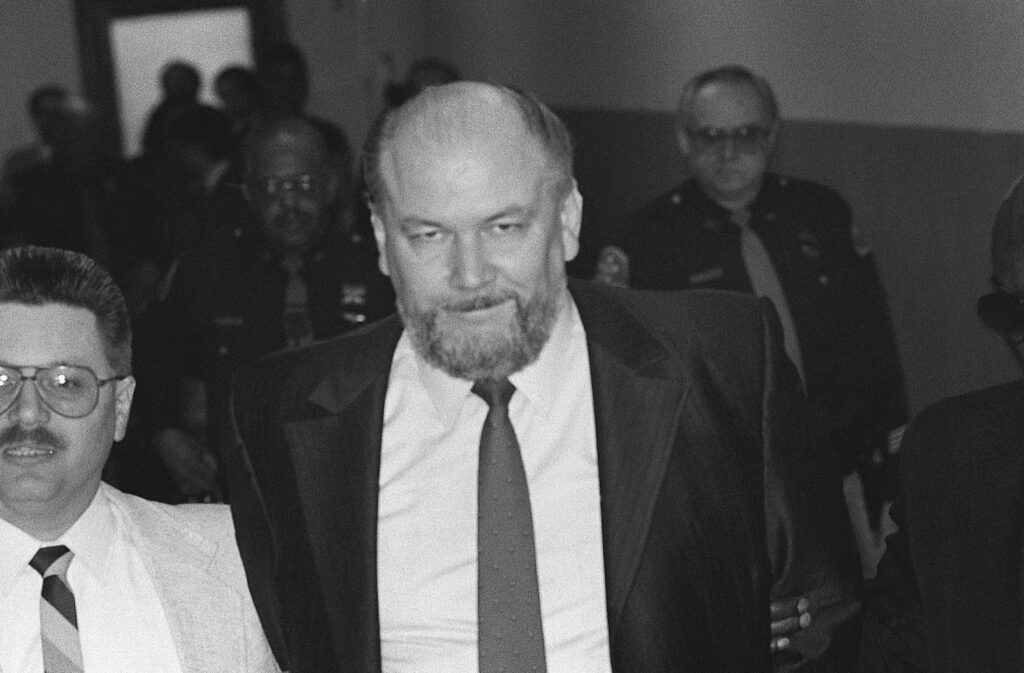
Mob hitman Richard Kuklinski was arrested on December 17, 1986, and ultimately sentenced to 60 years in prison for the murder of associates Daniel Deppner and Gary Smith. Getty Images

A few months later, police found another body in Orangetown, just north of the New Jersey-New York border, under curious circumstances. The corpse appeared to be fresh with little decomposition. Corpses typically begin to decompose from the bacteria inside the body, but in this case the body had more decay on the outside than inside. During the autopsy, the coroner found evidence of ice crystals in the victim’s heart. The body appeared fresh because it had been frozen. Investigators were fortunate that the culprit was in a hurry and did not properly thaw the body, or else they would have never realized the victim died more than two years before. A missing persons report confirmed this was Louis Masgay.  

Deppner and Masgay were both associates — and now victims — of Mob hitman Richard Kuklinski.  

Kuklinski had already committed a number of murders by the time he began his career with the Mob. He started doing occasional jobs for the DeCavalcante family in New Jersey. Later, he became involved with a like-minded killer, Gambino family hitman Roy DeMeo of New York. DeMeo and his crew perfected a system of murder called the “Gemini method.” They would lure a target into an apartment next to DeMeo’s Gemini Lounge bar where, after a shot to the head, the crew would drain the body of blood and dismember the corpse for easy disposal. Kuklinski worked with DeMeo’s crew as an enforcer. Kuklinski’s murders were not limited to Mob hits, however. Deppner was an associate in Kuklinski’s breaking-and-entering crew. Masgay was a customer for fencing hijacked VHS tapes.  

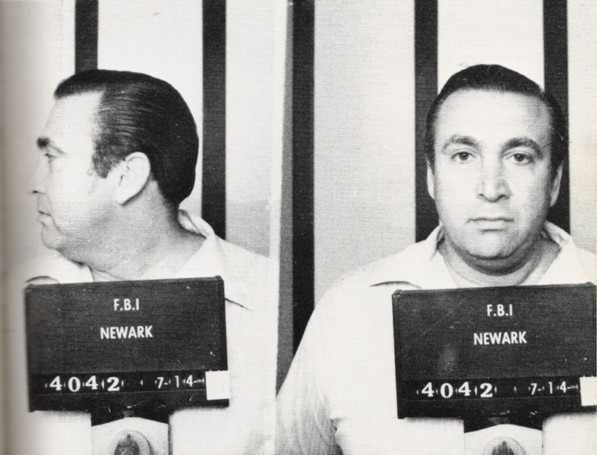
Gambino family hitman Roy DeMeo and his crew dismembered their victims for easy disposal with the philosophy of “no body, no crime.” DeMeo hired Richard Kuklinski for occasional hits.

The personal effects found on Deppner and Masgay’s bodies were the only clues to identify them and provide evidence for the post-mortem interval (PMI) – how long they had been dead. Deppner’s body was too decomposed for any accurate biological estimate. Masgay’s frozen corpse left no pathologic clues for time of death. Had Kuklinski tried to hide the victim’s identity by removing personal effects and fingertips, as he had done in previous cases, determining the PMI may have been impossible. Forensic anthropologists at the time were unable to determine PMI for a well-decayed corpse. There was room for improvement that the University of Tennessee’s Forensic Anthropology Center (FAC) had just recently begun to explore. 

In 1977, University of Tennessee forensic anthropologist William Bass was called in by the local sheriff to consult on a puzzling case. Apparently grave robbers had placed a murder victim in the disturbed grave of Confederate Lieutenant William Shy. Bass estimated the post-mortem interval at six months to a year based on the condition of the victim’s body. However, as more evidence became known, Bass realized the “murder victim” was actually the expertly embalmed body of William Shy, well preserved in a sealed iron casket. From this experience, Bass recognized that forensic anthropologists needed to know a lot more about the decomposition process. In 1987, Bass opened the first anthropology research facility – later dubbed “the body farm” by a Patricia Cornwell novel in 1994. 

Using human cadavers to study decomposition was a new concept in 1980, as the standard practice was to use pig cadavers as an analogue to humans in decomposition studies. Pigs and humans share many attributes, including body mass range, anatomy and hair coverage. Pigs are widely available, so researchers can control traits and the time and cause of death. However, pigs fall short of a perfect analogue concerning body proportions, stomach anatomy and diet. Recent studies have observed that pig cadavers decompose at a higher rate compared with human cadavers. Pig studies allowed researchers to know and understand the steps of decomposition, but the timing of said steps lies with human cadaver studies. 

Researchers were initially reluctant to use human cadavers in decomposition studies because of several confounding factors. Unlike pigs, for human cadavers, researchers cannot control variables such as age and weight. Most donated human cadavers have died of natural causes, so the elderly make up a large portion of available cadavers. Humans also have dissimilar body chemistry thanks to factors such as diet and pharmaceutical use. Lastly, human cadavers may have been autopsied or frozen before arrival at the facility. Even with these limitations, it is still important to use human cadavers to understand how the human body decomposes. 

Blowflies can detect and lay eggs in a corpse within a few minutes after death. Crime scene investigators collect the larvae by placing them in an ethanol solution to kill the larva and stop any further growth. Shutterstock

The primary focus of body farms is forensic taphonomy (from the Greek taphos, meaning “burial”), which covers everything that happens to a body from death to discovery. Taphonomists observe how the human body decomposes in a controlled environment by studying the body itself as well as the impact the body has on its surroundings.

A corpse forms a localized ecosystem that attracts a variety of carrion organisms that feed on decaying tissue such as insects, bacteria and even vertebrates such as vultures. Species have adapted over time to have a favored stage in the decomposition process to minimize competition with other organisms. Blowflies and ants prefer the fresh stage at the beginning of decomposition. Adult flies lay their eggs in the corpse, which provides a crucial food resource for the newly hatched larvae. As the body begins to bloat from gases produced by flourishing bacteria, the odor becomes a signal for carrion beetles to join the feast. Predators such as wasps arrive not to feed on the corpse, but to prey on the foraging insects. Because each species has a preferred time to feed on a corpse, taphonomists study the assemblages of organisms feeding on a cadaver to estimate accurately the post-mortem interval.  

Taphonomists also study environmental factors that influence the decay process. Bodies decay at different rates depending on temperature, weather and soil chemistry. Extreme cold or heat leaves detectable signatures on the body, such as microscopic cracks in the bones from the freeze-thaw cycles of water in the tissue. 

Body farm research can aid in the identification of remains in unmarked graves, such as those found in an Indiana cornfield belonging to Chicago Outfit mobsters Tony and Michael Spilotro. Associated Press

More than 100 bodies are donated to the University of Tennessee each year. The body farm even arranges transportation for bodies within 100 miles of Knoxville. While medical schools return remains to the family after use, the FAC cleans the skeletal remains and maintains them in its anthropology collections, which contain more than 1,600 individuals ranging from fetal to 101 years old.  

For nearly three decades, the University of Tennessee’s Forensic Anthropology Center was the only one of its kind. With the rise in popularity of forensic science in the 21st century, however, other universities started their own body farms. Today, there are nine body farms across the world, with seven of them located in the United States. Environment has a significant impact on decomposition, so it is beneficial for body farms to be located in different climates. In addition to Tennessee, there are body farms in Texas, Illinois, Colorado, North Carolina and Florida. Several more are in the planning phase and will begin construction when they secure funding. In 2016, the Australian Facility for Taphonomic Experimental Research became the first body farm outside the United States. 

Forensic taphonomists work closely with law enforcement for training and consultation. Investigators apply these principals to cases to determine the time of death in conjunction with other evidence. With an ever-increasing library of decomposition data, Richard Kuklinski’s carelessly creative disposal of frozen bodies is no longer a foolproof way to disguise the time of death. Taphonomists have tested those and many other conditions in their outdoor laboratories. In recent years, the Tennessee facility has worked with Mexican investigators to train them on forensic excavation — a step toward resolving the many mass graves of drug cartel victims. Thanks to these recent advances in forensic taphonomy, it has become more difficult for killers to make a victim disappear. Any negligence will inevitably leave a clue for investigators to identify the victims and solve the case. 

‘When Spilotro got greedy, the end was written’

Since 1980, award-winning reporter Chuck Goudie has covered the Mob and much more for ABC7 News in Chicago. He’s been the television station’s chief investigative reporter since 1990.

Among other high-profile mobsters Goudie has reported on, Tony Spilotro was, beginning in the early 1970s, the Chicago Outfit’s overseer in Las Vegas. In 1986, Spilotro and his brother, Michael, were beaten to death in the basement of a home near O’Hare International Airport and buried in an Indiana cornfield. Outfit leaders were angry with Spilotro for being a “loose cannon,” according to what one federal official told Goudie.

In 2022, Goudie traveled to Las Vegas to investigate whether human remains discovered along Lake Mead’s receding shoreline might have a connection to the Chicago Outfit. The lake is about 30 miles east of Las Vegas.

Many of Goudie’s stories about organized crime can be found on YouTube at “Chuck Goudie’s Mob Vault.”

The Mob Museum recently interviewed Goudie about his coverage of the Outfit and some of its members.

Museum: What are the one or two Chicago Outfit stories that have especially stood out to you over the years as a reporter, and why?

Goudie: One was “Lunch with No Nose.” The late John DiFronzo was quite a character, albeit you wouldn’t want to cross him.

When he assumed the leadership of the Outfit in 2009, my ABC7 I-Team began a surveillance operation of a west suburban Chicago restaurant where he would hold weekly Mob court.

The upper crust of the Outfit would be there. We branded it “Lunch with No Nose,” the nickname given to DiFronzo decades ago when he sliced off a good portion of his proboscis while diving through a plate-glass window during a Michigan Avenue retail theft gone awry. That mob luncheon seemed to be a command performance, a who’s who of crime bosses.

Anyway, the restaurant was open to the public. So I sent in our fearless camerawoman wired for undercover video to get a table and some video. And then when DiFronzo and his chums came out from lunch, I was with a full TV crew in the parking lot to conduct a little interview. DiFronzo, not surprisingly, was cordial but knew nuttin ’about nuttin’.

Perhaps the best non-assassination shot ever came as DiFronzo was driving away. A fake (I hope) large pair of testicles was gangling from the ball of his trailer hitch.

Also, ABC7 reported on how a jury mistake cut the sentence for current (but now ailing) Chicago Mob boss Solly DeLaurentis.

During the Good Ship Lollipop case in 1993, the jury reported a clean sweep of guilty verdicts against DeLaurentis that would have sent him away for decades. The day after, a juror contacted me to say that the judge got it wrong. They had actually acquitted him on a murder conspiracy count.

Chuck Goudie conducted a prison interview with the Outfit’s Salvatore “Solly D” DeLaurentis, who ended up with a much shorter sentence than initially believed because of a mistake by the jury in announcing the verdicts.

The judge had to reconvene the jury, and after being satisfied that there had been a mistake in announcing the verdict, it was thrown out. That mistake, and our reporting it, resulted in DeLaurentis getting out of prison far earlier than he might have.

What is the significance of the Chicago Outfit’s involvement in Las Vegas?

The significance is that the Outfit represents the beginning and the end of lucrative, old-time Las Vegas. From the 1950s through the mid-’80s, Chicago racketeers controlled legal gambling rackets, illegal gambling with better odds, loansharking, prostitution, drugs, guns and even much street crime.

When Spilotro got greedy, the end was written. Spilotro’s semifinal resting place in an Indiana cornfield marked the beginning of the city going legit. Or as legit as it will ever be.

What are your thoughts on the body found in the barrel at Lake Mead — the shooting victim whose clothing indicated he was dumped in the lake in the late 1970s or early ‘80s? Does your reporting indicate this could have been an Outfit hit by Tony Spilotro or someone in his circle?

We went to Lake Mead last fall to look into this, and I came away with mixed feelings. While it certainly could be a Mob-hit victim, several law enforcement experts said that with an expansive desert to dispose of bodies, the lake seemed to be a long shot. So who knows?

Has anybody pinpointed the exact house near O’Hare where Spilotro and his brother Michael were beaten to death in 1986? Is the house still there?

We looked into this for a Spilotro anniversary piece in 2016.

Tony Spilotro, left, is shown with members of his crew in Las Vegas in this police surveillance photo. Goudie’s team conducted research to try to determine exactly where Spilotro and his brother Michael were killed in the Chicago suburb of Bensenville. They could not definitively locate the house in which the murder occurred.

While there will be disagreement, we reported: “Mob-watcher websites display several Bensenville homes purported to be the location of the Spilotro killings. Investigators say all were looked at and cleared. The I-Team examined property records for those and other possible locations and spoke with current and former homeowners and found no Outfit connection. So, 30 years later, that last family secret remains intact.”

What’s next for the Outfit? Is it still active with an identified leader?

Federal law enforcement officials in Chicago say the Outfit exists but is leaner and less mean. Salvatore “Solly D” DeLaurentis is said to be the boss of the Outfit, but in his mid-80s, he is also in failing health, according to some sources.

The day-to-day operations head of the Outfit is likely Albert “Albie the Falcon” Vena, a Spilotro-style hoodlum, according to some Mob watchers.

And don’t count out old man Rudy Fratto, who never seems to go away.

There have been notable Mob movies about New York and Las Vegas but not much from Hollywood on the Chicago Outfit. Do you have thoughts on why that is?

There have been some, but the New York-Los Angeles pipeline frequently forgets there is a middle of the country. The more likely issue may be that Chicago City Hall has always insisted on playing down Chicago’s rich organized crime history. That is why Al Capone’s haunts are not recognized by the city in any meaningful way, Mob tours are disrespected by the city and any effort to get an organized crime museum here has always been stymied.

Only a cynic would think that the reason for this might be the long and deep connections between the Outfit and City Hall that have surfaced over the years in various federal investigations. After all, the entire First Ward governors of the city were once Mob bosses and their devoted underlings.

Of course, in 2023 city officials insist such organized crime infiltration has been doused.

Larry Henry is a veteran print and broadcast journalist. He served as press secretary for Nevada Governor Bob Miller, and was political editor at the Las Vegas Sun and managing editor at KFSM-TV, the CBS affiliate in Northwest Arkansas. Today, he is a senior reporter for Gambling.com. The Mob in Pop Culture blog appears monthly.