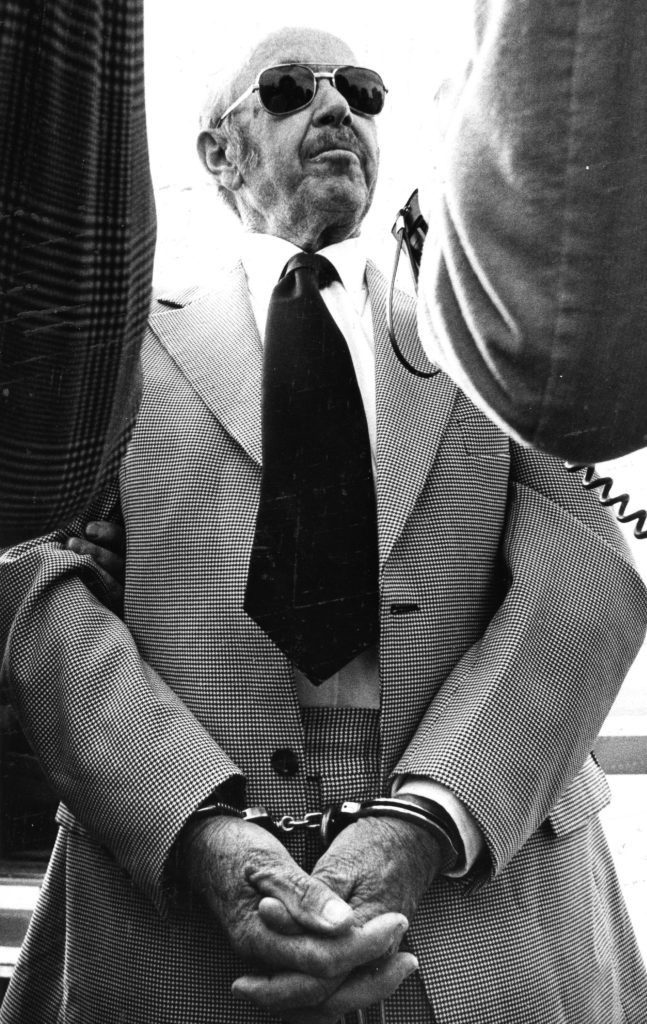
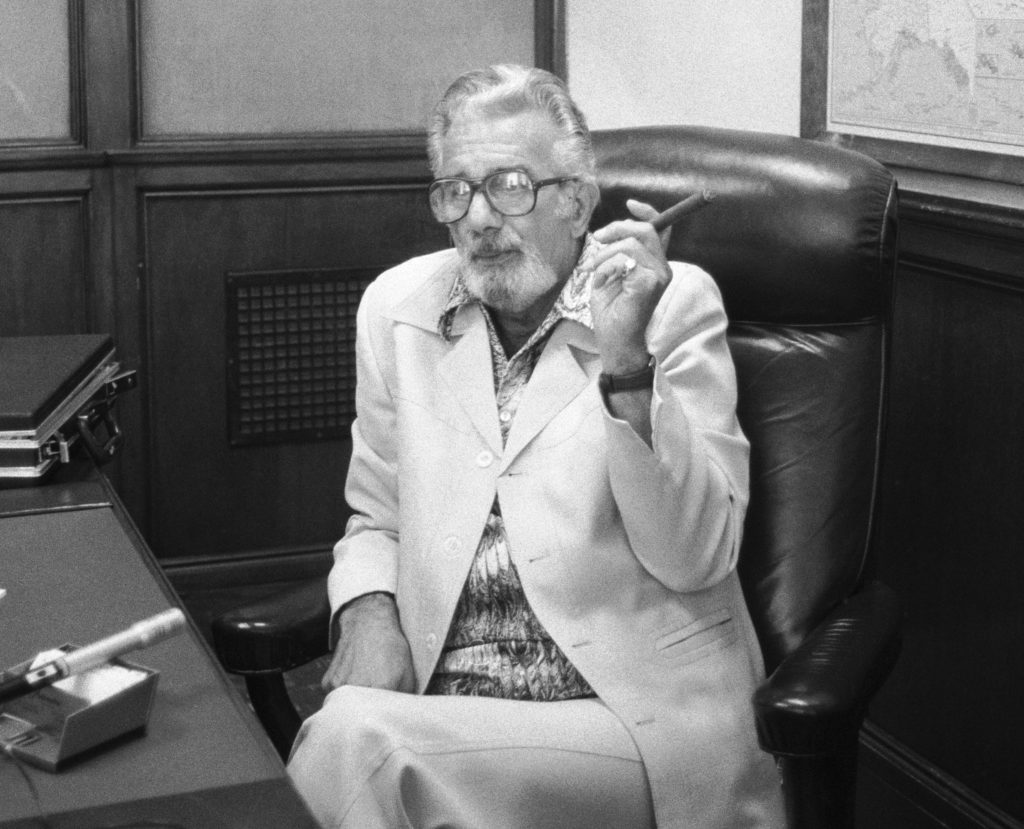
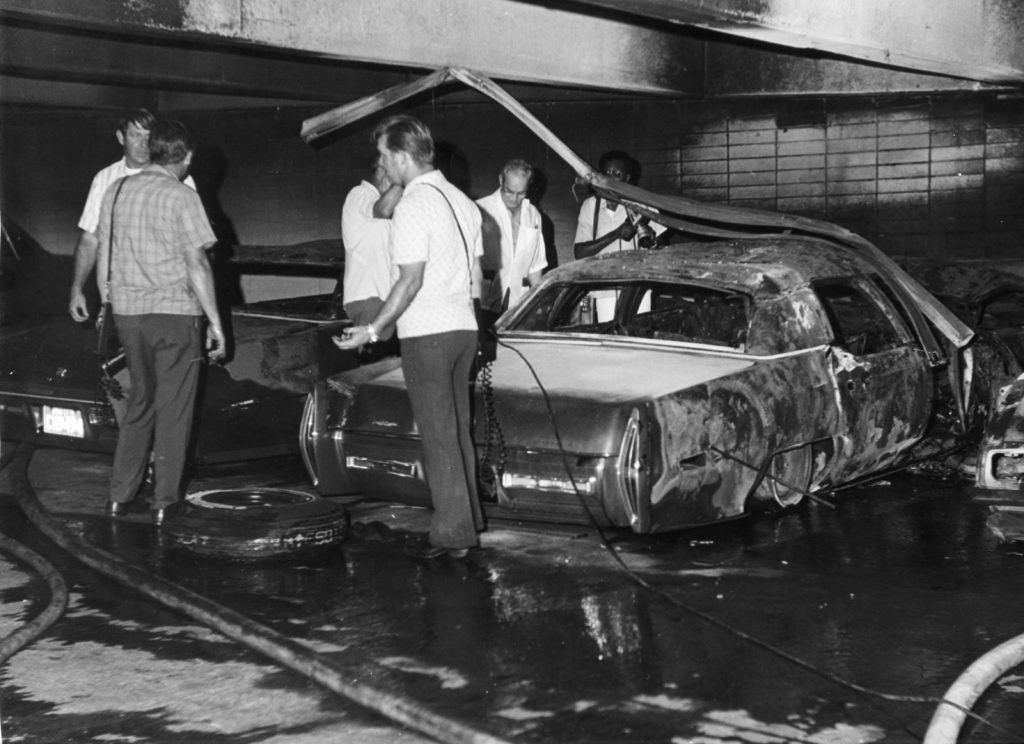
Seventy years ago, Meyer Lansky took a legal hit in an upstate New York gambling rackets crackdown that concluded with the first and only stint of jail time he ever served.
Sixteen months of inquiries conducted by a blue-ribbon grand jury led to sweeping indictments being handed down in late 1952, naming dozens of front men, several corporate entities and a few of the hidden string-pullers involved in illegal gambling enterprises in picturesque Saratoga Springs. Meyer Lansky, no stranger to law enforcement and police lineups, had managed until this time to avoid conviction for any major crime. As a result of the expansive investigation, however, his winning streak was officially broken in May 1953.
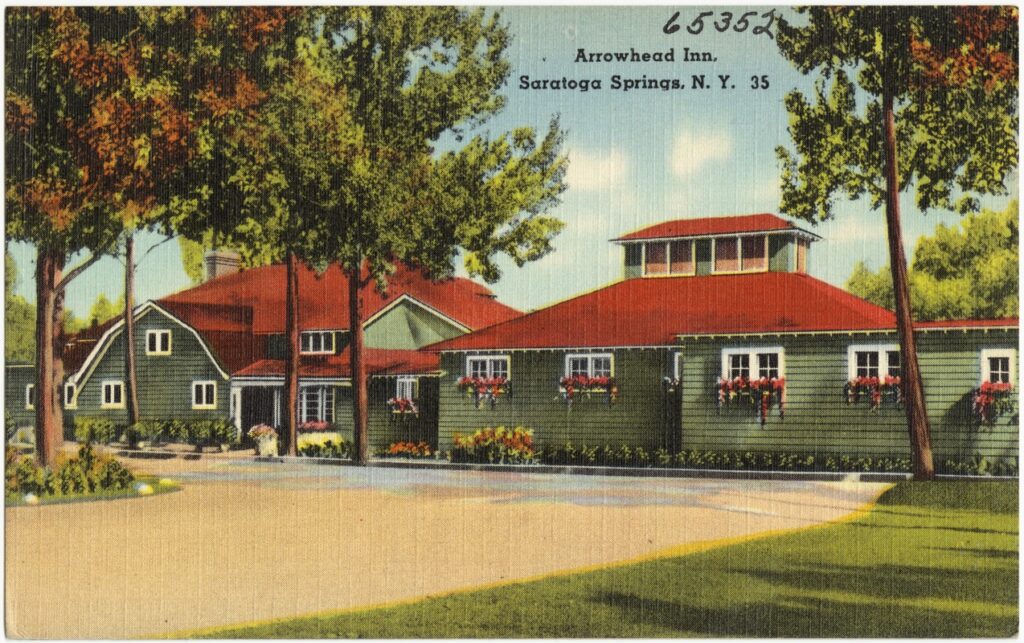
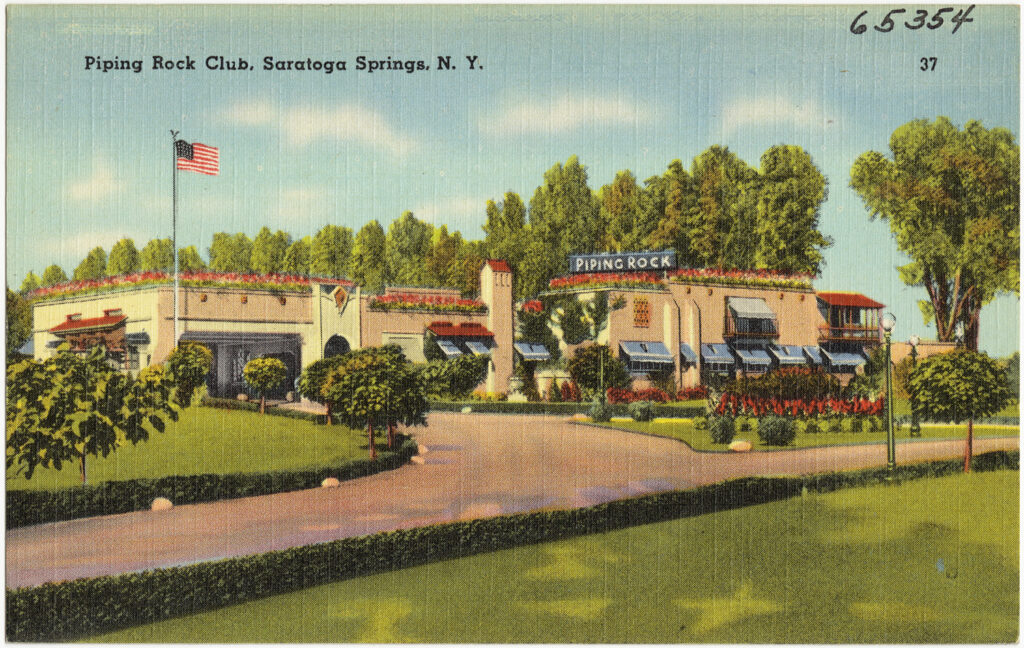
For years, the swanky establishments, colloquially known as “lake houses,” were well known for fine dining and top-notch entertainment. But after sundown, it was an open secret that the lake houses offered ample libations and games of chance. Some of the notable hot spots included Piping Rock, Riley’s, The Brook and the Arrowhead Inn.
The Arrowhead Inn was one of the mobbed-up Saratoga lake houses targeted by authorities, even though it had closed in 1947. Courtesy of Christian Cipollini
Saratoga’s gambling underbelly traces back long before the underworld’s most infamous figures became involved. When Manhattan’s most notorious financier — Arnold Rothstein — began putting his money (and installing up-and-coming underlings) into the area during the 1920s, the racket became a well-oiled machine.
Investigative interest in the lake houses was probably inevitable and had even been predicted (by the news media) some years earlier, but fierce new attention came on the heels of the nationally televised Kefauver Committee’s investigation of organized crime, beginning in 1950. Lansky was one of many known and lesser-known mobsters called before the committee. He, like most of those facing hard questions, denied or refused to answer anything self incriminating. Nevertheless, the exposure certainly prompted then-New York Governor Thomas Dewey to take aim at the numerous rackets across the state, and in particular the gambling enterprises in Saratoga.
The Piping Rock Club was another Saratoga resort linked to the Mob and illegal gambling. Courtesy of Christian Cipollini
A special grand jury convened in late 1951 to examine illegal activities at the lake houses. In September 1952, a 52-page document listed alleged conspirators (most names were still under seal) and various lake houses. Lansky was one of seven indicted individuals charged with forgery, conspiracy and gambling in the operation of the Arrowhead Inn (which had been closed since 1947). The 21-count indictment asserted the Arrowhead was operated as an elaborate scheme, under the ownership of L & L Company, and essentially was a “front” for the ultimate purpose “to attract the maximum number of patrons of appropriate economic position who should be induced to proceed from the restaurant to the casino and there to engage in games of chance.”
Prosecutors publicly named Lansky and James “Piggy” Lynch, but kept the other names under seal until the individuals could be located and presumably apprehended. Lansky took the proactive route and came forward quickly. Accompanied by his attorney, Moses Polakoff, Lansky surrendered to New York State Police on September 10, 1952. He was arraigned later that afternoon in Ballston Spa and released on $10,000 bail. Most of the charges were misdemeanors, with the exception of a charge of third-degree forgery for feloniously obtaining signatures for a summer liquor license.
Lansky’s case was not the first, although it received the most press. When the Arrowhead indictment came to light, prosecutors had already issued 40 indictments related to other lake houses, stakeholders and complicit politicians.
Press coverage of the probe put extra flair into the headlines with frequent mentions of Lansky’s association with Lucky Luciano, Frank Costello and Joe Adonis. Interestingly, despite suspicions they too had financial interests in the Saratoga nightclubs at one time or another, none of those three was ever named in the indictments. Luciano was living in Italy, exiled since 1946. Costello was serving 18 months for contempt of Congress, and Adonis was being tried in New Jersey for unrelated gambling conspiracies.
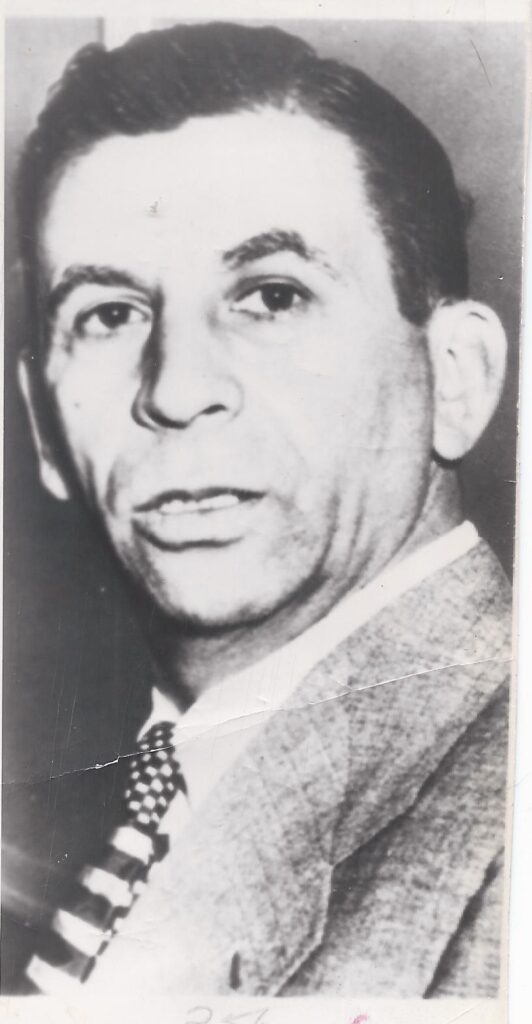
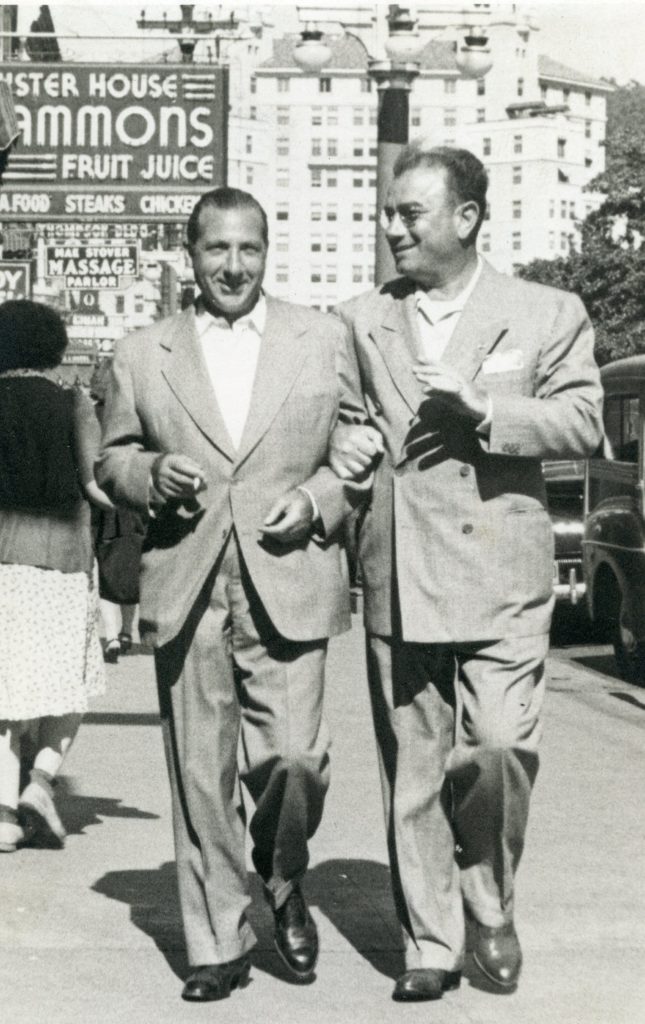
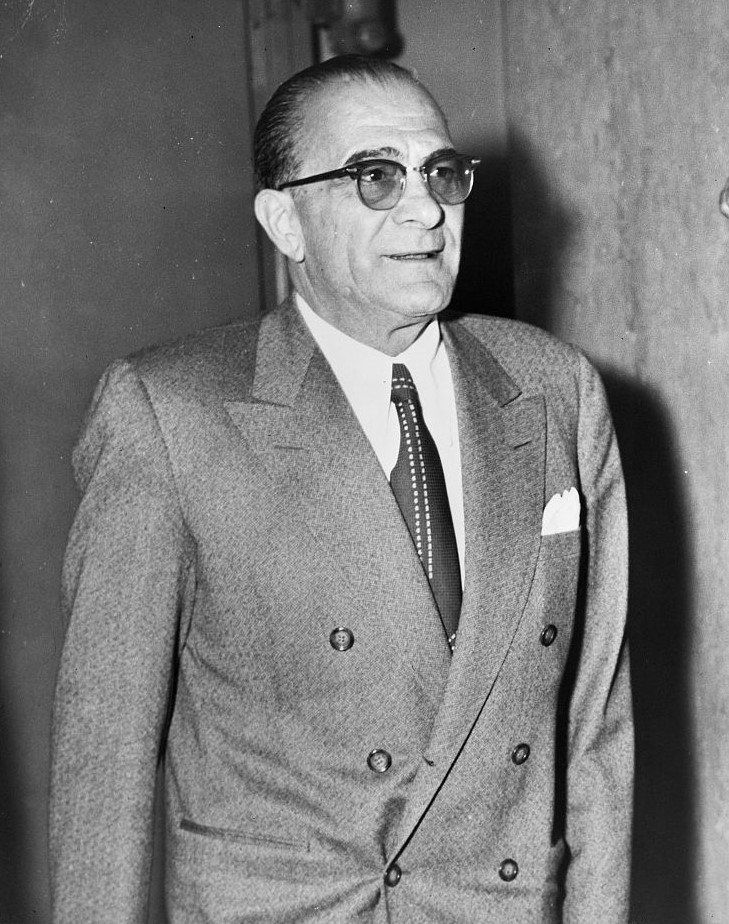
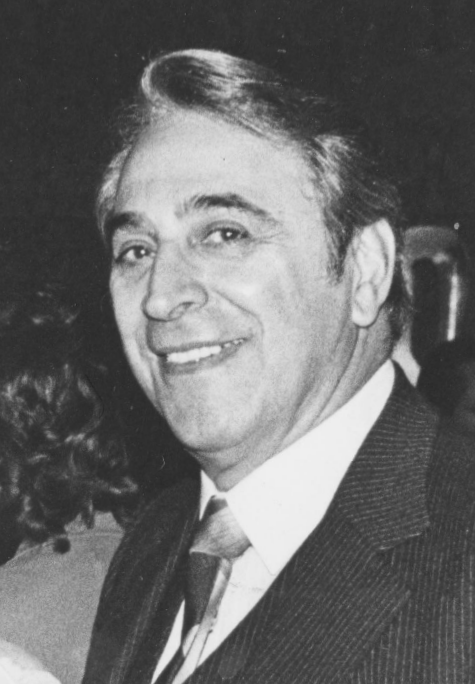
This image of Lansky is dated 1951, when the Saratoga investigation was unfolding. Courtesy of Christian Cipollini
The government’s Saratoga probe did, however, target another recognized Mob figure and co-owner of the Arrowhead Inn — Joseph “Doc” Stacher, who laid low in Las Vegas to buy some time and, some reports suggested, to avoid being tried with Lansky. Once unsealed, the indictment revealed Lansky, Stacher and John ‘Piggy’ Lynch as the owners of L & L, which owned the Arrowhead.
Lansky returned to court on February 19, 1953, where he pleaded guilty to five counts of gambling and conspiracy, all misdemeanors (the felony forgery charge was dropped). Others charged were Louis “Doc” Farone, Gerard and John King, Thomas O’Brien, Herman Weiner and George Brown (the latter two also pleaded guilty).
Then, on May 2, Justice Leo J. Haggerty of the state Supreme Court sentenced Lansky to three months behind bars (in the Saratoga County Jail) and $2,500 in fines ($500 for each count). The judge told the defendants they had 30 days to get their affairs in order.
Lansky’s prison stint in 1953 was an anomaly, even beyond the fact it was the only time served during his criminal career. The incarceration, and subsequent release, received little if any publicity, thus leaving that short period behind bars with a dose of mystery. A notation tucked within Lansky’s FBI file states the mobster was sentenced to 40 days, plus three years of probation, and that during incarceration, in July 1953, “he was also treated for a kidney infection in the Saratoga hospital.“
Robert Lacey’s 1991 Lansky biography Little Man tells of Lansky and co-defendant Gerard King having a pretty easygoing time in the jail, eating delivered meals and basically having the run of the cellblock. Lacey’s account also says Lansky chose to begin serving almost immediately after sentencing and was set free a month early “for good behavior.” According to a New York Daily News article from 2017, Lansky’s prison stay was even shorter than that. “He served 24 days,” the Daily News reported. A 1961 Bureau of Narcotics file notes, with a hint of uncertainty, “On or about July 21, 1953, Meyer Lansky was released.”
The other Saratoga trials continued throughout the year, eventually catching up with Lansky’s partner Doc Stacher. By September, Lansky had been a free man and allegedly making serious moves in Havana, but his legal woes from Saratoga weren’t quite over. The federal government levied a $238,791 tax lien and attempted to have him deported.
The lake house probe itself was an expensive affair and finally came to a presumed close in late December 1953 with a “mass sentencing” of 27 individuals. The sentences included $28,000 in total fines (a $10,000 fine for Doc Stacher alone). Special prosecutor Paul W. Williams announced, “I have cleaned up and closed every casino and gambling house in Saratoga County.” The total cost of the State’s probe was estimated at $500,000, and ultimately tallied 38 guilty verdicts of the 48 people indicted, and three of the six corporations. The county of Saratoga’s bill was $45,000, but it had already collected $20,000 in fines and expected to be in the black again with the fines from the mass sentencing.
Christian Cipollini is the author of Murder Inc.: Mysteries of the Mob’s Most Deadly Hit Squad and LUCKY, a gangster graphic novel.
The Beverly Hills, California, mansion where Benjamin “Bugsy” Siegel was shot to death in 1947 is on the market for $16.9 million, giving many their first glimpse, through current photographs, of the home’s lavish interior.
Though the house at 810 N. Linden Drive has seven bedrooms and seven bathrooms, people familiar with Mob lore are drawn to one room in particular — the living room where the 41-year-old mobster was killed by a gunman firing through a window from outside the home.
Siegel had leased the residence for his girlfriend, Virginia Hill. The lease was due to expire in three days. She was not there, having left for Paris, as her relationship with Siegel was becoming increasingly volatile. Siegel had flown in from Las Vegas to retrieve clothing and other personal items while awaiting a visit from his daughters arriving by train from their home in New York. He was planning to take them to Canada on vacation.
Before that could happen, the gunman ended Siegel’s life, sparking curiosity about the house that continues to this day, with people regularly driving up and pulling over to photograph the palatial exterior.
The inside has been less available for public viewing. Myra Nourmand, the real estate agent handing the sale, said in a telephone interview that tours are available only to serious potential buyers, not “lookie-loos” who just want a peek at the interior and famous living room.
However, she said the living room, though refurbished, including a new fireplace mantel, is the same as it was on the night when Siegel was killed. For instance, the windows are the same that the gunman peered through, though the panes have been upgraded.
Overall, the room is “beautifully furnished,” she said. “It’s a lot nicer than it was. You would never know there was a shooting.”
Siegel shooting remains unsolved
On December 26, 1946, about six months before Siegel was shot to death, he opened the Flamingo Hotel south of Las Vegas on the highway to Los Angeles. Virginia Hill was with him for the grand opening.
That highway, now lined with megaresorts, is known today as the Las Vegas Strip. The Flamingo is still at the same location, though none of the original buildings remain.
On the evening of June 20, 1947, Siegel was sitting on the couch in the living room of the Beverly Hills house when shots were fired through the front window. He was hit four times, including two times in the face.
Siegel had taken over construction of the Flamingo from Billy Wilkerson, a Los Angeles nightclub operator and publisher of the Hollywood Reporter. A compulsive gambler who burned through money, Wilkerson lacked the financial wherewithal to complete the project.
The Flamingo didn’t remain in Siegel’s hands for long. Just before 11 p.m. on June 20, 1947, a gunman aiming a carbine from outside the house fired nine shots at Siegel where he sat on a couch only 14 feet away, striking him four times, killing him instantly. Allen Smiley, a Siegel associate, also was on the couch when the shooting started. A bullet ripped Smiley’s jacket, grazing his left arm.
Photographs showing a bloodied and lifeless Siegel on the couch are in mass circulation online and in print publications, serving as a reminder of the underworld violence during that era. The shooting was dramatized in the 1991 movie Bugsy, starring Warren Beatty as Siegel and Annette Bening as Hill.
Several theories exist for why Siegel was shot. Some believe leaders of the East Coast crime syndicate financially backing the Flamingo project were upset about cost overruns. Others contend Siegel was gunned down in a battle to control the race wire transmitting results from horse tracks across the country to bookmakers in the West. Another theory holds that a brother of Hill’s, upset at Siegel for brutally mistreating her, fired the fatal shots.
While these and other theories are the subject of continued debate, the gunman has never been positively identified. The Beverly Hills Police Department considers the high-profile killing to be an open case and will not release the Siegel file.
Special place
Nourmand, the real estate agent, said most potential buyers are not spooked that a murder occurred at the home.
California Realtors are required to reveal recent deaths at a residence, with certain exceptions, but the Siegel shooting is no secret. It is highlighted in the home’s picture presentation on the Nourmand and Associates website.
This is the living room where Siegel was sitting when he was assassinated. Courtesy of Nourmand & Associates
Nourmand said the residence is spectacular, with an impressive architectural appearance from the street. The 7,092-square-foot home, built in 1928 and sitting on a half-acre lot, has “a tremendous presence,” she said.
Inside, the Spanish Colonial mansion features original stained glass and wrought iron, as well as hand-pained tiles, hardwood floors and beamed ceilings.
Even so, high-end buyers sometimes flatten older homes to start over with a modern showpiece.
Also, some buyers demolish houses that have been the site of killings, including, in Southern California, the Cielo Drive home where Charles Manson followers killed pregnant actor Sharon Tate and four others in August 1969, scrawling “pig” in Tate’s blood on the front door.
Nourmand said she doubts a buyer will tear the Linden Drive home “down to the studs,” though a new owner might choose to do some remodeling.
The backyard of the North Linden Drive home features a swimming pool and large garage. Courtesy of Nourmand & Associates
With its high ceilings, natural light and redone bathrooms and kitchen, the North Linden residence has a special appeal inside and out that can’t be matched, she said.
“They don’t build them like that anymore,” Nourmand said.
‘A Mob shrine’
Historian Larry D. Gregg said the Siegel death house might not appeal to all buyers, but he stressed that it has a distinctive mystique.
“So many Americans love the lore and gore associated with organized crime,” he said in an email. “For those who have followed the Siegel saga, it likely would have a great appeal. The new owners could entertain guests with tales of this fascinating person who once leased the property.”
Gragg, author of Benjamin ‘Bugsy’ Siegel: The Gangster, The Flamingo, And the Making of Modern Las Vegas, said the luxurious mansion “fits Siegel’s tastes.”
“This man, born in poverty on the Lower East Side of New York, engaged in true conspicuous consumption whether in wardrobe, his automobiles or where he lived,” Gragg said.
With an apartment in New York City’s Waldorf Astoria and other residences, Siegel enjoyed proving that he had overcome his modest origins, Gragg said.
“It adds much to the mystery of his death in the sense that he was not murdered out in the desert or on a deserted street,” the author said. “Siegel died in a stunning home.”
The main entry space to the home is highlighted by a spiral staircase. Courtesy of Nourmand & Associates
Mob expert Eric Dezenhall, whose published books include fiction and nonfiction on organized crime, said he doesn’t know many people who would want to live in a murder house, “but the prospect of having dinner guests over and getting a midnight visit from the ghost of Bugsy Siegel would be kind of cool.”
“I can see a Hollywood director going for it,” Dezenhall said in an email.
Dezenhall said the well-known death photograph of Siegel on the couch “with his face bloody and eye popped out is a cultural meme and a parable.”
“It’s everything we love about the Mob in one image — the glamor and the violence, not unlike why we can’t let go of the JFK assassination,” Dezenhall said. “If the Mob is a secular American religion, the Linden house is a shrine.”
Larry Henry is a veteran print and broadcast journalist. He served as press secretary for Nevada Governor Bob Miller, and was political editor at the Las Vegas Sun and managing editor at KFSM-TV, the CBS affiliate in Northwest Arkansas. Today, he is a senior reporter for Gambling.com. The Mob in Pop Culture blog appears monthly.
After a childhood in upstate New York, Ori Spado embarked on a criminal career that took him from Manhattan to Hollywood to prison.
After growing up in Rome, New York, Spado landed in Los Angeles, where he became involved with organized crime figures such as Jimmy Caci.
Spado’s life in and out of crime is chronicled in his 2020 memoir The Accidental Gangster: From Insurance Salesman to Hollywood Fixer. The book delves into Spado’s many ventures over the years and his acquaintances with high-ranking mobsters such as Frank Costello and Meyer Lansky.
Spado, 78, is active on podcasts and social media sites, but his story is expected to receive wider recognition in the coming months. Hollywood veterans George Gallo and Nick Vallelonga are producing a feature film based on the Rome, New York, native’s life. The movie is set to go into production this year. A theatrical release date has not been scheduled.
“The movie is going to happen,” Gallo said in a telephone interview. “We’re going full speed ahead.”
Among other film credits, Gallo wrote the script for the 1988 Mob movie Midnight Run, a Golden Globe Best Picture nominee starring Robert De Niro.
Vallelonga won the Best Original Screenplay Academy Award for 2018’s Green Book, a popular movie that also won a Best Picture Oscar.
Film producer Sean Robins (Mortal Kombat) also is involved in bringing the Accidental Gangster project to completion, Spado said.
FBI shadows Spado
According to Gallo, Spado’s book is not typical of most gangster stories. “How he became a Hollywood fixer is fascinating,” Gallo said. “It’s a great journey.”
The law finally caught up with Spado. He was indicted for racketeering along with 11 others linked to New York’s Columbo crime family. Among those indicted was underboss John “Sonny” Franzese.
From attempting to shake down a Hawaiian brothel operator while in the Army to later assisting celebrities such as Naomi Campbell, Spado became involved throughout the years in one scheme after another. In assisting Campbell, he helped locate a stalker and encouraged him to leave her alone. The stalker did not bother Campbell again, Spado said.
Spado counts acclaimed screenwriter Nicholas Pileggi and the late Hollywood producers Dino De Laurentiis and John Daly among close friends who have worked in the film industry.
Other friends made their living in the underworld.
Shadowed for years by the FBI, Spado associated with Los Angeles crime family capo Jimmy Caci and London gangster Joey Pyle.
Spado’s involvement with Caci included trips to Las Vegas on “garbage business” and more. According to the Buffalo News, Caci, who died in 2011 at age 86, had been “a feared Mob leader in Los Angeles, Palm Springs and Las Vegas.”
“Jimmy and I were like brothers,” Spado said over the telephone.
Spado said he twice was given a chance to become a Mafia made member but turned down the opportunity both times, not wanting to answer to anyone but himself.
Along the way, Spado was imprisoned on a federal racketeering conviction targeting 12 defendants connected to the Columbo crime family. Among those named with Spado in the 17-count indictment was Columbo underboss John “Sonny” Franzese. When indicted, Spado was 63 years old.
Father-son story
As a father, Spado said he used the experiences that landed him in prison to steer his three children away from the lifestyle that caused him more than a few legal problems. One son, Anthony, co-wrote the script with David Steenhoek for the upcoming movie.
Gallo said Spado’s life has been a “trial by fire” that led to better outcomes for his children.
“It’s a father-son story,” Gallo said. “It’s a story of family, a story of selflessness.”
Spado’s memoir includes reprints of encouraging notes he wrote to his children, including one to son Anthony saying that having a dad in prison for five years contributed to the young man becoming more independent.
“I’m extremely proud of what and who you’ve become,” Spado wrote. “If me doing five years did that, then it was well worth it.”
Interest in Mob remains strong
Ori Spado discussed his experiences at The Mob Museum in 2021.
The film based on Spado’s life is one of several projects Gallo has in the works that focus on organized crime. He is moving forward on a movie about Tony Spilotro, the Chicago Outfit’s overseer in Las Vegas during the 1970s and early ’80s. That project is in its early stages.
Gallo and Vallelonga also are putting together a film on New York Mob boss Carlo Gambino, who died in 1976 of natural causes at age 74. Gambino’s last name still is used for one of the Five Families operating in the city. At one time, high-profile mobster John Gotti led the Gambino crime family.
In addition, Gallo is working with Spado on a television series about former Drug Enforcement Administration agent Frank Panessa, who infiltrated the Mafia to help crack the “Pizza Connection” heroin distribution case, resulting in criminal convictions during the 1980s.
With these projects underway, Gallo noted that organized crime stories continue to be popular. One reason is that Mob stories allow viewers to live vicariously in an “extremely dangerous” world inhabited by those who don’t follow normal rules, he said.
“It’s cops and robbers,” Gallo said. “It lends itself to great cinema.”
Larry Henry is a veteran print and broadcast journalist. He served as press secretary for Nevada Governor Bob Miller, and was political editor at the Las Vegas Sun and managing editor at KFSM-TV, the CBS affiliate in Northwest Arkansas. Today, he is a senior reporter for Gambling.com. The Mob in Pop Culture blog appears monthly.
By the time he was 11 years old, he was arrested for burglary in San Francisco. By the time he was 21, his rap sheet included assault with a deadly weapon. By the time he was 31, he had run his first gambling scam in Las Vegas. By the time he was 41, he was charged with the murder of his partner in a Lake Tahoe casino. And by the time he was 51, he had been dead for more than a year.
He was Louis Matthew Strauss, aka “Russian Louie.”
On April 16, 1953, Strauss got into a Cadillac convertible near his Las Vegas home at 209 North 15th Street. “Russian Louie” has not been seen since.
Strauss spent most of his adult life on the dark side of gambling in California and Nevada, with the occasional visit to Florida. In the late fall of 1934, as he was getting ready to celebrate his 28th birthday, Strauss and a couple of his pals developed a scam to rip off a Las Vegas gambling club.
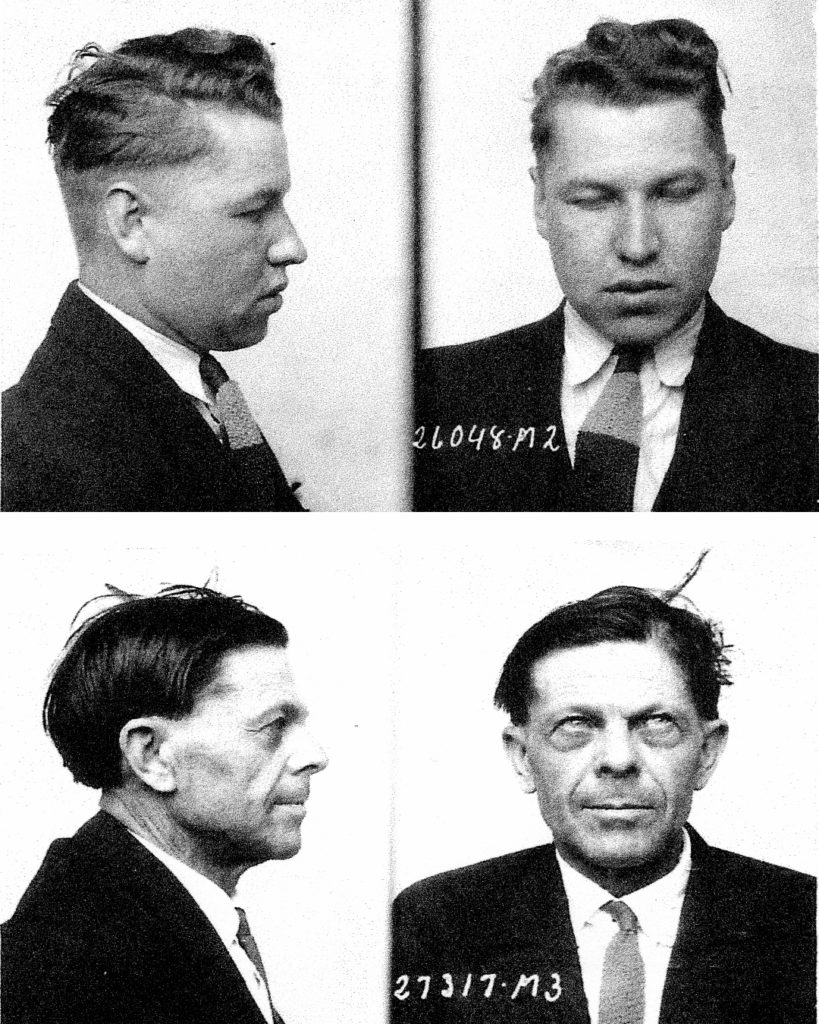
Russian Louie Strauss, top, and Charles Hall were members of a crew accused of a scheme to rip off the Northern Club on Fremont Street in 1934. Courtesy of Robert Stoldal
Nevada banned gambling in 1910. Over the next two decades, some games of chance were legalized, from slot machines to poker tables. In March of 1931, the state relegalized most forms of gambling, moving the craps tables and roulette wheels from the back room to the front room.
But Las Vegas did not embrace the opportunity to expand its gambling economy right away, despite the fact that Hoover Dam construction had brought thousands of workers and their paychecks to town. In the fall of 1934, only 39 slot machines were licensed in the city of Las Vegas. Moreover, 27 of those licensed slots were scattered around the city in retail outlets such as grocery stores and restaurants.
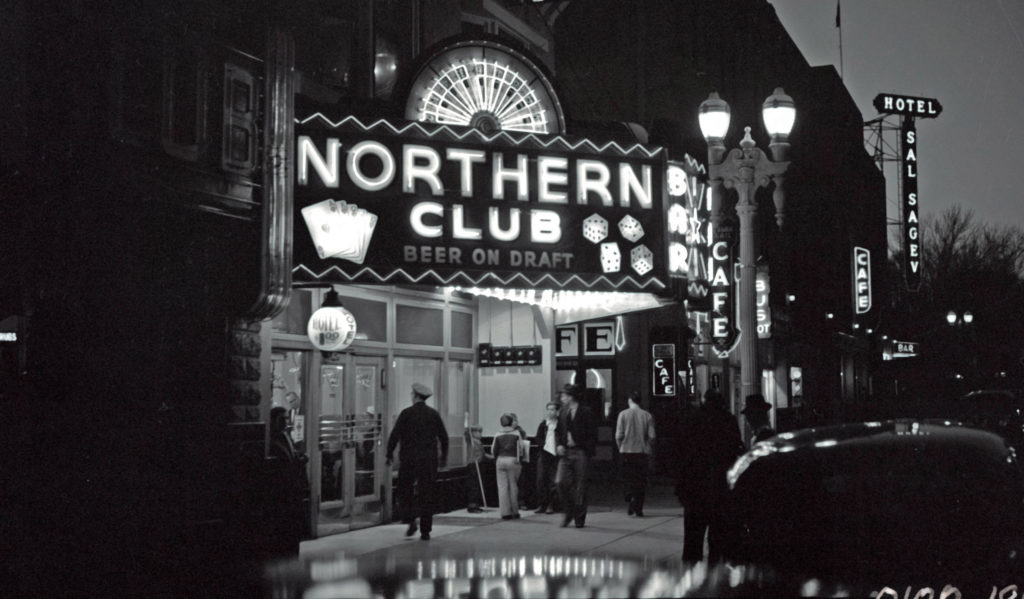
There were only five full-fledged gambling clubs on Fremont Street: the Apache Casino, the Big Four Club, the Boulder Club, the Las Vegas Club and the Northern Club. The largest was the Boulder Club, with its five slot machines, three card games and four devices, including a roulette wheel and crap tables. The Big Four Club was at the bottom of the list, with just one poker table, a roulette wheel and two dice games.
In the middle was the Northern Club with three slot machines and three card tables, which offered both blackjack and poker, along with four “devices,” including craps tables and a roulette wheel.
Plus, the Northern Club was about to start taking bets on horse races at tracks outside Nevada. At that moment, it would be the only race book in Las Vegas. The club’s operators, Dave Stearns and Elmer Sorber, promised patrons they would be able to “hear the description of the races just as if you were at the track.”
On October 4, 1934, a Thursday afternoon, the Northern Club and all gambling operations that applied and paid their license fees were formally approved by the Las Vegas City Commission to operate for the rest of the year.
At this exact moment, Russian Louie and his crew made their move. After reviewing all the operations in town, they decided to target the Northern Club. Their plan was simple. Send in one man, a card dealer by the name of Charles Hall (also called Howe).
On the morning of October 4, Hall offered Stearns and Sorber an arrangement that was hard to turn down, and they didn’t. He would take over one of the club’s already licensed card tables and deal faro. Once one of the most popular card games, faro slipped when it was revealed how easy it was for the clubs to set up the decks so the house would win.
Sorber and Stearns liked Hall’s plan, which included each group putting up $1,000 to bankroll the game.
The second member of the crew, identified at this point as W.A. Burns, walked into the Northern Club and began to play faro at Hall’s table. In a matter of minutes, Burns began winning, and winning big.
Sorber and Stearns had a “lookout” watching the new dealer and quickly reported, “Something is wrong with the game.” By the time Stearns arrived and ordered the game closed, Burns had won $3,200 in just three hands.
After a face-to-face discussion with Stearns, Burns left with only $800 of his $3,200 alleged winnings. Burns said Stearns had promised he would receive the rest of his winnings the next morning.
When Burns showed up, he said Stearns offered him another $1,200, for a total of $2,000, to settle the matter. Burns said he agreed to the deal that Friday morning, October 5. Stearns said he would raise the money and for Burns to return later.
By Sunday, October 7, Stearns and Sorber concluded they had been ripped off by a well-planned fraud involving three men: Hall, Burns and Louie Strauss. And through his connections with the West Coast underworld, Stearns learned that Strauss was the California gambler known as “Russian Louie.”
The three California gamblers reached out to one of the city’s leading attorneys, Artemus Ham. Ham advised them not to file a criminal complaint because it could expose all parties to potential problems.
There was another plan of attack. Burns told Stearns and Sorber that unless they paid up, he would ask the city to revoke their just-granted gambling license. There is no formal record of the response from the Northern Club partners, but clearly it was a resounding no.
The city commission’s recessed meeting of October 4 was set to resume at 3 p.m. Monday, October 8. When the commissioners had finished work on the agenda items and opened up the meeting for public comment, Burns stood up and walked to the speaker’s podium, where he publicly called for revocation of the Northern Club’s gambling license.
There are two versions of what took place next.
The official minutes of the city commission list Burns as “Mr. J.W. Byrnes,” who “appeared before the Board at this time and asked that the license issued the Northern Club be revoked on the grounds that the winnings made by the said W.J. Byrnes had not been paid. A number of witnesses were presented to the Board … verifying the non-payment of the winnings and the reason same should not be paid.”
The Northern Club, owned by Dave Stearns, risked losing its gambling license over the scam orchestrated by Strauss, Hall and W.A. Byrnes.
The formal commission minutes fail to describe what members of the press and the public described as a “near fist fight” and an “impending riot.” City staff alerted Las Vegas Police Chief Clint Boggs, who arrived with Officer Dott Smith, and the meeting simmered down to a shouting match.
Burns called Stearns a “welcher.” Stearns said Burns was part of a swindle, and the deal was a “frame-up.” Sorber said it was a “conspiracy” of cheaters.
At this point, Sorber said another man he identified as “Russian Louie” was part of the scam “to take our roll.”
Not surprisingly, Strauss, who was in the audience, objected to being called “Russian Louie” and ran to the speaker’s platform. Those in the audience were sure a fight would take place.
However, with law enforcement visible, Strauss took a deep breath and told the city commissioners that his name was Louie Strauss, not “Russian Louie.” Strauss also denied he was part of any conspiracy and accused Stearns and Sorber of running a crooked club.
At this point things started to get out of hand again.
Mayor Ernie Cragin, with the backing of the police, gaveled the meeting back to order. Hall told the city leaders that he was the faro dealer, and there was nothing crooked about how he dealt the game.
Stearns told Cragin and the commissioners that no gambling club would pay if it was the victim of a coordinated ripoff. The scam crew, Stearns asserted, was made up of Strauss, Burns and Hall.
Burns threatened to take the matter to a criminal grand jury if Stearns did not “pay up.” Stearns ran to the speaker’s podium and confronted Burns, saying, “Go do your best and see what happens.”
Again, Mayor Cragin gaveled the meeting back to order and declared, “It is up to the house to protect their games.”
Since pulling the club’s license was not on the agenda, the city could not take direct action on Burn’s request. However, the mayor and commissioners ended the matter by unanimously agreeing to schedule a show cause hearing as to why Northern’s gambling license should not be revoked.
Stearns and Sorber now had seven days to prevent the closing of the Northern Club.
Las Vegas Police Chief Boggs quickly reached out to law enforcement agencies outside Nevada. From California, he received a mugshot of “Russian Louie,” who was formally identified as Louis Matthew Strauss.
Strauss was born in San Francisco on October 26, 1904, to Lithuanian parents. He was not Russian. Strauss’s only connection to Russia was its occupation of the country of his birth and forcing people to speak Russian instead of Lithuanian.
Chief Boggs reviewed Strauss’s rap sheet and found the burglary arrest at age 11. His adult arrest record revealed Strauss faced a series of charges, including grand larceny, suspicion of assault with a deadly weapon, robbery and illegal gambling, all in California.
Chief Boggs also received a mugshot and rap sheet for Charles H. Howe, aka Charley Hall. His arrests ranged from forgery to robbery to illegally possessing a weapon, to most recently, “gambling, Los Angeles.”
As for W.A. Burns, aka John W. Byrnes, he was wanted in Canada for “passing a worthless check.”
As the opposing sides prepared their cases, Charles “Pop” Squires, publisher of the Las Vegas Age newspaper, published an editorial pointing out the problems of gambling. Without naming the Northern Club, Squires stated that “Las Vegas for the past two years has been the target of unfavorable comment” about “our gambling clubs.” Squires said if it is true that a Las Vegas gambling club has refused to pay off a debt by using “unfair tactics” and “unfair means to get their patron’s dollars, it is time that gambling in Nevada ceased.”
Thirty-six hours later, the Las Vegas City Commission held its show cause hearing. Las Vegas’ top attorneys were now on the case. Stearns hired Leo McNamee, and Strauss and Burns were represented by Artemus Ham.
Both attorneys got word that city police had received details about the gamblers’ most recent arrests in California for “gaming law violations.” The attorneys asked the commission to delay the show cause hearing so they could secure more “evidence and affidavits.” The City Commission agreed to delay the hearing for another week.
Both sides did not want another hearing or to move the matter into criminal court. They wanted the case closed privately.
McNamee and Ham met with their clients and quickly arrived at a deal. Money changed hands.
Just as the recessed show cause hearing was about to resume, the attorneys submitted a letter to the mayor. The commission meeting started at 7 p.m. with the mayor announcing that the two sides had reached a deal. With little discussion, the commissioners unanimously approved a motion that the matter should be “considered closed.” The Northern Club kept its licenses.
Details of the deal quickly spread through the town. At the start of the scam, Strauss and his crew wanted the Northern to pay them $3,200. Then the out-of-town hoodlums said OK to the offer of $2,000. In the end, they settled for $1,500.
Minus their initial purchase of $500 in chips to play at the Northern, as well as attorney fees and travel expenses for three weeks in Las Vegas, the gamblers left town with a net profit of a few hundred bucks, split three ways.
It is also likely that Stearns, known for a quick temper, suggested to Strauss and his buddies not to show their faces in Las Vegas again.
As for Stearns, by the end of the year, at least on paper, he ended his involvement with the Northern Club, and Sorber took over.
The two men soon became partners in a new venture in a closed casino. In 1931, the Corneros, bootlegging brothers from California, built and opened the Meadows hotel, casino, restaurant and showroom a few yards outside the city limits. The Meadows resort didn’t pan out as the Corneros had hoped, and by 1934 it was sitting idle.
Stearns and Sorber cut a deal with the Cornero to reopen the Meadows. In early 1935, the two men renamed the resort the “Coconut Grove Meadows.” Stearns’ operation of the Meadows started on a positive note, but by the end of 1935 his bubble dancer had lost all her bubbles.
The Meadows was closed by then District Attorney Roger Foley.
With the Meadows closed, Stearns quickly and publicly returned to operating the Northern Club. His partner Sorber left town to be replaced in 1941 with a new partner. Making his entrance into Las Vegas, New York mobster Benjamin “Bugsy” Siegel became part owner of the Northern Club.
In the 1930s and ’40s, Strauss would find his way into the operation of Lake Tahoe casinos. But in the fall of 1947, Strauss got into a financial beef with one of his partners. He ended up shooting and killing the man. The room was filled with friends, but nobody saw Strauss fire the fatal shot from his .38.
The court ruled it self-defense.
A few months after Siegel was murdered in June 1947, Strauss headed south to Las Vegas. And once again, “Russian Louie” got involved in a scheme to rip off a Fremont Street casino. In this craps table scam, he worked with Allen Smiley — the same Allen Smiley who sat next to Siegel on a couch when he was murdered in Beverly Hills, California.
By now, Strauss had two rap sheets. One was kept by law enforcement and the other by his pals in the crime trade.
On paper and publicly, Strauss built and owned the Fairway apartment complex, which was located behind the Desert Inn hotel-casino.
In the early 1950s, Strauss was considered by a Las Vegas Review-Journal entertainment columnist as “a proud” and “popular man about town” whose apartment complex “is the finest example of modern beauty and good taste.”
On the other hand, a Review-Journal political columnist wrote that Strauss was just “an errand boy for big-time wire pullers.”
As a result of Russian Louie’s lifestyle, he constantly needed money. In February of 1953, he was in a big-time poker game with some of his associates. Two versions of the card game have surfaced. In one, Strauss came out a big winner by cheating and got caught. In the second version, he simply came out a big loser.
In either case, by April 1953, Strauss was looking for funding opportunities.
On the morning of April 16, he got a call from his close friend, Chicago mobster Marcello Giuseppe Caifano, aka Marshall Caifano, aka Johnny Marshall. Caifano and Strauss discussed Russian Louie’s financial problems. Caifano suggested there was a way out, and it could be resolved within 24 hours. Strauss agreed and began packing.
Naomi, his new wife, wanted to know what was happening. He said he was going to the El Mirador Hotel in Palm Springs, and, “Honey, it’s only for overnight, and I’ll be back.” She wanted to know who he was going with. Strauss said even if he told her, “you wouldn’t know them anyway.”
Chicago mobster Marshall Caifano, known in Las Vegas as Johnny Marshall, appears to have organized the hit on Russian Louie, who disappeared in 1953 after heading west out of Las Vegas in a car with Jimmy “The Weasel” Fratianno and Felix “Milwaukee Phil” Alderisio.
Caifano had told him earlier that he and Jimmy Fratianno would handle the driving of the 260 miles to Palm Springs.
By this time, Fratianno, a Cleveland-bred mobster who relocated to California, had already picked up the nickname “The Weasel.”
Not long before the three men were scheduled to leave Las Vegas, Caifano said he was not going and that Phil Alderisio would take his place. Felix Anthony Alderisio, aka Phil Alderisio, aka “Milwaukee Phil,” was, like Caifano, was part of the Chicago Outfit.
Strauss’ wife said he left early that evening dressed in a rust gabardine suit and rust-colored suede shoes, and he had packed one additional blue-gray suit for his overnight stay in California.
About 5:30 p.m., the three men met at a parking lot near Strauss’ apartment at 209-A North 15th Street.
When Strauss saw Fratianno’s new dark green Cadillac convertible, he knew it would be a good trip. Cadillac’s were his favorite cars. He owned two.
Fratianno told Alderisio to drive as he wanted to take a nap in the back seat. Strauss got in the front seat. After a quick and mysterious stop at the Desert Inn, the three men headed south on U.S. 91 for Palm Springs.
Five hours later, with Fratianno’s help, Strauss, age 48, was dead.
A joke began circulating through Las Vegas within a year of his disappearance. When asked when they planned to pay off a gambling debt, Las Vegans would answer, “Just as soon as Russian Louie gets back!”
Strauss’s body never surfaced.
Why was Strauss killed by his fellow associates? Was it because he cheated at poker with the wrong people, or because he tried to scam Benny Binion (which Binion denied)? Or were there just too many entries on the rap sheet kept by his fellow hoodlums?
Like Strauss’s current location, the reason or reasons why he was murdered may never be known.
But maybe the prediction of Jack Barlow will come true. At the time of Russian Louie’s disappearance, Barlow was chief of detectives for the Las Vegas Police Department. Barlow guessed that Strauss died a horrible death and that “someday we’ll find a skeleton in a desert grave or at the bottom of a bay or river and the mystery of ‘Russian Louie’ will be solved.”
Robert Stoldal, a longtime television journalist and executive, is a member of The Mob Museum Board of Directors.
Las Vegas reporters Jeff German and Ned Day had more in common than a dogged approach to digging out major news stories.
Both were from Milwaukee, both covered the Mob during its explosive downward spiral in Southern Nevada, and both were targeted by people they exposed in their reporting.
Both also reported and narrated two of the most important works of journalism ever on organized crime in Las Vegas.
‘Mob on the Run’
Day, a print and broadcast reporter, worked with News Director Bob Stoldal and others at KLAS, the CBS affiliate in Las Vegas, to produce the 1987 documentary The Mob on the Run.
The documentary covers more than 50 years of Mob involvement in Las Vegas but especially draws attention to the era later portrayed in the movie Casino, starring Robert De Niro, Sharon Stone and Joe Pesci. The events dramatized in the movie mostly occurred in the 1970s and early ’80s.
During that period, Chicago bookmaker Frank “Lefty” Rosenthal ran the Stardust and three other Argent Corporation casinos for Midwestern Mob families, with Tony “The Ant” Spilotro serving as the Chicago Outfit’s overseer in Southern Nevada. In the movie, released in 1995, De Niro and Stone portray characters based on Rosenthal and his wife, Geri. Pesci’s character is based on Spilotro.
Over the course of German’s newspaper career, he worked at the two main dailies in Las Vegas, the Sun and Review-Journal, covering courts, politics and organized crime for more than 40 years.
Like Day, who received news tips from people on both sides of the law, German cultivated a variety of sources who knew they could trust him with confidential information.
‘Mobbed Up’
German’s decades-long knowledge of the city, from the streets to casino boardrooms, added important details to the true crime podcast “Mobbed Up: The Fight for Las Vegas,” which he researched and narrated in a partnership between the Review-Journal and The Mob Museum.
Jeff German was a reporter in Las Vegas for more than 40 years. His work included covering organized crime in the 1980s and 1990s. Courtesy of Las Vegas Review-Journal.
Among other aspects of Las Vegas’ Mob past, including funding arranged by the Teamsters Union’s Jimmy Hoffa for casino construction, the eight-part second season of “Mobbed Up” examines organized crime’s influence at the Aladdin hotel-casino on the Strip.
The podcast also looks at the feud between entertainers Wayne Newton and Johnny Carson over ownership of the Aladdin after the Mob was pushed out of the resort, located where the Planet Hollywood hotel-casino now stands.
Killed in knife attack
In early September, Las Vegans were stunned to learn that the 69-year-old German had been stabbed to death outside his home.
Right away speculation arose about who might have done it, including a sense that the killer could have been someone German had written about over the years.
During more than four decades, German exposed corruption and wrongdoing at the highest levels of state and local government. A competitive reporter, he also covered Spilotro and other underworld operatives in Las Vegas.
Early in his career, German saw first-hand, in a minor but telling encounter, the arrogant influence that mobsters wielded in Las Vegas.
One Saturday night, German and a colleague saw Spilotro and Hollywood actor Robert Conrad in a bar near the Upper Crust pizzeria, a Mob-run restaurant east of the Strip. The reporters asked their server to tell Spilotro they wanted to buy him a drink. “We didn’t know any better,” German later said. The server went to Spilotro and spoke to him, then returned with a stern message: “You don’t send Mr. Spilotro drinks. He buys you drinks first.”
“It was like he owned the town,” German said in a July 2021 interview on Nevada Newsmakers with broadcast host Sam Shad. “It was eye-opening.”
German had other experiences with Mob figures that turned out to be more serious.
In the early 1980s, after he had written about a Justice Court warrant officer who collected juice money for the Mob, the court officer, a former professional boxer, threw a drink in German’s face during an event at the Sands hotel-casino on the Strip. After dousing German with the drink, the former boxer punched him in the face. The incident resulted in German receiving four stitches to his lip.
Decades later, when first hearing the news of German’s death this year, some wondered if a long-ago Mob revenge motive might have been a factor in the Sept. 2 fatal stabbing.
As it turned out, the investigation went in a different direction.
With Review-Journal reporters working to help solve their colleague’s violent death, the focus shifted to a little-known Clark County elected official, Robert Telles.
German had reported on accusations that Telles created a hostile work environment in the office, including bullying and other misconduct. Only months before German was killed, Telles lost a bid to win re-election as Clark County public administrator.
Based on neighborhood surveillance video and other evidence, Telles, 45, was arrested and charged with murder. He is being held without bail while awaiting a trial.
German’s killing led to strong condemnation from news organizations globally. The nonprofit group Investigative Reporters and Editors, working with the Review-Journal, has set up a Jeff German Fund for Investigative Journalism “to help continue the kind of game-changing investigations German devoted his life to producing.”
“Jeff’s senseless death evoked a strong resolve from journalists across the country that we will not be intimidated,” IRE Executive Director Diana Fuentes said. “This fund will help journalists follow in Jeff’s footsteps, holding those in elected office accountable to the people they serve.”
From ‘street scuffler to street reporter’
Day also faced abuse from people he covered as a reporter, first at the small Valley Times newspaper in North Las Vegas and then at the Review-Journal and KLAS.
The Valley Times has since gone out of business, but the muckraking Day, arriving from Milwaukee in 1976, helped turn the paper into a must-read, often scooping the larger Sun and Review-Journal.
The son of a national champion bowler named Ned Day, the younger Day, who briefly dabbled in professional bowling, ultimately drifted into “a netherworld of bars, pool halls and gambling” in Milwaukee, according to veteran KLAS reporter George Knapp, a friend and colleague of Day’s in Las Vegas.
Shortly after Day died in a 1987 while snorkeling in Hawaii, Knapp documented Day’s life and career in a series of broadcasts for the Las Vegas news station.
As Knapp pointed out, Day had become a bookmaker in Milwaukee and a bartender at nightclubs controlled by the Balistrieri crime family. At a topless bar, Day met a former Miss Nude America. The two were married in 1972.
Still in Wisconsin, Day later was arrested for attempting to pass bad checks to pay off a bookie. According to one of his later newspaper colleagues in Milwaukee, Day during this period described himself as a gambler and pimp.
With his marriage falling apart, however, Day quit bartending and bookmaking, and, as Knapp reported, sold his diamond pinkie ring. Day took a night job delivering pizzas for a local restaurant coincidentally named Ned’s Pizza. He enrolled at the University of Wisconsin-Milwaukee and landed a job at a weekly newspaper, transitioning, as Knapp put it, from “street scuffler to street reporter.”
Then things took a turn for the worse.
In April 1976, Day’s girlfriend, a stripper and part-time prostitute, was strangled to death along with her 10-year-old daughter, Day’s goddaughter. Day dug into the killing, even snapping a photograph of the man later convicted of using a bicycle-lock chain on the daughter and a lamp cord on the mother. The daughter died trying to protect her mom.
Move to Las Vegas
That same year, at the suggestion of friend, Day moved to Las Vegas at age 31, escaping a troubled past in Milwaukee. In Las Vegas, he applied for a job at the Sun but was turned down. He made his way to the Valley Times and was hired at $150 a week.
Linda Faiss, who worked with Day at the Valley Times before becoming a Las Vegas public relations executive, said the Wisconsin native immediately felt at home in Southern Nevada.
With the experiences he’d gained on the streets in mobbed-up Milwaukee, a town whose Major League Baseball team name, the Brewers, underscores its beer-making heritage, Day was a natural fit in free-wheeling Las Vegas.
“He liked the glitz, the glitter, the bimbos, the lounge lizards,” Faiss said. “He liked the movers and shakers, and the fact that we were such a young, upstart city. I think that was his kind of place.”
From the start, Day called out those operating unscrupulously but unscathed in the town’s good ol’ boy protective tradition. The Mob was a favorite target.
Over time, Day’s face had begun to show up on underground wanted posters distributed in at least one bar that Knapp and Day popped into.
Risks of the job
The pressure on reporters was intensifying, as German experienced at the Sands. Day felt it, too.
In July 1986, Day’s uninsured three-year-old Volvo was firebombed on a night when he fortunately was not in it, though he later lamented the scorching of his golf clubs in the backseat. In a taped interview, Day fired back.
In 1986, Ned Day’s Volvo was firebombed. He was not in the car at the time, and the crime was never solved.
“It does not demonstrate a great deal of menace to sneak up in a parking lot in the dead of night and attack an unarmed car,” Day said. “If that’s the best that they have to offer, they don’t scare me at all.”
The firebombing was never solved, yet Day understood the streets and knew his reporting was having an impact on the mobsters whose presence had created what Knapp called a “fear factor” around town.
During an April 2017 panel discussion at The Mob Museum, Knapp said the firebombing was the best day of his friend’s life.
“To Ned it confirmed that he was getting under people’s skin,” Knapp said.
A year later, on Sept. 3, 1987, Day died at age 42 while vacationing in Hawaii with girlfriend Mary Ottman. Knapp reported that the local coroner determined “heart disease was the culprit,” and while rumors persist that foul play might have been involved, those suspicions, Knapp said, are “almost certainly unfounded.”
“There was no foul play,” Knapp said on the air.
In explaining what led to his friend’s death, Knapp said Day was at the “high end of virtually every category for heart disease.” Though attempting to lead a healthier life by then, Day for years had been a heavy drinker and smoker whose diet, consistent with a reporter’s hectic schedule, mainly consisted of hamburgers and other fast food.
“There were many people who may have wanted him dead,” Knapp reported, “but they were not to blame for what happened at Hanauma Bay.”
Apparently no serious threats had followed him to Hawaii. Those who knew Day said he would not have been intimidated by threats anyway. A year before the firebombing took place, his car was vandalized. He remained undaunted and continued a streak of hard-hitting investigations.
In The Money and the Power: The Making of Las Vegas and Its Hold on America, authors Sally Denton and Roger Morris wrote that Day “refused to back down, sometimes seeming to flaunt his invulnerability, convinced that he had become too public a figure to be killed.”
“If something happened to me,” Day said, “then 60 Minutes and ABC’s 20/20 — Geraldo Rivera and all those jerks — are going to be all over here like they were in Arizona, where reporter Don Bolles was murdered.”
Bolles had reported on Mafia infiltration and land fraud in Arizona before dying in June 1976 after his car was bombed in the Hotel Clarendon parking lot in Phoenix.
During Day’s September 1987 funeral service at Guardian Angel Cathedral in Las Vegas, former Nevada Governor Grant Sawyer noted that the community underwent a sense of loss at Day’s death.
Though Day by this time was making good money, he spent much of it and was living a lifestyle that reflected his journalistic defense of the have-nots. Sawyer said Day owned no property and lived in an apartment described as “scruffy,” according to the Las Vegas Sun. Day had his telephone disconnected three times the previous year for failing to pay the bill.
The outpouring of support at Day’s funeral was an indication of the reporter’s contribution to the community, Sawyer said. “He defeated the pompous and self-righteous and become the most influential man in Nevada,” the former governor said.
Larry Henry is a veteran print and broadcast journalist. He served as press secretary for Nevada Governor Bob Miller, and was political editor at the Las Vegas Sun and managing editor at KFSM-TV, the CBS affiliate in Northwest Arkansas. Today, he is a senior reporter for Gambling.com. The Mob in Pop Culture blog appears monthly.
Mob movie veterans Robert De Niro and Nicholas Pileggi are teaming up again, this time for a drama about two of history’s most notorious organized crime figures.
Initial reports indicate De Niro might play both main characters, Frank Costello and Vito Genovese, in the upcoming Warner Bros. production Wise Guys, still in its earliest stages. A theatrical release date has not been set.
The script was written by Pileggi, who co-wrote, with director Martin Scorsese, two classic Mob movies, Goodfellas and Casino, that also feature De Niro in key roles.
Hollywood veteran Barry Levinson is set to direct the new production.
Among other popular movies, Levinson directed Bugsy, a film loosely based on mobster Benjamin “Bugsy” Siegel’s involvement in Las Vegas with the opening of the Flamingo hotel-casino in December 1946. The movie stars Warren Beatty as Siegel, while Annette Bening portrays his girlfriend Virginia Hill.
‘Different directions’
Nick Pileggi, screenwriter of Goodfellas and Casino, has written the screenplay for Wise Guys, an exploration of the lives of Mafia bosses Frank Costello and Vito Genovese.
According to Pileggi, the new film will follow Costello and Genovese on their paths to power and explore the fate that awaited each after decades in New York’s underworld.
“Life took them in different directions,” Pileggi said in a telephone interview.
Costello was a backroom wheeler-dealer who exerted influence by maintaining control over public officials. Known as the Prime Minister of the Underworld, he was regarded as a resolution-seeking boss. Genovese, meanwhile, was murderous and manipulative.
“A glare from Genovese’s dark eyes from beneath bushy eyebrows intimidated the bravest mafioso,” Mob expert Selwyn Raab wrote in Five Families: The Rise, Decline, and Resurgence of America’s Most Powerful Mafia Empires.
The separate ambitions of these two powerful mobsters, and their contrasting personalities, would place them on a legendary collision course.
Battle to control crime family
After New York crime boss Charles “Lucky” Luciano was convicted in 1936 on prostitution charges, Genovese, who’d been Luciano’s underboss, took over as acting don. About a year later, however, Genovese fled to Italy, fearing an indictment in an earlier killing.
These events put Costello in charge of the Luciano crime family, a development that Genovese did not easily accept after returning to the United States and regaining a street presence in the years after World War II.
In May 1957, Genovese sent a young Vincent “The Chin” Gigante to kill Costello. The gunman fired a shot that left only a superficial head wound. Though Costello wasn’t seriously injured, the attempt on his life was enough to push him into retirement, ceding the crime family’s ruling authority to Genovese.
By the fall of that year, in a bid to rule the Mafia’s governing body known as the Commission, Genovese conspired on another assault, this one with assassins targeting New York crime boss Albert Anastasia. During a surprise attack, Anastasia was shot to death while seated in a barber’s chair at a Manhattan hotel.
Soon after, Genovese organized a Mob summit at Apalachin, New York, to consolidate his power. But the meeting backfired, as a police raid led to the arrest of more than 60 leading mobsters from across the country.
Failed assassination attempt
Pileggi’s script delves into important differences between Genovese and Costello.
Frank Costello, left, was a powerful Mafia boss in New York who rubbed shoulders and bought favors from politicians, judges and other public officials. The Mob Museum Collection
Tony DeStefano, a New York journalist and author, said the Wise Guys film project had been on Pileggi’s radar for at least five years. He remembers talking with Pileggi, beginning around 2017, about Costello’s place in Mob history.
“As we talked, Pileggi suggested to me there is a book there about Costello. I thought for about two seconds and agreed,” DeStefano said in an email. “The book took much work on my part, with occasional calls to Nick for perspective, and I finally got to pull the project together.”
The result was DeStefano’s 2018 book Top Hoodlum: Frank Costello Prime Minister of The Mafia, followed in 2021 by The Deadly Don: Vito Genovese, Mafia Boss.
DeStefano noted that Costello and Genovese were at odds from the time they were under Luciano’s command.
“I think the main problem was that Genovese felt envious of Costello, who was the more polished, politically connected and more astute businessman,” he said. “For those reasons, Costello was given the leadership of the family by Luciano after Genovese left for Europe in the face of the murder rap.”
Costello’s leadership position “grated on Genovese,” DeStefano said.
“Upon his return to New York City in 1945, (Genovese) realized he had missed out on many opportunities in the rackets and wanted Costello to compensate him a share, which didn’t happen.”
Costello moved easily in the world outside the Mob, which Genovese couldn’t or wouldn’t do, DeStefano said.
“Genovese saw Costello in the 1950s as the main impediment to his control of the family,” he said. “So Genovese got Gigante to try and kill Costello in the failed assassination attempt.”
Mob in Las Vegas
For investigators, the assassination attempt uncovered a surprise that exposed Costello’s involvement in a Las Vegas casino.
In going through Costello’s pockets after the shooting, authorities discovered a note reading, “Gross casino win as of 4-27-57—$651,284.” This message was in reference to the Tropicana hotel-casino on the Las Vegas Strip, which had opened several weeks before Costello was wounded.
The note revealed Costello’s hidden interest in the resort, whose visionaries included Phil Kastel, a Costello associate in Louisiana slot machine routes.
DeStefano pointed out that the note “led to the cops focusing on Costello and his ties to Las Vegas and the Tropicana.”
Law enforcement scrutiny would intensify over the years, leading to further underworld scandals in Las Vegas, including an investigation into a casino skimming pipeline from the Tropicana to the Civella crime family in Kansas City.
The final years
Not long after Costello stepped aside, Genovese ran into serious trouble with the law, culminating in a 1959 felony conviction for heroin trafficking. A decade later, locked in a Missouri federal prison, Genovese died of a heart attack at age 71.
Vito Genovese hired a hitman to kill Costello in 1957. Costello survived the attempt on his life, but he stepped aside to allow Genovese to take over what became known as the Genovese crime family in New York.
Throughout the years, the crime family that Genovese took over by force and intimidation has continued to bear his name. It is one of the Mafia Five Families still operating in New York City.
For his part, Costello was respected by other Mafioso in his later life and remained close to associates such as Meyer Lansky. Costello died of natural causes in 1973. He was 82.
The upcoming Warner Bros. production, with Pileggi’s script providing the storyline, will examine how these two historical Mafia bosses embarked on criminal lives that resulted in different outcomes.
In retrospect, Pileggi said, Costello ended up in better shape than his imprisoned rival, Genovese.
“If ever there was an organized crime figure who came out pretty good, it was Frank Costello,” he said.
Larry Henry is a veteran print and broadcast journalist. He served as press secretary for Nevada Governor Bob Miller, and was political editor at the Las Vegas Sun and managing editor at KFSM-TV, the CBS affiliate in Northwest Arkansas. Today, he is a senior reporter for Gambling.com. The Mob in Pop Culture blog appears monthly.
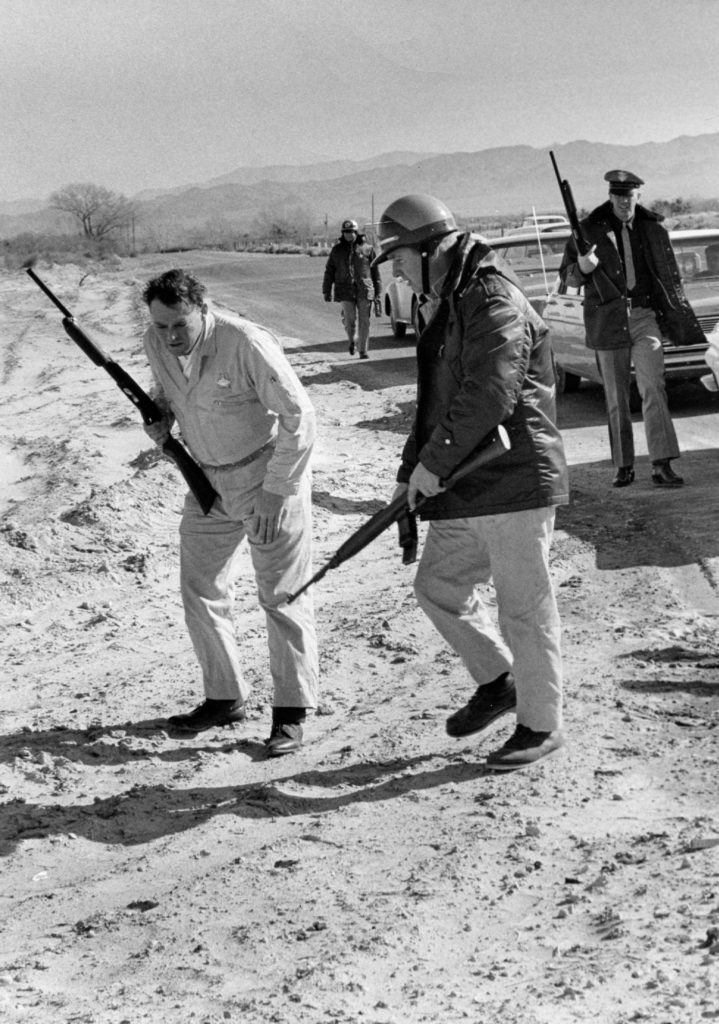
Authorities located Tom and Gramby Hanley on the lam in a Phoenix apartment. In late March 1977, both agreed to give up once police issued warrants for their arrest. The state warrants came in mid-April, followed by federal warrants, on kidnapping and murder charges. However, the Hanleys reneged and failed to surrender.
Wendy Hanley, 21, walks in the Clark County Courthouse in April 1978 for a hearing where she pleaded guilty to a gross misdemeanor in helping Tom Hanley hide items taken from Al Bramlet’s body in 1977. The mother of Hanley’s daughter received one year of probation. Prosecutors dropped murder charges. To reporters, Wendy said Tom and Gramby “brainwashed” her. She described them as “good con artists.” Courtesy of Las Vegas Review-Journal Archive
A grand jury in Las Vegas indicted Tom and his 21-year-old presumed wife, Wendy, on charges of receiving stolen property. Robert Peoples, a paroled convicted murderer and former prison cellmate of Gramby’s who became a family friend, informed police that Wendy unknowingly led him to places, including next to Tom’s mobile home in Pahrump, 60 miles west of Las Vegas, where Bramlet’s stolen jewelry, boots, underwear and socks were buried.
Peoples was working as an investigator for Hanley’s legal defense team. He contacted police when he suspected the Hanleys wanted him to commit a crime by disposing of evidence, likely sending him back to prison. Wendy, if she were Hanley’s wife, might not be able to testify against him. However, while Tom and Wendy obtained a marriage license, there was no record of an actual wedding ceremony. She never did testify. That summer, police arrested her on a murder charge. She had some of Bramlet’s jewelry in her possession. The D.A.’s office later reduced the charge to being an accessory to murder.
On April 29, 1977, FBI agents nabbed Tom and Gramby after spotting them sitting in a car next to a residential building in Phoenix. A federal judge in Arizona set their bail at $1 million each and ordered them held until Nevada authorities could take them in. Tom waived extradition. Gramby fought it.
In May, back from a flight to Las Vegas, Tom spoke to reporters. In handcuffs, he said he remained in Phoenix for two months “trying to transact real estate deals” and build his criminal defense. Tom felt persecuted by the press and police, naming the same reasons when charged with murdering Alsup in 1966 – to kill his campaign for the casino dealers union. He took a firm stance, insisting on his innocence, not only in Bramlet’s homicide, but in the restaurant and casino bombings and conspiracies.
“I never had any animosity towards Al Bramlet,” he said. “He was one of the best friends I ever had.”
In jail, unable to raise a $250,000 bond, he consented to an interview with the North Las Vegas Valley Times. Tom declared he had an airtight alibi and could call a bunch of witnesses to back him. He suggested Vaughn made false statements in bitterness over a wage quarrel at Tom’s air conditioning company. He swore he had no motive to kill Bramlet, who he said sought his advice during the 1976 Strip hotel strike.
Bramlet murder case
In June 1977, at a preliminary hearing, prosecutors argued they had enough evidence to bind Tom and Gramby over for trial. Vaughn, granted immunity for testifying, described the two defendants’ complicity in the kidnap-murder and how he helped them bury the body. He said he watched Tom Hanley shoot Bramlet.
Peoples then took the stand and went further, providing an alleged motive for Tom to kill Bramlet – because he would not support Tom’s second try at organizing casino employees. In a conversation, Hanley told the ex-con that he needed the Culinary’s participation in the union drive and Bramlet had to be eliminated in favor of someone who would support it. Tom told him he wanted Bramlet’s jewelry transferred to Reno or Lake Tahoe, where once located it would discredit statements by police and Vaughn about the murder.
Beyond the jewelry, Peoples said Hanley also intended to transfer Bramlet’s body to the Reno-Tahoe area and induce a news reporter to write about its discovery there. As a rationale, he testified, Tom said unnamed union officials “back East” were unhappy with Bramlet and would support Tom eliminating him. Tom also stated that Bramlet had turned soft after the supper club bombings and might blab to police about them, Peoples said.
“Bramlet would have to go because Bramlet was weak and Bramlet had been shaky because of the bombing situations,” Peoples said. “Bramlet was weak and giving in to the clubs.”
Prosecutors produced damaging physical evidence from a cardboard box found in Phoenix containing a sports jacket and plaid pants. Barbara Bramlet, the victim’s widow, testified the clothes were indeed Al’s. Prosecution witness U.E. Wilson, a longtime friend of Tom’s, stated that Hanley asked him in April, while he and Gramby lived at Wilson’s residence, to stow the box for him.
The court ruled that Tom be tried for murder. In late September, a judge ordered Gramby bound as well. Gramby appealed to the Nevada Supreme Court. He said prosecutors violated his constitutional rights by illegally admitting evidence acquired after intimidating Peoples into becoming a secret informant and furnishing testimony against Gramby. The high court turned him down. Gramby’s lawyer should have filed the case earlier in the lower district court, the justices ruled.
In January 1978, prosecutors tried to consolidate the two defendants’ cases into one to save tax dollars, but a judge decided legal complexities would be too much for a single jury to handle. Tom’s lawyers filed motions for a change of venue outside of Nevada and to dismiss the charges. Evidence Peoples helped collect, they said, was illegally obtained, such as the jewelry and clothes Bramlet had on when he vanished that February. Turning Peoples, their former investigator, into a prosecution witness was enough to have the case dismissed, the lawyers said. Their motions failed to move the court.
At the end of April, Tom and Gramby went to the news media again, this time promising “bombshell” revelations that top-level Culinary officials in Chicago hired them to kill Bramlet, and they would name names. Behind the scenes, the Hanleys and their lawyers spoke to state prosecutors about a plea deal – agreeing to life sentences without parole – as long they did their time in a federal prison, not Nevada’s state system, where they believed they might be killed. Prosecutors allowed them to do their time in U.S. custody and join the federal Witness Protection Program in prison for extra security.
Tom and Gramby confess
Whatever the pair hoped to accomplish, there was no “bombshell.” On March 2, 1978, they changed their not guilty pleas in the kidnap-murder to guilty, confessed to the dirty deeds and admitted there was no additional suspect. They also pledged to aid federal law enforcement in the prosecution of unsolved criminal cases, i.e., the supper club bombings. Investigators brought up the Coulthard bombing, but Tom and Gramby, likely weary of yet more turmoil, declined to go there. The government consented to drop some charges that might have led to additional life sentences.
Tom Hanley, in handcuffs, faces reporters upon arriving in Las Vegas in May 1977 following his extradition from Phoenix, where he and son Gramby had fled two months earlier after the murder of Al Bramlet. Hanley claimed he went to Phoenix to look for real estate investments and build his criminal defense. “I never had any animosity towards Al Bramlet,” he said. “He was one of the best friends I ever had.” Courtesy of Las Vegas Review-Journal Archive
“There was nobody that discussed any killing of Mr. Bramlet at any time,” Tom told the judge as part of the plea agreement. “There was no such contract on Mr. Bramlet whatsoever.”
“I shot Mr. Bramlet,” he said. “I was drunk, but I did shoot him … I shot him three times … I may have shot him four.”
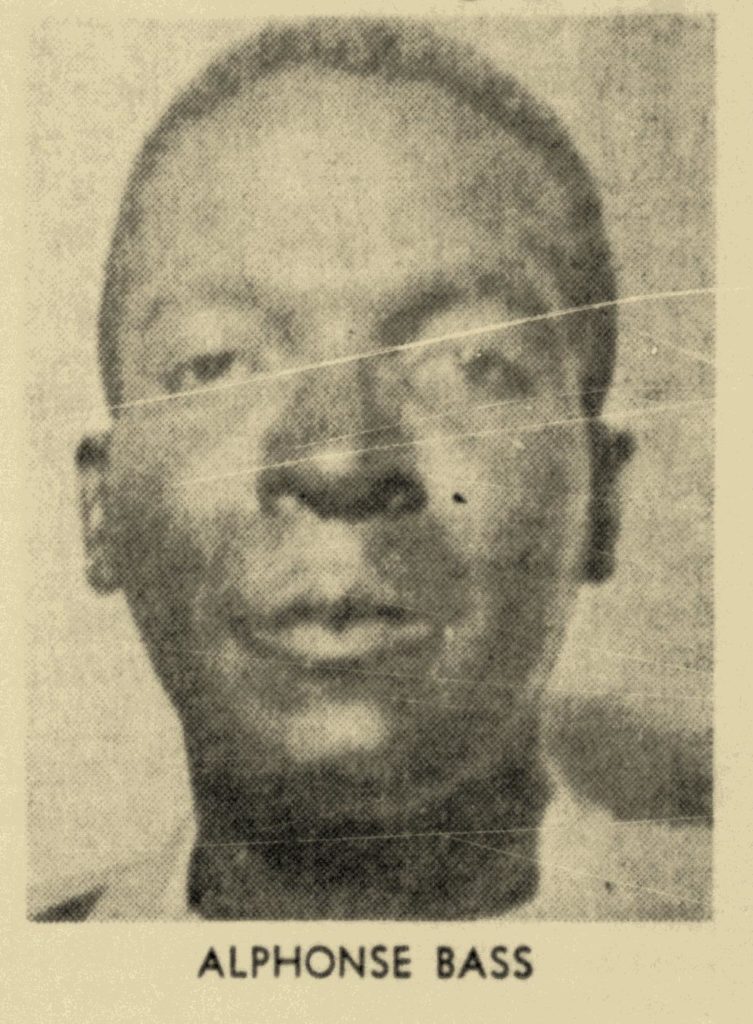
Hanley said after he, Gramby and Vaughn kidnapped Bramlet from the airport, they gagged him and put him in handcuffs. Once they reached the remote area, they had him exit the vehicle. Hanley said he wanted to bring Bramlet back to Las Vegas and that Gramby offered to drive. However, he claimed Vaughn objected, saying they would “all be in jail” if they released Bramlet. Hanley said that’s when he shot Bramlet. Tom also offered to take a lie detector test to deny his personal involvement in the 1960s murders of Alsup and Bass.
In the interim, Wendy, bailed out of jail, pleaded guilty to a gross misdemeanor count of conspiracy to pervert justice and received one year of probation.
Tom was sentenced first, on April 25, 1978, and then Gramby, in a separate courtroom. They both received sentences of life in prison without the possibility of parole. But before the pronouncement, father and son tried to pull another maneuver. They asked to withdraw their guilty pleas. Tom alleged the government bribed witnesses and suborned perjury. The judge refused.
District Judge Michael Wendell described Tom as “a shrewd, calculating and dangerous man. I think you are a danger to society.”
Tom testifies in bombing trial
Next was the trial in federal court. The Hanleys’ confessions in the supper club bombings in Las Vegas resulted in their indictments, handed down by a federal grand jury in April 1979. The co-defendants included Ben Schmoutey, Bramlet’s elected successor as secretary-treasurer of the Culinary Union, and Gramby’s men Howard Wilch, J.D. Northrup and brothers Rick and Harry Blasey. Tom and Gramby latched onto agreements with prosecutors to plead guilty in exchange for five-year concurrent prison terms and testimony before the grand jury about the bombings. Gramby admitted his responsibility in the David’s Place and two Alpine Village bombings and the unsuccessful ones at Starboard Tack and Village Pub.
Grand jurors, after considering the case secretly for two years, charged Schmoutey with racketeering, conspiracy, embezzling Culinary funds, arson and attempted arson of buildings and perjury in grand jury testimony.
Most significantly, the jury also charged Schmoutey with conspiring with Bramlet to allocate Culinary money to purchase bomb materials and to hire Gramby and other people to plant the explosives.
The federal trial produced some new information, and surprises. Bramlet’s first labor-intimidation conspiracy took place earlier, in 1975 at the non-union Harvey’s Wagon Wheel. The jury panel alleged that Bramlet hired defendant Wilch to set a fire at the casino. Schmoutey and Wilch were charged with providing explosives used by Gramby to bomb David’s Place in 1976.
Before the federal trial in October 1979, in Las Vegas, U.S. District Judge Harry Claiborne, Tom’s former longtime lawyer, ruled that based on a psychiatric evaluation, Tom was competent enough to understand questions and testify under oath against Schmoutey and the co-defendants. Claiborne also turned back a defense motion to dismiss the indictments. Federal prosecutors touted Tom and Gramby as star witnesses in the case against the five defendants accused in the successful and unsuccessful bombings from 1975 to 1977.
On the witness stand in U.S. court, Tom threw yet another legal curve, stating that he did not tell the federal grand jury the right story – the one that resulted in the indictments. He had told the closed-door grand jury that Schmoutey agreed to pay Tom $10,000 to blow up David’s Place. But now at the trial, Hanley claimed to have misspoken; that he really meant only Bramlet conspired with him and made the payment. Then Tom and Gramby insisted that federal prosecutors broke their promises to them and so moved to retract their guilty pleas to conspiracy allegations. The judge declined the request.
Prosecutors had presumed Hanley would detail in court what he told the grand jury, implicating Schmoutey in Bramlet’s murder. Schmoutey, Hanley had said, told him that Bramlet must be “snuffed out” because he might agree to expose Schmoutey and others in the bombings.
Something was wrong with Tom this time. He testified over several days, but in a rambling, contradictory and confused manner. He claimed deafness and asked lawyers to repeat many questions. He looked haggard, as if he had aged years in only months. In reality, he was suffering from hepatitis.
Oscar Goodman, Schmoutey’s lawyer, objected, saying that it would be too difficult to cross-examine in light of Tom’s mental condition. Relying on Hanley’s testimony to build its case against the defendants was a “clever, diabolical scheme on the government’s part,” Goodman said.
Judge Claiborne replied that Tom and Gramby, in order to avoid Nevada prison, appeared “ready to trade anything to get into a federal system, truthfully or not. And the government bought the wares they were peddling. As I said earlier, in the final analysis of the case I think we will all find that the government was a victim, a patsy, of the Hanleys.”
Claiborne ultimately agreed that Tom’s testimony was too flawed and incompetent because of his hearing and other physical problems for defense attorneys to interpret – so much so that he ordered his entire trial testimony stricken from the court record. The prosecution had lost a star witness.
“The question now before the court is, is Hanley capable of understanding the questions and relating accurately the events?” the judge said. “I have come to the conclusion he was not. He testified he answered many questions he did not hear.”
Former Mafia boss Fratianno appears as witnesses
On November 8, it was not only Gramby’s turn, but a surprise prosecution witness – former Los Angeles crime boss and Mafia hit man turned federal informant and witness Aladena James “Jimmy the Weasel” Fratianno.
Gramby’s testimony, in another disappointment for the government, did not directly connect Schmoutey to the bombing conspiracies. He did finger defendants Wilch, Northrup and the Blasey brothers for being present or assisting him with the explosives. Rick Blasey, he said, was with him in 1975 while preparing the bomb that blew up at Harvey’s, and Rick and Wilch joined him later when Gramby went back to Alpine Village to check the fuse on the first bomb.
Jimmy “The Weasel” Fratianno, pictured in 1981, was a Mob hitman turned government witness after pleading guilty to the 1977 murder of Cleveland mobster Danny Greene. In Las Vegas, federal prosecutors used him as a surprise witness in the 1979 trial against Culinary Union chief Ben Schmoutey and Gramby Hanley’s alleged co-conspirators in the bombings of non-union properties in the mid-1970s. But Fratianno offered little of substance, and charges were dropped against Schmoutey and all but one of the defendants. Bettmann/Getty Images
Fratianno, a paroled ex-con, in witness protection and complicit in multiple gangland murders since the 1940s, was the celebrity witness for the prosecution. However, his testimony made little impact. The former Mafia leader said he never knew Tom Hanley. He said that in 1976, at Fratianno’s seaside Northern California home, he met bombing defendant Harry Blasey, who told him “he was working for (Tom) Hanley and they bombed Harvey’s Wagon Wheel for the Culinary Union.” Then, in 1977, he spoke with bombing defendant Rick Blasey, who mentioned that police were after Gramby in the Bramlet slaying.
Claiborne’s ruling striking Tom Hanley’s testimony sent the prosecution’s case into a tailspin. Goodman and lawyers for the co-defendants filed for directed verdicts of acquittals by the judge. On November 20, 1979, in a 20-page ruling, Claiborne did just that, dismissing charges against Schmoutey and all but one lesser defendant, J.D. Northrup, because Claiborne believed the key witness against him – Northrup’s ex-wife.
About the main defendant, Claiborne said the prosecution failed to provide evidence “which would tend to show that Schmoutey was aware of or involved in the bombing or burning of any establishments named in the indictment,” nor did they prove the labor leader guilty of embezzlement.
Tom Hanley dies, U.S. Senate probes Culinary’s parent union
Just three days later, on November 23, Tom Hanley died at age 62. He passed from natural causes in a sequestered section of a local hospital, where he stayed under an assumed name after his transfer from a federal prison in the Midwest while testifying in the Schmoutey case. At his death, he was still in witness protection. About 30 people attended his funeral. His family buried him in an unmarked grave at Woodlawn Cemetery in Las Vegas.
Gramby kept up his fight to withdraw his guilty plea. In March 1981, the Nevada Supreme Court rejected his argument that he did not understand what the legal penalties of his plea to first-degree murder would mean. One judge noted that Gramby admitted to the court that the victim Bramlet “was not going to be allowed to return to town” and then helped bury the corpse.
Nevada’s tremulous and violent labor climate attracted added interest in summer 1982, when the U.S. Senate Permanent Subcommittee on Investigations held hearings in Washington on allegations of financial corruption and ties to organized crime within parent union HERE and its locals in Atlantic City, Honolulu, Reno, San Diego, Oakland and San Jose. As for Las Vegas, the subcommittee focused on Bramlet and Schmoutey. After Bramlet’s death, Schmoutey allowed the administration of the Culinary’s health and welfare fund to merge with HERE, which Bramlet had blocked.
A subcommittee informant reported that Schmoutey had been “controlled” by Las Vegas-based Chicago Outfit enforcer Anthony Spilotro through Culinary president Mike Pisanello, and had hired as a Culinary organizer Steve Bluestein, a notorious Spilotro associate. In 1981, during Schmoutey’s run for reelection as secretary-treasurer, the Review-Journal took a photo of Spilotro associates Joseph Blasko, Joey Cusumano and Herbert Blitzstein smiling outside union headquarters, there to aid Schmoutey’s election campaign with rank and file members. Schmoutey nevertheless lost the contest to Jeff McColl. The Senate panel learned in 1984 that HERE head Edward Hanley maintained secret ties to Chicago Outfit leaders Joey Aiuppa and Tony Accardo and that HERE charged “outrageously excessive” costs to administer dental plans in Las Vegas and Atlantic City locals to furnish payments to organized crime.
Gramby tells his story to Senate investigators
The subcommittee brought Gramby to Washington to testify on the coordinated assaults on non-union businesses in Las Vegas and Lake Tahoe in the 1970s. Committee staffers interviewed him seven times previously.
Gramby told Senate investigators beforehand that this father Tom helped form Local 88 in the 1940s with the assistance of the Teamsters Union. Tom, he said, had been framed in the murder of James Hartley in a power struggle with the Sheet Metal Workers International and expelled. Tom brought him at a very young age to Los Angeles as an apprentice in union activities with Local 108. Gramby learned how to organize, form picket lines and invest union funds.
Upon his release from a two-year stretch in state prison for burglary in 1974, Gramby said his father had him meet Bramlet, who was organizing properties in Reno and Lake Tahoe. Bramlet gave him $1,500 and sent him to the Tahoe area to scout casinos to see if any were “feasible” as sites to use smoke and stink bombs to influence labor disputes. Gramby chose Harvey’s as an easy choice and Sahara-Tahoe as “feasible,” meaning of lower cost and less chance of getting caught.
Bramlet, he said, was “eager” to start and hired him to bomb Alpine Village in Las Vegas, Harvey’s and Sahara-Tahoe as soon as he could. Gramby’s approach was to do three bombings at once. In 1975, he “wired” the bombs at Alpine Village and Harvey’s and aborted the job at Sahara-Tahoe when security guards spotted him. After the bomb blew up at Harvey’s, he drove to Las Vegas to detonate the one at Alpine Village.
Ben Schmoutey, who succeeded Al Bramlet as secretary-treasurer of Culinary Union Local 226 after Bramlet’s murder in 1977, was indicted by a federal grand jury in April 1979 on charges related to the bombings of non-union properties in the mid-1970s. The indictments were based largely on testimony from Tom Hanley, who claimed Schmoutey also conspired to murder Bramlet. But the prosecution’s case collapsed at trial. Hanley spoke in a such a contradictory and confused manner that the judge threw out his testimony. Courtesy of UNLV Special Collections/North Las Vegas Library Collection
Bramlet had offered him $25,000 for each explosion. The labor leader only gave him $6,000 to $8,000 for the first and $8,000 to $9,000 for the second. He accepted the cash through his father, Tom, who told him the money for the Tahoe jobs came via a picketing fund in Reno controlled by Bramlet. The Culinary head also offered him $25,000 to bomb David’s Place, but Bramlet himself paid Gramby only $10,000, which Gramby claimed came from someone in New York.
Gramby collected $50,000 total for the Nevada bombings from 1975 to 1977, about half of it passing through Tom’s Oasis Air Conditioning Company, which had an $80,000 contract for work at the Culinary headquarters. Further, he said, Bramlet made illegal payments to Tom of up to $60,000.
In 1977, Bramlet hired him to bomb the Starboard Tack and Village Pub to panic the management into signing with the Culinary Union. Gramby stated the firebombs were not designed to blow up, only startle the club owners.
Gramby further stated he came up with the idea to confront Bramlet on February 24, 1977. With Tom and Vaughn, they abducted Bramlet in a vehicle, asked him about the $10,000 he owed and about providing another $25,000 Bramlet promised for bail if Gramby got arrested. Bramlet agreed and made some phone calls in a desert area outside Las Vegas.
While driving, Gramby said Tom also questioned Bramlet about the possibility that union vice president Ben Schmoutey had recorded phone conversations in Bramlet’s office without Bramlet’s knowledge in which Bramlet informed law enforcement officers about alleged loans by the Culinary to people at the Dunes Hotel.
Bramlet, Gramby stated, as a union pension fund trustee, loaned Dunes owner Morris Shenker $28 million to $30 million, from which Shenker kicked back $1 million to $1.5 million to Bramlet. Gramby heard that from Tom, who claimed to have seen $500,000 of it in cash at a ranch Bramlet owned in Needles, California, and that Bramlet was also awarded a “chalet” in Switzerland.
At the time of his death, Bramlet, according to Gramby, was liquidating his assets and planning to leave the United States out of concern over being caught in the bombings and a federal law enforcement investigation of the Shenker loans. Gramby, likely from Tom, also claimed Bramlet wanted to “sell out” the Culinary to Frank Fitzsimmons, head of the Teamsters Union.
Once transferred from prison to speak before the Senate subcommittee, Gramby sat behind an opaque glass wall with federal marshals at his side. But the paranoid personality trait he shared with his father reared its head. Gramby informed the committee he would not testify without assurances that none of it would be used against him in future parole or pardon hearings in Nevada. The senators told Gramby they had no legal jurisdiction to offer an immunity agreement, and so Gramby declined to testify further.
Gramby dies in prison, served 43 years
What exactly happened to Gramby Hanley? He became one of the many inmates in witness protection, with extra security measures, while serving their state sentences in a federal prison. In the 1980s, he described for a reporter for United Press International the artwork – pencil drawings, paintings and sculptures – and poetry he created to pass the lonely times. Some of his works received considerable attention – one of his poems was read at Stanford University and at the World Congress of Poets in Europe in 1982. One of Gramby’s sculptures was on display for several years in The Mob Museum. For his security, he never joined the general prison population, and the U.S. government periodically moved him to different facilities.
“Why did I do the bombing? For the money. I had just gone through a divorce. My life was in disarray. My dad came to me and told me if I wanted to make some money, someone needed some bombings done,” Gramby told the Chicago Tribune by telephone in 1984.
The Nevada Department of Corrections website lists Gramby, inmate number 13552, among those convicted in Nevada, transferred to “out of state confinement,” but now deceased. It does not say exactly when he died. The department lists his age as 83, although he turned 82 on September 15, 2021. The location of his body has not been released. He served 43 years.
If what is known publicly about the crimes committed by Tom and Gramby Hanley over four decades is bad enough, what remains hidden – perhaps forever – may be much worse.
Former Las Vegas Metropolitan Police Department homicide detective David Hatch, in an interview for the 2012 KLAS Channel 8 documentary In the Company of Killers, said the Hanleys likely were responsible for a lot more than the seven murders police believe they committed, including some done at the request of organized crime figures.
“I think between here and Phoenix, Arizona, especially in the Phoenix area – they did stuff down there,” Hatch said. “I don’t think this is a third of the killings they did. I really don’t.”
Just before his planned murder trial in the Ralph Alsup slaying, Tom Hanley caught another astonishing break. On March 30, 1970, county prosecutors requested dismissal of the charges. They pointed to insufficient evidence. Two important witnesses, Alphonse Bass and Marvin Shumate, were dead, and the two others – Michael Marathon and former Hanley aide Barbara Simmons – were not credible enough to secure a conviction. Officially, Alsup’s murder remains unsolved.
This put Hanley on a hot streak. Three weeks later, a judge, finding that no crime had been committed, dismissed the criminal libel and extortion charges filed by the Nevada Club in state court. All that remained was the Nevada Club federal extortion case. In May, while walking by the Four Queens casino downtown, a passing citizen smacked Hanley in the mouth and ran away. No one was arrested. In June, a judge granted Hanley’s motion to change the venue of the remaining extortion case to California.
As for career criminal LeRoy Marsh, he agreed to submit to a lie detector test and plead guilty to the armed robbery of a Las Vegas tavern. In exchange, the district attorney dismissed his murder charge in the Bass case. The judge sentenced Marsh to five years in state prison. The Bass homicide ended up the same as Alsup’s, never adjudicated by law enforcement.
Wendy Mazaros stated in her book that Tom confessed to murdering Alsup and Shumate. Their cases stood, he said, “with no small measure of pride, as examples, of his intellectual dominance over police, over attorneys, over anyone who ever tried to outsmart him.”
Things also worked out for Hanley in federal court in Los Angeles. He pleaded guilty to a misdemeanor, avoiding a felony conviction and prison time, in the Nevada Club extortion case. In Las Vegas, a federal judge ruled prosecutors denied Hill a speedy trial and dismissed his charges.
Now free of criminal cases, and ready to unleash his vindictive streak, Hanley filed another flurry of lawsuits against his detractors. In October 1970, he argued for an award of $300,000 in damages, alleging libel against the owner of the Nevada Club and the Oakland Tribune. The newspaper in 1969 published a 12-part series on him and the AFCGE, which he said falsely stated the union engaged in “shakedowns” and “sweetheart deals.”
In April 1971, Hanley filed a $1.75 million action against the Fremont Hotel and four men, including former District Attorney George Franklin and City Attorney Earl Gripentrog, saying they tried to destroy the AFCGE by promoting charges that Hanley conspired to murder Alsup and that they induced a casino dealer to provide false testimony against him.
His next suit asked for $3.7 million from the Hacienda hotel and county criminal prosecutors, declaring that they tried to use the Alsup case to ruin the AFCGE. In August, he filed yet another damage suit against the Nevada Club, Franklin and Gripentrog, this time for $500,000. In 1972, reopening old wounds, he filed a $1.65 million suit over his 1954 expulsion by the International Sheet Metal Workers.
Coulthard car bombing
On July 25, 1972, at 3:40 p.m., in the parking garage of the Bank of Nevada building in downtown Las Vegas, lawyer and former FBI agent William Coulthard entered his car. A clothespin attached to wiring in the car’s steering column detonated a powerful bomb fixed beneath the engine. His body was blown to bits. Investigators identified him via dental charts. Five cars beside Coulthard’s also burned. The blast blew a hole in the concrete floor. The bombing happened after Coulthard refused to sell his interest in land under Benny Binion’s Horseshoe casino. Binion later signed a 100-year lease on the land.
William Coulthard, attorney, ex-FBI agent and former legislator, was blown apart by a powerful bomb after he entered his car in a parking structure in downtown Las Vegas in 1972. Coulthard had declined to sell his share in property below the Horseshoe casino to owner and one-time Texas hoodlum Benny Binion. Gramby Hanley was suspected of planting the bomb for Binion, who soon signed a 100-year lease to control the disputed land. Courtesy of Robert Stoldal
Despite federal investigations and a reward of $75,000 offered for information resulting in an arrest and conviction, no one was arrested in the deadly bombing. Although it cannot be proved, Wendy Mazaros, in her book, stated that she witnessed Gramby Hanley accepting responsibility for planting the explosives that killed Coulthard, at the behest of Binion. Tom Hanley, she said, remarked that Coulthard tried to “extort” Binion. “So he had to go,” she quoted him saying, “We blew the son of a bitch up.”
Hanley then considered starting a new sheet metal workers union, specifically for housing developments. He sensed an opening when his old union Local 88 appeared divided during its protracted strike in 1972. Nothing came of it. His next big move, in 1973, was another lawsuit, this time against Sheriff Lamb and District Attorney Franklin, for $500,000 in personal damages from his criminal cases.
Little is known about what came of most all of Hanley’s “revenge” lawsuits: if he lost, settled out of court or something else. Newspapers wrote about just one of them progressing. In December 1971, a California court dismissed his Oakland Tribune libel suit, but in 1975, the 9th U.S. Circuit Court of Appeals, reasoning the case deserved to be tried in Hanley’s domicile of Nevada, not California, reversed the ruling and sent it back to federal court in Las Vegas. However, the case remained dormant. Maybe Hanley had had enough after years of litigation and legal expenses.
Hanley, still an experienced sheet metal technician, founded a business with a lot of potential customers in Las Vegas – air conditioning. From his friendship with Bramlet, the Culinary became Hanley’s biggest client. He built and maintained the AC system at the union headquarters.
Bramlet orders restaurant, casino bombings
During Bramlet’s two decades at the helm, Local 226’s paid membership grew dramatically, from about 1,500 to 23,000 in 1977. It was the largest union in Nevada and the second largest local in the country. Nevertheless, by the mid-1970s, Bramlet became frustrated by intractable owners of large restaurant “supper clubs” in Las Vegas and hotel-casinos in Northern Nevada that refused to sign or renew employee collective bargaining pacts. His most determined foe was Hershel Leverton, owner of Alpine Village, a popular Bavarian-German eatery that first opened in 1951 and relocated several times in the Las Vegas area. Leverton and a partner bought it in 1958 not intending to sign with the Culinary. The day Leverton opened, Bramlet “came out of the blue and said we had 15 minutes to join or he’d put me right out of business,” he told the Los Angeles Times in January 1976. “‘Take your best shot,’ I told him, and 15 minutes later 20 pickets started marching.”
The Alpine Village, a Bavarian-themed supper club, pictured in 1970, beside the former Landmark Hotel on Paradise Road, was the site of two bombings by Tom Hanley’s son Gramby in 1975. Al Bramlet, head of the Culinary Union Local 226, ordered the bombings to pressure the restaurant’s ownership into negotiating a labor contract. The efforts failed and owners refused to sign with the union.
In a court battle, Leverton initially won a restraining order in December 1958 but the judge allowed Culinary picket lines to remain outside, and they did – over the next 18 years. Leverton endured, unbowed in the face of multiple acts of intimidation. “They’ve tried everything,” he told the Times. “Sugar in the gas tanks, stink bombs … sabotage threats. You name it. You just don’t kiss and make up after all that.”
Pressure on Leverton from the Culinary leadership amplified beyond measure in 1975. Unknown at the time, Bramlet, hoping to frighten the business into agreeing on a union contract, paid Gramby Hanley to position an explosive at Alpine Village, located on Paradise Road across from the Las Vegas Hilton.
Bramlet also hired Gramby to help solve the union’s organizing problems with three hotel-casinos at South Lake Tahoe: Harvey’s Wagon Wheel, the Sahara Tahoe and Harrah’s. Gramby wrote off Harrah’s as too risky. Security guards ran Gramby off as he tried to install a bomb at Sahara Tahoe.
Gramby decided to set up bombs at Harvey’s and Alpine Village on the same day. The one at Harvey’s exploded first, at 1:27 a.m. on September 1, 1975. An outbuilding with the hotel-casino’s air-conditioning unit had minor damage, as parts of the bomb failed to explode. There were no injuries and the casino remained open. Someone phoned Harvey’s about two other bombs but detectives found nothing.
The younger Hanley quickly drove back to Las Vegas to ignite the bomb he hid at Alpine Village. But he bungled the job. Later that day, an explosive inside a paint can about 30 feet behind the Alpine blew up and only damaged a water cooler and former employee locker. A plastic explosive and two smoke grenades – presumably to send smoke into the building – tied to an air conditioning unit failed to explode. While maybe meant to serve as a warning, Alpine Village managers did not budge.
He tried again at the supper club on Saturday night, December 20, 1975. This time he chose potent charges of TNT in two bombs, which he threw onto the roof. With about 350 dinnertime patrons and 70 employees packed inside the business, the two explosives detonated 30 seconds apart. Everyone inside evacuated but no one was hurt. The bombs started a fire on the roof with flames 20 to 30 feet high. The blast moved downward, leaving a pair of two-foot holes, throwing debris into the kitchen. The Culinary Union issued a statement disavowing any role. Who planted the bombs confounded law enforcement.
Three weeks later, Gramby made out better. A stronger explosion rocked another non-union restaurant, David’s Place on West Charleston Boulevard. The early morning blast on January 12, 1976, came from a few bombs triggered simultaneously, nearly destroying David’s and damaging four neighboring businesses. David’s was closed at the time, but paramedics took 14 elderly tenants of a residence hotel next door to a hospital for observation. David’s had also avoided a union deal with the Culinary and again suspicions focused on the Culinary, but deputies made no arrests.
After the David’s Place bombing, both Tom and Gramby laid low for a while in 1976, but that soon changed drastically. Bramlet, joined with Culinary bargaining partner Bartenders Local 165, ordered strikes at major hotel-casinos on the Strip to press them to renew expiring contracts. The strikers discouraged customers, and the hotels bore more than $20 million in lost revenue. Bramlet also directed members to strike prominent supper clubs in Las Vegas that had not approved four-year agreements ending in October. About 30 of 50 supper clubs did renew their pacts. The Culinary assigned picket lines at the other clubs. In November, the Peppermill, Bootlegger and Copper Cart clubs voted to decertify, or drive out, the unions. Two others, Starboard Tack and Village Pub, asked the NLRB for votes allowing employees to represent themselves with “in-house” unions. In early January 1977, the board accepted the Starboard Tack and Village Pub requests, setting January 27 for Starboard’s election.
Bramlet, seeing his leadership imperiled by lost elections and possible decertifications, became desperate again. A little more than a year after the bombing of David’s, Gramby would plant even more potentially devastating, fire-type bombs at the restaurants seeking elections.
Just before 11 p.m. Sunday, January 23, 1977, a security guard at the Village Pub on Koval Lane noticed gas dripping from a Jeep in the parking lot. He helped evacuate people from the business and a few Culinary members picketing outside. A Las Vegas firefighter answered the call. Fire officials initially figured it was a routine, gas wash chore to rinse away the flammable liquid. But from a quick look inside the Jeep, the firefighter saw behind the front seat a 55-gallon barrel with a hose leading from it to a hole in the floorboard. It turned out the hose extended under the vehicle to the rear and connected to a 12-volt battery with a toggle switch, a safety fuse and a nine-inch tube containing a type of powder. He called in explosives experts.
Minutes later, a similar report came from Starboard Tack on Atlantic Avenue, also picketed by the Culinary. Another Jeep parked there contained the same oil drum gadget. An assistant fire marshal arrived and while attempting to disarm the bomb early Monday, the secondary detonator exploded, burning his hands and abdomen. He was treated and released from a hospital.
Al Bramlet grew the Culinary Union Local 226’s paid membership from 1,500 in the late 1950s to 23,000 by 1977. It became Nevada’s largest union and the second largest local in the country. But he resorted to bombings when some casinos and supper clubs declined to sign union agreements. His bullet-riddled, naked body was found in the desert outside Las Vegas in February 1977. Tom Hanley later confessed to killing him. Courtesy of Las Vegas Review-Journal Archive
In both cases, Gramby had filled each barrel with highly flammable gasoline. He made sure to saturate the insides of the Jeeps and the ground outside them with the liquid. He primed the bombs to detonate once someone activated a “booby trap” by opening the vehicle’s only unlocked door, which pulled an attached wire leading to a spark-producing friction device meant to ignite the spilled gas and then the drum. He added a secondary fuse on each in case the other failed. Either firebomb could have led to a massive, deadly blast. However, owing to flawed detonators, both proved to be duds. Gramby later said that he deliberately set the bombs not to blow, only to frighten people, but given the dangerously high amounts of gasoline, investigators weren’t so sure.
Police learned that someone stole both Jeeps from the lot of a dealership on Eastern Avenue and affixed filched license plates to them.
The successful and attempted bombings in Las Vegas remained a mystery at first. Bramlet felt the heat as a logical suspect. He also endured defeat at the two supper clubs. Days after the discovery of the Jeep bombs, employees at Starboard Tack and Village Pub voted to decertify his union and organize in-house. Workers at seven Denny’s restaurants requested decertification elections as well. The Culinary and Bartenders in mid-February filed appeals with the NLRB against Starboard Tack’s election and the request by Denny’s outlets.
Bramlet disappears in Las Vegas
Labor trouble for Bramlet persisted in Northern Nevada, where his campaigns had struggled with workers for years. Union employees at the Harold’s Club hotel-casino were to hold hearings on whether to decertify Reno-based Local 86 hotel and bartender unions. Bramlet took a flight north to oppose the effort. The vote was a heartbreaking 134 to 134, meaning decertification. He left on a return trip to Las Vegas on Thursday afternoon, February 24, 1977. He phoned his daughter from McCarran International Airport and said he would be home in half an hour. Then he disappeared. His car was located in the airport lot the next day.
As Las Vegas police and the FBI investigated the union’s missing persons report, details trickled out on the hours before Bramlet’s disappearance. While back in Las Vegas, he had made a call to Sid Wyman, an executive at the Dunes Hotel, and asked him to take $10,000 in cash, go to the Horseshoe casino and deliver the money to Binion. Bramlet said he needed the cash for “personal reasons.” The money made it there but Binion said Bramlet never showed up.
Many people called in tips to police, but one source told a detailed and damning – for the Hanleys – story about what happened to Bramlet. The confidential informant was Clem Vaughn, Tom Hanley’s old 1950s Sheet Metal Workers Union hack who remained his close pal for more than 20 years. Vaughn knew what he was talking about. He passed two lie detector tests. Police also interviewed Vaughn after treating him with a “truth serum.”
Vaughn related that he came along that Thursday afternoon with Tom and Gramby. The younger Hanley was angry with Bramlet for not paying him the $10,000 he had promised for the bombs at the Village Pub and Starboard Tack. Bramlet declined to pay since they failed to work. Somehow, the Hanleys knew when Bramlet would make it back in Las Vegas, and where he parked his car in the airport’s lot. They determined to kidnap him and force him to pay up.
Tom and Vaughn drove up in a rented van. They encountered Bramlet as he made his way to his car. Gramby, Vaughn recounted, stepped forward and pointed a handgun at Bramlet and threatened to shoot him then and there if he did not enter the van. Bramlet got in, and agreed to arrange for delivery of the $10,000. They handcuffed Bramlet and gagged him with tape. Finally, in the rear of the van, Vaughn said he watched as the inebriated Tom called out Bramlet’s name. When Bramlet turned to face him, Hanley shot him in the chest with a .22-caliber handgun. Tom Hanley later admitted he had consumed five half-pints of Wild Turkey bourbon whiskey before firing.
Gramby would tell a bit more to the U.S. Senate staff in 1982. After forcing Bramlet into the van, they first drove to Goodsprings, west of Las Vegas, where Tom phoned the Dunes. Then they drove to Mountain Springs and Bramlet made two pay phone calls to the Dunes. After, they wheeled down a desert road where he said Tom and Vaughn stated they could not bring Bramlet back to town alive. Gramby exited the van. He saw another car drive up and shut off its lights. At that, he gave up on Bramlet, got into the front of the van and soon heard the shots.
What had gone on in Tom’s drunken mind? Was he, as Gramby maintained, a paid hitman for Chicago? Did he resent Bramlet over the $10,000, some of which he would skim off from Gramby as he had Bramlet’s other payments? Or did he feel power over the now-helpless Bramlet, who succeeded as a labor leader for 25 years, way beyond Hanley, who, mostly through his own faults, had failed with the sheet metal workers and the ill-fated AFCGE? Or was it because Bramlet quashed his idea of reviving the gaming employees union?
Bramlet represented what Hanley wanted but never had. Both men were 60 years old, Tom eight months older. For years, as head of Nevada’s largest union, Bramlet negotiated contracts with the giant Strip hotels. Bramlet was president of the state AFL-CIO. Hanley just ran an air conditioning company, employing himself, Gramby and Vaughn. Hanley fixated on a $1,500 debt Bramlet owed for the revamped Culinary AC system. Vaughn would say that Bramlet already told Hanley he’d get his money by February 25, the next day.
Tom must have been filled with hate, spurred by the pints of Wild Turkey, from the number of shots fired. Bramlet had six bullet wounds, one in the sternum, three near his heart and one in each ear. Gramby stripped Bramlet of his jewelry and clothing. In the dark of night, they carried the nude body about 50 feet out to behind a yucca plant. They dug a shallow grave and buried him under rocks. Tom and Gramby retained the jewelry and much of Bramlet’s clothing, perhaps as souvenirs.
Vaughn, the crucial informer and witness, said it was too dim that evening for him to pinpoint exactly where they placed Bramlet’s body. Authorities searched for nearly three weeks in the area he described with no luck. But on March 17, a woman hunting for rocks with her husband came across what looked like a grave. When the man went to investigate, they spotted a human hand jutting out. Bramlet’s body rested there, partly decomposed after three weeks. When authorities reached the grave, compacted stones and dirt on Bramlet’s face made it hard to identify him.
Vaughn urged police to contact Tom and Gramby. Tom’s phone records showed he called Bramlet several times leading up to February 24. Gramby bolted from town soon after the murder, but Tom stayed. Each time detectives interviewed Tom in Las Vegas, he denied knowing anything about Bramlet’s demise. But when mentioned as a suspect in a local news story, Tom fled.
In 1955, the national AFL union (months before merging with the CIO) formally expelled Tom Hanley, Troy Nance and Ralph Alsup from the organization. Full of resentment, Hanley decided to start a new “independent” union of sheet metal workers, with him and Nance at the helm, to displace Las Vegas Local 88 for labor contracts. Contractors, however, rejected his overtures.
In July and August, despite his expulsion, Hanley again injected himself into Local 88’s affairs. He resumed verbal and physical intimidation of members, but with little effect. Clem Vaughn, business agent and Hanley’s front man at Local 88, called for a general strike. But it didn’t happen. Vaughn set up a picket line at the Stardust Hotel project on the Strip but withdrew it after about 10 minutes when workers walked right through it.
Deputies arrested Nance in the severe beating of Walter Vickers, a plumbing worker elected unanimously as the 100-member Local 88’s new business agent to replace Vaughn. The August 31, 1955, election followed a loud and violent union meeting attended by 15 sheriff’s deputies in plain clothes. Hanley stormed in and got into a fight in a hallway. Deputies booked him on disorderly conduct. Vickers immediately complained that Vaughn failed to return ledgers showing how the local spent its funds.
Hanley later phoned Vickers to meet him at a plumbing contractor’s office. When Vickers arrived, Hanley and Vaughn forced him against a doorway where Nance emerged and knocked Vickers unconscious. Amid reports of the fighting, county authorities placed Hanley’s two sons into temporary protective custody. A few weeks later, Edward Ralls, a Local 88 member who voted for Vickers, reported that Nance, in a car with several men, tailed him to a grocery store where Nance beat him up in the parking lot. A photo of Ralls with his bloodied face appeared in the Las VegasReview-Journal.
Hanley’s proposal for a new sheet metal workers group went belly up. He shifted to his fallback plan of creating a union representing Las Vegas casino employees. He also filed multiple big-money lawsuits, essentially a form of shakedown. He lost a $300,000 suit against the International union, a $100,000 suit against a law firm in state court and a $300,000 defamation case in federal court. In 1958, with Vaughn as a co-plaintiff, he at first suffered defeat in a $225,000 wrongful termination suit against Byron and Carlough in Utah. On appeal, incredibly, a judge there found in their favor, ordering the union to pay them $20,000 each and restore their memberships. The International refused to settle and won on appeal in the Utah Supreme Court.
Hanley’s family problems
Meanwhile, members of Hanley’s dysfunctional family ran afoul of the law. In 1957, deputies booked 18-year-old Gramby in the assault of a 15-year-old boy, trespassing, kicking kids at a party and threatening them not to report it. In 1958, narcotics officers busted Gramby and five other youths on marijuana possession. Two weeks later, deputies arrested the teen for failing to appear in court on a driving without a license citation.
Things got worse for the Hanleys in the summer of 1960. Deputies arrived at the family’s Ogden Avenue home with a search warrant to look for jewelry stolen in early July from the Strip bungalow of singer Pearl Bailey while she performed at the Flamingo Hotel. Hanley punched a deputy, resisted arrest with the other and suffered a deep cut to his head. His family joined in the fracas. Deputies arrested his wife, Mary Lou, and sons, Gramby and Ned, on suspicion of resisting. Tom’s attorney, Harry Claiborne, helped all four beat the charges in December.
As it turned out, deputies came by the house to question Ralph Alsup’s 19-year-old son, Donald, about Bailey’s missing jewelry. Days earlier, Donald, who had been living at the Hanley residence, was arrested and bailed out with two other youths in the $15,000 theft.
Hanley’s other son, Ned Wayne, aged 18 in 1958, fared far worse. He was taken into custody in Las Vegas on a narcotics charge and contributing to the delinquency of a minor and arrested in New Mexico on suspicion of breaking and entering and possessing narcotics. In Las Vegas in May 1961, cops arrested him on another narcotics rap. Then in June, the 20-year-old Ned died at a hospital in San Diego of a drug overdose. U.S. Customs agents found him lying unconscious in a car with two young men, including Donald Alsup. The three had been to Mexico to buy heroin and Ned had used too much, agents suspected.
Hanley launches casino workers union
Tom Hanley began to chart a strategy to organize Las Vegas’ casino game dealers, change workers, slot machine technicians and other employees not covered by the Culinary and Bartenders unions. A casino union might interest thousands of dues-paying workers. Casino managers were typically strict in treating craps, roulette and blackjack dealers, who were closely monitored and verbally abused for dealing errors and if their tables lost to customers. The casinos often frowned on older dealers and punished their tip-seeking employees with shift assignments during slow times. Efforts to unionize casino employees in the late ’40s and ’50s failed. Dealers feared swift termination from their exacting supervisors.
Hanley, then 46 years old, unveiled his gaming union drive in 1963. He called it the American Federation of Casino and Gaming Employees (AFCGE).
Plumbers and Pipefitters union business agent Ralph Alsup was 53 when he was shot and killed in 1966 in a murder that remains technically unsolved, although Tom Hanley was a top suspect. Alsup’s death coincided with construction work on the Caesars Palace hotel project on the Las Vegas Strip.
Years later, in the 1980s, U.S. Senate investigators would contend that Hanley’s casino union movement was bogus and merely a ruse to extort thousands of dollars from Las Vegas casinos. Hanley’s reputed scam was to take aim at a casino, assign pickets to walk outside, demand a payment and, once received, remove the pickets.
On the surface at least, his pitch for the AFCGE in the 1960s hit a nerve with casino workers. Gaming employees were notoriously underpaid, made to work uncompensated overtime and subject to impulsive dismissal by managers. Hanley took over a dormant local of the Operating Engineers union, signed up as a nonprofit with the state of Nevada and began to recruit members. As self-appointed union chief, he said he would seek to represent the estimated 2,600 casino workers in Las Vegas and 2,400 in Reno.
Back then, most casino employees, depending on the property, collected an average wage of $22.50 per shift, with tips on top of that for experienced game dealers. Change providers, cashiers, slot technicians and new “break in” dealers received as low as $12 a day. Table game supervisors and box men got from $30 to $50. The casino industry, Hanley contended, had not raised gaming employee earnings since the early 1950s. Even into the 1960s, paternal (and sexist) Las Vegas and Clark County – by law – banned women as both casino dealers and bartenders. Hanley said he wanted to represent female dealers and pledged to support qualified Blacks, who faced discrimination in recently desegregated Las Vegas.
Hanley knew he would face stiff competition from the established, 10,000-member Culinary Local 226, the bargaining representative for non-gaming hotel and beverage workers. Headed by Bramlet, Local 226 opted to hold a drive of its own for casino employees. In June 1964, Hanley announced he had signed up about 800 game dealers to his AFCGE. Dealers liked his wage demand of $30 a day and protection from arbitrary firings. Hanley called for $47.50 a shift for supervisors and box men. He boasted that more than 51 percent of casino workers had signed pledge cards for his union, enough to be eligible for certification by the National Labor Relations Board to negotiate contracts with casino management.
Casino owners, well aware of Hanley’s expulsion from the Sheet Metal Workers Union, past arrests, intimidation tactics and reputation as a shakedown “hoodlum,” opposed his campaign. A casino union, they insisted, would subject their employees to federal labor laws and make it too hard to fire dishonest dealers.
The local press also groused about Hanley. Hanley’s widow, Wendy Mazaros, in her book, maintains that Hanley set the late 1963 fire that destroyed the offices of the Las Vegas Sun newspaper, published by Hank Greenspun, whom Tom hated for criticizing him. The official investigation concluded that overheating in the air-conditioning system triggered the fire.
Tom spared the Sun’s larger rival, the Review-Journal, which was no less disapproving. Its editorial board wrote in 1964 that “if the truth be known Mr. Hanley is far more interested in setting himself up with a plush job than he is in helping the casino dealers. … But it is our guess that in the end, Hanley will wind up sleeping with the hotel owners to an ever greater extent than Bramlet, if that’s possible.”
Predictably, Hanley responded aggressively to Local 226. In meetings attended by about 100 dealers, he charged casino management and the Culinary with conspiring to hinder his drive, and filed unfair labor practice complaints with the NLRB against four casinos and Bramlet. He sent telegrams to 12 casinos trumpeting his success in recruiting their workers. Owners of the Thunderbird and Dunes on the Strip denied his accusation that they had asked the Culinary to organize there without contacting his union.
Hanley seeks union elections at casinos
Hanley filed for organizing elections at the downtown Mint, Horseshoe, Pioneer, El Cortez, Golden Gate, California Club and Showboat casinos and later the New Frontier, Castaways, Hacienda and Tropicana on the Strip. The Mint would make history as the site of the first successful union election for gaming employees – seven slot mechanics voted 6-1 for Hanley’s union (it would be a rare victory). The Culinary arranged to be on the ballot with the AFCGE in future elections. Hanley then buried the hatchet. On June 22, at a mass meeting, he announced he would end his attacks on the union. “I have no personal fight with Bramlet or the Culinary workers,” he said.
In late July 1964, Hanley, the AFCGE’s newly elected business manager, declared that more than 1,600 casino dealers had signed authorization cards. The NLRB sent officers to Las Vegas to consider whether the U.S. government agency had jurisdiction in casinos and if the AFCGE or the Culinary should represent casino employees. The NLRB gave the AFCGE a boost by allowing it to bargain for dealers, change people, slot mechanics, cage cashiers and other casino staff at the Hacienda. This despite the fact that the NLRB said it would take about two months to decide whether to officially sanction the AFCGE.
When Hanley was suddenly hospitalized with a slipped disc, his momentum slowed and members lost energy as the NLRB’s process continued and casino owners stalled. Still, Hanley opened an office in Reno to organize elections at casinos there. Nevada Governor Grant Sawyer expressed overall support for collective bargaining by casino workers. But he angered Hanley by also saying that the NLRB should not take over the state’s role in controlling gaming by blocking licensed casinos from firing casino workers, or else the state might have to license all gaming employees. Hanley later conceded to owners, permitting automatic firing of cheating dealers within 24 hours after a fair hearing.
That September, Hanley ordered picket lines set up outside the New Frontier, Hacienda and California Club casinos due to contract impasses. With no progress, pickets were withdrawn except for at the California Club, where they remained for almost a year until the casino agreed to hold an employee election.
In November 1964, Gramby had more legal problems. He was charged with burglarizing a motorcycle shop and attempted grand larceny in the theft of trees from a nursery. Gramby bolted for Colorado – where he was born in 1939 – but was convicted of burglary anyway and extradited back to Las Vegas. In 1966, a judge sentenced him to one to 15 years in state prison. Freed for a while on appeal, he survived a drug overdose. He eventually served two years of his term.
In early January 1965, Hanley, still in pain from his aching back, was arrested after shooting two men in the leg when they came to his home and allegedly threatened him with a bayonet in a money dispute with a drug dealer. He was booked on possessing an unlicensed firearm. That March, deputies cuffed him after he recklessly fired his shotgun at a car parked in front of his house.
Days later, the NLRB formally recognized the AFCGE as a labor organization to represent casino workers, known as AFCGE Local 54. The NLRB ruled it had jurisdiction based on the federal interstate commerce act. Hanley laid ambitious plans to file about 50 unfair labor charges with the NLRB on behalf of about 150 workers and request a hearing about his $2 million civil suit against 16 casinos in Clark County, saying they had blacklisted him. In April, he filed for worker balloting at five casinos in Northern Nevada.
While accepted by the NLRB, Hanley’s AFCGE not only remained unaffiliated with the AFL-CIO and other major unions, it had yet to make it to the bargaining table to sign contracts. Interest in the AFCGE continued to wane, as working membership declined to less than 400. The NLRB permitted a vote at the Showboat and El Dorado casinos, giving about 200 employees the choice of the AFCGE, Culinary or no union representation. Hanley assigned long picket lines at the Mint and Golden Nugget hotels and insisted that the New Frontier and Hacienda had fired employees for union activities.
Finally, in early 1966, the AFCGE won three elections and prepared to sign contracts at the Bonanza Club and Jerry’s Nugget casinos in North Las Vegas and the Golden Gate in downtown Las Vegas. Hanley took aim at the Stardust, Sahara and Desert Inn on the Strip. But management at the Bonanza Club and Jerry’s Nugget later refused to sign deals. Hanley ordered a sit-down strike at Jerry’s Nugget. The casino hired non-union dealers to replace them. He then lost elections at the Mint, Lucky and Thunderbird casinos.
Alsup murdered, Hanley assaults IRS agent
Also that January, Ralph Alsup, the longtime Hanley associate and business agent for the plumber and pipefitters union local, was murdered, killed by a shotgun blast outside his home in southwest Las Vegas, not far from where Hartley’s body was found. Reporters speculated the homicide was part of a violent struggle against unionizing gaming employees.
Armed sheriff’s deputies, part of an 18-member posse, track boot prints left by the suspected killer of plumbers union official and longtime Hanley associate Ralph Alsup. Alsup was ambushed outside his home on Warm Springs Road near Eastern Avenue on January 17, 1966. Deputies located a discarded 12-gauge shotgun believed to be the murder weapon. Courtesy of Las Vegas Review-Journal Archive
Hanley’s antics still made front-page news unrelentingly in Las Vegas. His longtime predisposition to violence got him into hot water again in November 1966. Two agents of the Internal Revenue Service arrived at the AFCGE office on Seventh Street one afternoon to serve a summons to Glen Herron, Hanley’s main organizer. The IRS was investigating tax returns Herron prepared for Tom and Mary Lou Hanley from 1963 to 1965. Herron refused service outside, and an enraged Hanley pushed and later slugged an agent, who drew his gun and told Hanley he was under arrest. The agent also arrested Herron. Hanley’s labor lawyer, Albert Dreyer, was injured trying to arbitrate. Federal authorities charged Hanley and Herron with felony assault and interfering with the IRS, and another organizer, Vivian Brooks, with interfering.
The next day, IRS agents, U.S. marshals and sheriff’s deputies raided the office with a warrant to search for a pistol Hanley kept in a desk drawer. One agent said the day before, Brooks opened the drawer, revealing the gun to the agent. Hanley, the agent said, ordered her to close and lock it. Hanley, Herron and Brooks won release on bail. Hanley professed his innocence.
A federal judge sent the case to a grand jury, which indicted all three defendants on the accusations. Meanwhile, owners of the Pioneer, California Club and Bonanza casinos filed actions in state court and with the NLRB to force the AFCGE to stop picketing their properties. The AFCGE lost to the California Club and Bonanza but continued to picket the Pioneer.
Casino unions in election showdown
While Hanley awaited trial in the assault of the IRS agent in 1967, a new opponent, the Office and Technical Workers Union Local 29, announced its intent to pursue authorization by the AFL-CIO for a gaming workers union, having signed about 800 casino employees seeking insurance plans and better wages. Local 29’s leader, in an allusion to Hanley’s tactics, stated that he would not engage in “wildcat picketing, power plays and legal maneuvers” that have “done untold harm to the Nevada image, the gaming industry and the cause of respectable and responsible unionism.” Unlike Hanley, Local 29 would charge no dues or fees without signed contracts.
Another proposed union, the Seafarers International’s United Casino Employees, entered the fray, as did Bramlet, whose Culinary started Casino Employees Local 7. Bramlet obtained contracts at two casinos to represent change people and cashiers. Hanley tried and failed to merge AFCGE with Bramlet’s Local 7. Then the International Association of Machinists and Aerospace Workers expressed interest in representing slot machine mechanics.
The showdown for Hanley, Bramlet and Paul Hill, president of the 85,000-member Seafarers International, came to an election at the Dunes Hotel. Hill appeared in town, held rallies and called Hanley’s non-affiliated AFCGE a “paper local,” its people “a bunch of finks” and added that he was “not particularly impressed with Mr. Bramlet.”
In September, the AFCGE, Seafarers, Culinary and Machinist unions entered NLRB elections at Jerry’s Nugget and Silver Nugget in North Las Vegas and the Desert Inn on the Strip, while holding off at the Dunes. The Seafarers and Mechanics, charging unfair labor acts and firings of employees for union activities, picketed outside the Dunes and Silver Nugget while the AFCGE picketed the Carousel Club.
The election results from the three casinos shocked the unions – 77 Desert Inn gaming workers voted for no union representation, with the Seafarers garnering 42 ballots, the AFCGE and Culinary only one vote each. Jerry’s Nugget voted 38 to 14 against any unionization. All four lost at the Silver Nugget as well, the AFCGE garnering only four votes out of 72 employees. Just 76 casino workers voted for any one of the four unions.
Hanley, whose union succeeded only in tentative representation of dealers at the downtown Golden Gate casino, had now entered his fourth year trying to build his organization. His defeat in the 1967 votes proved devastating for the prospects of the underfunded AFCGE.
Hanley arrested in kidnap, attempted murder
The wheels started to fall off for Hanley in 1968 when he found himself in yet more dire legal straits linked to violent acts. That May, he landed in county jail on attempted murder, attempted robbery and kidnapping charges in the abduction and beating of his one-time bodyguard and union organizer Michael Marathon. Undaunted and out on bail, Hanley lodged allegations of unfair labor practices against the Silver Nugget with the NLRB. Then he was arrested again, for allegedly hiring three men to pound a metal shop owner with a pipe and robbing him of $526. Deputies claimed the victim’s ex-wife hired Hanley to beat the man up.
Hanley’s trial in his alleged 1966 attack on the IRS agent was set for August 29. Meanwhile, deputies sought him on charges of extorting money from the owner of the Nevada Club casino, who claimed Hanley demanded a cash payment to call off a picket line.
The kidnapping and beating brought Marathon to the table as a witness in the two-year-old Alsup shotgun murder case. Sheriff Ralph Lamb hinted that Marathon might provide evidence in the murder, which Las Vegas authorities suspected had ties to contemporaneous shotgun slayings of two labor officials in San Francisco – painter’s union leaders Don Wilson of Local 4, killed on April 5, 1966, and Lloyd Green of Local 1178, shot on May 5, 1966.
On May 27, 1968, Hanley turned himself in amid warrants for his arrest in Alsup’s murder. A picture of his arrest hit the Review-Journal’s front page. The sheriff’s office further issued warrants in the Alsup murder for two other men, Norman Call (aka Paul Lombardino) and Carl Black (aka Carl Schwartz), also suspected in California in the 1966 killings of Wilson and Green. A judge in San Francisco later exonerated Black in the Wilson murder. The backlog of allegations against Hanley included the Alsup murder, Marathon kidnapping, extortion, criminal libel, assault of an IRS agent and robbery.
A justice of the peace rejected Hanley’s request for bail on the murder charge and bound him over for trial. Deputy District Attorney Earl Gripentrog said that Hanley “is capable of hiring people to kill – to eliminate witnesses.” At trial, Marathon testified that Hanley offered Black $5,000 “to eliminate Alsup,” and that Black replied: “We’ve arranged for a trigger man to take care of Alsup, all we need is the money and the job will be taken care of.” The witness identified the unique 12-gauge pump shotgun located near Alsup’s murder scene as the one owned by Hanley, who Marathon said “kept it under his bed. … I’ve fired it myself.”
Also during the hearings, the witness Alphonse Bass, a former union employee and handyman for Hanley, said he saw Hanley together with Black and Call and a cab driver named Marvin Shumate in late 1965 before the Alsup homicide. Bass said he witnessed Hanley give $5,000 to Black at the Horseshoe casino. As for Shumate, a potential witness against Hanley, it was too late. He was found beaten and shotgunned to death in the desert by Sunrise Mountain east of Las Vegas in December 1967.
Hanley fired, casino union disbands
With Hanley still behind bars without bail, Dale Hill, president of the AFCGE, based on support from union officers and members, declared in August he had fired Hanley as business manager and suspended him as a member. Only about 100 members remained – Hanley claimed it once had 4,500. Hill said he intended to keep on organizing and seeking contracts. The AFCGE still had only one tentative bargaining unit at the Golden Gate. Days later, the NLRB stated it might abolish the union completely. In September, Hill and a new group of officers took over AFCGE. Meanwhile, a county grand jury indicted Call and Black on murder charges. Sheriff’s investigators heard from an informant who quoted Black saying, “We got rid of that (Alsup) loud-mouthed so-and-so.”
In November, a federal judge sentenced Hanley to one year in prison, after he pleaded to a reduced charge of interfering with the IRS agent. The next month he was admitted to a hospital for a heart ailment.
At Black’s preliminary hearing in the Alsup murder, his ex-wife, Barbara Simmons, claimed Black agreed to furnish Hanley a “triggerman to get rid of Ralph Alsup.” Black, she said, replied, “We will just put a shotgun through his belly and the debt Tom owes Alsup will go to his grave with him.” Marathon also testified Hanley “asked Black if he could arrange to have somebody kill Alsup, and Black said he could for a price. Tom said a shotgun would be used in the slaying.”
But late in December, a judge threw out the testimony from Bass against Hanley and Black as inconsistent and “incompetent.” Herron, Hanley ally and new business agent of AFCGE, disputed Marathon’s testimony, saying that Marathon was in Reno organizing for the union when the supposed Alsup murder conspiracy took place in December 1965. Other defense witnesses placed Hanley at the ranch he owned in Colorado when Alsup died. Prosecutors presented a new witness, casino dealer Truman Scott, who claimed Hanley was in Las Vegas at the time of Alsup’s death. Hanley lawyer Claiborne argued in a writ that his client should be freed because Bass and Marathon had lied.
With the trial in recess, on January 10, 1969, AFCGE president Dale Hill said members had voted to dissolve the union, due to a lack of funds to remain in operation and because the NLRB was looking at disbanding it.
Trial witness dies in arson fire
On March 30, 1969 – a day before Hanley began his federal prison sentence at Terminal Island in Los Angeles – former key trial witness Bass, living for free in a Las Vegas home owned by Hanley’s sister Jane Fitzgerald, was found unconscious in a suspicious fire at the residence in eastern Las Vegas. He died hours later of severe burns and smoke inhalation. An autopsy found the sleep-inducing barbiturate drug Tuinal in his system, but not a lethal dose. Fire investigators determined it was deliberately set with accelerants in several spots outside the home.
Alphonse Bass, a former handyman for Tom Hanley, was a prosecution witness in 1968 when Hanley went on trial for the murder of Ralph Alsup. Bass testified he saw Hanley give $5,000 to a man to kill Alsup. But a judge excluded his testimony as “incompetent.” In 1969, a drugged Bass died in a suspicious fire, and Hanley was charged in his murder. A judge threw the case out, citing lack of evidence. Image courtesy of Las Vegas Sun
Hanley attorney Albert Dreyer denied his client was involved. The sheriff’s office in late April arrested Leroy Allen Marsh, 28, a veteran criminal and former cellmate of Hanley’s in Las Vegas, on suspicion of conspiring to murder Bass and burglarizing a guest room at Caesars Palace. In May, prosecutors also charged Hanley in the murder of Bass, accusing him of hiring people to kill him. The NLRB that month formally dissolved the AFCGE. In the coming years, various efforts came and went, but the drive to unionize casino workers in Las Vegas eventually fizzled.
At the preliminary hearing in the Bass murder, witness and ex-con Joseph Vineze testified that while in county jail with Hanley, he witnessed Hanley telling Marsh he would get him out of jail in exchange for killing Bass, and Marsh agreed. “Bass was to be disposed of,” Vineze said. “I won’t be implicated” in the murder, he said Hanley told him. However, under intense cross-examination by defense attorney Louis Weiner, Vineze could not recall the dates he spoke with Hanley. Judge Joe Pavlikowski then stated, “I’m not sure of any of the conversations myself.” In July, Pavlikowski, based in his opinion on an absence of evidence, threw out the murder charge against Hanley.
Was it lack of evidence? Did sheriff’s detectives conduct a thorough investigation of the Bass murder? Did Hanley’s powerful local friends such as Binion and Claiborne play a factor? Again, in her book, Hanley’s former wife Wendy wrote that Tom Hanley did hire someone to kill Bass – Gramby, whom she claimed drugged and incapacitated Bass and set fire to the house, leading to the death of the Alsup case witness.
Still in the federal pen, Hanley didn’t have much time to celebrate. In August 1969, a federal grand jury in Las Vegas indicted him and Dale Hill on allegations that they violated U.S. labor laws by using their positions with AFCGE to extort Robert Van Santen, Nevada Club casino owner, for money to prevent a picket line. The jury accused Hanley of threatening the casino man into giving him a $2,500 loan in 1968 and Hill of demanding a $50-a-day salary as “casino manager.” They were also charged in state court with criminal libel for union picket signs claiming the Nevada Club employed “bust out” dealers and ran “rigged” slots.
In December, Hanley pleaded not guilty in the murder of Alsup. His trial would commence in April 1970. He also faced a charge of assault with a deadly weapon in the Marathon beating. In January 1970, having completed the last days of his federal sentence in the Clark County jail, U.S. marshals escorted him to federal court in Las Vegas where a judge promptly jailed him on the Nevada Club extortion charges. He and Hill were bailed out several days later.
Editor’s note: Las Vegas outlaws Tom and Gramby Hanley were never members of a traditional organized crime group, but the menacing tactics they used to corrupt labor unions, and the murders and bombings they planned and executed, drew heavily from the Mob handbook. For more than 30 years, the Hanleys made as many headlines in Las Vegas as Bugsy Siegel or Tony Spilotro ever did. This four-part series marks the first time an extensive history of the Hanleys has been compiled. And yet one has the uneasy feeling we have only scratched the surface . . .
Two murdered men found buried in the desert outside Las Vegas – nearly a quarter-century apart – had a grisly connection. Thanks to poor burial jobs by their killers, passers-by discovered each body after seeing a hand emerging eerily from the grave. Both men were labor union officials, shot execution style.
The victims, James Hartley and Elmer “Al” Bramlet, shared another connection – to a veteran labor figure with a violent past named Tom Hanley, a suspect in both killings. Hanley would escape justice on the first murder and receive a life sentence without parole for the second. In the interim, Hanley had enlisted his son, Andrew “Gramby” Hanley, as a fire bomber for hire and sociopathic partner in murder.
Tom and Gramby, an almost Teflon-coated, two-man crime group, brought calamity and disruption to Las Vegas for decades.
From 1975 to 1977, Gramby, with Tom as a co-conspirator, successfully bombed two non-union supper clubs in Las Vegas and a non-union casino at South Lake Tahoe, then tried and failed to bomb a second Tahoe casino and two other restaurants. Bramlet, as head of Culinary Union Local 226 and in control of Local 86 in Reno, paid Gramby, through Tom, to blast the businesses to scare them into signing union contracts.
But Bramlet angered the Hanleys when he declined to pay for the two bombs that didn’t go off. That led to the sensational kidnap-murder of Bramlet in 1977 and an investigation into the Chicago Mob’s infiltration of the Culinary, its parent the International Hotel and Restaurant Employees union (HERE) and HERE locals nationwide by the U.S. Senate Permanent Subcommittee on Investigations in the early 1980s.
Gramby would tell subcommittee staff that in 1975, HERE sent money to pay for the Tahoe-area bombing to a Local 86 picket fund controlled by Bramlet. The subcommittee later reported that HERE wanted Bramlet to merge the Culinary’s huge health and welfare fund with the parent union’s so HERE could channel kickbacks to the Chicago Outfit. When Bramlet refused, Mob enforcers beat him up but didn’t kill him. The Senate panel heard testimony that HERE President Edward T. Hanley (no relation to Tom) and Chicago Outfit figures pressured Bramlet to give in before his death.
However, the subcommittee believed the Hanleys did away with Bramlet for their own reasons, despite Gramby’s opinion that someone paid Tom to kill him.
Legacy of labor violence, shakedowns
For nearly a quarter-century, Tom Hanley was a leading suspect in numerous slayings that remain unsolved today – Hartley, prosecution witness Alphonse Bass, potential witness Marvin Shumate, union officer Ralph Alsup and others, including former Las Vegas FBI agent William Coulthard.
Tom Hanley, in 1951 at age 35, when he announced his promotion to regional manager of the AFL International sheet metal workers union, overseeing local unions in Southern California, Nevada and Arizona. By 1952, some contractors alleged Hanley had sent union agents to demand cash payments to avoid labor stoppages. Courtesy of Las Vegas Review-Journal Archive
Time after time, with prominent attorneys on his side, he beat charges of murder, attempted murder, kidnapping, robbery, conspiracy to commit robbery, extortion and assault. Tom also generated an extraordinary number of well-publicized controversies – arrests, jail stays, shootings, beatings, fights, alleged shakedowns, labor complaints, lost elections, picket lines, terminations and revenge-seeking lawsuits. His name made the headlines of hundreds of news stories in Nevada and California in the 1950s, ’60s and ’70s, sometimes several per week in Las Vegas, conceivably more than anyone else in town during that period.
Gramby, certainly his father’s son, also had many arrests to his name. Tom had coached Gramby, at times desperate for money to feed his heroin addiction, in pathological criminal acts for hire from inside their modest single-family home at 1621 Ogden Avenue, about 15 blocks east of downtown Las Vegas. They maintained a close relationship with Horseshoe casino man, ex-con and hoodlum Benny Binion, who wielded considerable political influence over the Clark County Sheriff’s Department.
Thomas Burke Hanley’s infamy in Las Vegas began in the late 1940s. Born in Council Bluffs, Iowa, in 1916, he moved to Las Vegas around 1940 and found work at the Basic Magnesium plant that manufactured magnesium metal into an alloy of aluminum for war munitions and airplane parts, vital to the U.S. military during World War II. After the plant closed in 1944, he helped found and rose to lead the American Federation of Labor Sheet Metal Workers Union, Las Vegas Local 88.
His proclivity for brazen violence materialized in 1948, when he was charged in the assault of a sheet metal worker at the union office downtown. In court, Hanley professed self-defense against the victim, and he was backed by two union-connected witnesses, including Local 88 business agent Hartley. Coulthard, former assistant city attorney and ex-FBI agent, testified that Hanley admitted in open court to beating the victim. The case attracted a lot of local newspaper coverage, but the judge ruled Hanley innocent, one of many times he would beat the legal system.
Tom’s labor career took off in the late 1940s. While with Local 88, he was elevated to secretary of the Clark County Building and Construction Trades Council. He advanced even further in 1951, when the Sheet Metal Workers Union parent, the AFL International, appointed him regional manager of its locals in Southern California, Nevada and Arizona. He moved to the International’s Los Angeles office, frequently traveling back to Las Vegas. At one point, some labor leaders viewed Hanley as a good candidate for International president.
However, Hanley’s criminal impulses made him unfit to be a legitimate labor leader. His newfound power emboldened his ambition, greed and willingness to resort to threats and beatings.
From 1952 to 1953, sheet metal workers were crucial to Cold War-era defense contractors fulfilling profitable guided missile, aircraft and other government projects in Southern California and Nevada. The workers also were important for builders of sprawling new subdivisions in the Southwest. But some sheet metal and plumbing contractors reported that Hanley and his union agents engaged in “shakedowns,” extorting them to pay cash to avoid work stoppages and picket lines at construction sites. Those sites included Las Vegas Strip hotels, Nellis Air Force Base and the Lake Mead military ammunition dump. Hanley’s handpicked motley crew of union officials included ex-cons willing to strong-arm and commit violence. News reports claimed demands from his extortion ring might have amounted to hundreds of thousands of dollars.
In one case in 1953, four building contractors fought back. They sued Hanley’s Local 88 for $1.6 million in lost revenue, saying the union illegally halted contracted work on housing projects in Clark County. The local, they said, sent nine sheet metal workers to a construction firm’s office, where they threatened to harm its employees and destroy its property. Local 88 business agent Hartley, a close Hanley crony, warned he would “bankrupt” the company, they alleged. Weeks later, Local 88 agreed to halt the wildcat strike and return to work.
Hanley’s arrogance continued to swell in his International job. In Los Angeles, he ordered his favored union pals – such as a recent Nevada prison parolee named Ralph Alsup – to assist in a forced takeover of the large Southern California AFL Sheet Metal Workers Local 108. This plan, incredibly, even included an interstate contract murder (never completed) of a recalcitrant top union executive in Washington, D.C.
The murder of James Hartley
Tom’s controlling personality reached a breaking point amid some bizarre events in Las Vegas and L.A. in early 1954. On March 13, a youth walking his dog in a semi-rural area southwest of Las Vegas noticed a human hand protruding from a shallow grave in the desert soil. Sheriff’s deputies identified the corpse as Hartley, the missing 32-year-old Local 88 business agent, shot in the forehead, his body poorly buried and exposed, possibly after high winds and digging by coyotes.
Clark County Sheriff Glen Jones stands before the hole that once held the body of murder victim James Hartley, 32, business agent for sheet metal workers union Local 88 in Las Vegas. Two days before, on March 13, 1954, a passer-by noticed Hartley’s arm protruding from the grave. Hartley, a union crony of Tom Hanley, left behind a wife and infant son. No one was charged in Hartley’s murder. Tom’s widow, Wendy, claims Tom told her that he killed Hartley with the help of an accomplice, Ralph Alsup. Courtesy of Las Vegas Review-Journal Archive
Hartley’s wife, Ruth, said her husband seemed distraught for weeks before his death. She last saw him February 19, and he phoned her from Los Angeles on February 23. Hanley had reportedly tried to remove Hartley as business agent. A few days before Hartley left Las Vegas, a neighbor saw two men attempting to force their way into his apartment. Hartley’s makeshift gravesite was close to a farm owned by Local 88 official Alsup, the former president of the Clark County Federation of Labor and vice president of the Nevada State Federation. Alsup was on parole after serving one year in the Carson City state prison for the 1949 shooting of an unarmed union painter in a labor dispute. Alsup was also appealing a six-month federal prison sentence for scheming with contractors to rig bids on a government project. For months, deputies could not locate Alsup for questioning about the Hartley murder.
Police in Los Angeles, not yet knowing the significance, on February 26 seized an abandoned briefcase found at the city’s international airport. It contained several thousand dollars in government bonds and a Beretta handgun. Meanwhile, on March 9, four days before Hartley’s body was found, L.A. cops impounded Hartley’s disabled 1953 Chrysler New Yorker from the parking lot of Local 108 at 208 W. Seventh Street. Someone apparently drove Hartley’s car hundreds of miles and left it there after the murder. Detectives lifted a palm print from the car’s body. Deputies in Las Vegas estimated Hartley died between February 26 and March 4.
Hanley, almost immediately eyed as a suspect, denied any part in the murder. Then on April 1, sheriff’s deputies took in Sheldon DeWitt Rich, 52, a veteran labor figure in Las Vegas whom Hanley had just appointed as a union trustee. Rich was an ex-felon who served terms in California’s San Quentin and Folsom prisons for armed robbery. Deputies soon considered Rich the main suspect in the homicide, but with a lack of hard evidence, could only hold him on a morals charge – cohabitating with a woman not his wife. Rich revealed little under questioning, telling deputies, “They took care of me, so I’ll take care of them.” His lawyer, Harry Claiborne, won his release on bail. Rich would soon loom large in the Hartley case.
Clark County sheriff’s and Los Angeles police detectives conducted a joint investigation into the killing. In L.A., police found some witnesses uncooperative, fearing they might end up like Hartley.
The ongoing mystery evolved into a national story and regularly made the front pages of Los Angeles and Las Vegas newspapers. The Las Vegas Review-Journal published features on Hartley’s funeral at Woodlawn cemetery, grieving pregnant wife and infant son. Police speculated that Hartley was slain to prevent him from revealing the extortion ring. The investigation also discovered shortages of funds at Local 88 – from $5,000 to $30,000 – and many business records were missing.
Hanley admitted to L.A. cops that the briefcase was his, that he meant to deliver the bonds to sheet metal union locals in Southern California, carried the gun for protection and misplaced the bag at the airport.
News of the Hartley murder, the contents of Hanley’s briefcase, and alleged financial improprieties at Local 88 soon reached Robert Byron, head of the Sheet Metal Workers International in Washington. Byron also heard about possible intimidation and shakedowns by Hanley’s people. The labor chief summoned Hanley to his office in D.C. At the end of March 1954, Byron fired Hanley and revoked his union membership, citing, vaguely, “improper handling of union matters in this area.” The International also axed the ex-con Alsup and a few of Hanley’s cohorts. Hanley appealed his firing, and the union set up a trial board to hold hearings on Byron’s charges. His termination didn’t stop him from hanging out at the Local 88 office. Members complained that he browbeat and pressured them to see things his way despite losing his membership.
In June, a three-member board of the International opened the trial in a meeting room of the Statler Hotel in Los Angeles. Defendants included Hanley and his appointees C.A. Nichols, John Fuller and Troy Nance. The union contended Hanley brought disrepute to the labor movement, failed to report extortion attempts by Locals 108 and 88, had associates with criminal records, discredited the union through the publicity of the Hartley murder case, caused more than $150,000 in litigation against the union, took $12,000 in excessive expenses that pushed the Sheet Metal Workers Local 371 into insolvency and conspired to force a contractor to hire Alsup on salary as a “labor relations man” to resolve disputes with Local 108. Hanley’s union sidekick Clem E. Vaughn served as his counsel.
The trial quickly turned into a circus, with Hanley constantly disrupting the hearings and loudly raising the same objections to the point that the board’s chairman, Moe Rosen, adjourned days later, intending to try the defendants in absentia. The board later found Hanley and his buddies guilty, formally expelling all of them from the union in July. Hanley and Fuller lost their appeals in court.
Hartley murder mystery deepens
Meanwhile, a strange event revived the Hartley murder case that month, all the way out in the nation’s capital. Rich, the ex-felon and Hanley-appointed union trustee, met with Byron in the labor leader’s D.C. office. The apparently slow-witted Rich admitted to being part of a scheme to assassinate Edward Carlough, secretary-treasurer of the International. Rich said that a union person from the West Coast had paid him $600 to “find a trigger man” to kill Carlough. But Rich offered to cancel the hit for a payment of $15,000 and a decent union job. Putting him off, Byron reported Rich to the D.C. police.
Officers stopped Rich in his car. In the trunk, they recovered a .22-caliber rifle. Police arrested him and his companion, John Georgacakis, a Las Vegas race book operator, on suspicion of murder conspiracy, and Rich for possessing a gun while an ex-felon. Prosecutors failed to convince a D.C. grand jury to indict Rich and Georgacakis for conspiracy to kill Carlough. But jurors did haul up Rich on the gun charge. While Rich served 90 days in jail, D.C. officers sent the rifle to Los Angeles police. Ballistics experts there soon identified it as a match to the partial slug taken from Hartley’s head.
Rich started talking, telling D.C. police that Hartley’s murder may have involved “an ousted Las Vegas union official.” Almost everyone knew that could mean Hanley or Alsup. Hanley had put the convicted armed robber Rich to work at the Lake Mead ammunition dump, a U.S. armed forces project east of Las Vegas, where contractors reported alleged shakedowns.
Las Vegas deputies linked the palm print on Hartley’s car to Rich. He confessed to switching the license plate of his car onto Hartley’s Chrysler before driving on the Los Angeles highway toward L.A. through the Yermo, California, agricultural checkpoint. Rich told the spot check attendant that his name was “DeWitt S. DeWitt,” Rich’s middle name repeated.
In September 1954, a U.S. House subcommittee meeting in Los Angeles heard testimony that Tom Hanley began mismanaging a $2 million union welfare fund back in 1950 and overcharged the fund for office administration by about $40,000 a year. Hanley also put in Fuller, with no experience in insurance, as welfare fund administrator for Local 108 in Los Angeles, overseeing an employer-paid account with reserves of $400,000. The panel heard testimony that employer trustees of the fund had no ability to vote on the spending of it, and Hanley, not a trustee, exercised total control of the fund during board meetings before his ouster.
In October, in yet another weird twist, Fuller, the expelled former union member, informed L.A. police about a letter he placed in a bank deposit box, detailing the plan by several Local 108 officers to take over the entire International. Fuller was scared stiff he’d be killed for knowing too much. He told his wife he received death threats and asked her to deliver the letter to police if he ended up missing.
Fuller admitted to going with Hanley to a Las Vegas sporting goods store where they traded Hanley’s .38-caliber pistol for the suspected murder weapon and Fuller signed the sales receipt. He then gave the rifle to Hanley. Left unexplained was how Rich got the gun. Fuller added he attended clandestine meetings that year with union members in Tucson and Barstow. In Tucson, they discussed “ways to take over the International and get Byron and Carlough,” but Fuller declined to take part. In Barstow, they told him Hartley was missing and tried to get him to call the dead man’s wife and lie that Hartley was fine and in Los Angeles. He declined to make the call.
Fuller also detailed Hanley’s four-year shakedown scheme and named suspects in a paid plot to “get Hartley out of town, but I didn’t know then he would wind up dead.” It was Rich, Fuller stated, who drove Hartley’s car to the Local 108 lot and came into the office to ask Fuller to help push it there when the battery died.
“Two different times I was supposed to be killed (but) I was able to find out about it in advance,” Fuller wrote in the letter, as reported in the Los Angeles Times. “And I have been told three different times that if I was ever arrested that I would get out on bond and then would be killed and the case would be solved. I am no angel, but I believe anything can be settled without murder. … Please don’t let my wife and daughter get hurt – that is all I ask!”
Fuller accepted 24-hour police protection in his L.A. area home before his testimony after someone made telephoned threats, including “the next guy will be buried hands down” and “we’ll use a post hole digger next time.”
A county grand jury in Las Vegas compelled Hanley, Rich, Alsup, Nance, Nichols and Georgacakis to appear for questioning in Hartley’s murder. All six were suspected of being part of the aborted drive to take over Local 108. Other witnesses included members of the L.A. police racket squad and a pair of sheet metal contractors. The jury heard the makings of a murder conspiracy and allegations of extortion and financial wrongdoings. Rich remained the chief murder suspect. The L.A. police probe uncovered a suspected plot to compel Byron to resign from the International and give the conspirators high-level positions in the parent union. Nichols, appealing a six-month jail sentence for assault, told a judge in L.A. of getting a note claiming a risk of death “if he talked.”
In November, the grand jury recalled Hanley and Alsup for further testimony. Word leaked to the media about links to at least three murder suspects. Investigators heard stories of disputes within Hanley’s union and a possible conspiracy to kill Hartley because of his knowledge of the shakedowns and money missing from union coffers.
Newspaper accounts told of sources claiming Fuller would “finger” Hartley’s killers and that Rich, Hanley and Alsup all faced indictment.
However, the Las Vegas grand jury, evidently working under a high bar for proof, determined there was not enough evidence to indict anyone in the murder. One factor may have been that the panel at the same time investigated and indicted Clark County Sheriff Glen Jones and a county commissioner on corruption charges.
Deputies resumed the Hartley investigation in early 1955, but did not find new evidence to file a winnable case. Hartley’s murder was never solved, at least by a court of law. Hanley’s likely co-conspirators in the crime, Alsup and Nance, kept quiet. It was the first of several murder plots that Hanley got away with – including that of Alsup himself more than a decade later.
Tom’s one-time wife, Wendy Mazaros, in her 2011 memoir Vegas Rag Doll, claimed Tom admitted he killed Hartley with Alsup’s help.