

The Commission trial lifted the lid on the New York Mafia

First of two parts.

In the annals of Mafia courtroom dramas, one case tends to stand above the rest, The United States v. Salerno, otherwise known as the Commission trial. This 1986 trial was full of theatrical highs and lows, and featured eight of the most prominent and feared New York mobsters of the time. They were:

  • Anthony “Fat Tony” Salerno, 75, boss of the Genovese crime family.
  • Carmine “Junior” Persico, 53, boss of the Colombo crime family.
  • Anthony “Tony Ducks” Corallo, 73, boss of the Lucchese crime family.
  • Gennaro Langella (Jerry Lang), 47, underboss of the Colombo family.
  • Salvatore “Tom Mix” Santoro, 72, underboss of the Lucchese family.
  • Christopher “Christie Tick” Furnari Sr., 62, consigliere of the Lucchese family.
  • Ralph “Little Ralphie” Scopo, 57, a soldier in the Colombo family and a former union leader. 
  • Anthony “Bruno” Indelicato, 38, a soldier in the Bonanno crime family.

That lineup would be interesting enough on its own, but this case offered added flavor when Persico decided to act as his own attorney. Judge Richard Owen ordered attorney Frank Lopez to serve as Persico’s legal adviser during the trial. Lopez said of Persico, “He could explain the case better . . . in his own homespun style.” “Style” is something the Mafia don definitely added to the proceedings.

A little background

The FBI and U.S. attorneys for the Southern District of New York had an ambitious goal: to take down the American Mafia by prosecuting three of the top five New York crime bosses.
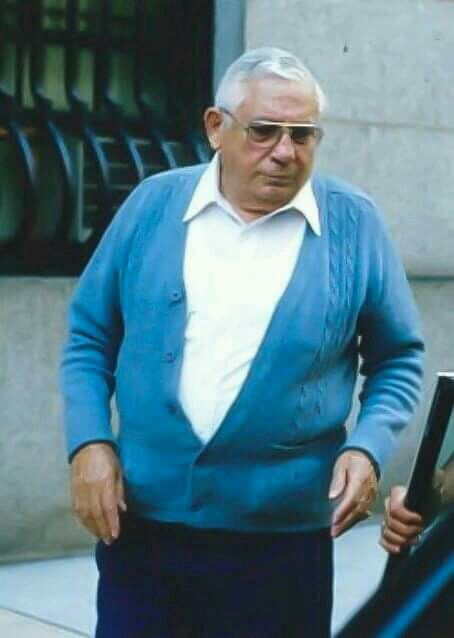
Anthony “Tony Ducks” Corallo, boss of the Lucchese crime family, was one of three New York Mafia godfathers on trial.

The trial got its nickname from the entity created by Charles “Lucky” Luciano in 1931 to oversee the Mafia’s national crime syndicate. The Commission was composed of the bosses of the five New York Mafia families, as well as representatives from other prominent crime families across the country.

Anthony “Bruno” Indelicato, alleged killer of the cigar-smoking Bonanno family boss Carmine Galante, was included among the defendants to reveal to the jury the true murderous nature of the Mafia. Graphic photos of Galante’s bloodied and bullet-riddled body would be shown in court.

The original 15-count indictments were revealed in February 1985. The indictments were the product of five years of investigations, 171 court-authorized wiretaps and strategically placed bugs, and the work of more than 200 federal agents. By the time the trial started 18 months later, the indictment count had grown to 25, including charges of extortion, labor racketeering, narcotics, gambling and murder. The core mantra behind these indictments was that the Mafia Commission used “threats, violence and murder.” 

The original indictment contained nine defendants. By the time the trial started, two names had been added, but three names had to be removed – they were dead by natural causes or otherwise. The three men removed from the indictment were Paul “Big Paul” Castellano, Gambino family boss (murdered December 16, 1985); Aniello “Neil” Dellacroce, Gambino family underboss (died of cancer December 2, 1985); and Stephano “Stevie Beefs” Cannone, Bonanno family consigliere (died of natural causes September 1985).

Samuel Dawson, attorney for Salvatore Santoro, had choice words about the indictments: “The indictment includes the Chicago fire and the San Francisco earthquake. I intend to prove that Mr. Santoro did not play with matches, or have anything to do with the earthquake.”

At the bond hearing, Magistrate Michael Dollinger read the obligatory statement warning that if the defendants were to threaten any witnesses in the case, their bail would be forfeited. “Christie Tick” Furnari asked, “What witnesses?” His attorney quickly led him out.

Let the circus begin

The trial started on September 8, 1986, on the third floor of the Manhattan Federal Court. The trial was THE show to attend in New York, and spectators never left disappointed.

Before jury selection began, Salerno’s attorney, Anthony Cardinale, argued that his client clearly was unfit to stand trial. As “Fat Tony” repeatedly dabbed at his right eye with a white handkerchief, Cardinale explained that Salerno was suffering from the recent effects of surgery less than a week before. Judge Owen denied the request.

Persico claimed he was facing double jeopardy. Earlier that year he was convicted of being the Colombo family boss. That case was now in the hands of the federal appeals court. Persico contended this trial should be delayed until after the appeals court issued its ruling. Judge Owen denied his request.

Arguments were then raised that the trial needed to be delayed because the defendants could not receive a fair trial because of all the pretrial publicity. Judge Owen denied the request as well.


What is the Mafia?

Before the jury could be selected, Persico had some “directives” for Judge Owen. First, he wanted to make it absolutely clear to the judge – and to the jury – that in no way can the Mafia be presented as or construed to be a criminal entity. Obviously, according to Persico, it was the government spinning this mistruth.

Persico went further when he attempted to guide Judge Owen on how to question prospective jurors. He explained, “Not too many of these jurors have a lot of education. I don’t believe you should use this terminology questioning the jury. You should use more lay language. They don’t understand this kind of language. I should put it in less – plainer terms.” 

Judge Owen countered, “I’m accustomed to asking people questions in language that they can understand and answer.” 

Jury selection started. Prospective jurors were given a quiz to determine if they knew, or had heard, of any of about 200 past and present Mafia figures or alleged mobsters whose names may come up during the trial. The list included Al Capone, Vito Genovese and Lucky Luciano. The quiz was given, and the answers were provided. 

The jury was selected: seven women and five men.


Opening arguments

Opening arguments began on September 18, 1986. 

The prosecution was intent on showing that the Commission was a criminal enterprise, and that each of the defendants was a member of the Commission, or of an entity directly under its control. Also, each of the eight men being tried had committed at least two – if not more – acts of racketeering to benefit the Commission and its goals.  The racketeering fell into three categories:

1.  The Commission directed bid-rigging (including extortion) in the New York concrete industry.
2.  The Commission organized Staten Island loansharking territories.
3. The Commission ordered the murder of Bonanno family boss Carmine Galante, along with two of his associates. 

U.S. Attorney Michael Chertoff described the Commission: “It’s kind of like a board of directors of a big criminal company.” The evidence he would present included surveillance photographs, videotapes and audio recordings. Among the witnesses were some high-ranking Mafia figures, as well as an undercover FBI agent named Joseph Pistone – known to the Bonanno family as “Donnie Brasco.”

“It’s not romantic, not like TV, the movies or books,” Chertoff told the jury. “You’ll see them fighting, back-stabbing each other. The Commission was dominated by a single principle – greed.”

Yes, there is a Mafia

The defense attorneys went into preemptive attack mode, knowing that one of the prosecution’s goals was to emphasize how the defendants were all going to deny the Mafia’s existence. In his opening statement, defense attorney Samuel Dawson said, “This case is not about whether an organization is in existence, known as the Mafia or La Cosa Nostra. There is – right here in New York City.” But he said there was no evidence the defendants were guilty of the racketeering charges.

Dawson turned to the jury and asked them this simple question: “Can you accept that just because a person is a member of the Mafia, that it doesn’t mean he committed the crimes charged in this case?” He paused before he reminded them that, “You each assured us that you would accept and abide by that basic point.”

“Yes, there is a Commission,” Dawson stated in a matter-of-fact way. But, he said, the Commission’s only function was to approve of new members, and to resolve conflicts between groups. The Commission was not about extorting money from the construction industry, it was only setting prices to avoid competition. “This is a bid-rigging case. An antitrust case. The government has reached for more than what the evidence shows.”

The admission to the Commission’s existence was one of the first times in history when a defense attorney disclosed this about the American Mafia.

It was attorney John Jacobs’ turn. In a unique opening, he said that, yes, his client (Ralph Scopo) did accept some labor payoffs. But, he explained, Scopo didn’t accept the payoffs for the Mafia.

Now it was Persico’s turn to make his opening statements. With his gold-rimmed glasses and black pin-striped suit, he spoke softly to the jurors in a friendly, conversational way. His strategy was to win the jury over with charm, self-abasement and empathy. The jury couldn’t possibly convict someone they liked, right?

“Guess by now you all know my name is Carmine Persico, and I’m not a lawyer. I’m a defendant,” he said with his strong Brooklyn accent. He confessed to being a “little nervous” while he flipped through his notes on a yellow legal pad. He added, “Don’t let them (the prosecutors) blind you with all the labels. Keep your eye on the issues.”

Persico then said, while he smiled and raised his hands, “Mr. Chertoff says the Mafia … is all about making money. The government wants you to believe the money went up to the Commission and the orders came down. I’d like to know where that money went. You won’t see it coming to me. They can’t try me on gossip, or rumors.” 

Persico lowered his voice and spoke with an ominous tone. “Be wary of prosecution witnesses.” He speculated that these witnesses would include murderers and drug dealers. And how were these “stellar” witnesses being paid? They were being paid, he said, with “your money and my freedom.” “They are powerful,” he emphasized as he pointed to the prosecution team. “Not me. … I’m sure after you hear all the evidence, you will acquit me.”

From their own mouths

On the first full day of the trial, the jurors were advised they would be listening to tape recordings of some of the defendants and their associates. The first set of tapes was a conversation between “Tony Ducks” Corallo and an associate, Salvatore Avellino. A bug had been hidden in Avellino’s Jaguar. 

Before the tapes were played, the prosecution presented a New York state investigator, Richard Tennien, who testified that he took part in the electronic surveillance. Persico decided Tennien was the perfect person on which to flex his cross-examination muscles.

“How long did you work on this investigation?” Persico asked in a friendly manner.

“Approximately a year,” Tennien answered.

“Did you ever hear anyone in the car describe themselves as members of organized crime?”  Persico asked.

“In that terminology, no,” Tennien replied. 

Contending that organized crime was a term invented by the government, Persico continued, “Policemen talk that way?”

“Yes,” Tennien answered, adding, “It’s just another term to describe the Mafia, La Cosa Nostra.”

Persico was determined to make a point. He asked Tennien if he himself used the term organized crime “just to make it sound more criminal?”

“No,” Tennien answered. Persico, knowing he didn’t accomplish what he had set out to do, ended his cross-examination.

The jury was instructed to put on large, black headphones, open the transcripts in front of them, and follow along. Transcripts were needed as some of the recorded conversations, at times, were difficult to understand. 

The defense instantly disputed the audibility of some of the tapes, and questioned the accuracy of the transcripts. They had to plant a seed of doubt. They knew they only had to turn one of the jurors to their side to win the case.

The tape started to play. “Tony Ducks” and Avellino were discussing the problems with family members dealing in narcotics. Dealing was not approved by the Commission. How should these dealers being handled, Avellino asked. “Tony Ducks” replied, “We should kill them.”

Fat Tony identified

The oath of “omerta” – the Mafia’s code of silence – was thrown out the window when a former Cleveland Mafia underboss took the stand. Angelo Lonardo, (son of Joseph “Big Joe” Lonardo, former Cleveland family boss), was one of the highest-ranking Mafia figures to ever become a government witness. The 75-year-old Lonardo provided insights into how the Commission worked with the different family bosses outside of New York City. Lonardo’s family communicated to the Commission through Tony Salerno. He testified that Salerno was not only part of the Commission, but the boss of the Genovese crime family.
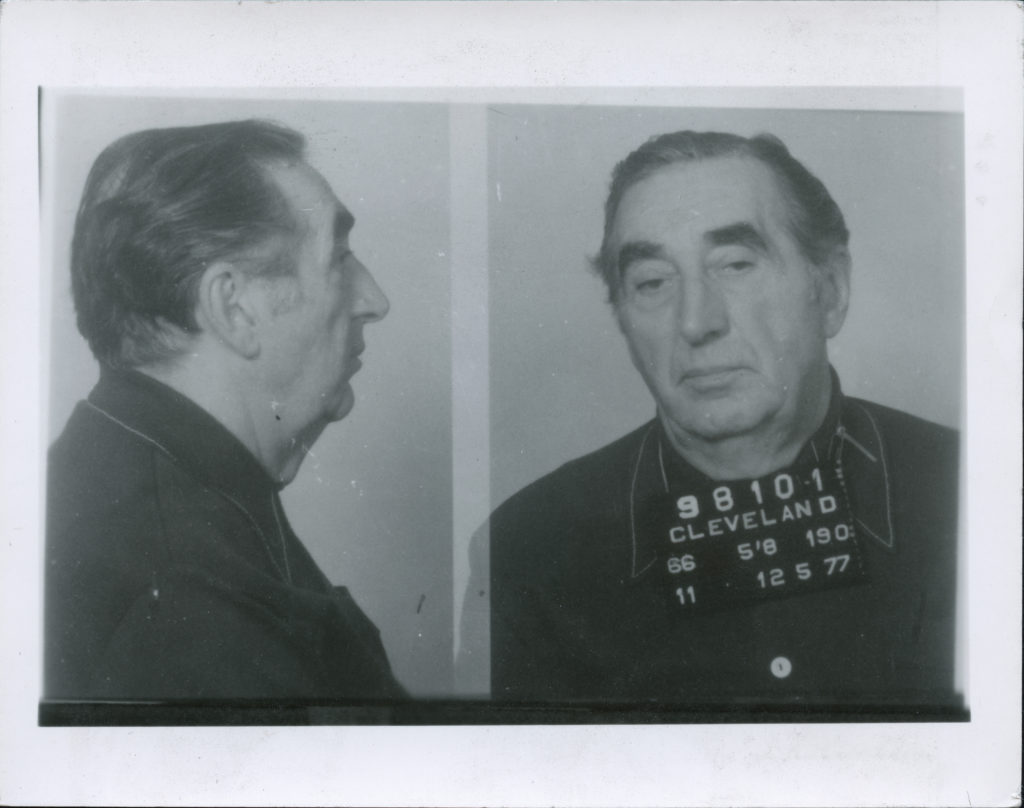
Angelo Lonardo, underboss of the Cleveland Mafia, testified as a government witness in order to reduce a life sentence for a drug conviction.

Attorney Chertoff asked Lonardo to look around the courtroom, and please tell him and the jury if he recognized any Mafia bosses that he had personally met. Stepping down from the witness stand, the older man looked the room around before his eyes became fixed on an individual sitting at the defense table. 

“Yes, I do – Tony Salerno,” Lonardo said, pointing his hand toward Salerno. Soft murmurs raced across the courtroom as all eyes darted from Lonardo to Salerno. Salerno’s only response was a slight lift of the chin and a narrowing of his piercing eyes.   

“People used to refer to him as Fat Tony,” Lonardo continued. “He’s a little thinner.”

Lonardo explained that the bosses of the five New York families controlled the entire national Mafia through the Commission.” He identified the five New York families as Genovese, Gambino, Lucchese, Colombo and Bonanno. 

“If there’s a dispute about anything,” he explained, “they get together and iron it out.” Lonardo continued, “They make all the rules and regulations – what you can do, what you can’t do.”  

And how did the feds get Lonardo to willingly testify about his former Mafia brethren? He was offered a deal. Lonardo had previously been convicted of drug charges. His sentence was “life without parole, plus 103 years.” By “cooperating,” his sentence was reduced, and he was being considered for parole.

Time to garden

Week after week, as the trial marched forward, the American public wanted more inside information and more shocking details. This was the face of America’s feared Mafia hierarchy? Agreed, they were a little rough around the edges, but that didn’t mean they were guilty. A lot of people were rough around the edges. And three of the defendants were in their 70s. Were they really running the Mafia at that age? Then again, President Ronald Reagan was 75 years old, and he was running the whole country.

Doubt had to be “planted,” and Carmine Persico was determined to be that “gardener.”

Marcy Knight is a freelance writer based in Florida.

Read Part Two: The 10-week-long Commission trial played to full courtrooms
 

The afternoon that Joe Masseria dined on bullets

The tale of Giuseppe “Joe the Boss” Masseria’s assassination on April 15, 1931, is one of many gangland legends that have been told, retold and morphed over the decades. It is sometimes hard to distinguish facts from folklore. One thing is certain: We were not there, so we are never going to know precisely the who, what, when and why of this particular hit.

Fortunately we do have reports from law enforcement officers who were eyeing the mobster’s every move (though they were not as clued-in as they thought they were). We also have the accounts of newspaper reporters (albeit often overdramatized narratives). In this case, we also are privy to an insider’s account. While those close to the assassination plot and execution remained mum for life, some critical details were divulged by a man most historians seem to trust for authenticity – Nicola Gentile.

King of wine, fish and booze

Giuseppe “Joe the Boss” Masseria led a large New York Mafia family in the 1920s but battled with a rival, Salvatore Maranzano, who wanted to be the “boss of bosses.”

Born in Menfi, Agrigento Province, Sicily, in 1886, Joe Masseria emigrated to the United States in 1903. He already had a criminal history in Sicily and quickly inserted himself into New York’s underworld. His reign of power began around 1920, and by the latter ’20s, within the region he ruled, Masseria collected payments from virtually every vendor and controlled a multitude of rackets.

Not unlike his contemporaries, Masseria embraced an old-school idealism, resisted change and always wanted a bigger piece of the pie. The so-called Castellammarese War was the product of Masseria’s angst over a newly positioned Mafioso in Brooklyn – Salvatore Maranzano, who hailed from Castellemmare de Golfo, Sicily. The street war began in 1930 and continued until Masseria’s demise in 1931.

Some historical accounts imply Masseria opposed doing business outside the clan (and this contributed to his downfall at the hands of more progressive subordinates), but that’s not entirely true. For examples, and contrary to some accounts that describe Masseria as being strongly against Jewish or Irish alliances, the facts seem to indicate he was considerably tolerant of other ethnic groups. Masseria himself had counterfeiting interests with Jews, and was aware that some of his closest aides conducted business with men of other ethnicities. One example of this is demonstrated in a widely reported 1930 Miami gambling bust, in which Masseria got pinched along with 18 other players who included not only Italians such as Lucky Luciano, but a number of Jewish gangsters as well, including Benjamin “Bugsy” Siegel (using the alias Harry Rosen) and Harry Brown (forever immortalized in the 1932 Chicago arrest photo of Luciano and Meyer Lansky with a couple of Al Capone’s boys).

Still, Masseria represented an outdated mindset, one that could no longer be reasoned with diplomatically. The same was true of his rival Maranzano. The ongoing tit-for-tat killing wreaked havoc not just on the streets but well into the Mafia hierarchy. This was also a time when the definition of “loyalty” became exceedingly unclear.

Sanctioned insurrection

As is almost always the case, Masseria’s downfall was not the result of any single factor. The American organized crime system had plenty of turmoil and dissent, side deals and secretive plots going on at any given time, but the battle between Masseria and Maranzano caused concern even beyond the borders of New York. Maranzano’s war of attrition proved a successful tactic in stripping away Masseria’s strength, and the latter’s own men were ready to defect. Meetings of the Mafia’s elite tried to bring about an end to the bloodshed, but Maranzano consistently manipulated matters to his own advantage. Also at play, on the broader scale, was a natural evolutionary process: The mob was progressing and expanding. Those resistant to change generally don’t last long. Such was the case for Masseria, and, a little down road, for Maranzano as well.

In order to facilitate underworld peace, the consensus turned from diplomacy to the inevitable – one of the two bosses had to go. The final straw, according to the account of Nicola Gentile and with regard specifically to Masseria’s remaining inner circle, was a disagreement over carrying guns. Police had called Masseria in at some point and demanded the violence cease. Still clinging to idealism and holding out hope for eventual peace, Masseria responded by disarming his men. The edict was not warmly received.

“But the boys not being of the same opinion called Al Capone of Chicago, being he was the capo dei decina (Head of Ten), and he was affiliated to the borgata (family) of Joe Masseria. Secretly, they made the decision to kill him (Masseria).” This according to Gentile, vita di capomafia.

Gentile, along with Vito Genovese, Albert Anastasia, Joe Biondo, Vincent Mangano, Paul Ricca (Capone’s No. 2) and others, met often in a hotel room, planning the coup. According to some accounts, Genovese and Luciano met directly with Maranzano and came to a mutual agreement. “Do you know why you are here?” Maranzano asked. The pair nodded confirmation. “Good,” Maranzano said. “I don’t have to tell you what needs to be done.” Before Maranzano excused them, he added, “I’m looking forward to a peaceful Easter.”

After a year’s worth of chaos, collusion and consultation, they chose to depose the weaker of the two embattled bosses, Giuseppe Masseria. Getting him out in the open wasn’t going to be an easy task, but eventually the plotters lured him to a lunch in Coney Island – Nuova Villa Tammaro 2715 W. 15th Street. Masseria arrived in his armored car with two bodyguards. They were led to a table in the back, where another man was already seated. Masseria ordered light, just some bread, wine and coffee. After the foursome was served, owner Gerardo Scarpato instructed his mother-in-law to remain in the kitchen, while he casually “took a walk” from the building.

About 3 p.m., Joe the Boss, while engaged in a hand of pinochle, took four bullets to the back, and one to the head. His body slammed into the table, then to the floor. The entourage quickly exited the restaurant and entered waiting getaway vehicles. They left behind a stolen car, several guns, hats and overcoats.

Charles “Lucky” Luciano, who was secretly allied with Salvatore Maranzano, is believed to have orchestrated the hit on Masseria.

Witness accounts were slim to none, while media reports added flair and the cops considered a number of theories that were perhaps close in some ways yet ultimately way off base in terms of ever achieving legal closure. The accounts echoed the same story – two men approached Masseria from behind and a series of gunshots rang out. The garments left behind did, however, provide some clues, or so the detectives hoped. Suspicion fell on a Chicago connection, also a dope racket, but everyone agreed it was “an inside job.”

Sam Pollacia, a close Masseria associate and owner of one of the leftover coats, was questioned for allegedly being present at the lunch meeting. Of course, he denied being there. Augie Pisano had been seen meeting with the restaurant’s owner, Scarpato, before the murder. Scarpato, when questioned as to why there were no waiters around, stated that everyone was off work, it was “a light day.” Cops also questioned Ciro Terranova who, according to some versions of the legend, served as one of the getaway drivers.

The aftermath

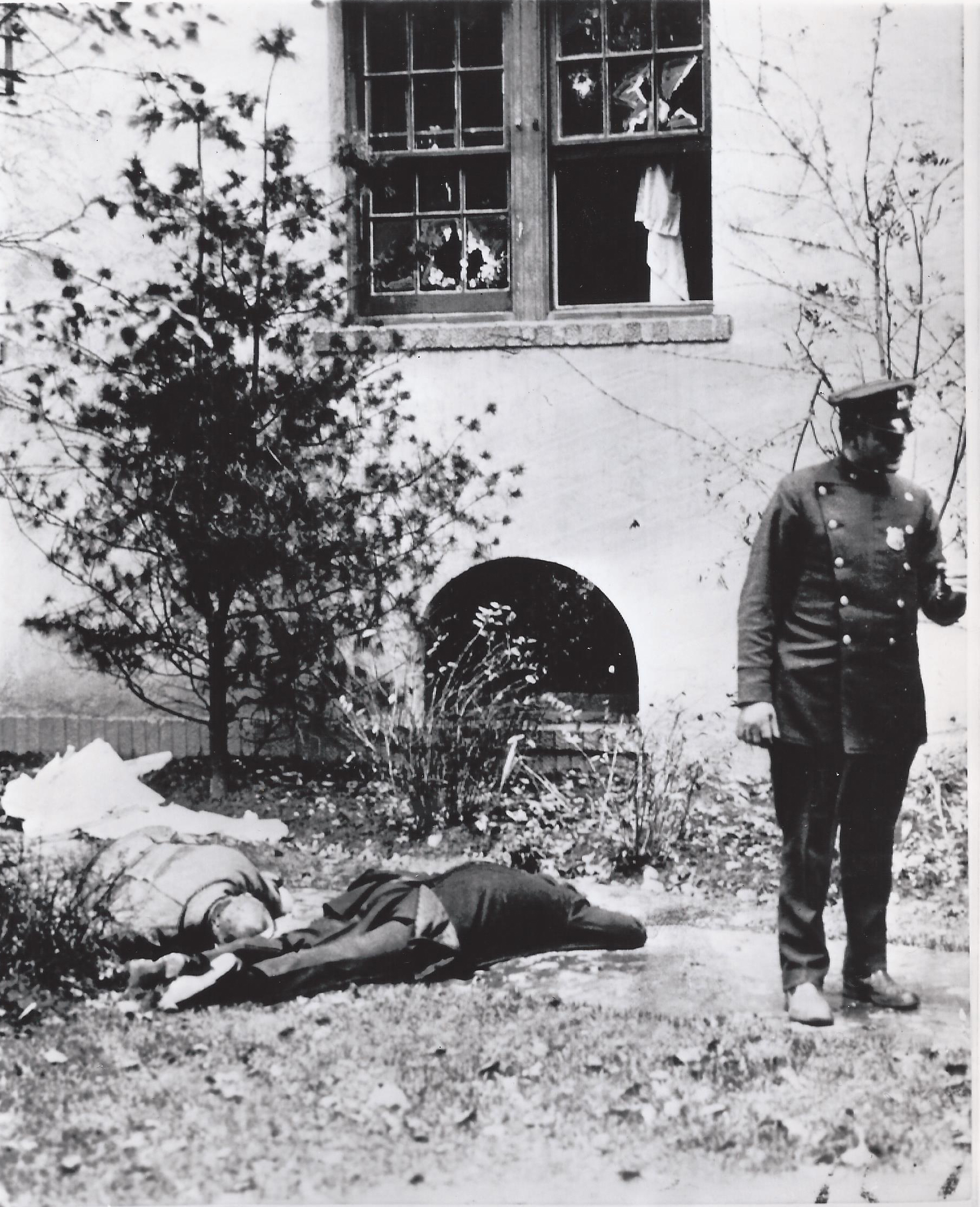
In November 1930, Steven Ferrigno and Alfred Mineo were ambushed outside 706 Pelham Bay Parkway in the Bronx following a meeting with Joe “The Boss” Masseria, to whom they were loyal. Ferrigno and Mineo were among the victims in the Castellammarese War. The assassins were reputedly from Salvatore Maranzano’s rival faction. Courtesy of the Cipollini Collection

In his memoir, Gentile stated that he and Paul Ricca arrived at Nuovo Villa Tammaro just after the fact. Seeing the heavy police presence, they changed course and rushed over to Luciano’s apartment. While there, Gentile recounted, one of Maranzano’s emissaries, Vincent Troia, arrived. Luciano gave Troia a message to relay back: “Don Vincenzo, tell your compare Maranzano that we have killed Masseria – not to serve him, but for our own personal reasons. Tell him that if he should touch even the hair of even a personal enemy of ours, we will wage war to the end. Tell him that within 24 hours he must give us an affirmative answer for a meeting at a locality which we will pick out.”

As expected, Masseria’s funeral was lavish, complete with a $15,000 bronze casket. The service was held in his Manhattan penthouse apartment at 15 W. 81st Street.

In another blow to the family, several weeks later Masseria’s 19-year-old daughter, Vinitia, succumbed to illness and died. Without missing a beat, the press called it a death from a “broken heart.”

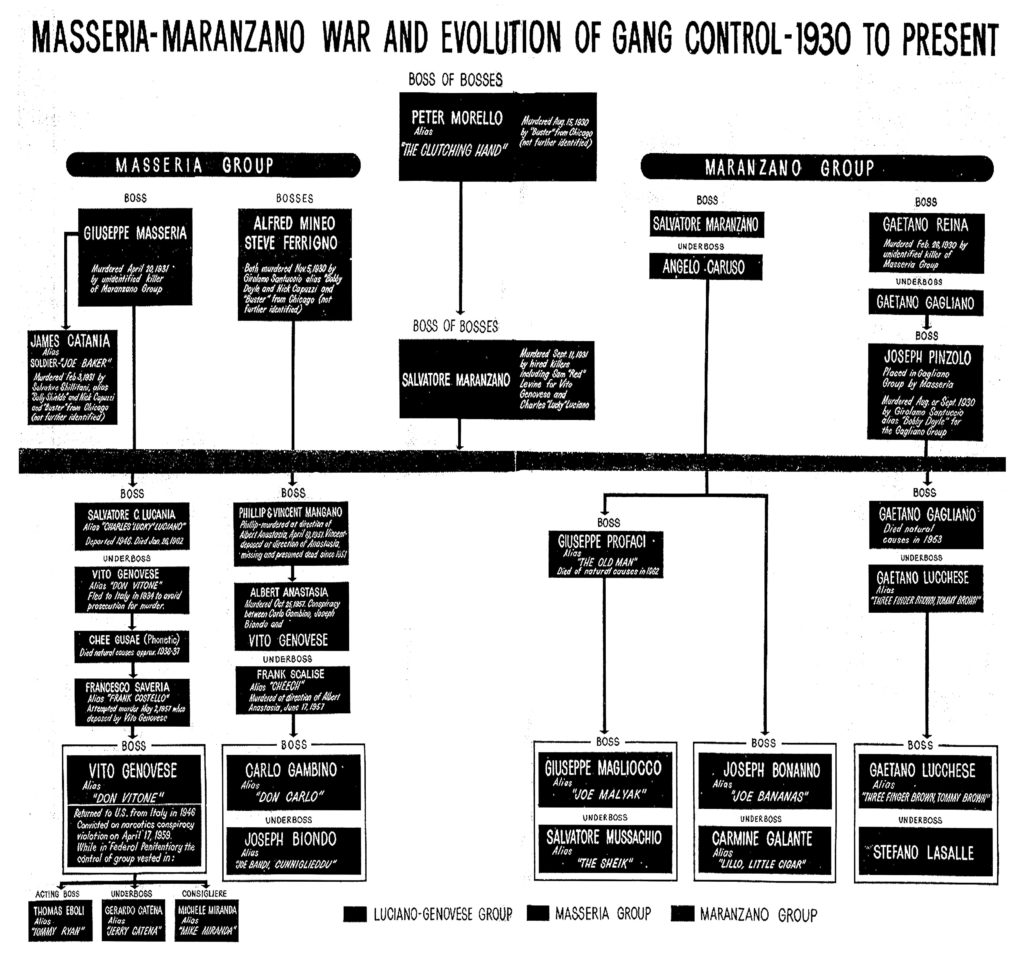
This Mafia organizational chart was presented during the U.S. Senate’s McClellan hearings on organized crime in 1963. Courtesy of the Cipollini Collection

As for restaurateur Gerardo Scarpato, his future looked bleak as well. After the Masseria hit, Scarpato requested to be fingerprinted, just in case something happened. He then took his family on an extended sabbatical to Europe. He returned in June 1932 and took another step that foreshadowed impending doom. Scarpato got tattooed with his name and address on the forearm. That September, his body was found in a burlap bag inside an abandoned car.

Scarpato fell victim to an up-and-coming method of witness elimination: trussing the victim in rope in such a way that struggling brings about strangulation. Incidentally, this tactic was later fine-tuned (by adding icepick punctures) and became the calling card of Brooklyn’s kill-for-hire group Murder Inc. At the same time, investigators turned their attention to Masseria’s former adviser.

“As part of their investigation, New York police requested Chicago authorities to question the present head of the Sicilian organization, Lucky Luciano, intimate of Ralph Capone and now a threatening factor in New York’s underworld,” the New York Daily News reported on September 12, 1932.

The new reigning overlord, Salvatore Maranzano, would also get his day of reckoning, but that is a story for another day.

Christian Cipollini is the author of Lucky Luciano: Mysterious Tales of a Gangland Legend and Murder Inc.: Mysteries of the Mob’s Most Deadly Hit Squad.

How Prohibition changed beer

For dedicated home brewers and beer snobs, the tale is familiar. Prohibition killed small and mid-sized breweries, and after repeal, the few breweries left — behemoths such as Anheuser-Busch and Pabst — had to do everything in their power to cut costs. This story is true, but it does not give us the whole picture. Prohibition had profound effects on beer, and some of the off-stated stories about these effects have formed a mythology that doesn’t hold up when you examine the historical record more closely.

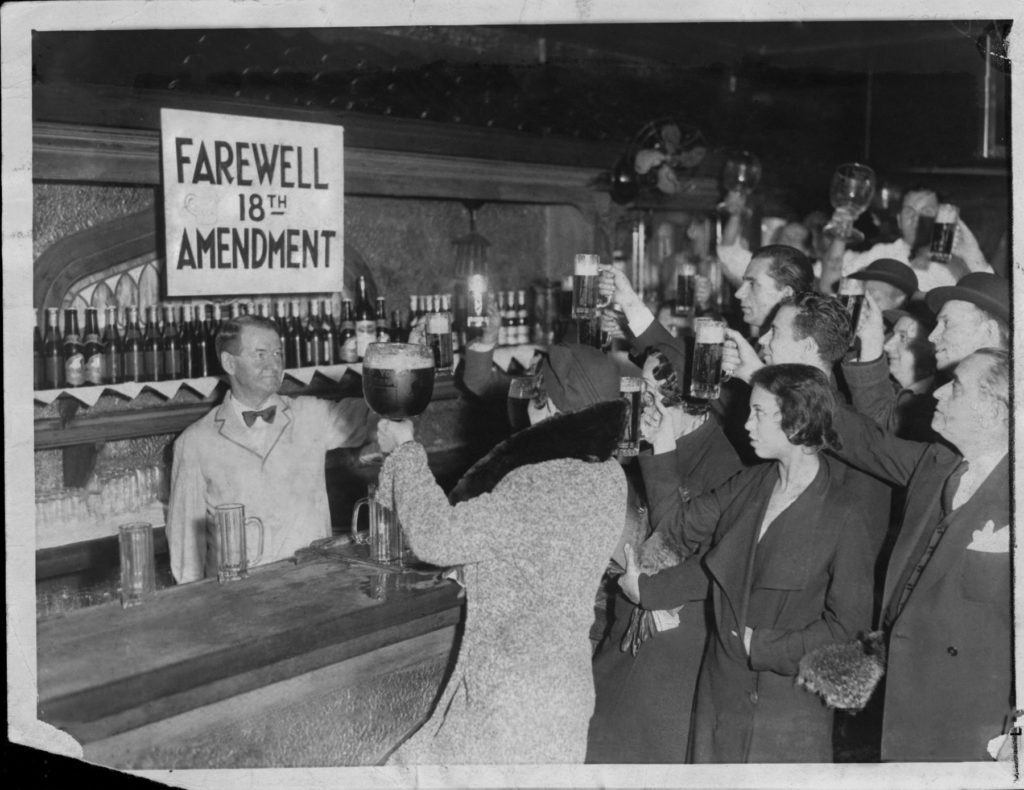
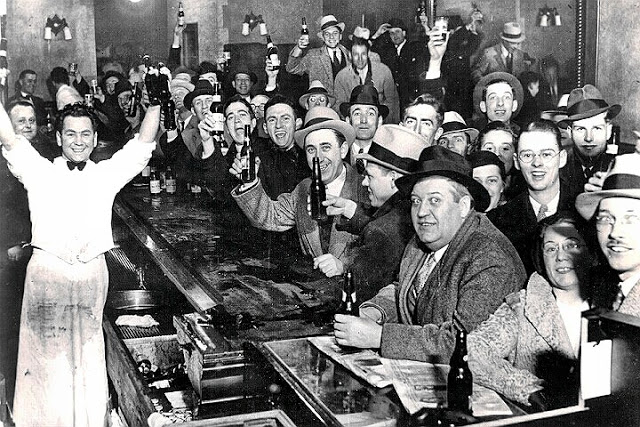
People celebrate Repeal Day 1933
Taken on Repeal Day, December 5, 1933, this photo of thirsty New Yorkers shows a bar full of beer drinkers toasting the end of Prohibition.

In honor of New Beer’s Eve, which commemorates the day in 1933 when President Franklin D. Roosevelt signed the Cullen-Harrison Act, re-legalizing beer for the first time since Prohibition took effect in 1920, let’s explore the ways Prohibition changed the American brewery landscape.

American lager and palatable brews

Before the craft beer revolution of the past few decades, the United States was most commonly associated with the bright, yellow lagers of breweries such as Budweiser, Pabst and Coors. Lagers have been the king of the brewing scene since the 1840s. Before large waves of German immigrants began settling in the United States in the 1840s and ’50s, Americans drank ale. The first wave of English settlers brought ale to the new world, a style that fermented at warmer temperatures than lagers and had a knack for filling bellies and warming bodies. Ales brew more quickly than lagers, but they don’t stand up as well to long-term storage or transport, which ultimately led to their demise in the vast American continent.

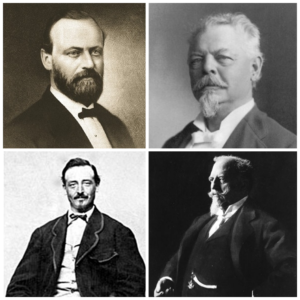
Clockwise from top left: Joseph Schlitz, Frederick Pabst, Adolphus Busch and Frederick Miller popularized beer in the United States in the 19th century.

As soon as English settlers landed in North America, ale suffered from a serious of setbacks. At first it was the lack of barley, which farmers remedied. Then it was competition from rum and whiskey, which was not as easily fought. These setbacks led to experimentation with fermenting different ingredients, including corn, pumpkin and spruce. Numerous Native American cultures had some form of fermented corn beverage. Ultimately, experimentation didn’t change much, and beer became less popular than hard spirits in the American colonies.

This began to change in the middle of the 19th century when German-Americans established breweries across the Northeast and Midwest. Americans of all ethnicities and nationalities fell hard for this clean, smooth-drinking beer. Lagers tasted fresher, traveled more easily and looked more effervescent in a glass than the old English ales.

One ingredient that led to the bright, bubbly new beers of the mid-1800s was rice. Brewers experimented with the process of adjunct brewing, making beer with grains other than barley. They first tried corn, but the results were oily. Then they tried rice, an addition that was originally heralded as an improvement. And a surprise to many today — adjunct-brewed beers were actually more expensive to make than conventional all-malt versions. Rice was not perceived as an inferior ingredient until recently.

The Midwestern brewers in particular had an interesting challenge, as explored in Ambitious Brew: The Story of American Beer by Maureen Ogle. They were incredibly successful in their own towns, but even Milwaukee, Chicago and St. Louis were relatively small in the 1850s and ’60s. In order to grow their operations, they expanded across the Midwest and as far away as Texas and California. They cornered the market on distribution and transport while brewers in New York, Philadelphia and other East Coast cities were content to serve their local populations.

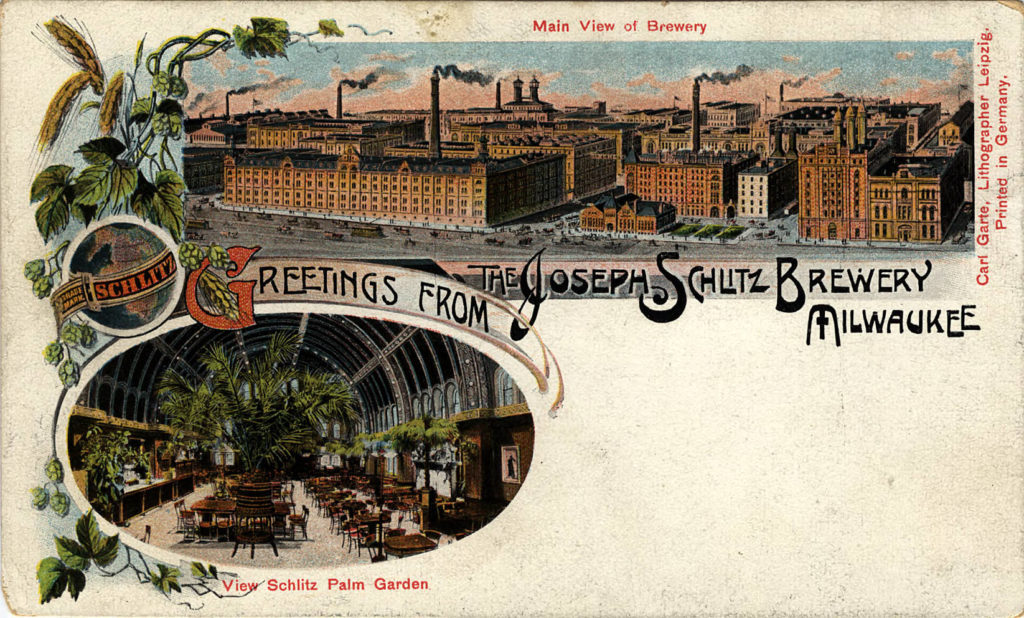
Schlitz Brewery
This postcard illustrates the size and scale of the Schlitz Brewery empire at the turn of the 20th century.

The success of German-American brewers such as Joseph Schlitz, Frederick Miller, Adolphus Busch and Frederick Pabst had a number of consequences. Their lagers became the perceived standard of quality and taste. They continually reinvested in more technologically advanced machinery and were able to negotiate lucrative deals for raw materials and distribution.

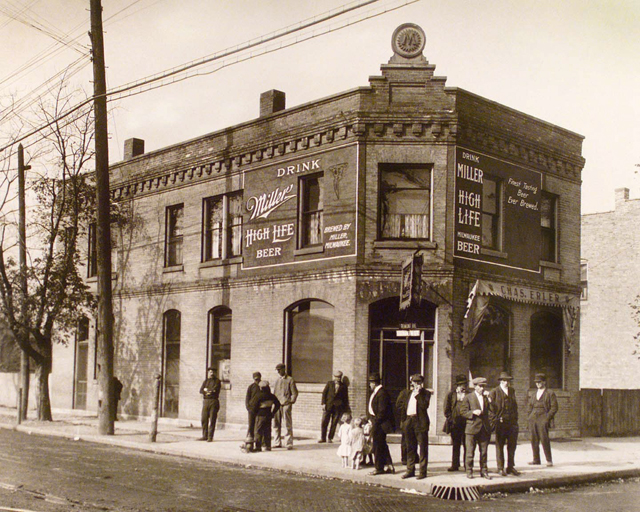
Miller Kenosha
This Miller tied house is typical in its design. Located on a street corner in Kenosha, Wisconsin, it would have exclusively sold Miller beer.

In the end, the success of German-American brewers contributed to breweries’ downfall and Prohibition. As the temperance movement became more politicized around the time of World War I, anti-German sentiment reached a new high, and a lot of Prohibition propaganda focused on demonizing German-American brewers.

The end of the ‘tied system’

If modern connoisseurs walked into a late 19th century saloon, they would be sorely disappointed by the beer selection. Almost every restaurant, hotel and saloon in the United States was part of the “tied system.” Tied houses, which are saloons owned and controlled directly by a brewery, originated in England. They arrived in the United States because of pressure from temperance advocates who saw saloon owners as unscrupulous thugs eager to turn a profit however they saw fit. Before the tied system, many saloons operated brothels or illegal casinos as well. As local law enforcement and revised ordinances cracked down on these dens of ill repute, brewers such as Schlitz and Anheuser-Busch purchased existing saloons and turned them into brand-specific beer halls.

At first temperance advocates were mildly placated because brewery-owned saloons were more likely to follow the letter of the law. But the tied system led to an increased proliferation of saloons. If Schlitz opened a public house on one corner, then Blatz, Pabst and Miller were likely to open competing operations on the other three corners. Besides increasing the accessibility of alcohol in many communities, prohibitionists complained that these tied-system saloons were operating as secret social and political societies that furthered the liquor cause and pro-immigrant sentiment.

When Prohibition was repealed, tied houses were effectually outlawed. A three-tier system was established to define and separate producers, distributors and retailers. Although many states have since loosened restrictions on brewery-owned retailers — think microbrewery brewpubs — the tied system ended along with Prohibition.

Decorative, informative tap handles

Another change was the proliferation of clearly labeled tap handles. Before Prohibition, most kegs or draft faucets were fashioned with nondescript black ball-shaped knobs. A distributor or bartender might scrawl a brand name or insignia on the knob, but breweries rarely, if ever created branded tap handles. In the 19th century, no regulations mandated clearly labeled beer taps.

Once Prohibition ended, many states realized they needed to enact new local protocols to protect consumers. In Pennsylvania, a 1935 bulletin established the following regulation, which is still enforced by the Pennsylvania Liquor Control Board: “. . . shall be unlawful for any retail dispenser to furnish or serve any malt or brewed beverages from any faucet, spigot or other dispensing apparatus unless the trade name of brand of the product served shall appear in full sight of the customer and in legible lettering upon such faucet, spigot or dispensing apparatus.”

Repeal Day Bar Celebration
At the end of Prohibition, Americans were still drinking beer from bottles and kegs, as they are in this photo. In 1935, Krueger Brewing Company became the first brewery to debut beer cans, which were lined with a new material called Vinylite.

In addition to new regulations, many breweries saw themselves faced with new marketplace competition for the first time. Pre-Prohibition saloons rarely served more than one brewery’s beer. Even at a higher-end hotel or restaurant, the average imbiber did not expect a cornucopia of choices. But after repeal, breweries needed to find ways to visually stand out.

Since Prohibition’s repeal, tap handles have become increasingly ornate and decorative. The first branded tap handles were simple, modified versions of the ball knobs. They would have the brand name and possibly a recognizable logo on the front face. By the 1950s, breweries were experimenting with different shapes, sizes and materials to set their taps apart, and this creative one-upmanship continues to this day.

New markets, new ads

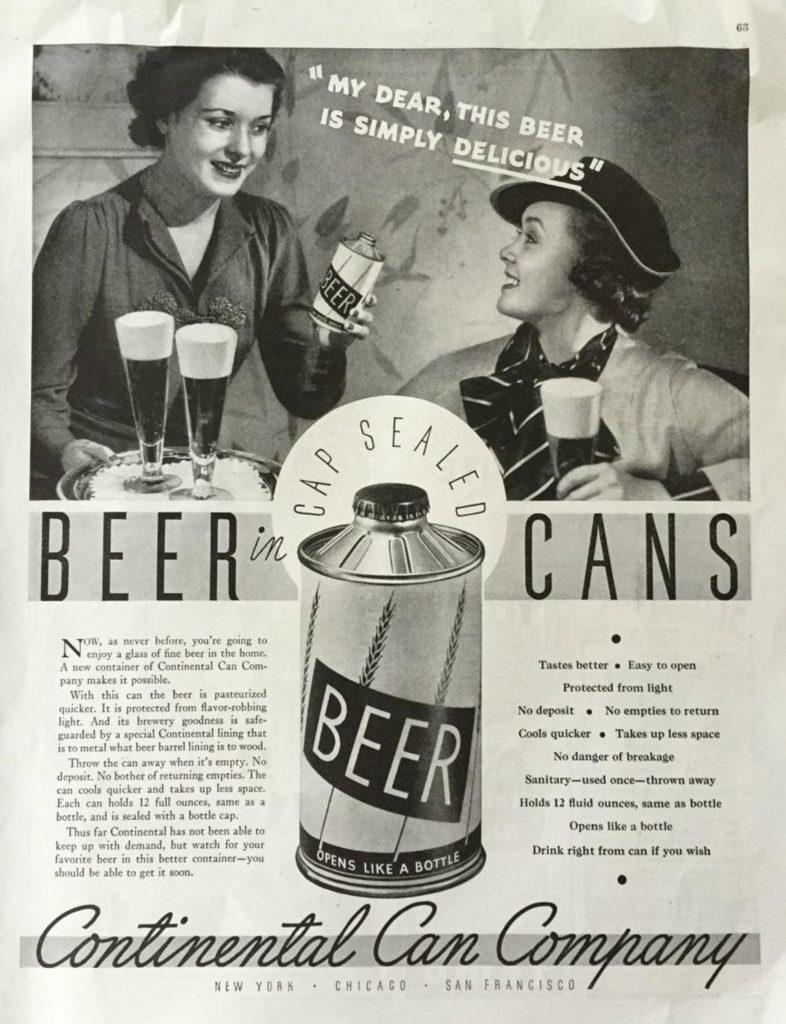
Another area where breweries shifted their focus after Prohibition was how they advertised and who they advertised to. Breweries had become astute marketing agencies in their own right during the 19th century, but it was not until after repeal that they focused on marketing beer as a leisure activity that could be done at home. New advertisements showed men cracking open a can — a new invention introduced in 1935 — after a long day of work. Some even showed families at picnics. By the late 1940s, Miller was directly promoting Miller High Life as the “Champagne of Bottle Beer,” with full-page color ads in women’s magazines such as Vogue and McCall’s.

Women Beer Advertisment
This mid-1930s advertisement illustrates the push for consumers to embrace cans, which were less expensive for breweries. It also shows the new audience for beer: women.

Loss of diversity

Prohibition killed thousands of small breweries around the country. The breweries that were able to weather 13 dry years were those that already had diverse enough portfolios and deep enough coffers to make alternative products for diminished profits during Prohibition. According to Maureen Ogle, of the 1,300 brewers operating in 1915, no more than 100 survived Prohibition.

It is worth noting, though, that in the 1870s there were 4,000 breweries. Between the 1880s and 1910s many small and mid-sized breweries folded because of temperance pressure or consolidation with other breweries for financial reasons. Prohibition had an immediate effect on those breweries still operating in 1920, but it is not cut and dry. Corporate consolidation happened in nearly every American industry between the late 1870s and 1900. This Gilded Age phenomenon affected vertical integration, as seen in the tied system and the transportation operations that many breweries handled themselves. It also led to large monopolies and corporations. It is likely that even without the hastened death of breweries thanks to Prohibition, the United States would have continued losing smaller breweries to consolidation throughout the early 20th century.

In the intervening decades, beer has recovered and grown exponentially. Today there are more than 7,000 breweries in the United States, an all-time high. The nation’s brewing capacity was 80 million barrels in the year after Prohibition, and consumption was less than half of that. Decreased interest in beer was due in part to the mobsters, bootleggers and moonshiners who peddled poorly brewed beer during Prohibition. Thankfully for trained brewers, it was not long before Americans remembered why they loved the stuff.

According to figures compiled by the Alcohol and Tobacco Tax and Trade Bureau as well as the Brewers Association, today the United States is producing about 200 million barrels for national consumption and five billion barrels for export annually.

On April 6, raise a glass to the return of beer, and keep in mind the lasting consequences of Prohibition on our favorite fermented beverage.


A new look at Tony Spilotro in upcoming movie

When mobster Tony Spilotro was active in Las Vegas decades ago, doors opened for him in Hollywood.

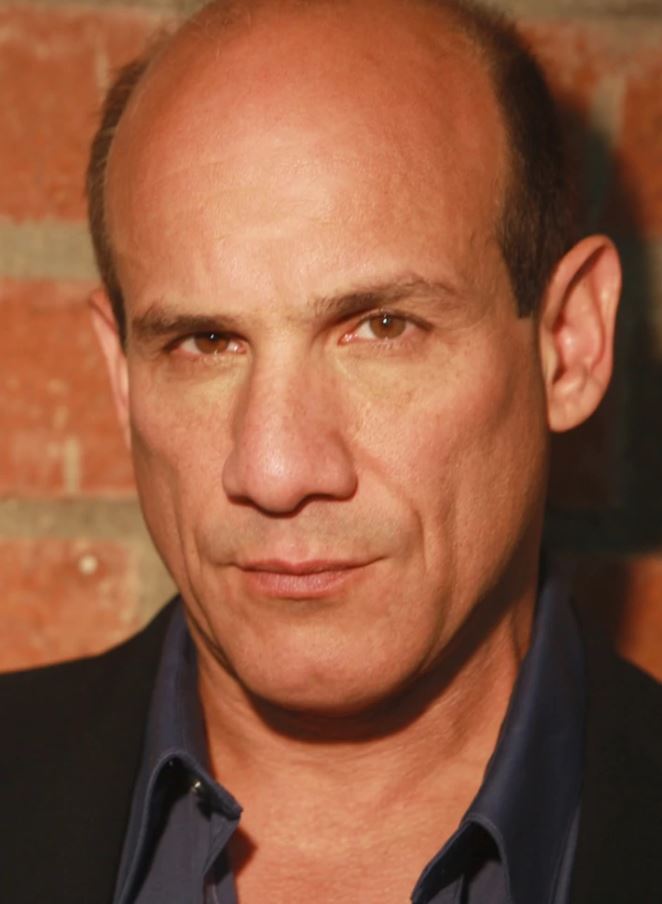
Paul Ben-Victory will play mobster Tony Spilotro in The Legitimate Wiseguy.

As the Chicago Outfit’s representative in Southern Nevada, Spilotro’s reach extended into the movie-making industry through the unions, according to screenwriter Nicholas Celozzi.

“He had a lot of influence because of his association with the Outfit,” Celozzi said in a telephone interview. “When he spoke, he spoke for others.”

Celozzi’s relationship with Spilotro is the focus of The Legitimate Wiseguy, a movie going into production this spring, with an undetermined release date. Directed by George Gallo, it stars Paul Ben-Victor as Spilotro and features Harvey Keitel, Emile Hirsch and Ruby Rose. Celozzi co-wrote the screenplay with Jim McGrath.

The movie will center on Spilotro’s efforts to line up Hollywood contacts for Celozzi, an aspiring actor from Chicago with a family history in organized crime. His grandmother’s brother was Sam Giancana, a former Outfit boss.

At Marquette University in Milwaukee, Celozzi performed in plays and wanted to continue acting after graduation. His father, a Chicago Chevrolet dealer, knew Tony Spilotro and his brother Michael.

This initial contact with the Spilotros led Celozzi, known as Nicki, to the West Coastaround 1981.

Price to pay

Tony Spilotro offered to help Celozzi in Hollywood, but that favor came with a price. “Oh, by the way,” Spilotro told Celozzi, “there is somebody coming to Los Angeles. He is probably staying with you.”

As a young actor, Nicholas Celozzi enjoyed access to opportunities in Hollywood thanks to the influence of Tony Spilotro. Courtesy of Monaco Films, Inc. & Le Monde Productions.

Unbeknownst to Celozzi, the person Spilotro sent that way turned out to be an underworld operative. Celozzi won’t say who the person was or elaborate on certain incidents, but the young actor was being pulled into a shadowy world that could have resulted in serious consequences. 

“I shouldn’t have been in certain places,” Celozzi said.

At one point, Spilotro urged Celozzi to cross major criminal boundaries. This was an era of headline-making Mob killings and car bombings in Las Vegas and elsewhere. People on the periphery of this world, including Celozzi, found themselves having to make dangerous choices.

“My world was collapsing,” he said.

The film’s title reflects Celozzi’s connection to some of the criminal suspects under surveillance during this era. Authorities who spotted him with people such as Spilotro noted that Celozzi was “legitimate,” unlike the real wiseguys.

Father-son relationship

Years later, in writing the screenplay, Celozzi, 58, was able to put his complex relationship with Spilotro into perspective. He valued Spilotro’s help in advancing his Hollywood career, but he did not want to be lured into a criminal life. Looking back on it, the personal bond with Spilotro is what stands out.

“It was like a father-son relationship,” Celozzi said. “He filled that gap for me.”

Gallo, the director, said the Celozzi character in the movie is “a young guy who was naive and grew up rather quickly.”

“He had a whole bunch of life lessons thrown at him,” the director said in a telephone interview.

George Gallo will direct The Legitimate Wiseguy. He was the screenwriter for Midnight Run and The Whole Ten Yards, and has directed more than a dozen movies. Courtesy of George Gallo.

One challenge for the director is to create a Spilotro character who isn’t a carbon copy of Joe Pesci’s portrayal in the classic 1995 movie Casino.

That popular film, co-written by author Nicholas Pileggi and director Martin Scorsese, in part explores the romantic relationship between Spilotro and Geri Rosenthal, the wife of Outfit associate Frank “Lefty” Rosenthal.

An oddsmaker from Chicago, Rosenthal oversaw the Stardust and three other hotel-casinos in Las Vegas for Midwestern crime families.

The movie is based on Pileggi’s nonfiction book Casino: Love and Honor in Las Vegas. In the book, Pileggi used the characters’ real names, but he and Scorsese changed the names in the movie for legal reasons. Robert De Niro plays a character based on Rosenthal, with Sharon Stone as his wife.

The Spilotro-inspired character that Pesci portrays is a hot-tempered, violent killer, popping out one person’s eyeball and jabbing another in the neck with an ink pen.

Gallo said The Legitimate Wiseguy will show the way people like Spilotro conducted themselves when they weren’t making headlines. In Spilotro’s case, his relationship with Celozzi was a respite from that kind of life, the director said.

“Nicki was a pure soul who loved movies and TV,” Gallo said. “For Spilotro, it was a breath of fresh air.”

The director said many Mob movies attempt to show the audience “the most vicious gangsters in the world.” This movie will be more of a personal story that says, “Let me tell you about my friend,” Gallo said.

Violent end

About six months before his life ended, Spilotro sensed he was in trouble, Celozzi said.

“He knew he was jammed up,” the screenwriter said. “He was well aware something was going on.”`

Spilotro’s legal problems were keeping him in the news, which Mob bosses reportedly considered to be unacceptable.

The end came in 1986, when Spilotro and his brother Michael were beaten to death in a Mob hit at a home near Chicago’s O’Hare International Airport. They were buried in an Indiana cornfield.

Tony Spilotro’s death meant people connected with him weren’t welcome anymore in places like Los Angeles. With Spilotro gone, Celozzi found himself on the outs in Hollywood.

“They opened doors because of Tony,” he said of West Coast filmmakers, “and they slammed them because of Tony.”

Now Celozzi is back in the fold, telling the story of a young person hoping to break into acting but almost losing his way with an out-of-control lifestyle involving one of the nation’s most notorious gangsters.

Gallo said the movie is something of a Faustian tale about “a guy that makes a deal and thinks he will come out clean.”

“It never works out,” Gallo said.

Larry Henry is a veteran print and broadcast journalist. He served as press secretary for Nevada Governor Bob Miller, and was political editor at the Las Vegas Sun and managing editor at KFSM-TV, the CBS affiliate in Northwest Arkansas. The Mob in Pop Culture blog appears monthly.

Nevada marks 90th anniversary of legal gambling

Ninety years ago today, Nevada legalized gambling. It changed everything — eventually.

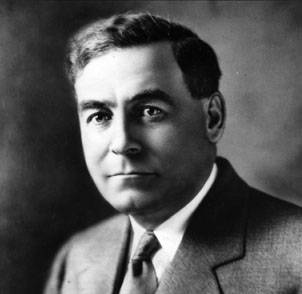
Nevada Governor Fred Balzar signed the bill legalizing all forms of gambling in 1931.

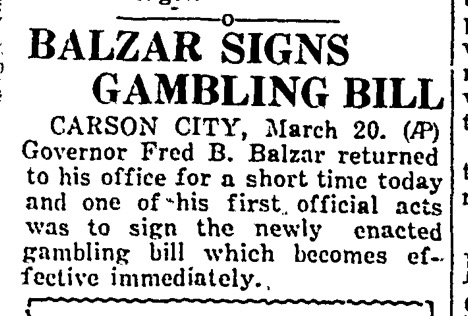
When Governor Fred Balzar signed Assembly Bill 98 on March 19, 1931, few Nevadans could have foreseen the long-term significance of what had occurred. The Las Vegas Evening Review-Journal surely didn’t, as news of the bill signing earned one short paragraph at the bottom of the front page the following day.

By contrast, United Press International correspondent Earl H. Leif had an inkling the legislation could have historic importance:

“The lid is off now, the sky is the limit, and investors can feel safe to place their money here in high-class gambling casinos, and there may be keen rivalry between Las Vegas and Reno for the title of the ‘Monte Carlo of America.’”

No doubt responding to Leif’s exuberant prognostications, the Review-Journal, in a March 21 editorial, sought to temper its readers’ expectations:

“People should not get overly excited over the effects of the new gambling bill — conditions will be very little different than they are at the present time, except that some things will be done openly that have previously been done in secret. The same resorts will do business in the same way, only somewhat more liberally and above-board.”

Although the Las Vegas Evening Review-Journal had provided ample coverage of the gambling bill as it coursed through the legislative process, the governor’s signing of the bill earned just one short paragraph at the bottom of the front page.

The newspaper’s killjoy prediction proved to be more accurate in the short run. The transformation of Las Vegas from dusty railroad town to American Monte Carlo was delayed, at least in part, by the Great Depression. While Las Vegas was doing better economically than many other communities across the country thanks to Hoover Dam construction, the banks that hadn’t gone under were not exactly handing out loans to build bigger betting palaces, especially considering that gambling was still considered a sin in wide swaths of the country.

Even in Las Vegas, there was some reluctance to fully embrace gambling. The first city ordinance outlining casino licensing fees and regulations required that “all glass doors to gambling establishments and abutting on streets or alleys must be opaque or curtained to shield the interior from view by passers-by,” according to the Review-Journal.

On April 2, 1931 — 12 days after the state legalized gambling — the Clark County Commission granted licenses to eight businesses: the Northern Club, Las Vegas Club, Boulder Club, Red Rooster nightclub, Big Four Club, Exchange Club, Rainbow Club and Meadows Casino.

Most of the licensed casinos crowded along the west end of Fremont Street. There was no vision, in those early days, that the city could attract millions of tourists by building casino resorts with showrooms, buffets, swimming pools and horse stables. That discovery would come a decade later.

Rise of the Strip

The incremental growth of the Las Vegas casino industry during the Great Depression took a dramatic turn starting in 1941. Eighty years ago this spring, Las Vegas transformed from a town to a city, from a regional curiosity to an international resort destination.

Three major developments in 1941 kicked off an unprecedented growth boom. The first of these was the construction of an Army air field.

The United States did not formally join the fight against the Axis Powers until after Pearl Harbor on December 7, 1941. But America contributed money and materials to the Allies as early as 1940. And, figuring it was just a matter of time before we became directly involved, the military was getting ready.

In October 1940, Army Air Corps officials scouted several Southwestern desert locations for an aerial gunnery school. Las Vegas was selected because it offered large, uninhabited areas north of town, the ability to train year-round, and an inland location that reduced the likelihood of an enemy attack.

The Army began construction in March 1941. The first commanding officer, Colonel Martinus Stenseth, had his first office in the basement of the U.S. Post Office and Courthouse at 300 Stewart Avenue – the building that today houses The Mob Museum. From this temporary base of operations, Stenseth and his junior officers designed the gunnery school curriculum.

Since the base had to be constructed from scratch, it was a massive endeavor. Besides the runways, crews built 173 buildings and installed electrical lines, sewer and water systems, and the technical equipment needed for a cutting-edge military operation.

By July 1941, more than 800 enlisted men were stationed at the base, moving into the newly constructed barracks and helping to build other structures. After Pearl Harbor, the Las Vegas Army Air Field expanded dramatically. In 1942, its first full year in operation, the airfield graduated 9,117 gunners.

At its peak in 1943 and ’44, the airfield hosted more than 15,000 enlisted men and women, all of whom spent money in area stores, restaurants, theaters, bars and casinos. Senior enlisted men were allowed to live off the base with their wives, creating a pressing demand for housing. Today, that training facility is known as Nellis Air Force Base.

While the Army airfield sprouted northeast of Las Vegas, another war-related project was gearing up to the southeast. Basic Magnesium Incorporated was created to produce magnesium, a lightweight metal that, when incorporated into the structure of aircraft, increased their speed and maneuverability. Magnesium also was used in bombs, flares and tracer bullets.

The man behind the magnesium plan was Howard Eells of Cleveland. In 1936, Eells discovered rich magnesite deposits in northern Nye County. He originally wanted the magnesite to produce furnace bricks, but as war raged in Europe, he recognized the value of his discovery to America’s military.

Eells partnered with a British company to build the plant. The U.S. government invested $130 million in the project. Eells decided to locate the facility about 20 miles southeast of Las Vegas. Why there? It was close to Hoover Dam, which could provide abundant water and electricity, and not too far from Las Vegas, which had the railroad.

Construction started in September 1941. By December, more than 2,700 men were working there. The numbers soon soared, reaching a peak of 13,000 in 1942. The magnesium plant was the foundation for the city of Henderson.

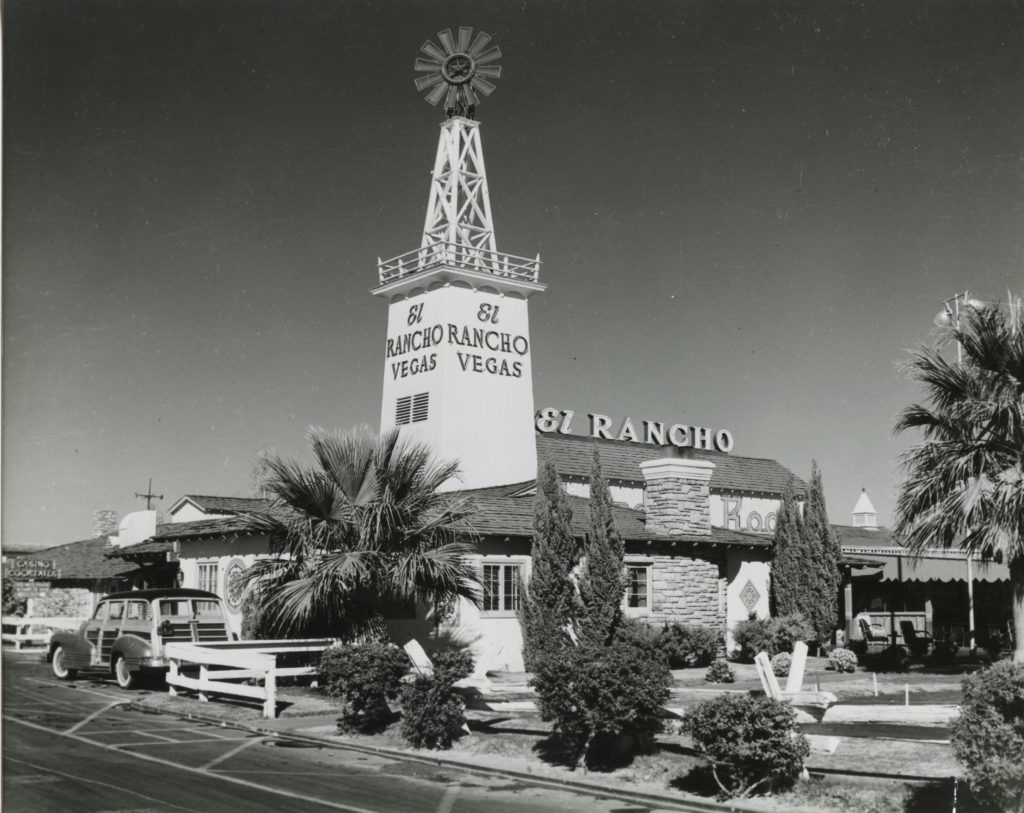
The third major development was the El Rancho Vegas, which opened on April 3, 1941. It was the first hotel-casino on what eventually came to be called the Las Vegas Strip. The Western-themed resort debuted with 50 rooms, restaurants, a theater, a casino and a swimming pool.

Tommy Hull opened El Rancho Vegas on April 4, 1931. It was the first hotel-casino on what would become known as the Las Vegas Strip.

According to a popular legend, in 1940 a California hotel builder named Thomas Hull and a friend were driving on Highway 91 toward Los Angeles when their car got a flat tire just south of the Las Vegas city limits. While the friend hitchhiked back to town to seek assistance, Hull waited beside the highway and counted the cars going by. After an hour of this, he became convinced he had found a great spot to build a hotel.

That’s a clever origin story, but it bears little resemblance to what really happened. In fact, Hull first expressed interest in building a Las Vegas hotel as early as 1938. Las Vegas business leaders Robert Griffith and Jim Cashman encouraged Hull to make the investment.

However, Hull did not secure financing for the venture until 1940 — in other words, not until news of the soon-arriving Army Air Field and magnesium plant surfaced.

Hull chose not to build within the city limits. Instead, he bought an affordable piece of land on Highway 91 south of San Francisco Street (now Sahara Avenue), just outside the city boundary. There, he was not subject to city taxes or regulations.

Wesley Stout, a writer for the Saturday Evening Post magazine, showed up in Las Vegas in 1942 and wrote an article about what was happening here. The article, titled “Nevada’s New Reno,”offered an interesting take on what the Las Vegas boom meant:

“There are bigger war booms than Vegas’, but not relatively, nor any other as gaudy. There’s never been anything quite like it, and there may never be again. The population has more than doubled, exclusive of two Army camps. For the first time in Nevada, Reno and Washoe County have been shoved back into second place.”

In a matter of a year or so, Las Vegas had surpassed Reno to become the state’s premier vacation destination.

Enter the Mob

Before the 1940s, Las Vegas saw its share of thieves, schemers, killers and other ne’er-do-wells. Gunplay and robberies were not unusual in Block 16, the city’s red-light district. Bootlegger Jim Ferguson was dubbed the “King of the Tenderloin” in Las Vegas in the 1920s. But the traditional Mob took little interest in the small desert town until it became a fast-growing city.

Billy Wilkerson, left, bought the land and started building the Flamingo. Only after Wilkerson ran out of money did Bugsy Siegel become involved with the project.

Individual mobsters started hanging around Las Vegas as early as 1941, but the syndicate’s first significant business play was the acquisition of the El Cortez hotel-casino on Fremont Street in 1945. Meyer Lansky, Benjamin “Bugsy” Siegel, Moe Sedway and Gus Greenbaum were among the investors. But they ran the El Cortez for less than a year before selling out, because a bigger opportunity had entered their radar.

The origins of the Flamingo Hotel are no longer in dispute, but unfortunately many people still buy into the myth, so let’s briefly set the record straight once more. The original developer of the Flamingo was not Bugsy Siegel, it was a Los Angeles newspaper publisher and nightclub operator named Billy Wilkerson.

Wilkerson’s project started with the purchase of the land on which the Flamingo would stand. In March 1945, Wilkerson wrote a check for $9,500 to Margaret Folsom. This was a down payment for 33 acres on the east side of Highway 91 south of Las Vegas. He paid Folsom a total of $84,000 for the property. The Mob Museum has in its collection Wilkerson’s original down payment check.

Wilkerson started building the Flamingo in 1945 but ran out of money. Wilkerson was a problem gambler – he lost hundreds of thousands of dollars at the green-felt tables, money that could have been spent to build the Flamingo. Lacking options, Wilkerson turned to Meyer Lansky and his underworld associates to invest in and help him finish the Flamingo.

Lansky needed someone to keep an eye on their investment. Siegel, who lived in Los Angeles and had other business interests in Las Vegas, was the logical choice. Siegel started spending time on the construction site, and before long he wanted more control over the project. He and Wilkerson did not see eye to eye on how things should be done, and Wilkerson was pushed out.

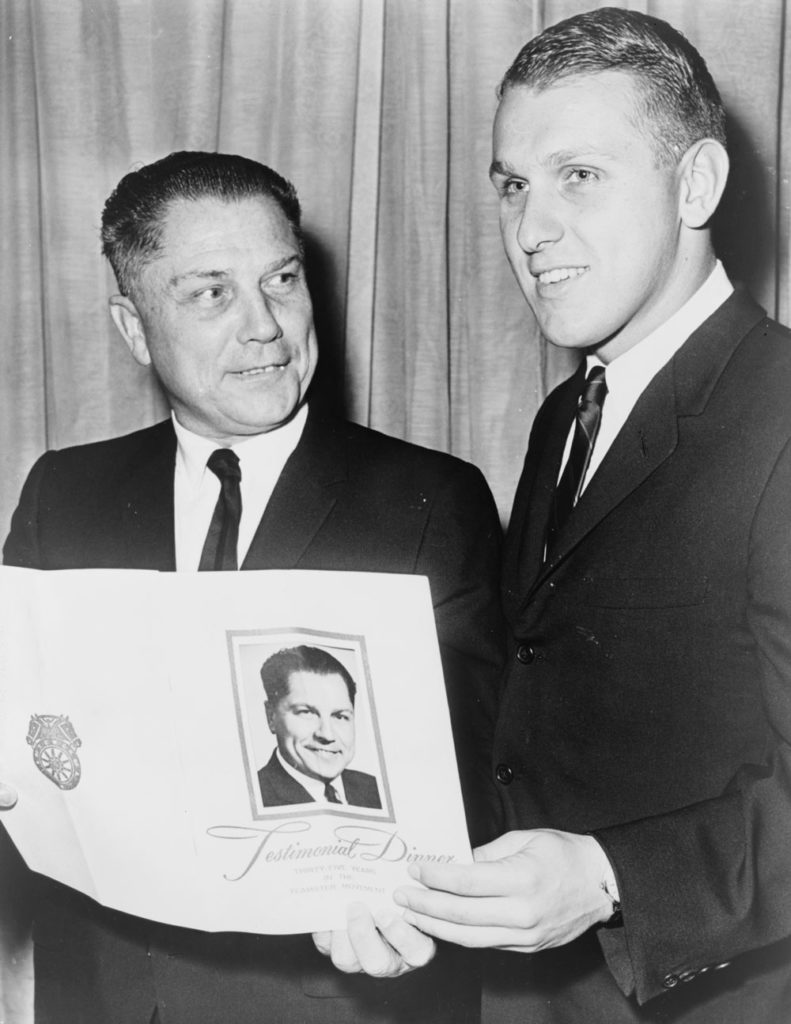
Teamsters Union President Jimmy Hoffa, left, played a huge role in the growth of the Las Vegas casino industry in the 1950s and ’60s. The union’s Central States Pension Fund, which he controlled, provided low-interest loans to mobsters to build and expand casinos. Courtesy of Library of Congress

Siegel was now in charge, and he spent millions more than Wilkerson had planned to make the Flamingo a modern, elegant resort. Siegel procured additional funds from his co-investors, but he faced pressure to start showing some returns on their investments.

He opened the Flamingo on December 26, 1946. It turned out to be a bad move, because the hotel rooms were not finished, and guests who might have enjoyed a couple of hours at the Flamingo had to leave to sleep at competing resorts. The Flamingo lost money, and Siegel decided to shut it down until the rooms were finished.

When the Flamingo reopened in the spring of 1947, it did much better, but Siegel’s tenure at the helm was cut short on June 20, 1947, when an assassin shot him to death in Beverly Hills, California. The case was never solved, but the conventional wisdom is that his syndicate friends saw a smoother and more prosperous future without Bugsy running the Flamingo.

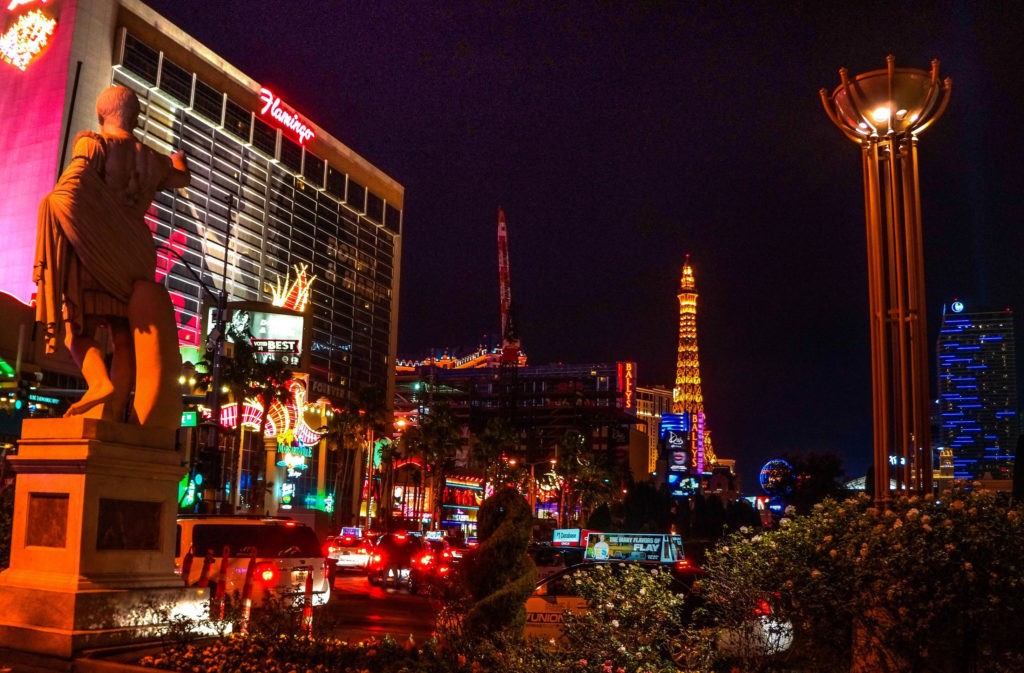
The El Cortez and Flamingo were just the beginning of the Mob’s infiltration of the Las Vegas casino industry. Crime families had hidden — and sometimes not-so-hidden — interests in more than a dozen casinos that sprouted along the Strip in the 1950s, ’60s and ’70s. The Mob’s efforts to grow the industry were fueled in large part by low-interest loans provided by Jimmy Hoffa, who led the Teamsters Union and controlled its Central States Pension Fund.

The Mob’s heyday in Las Vegas ran from 1945 to about 1975. After that, state gaming regulators and federal agents became more aggressive in ferreting out casino skimming schemes, forcing the Mob to look for the exits.

Entrepreneurs and corporations soon took control of the Strip. With greater access to capital, they built megaresorts – sprawling hotels with thousands of rooms and numerous amenities, from luxury restaurants and giant showrooms to retail shops and convention halls.

Las Vegas today

When the coronavirus started spreading across the United States in early March of 2020, Nevada Governor Steve Sisolak ordered the state’s casinos to shut down for 11 weeks. It was the first time anything like this had happened in nine decades of legal gambling. Casinos that had operated 24/7/365 for years started searching for the keys to doors that had rarely been locked.

When Nevada lawmakers legalized gambling in 1931, they surely had no idea what this would mean for Las Vegas 90 years later.

Now, as widespread vaccinations give hope that the end of the pandemic approaches, Las Vegas tourism officials are gearing up for a resurgence of visitors. Legal gambling’s 90th anniversary coincides with big plans for entertainment venues to reopen, conventions to return, and 65,000-seat Allegiant Stadium to fill with Las Vegas Raiders fans. The 3,500-room Resorts World will debut this summer, filling a void on the north Strip, while downtown’s Circa, which brazenly opened in the midst of the pandemic, will finally see its full potential realized.

The Las Vegas casino industry in 2021 bears little resemblance to the handful of small gambling parlors that lined Fremont Street in 1931. But Las Vegas would not be what it is today were it not for the Nevada legislators who assembled in Carson City and audaciously voted to legalize gambling 90 years ago.

Embattled ‘maxi-trial’ prosecutor takes on ’Ndrangheta

Nicola Gratteri has not been to a restaurant in 20 years. The 62-year-old lawyer eats in his office. His home, he says, is a bunker. Armored vehicles and armed guards have been a part of his life for decades, since he began taking on the ’Ndrangheta crime syndicate in southern Italy.

His lifestyle won’t change anytime soon. Since January, Gratteri has been chief prosecutor in the “maxi-trial” underway in Calabria, a rugged region at the toe of Italy’s boot near Sicily. Calabria is considered the ’Ndrangheta’s home base.

The trial is one of the largest in Italian organized crime history, with 355 defendants reputedly linked to the ’Ndrangheta. A pre-trial hearing lasted about three hours as the defendants’ names were read, some with nicknames such as “Fatty,” “Blondie” and “Little Goat.”

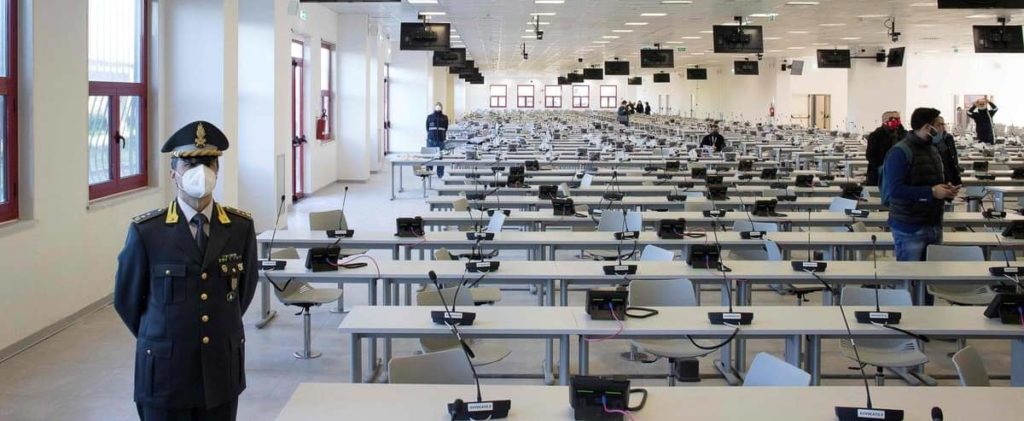
The defendants are charged with an array of serious crimes, including murder, drug trafficking and loan sharking. Public officials and police officers are among those charged. The trial is expected to last two years. It is being conducted in a large call center converted into a courtroom. Security is tight, with COVID-19 restrictions in place.

Deadly drama

The Wall Street Journal has referred to the ’Ndrangheta as the Western world’s richest crime syndicate. The syndicate is thought to control 80 percent of the cocaine trade in Europe, generating an annual income of $64 billion. According to The Atlantic, the term ’Ndrangheta, pronounced en-drahn-get-ta, comes from the Greek andragathía, meaning “man of honor” or “heroism.”

Calabria is an impoverished, violent region with a history of intertwined relationships, sometimes involving family and friends in opposing camps. These complicated relationships are part of the drama unfolding in this massive court case and in other legal battles involving the ’Ndrangheta.

Gratteri is among those whose relationships are part of the Mob-fighting story in Italy. A shopkeeper’s son, he grew up in the small Calabrian town of Gerace, where he played barefoot soccer with some of those he has gone after over the years.

The massive trial, which is expected to last two years, is being held in a giant warehouse-like building converted into a courtroom in Calabria.

This continuing deadly drama, dating back generations, is played out in more places than courtrooms. An upcoming television series and soon-to-be-published book are recent examples of how the public’s interest in Italian organized crime remains high.

According to a report this month from Deadline, a six-part series titled The Good Mothers has been commissioned byDisney+ and its international streaming service, Star. Based on journalist Alex Perry’s 2018 nonfiction book of the same name, the series will focus on three women inside the ‘Ndrangheta as they work with prosecutor Alessandra Cerreti to take on the syndicate.

Executive producer Juliette Howell told Deadline the series will be a thriller that “gives these women and their children a voice.”

The Good Mothers tells us about the women, not as accessories, but as fully rounded characters in their own right, as wives, mothers and daughters who show grit, determination and astounding courage in the face of the murderous misogyny of their husbands, fathers and brothers,” Howell said.

A release date for the series has not been set.

In a story for The Daily Beast website, Rome-based journalist Barbie Latza Nadeau noted that 42 women are among the hundreds of suspects on trial in Calabria. Underscoring the deep family relationships, Nadeau wrote, “One of the female suspects is charged with murder for attempting to carry out a vendetta on behalf of her incarcerated brother — although she was thwarted when the victim took a cyanide pill — as is common among mafiosi who use suicide to deprive their assassins of a successful hit.”

Nadeau noted that the number of women on trial “speaks to the seriousness with which the Italian court system is finally taking female organized crime suspects.”

“For decades, women were given a pass in Mafia trials, thought to be on the periphery or simply not smart enough to be involved, thus allowing them to fly under the radar,” she wrote.

Nadeau’s new book, Godmothers, is scheduled to be released this year. The book examines the role of women in Italy’s organized crime syndicates.

‘Dead man walking’

The intertwined relationships also include the Mancusos, a family said to control the Calabrian province of Vibo Valentia, “A leaf doesn’t move in Vibo Valentia without the say-so of the Mancusos,” Mafia expert Antonio Nisaco said in The Sun newspaper.

For assisting the prosecution in the maxi-trial, family member Emanuele Mancuso has received police protection. He is the son of Mafia boss Luni Mancuso, “The Engineer.” Emanuele Mancuso’s uncle, Luigi Mancuso, is the reputed leader of the clan. Luigi Mancuso’s nickname is “The Uncle.”

Gratteri understands the deadly risks Emanuele Mancuso and authorities such as himself face in challenging the ’Ndrangheta. In 2005, police uncovered a weapons stockpile intended for use in killing him. He has been called a “dead man walking.”

This is not the first time crime syndicates have threatened Italian prosecutors with reprisal. After a large trial in Palermo in 1986-87, Mafia hit men followed through on threats, killing prosecutors Giovanni Falcone and Paolo Borsellino. The trial in Palermo, targeting Sicily’s Cosa Nostra, resulted in 338 convictions.

Whether the current maxi-trial will cripple the ’Ndrangheta is up for debate. The syndicate is said to have 20,000 members. In addition, Italian underworld factions could be joining forces, potentially enhancing their power. 

Emanuele Mancuso, son of ’Ndrangheta crime syndicate boss Luni Mancuso, is assisting the prosecution. He receives constant police protection.


Public Prosecutor Federico Cafiero De Raho said the major syndicates are collaborating on cocaine shipments, money laundering and online gaming, according to the Organized Crime and Corruption Reporting Project.

The syndicates involved include the Calabrian ‘Ndrangheta, Sicilian Mafia (Cosa Nostra), Campanian Camorra and Pugliese Sacra Corona Unita. Newer groups such as the Foggia Mafia and Gargano Mafia also might be aligned in this alleged one-syndicate empire.

“The most recent judicial developments make us see that this distinction of Cosa Nostra, ‘Ndrangheta, Camorra as different and separate criminal entities hardly corresponds to reality anymore,” Cafiero De Raho said. “The various Mafias operate together, as a single entity.”

Whether these groups are aligned or not, anti-Mafia prosecutors like Gratteri believe crime syndicates have a stranglehold on politics and commerce wherever they operate. Last year, unemployment in Calabria was 21.6 percent, the highest in Italy.

With few job opportunities and distrust of authorities, some in the region see the Mafia as a good option, The Wall Street Journal reported.

Children of ’Ndrangheta families have demonstrated this distrust by being tattooed on the bottoms of their feet with police-related images. This way they are always stepping on law enforcement, according to a Vice News report.

“On social issues, politicians are weak,” Gratteri told The Wall Street Journal. “The ‘Ndrangheta is much stronger. It offers hope.”

Gratteri is not without detractors. Some have accused him of being overzealous and interfering in politics. According to the the Wall Street Journal, Enza Bruno Bossio, a public official whose husband has been under investigation, said on Facebook, “Gratteri arrests half of Calabria! Is it justice? No, it’s just a show.” The post later was deleted.

Gratteri is not alone in this fight, however. Supporters have rallied outside his office in Catanzaro, cheering on his efforts, some chanting, “Don’t touch Gratteri.” These supporters hope this trial can unlock a brighter future for themselves and subsequent generations.

Gratteri told the Reuters news service the trial is “a kind of liberation for Calabria, a turning point that should allow people here to regain a freedom that has been denied them for many years.”

Larry Henry is a veteran print and broadcast journalist. He served as press secretary for Nevada Governor Bob Miller, and was political editor at the Las Vegas Sun and managing editor at KFSM-TV, the CBS affiliate in Northwest Arkansas. The Mob in Pop Culture blog appears monthly.

El Chapo’s wife arrested in U.S., faces federal charges

Emma Coronel Aispuro may not be a household name, but the U.S. Justice Department believes she was a key accomplice of the most notorious international drug trafficker of the 21st century: Joaquin “El Chapo” Guzman.

She also is his wife.

Coronel Aispuro, 31, was arrested Monday, February 22, at Dulles International Airport near Washington, D.C. The following day, a judge ordered her held without bond after prosecutors argued that she is a flight risk.

The former teenage beauty queen is charged with conspiracy to distribute cocaine, methamphetamine, heroin and marijuana in the United States. She faces 10 years to life in prison and a fine of up to $10 million.

Officials did not reveal how they knew Coronel Aispuro was traveling to the United States, but it appears she was oblivious to the fact that she faced the possibility of being arrested.

Emma Coronel Aispuro had a daily presence at her husband’s trial in late 2018 and early 2019. She attracted paparazzi as she entered and exited the federal courthouse in Brooklyn.

Prosecutors allege that Coronel Aispuro helped her husband, then boss of the Sinaloa Cartel, to escape from Mexico’s Altiplano federal prison in 2015. Guzman escaped by exiting his cell through a hole beneath the shower and descending into a lighted tunnel that ran almost a mile away from the prison. Court papers contend that Coronel Aispuro worked alongside Guzman’s sons, Ivan, Alfredo, Ovidio and Joaquin, and another person, who is now a government witness, to build the tunnel and execute the escape.

Coronel Aispuro was a familiar presence at Guzman’s 2018-2019 trial in Brooklyn, New York. She attracted paparazzi outside the courthouse with her stylish attire and frequently waved and blew kisses to the defendant during the proceedings. She claimed to know nothing about the Sinaloa Cartel, suggesting Guzman was the humble owner of an irrigation company.

The jury did not agree with Coronel Aispuro’s depiction of her husband. He was convicted and sentenced to life in prison plus 30 years. Guzman, 63, will spend the rest of his life in the federal “supermax” prison in Florence, Colorado.

Coronel Aispuro has dual citizenship. She was born in Santa Clara, California, when her mother was visiting relatives, but she grew up in rural Mexico. She met Guzman when she was 17 years old. They married when she turned 18 and had twin daughters in 2007.

Her claims of ignorance of the Sinaloa Cartel are not convincing to investigators because her father, Ines Coronel Barreras, was a cartel member (he is now in prison), and her brother was involved as well.

“Coronel grew up with knowledge of the narcotics trafficking industry,” FBI special agent Eric S. McGuire states in an affidavit supporting the criminal complaint. “Based on my investigation, I know Coronel understood the scope of the Sinaloa Cartel’s drug trafficking. She knows and understands the Sinaloa Cartel is the most prolific cartel in Mexico.”

Beyond her familiarity with the cartel’s activities, investigators believe she was an active participant, relaying messages regarding drug trafficking matters from the imprisoned Guzman to his lieutenants.

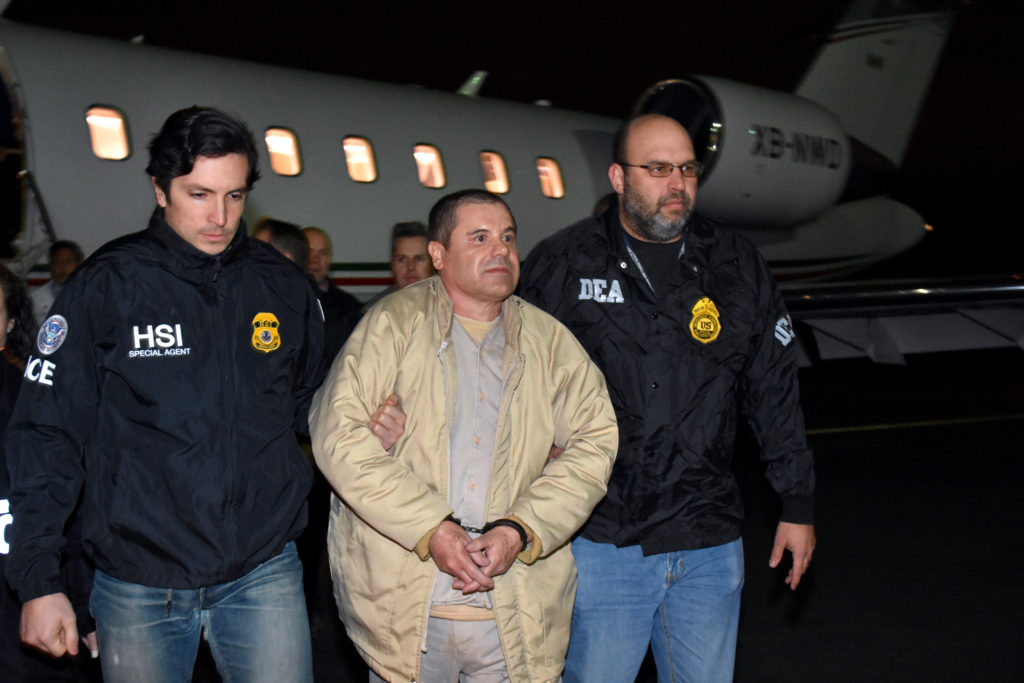
Joaquin “El Chapo” Guzman, shown during his extradition to the United States in 2017, met Emma Coronel Aispuro in 2007 when she was 17 and he was 50. They married a year later and have twin girls.

She also was heavily involved with her husband’s prison escape, according to government witnesses cited in the affidavit. Coronel, along with El Chapo’s sons and others, “agreed to organize the construction of an underground tunnel linked to Altiplano in order to facilitate Guzman’s escape from prison.” The plot involved purchasing a piece of land near the prison, where a structure was built to disguise the tunneling work. The plan also included delivering a GPS watch to Guzman in prison “in order to pinpoint his exact whereabouts so as to construct the tunnel with an entry point accessible to him.”

After Guzman was recaptured in 2016 and returned to Altiplano prison, he met with Coronel Aispuro and again discussed escape plans. But then Guzman was transferred to a prison in Ciudad Juarez, According to the affidavit, Coronel Aispuro told the government witness that “approximately $2 million had been paid to the Mexican official who oversaw the Mexican prisons to facilitate the transfer” back to Altiplano. However, the transfer did not happen, and Guzman was extradited to the United States on January 19, 2017.

In the affidavit, McGuire describes his extensive investigations of the Sinaloa Cartel. “I have debriefed more than one hundred members, former members, and associates of the Sinaloa Cartel, including but not limited to a high-ranking associate of Guzman,” McGuire states, referring to the cooperating witness.

McGuire states that Guzman and Ismael Zambada Garcia, known as “El Mayo,” “were the co-leaders of the Sinaloa Cartel from 1989 to 2016.” He says they “controlled drug trafficking routes from South America to the United States, importing tons of cocaine, heroin, methamphetamine, and marijuana,” and they “created an umbrella of security and corruption that permitted other drug traffickers to operate throughout Mexico.”

El Mayo remains at large, and is believed to be hiding out in the mountains of Sinaloa.

The Mafia boss who flipped

Behind bars and abandoned by his men, Ralph Natale of Philadelphia became the first official American Mafia boss to flip when he cut a deal with the feds in September 1999. Natale, a polished and gregarious gangland chief known for keeping physically fit and being friendly with the press, copped a plea in a narcotics trafficking case and agreed to testify against his underboss, Joseph “Skinny Joey” Merlino, as well as corrupt Camden, New Jersey, Mayor Milton Milan.

The 85-year-old Natale, who currently resides in the Witness Protection Program, headed the Bruno-Scarfo crime family out of Philadelphia and North New Jersey in the mid- to late 1990s. As part of his cooperation deal, Natale admitted to ordering or personally carrying out 10 separate Mob executions.

Most enticing for authorities in flipping Natale was, they believed, his ability to directly connect the swashbuckling Merlino to a string of Mob hits that rocked the Philly underworld. Some of the murders were sanctioned by Natale from prison. Merlino, 58, has long been Public Enemy No. 1 for the feds in Pennsylvania.

Natale was taught to kill by storied Philly Mafia hit man Felix “Skinny Razor” DiTullio, who operated out of the Friendly Lounge where Natale tended bar as a young man. After learning the tricks of the trade under Skinny Razor’s tutelage, he went on to craft a formidable reputation as a racketeer and enforcer for legendary godfather Angelo Bruno in the 1960s and ’70s. Natale was Bruno’s point man in the crime family’s labor union rackets and traveled around the country on his behalf troubleshooting and palm-greasing.

Using Natale as his muscle, Bruno took control of the freshly minted Atlantic City casino industry through a hostile takeover of the city’s bartenders, construction and hotel and casino workers unions. On orders from the man the news media miscast as the “Docile Don,” Natale shot Irish mobsters George Feeney and Joey McGreal to death in 1970 and 1973, respectively. McGreal was slain on Christmas Eve in a dispute over power in Bartenders Union Local 170.

Bruno began losing his grip on the crime family after Natale was incarcerated for drug dealing and arson in January 1979. Bruno was assassinated in March 1980. While Natale did 15 years in prison, he plotted his return to the streets, linking up in 1990 with then-28-year-old Merlino (who was doing a short stint for an armored truck heist) and deciding to go to war for the Philly Mafia throne he previously protected for Bruno.

Merlino and his pals became Natale’s arsenal on the street in his fight against Sicilian-born John Stanfa, believed to have been one of the conspirators in Bruno’s assassination and installed as Philly boss by New York’s Gambino crime family in the early 1990s. From his prison cell, Natale commanded a war that left a trail of bodies. Stanfa was locked up for his role in the violence.

Natale walked out of prison in the fall 1994 as the don of the Bruno-Scarfo crime family. His networking in the prison yard paid dividends, and he secured backing from the Genovese, Lucchese and Colombo borgatas in New York. Merlino was named his underboss.

It’s unclear exactly when Natale was “made” into the Mafia. During debriefings with the feds and testimony in court, he claimed Merlino inducted him upon his release from prison in 1994, but his 2017 memoir Last Don Standing (co-authored by Larry McShane and Dan Pearson) states that he was made by Bruno and New York godfather Carlo Gambino in the 1960s.

Natale’s memoir, Last Don Standing, co-authored by Larry McShane and Dan Pearson, was published in 2017. COURTESY OF FOX 29 NEWS IN PHILADELPHIA.

Moving into a luxury condo along the Delaware River in Pennsauken, New Jersey, Natale set up his headquarters at the Garden State Park Raceway, holding daily meetings at the track’s Currier & Ives Room restaurant on the building’s top floor. The restaurant and the condo were wired for sound by the feds for virtually his entire reign.

With Merlino handling collections and shakedowns in Philly, Natale angled for leverage in political circles and got his hooks into Camden, New Jersey, Mayor Milton Milan, funneling the young politician $50,000 in bribes. He also started dabbling in the illicit drug market and engaging in a high-profile extramarital romance with one of Merlino’s female contemporaries who was friends with his daughter

FBI agents arrested Natale at his condo on a parole violation (associating with known criminals) in the summer of 1998. Almost immediately, Merlino seized power and cut Natale out of the loop. He was put on the shelf and no longer received tribute payments.

As a result, when Natale was nailed for pushing crystal meth, indicted in prison on September 16, 1999, he felt no particular loyalty to Merlino and spilled the beans on their entire operation. Only Cleveland acting boss Angelo “Big Ange” Lonardo’s cooperation with authorities in the 1980s compares in terms of a coup by the FBI in its battle against the Mob.

Merlino might have gotten the last laugh, though. Merlino allegedly kept Natale in the dark regarding details of certain murders carried out on his watch, and jurors didn’t buy everything the animated former Mafia boss was selling on the stand at a heavily publicized 2001 trial. Merlino and several co-defendants were convicted of racketeering but found not guilty of all the murder counts. Milan was convicted at an earlier trial on Natale’s testimony and served seven years in prison.

Both Natale and Merlino were released from prison in 2011, Merlino in March and Natale in May. Merlino remains the boss of the Philadelphia Mafia today.

Scott M. Burnstein is a journalist and true crime historian who has had six books on organized crime published in the last decade. He founded and runs The Gangster Report (www.gangsterreport.com) newsmagazine website, and has been a part of numerous Hollywood film and television projects. Burnstein writes daily for The Oakland Press in Metro Detroit and has a focus on Mob activity in Detroit, Chicago, Philadelphia and New England.

The mystery of Lucky Luciano’s ‘invaluable service’ to the country

Seventy-five years ago, Charles Luciano caught a Lucky break . . . sort of.

Following several years of negotiations (and under circumstances that still remain a mystery), infamous Mafia boss Lucky Luciano’s fight for freedom had been granted — his sentence was commuted. On Wednesday, January 9, 1946, he was transferred from Great Meadow Prison in Comstock, New York, to Sing Sing Prison, where he awaited the final step of the government’s deal: deportation.

The arrangement had another stipulation, though, something that would draw the mobster’s ire for the rest of his life. The conditions of the deal meant not only immediate deportation to Italy, but Luciano was not permitted to step foot back in the United States — ever.

The lead-up

Prosecutor Thomas Dewey once described Luciano as “the greatest living gangster in America” and “the most dangerous.” During the 1936 trial that put Luciano behind bars, Dewey tailored his case accordingly, right into the public animus toward crime lords, declaring, “Isn’t it time the boss was convicted?”

Luciano and eight co-defendants felt the heavy hand of justice on 62 counts (four others pleaded to lesser charges). Lucky received the harshest punishment on charges of, basically speaking, being head pimp of an extensive prostitution racket.

He was sentenced in June 1936, and he was sent to Sing Sing in July. The stay was short. Following an examination of his psychology and criminal history, it was recommended that Luciano be moved to a facility better suited for inmates with narcotics and/or mental health issues. He was transferred to Clinton Prison in Dannemora, New York, a cold, unwelcoming facility derided as “Little Siberia.”

After six years, Luciano’s dark tide began to turn in his favor. It began in February 1942 when the French ocean liner Normandie caught fire and sank in New York harbor while being retrofitted for naval use. Although the cause of the fire ultimately was a welder’s torch, investigators initially suspected enemy sabotage. The course of events that followed led to an unprecedented relationship between law and outlaw.

Bizarre turn of events

Notwithstanding the expected (and ultimately futile) appeals process, Luciano’s journey to eventual freedom bore elements of a grand spy novel rife with plot twists, wartime espionage, secret rendezvous, paper trail disappearing acts and even some blackmail. The diverse cast of characters included military brass, brazen lawyers, an array of mobsters and, perhaps most interestingly, the crusader who put Luciano behind bars in the first place.

How did it all start? Presumably, fear of Nazi sabotage on U.S. shores led to a clandestine collaboration, through intermediaries, between the Navy and New York’s organized crime network.

According to author Thomas Hunt, here is how it started:

“Understanding organized crime’s control of dock unions, ONI (Office of Naval Intelligence) Captain Roscoe C. MacFall, Commander Charles Radcliffe Haffenden and Lieutenant James O’Malley Jr. sought underworld assistance. They approached Frank Hogan, Manhattan district attorney, and Murray I. Gurfein, assistant D.A. in charge of the Rackets Bureau, seeking an introduction to the Mafia.”

George White
George White, a federal narcotics agent, used a truth serum to try to get mobster August “Little Augie” Del Gracio to open up about international drug trafficking. Del Gracio had approached White for help to secure Luciano’s early release.

Much of what took place during this collaboration is conjecture, and a lot of documentation relating to it simply vanished. What is known: Following the introduction of military and Mob, meetings were held at the Dannemora prison that included Luciano, Meyer Lansky and other visiting parties. Under the pretense of making these meetings more feasible, and by order of New York State Corrections Commissioner John A. Lyons, Luciano was moved to Great Meadow on May 12, 1942. There, Luciano continued to receive visitors such as Frank Costello, Benjamin “Bugsy” Siegel and attorney Moses Polakoff.

Meanwhile, contributing to an already unconventional course of events, August “Little Augie” Del Gracio, a recognized international drug trafficker, pleaded Luciano’s case to George White in May 1943. Del Gracio, claiming he was sent on behalf of Costello, Lansky and Polakoff, wanted to cut a deal for Luciano. White, a narcotics agent and OSS Intelligence man, entertained Little Augie’s discourse only because he had an ulterior motive. The two had a history; they were frenemies, you could say.

Ultimately, though, White did not care about Luciano’s bid for clemency; his primary mission involved testing a truth serum on the unsuspecting guest. After unknowingly ingesting THC (infused in tobacco cigarettes) Del Gracio’s dialogue, much to White’s surprise and glee, veered into an unsolicited, casual and very revealing diatribe on how the drug business worked. At the meeting’s conclusion, White achieved his goal, while Del Gracio was left “high” and dry. We don’t know if Luciano’s friends did or did not sanction Del Gracio’s mission, but it certainly added another offbeat layer to the convoluted historical account.

In May 1945, citing “invaluable service” provided by his client to the military, particularly in regard to the Allied invasion of Sicily, attorney Moses Polakoff filed an application on behalf of Luciano to the state parole board in Albany. The board’s favorable report made its way to the desk of former prosecutor and now Governor Dewey. On January 3, 1946, the governor signed off on the parole. Luciano had served nine and a half years of a steep 30- to 50-year sentence.

“Isn’t it time the boss was convicted?”

Thomas Dewey

“Luciano is deportable to Italy,” read Dewey’s statement. “Upon entry of the United States into the war, Luciano’s aid was sought by the armed services in inducting others to provide information concerning possible enemy attack. It appears that he cooperated in such effort, though the actual value of the information procured is not clear.” 

It should be noted that commutation is not a pardon, but rather a reduction in sentence being served, either totally or partially. It has no effect on the individual’s record (doesn’t expunge or alter it), nor on immigration status. Luciano was not a documented U.S. citizen, hence the deportation caveat (and presumably a key factor in the government willingness to offer a deal to Luciano).

Exile to Italy, but not for long

Luciano exited Great Meadow destined for Sing Sing on January 9, 1946. According to an Associated Press reporter, “Luciano arrived at Sing Sing with his fingernails manicured and wearing a jeweled wristwatch and ring. He was accompanied by one prison guard on his journey.”

Luciano and a guard arrive at Harmon Station en route to Sing Sing Prison on January 9, 1946. He was deported the following month. Courtesy of the Cipollini Collection

Authorities then whisked Luciano from Sing Sing to an undisclosed location on Ellis Island. He was placed in a room, guarded and locked from the outside. Luciano spent several days in wait, yet able to receive visitors. Among them was the Prime Minister of the Underworld, Frank Costello. Not allowed, however, were reporters. One brazen newshound attempted to disregard the ban, and found himself physically ejected. When asked why Costello had permission to visit Luciano, Lloyd H. Jensen, chief of the Detention, Deportation and Parole Division, told the press that he personally authorized the visit, adding, “Luciano was here as a deportee, not as a criminal. Like everybody else, he received visitors in a public room with a guard standing by.”

On February 8, 1946, Luciano was taken to Pier 7 in Brooklyn and placed aboard the Liberty ship Laura Keene. Brawny dockworkers kept the curious newsmen at bay, but according to Daily News reporter Art Smith, an entourage of six men led by Albert Anastasia boarded the ship around 8 p.m. What’s more, and take this with a heavy dose of skepticism, the story continued with quoted conversation, allegedly between Anastasia and Luciano, that concluded at 11 p.m. with Luciano delivering a farewell speech. “I’m really glad to be getting out of this country,” he supposedly said. “I will be a free son-of-a-bitch. I will be a free man in Italy, even though I do not intend to stay there long.”Within the annals of organized crime history, truth is often stranger than fiction, but did a single newsman get access to such an intimate conversation? Possible? Yes. Probable? No.

The Laura Keene set sail the next morning. Luciano arrived in Naples on February 28, avoiding the press as much as possible, commenting only that the voyage was“pleasant.”Rumors of “other” travel plans had begun circulating even before his arrival in Italy. Sure, there were the publicly known jaunts Luciano would make to Rome and Sicily, but law enforcement and the press were far more interested in whispers of a trip to Latin America, specifically Mexico.

Luciano hounded by surveillance, press

From the moment he set foot in Italy, Luciano tried to lay pretty low, and dropped out of public view for months. His name finally re-emerged in the same sensationalistic manner as it had back in New York. Stories surfaced alleging Luciano took the reins of a “Robin Hood” band of thieves known as the La Marca Gang, running a human trafficking ring. Gossip columns told of Lucky in Paris, rendezvousing with old flame and former showgirl Gay Orlova. In early September, the New York Daily News broke the story purporting Luciano had acquired passage to Mexico, information allegedly provided by “stool pigeons” within Italy’s underworld. Of all the gangland hearsay, that one turned out to be somewhat accurate. That October, Luciano made his way to Cuba via South America — but that is another story entirely.

New York Governor Thomas Dewey, who, as a prosecutor, successfully convicted Luciano and put him in prison, decided in 1946 to commute his sentence and deport him to Italy. Dewey was always vague about exactly what Luciano did to earn the commutation. Library of Congress

Incidentally, agents of the Federal Bureau of Narcotics, already present in Italy, had been keeping track of Luciano’s movements. FBN agents, the American consul and the Questura, initially tasked with keeping an eye on self-exiled fugitive Nicola Gentile, passed confidential memos up the chain, referencing directives “concerning persons guilty of violation of narcotics law” of which one in particular, dated July 31, 1946, specifically mentioned “Charles Lucania.” The surveillance operation undoubtedly contributed to, if not initiated, a relentless campaign that FBN Commissioner Harry Anslinger set in motion the following year and waged against Luciano until, literally, the day the Mafia don died.

As for Thomas Dewey, he drew criticism for signing off on the Luciano deal. Despite the inquiries, Dewey remained tight-lipped on details outside of very minimal and scripted statements concerning the gangster’s assistance in war efforts.

Perhaps Luciano’s version of the entire process, which he divulged to sports columnist Oscar Fraley during an interview conducted in 1960, leans closer to the truth about how things get done in the underworld.

“You know how I got out?” Luciano asked. “This is the truth. I told my lawyers to get everything they could on a certain man. They had a book full of stuff. Then my lawyer walked in and threw it on his desk, and told him if I wasn’t deported, anything to get out of prison, this would be made public information.”

Luciano hissed a parting shot: “They think I was bad, they should’ve seen what we had on him, this honorable public servant.”

Christian Cipollini is the author of Lucky Luciano: Mysterious Tales of a Gangland Legend and Murder Inc.: Mysteries of the Mob’s Most Deadly Hit Squad.

Geri Rosenthal’s ‘life on the edge’

In September 1980, during an argument with her husband, Geri Rosenthal waved a gun around outside their house in the gated Las Vegas County Club Estates.

The weapon was a chrome-plated, .38-caliber snub-nose handgun. Geri Rosenthal’s name was engraved on the pearl handle.

In addition to her husband, Frank “Lefty” Rosenthal, police officers were at the house at 972 Vegas Valley Drive that day. Nancy Spilotro, the wife of mobster Tony Spilotro, had arrived in a blue Oldsmobile with Utah license plates. Nancy Spilotro ended up wrestling her friend Geri Rosenthal to the ground and, with police officers helping, retrieved the handgun. 

This scene on the driveway, and Geri Rosenthal’s complicated relationship with her husband and romantic involvement with Tony Spilotro, are depicted in Nicholas Pileggi’s 1995 nonfiction book Casino: Love and Honor in Las Vegas. A version of the driveway incident is dramatized in the movie Casino, which Pileggi co-wrote with director Martin Scorsese.

Geri Rosenthal had an affair with Tony Spilotro, the Chicago Outfit’s overseer in Las Vegas and a childhood friend of Lefty Rosenthal.

In November 2020, Pileggi and former Las Vegas Mayor Oscar Goodman participated in an event at The Mob Museum celebrating the movie’s 25th anniversary. As a defense attorney, Goodman represented several figures from the Casino era, including Rosenthal and Spilotro.

The people involved in that gun-waving incident would become known to a wide audience when the book and movie came out. Pileggi used the real names in the book, but the names were changed in the movie for legal reasons. In the movie, Robert De Niro portrays a character based on Frank Rosenthal, with Sharon Stone as his wife. Joe Pesci plays a Tony Spilotro-inspired mobster.

During this period, Frank Rosenthal oversaw four Las Vegas casinos, most notably the Stardust, for Midwestern Mob families. The Stardust has since been demolished. Resorts World Las Vegas has gone up at that site on the Strip.

While Frank Rosenthal and Tony Spilotro have received their share of attention since then, Geri Rosenthal has had a lower profile.

The impression many people have of her is probably the version Sharon Stone portrayed in the movie. In a recent telephone interview, Goodman said Stone’s portrayal is accurate. Stone “immersed” herself in the role, Goodman said.

“She was almost as real as Geri Rosenthal would have been if she had played herself,” Goodman said.

A ballroom dancer in her younger years, Geri McGee had grown up in Sherman Oaks near Los Angles. Her father was an auto mechanic. Her mother had been in the hospital for a mental illness. The family was “probably the poorest” in the neighborhood, Geri’s sister, Barbara, says in the book Casino.

At Van Nuys High School, Geri was in the class of 1954. Her schoolmates included Robert Redford, later a famous actor and director, and Don Drysdale, a future Hall of Fame baseball pitcher.

Another classmate was Lenny Marmor, described in the book as “slick” and the “sharpest guy” at school. Marmor, who inspired the character played by James Woods in Casino, even wore sunglasses indoors.

He and Geri started going out when she was 15. In time they had a daughter. Taking the child with her, Geri moved to Las Vegas around 1960. She became a dancer at the Tropicana, earning $20,000 a year, but made much more, in the hundreds of thousands, by “hustling chips,” as Pileggi wrote, “and partying with high-rollers.”

Frank Rosenthal, a sports handicapper, lived for a while at the Tropicana. By 1968, he and Geri were seeing each other. They were married in May 1969. Caesars Palace erected a chapel for the event. The 500 guests enjoyed caviar, lobster and champagne. Frank didn’t know how much the wedding cost. It was comped.

Geri and Frank Rosenthal’s marriage crumbled after Geri threatened to shoot him in a public scene in front of their house in the Las Vegas Country Club. Courtesy of Las Vegas Review-Journal

Pileggi said in a recent phone interview that the Rosenthals’ affiliation with the Las Vegas Country Club meant they were established. However, their backgrounds “kept them back,” he said.

“It was a classic failed romantic drama,” Pileggi said. 

Their marriage was less than perfect, damaged by infidelities and drunken fights. She once wrote in a letter to her daughter that one fight left her with a cracked rib, two black eyes and multiple bruises.

Frank Rosenthal even had a fight with one of Geri’s old boyfriends, Johnny Hicks, on a dance floor at the Flamingo. Frank’s face was bloodied. He returned to his room at the Tropicana and got a gun. He went looking for Hicks, but some acquaintances calmed him down, ending the manhunt. Hicks, the son of former local casino owners, later was shot to death outside his residence near the Rosenthal house in the same gated community. Geri accused Frank of having Hicks killed, according to Pileggi’s book.

In a recent phone call, Goodman said Geri and Frank Rosenthal both had a temper, “and the two of them would shout at each other on occasion.”

“That’s when I would head for the front door of their house and leave,” he said.

The former Las Vegas mayor said he never saw Geri take drugs, though she “liked her drinks.” According to the book Casino, her drink of choice was vodka on the rocks.

However, Geri was a “wonderful mother” to her and Frank’s son and daughter, Goodman said.

“I have nothing bad to say about Geri Rosenthal at all,” Goodman said. “She always conducted herself in a manner which I thought was consistent with being a decent person.”

She waited on her husband “hand and foot” at home, Goodman said. Frank would stay in bed during the day and then go to work at the Stardust at night. “She would take care of him,” Goodman said.

A few photographs of the two of them together are available online. Both also appear in a 1979 episode of the The Frank Rosenthal Show filmed at Paul Anka’s disco, Jubilation. A video of this show is on YouTube.

The 10,000-square-foot Jubilation nightclub no longer exists. Later known as the Shark Club, it was on East Harmon Avenue across from the Aladdin, now the Planet Hollywood hotel-casino.

Jubilation was one of the most popular nightclubs in Las Vegas. It attracted celebrities, politicians and gangsters. Steve Schirripa, who later starred as Bobby Baccalieri on The Sopranos, was a bouncer at Jubilation.

In the televised episode with his wife, Frank Rosenthal, microphone in hand, approaches the table where she is seated with entertainers Siegfried and Roy. Frank asks Geri if she is a former dancer. “Yes, I think you could say that,” she says.

When Frank asks about her height, she answers that she is five feet nine and a half inches tall.

Jeff Kutash, a Las Vegas choreographer who also had walked over to the table, invites Geri to dance. In the disco lingo of the era, he asks, “When’s the last time you had a good freak or a good rock or a good hustle?”

“The best things I ever had were always with my husband,” Geri says.

“I won’t argue with that,” Kutash says.

Standing over the shorter Kutash, she and the choreographer head out to the floor and dance to the disco song “Boogie Oogie Oogie.”

Soon the “good hustle” of that era would fade for the Rosenthals and those in their circle.

A little more than a year after the television show at Jubilation, the gun-waving incident occurred. Frank Rosenthal would be injured in a car bombing in 1982 outside a Tony Roma’s restaurant on East Sahara Avenue. No one has been held criminally responsible for the bombing.

Frank Rosenthal moved to California and then to Florida, where he died of a heart attack in 2008 at age 79. Las Vegas Review-Journal reporter Jane Ann Morrison later confirmed that he had been a top echelon informant for the FBI. Geri Rosenthal was an FBI source as well.

Spilotro, who had been the Chicago Outfit’s overseer in Southern Nevada, died violently. In 1986, he and his brother Michael were beaten to death in a Mob hit at a home near Chicago’s O’Hare International Airport. They were buried in an Indiana cornfield in their underwear. According to news accounts, Chicago crime bosses were upset at the Spilotros for attracting too much media attention. This posed a threat to the Mob’s lucrative skimming operations in Las Vegas.

Sharon Stone played a character inspired by Geri Rosenthal in Casino. Former Mob defense attorney and Las Vegas Mayor Oscar Goodman, who represented Lefty in many big cases, said Stone’s portrayal of Geri was spot-on.

By the late 1980s, with population growth and a boom in corporate megaresorts, Las Vegas was not the same as when Rosenthal and Spilotro were the subject of news stories in town. Geri Rosenthal did not live long enough to witness these changes.

In 1980, police in Los Angeles arrested her for trying to undress on Sunset Boulevard. She had been drinking and taking drugs. She was admitted to the psychiatric ward of Harbor General Hospital in Torrance, California, a beachside town south of Los Angeles.

Frank Rosenthal flew to Torrance.

“When I got to the hospital, I went into her room and she was in a straitjacket,” he says in Pileggi’s book. “She wanted me to loosen it, but I said I couldn’t do that. She started screaming at me. She was hysterical.”

Frank Rosenthal filed for divorced. He got custody of the two children they had together. She received $5,000 a month in alimony and the jewels she had taken out of their safe deposit box at a Las Vegas bank, another scene depicted in the movie. She also kept her Mercedes coupe.

One November morning in 1982, she was heard screaming on the sidewalk in front of the Beverly Sunset Motel at 8775 Sunset Boulevard. This was only about a month after Frank Rosenthal’s car bombing. She stumbled into the hotel lobby and collapsed. Her legs were bruised. She had liquor, drugs and tranquilizers in her system. She died three days later at Cedars-Sinai hospital of an apparent drug overdose.

In a telephone interview, Pileggi said Geri Rosenthal had become involved with a biker crowd in Southern California. People were taking advantage of her. At her death, she was 46.

“That’s the tragic thing of life on the edge,” Pileggi said. “It was that period in Las Vegas.”

Larry Henry is a veteran print and broadcast journalist. He served as press secretary for Nevada Governor Bob Miller, and was political editor at the Las Vegas Sun and managing editor at KFSM-TV, the CBS affiliate in Northwest Arkansas. The Mob in Pop Culture blog appears monthly.