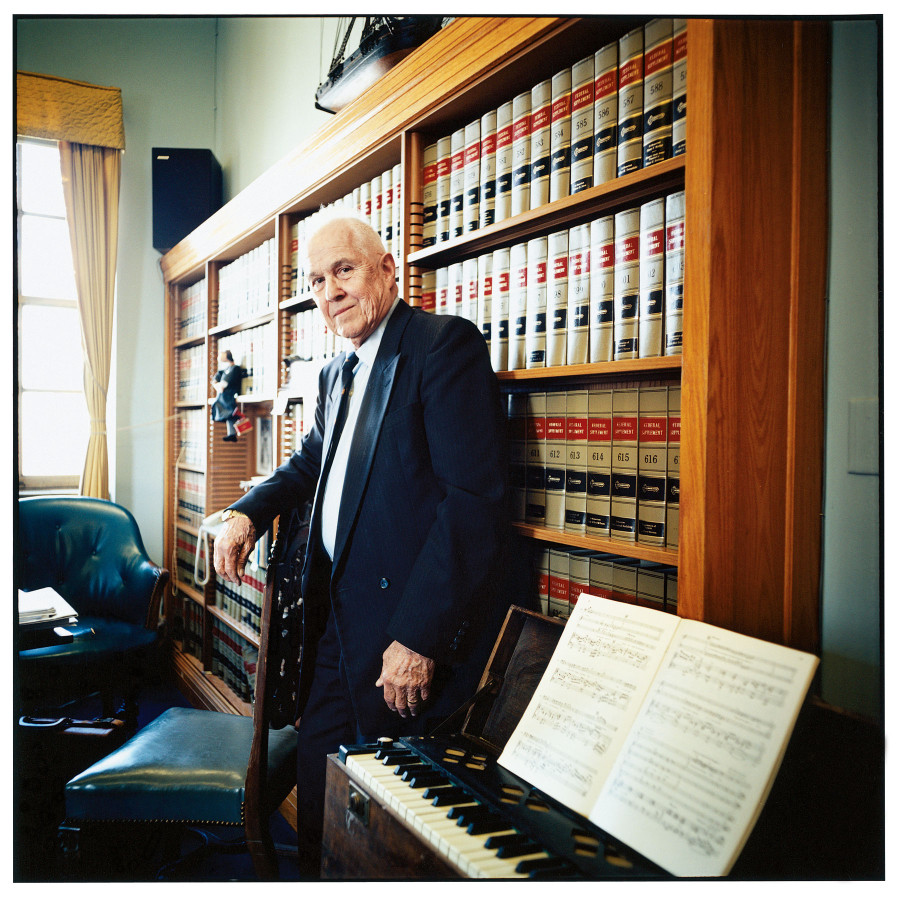


The Jimmy Hoffa disappearance: The 46th anniversary

Editor’s note: Since July 30, 1975, the law enforcement community on the federal, state and local levels, along with an army of investigative journalists, have attempted to crack open the Jimmy Hoffa murder case. And now the solution to one of the biggest mysteries of the 20th century might be at hand. 

Dan E. Moldea, author of the 1978 book The Hoffa Wars — who has been on Hoffa’s trail since his disappearance was first announced — believes this moment could come soon with the anticipated recovery of the ex-Teamsters boss’s remains.

Last July — for the 45th anniversary of Hoffa’s disappearance — The Mob Museum published two of Moldea’s articles about the Hoffa case:

  • The first story, on July 8, 2020, chronicled his then-45-year-long investigation of the Hoffa mystery.
  • The second story, posted 13 days later, detailed Moldea’s adventure with Frank Cappola, who showed him what he believed was the actual location of Hoffa’s remains in September 2019.

Moldea, who has refused to accept any money for this latest investigation until Hoffa’s body has been recovered and positively identified, declared: “If this actually happens, there will be many people to thank for their help and support. … But, if this does not succeed, the failure will be mine and mine alone. Either way, I will have no regrets. This is still the best lead I have ever seen or heard during my 46-year search for Jimmy Hoffa.”

Here is Moldea’s update for the 46th anniversary of Hoffa’s murder.


I would like to have a dollar for every person who said to me during the past 46 years, “The Mafia would have never murdered Jimmy Hoffa in Detroit and then shipped him for burial over 600 miles east to the PJP Landfill, aka ‘Brother Moscato’s Dump,’ under the Pulaski Skyway in Jersey City.”

As anyone who has been following my ongoing Ahab v. White Whale slow-speed chase knows, I have bet everything I have that this is exactly what happened. Indeed, I have pushed “all in.”

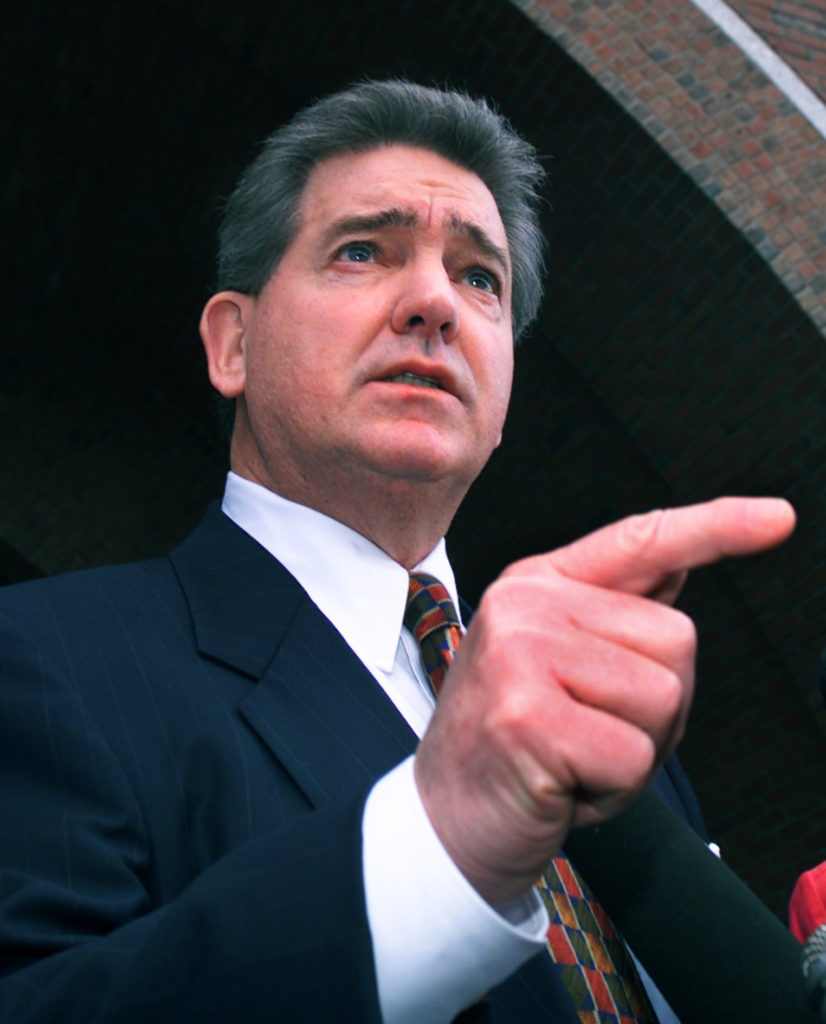
Truth be told, though, just five months after the July 1975 killing, the FBI was the first to legitimize this theory. Based on the statements of Ralph Picardo, a flipped federal witness, U.S. prosecutors and FBI special agents sought and obtained a search warrant for the PJP Landfill and served it on PJP’s owner-operators, Phillip Moscato and Paul Cappola, on December 11, 1975, ostensibly looking for Armand Faugno, a murdered mobbed-up Jersey City loanshark.

To be sure, though, based on Picardo’s information, federal agents tried but failed to find Hoffa. The problem was they did not have a specific location for his unmarked grave in the 34-acre landfill.

But thanks to my key source whom I met in September 2019 — the late Frank Cappola, the oldest son of PJP co-owner Paul Cappola — I have now given what I believe is the exact location to federal investigators, which is only about 150 yards from the site they searched in December 1975.

So, if confirmed, the FBI’s 46-year investigation will be vindicated. And so will mine.

Here is how we got to this point.

* * *

On that hot summer afternoon 46 years ago this month, Jimmy Hoffa stood outside the Machus Red Fox restaurant in Bloomfield Hills, Michigan, just north of Detroit, waiting for a meeting with two Mafia figures, New Jersey labor racketeer Anthony Provenzano, a capo in the Vito Genovese crime family, and Anthony Giacalone, a feared mobster with the Detroit underworld. A third man Hoffa expected to meet was Leonard Schultz, a mobbed-up businessman connected to Tony Giacalone and his brother, Vito.

Hoffa was never seen or heard from again.

During the immediate aftermath of Hoffa’s disappearance, speculation about Hoffa’s fate ran rampant. There were dozens of theories about who killed him, where, and why. And there were hundreds of theories as to where his body wound up.

The Briguglios, the Andrettas and Brother Moscato’s Dump

Then, in November 1975, Ralph Picardo, who was in Trenton state prison for manslaughter, told the FBI that, based on his August 1975 conversation with Steve Andretta, a top lieutenant to Tony Provenzano, Hoffa was murdered in Detroit on July 30, 1975; stuffed into a 55-gallon drum; loaded onto a Gateway Transportation truck; and shipped to New Jersey.

Asked by the FBI to speculate, Picardo said he believed that Salvatore Briguglio, another key Provenzano associate, had killed Hoffa and that he might be buried at “Brother Moscato’s Dump” in Jersey City, New Jersey, under the Pulaski Skyway, the bridge that connects Jersey City and Newark.
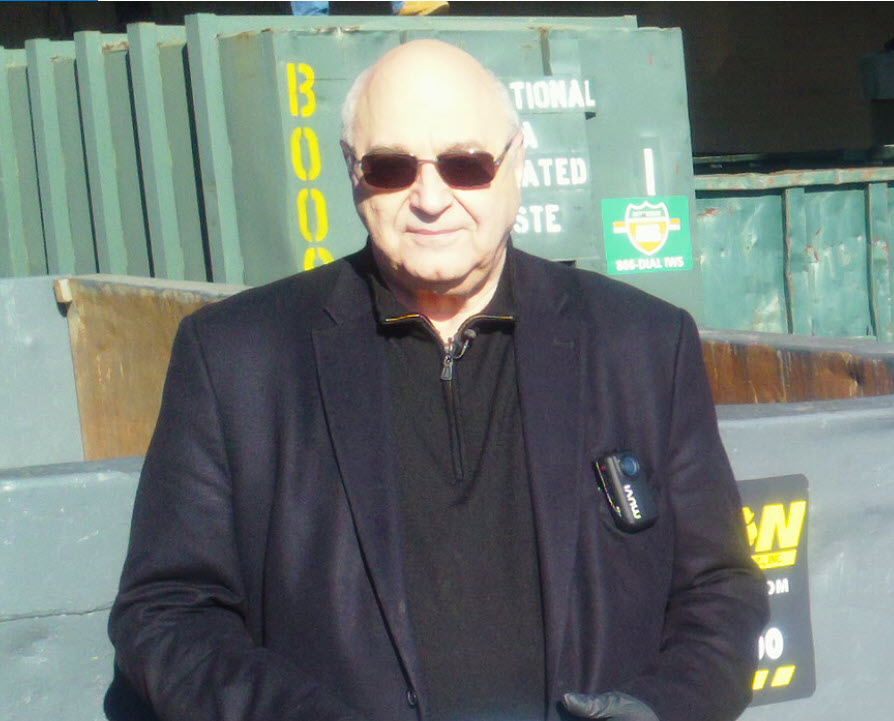
Dan Moldea arrives at Brother Moscato’s Dump amid the clutter of dumpsters. Courtesy of Dan Moldea (Copyright © 2020 by Dan E. Moldea)

On December 4, 1975, federal prosecutors called, among others, Briguglio and Andretta, along with their brothers, before a federal grand jury in Detroit. All four took the Fifth. 

Also called and taking the Fifth was Rolland McMaster, a powerful Teamsters official whom I believed from the outset of my investigation was responsible for the disposal of Hoffa’s body. I was present at the federal courthouse that day and met McMaster for the first time. I had previously only interviewed him by phone.

A federal law enforcement official told me privately that McMaster’s alibi for the day of the murder was that he was with his brother-in-law, Stanton Barr, who was the head of the steel division of Gateway Transportation. Also, one of McMaster’s top associates, Jim Shaw, was a long-haul driver for Gateway. 

Along with McMaster, I also interviewed Barr and Shaw at length. All three denied any role in the Hoffa murder conspiracy.

That same month, on December 11, the FBI obtained a search warrant for Brother Moscato’s Dump, serving it on its two co-owners, Phillip Moscato, a soldier in the Vito Genovese crime family, and Paul Cappola, a mobbed-up Jersey City businessman. However, federal agents did not have a specific location to search for Hoffa’s body within the 34-acre site, so they came up empty.

Later, in October 1976, I conducted an exclusive three-and-a-half-hour recorded interview with Briguglio and Andretta. Although they conceded nothing, I got them on the record about Andretta’s prison visit to Picardo, as well as Briguglio’s concern about the accusations against him as Hoffa’s actual killer and his knowledge of Brother Moscato’s Dump.

Also that day, I interviewed Briguglio and Andretta’s brothers, Gabriel and Thomas, respectively. They, too, denied any wrongdoing.

McMaster and Gateway Transportation

In September 1978, I published my first book, The Hoffa Wars, a chronicle of Hoffa’s rise and fall. In that work, I remained faithful to Picardo’s story, except for the trip to New Jersey and his speculation about Brother Moscato’s Dump. But I still embraced his information that Briguglio was Hoffa’s killer and that a Gateway truck had shipped Hoffa’s dead body to its final destination. 

Charles Crimaldi, a member of the Chicago Outfit, had persuaded me during an exclusive interview that, after the murder, Hoffa’s body was taken by truck to a location where he was “crushed and smelted” in a car compactor. Significantly, the steel division of the Detroit terminal of Gateway Transportation — which was headed by Stanton Barr, McMaster’s brother-in-law — was located near the Ford River Rouge Plant where tons of steel were crushed and smelted every day. 

In May 2006, FBI agents raided a farm in Wixom, Michigan — which at the time of the Hoffa murder was owned by Rolland McMaster. The FBI was looking for Hoffa’s remains based on information provided by Donovan Wells, a former business partner of McMaster and Barr. At the time of his cooperation with the FBI, Wells was in a federal prison in Lexington, Kentucky, after his conviction for hauling a load of marijuana. At the time of Hoffa’s disappearance, Wells and his family lived on the McMaster family farm.

The FBI never unearthed Hoffa’s remains or any evidence in 2006 that he had been killed on McMaster’s farm, but Wells — who passed an FBI polygraph test — provided the Bureau with important new information about Hoffa’s disappearance: Rolland McMaster, Tony Provenzano and Stan Barr were together at a restaurant in Detroit on July 29, 1975, the night before Hoffa vanished. Wells also heard a portion of their conversation, which was clearly about Provenzano’s scheduled afternoon meeting with Hoffa on July 30, as well as the need for McMaster and Barr to have well-established alibis.

In addition, Wells’s wife, Monica, claimed that on the afternoon of Hoffa’s disappearance, she saw two or three dark-colored cars speeding onto a dirt road at the farm, roaring past the farmhouse on an adjacent dirt road. When she reported to McMaster what she had seen, McMaster replied, “Blondes who talk too much don’t get old.”

Although I believed for years that the crime scene of Hoffa’s murder was either at McMaster’s farm in Wixom or his home in Southfield, which was just a few minutes from the Red Fox restaurant, I did not have any real evidence. 

Years later, journalist Scott Burnstein, a respected expert on the Detroit Mafia, developed an underworld source close to Lenny Schultz, the third man whom Hoffa expected to meet on the day he vanished. According to Burnstein’s source, Hoffa was taken from the Red Fox to Schultz’s home where he was murdered. 

And then, according to Burnstein’s source, Hoffa’s body was given to Rolland McMaster.

Meeting Brother Moscato

From April 2007 to January 2014, I conducted a series of exclusive recorded interviews with Phillip Moscato, the co-owner of Brother Moscato’s Dump. During those seven years, Moscato, whom I liked and respected, told me, among other things, that “Picardo basically had it right,” adding that a) In Act One, Hoffa was picked up at the Red Fox and delivered to the scene of the crime by Vito Giacalone, Tony Giacalone’s younger brother; b) In Act Two, Hoffa was indeed murdered by Sal Briguglio; and c) Hoffa was shipped to New Jersey, via Gateway, and buried at his dump in Jersey City — where the FBI had conducted a cursory search in December 1975.

Moscato died on February 16, 2014, without giving me everything he knew about Hoffa’s murder. Still, I had promised him I would not reveal the details of what he did tell me during our recorded interviews until after he was gone.

I chose to publish this astonishing confirmation of Picardo’s information on July 30, 2015 — the 40th anniversary of Hoffa’s disappearance — in Jerry Capeci’s widely respected anti-Mafia online publication, Gang Land News. Notably, in that story, I credited the FBI with being right about the location of Hoffa’s remains in 1975 — even though federal agents did not have an exact location for the unmarked grave and neither did I.

In addition, Capeci and I spoon-fed my story to the New York Daily News, which, also on the 40th anniversary, ran it under the headline: EXCLUSIVE: New evidence emerges on Jimmy Hoffa’s possible fate, suggests feds were on right track searching N.J. dump.”

After spending 29 years, from 1978 to 2007, believing that Hoffa’s body had been crushed and smelted in Detroit, I now embraced what Moscato had told me, “Picardo basically had it right,” and that Hoffa’s body was buried at Brother Moscato’s Dump, also known as the PJP Landfill, which Moscato had co-owned with Paul Cappola, who died in March 2008, six years before Moscato passed.

The Cappola family

In February 2019 — after seeing me on a television news show claiming that Hoffa’s body was at Moscato’s dump — Paul Cappola’s youngest son, Florida businessman Paul Cappola Jr., cold-called me, saying that his oldest brother, Frank Cappola, might know something important about the Hoffa case. Although I was extremely interested in pursuing this new lead, Frank Cappola did not agree to speak with me until the following September.

Then, after six telephone interviews over the next three weeks, we met in New Jersey. I personally paid for Frank’s travel expenses from Florida.

In short, Cappola told me that his father had given him a deathbed confession in 2008, which included the exact location of Hoffa’s unmarked grave.

On September 29, 2019, Cappola picked me up at my hotel in Secaucus and drove us to the PJP Landfill where he gave me a tour of the site. During that visit, Cappola showed me what he believed was the exact location of Hoffa’s unmarked grave, which was the size of a little-league baseball diamond — under the Pulaski Skyway. I filmed the entire visit.

After a lengthy formal interview the following day, which I also recorded, Frank, at my request, executed a sworn declaration on October 7, attesting under the penalty of perjury to his specific knowledge of the location of Hoffa’s remains. He also agreed to cooperate with the law enforcement community and to take a polygraph test.

In short: At the end of July 1975, Paul Cappola Sr. allegedly received the assignment to bury Hoffa’s murdered body from Phillip Moscato, his partner at the PJP Landfill in Jersey City and a reputed soldier in the Vito Genovese crime family. Defying Moscato in retaliation for this unwanted task, Cappola interred the body at a location that only he knew … under a section of the nearby Pulaski Skyway and about 150 to 300 yards from where Moscato had instructed him to bury it.

Among other details, Frank Cappola told me that his father revealed to him that he had buried Hoffa in a 55-gallon drum and then piled 15 to 30 steel barrels, filled with chemical adhesives, on top of the ex-Teamsters boss.

To me, this was an absolutely stunning revelation.

After I left New Jersey, Cappola and I remained in close contact by phone. On January 10, 2020, while having dinner with me and the love of his life, Joy DiBiaso, at a restaurant in Secaucus, Cappola, who had long suffered from a chronic respiratory condition, collapsed at the table. Despite our pleas, he refused to go to the hospital that night. However, Joy forced him to go the following day. Shortly after admission, he was put on a ventilator and in a drug-induced coma.

Sadly, Cappola died two months later on March 16 without ever regaining full consciousness.

So, just to be clear, the only person in the world who actually knew what happened to Hoffa was Frank’s late father, Paul Cappola. The only person Paul told was his oldest son, Frank. And the only person Frank told — and showed “the exact location” — was me.

Preliminaries

Immediately after our tour of PJP in September 2019 and with Cappola’s approval, I put together a production team for a documentary about his story. Our team captain was Beaux Carson of Carson Signature Films, a trusted friend of mine since the early 1990s and a specialist in life-rights arrangements. Almost immediately, again with Cappola’s approval, Carson’s agent, Richard Lawrence, opened negotiations with Ari Mark, the co-founder of the award-winning production company and showrunner Ample Entertainment.

All four of us agreed that no one would accept any money until Hoffa’s body was recovered and positively identified by the FBI. If and when that happened, Ample would negotiate a deal with a major media organization to finance a documentary about my successful 46-year search for Hoffa’s remains, based on Cappola’s information.

If I was wrong about the location of Hoffa’s remains, there would be no deal.

Inasmuch as we believed we knew the location, we needed to arrange for a ground-penetrating-radar examination of the site. Because of the worldwide Covid-19 pandemic and other obstacles, we did not sign our contract with Ample, which would arrange for the mechanics of the GPR and a possible excavation, until August 2020.

The GPR apparatus detects steel barrels. Courtesy of Dan Moldea (Copyright © 2020 by Dan E. Moldea)

Meantime, after reading my two stories for The Mob Museum, several colleagues — excellent researchers all — admonished me, claiming that I had forgotten that the PJP Landfill, aka Brother Moscato’s Dump, was an EPA Superfund site during the 1980s. Thus, they argued, the 15 to 30 chemical drums piled on top of Jimmy Hoffa — encased in a 55-gallon steel drum at the bottom of an eight- to 15-foot hole — would have been collected and disposed of as part of the overall EPA cleanup.

However, Frank Cappola had stated in his sworn declaration: “[B]ecause of my father’s decision to bury Hoffa’s body off the PJP property, it is possible, even probable, that the grave was not affected by the EPA cleanup. In other words, the burial site likely still exists and is intact.”

Just to be sure, I obtained the EPA’s record of its multi-year, cleanup operation at PJP and found a map showing the agency’s site boundary. Confirming what Cappola had stated under oath, I was relieved to see that the actual location of Hoffa’s remains under the Pulaski Skyway was a few hundred feet beyond the EPA’s eastern perimeter.

Further, local property records showed that Hoffa’s alleged unmarked grave was, indeed, not buried on PJP property. Instead, it was on state property, regulated by the New Jersey Department of Transportation, which controlled everything on and under the Pulaski Skyway.

So, led by Beaux Carson, our team began planning for the ground-penetrating-radar analysis of the site identified by Cappola. However, when Carson contacted the Department of Transportation to make the necessary arrangements, an agency official told him that we needed a permit, which would take more time than expected.

Eric Shawn and Fox News

I had known and respected correspondent Eric Shawn of Fox News since the spring of 2004 when he was busy promoting Charles Brandt’s book, I Heard You Paint Houses. Shawn’s filmed reports embraced the thesis of Brandt’s work that Frank Sheeran, Hoffa’s loyal friend and ally, had killed the ex-Teamsters boss. Shawn immediately adopted this scenario as his own, a theory he then faithfully promoted for the next 15 years. 

To me, Sheeran — whom I had briefly interviewed for my 1978 book and who then threatened, in writing, to sue me for defamation after its release — was lying. I continue to insist that Sal Briguglio, not Sheeran, had performed the killing.

To his credit, despite our disagreements, Shawn frequently included me in his filmed reports, using me as his designated contrarian. In fact, without Shawn, the movie The Irishman probably never would have been made. It was his enthusiastic reporting, featuring Sheeran as Hoffa’s killer, that supercharged interest in the project, adopted by Martin Scorsese and Robert De Niro with their “great-cinema-but-terrible-history” motion picture.

Between 2004 and 2019, Shawn almost singlehandedly had kept the Hoffa case alive and on the public’s radar. Consequently, whether I liked it or not — with ABC, CBS, CNN and NBC expressing zero interest in the Hoffa cold case — Fox News was the only game in town. 

During the summer of 2019, Shawn offered me a consulting contract to work with Fox on a new angle of the Hoffa project, which I had originally developed five years earlier. Because I liked and trusted Shawn, I agreed to work with him personally, but I refused to either sign a contract with Fox or to accept any money from Fox — other than routine travel expenses, limited to train fares and hotel rooms, which Fox placed on its corporate credit card. 

Unfortunately, the story Shawn and I were exploring soon became more complicated than expected, primarily because our key source refused to sign a sworn statement and failed to pledge full cooperation with the law enforcement community. 

Ironically, it was that source who converted Shawn’s view of the Hoffa case from “Frank Sheeran did it” to “Ralph Picardo was right.”

By this time, Frank Cappola had come into my life. However, Fox News, at first, did not take him seriously and reneged on its agreement to pay for Cappola’s plane fare from Florida to New Jersey — which forced me to pay that expense personally. 

Cappola was extremely upset because Fox had inconvenienced and embarrassed him. And I was upset with Fox for putting me in such an awkward position with Cappola.

Meantime, I understood that Shawn, whom I now considered a friend, was caught in the middle.

But to be clear, I did not ask to be reimbursed for Cappola’s travel expenses — and I rejected Fox’s offer to cover them after the fact. I had no contract with Fox, and, considering how badly Cappola had been treated already, I was not going to place him at the mercy of Fox News. I had interviewed him seven times by phone over the past three weeks, and, thus, I appreciated his true importance. And I protected him as I would any of my prized sources.

Cappola believed that Fox had so disrespected him that he refused to have anything to do with the network, cancelling an interview I had arranged between Cappola and Shawn for September 30, 2019. And Cappola’s continuing anger was aggravated by my ongoing defense of and loyalty to Shawn, causing severe problems between Cappola and me. At one point, in the midst of an argument about Shawn, Cappola threatened to cease his cooperation with me.

Finally, Cappola relented and, as a personal favor to me, grudgingly agreed to sit down for a brief interview with Shawn on October 11 at Rutt’s Hut, a popular restaurant in Clifton, New Jersey, that specializes in deep-fried hot dogs. 

At this quick but friendly interview, during which I sat at the table while Shawn, who was both contrite and charming, asked his questions, Cappola did not give any details about the specific location of Hoffa’s unmarked grave at PJP. 

In his subsequent hour-long report, broadcast on December 1, Shawn relegated Cappola to the final few minutes of his program. Cappola, who again felt disrespected, told me that he wanted nothing further to do with Fox.

On March 20, 2020 — four days after Cappola died and after our other story had completely faded — Shawn published a lengthy article, featuring Cappola and touting his information about Hoffa’s unmarked grave at PJP.

 Inexplicably, Shawn did not even mention my name in his story.

I was so upset with Shawn that when I later appeared live on his weekend news show on August 1 — to commemorate the 45th anniversary of Hoffa’s murder two days earlier and Cappola’s information — I said sarcastically at one point during the interview that I did not want Fox Newsto beat me on my own story.

In response, Shawn sent me a harsh email, critical of my indiscreet comment. That led to an airing of grievances between us, culminating in a peace agreement.

The GPR test

Later in August, I invited Shawn — whom, apart from Fox, I wanted as the independent host of my team’s documentary — to accompany me for my return to PJP for the ground-penetrating-radar examination that Beaux Carson and Ari Mark at Ample Entertainment were arranging to feature in our anticipated film.

As a quid pro quo, Shawn agreed to showcase my work about Cappola and PJP in his next broadcast report for Fox and to help my team publicize our project. Specifically, Shawn said he wanted to do “a documentary about a documentary.” 

Shawn was so grateful for my invitation that he offered to arrange for Fox to pay for the GPR examination. In addition, a Fox producer boasted to Carson that Fox had connections in the New Jersey state bureaucracy that would make it unnecessary for us to obtain any written authorization for our visit to the site.

In response, my team stepped aside, allowing Fox to take the lead on the GPR and with the state of New Jersey.

In the end, the Fox producer was wrong. Just like my team, Fox News needed the state’s permission. So, with our team still allowing Fox to keep control, Beaux Carson walked the Fox producer through the process and introduced him to the key person in the state bureaucracy — with whom my team had already been in negotiations for several weeks.

Also, a nearby waste-disposal company routinely used the state’s property under the Pulaski Skyway, including the area cited by Cappola, to park its large steel dumpsters. So, in addition, Fox needed to arrange for them to be cleared out before the GPR test could be conducted.

On November 24, 2020, a cameraman from my production company and I met Shawn and the Fox team at PJP. However, the top Fox producer, who never spoke to me about the location, had arranged for the wrong area under the bridge to be cleared of steel dumpsters.

After I pointed out what appeared to be a fatal error for our mission that day, I received word from the Fox producer that the waste-disposal company had refused Fox’s request to take the time and manpower to atone for Fox’s mistake.

Because of this situation, I was badly shaken. I had everything riding on a successful outcome of the GPR review. If the search came up empty, regardless of the state of the site, I assumed that my project was dead — and that no one would be returning my phone calls.

Hoping to get lucky and while being filmed by multiple cameras, I gave Fox and the GPR technician Cappola’s best-educated guess as to the exact location of Hoffa’s unmarked grave. And I showed them a video and still photographs of Cappola pointing to it.

A big truck removes a large dumpster to allow for wider GPR testing. Courtesy of Dan Moldea (Copyright © 2020 by Dan E. Moldea)

Further, we were not just looking for a single buried 55-gallon drum. Rather, we were also looking for the 15 to 30 steel barrels, buried on top of the drum containing Hoffa. Essentially, we were searching for a sheet of steel that would light up the GPR apparatus.

The problem was that the clutter of dumpsters at the site was so tightly packed that in most places only one person could walk in the small spaces between them.

But then we got lucky. About 20 minutes into the GPR examination and working in the area that I had pointed out, the technician detected what appeared to be steel barrels under a path between two of the dumpsters at a location 12 feet to the north and three feet to the east, which was blocked farther east by a heavy seven-foot-high dumpster. 

The Fox producer who had earlier arranged for the wrong area to be emptied immediately redeemed himself by somehow arranging for the removal of several dumpsters that were obstructing the location where the barrels were detected.

After that limited area was cleared and the GPR technician went back to work, the 12-foot-by-three-foot perimeter of steel barrels stretched to 12-by-15. Shawn and I, along with everyone else present, were cautiously jubilant. 

Mercifully, I was still in the game and my phone calls continued to be returned.

Dampening the mood, Fox later fed the results of the GPR examination to the New York Post — a subsidiary of News Corp, also the parent company of Fox News. Celebrating the GPR success, along with discussing Frank Cappola’s amazing story, the Post article did not mention either Eric Shawn or me.

Consequently, I have to wonder what Fox has planned for this monumental, history-making story if and when my work, culminating my 46-year investigation, is confirmed by the FBI.

The one-way street

In September 2020, two months before the GPR examination, two FBI special agents contacted me by phone and asked for my cooperation on the Hoffa case, based on recent articles I had written and television shows on which I had appeared. Inasmuch as I was in a “use it or lose it” situation and needed the FBI, as required by law, to perform the excavation, I was more than happy to oblige.

In fact, I told both agents that, from soup to nuts, my team wanted to give them everything they needed “on a silver platter,” leaving them “with nothing to do but DNA the contents of the unmarked barrel at the bottom of that unmarked grave” under the Pulaski Skyway.
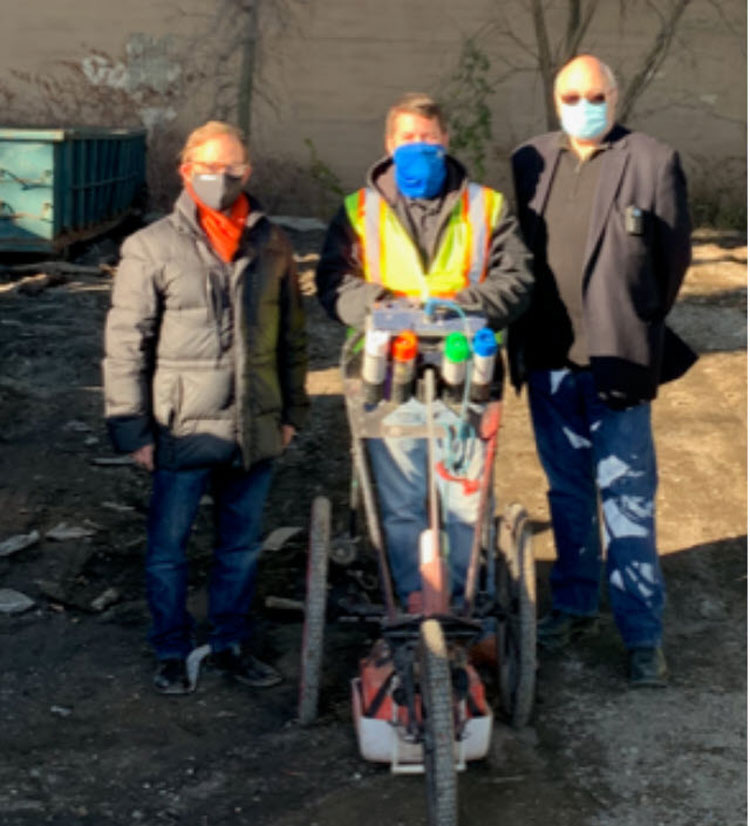
From left, Fox News correspondent Eric Shawn, GPR technician Steve Psihoules and author Dan Moldea. Courtesy of Dan Moldea (Copyright © 2020 by Dan E. Moldea)

Notably, when the Hoffa investigation was red hot back in 1975, I made it my business to know several federal agents personally. But, respecting the traditional “one-way-street” ritual between reporters and the FBI, no federal agent had ever spoon-fed information to me. Yet I could always depend on some of them to make sure I never went off track. If I did, they would gently guide me back onto the proper path without violating their oaths.

Today, I am, once again, on the now-familiar one-way street with the FBI, contributing all the information I have while receiving nothing in return. And even though I do not really know any of these current federal agents very well — some of whom were not even born when Hoffa died — I am cooperating without complaint and with total enthusiasm.

To be clear, I have given the FBI every document, photograph and videotape requested, along with any other materials I think might be useful. But, recognizing how busy the FBI is with pending 21st century problems — such as the Capitol Insurrection and foreign cyber-warfare, among other serious national-security threats — I can understand why the Bureau is taking a considerable amount of time to solve a 20th century mystery.

However, I do know — from our sources on the ground in Jersey City — that the area pinpointed by the late Frank Cappola has been protected for several months. No one can get close to “The Spot” for any unauthorized digging or malicious vandalism.

If this alleged location of Hoffa’s remains is confirmed, it will vindicate the FBI’s original theory of Hoffa’s whereabouts, as well as its December 1975 search warrant on the PJP Landfill and its entire 46-year investigation.

The FBI deserves that. And when that moment finally arrives, I want — and deserve — to be present at the scene to witness and report on this unfolding history.

Dan Moldea is a veteran investigative reporter and the author of 10 books, including The Hoffa Wars: The Rise and Fall of Jimmy Hoffa; Dark Victory: Ronald Reagan, MCA, and the Mob; Interference: How Organized Crime Influences Professional Football; The Killing of Robert F. Kennedy: An Investigation of Motive Means, and Opportunity; and Confessions of a Guerrilla Writer: Adventures in the Jungles of Crime, Politics, and Journalism.

Key characters in the Hoffa case and their dates of death

(*) interviewed by Dan Moldea

*Thomas Andretta: January 25, 2018
*Stanton Barr: November 13, 2019
*Salvatore Briguglio: March 21, 1978
Russell Bufalino: February 25, 1994
*William Bufalino: May 12, 1990
*Frank Cappola: March 16, 2020
Paul Cappola Sr.: March 8, 2008
Anthony Giacalone: February 23, 2001
Vito Giacalone: February 19, 2012
*Louis Linteau: October 13, 1978
*Lawrence McHenry: January 17, 1994
*Rolland McMaster: October 25, 2007
*Phillip Moscato, Sr.: February 16, 2014
*Charles O’Brien, February 13, 2020
Ralph Picardo (federal witness): January 26, 2004
Anthony Provenzano: December 12, 1988
*Salvatore Provenzano: May 27, 2013
*Jack Robison: July 27, 2003
*Leonard Schultz: September 6, 2013
*Jim Shaw: March 31, 1987
*Frank Sheeran: December 13, 2003
*Donovan Wells (federal witness): September 5, 2019

Still alive, as of this writing (July 22, 2021):

*Gabriel Briguglio, living in New Jersey
*Stephen Andretta, living in New Jersey
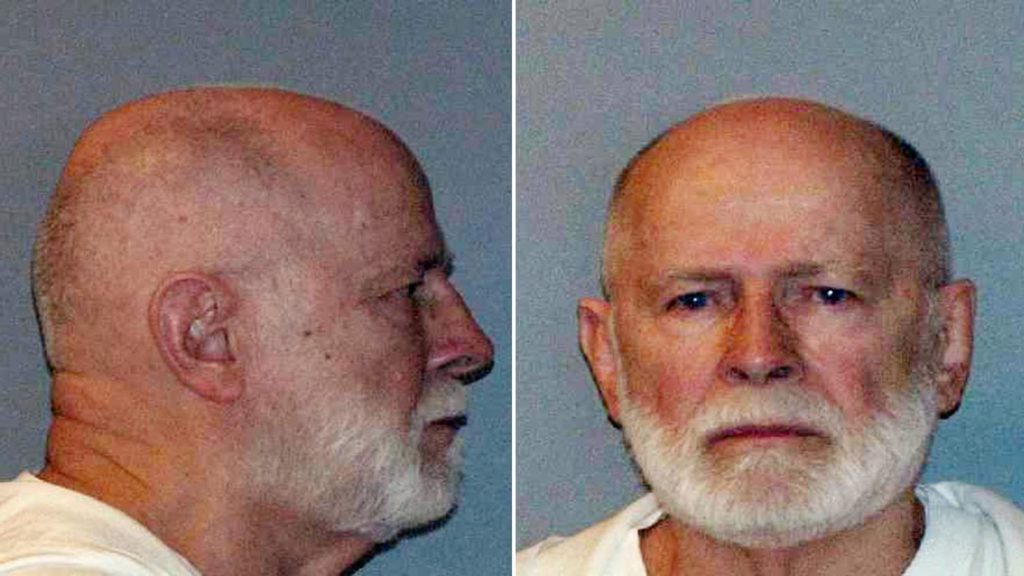
Recently released FBI documents tie Whitey Bulger to horse race-fixing scheme

The recent release of FBI documents about the late mobster James “Whitey” Bulger does more than shed light on a 40-year-old horse race fixing and bribery case. It also recalls the shameful saga of how former Boston FBI agent John Connolly for years protected Bulger and Bulger’s murderous cohort, Steve Flemmi, from prosecution.

The FBI posted on its public records website The Vault exactly 300 pages of intelligence reports from the mid- to late 1970s, first about Bulger and Boston’s Winter Hill Gang extorting “juice” payments for illegal street loans, then shifting to the Mob’s scheme to fix races at East Coast pari-mutuel horse tracks.

The heavily redacted documents name Bulger and gang leader Howard Winter among the suspects conspiring to force loansharking payments from people in Boston from late 1974 to early 1975. FBI agents detailed how some victims consented to wear wires and permit wiretaps on their phones to record incriminating threats of violence for nonpayment by several gang members.

But further into the file, the focus of the intelligence reports abruptly swings from loansharking to a notorious case that resulted in indictments in 1979 of Winter and 20 others — including most of his gang but not Bulger or Flemmi — for alleged racketeering, sports bribery and conspiracy in the fixing of thoroughbred horse races.

The FBI reports bring renewed relevance to disclosures about Bulger, Flemmi and Connolly in the 2000 book Black Mass: The True Story of an Unholy Alliance Between the FBI and the Irish Mob, by Dick Lehr and Gerald O’Neill.

According to the authors, in 1978, Anthony “Fat Tony” Ciulla, a convicted race fixer and major player in Winter’s race-fixing plot, agreed to serve as a prosecution witness to avoid a long prison term. Ciulla said in open court that among his “partners” in the fixing scheme were Winter, hitman John Martorano, Bulger and Flemmi.

However, Connolly was determined not to see Bulger and Flemmi indicted in the race-fixing case. During the late 1970s and into the 1980s, FBI agent Connolly served as Bulger’s “handler,” or protector, maintaining Bulger as a confidential informant for the FBI on organized crime. Connolly’s information led to convictions of some Mafia leaders in Boston, embellishing his reputation with the FBI. For his part, Connolly regularly tipped off Winter Hill members about FBI informants, some of whom were murdered as a result.

This scandalous cooperation culminated in 1982 when Connolly slipped information to Bulger and Flemmi that John Callahan intended to inform on them about the 1981 killing of Roger Wheeler, the head of World Jai Alai in Oklahoma, by the Winter gang. Bulger, Flemmi and Martorano soon participated in murdering Callahan.

Bulger and Flemmi were later charged with 18 murders, 11 of which occurred while Connolly and the FBI protected them as informants.

The FBI recently released 300 pages of documents, which, though heavily redacted, reveal details of Whitey Bulger’s connection to the race-fixing racket.

Bulger, secretly told by Connolly he’d be indicted on racketeering charges in 1994, fled Boston and remained in hiding until his arrest in Santa Monica, California, in 2011. A judge in 2013 sentenced him to two life terms on racketeering charges and taking part in 11 murders. His fellow inmates beat him to death in a federal prison in West Virginia in 2018. 

Connolly received a 10-year federal sentence in 2002 for protecting Bulger and Flemmi, and a 40-year sentence for murder in a Florida state court in 2009. Now 80 years old and suffering from terminal cancer, he received a medical release from prison in February.

Flemmi’s protector was FBI agent H. Paul Rico, who allegedly helped arrange Wheeler’s homicide in Tulsa, Oklahoma, with Bulger, Flemmi and Martorano. Flemmi pleaded guilty to 10 murders and was sentenced to life in prison in 2004. Rico, charged with murder in the Wheeler case in 2003, died after his extradition to Oklahoma in January 2004. 

The new files on Bulger indicate that the FBI had information as early as the mid-1970s that he may have been in on the race fixing conspiracy, but he escaped indictment. According to authors Lehr and O’Neill, this was Connolly’s doing.

The federal prosecutor in the race fix case, Jeremiah T. O’Sullivan, had already added Bulger and Flemmi to the list of those to be indicted in January 1979. Ciulla had already testified that Bulger and Flemmi were among six associates of Winter who shared in the money won via race fixing.

Connolly and his FBI colleague John Morris told O’Sullivan they needed Bulger and Flemmi free, with the prospect of gaining incriminating information on a big fish —Gennaro Angiulo, underboss of New England’s Patriarca crime family. O’Sullivan consented to dropping them from formal indictment, instead making them unindicted co-conspirators.  

As recounted by Connolly himself in Black Mass:

“It turned out, added Connolly, that the government had the goods on Bulger and Flemmi. ‘Ciulla had actually buried them, apparently in his grand jury testimony.’”

“… After getting back to the FBI with the good news, O’Sullivan, continued Connolly, required that Bulger and Flemmi promise not to even think about taking out Ciulla. ‘He told me that as a condition of their being cut loose from the race-fix case, they had to give their word that they would play no role in hunting down Anthony ‘Fat Tony’ Ciulla.’”     

Ciulla, a national expert in bribing jockeys, practically ran the race fix operation with Winter’s investments and was crucial to the federal investigation. Back in 1972, Ciulla had been convicted of conspiring to fix races at the Suffolk Downs track in East Boston.  

Howie Winter led Boston’s Winter Hill Gang, which Whitey Bulger essentially took over after Winter was convicted and sent to prison in 1979.

This time, caught again and facing a stiff prison sentence, Ciulla agreed to testify about the scam in exchange for avoiding a criminal indictment (he was named an unindicted co-conspirator).

The incredible scheme, which ran from December 1974 to November 1975, involved fixing horse races at legal racetracks by bribing scores of jockeys, trainers, owners and race officials to throw the contests. Jockeys would mostly receive $400 to $500 bribes to slow down their horses to let others win.

The plotters even bought a thoroughbred horse, called “Spread the Word,” and bribed its riders to hold it back to look like a poor racer. After they laid heavy bets on the horse, the animal, now with longer odds against winning, did “win,” hoofing down the stretch against corrupted jockeys, at New Jersey’s Garden State Park on February 8, 1975. The conspirators split $80,000 won on the race. They would net at least $1.3 million in all, federal prosecutors said.

The new FBI documents pertaining to the RICO/sports bribery probe, which took place from 1976 to 1978, focus on Winter, Bulger, a Las Vegas resident and unlicensed handicapper named Robert Martin and others whose names are censored. 

Winter and his conspirators enlisted Martin and other illegal bookmaking contacts based in Las Vegas, Elliot Paul Price and Melvin Goldenberg, who knew how to move money bet on horses in fixed races, thereby cheating both illegal bookmakers and the legal racetracks.

The FBI file also mentions Las Vegas sports handicapper and Stardust hotel executive Frank Rosenthal, an active associate of the Chicago Outfit found guilty in 1960 of trying to bribe college basketball players. Agents said Rosenthal and Martin at the time operated the largest illegal lay-off sports betting operation in the country. The agents figured that the conspirators must have first obtained the permission of Anthony Salerno, underboss of the Genovese crime family of New York, to lay their illegal bets through Las Vegas bookies.   

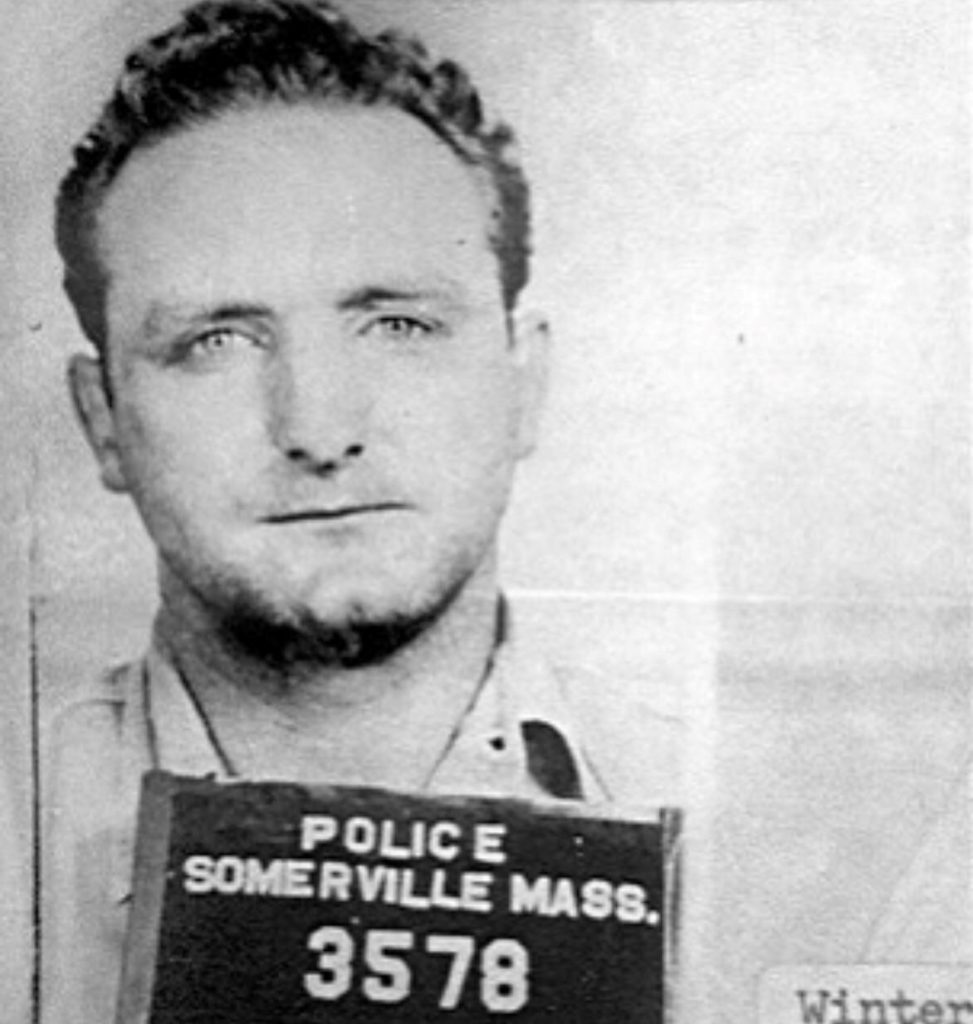
Winter masterminded the conspiracy, and he and his partners provided the financing from the gang’s roost in Somerville, Massachusetts. The FBI file describes how the scheme worked. Basically it set up an almost sure thing — bribing jockeys so their horses would not place in the top three for win, place or show bets, so the schemers could bet on the fixed racers.   

“The Las Vegas people would, through their contacts, move a certain amount of money on a given horse, which was handicapped by (redacted) in a fixed race. The horse would more than likely be one of the three or four remaining ‘live horses’ meaning that these horses in fact had a chance to actually win the race. The other horses would theoretically be stopped from placing in either the win, place, or show positions through bribery of either a jockey, trainor (sic), or owner or other racetrack official. The bets which would be placed with the illegal bookmakers would generally be across-the-board wagers, that is monies placed in the win, place and show position. This would ensure an almost certain return on the monies which would be bet illegally.”

The contacts in Las Vegas would move as much money as possible on a fixed race at the appropriate track and telephone Winter in Somerville to tip him or someone in his gang off about the track and the fixed race. Winter’s people would then make illegal wagers through Las Vegas and assign runners to place bets at the pari-mutuel tracks where fixes occurred. In Las Vegas, Martin (who had lost his Nevada gaming license) worked as a silent partner in the Churchill Downs Race & Sports Book, Price at the Riviera Hotel and Goldenberg at the Tropicana.

Disgraced FBI agent John Connolly, who developed Bulger as an informant, protected Bulger from being indicted when investigators uncovered the horse racing scheme. John Tlumacki/The Boston Globe via Getty Images.

In one case, according to the FBI documents, a conspirator gave a horse called “No Hurry” a depressant before a race at the Pocono Downs track in Pennsylvania, after the jockey had stated he, “could not hold this horse because it was so superior to all the other horses in this race.” After the horse ran a slow race, suspicious track officials took a urine sample from it that later tested positive for a depressant drug, leading to the arrest of the alleged drugger.

In the end, they fixed 20 races at six Eastern tracks: Suffolk Downs, Pocono Downs, Rockingham Park in Salem, New Hampshire, Lincoln Downs in Rhode Island, and the Atlantic City Race Track and Garden State Park in New Jersey. A federal court convicted Winter in 1979 and sentenced him to 10 years in federal prison. Four other defendants received shorter sentences.  

Hoffa’s missing body leads list of top 5 Mob mysteries

Organized crime, by its nature, is a secretive activity, with the threat of violence often reserved for those who might reveal damning details of its inner workings. Better to keep quiet to prevent the whole enterprise from collapsing into turf wars, bad publicity, insolvency, indictments and prison.

And so, Mob mysteries proliferate. Many of them are about the identities of who ordered and who perpetrated Mob hits. Even one of the most prolific of Mob songbirds, hitman Abe Reles of Murder Inc., was ill equipped to reveal to authorities those responsible for hundreds of New York area murders in the 1930s.

Here is our list of the top five most enduring mysteries in the history of the American Mob. Lacking in solutions, we try to make up for it with informed speculation, which is about all we have in many cases.

Where is Jimmy Hoffa’s body?

The most famous Mob mystery has to be the whereabouts of the corpse of former Teamsters Union president James “Jimmy” Hoffa, who disappeared in 1975, certainly the victim of a gangland hit. Ironically, the solution to this mystery may come soon. Or perhaps not. The FBI has searched and excavated potential Hoffa burial sites multiple times based on leads, and it has come up short each time.

The pursuit of Hoffa’s burial site gained renewed traction recently with the release of the 2019 movie The Irishman, which mixed fact, fiction and speculation about Hoffa. The film bases its take on a controversial book by one-time Hoffa bodyguard Frank Sheeran, who claimed New Jersey-based Genovese crime figure Anthony “Tony Pro” Provenzano commissioned him to kill Hoffa. Sheeran professed to being in the car that picked up Hoffa outside a restaurant near Detroit, taking Hoffa to an empty house, shooting him dead, and having a couple of Mob goons cremate the body.

The 62-year-old Hoffa, known for his longtime Mob ties, wanted to run again for union president and, in 1975, sought the approval of Tony Pro and Detroit boss Anthony “Tony Jack” Giacalone, involved in racketeering with the Teamsters. However, they were satisfied with the corruption offered by Hoffa’s replacement, Frank Fitzsimmons, and did not want him back. The Detroit and New Jersey underworld feared Hoffa might spill about their illicit diversions of Teamster pension funds.

On July 30, 1975, Hoffa expected to meet with Tony Pro and Giacalone for lunch at a suburban Detroit restaurant, the Machus Red Fox. The mobsters never showed. Witnesses last saw Hoffa in the parking lot, getting into the passenger seat of a car later confirmed owned by Giacalone’s son, Joseph, and allegedly driven by Hoffa’s foster son, Charles “Chuckie” O’Brien.    

Sheeran’s story is one of many making the rounds over the decades about Hoffa’s departure. Another popped up just this past May. Reginald Haupt Jr., a former Mob defense lawyer, said one of his gangster clients, the late Chicago Outfit fellow Lou Rosanova, told him he arranged for a private plane to fly Hoffa’s body from Michigan to Georgia in 1975 to inter it beneath a green at the Savannah Inn and Golf Country Club on Wilmington Island. Hoodlums and their Teamsters cronies liked to vacation there, and when they reached the green, they would urinate over Hoffa’s alleged grave, according to Haupt.

No bulletins on that one yet. The old tale of Hoffa’s remains at New York Giants stadium in New Jersey was debunked after the stadium’s demolition in 2010. Investigators have dug into at least nine locations in and around Detroit without success. Wilder stories included his body placed under a poker club in Gardena, California, dumped in the Florida everglades, and inserted into a junked car sold for scrap in Japan.
A scenario promoted lately by renowned Hoffa expert Dan Moldea holds the most promise: Tony Pro had Hoffa’s body shipped in a metal barrel from Michigan to a landfill site in New Jersey. Why drive it so far away, 620 miles? Maybe Provenzano, on the outs with Hoffa, considered the body a “trophy” to have in his home state. Moldea’s opinion is that Tony Pro considered the cadaver a bargaining chip to trade with the feds for leniency if he was indicted.

Moldea obtained a sworn affidavit from Frank Cappola, son of Jersey City refuse dump partner Paul Cappola. Frank Cappola told Moldea that his father had described how Hoffa’s body arrived in a drum by truck from Michigan in 1975 and was stuffed into another barrel. Paul then buried the Hoffa container with other barrels of industrial waste, inserted a marker and covered up the hole. Another source, Phil Moscato, Paul’s partner in the dump, also told Moldea that Hoffa’s remains were there.

Frank Cappola (who died in 2020) showed Moldea exactly where Hoffa’s body was buried — under a paved-over section of the dumpsite, beside the Pulaski Skyway bridge between Jersey City and Newark. Moldea is advocating for authorities to dig up the barrels. Let’s hope he gets his wish.  

Who killed Bugsy Siegel?

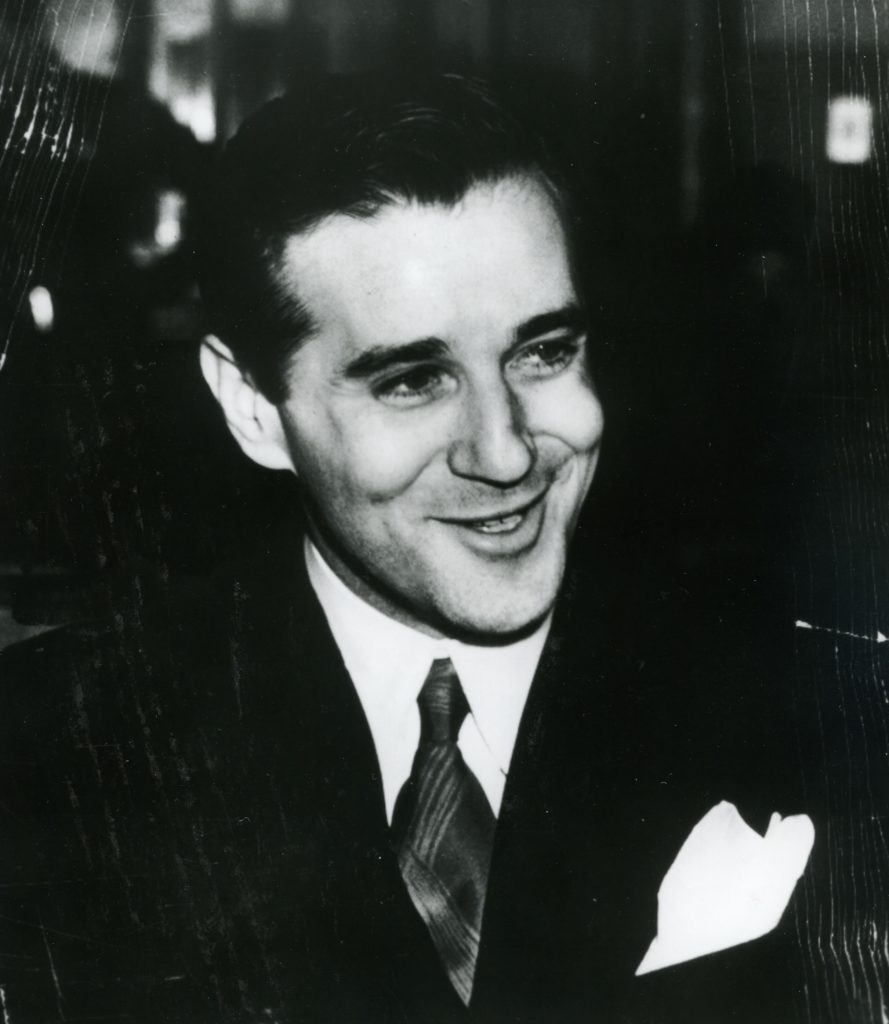
Another enduring Mob mystery is who killed Benjamin “Bugsy” Siegel, the man a Los Angeles newspaper once labeled “America’s number one gangster and West Coast chief of Murder Inc.” 

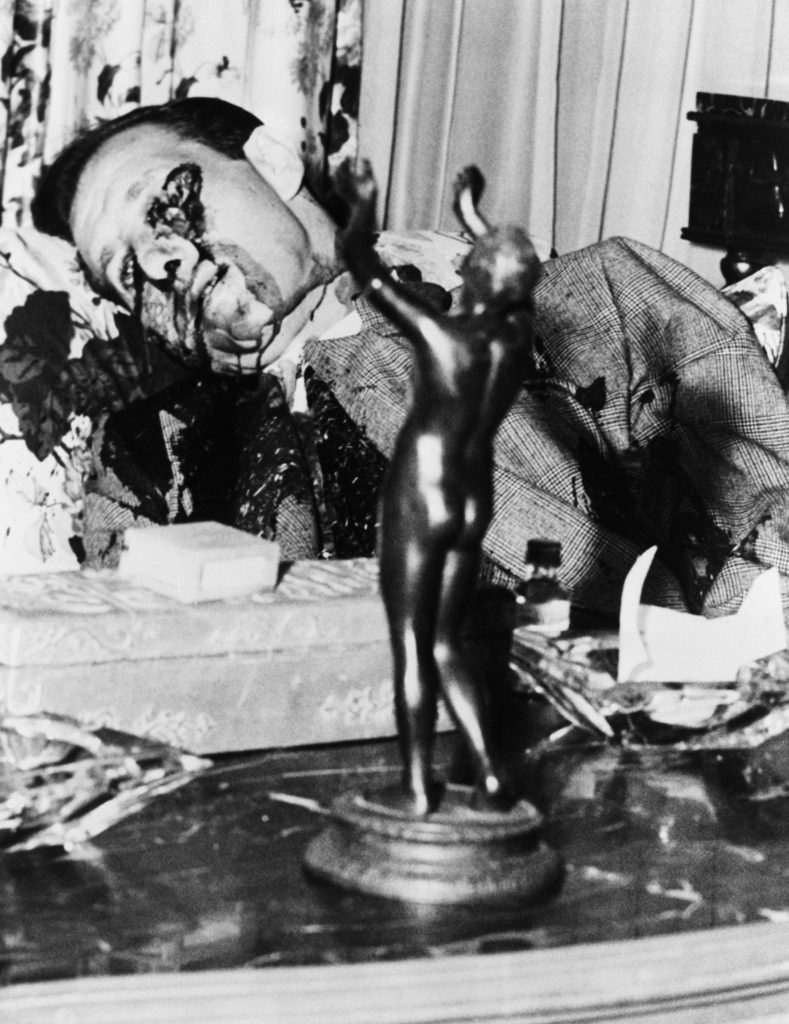
Benjamin “Bugsy” Siegel was killed on June 20, 1947, in the Beverly Hills home of his girlfriend, Virginia Hill.

It happened on the night of June 20, 1947, inside the house at 810 N. Linden Drive in Beverly Hills, rented two months earlier by Siegel’s girlfriend, Virginia Hill. Ten days remained on the lease. Hill’s brother, Charles “Chick” Hill, was upstairs with his fiancé, Jerri Mason, pulling up a rug for an intended move to Virginia’s house in Florida. Siegel, 41, who was spending most of his time in Las Vegas running the Flamingo Hotel, had been staying at Hill’s house during business trips to L.A. On this trip he intended to take a vacation with his two daughters.

About 10:45 p.m., someone fired nine bullets from a .30-caliber M1 carbine (standard issue for U.S. Army troops in World War II) at Siegel. The victim expired instantly from two gunshot wounds to the head. He lay dead with a look of bland acceptance on his bloodied face.

The assassin had to have acted quickly. Siegel, his frequent sidekick Allen Smiley, Chic Hill and Jerri Mason had dinner at Santa Monica’s Ocean Park and had arrived at the house only minutes earlier. Maybe the shooter and getaway driver tailed them from the restaurant, or waited hours in a car outside the house for them to show.

Siegel was only 41 when he was assassinated while sitting on a couch reading a newspaper. Getty Images.

Local police suggested the shooter must have crept into the arched porte-cochere in the driveway of the neighboring house, at 808 N. Linden. Standing beneath the porte-cochere, the assassin spotted Siegel through the far right window, rested the rifle muzzle on a latticework trellis and fired through the glass. Cops found nine .30-caliber shells in the neighbor’s driveway. A witness reported seeing an auto speed toward Sunset Boulevard after the shots.  

One intriguing part of the puzzle is that Siegel sat like a sitting duck on a couch, his body facing the window with the curtains conveniently parted just so — leaving a nice view for the shooter. Was it a coincidence? Did someone draw the curtains to aid the assassin?

The list of suspects in Siegel’s death is lengthy. He racked up enormous debts to his East Coast gangster partners to get the Flamingo Hotel in Las Vegas just right. He drove up the hotel’s cost to more than $6 million ($72 million in current dollars). The Los Angeles District Attorney’s office reported that Siegel’s personal debts totaled $1.5 million ($18 million today), and the gangster told a friend that if he could not cover it, he would have to “hide out somewhere. But I wouldn’t know where to hide.”   

Bookmakers, including Los Angeles Mafia boss Jack Dragna, were angry over the excessive fees Siegel charged for his Trans-America race wire. A U.S. narcotics official on June 27, 1947, claimed Charles “Lucky” Luciano wanted Siegel dead in a row over dominance in international drug peddling. Siegel also allegedly had a piece of an interstate jewelry theft ring. Speculation has centered on Chick Hill, who may have sought retribution for Siegel’s physical abuse of his sister.

Surely, a number of people knew who killed Siegel. But they kept the secret, and died with it. Police speculated one of them was L.A. hoodlum Tony Trombino, one of the “Two Tonys” shot dead in Hollywood with Tony Brancato by Jimmy “The Weasel” Fratianno, in 1951. Still, the person who fired that M1 carbine may never be known.  

Where are Lansky’s millions?

Six years after the death of Meyer Lansky, his eldest son, Buddy Lansky, a lifelong victim of cerebral palsy, lived virtually penniless in a county government nursing home in Miami, at the age of 59. His father left unfulfilled a dying promise to arrange for Buddy’s care after he was gone.

For many years leading to his death at age 80 from lung cancer on January 15, 1983, Meyer Lansky was commonly known as the “accountant” and master business adviser for the national crime syndicate. He was a boyhood friend in New York’s impoverished Lower East Side of fellow Mob legends Charles Luciano and Benjamin Siegel. And, thanks to his genius as an investor and racketeer, the narrative went that he must be very rich, with a net worth of as much as $300 million.  

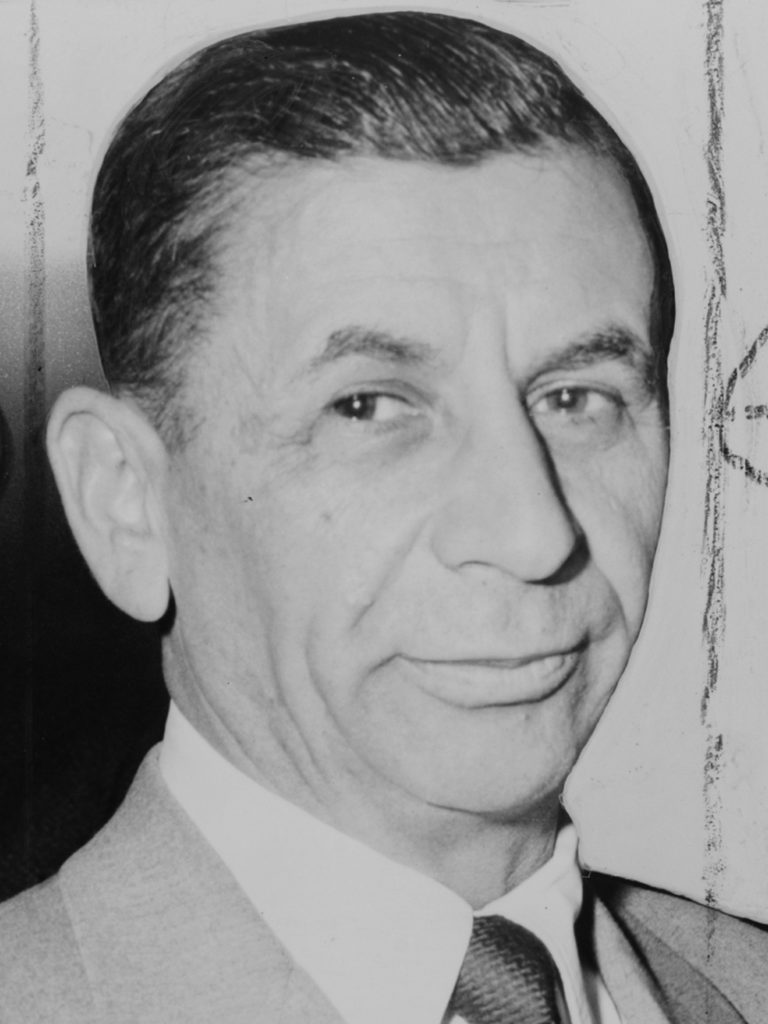
Where is Meyer Lansky’s purported $300 million nest egg? It never existed. Courtesy of Library of Congress.

However, there is no evidence that Lansky ever held such a sum. In 1989, Buddy barely missed eviction after trustees for Lansky’s estate could not even meet the $3,000 owed for his medical care. When Meyer died, the personal assets he had left came to $58,401.67. So little did he have that his own hospital bills at his death totaled $16,375.60, of which the federal Medicare program covered $15,150.62.

Lansky’s second wife, Thelma “Teddy” Lansky, found absurd the notion that the “Little Man” who strode with the giants of American organized crime for decades was worth $300 million, as some U.S. law enforcement officials somehow estimated. In an interview with the CBS show 60 Minutes in 1989, Teddy described the $300 million claim as “preposterous and ridiculous.”

So what happened to Meyer’s supposed fortune? How about his years as a leading stakeholder in casinos in Cuba? 

Lansky participated in gambling rackets with a gang that featured Luciano, Siegel and Frank Costello after World War I. During Prohibition, they were successful bootleggers. Lansky co-ran the violent Bugs and Meyer Mob, with Siegel. After Prohibition, they dabbled in drug trafficking and fine furs. From the late 1930s to the 1960s, Lansky invested in hotels and gambling clubs in Cuba, Las Vegas, the Bahamas, and in jukeboxes in New York.

In the 1950s, while a hidden investor, Meyer had his brother Jake front for him for a time at the Thunderbird hotel-casino in Las Vegas. In 1960, he asked for and got a $200,000 “finder’s fee” for inducing some of his Miami hotel owner friends to the buy the Flamingo in Las Vegas. In 1971, the feds charged Meyer with conspiring with the Miami group to secretly skim $36 million from the Flamingo from 1960 to 1968. A judge dropped criminal charges against him, citing Lansky’s poor health. Two other defendants served brief terms in federal prison.

What’s true is that many of Lansky’s best investments over the years went sour. In Havana, he operated the Montmartre Club, the famed Nacional Hotel and then spent up to $18 million building his Havana Riviera hotel-casino. He opened the Riviera in December 1957 only to see it all collapse as Fidel Castro’s revolution seized American-owned property. The upheaval in Cuba came at the peak of Lansky’s success, and wrecked him. He also lost his large casino investments in Freeport in the Bahamas in the 1960s when a government bribery scandal led to the end of his businesses there.

What happened to Lansky’s purported hundreds of millions? The answer is that he probably did not amass that kind of money, and lost the fortune he did have. Maybe the figure referred to the value of his holdings over a lifetime, made and spent. However, the so-called “$300 million” fortune squirreled away in Swiss bank accounts was nothing more than a legend.

Who killed Arnold Rothstein?

About 10 p.m. on November 4, 1928, Broadway gambler, racketeer and narcotics smuggler Arnold Rothstein sat as usual at his table at Lindy’s restaurant in midtown Manhattan. A waiter told him he had a phone call. After hanging up, Rothstein is said to have muttered something about having to meet “George McManus.”

Though no one saw him enter, Rothstein went into the Park Central hotel several blocks away on 7th Avenue. He walked into Room 349. About 10:45 p.m., a hotel guest in the corridor heard a loud commotion and noticed a stricken man — Rothstein — emerge from the guest room, clutching his abdomen. The man took the stairs to a first-floor service entrance. He told a janitor he’d been shot and needed a doctor.

A police detective asked Rothstein who shot him. “I won’t tell you,” the cop reported him saying. When the detective persisted, Rothstein replied, “Please don’t ask me any more questions.”

Arnold Rothstein was killed in 1928 in Room 349 of the Park Central Hotel in Manhattan.

Rothstein suffered a wound from a single, .38-caliber pistol shot. The slug punctured his bladder and intestines. He continued to refuse telling police who did it, at one point placing his index finger to his smiling lips. Despite blood transfusions, he died two days later. His would be one of 25 unsolved murders in New York that year.

It was a strange but not entirely surprising end to the city’s most legendary and well-connected gambler, the brilliant man known in the underworld as “the Brain,” whose private, high-stakes dice and poker games attracted the wealthy and politically influential. He invested in drug trafficking, bootlegging, speakeasies, loansharking, illegal gambling clubs, real estate and bail bond businesses. He was a rich (estimated worth of about $17 million) fixer who demeaned his debtors and sometimes failed to honor his debts.

His killer got away with it (no thanks to the victim) and remains unidentified today. It took prosecutors about a year to bring prime suspect George “Humpy” McManus to trial in Rothstein’s murder. They claimed McManus, a friend of the victim, fired the shot believing Rothstein had failed to pay what he lost during a marathon poker game back on September 28.

McManus insisted Rothstein had scooped up the $51,000 in cash McManus had lost and left IOUs for the more than $200,000 owed to other players, including San Francisco card sharp Nate Raymond. The stud card game came down to Raymond and Rothstein. Finally, in the high spade card side game, with $50,000 at stake, Raymond drew the ace of spades. A frustrated Rothstein said he needed a day or two to raise what he owed. Raymond, at the murder trial, said the game was on the level and that Rothstein intended “to chisel” him out of $219,000.   

When Raymond phoned days later to collect, he said that Rothstein exclaimed: “Crooked! I won’t pay.” Later, McManus arranged a meeting with the game’s creditors at the Park Central for Rothstein to settle it up.

An investigation found that McManus had not only booked the hotel room, he left inside it an overcoat with his name on it. He admitted to reserving it but not to being present when Rothstein came by.

At McManus’s trial, the district attorney’s office made the case for motive — that when Rothstein lost $219,000 to Raymond, he left paper IOUs for his losses and took the $51,000 McManus lost for himself, and McManus resented it. 

But prosecutors and New York Police had a terrible time making their case. An officer lost Rothstein’s bloodstained clothing. The D.A. could not even prove McManus was in the room at the same time as Rothstein. The judge, citing insufficient evidence, ordered McManus acquitted.

Rothstein’s death had many ramifications in New York. The city’s police commissioner and district attorney soon resigned. Documents in Rothstein’s office showed his complicity in an international drug syndicate and proof of his involvement in the infamous theft of $5 million in Wall Street bonds with fellow fraudster Nicky Arnstein.

Ultimately, Rothstein’s own character flaws caught up to him. As one man told the United Press in November 1928: “He loved to collect and he hated to pay — so he died.”

Rothstein knew who shot him, but his apparent devotion to underworld ethics kept the truth from coming out before he died. No one ever fessed up either. After more than 90 years, this is another Mob murder that may never be solved.

Who killed Sam Giancana?

For Salvatore “Sam” Giancana, June 19, 1975, served as the end of a fateful year. The previous July, Giancana had returned after an eight-year exile in Mexico, following the end of his 10-year reign as the gangland chief of Chicago in 1966. Mexican officials forced him out of bed and delivered him to the feds at the border. The government subpoenaed him to testify in November 1974 in Chicago in the first of four appearances before a federal grand jury.

In May 1975, at age 67, Sam saw a surgeon in Houston for removal of his gall bladder. Meanwhile, the U.S. grand jury wanted him back, and the staff of the U.S. Senate Select Committee on Intelligence investigating the CIA’s alleged attempts in the early 1960s to assassinate Cuban leader Fidel Castro — using Giancana as the agency’s clandestine adviser — prepared to contact him about testifying.

Sam Giancana was killed in 1975 while cooking in the basement of his Oak Park, Illinois, home. Courtesy of Library of Congress.

That Thursday, June 19, as police and FBI agents watched outside, Giancana held a “welcome back” party to celebrate his return from Houston. Friends, relatives and mobsters came by his home in the suburb of Oak Park. The party lasted into the night. Some reports claim the police and agents left when it got late.

After 11 p.m., Giancana told his live-in caregiver, Joseph DiPersio, that he didn’t need him for the evening. Giancana went to his basement kitchen and started to heat a frying pan to make a snack of sausage and spinach, maybe to share with the person still with him. Immediately, someone drew a .22-caliber automatic pistol, with a suppressor, and shot him six times, into the neck and head, including once in the mouth.

Investigators surmised that Giancana must have known and trusted the shooter. The assassin conveniently fled the house without any witnesses. DiPersio and his wife said they heard no shots. The caretaker found the victim lying face up in a pool of blood. He placed an emergency call at 11:53 p.m. The sausages in the pan were hardly even cooked yet.

In August, landscapers came upon a High Standard .22-caliber Duramatic automatic pistol in the nearby River Forest area, where Chicago Outfit leaders Tony Accardo and Charles English lived, less than two miles from Giancana’s place. The gun had a shortened barrel with 42 holes drilled into it to make the silencer work better. Illinois State Police soon confirmed it as the murder weapon.

Some authorities believed the motive for the obvious Mob hit centered on information Sam provided to the feds, and his possible return before the federal grand jury. His murder may have been a message to would-be squealers in general, as was the shot to his mouth.

But Peter Vaira, then head of the U.S. Organized Crime Strike Force in Chicago, said he did not believe the motive was to silence Giancana. Giancana’s testimony provided so little substance that the Justice Department was thinking of charging him with perjury, he said. 

“It looks like a private thing, like he’s done something to somebody,” Vaira told the Los Angeles Times. “I don’t think it’s because of his grand jury testimony.”  

Two weeks before his death, Giancana took a meeting with Chicago Outfit leaders Accardo and Joseph Aiuppa about his grand jury statements. Any hit on Giancana must have been okayed by the boss, Accardo, who did not show up for Sam’s welcome party.    

Rumors swirled that the shooter may have been Tony Spilotro, the 37-year-old Outfit representative in Las Vegas. Federal and Chicago authorities thought it was Giancana friend and Mob crony Dominic Blasi, who parked his car outside during Sam’s party.

But without sufficient evidence against Spilotro or Blasi, nothing materialized. Thus, the identity of Giancana’s killer remains unknown, as least publicly.

The good and evil of Meyer Lansky

Eytan Rockaway is intrigued by complex gangsters. The film director’s new movie, released last week, explores an underworld figure he says fits that description: Meyer Lansky.

From his early days in New York during the Prohibition years to his role as the Mob’s gambling guru and financial wizard, Lansky emerged as one of the most prominent organized crime figures in the country. He is reputed to have once proclaimed to an associate that the Mob was “bigger than U.S. Steel.”

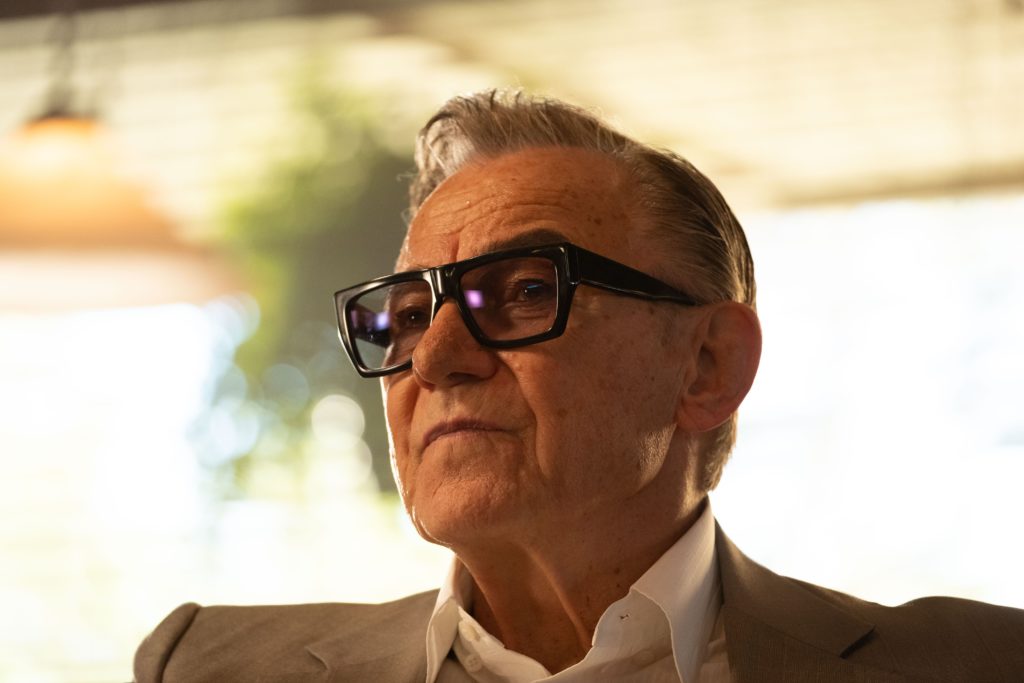
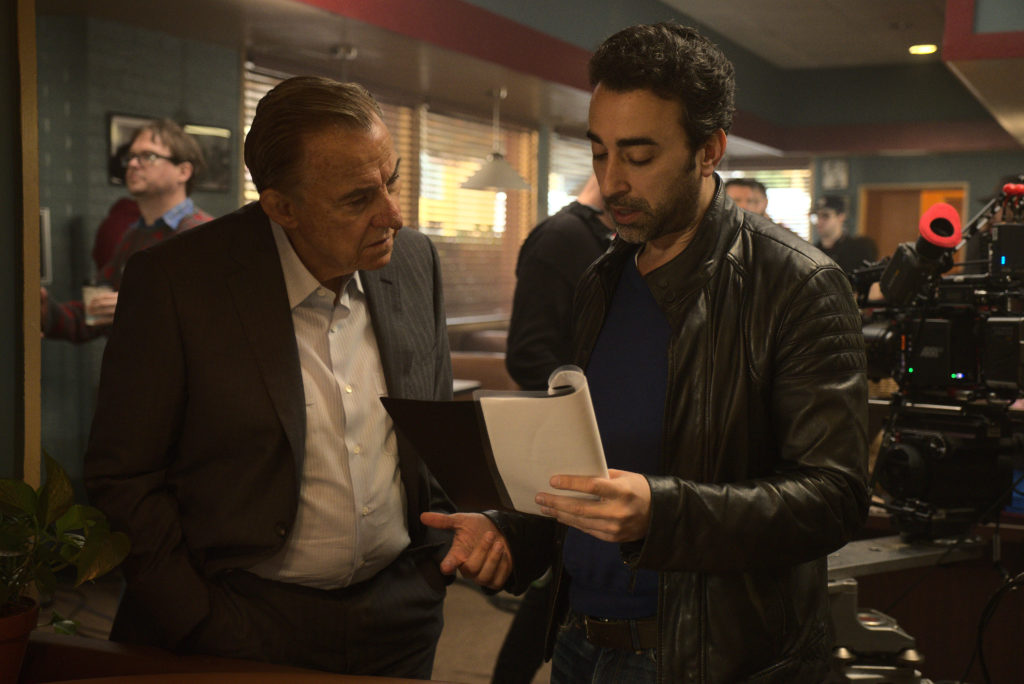
Harvey Keitel plays Lansky in his final years, when he was all but retired from organized crime yet the FBI was still investigating him.

Titled Lansky, the movie stars Harvey Keitel as the title character, a 1911 immigrant from Byelorussia who only made it through the eighth grade in New York but built a gambling empire from Cuba to Las Vegas. He died in 1983 at age 81.

Among Lansky’s partners were Benjamin “Bugsy” Siegel, Charles “Lucky” Luciano and Frank Costello. Lansky and Siegel, childhood friends, once headed the Bugs and Meyer Gang.

The movie explores Lansky’s elderly years in Miami, where the FBI continued to keep an eye on him. In the movie, Lansky agrees to work with a journalist named David Stone, played by Sam Worthington, to tell his life story. Federal agents, in turn, pressure Stone to help them find $300 million that Lansky supposedly had squirreled away somewhere.

As Variety magazine puts it, “Stone finds himself caught in the middle of a game of cat and mouse, uncovering the hidden truth about the life of the notorious boss of Murder Inc. and the national crime syndicate.”

‘Thin gray line’

When Rockaway was young, his father, the historian Robert Rockaway, told him about “the adventurous and dangerous lives of gangsters,” the director said in an email.

Robert Rockaway conducted a rare interview with Lansky in writing the book But He Was Good to His Mother: The Lives and Crimes of Jewish Gangsters.

Writer and director Eytan Rockaway, right, confers with Harvey Keitel on the set of Lansky.

Eytan Rockaway said he was fascinated by the “dark and elusive underworld, with its own rules and codes of conduct operating in the shadows of civilized society.”

“As a young boy, it sounded more like a fantasy world rather than a historical reality,” he said. 

To the director, Lansky stands out partly because of his complex nature. “I studied the criminals and gangsters who lacked empathy and emotion from a young age to the ones who lost it along the way,” Rockaway said. “I observed the stories of those thrown into the life of crime and the ones who willingly chose that path. But there was a small group of gangsters who intrigued me the most. These were the ones who reached the height of power, and their complexity transcended the normal boundaries of good and evil.”

Lansky was the “epitome of that group,” Rockaway said.

“Often in life things are not just black and white, good or bad, but there is a thin gray line between the two,” the director said. “Lansky walked that thin gray line like a funambulist” — a tightrope walker.

Siegel’s death

Meyer Lansky’s daughter, Sandi, said she knew her father and his associates as honorable men. Now 83 years old and living in Tampa, Florida, Sandi Lansky during her younger years hung out at the Copacabana nightclub in New York. She referred to men like club owner Costello as “uncles.”

“They were good people,” she said in a telephone interview.

The close relationship among these men is one reason Sandi Lansky doubts her father had anything to do with the still-unsolved shooting death of his friend Benjamin Siegel.

In late1946, Siegel opened the Flamingo hotel-casino south of Las Vegas on the highway to Los Angeles. Today, the Flamingo is at the same location on the Strip, though none of its original buildings remain.

Meyer Lansky, whose life is depicted in the movie, died in 1983 at age 81. Library of Congress.

Six months after the Flamingo opened, Siegel was shot to death at his girlfriend Virginia Hill’s Beverly Hills home. The shooter was outside the residence, firing at Siegel through a window.

Some historians believe Siegel’s syndicate partners, including Lansky, orchestrated the murder because of cost overruns and other problems at the property. In the movie, Lansky urges his syndicate colleagues not to kill Siegel but he is powerless to stop them.

“My dad wasn’t behind it,” Sandi Lansky said. “My dad and Benny were friends since they were kids.”

Her son, Gary Rapoport, agrees that his grandfather did not order Siegel to be killed. He said Lansky loved Siegel like a brother. “He never would have ordered that,” Rapoport said in a telephone interview.

Rapoport, 66, also lives in Tampa but grew up in Miami around his grandfather. He remembers Meyer Lansky as a kind man who always stressed the importance of education. Even during leisure time on the golf course, Lansky would ask his grandson math questions, testing his multiplication skills.

“I respected him for his mind,” Rapoport said.

Rapoport said that if Lansky had $300 million stashed away as some have claimed, it was invested or spent over time. It doesn’t exist anymore.

Another grandson, Meyer Lansky II, said his grandfather would not talk much about his life but mentioned that his childhood was tough. Lansky II, 63, lives in Las Vegas. His father is Lansky’s son Paul.

Lansky remembers his grandfather telling him not to let people push him around, to “fight back.”

Popularity of Mob movies

Rockaway’s movie is the latest in a long line of Mob films that continue to generate interest. Another is The Many Saints of Newark, a prequel to the television series The Sopranos. The move is set to be released September 24 in theaters and on HBO Max.

Another upcoming Mob movie, The Legitimate Wiseguy, looks at Tony “The Ant” Spilotro’s role in helping an aspiring actor in Hollywood. Spilotro was the Chicago Outfit’s overseer in Las Vegas during the 1970s and early ’80s. The movie stars Paul Ben-Victor as Spilotro and features Keitel, Emile Hirsch and Ruby Rose. A release date has not been set.

Rockaway said he and the public continue to be fascinated by the Mob world because of its characters.

“They reminded me of the characters in Greek and Norse mythology who had the capacity and the will to be forces of evil inflicting tremendous harm and chaos around them, while at the same time they could be forces of good, honor and judgment,” he said.

In other words, characters like Meyer Lansky.

Larry Henry is a veteran print and broadcast journalist. He served as press secretary for Nevada Governor Bob Miller, and was political editor at the Las Vegas Sun and managing editor at KFSM-TV, the CBS affiliate in Northwest Arkansas. The Mob in Pop Culture blog appears monthly.


Dennis Griffin, true crime author who chronicled the Mob in Las Vegas and elsewhere, dies

If there was a hall of fame for true crime authors, Dennis Griffin would be in it. He was a talented and prolific contributor to the genre, especially in the subgenre devoted to Mob history. Griffin died of lung cancer Monday, June 21, 2021, in Verona, New York. He was 75 years old.

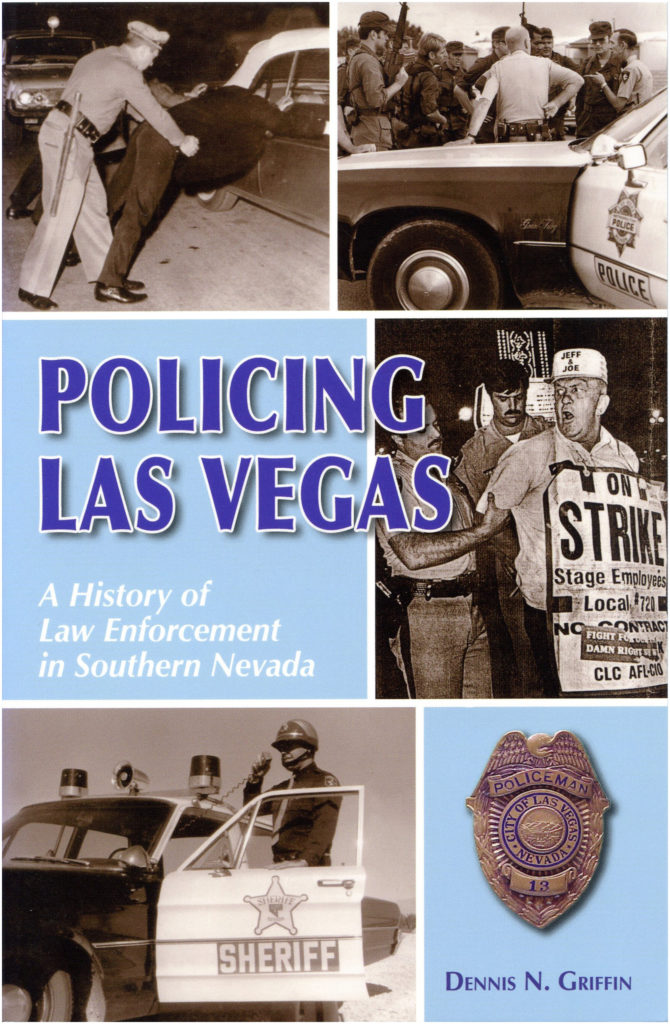
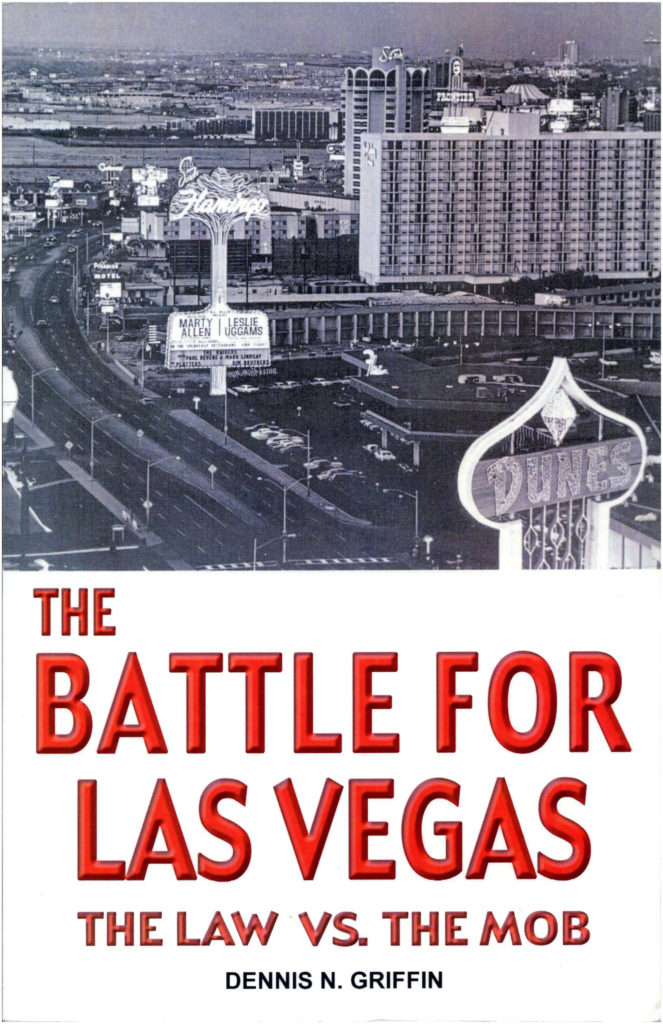
For those interested in Las Vegas crime history, Griffin wrote two books of particular value: Policing Las Vegas: A History of Law Enforcement in Southern Nevada (2005, Huntington Press), and The Battle for Las Vegas: The Law vs. the Mob (2006, Huntington Press). The latter is particularly helpful to understand the Chicago Outfit’s involvement in Las Vegas casinos in the 1970s and 1980s.

Dennis co-authored four books with the late criminal-turned-government witness Frank Cullotta.

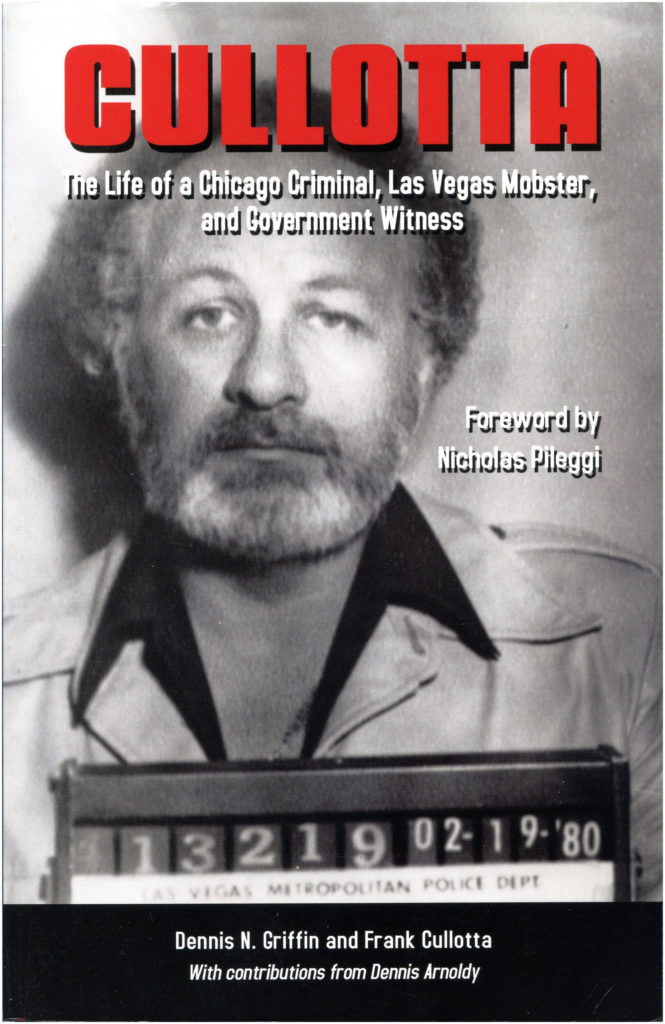
Griffin also co-wrote four books with Frank Cullotta, the Chicago mobster who ran a notorious burglary racket, dubbed the Hole in the Wall Gang, in Las Vegas in the late 1970s and early ’80s. After the Hole in the Wall Gang was caught breaking into a Las Vegas store in 1981, Cullotta became a government witness and testified in numerous trials against his former Mob associates. Griffin co-authored Cullotta: The Life of a Chicago Criminal, Las Vegas Mobster, and Government Witness (2007, Huntington Press); Hole in the Wall Gang, in My Own Words: A Memoir (2014, Houdini Publishing); The Rise and Fall of a ‘Casino’ Mobster: The Tony Spilotro Story Through a Hitman’s Eyes (2017, Wild Blue Press); and Frank Cullotta’s Greatest (Kitchen) Hits: A Gangster’s Cookbook (2020, Wild Blue Press). Cullotta died in 2020.

He also co-authored Andrew DiDonato’s memoir, Surviving the Mob: A Street Soldier’s Life Inside the Gambino Crime Family (2010, Huntington Press), and Vito Colucci Jr.’s Rogue Town (2013, Houdini Publishing).

Two of his final contributions were collaborations with Glen Meek on Wrong Numbers: Call Girls, Hackers, and the Mob in Las Vegas (2019, Wild Blue Press), and with David Bowman on Bringing Down Cullotta: The Story Casino Couldn’t Tell You (2021, Coastal West Publishing). He also edited The Accidental Gangster: From Insurance Salesman to Hollywood Fixer (2020, Costal West Publishing) by Ori Spado.

“Denny Griffin was a talented  and prodigious organized crime writer who helped me in more ways than I can count,” said Meek, who collaborated with Griffin on Wrong Numbers. “Incredibly, we never met in person, even though we co-wrote a book together on the Mob and Vegas escort services. Perhaps that demonstrates more than anything what a gifted and generous collaborator he was. Denny will be missed.”

Griffin also wrote several books on crime and law enforcement subjects unrelated to the Mob, as well as several mystery/thriller novels.

Mob historian Gary Jenkins said when putting his first documentary together, he turned to Griffin for help in finding sources to interview on both sides of the law. Jenkins, a former Kansas City Police detective, did not know Griffin but was impressed with his book The Battle for Las Vegas.

“He hooked me up with all these people,” Jenkins said. “He was so generous.”

Jenkins’ 2013 documentary, Gangland Wire, examines the 1970s casino skimming pipeline from Las Vegas to the Civella crime family in Kansas City.

Griffin was generous with many other authors and filmmakers interested in telling Mob stories, Jenkins said. “He always had time for everybody.”

Griffin was helpful in many ways to The Mob Museum staff, sharing his knowledge and making connections over the years.

Jenkins said Griffin could get anybody to talk to him — mobsters, cops, FBI agents, even former Stardust hotel-casino employees who worked for Frank “Lefty” Rosenthal. “Everybody trusted him,” Jenkins said. “He just wanted to tell the story.”

In 2017, Griffin founded a Facebook group called The Transparency Project, dedicated to helping the survivors of victims of murder and suspicious deaths to obtain records from governmental agencies.

Griffin was born August 6, 1945, in Rome, New York. He was the only child of Walter and Dorothy Kraeger Griffin. He attended Rome Free Academy. He served four years in the Navy and had a 20-year career in law enforcement before retiring in 1994 as director of investigations for the New York State Department of Health. He published his first book, a novel called The Morgue, in 1996. Griffin lived at least part time in Las Vegas for several years before returning full time to New York state.

He is survived by his wife, Faith Finster Griffin; his two daughters, Margaret Carro and Antoinette Mahoney; his stepchildren, Pamela Ashley and Robert McAree. Kimberly McAree predeceased him in 1986. He is also survived by five grandsons, two granddaughters and five great-grandchildren.


Wife of drug kingpin El Chapo pleads guilty to drug trafficking

Standing in a federal court dressed in a green prison jumpsuit and white face mask, the wife of imprisoned Mexican drug lord Joaquin “El Chapo” Guzman admitted to trafficking narcotics for his Sinaloa cartel and helping plan his spectacular escape through a tunnel under a Mexican prison in 2015.

Emma Coronel Aispuro Guzman, speaking in Spanish to an English translator, pleaded guilty June 10 in Washington, D.C., to conspiracy to distribute heroin and other illegal drugs into the United States, conspiracy to launder money and benefiting financially from Guzman’s cartel.

“I find you guilty as charged,” Judge Rudolph Contreras said after hearing the defendant give up her rights to a trial or appeal.

The 31-year-old Coronel was looking at a sentence of 10 years to life in prison for the drug trafficking conspiracy count, plus a $10 million fine. However, since federal prosecutors view her participation in the cartel as relatively marginal, insiders said she is likely to receive a reduced sentence, according to the New York Times.

Prosecutors also decided against requiring her to furnish information on other people potentially involved in cartel activities, sources told the Times. That was probably to protect her and her family from retaliation.

Federal agents arrested Coronel in February at Dulles International Airport in Washington, D.C., and she has remained in jail ever since.

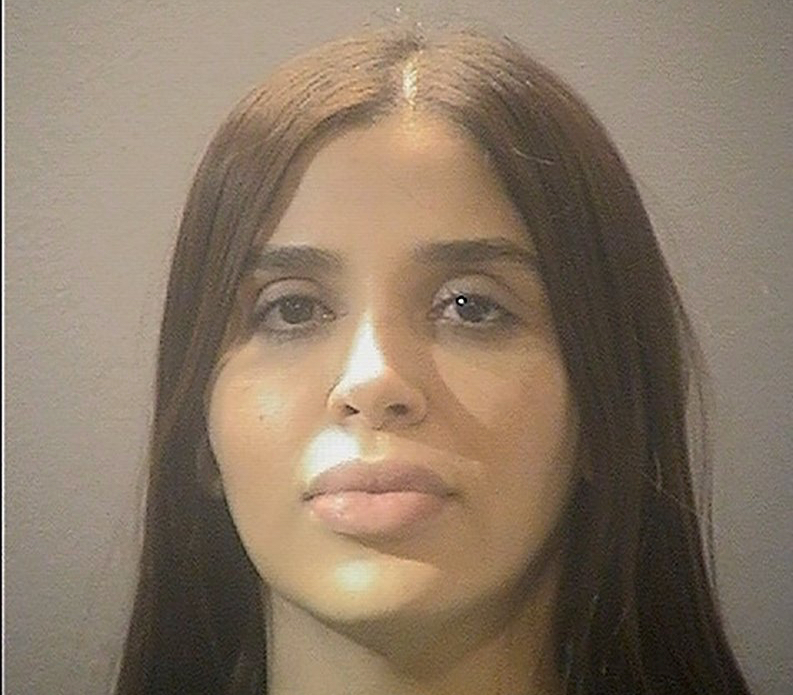
Emma Coronel Aispuro after being arrested and booked by the Alexandria, Virginia, Sheriff’s Office on Monday, February 22, 2021.

In the warrant for her arrest, FBI Special Agent Eric McGuire contended that Guzman and Ismael “El Mayo” Zambada Garcia, who co-led the Sinaloa cartel from 1989 to 2016, “formed the most prolific drug trafficking partnership in the world.”

McGuire argued that Coronel was a willing participant in the cartel. He accused her of conspiring to distribute at least one kilogram of heroin, five kilograms of cocaine, 1,000 kilograms of marijuana and 500 grams of methamphetamine.    

Coronel first met Guzman at a dance celebrating her nomination as beauty queen of the Coffee and Guava Festival in Canelas, Mexico, in 2007. She was 17 and he was 49. Guzman, who arrived by plane, entered the party carrying an AK-47 rifle, accompanied by an entourage of his henchmen. He wasted little time proposing marriage to the teenager right then and there, and she accepted. Coronel won the festival crown days later, amid rumors that Guzman bribed the judges, which she has always denied. The two were married in Canelas when she turned 18 later that year.

She was born in California in 1989 while her Mexican mother visited friends, and is a dual citizen of the United States and Mexico. She gave birth to twin daughters from Guzman in Los Angeles in 2011.

Based on interviews with former Sinaloa cartel members, McGuire determined that Coronel’s father, Ines Coronel Barreras, was a Sinaloa drug trafficker and that his daughter knew full well the scope of the cartel’s activities, including its large shipments of heroin, marijuana, cocaine and methamphetamines to the United States. 

While Guzman was on the run from Mexican authorities from 2012 to 2014, Coronel allegedly sent him messages to further the cartel’s trafficking and avoid capture. After his arrest in 2014, she again communicated operational details from the cartel while visiting him at the maximum-security Altiplano prison in Mexico, the FBI said.

She met with several men, one who became a cooperating witness for the feds in Washington, to inform them of Guzman’s plans for an escape from Altiplano through an underground tunnel. Coronel joined the plot to avoid Guzman’s extradition to the United States and assure his continued control of the cartel, authorities said.

Coronel then directed Guzman’s three sons to buy a piece of land near the prison, arrange to build a warehouse and a tunnel underneath it, and smuggle a GPS watch to Guzman so that shaft builders could pinpoint the location of his cell.

On July 11, 2015, Guzman made his incredible prison break from beneath the shower stall of his cell down into the passageway to freedom.

When Mexican officers caught Guzman on January 8, 2016 and delivered him back to Altiplano, Coronel resumed her efforts to break him out of custody to prevent his repatriation to America, according to the FBI. She offered a man, the same one who would serve as a prosecution witness, $100,000 to buy property beside the prison and later gave him another $1 million.

After Mexico transferred Guzman to a prison in Ciudad Juarez, Coronel allegedly approached the same man, telling him the new scheme was to have Guzman reassigned to Altiplano and that a top Mexican official had received a $2 million bribe to help do it.

Joaquin “El Chapo” Guzman, shown during his extradition to the United States in 2017, met Emma Coronel Aispuro in 2007 when she was 17 and he was 50. They married a year later and have twin girls.

But Guzman was extradited to the United States on January 19, 2017. Two years later, after a three-month trial, a federal jury convicted him of drug trafficking and money laundering charges. A judge imposed a sentence of life in prison plus 30 years.

He is serving his term at the ADX “supermax” federal penitentiary in Florence, Colorado. It is not yet known where Coronel will serve her time.


Eighty-five years ago this week, Lucky Luciano convicted of pandering

A few years after the fall of Chicago’s Al Capone in 1931, a new recognizable face of organized crime emerged from the streets of New York to decorate national headlines. Charles “Lucky” Luciano took the throne as Public Enemy No. 1, the purported lord of vice in the Big Apple and beyond. And just as the law unrelentingly pursued Scarface, it was hell-bent on putting Luciano behind bars. This time, tax evasion would not be the crime that sealed the kingpin’s fate. New York’s ambitious special prosecutor, Thomas Dewey, opted for an unconventional, yet almost guaranteed slam dunk charge. Dewey’s plan worked, and, 85 years ago this week, Luciano earned international infamy as the pimp of all pimps.

The plan to get Luciano

It was not Dewey’s idea, despite him getting most of the credit and fanfare at the time. Rather, it came from an assistant prosecutor named Eunice Carter. In order to cast an unshakeable aura upon their target,  they would accuse Luciano of vices so abhorrent that both the court and the court of public opinion would almost certainly deem them unforgivable sins. Luciano, the prosecution team alleged, was the primary mastermind and beneficiary of a nationally syndicated sex trafficking racket, what was then commonly called “white slavery.” The approach built from a belief that Luciano’s Mob evolved from extorting independent prostitutes and brothels to taking them over outright — thus controlling every element of the estimated $12 million-per-year underworld business. A grand jury agreed, delivering a whopping 90 indictments (later reduced to 62) against Luciano and several others. The recent passage of the Joinder Law allowed the prosecution to bring multiple defendants under one indictment, so Dewey’s team began hauling in various characters.

A newspaper file image of Lucky Luciano on April 4, 1936, while in custody in Hot Springs Village, Arkansas. Courtesy of the Cipollini Collection

Word began to spread that prostitutes, madams and associates were cooperating with prosecutors, and, by the early spring of 1936, Luciano got tipped off. In response, he and his then-girlfriend Gay Orlova, a Broadway dancer, skipped town and found refuge in Mob-friendly Hot Springs Village, Arkansas. It should be noted that Luciano was never officially “wanted” in terms of fugitive status, nor did law enforcement agencies ever circulate wanted posters or fliers (if you see such things for sale, they’re fake).

Dewey’s team knew where to find Luciano. Agents from New York came to collect him in Hot Springs in early April 1936. Lucky was held by authorities in Hot Springs while his lawyers fought to avoid, or at the very least, delay the extradition. They managed to hold Dewey’s troupe at bay until April 18, when Luciano’s luck ran out and he was whisked back to New York on a train, under heavy police guard. Police grilled the gang boss upon his arrival.

Captain Mooney: ”What’s your business?”

Luciano: ”Horse-racing.”

Mooney: “Are you involved in the white slave trade?”

Luciano: “Never heard of it.”

After questioning, Luciano’s bail was set at $350,000, and he was placed in a cell to await arraignment.

Trial and error

The trial against Luciano and his co-defendants began on May 13. Dewey’s case foundered during the first week, essentially for lack of any substantial connection between Luciano and the prostitution ring. The general assertion was that Luciano was so well insulated that none of the prostitutes would have even known him. “Nobody was allowed to mention his name,” Dewey asserted.

Luciano booking photo in New York on April 18, 1936. Courtesy of the Cipollini Collection

That all changed the following week when prostitute Florence “Cokey Flo” Brown took the stand and claimed she overheard Luciano and other so-called “bookers” of the ring. She recounted a specific conversation in which Luciano allegedly proclaimed a desire to unify whorehouses into a chain, similar to supermarkets. State witness after witness took the stand, each offering his or her perspective and/or personal relationship to the ring’s inner workings.

Luciano’s defense team wanted to put Gay Orlova on the stand, a move the mobster adamantly refused, telling reporters, “I don’t want her mixed up in this case.” Dewey also considered putting Orlova on the stand – that is, until he met her. The star of Earl Carroll’s Vanities revue appeared in Dewey’s office adorned in diamonds and fur, then gushed praise at the mere mention of her lover’s name. “Oh, I’m infatuated with Lucky,” she said. “He’s so sinister.” Prosecutors realized Orlova would not be a good state witness.

Galina Orloff, aka Gay Orlova, showgirl and Luciano girlfriend. Courtesy of the Cipollini Collection

Bucking attorney Morton Levy’s advice, Luciano decided to take the witness stand. Dewey’s cross examination was unrelenting. Everything from taxes to dope to phone calls with ringleaders, almost nothing was off limits in Dewey’s cache of questioning. In his closing arguments, Dewey admitted he couldn’t “prove that Lucania directly placed girls in houses,” but reasoned the crime boss “graduated from that.” He went on to characterize Luciano as “the greatest living gangster in America” and posed the ultimate question to the jury: “Isn’t it time the boss was convicted?”

On June 9, the jury found Luciano and nine co-defendants guilty of 62 charges. Judge Philip J. McCook instructed the jury to deliberate on sentencing. They returned on June 18, wherein McCook then addressed each of the defendants with equal, if not more vicious admonishment than prosecutor Dewey had during trial. For example, as he declared the sentences for each defendant, McCook described David Betillo as “an unprincipled and aggressive egoist” and Jack Ellenstein (aka Jack Eller) as “flabby of body and soul.” Luciano, of course, took the brunt of the insults. “Charles Lucania, the crimes of which you stand convicted make you responsible for every foul or cruel deed of all these other defendants. There is no excuse for you,”McCook said.

Luciano also received the harshest sentence. On the opposite end, three of the defendants received considerably light sentences for either pleading guilty at the start or for cooperating with the state. Here are the sentences for each of the 10 defendants.

  • Charles Luciana (as his name was spelled in the court records), 30 to 50 years.
  • Dave Betillo, 25 to 40 years
  • Jimmy Frederico, 25 years
  • Ralph Ligouri, 7 to 15 years
  • Abbie Wahrman, 15 to 30 years
  • Thomas Pennochio, 25 years
  • Jack Ellenstein, 4 to 8 years
  • Pete Harris, 2 to 4 years
  • Dave Marcus, 3 to 6 years
  • Al Weiner, 2 to 4 years

Fair trial?

Jurors escorted by detectives into the courthouse for deliberations on June 5, 1936. Courtesy of the Cipollini Collection

Did Luciano get a fair trial, or did the prosecutor have ulterior motives? It’s a question that remains a subject of considerable debate. Ellen Poulsen, author of The Case Against Lucky Luciano: New York’s Most Sensational Vice Trial, says Dewey certainly fit the “sterling American” image, but was ultimately “unethical” in terms of how the Luciano trial unfolded. “Nobody was an actual eyewitness,” she says. “Everything those women said about Luciano was hearsay.” Poulsen tells us Dewey’s methodic placement of Luciano among defendants that, in reality, the gang boss likely would never have known or associated with was a tactic “to diminish Luciano’s character,” a strategy to make Luciano look equal to the perceived common thug. As for the jury’s ease in convicting, Poulsen believes this is partially a result of bias on the bench.  “An ethical lapse on the part of the judge for not explaining to the jury that the testimony was hearsay,” she says, adding, “but also Dewey’s case was carried out in a convincing, sympathetic way, with emphasis on victims, but still hearsay evidence.”

After the trial, some witnesses recanted, and stories emerged accusing the prosecution of providing “incentives” to some of the witnesses (Cokey Flo and Mildred Balitzer in particular), and the prosecution’s true motive was even called into question during the trial’s final days. One of the most vocally opposed to the whole affair was Anna Kross, the first woman judge to serve in New York Magistrate court. A passionate advocate for social justice, Kross’s idealism, however, proved too avant-garde for those in power, especially New York Mayor Fiorello LaGuardia and special prosecutor Dewey, both of whom largely dismissed her commentary. To be clear, Judge Kross was not involved in the Luciano trial, nor did she think Lucky was any sort of saint. However, the Luciano situation served as the impetus to publicly vocalize her dissatisfaction with an unbalanced system:

“Clinical and hospital facilities for the treatment of venereal diseases are most inadequate; our institutions for the care of the feeble-minded and psychotic are overcrowded. There aren’t public funds enough for these things, we are told. But there seems to be plenty of money available at all times for politically inspired crusades and investigations that prove nothing and get nowhere.” As for the conviction of Luciano, Judge Kross called it a “Roman Holiday,” adding that such exploits were convictions of a few ‘“scapegoats.”

The front page of the New York Daily News reporting on the jury verdict in the Luciano case.

After the fall

Luciano’s attorney asked the court for time so that his client could get business affairs in order. The request was denied. Further, the judge and prosecutor agreed that all the defendants be quickly transferred to prison, and ideally split up. Corrections Commissioner Edward Mulrooney visited Sing Sing on June 29 to take a look at the convicted mobsters. To his dismay, Mulrooney observed inmate number 92166, Charles “Lucky” Luciano, presiding over a prison yard entourage. “They were out in the exercise court, stripped to the waist and bathing in the sun,” Mulrooney said. “Luciano was walking around, waving his arms, apparently laying down the law to the rest of the boys.” The commissioner immediately decided to separate most of the defendants. Pennochio and Ellenstein went to Attica. Luciano, Ligouri and Betillo ended up in Clinton Prison. Abe Wahrman was shipped to Auburn. The remaining members, all on relatively short prison terms, were not an immediate concern.

Dewey, meanwhile, shot up the political ladder, reaching the governor’s office. Ironically, that is where he would sign a commutation order, under still-mysterious circumstances, for the man he put away less than 10 years earlier.

Christian Cipollini is the author of Lucky Luciano: Mysterious Tales of a Gangland Legend and Murder Inc.: Mysteries of the Mob’s Most Deadly Hit Squad.

Historians of the underworld

When media outlets need an expert to explain what might have happened to former labor leader Jimmy Hoffa’s remains, they often turn to Scott M. Burnstein.

Burnstein has been called upon by Eric Shawn of Fox News and others in recent months as new leads pop up regarding possible Hoffa burial sites. The former Teamsters Union president went missing on July 30, 1975, from the parking lot of the Machus Red Fox, a suburban Detroit restaurant. His remains have never been recovered.

In explaining what might have happened to Hoffa, Burnstein is a reliable source for reporters covering the story. Burnstein is recognized as the expert on Mafia history in Detroit, Hoffa’s hometown.

Philadelphia journalist George Anastasia and Dave Schratwieser co-host the Mob Sit Down podcast.

A 44-year-old law school graduate and reporter for Michigan newspapers, Burnstein has family ties to Detroit’s notorious Purple Gang and other organized crime figures in Michigan. Burnstein’s great uncle married Meyer Lansky’s goddaughter. “I felt like I was living Goodfellas,” he said in a telephone interview.

With his knowledge of the Detroit underworld, Burnstein is part of a trend in Mob storytelling. City by city, as traditional media outlets cut back on organized crime coverage, Mob experts are using formats such as podcasts and blogs to tell the Mafia’s history. Burnstein’s podcast is called Original Gangsters.

Many in this arena have backgrounds as authors, historians, documentary filmmakers and journalists. Burnstein has been active in all of these fields.

Another Mafia observer working on multiple platforms is George Anastasia, an author and Philadelphia Inquirer staff member from 1974 to 2012. His books include Blood and Honor: Inside the Scarfo Mob, the Mafia’s Most Violent Family. Legendary New York newspaper columnist Jimmy Breslin called it the “best gangster book ever written.”

With veteran Philadelphia television reporter Dave Schratwieser, the 74-year-old Anastasia appears in YouTube videos and podcasts, reporting on the city’s Mafia history and current suspected mobsters. Anastasia also teaches a three-credit course on organized crime at Rowan University in New Jersey. His work with Schratwieser can be found at mobtalksitdown.com.

Anastasia is a fan of newer storytelling methods, but he cautions that any content lacking responsible oversight can have a downside. On some sites, there is no way of knowing what is factual or whether the person delivering the information has a track record in accuracy, he said.

“There is no filter anymore,” Anastasia said in a telephone interview. “Anybody and everybody has a platform.”

Hunt for Hoffa

With his record for accurate reporting, Burnstein, who serves on The Mob Museum’s Advisory Council, is one of the experts relied upon for a credible perspective on the nearly five-decade hunt for Hoffa’s remains.

Fox News’ Shawn has interviewed Burnstein several times. In addition to his duties as a television anchor, Shawn has spent years reporting on Hoffa’s disappearance.

Jimmy Hoffa at Caesars Palace Opening 1966
Jimmy Hoffa’s disappearance in 1975 has led, over more than four decades, to numerous theories about what happened to his body.

Shawn is one of the few reporters still covering the Mob for a national media outlet. His work appears on various platforms in addition to the Fox News cable channel. Shawn’s series, Riddle: The Search for James R. Hoffa, is on the Fox Nation subscription website. A version also is available as a podcast.

Hoffa’s middle name is Riddle, but the use of the word in the series title also reflects the mystery surrounding the 62-year-old union leader’s disappearance. Over the years, potential Hoffa burial sites have been investigated, but every lead has come up empty.

Shawn and Dan E. Moldea, an author, investigative reporter and Hoffa authority, have pinpointed what many consider a promising possible burial site at a former Genovese crime family dump in New Jersey. Moldea wrote the 1978 book The Hoffa Wars: Teamsters, Rebels, Politicians and the Mob.

An exploratory dig at the New Jersey site cannot occur without law enforcement approval. U.S. Rep. Lee Zeldin, a Republican candidate for governor in New York, has urged authorities to conduct a dig at the site.

Burnstein recently wrote a story for radaronline.com exploring different potential burial locations, including the one in New Jersey and another in Canada.
Burnstein said his own reporting indicates Hoffa was disposed of somewhere in the Detroit area. “This was clearly a Detroit job,” he said.

Burnstein stressed that he takes other theories seriously, especially by people he respects such as Moldea.

Detroit to Las Vegas

Burnstein’s knowledge does not end at the Detroit city limits. He also has written about Chicago and Philadelphia mobsters, among others. But Detroit is his territory. His institutional knowledge of the city goes back generations and includes current connections among prominent families.

For instance, a story Burnstein recently posted on his blog site, gangsterreport.com, mentions Derek Stevens, a Las Vegas casino developer. Stevens owns three hotel-casinos in downtown Las Vegas — the Golden Gate, D Las Vegas and Circa Resort.

Scott Burnstein’s Original Gangsters podcast is widely followed by those interested in organized crime.

An adults-only resort, the 777-room Circa at Fremont and Main streets is the first hotel-casino built from the ground up in downtown Las Vegas in 40 years. It opened in 2020.

Stevens’ name came up in a story Burnstein wrote in April about Detroit gambler Don “Dandy Don” DeSeranno. The 75-year-old DeSeranno was considered Detroit’s biggest gambler from the 1980s into the early 2000s. However, DeSeranno had moved to Las Vegas in retirement and died there this year. Burnstein noted that the former gambler’s nephew is Derek Stevens.

Burnstein also has written about Jack “Jackie the Kid” Giacalone, the reputed Detroit Mafia boss.

At an event in Southern Nevada in 2013, Giacalone’s daughter, Chantel, bit into a peanut butter-infused pretzel and suffered brain damage in an allergic reaction.

A 27-year-old actor living in Los Angeles at the time, she had been modeling at a fashion show at the Mandalay Bay convention center on the Las Vegas Strip. Mandalay Bay is located where the Hacienda hotel-casino once stood. 

The Giacalones’ attorney claimed that an ambulance company was negligent in treating her reaction, according to news media accounts. In April, a Las Vegas jury awarded the Giacalone family a $29.5 million settlement.

Now 35, Chantel Giacalone lives at home with her parents, who provide round-the-clock care for their quadriplegic daughter.

Future projects

As he continues to branch out in his research and writing, Burnstein now is focusing on several organized crime factions in addition to the traditional Mafia. Included in these Detroit-area factions are outlaw biker gangs.

In his work, he wants to create a picture of Detroit that is as recognizable and real as the Boston portrayed by the movie industry’s Ben Affleck, Matt Damon and Mark Wahlberg.

This includes offering his perspective regarding new leads in the Hoffa disappearance. On his Original Gangsters podcast, Burnstein has conducted interviews about the Hoffa mystery and much more. 

“At my core I’m a storyteller,” Burnstein said. “I just want to tell great stories.”

Larry Henry is a veteran print and broadcast journalist. He served as press secretary for Nevada Governor Bob Miller, and was political editor at the Las Vegas Sun and managing editor at KFSM-TV, the CBS affiliate in Northwest Arkansas. The Mob in Pop Culture blog appears monthly.


Former New York Mafioso shines light on syndicate ‘treachery’

When he was 20 years old, John Pennisi shot a man to death in a dispute over a girlfriend.

“The significance of what I did was 100 percent lost on me then,” Pennisi, 51, said in a recent telephone interview.

Pennisi now is trying to make sense of his previous life as a mobster and to shine a light on what he says is dishonor and treachery in the Mafia.

This newspaper article details the murder Pennisi committed when he was 20 years old that put him in federal prison for 17 years.

He said he is so focused now on doing the right thing that he won’t even drink from a juice bottle in the grocery store and stick it back on the shelf without paying the way he used to. In his earlier days, even juice from a grocery store tasted better if you didn’t pay for it. “You were always out to get over,” he said.

A former made member of New York’s Lucchese crime family, Pennisi co-hosts a podcast, “The MBA and the Button Man,” with Tom La Vecchia, a New Jersey media marketer with a master’s degree in business administration. Pennisi, the former mobster, is the button man, which is slang for a Mafia soldier.
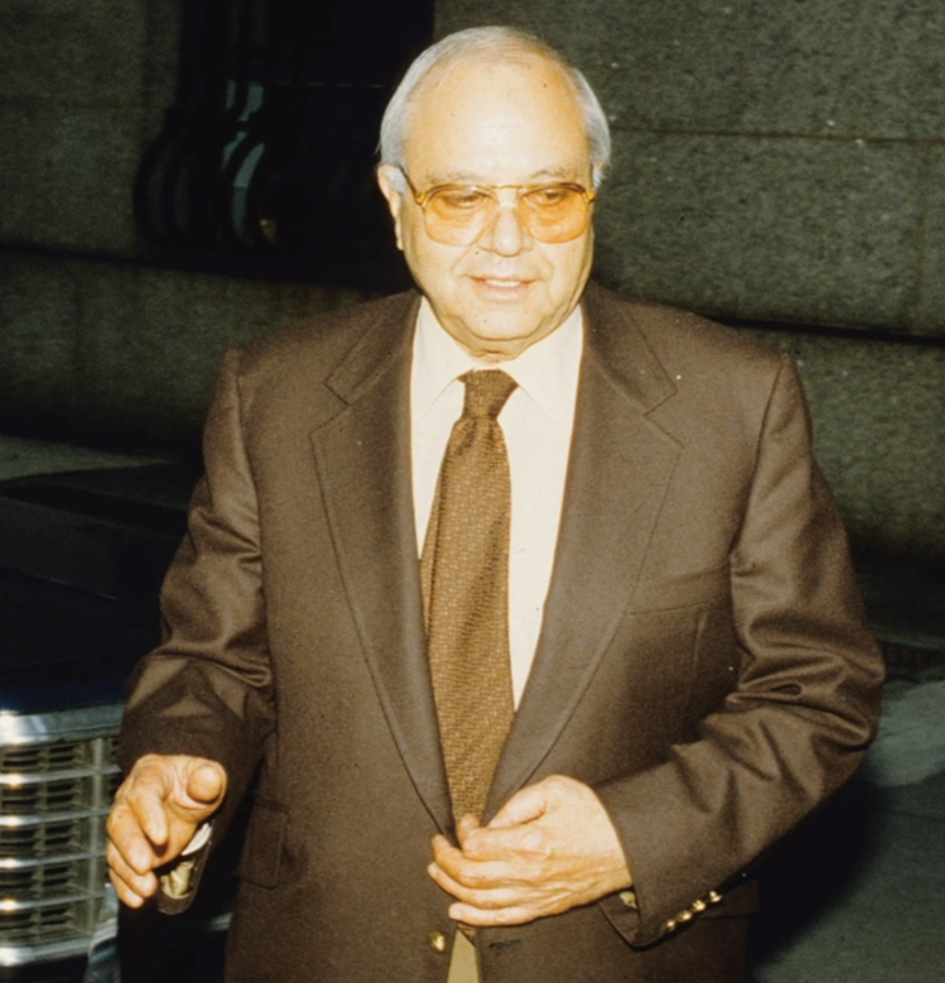
The podcast is receiving attention for exposing the Mafia’s inner workings. It joins other podcasts, including one by former Gambino family underboss Salvatore “Sammy the Bull” Gravano, in offering candid insights into a sinister world. 

When Pennisi went to prison for the shooting death, he was living in Howard Beach, Queens, near the Aqueduct Racetrack. He left a 2-year-old son at home. Pennisi spent 17 years in a federal penitentiary. He was 37 when he got out. These days, he works in construction management. He is the single father of two daughters and a son. One daughter is 25, the other is 10. His son is 32.

After being paroled, Pennisi eventually became a made member of the Lucchese crime family, which is one of New York’s longstanding Five Families, all of which are still active to some extent today.    

The induction ceremony to become a made man was serious. The men in the room locked arms, promising allegiance to one another and the borgata (family). As a Lucchese made member, Pennisi was involved in bookmaking, extortion and more. The real money was in loansharking. He operated mostly in Queens and Staten Island.

Pennisi said he doesn’t know how much money he made during this period. He was not a big earner. Much of the money he made went back on the streets in high-interest-rate loans. The 6-foot-1 Pennisi said he never had to rough anyone up to get paid back. Being a made member of the Lucchese crime family inspired fear on its own.

Pennisi also worked a legitimate job in construction. The legitimate job kept him off law enforcement’s radar. Staying out of his crime family’s crosshairs was another matter. Pennisi said he began picking up clues over time that others in the borgata were falsely accusing him of being a rat.

He believed he was targeted for death. In 2017, he become a government witness, testifying in court against his former criminal colleagues.

Ranking the Five Families

Pennisi discusses these events and more in the podcast and on his blog, Sitdown News. He also has a YouTube channel, Sitdownnews.

An example of the topics he discusses occurred on the April 19 podcast, when La Vecchia asked him to rank the Five Families based on which are the most powerful.

Pennisi ranked the Genovese family as the most powerful in New York. That family, which he calls “the West Side,” maintains its power in part by staying out of the limelight, Pennisi said. “They just do it right.” he said. The family also provides layers of insulation to keep members protected. For instance, they don’t introduce new members to other borgatas, he said.

Pennisi placed his own former crime family, the Luccheses, third in power behind the second-place Gambinos. Fourth in power is the Bonanno family. The Colombos, a small crime family sometimes divided by internal strife, are at “the bottom of the food chain,” he said. 

By going public with inside knowledge of the Mob and its inner workings, Pennisi has received criticism. Veteran organized crime journalist Jerry Capeci reported last fall on his Gang Land News website that the U.S. Attorney’s Office and FBI were “furious about the blog by their potential trial witness and have pushed him to take it down.”

In a recent telephone interview with the Mob Museum, Pennisi said no one from law enforcement or the prosecutor’s office has ever directed him to take down the blog or podcast.

Everyone breaks rules

In a New York Post story about Pennisi’s social media efforts, the newspaper referred to him as a rat and said he “isn’t breaking legs, but he’s busting chops.”

Pennisi and marketing professional Tom La Vecchia co-host the podcast. La Vecchia, the MBA of the podcast’s title, and Pennisi often delve into the business side of organized crime. Courtesy of Tom La Vecchia

Over the telephone, Pennisi said he is not bothered by the name-calling. People are “drawn to the negative,” he said.

Pennisi said a story labeling him a Lucchese snitch or rat is more interesting to readers than one with a headline saying something like, “Former Wiseguy Changes Life, Does Good.”

He said people who shine a light on the betrayal and bullying in a supposedly honorable society should be applauded, not mocked. “When a drug addict comes clean, do you want to mock that person?” he asked.

Pennisi said all Mafia members break the rules. “The honorable life does not exist today,” he said.

When society comes up with a name for all these rule breakers in general, Pennisi said, “then I would accept that name.”

The former made man said people worldwide are getting fed up with the Mafia’s strong-arm tactics and bullying behavior. Even in Italy, mass Mafia trials are an example of how the public has had enough, he said. A major trial targeting the powerful ‘Ndrangheta organization is underway this spring in Italy. More than 350 defendants are on trial.

“No one wants to be bullied,” Pennisi said. “That is kind of what the Mob does. It bullies people.”

Pennisi said he is not worried about reprisals from mobsters who might want revenge. The prevalence of security cameras makes that kind of violent conduct difficult, he said.

Ninety percent of the comments he receives about the podcast and blog are positive, Pennisi said. He has helped steer younger people away from the life, people who are the age he was when he went to prison for killing another person.

He even hears from people who say he is an inspiration. “I never got that in the life,” Pennisi said. “I was a criminal.”

Larry Henry is a veteran print and broadcast journalist. He served as press secretary for Nevada Governor Bob Miller, and was political editor at the Las Vegas Sun and managing editor at KFSM-TV, the CBS affiliate in Northwest Arkansas. The Mob in Pop Culture blog appears monthly.

The 10-week-long Commission trial played to full courtrooms

Last of two parts.

The Commission trial continued through November and into December of 1986.  The eight men on trial included New York’s top Mafia bosses and a few of their key underlings. The Manhattan courtroom was always standing room only. Arriving early in order to get a seat was worth the effort – this was the best show in town. 

Defendant Carmine Persico, boss of the Colombo crime family, kept one thing in mind as he represented himself. It would take only one juror not to believe the prosecution’s case – one juror could give all eight defendants their freedom. 

Persico had to play to that “one.” He believed his Oscar-worthy performance would be the difference between life and life behind bars. 


Point for Persico

Government witness Angelo Lonardo lamented that he was innocent of the drug charges of which he had been convicted in Cleveland. He explained that he was found guilty because of lies told by two of his underlings.

Persico pounced – in a subtle way – in full view of the jury. “You said you were innocent of that?” Persico asked.

“I am still innocent,” the 75-year-old answered.

“You found another way to get out of jail, is that right?” Persico asked in a curious way.

“To cooperate with the government, yes,” Lonardo answered without hesitation. 

“You decided to cooperate, and that is how you are going to get out of jail?” Persico asked. “By doing what somebody did to you – testify?”

“That’s right,” he responded. 

Persico smiled and sat down. Defense attorney Anthony Cardinale continued to question Lonardo. His attack was more direct and critical. Cardinale stated, to the jury’s benefit, that Lonardo had lied under oath – more than once – at previous trials. “Sir, perjury is no stranger to you, Angelo Lonardo, is it?”

“Right now,” Lonardo answered, “I’m telling the truth.” 

Cardinale knew he had successfully chipped at Lonardo’s credibility. He continued as he asked, “You felt that you were going to die if you were left to stay in jail?”

“Yes,” Lonardo said. 

Cardinale pressed further, asking if Lonardo would “testify against your own brother?”

Lonardo gave it a quick thought before answering. “I believe I would, yes.”


It’s hard being a Mafia don

In another taped conversation played for the jury, Anthony “Fat Tony” Salerno complained to Anthony “Tony Ducks” Corallo about a lack of appreciation and respect among the rank-and-file mobsters.

“I know you’ll retire, I know you’ll retire,” Corallo sympathized.

“Listen, Tony,” Salerno said, “If it wasn’t for me, there wouldn’t be no Mob left. I made all the guys. And everybody’s a good guy. This guy don’t realize that? I worked myself. Jeez, how could a man be like that, huh?”

Salerno told Corallo how one of his underlings disrespected him by directly calling him “Fat To

“No, I know the way he talks,” Corallo agreed. Corallo’s solution? “Shoot him. Get rid of them, shoot them, kill them. It’s disgusting.”

He finished by stating, “Here’s to your health.”


‘Went on a stick-up’

A key witness was Joseph Cantalupo. He was a former Colombo crime family member who identified Persico as the head of the family. Persico had his cross-examination questions ready. 

When asked how he knew Persico, Cantalupo explained that he had met him at a Brooklyn realty company in the 1960s. The realty company, he had explained earlier, was a front for illegal activities for the Colombo family. 

“And I came there to speak to Joe Colombo?” Persico asked.

“Yes,” Cantalupo said.

“Do you know what I spoke to him about?” Persico asked.

“No,” Cantalupo said. 

“Describe for these people my relationship to you,” Persico said. 

“Our relationship was only to say hello, shake hands, goodbye, nothing formal,” Cantalupo said.

Persico asked him if they ever “went on a stick-up” together or did “anything illegal” together. Cantalupo had a one-word answer: “No.”

“So, everything that you spoke here in this courtroom about me was knowledge you picked up from other people?” Persico asked.

“Correct,” Cantalupo acknowledged.

Persico contended that Cantalupo, as a paid informant, had used law enforcement agencies to get even with people. It was brought to light that while Cantalupo was a paid informant, he continued to commit robberies and other crimes.


You were my family

Persico next questioned Fred DeChristopher, one of the most damaging witnesses against him.  The two men were related by marriage. DeChristopher was married to Persico’s cousin.  DeChristopher acknowledged that while he had allowed Persico to use his Long Island home as a hideout, he was secretly working with a federal agent to get a $50,000 reward.

“You helped me when I came to your house?” Persico asked him with pure sarcasm.

“I did,” DeChristopher said. 

Laughter filled the courtroom. That bothered DeChristopher. He asked in a huff, “Wouldn’t you like to see me down the sewer altogether?”

“I don’t think the judge would permit me to answer that question,” Persico answered. The courtroom again filled with laughter. 

“I know, I know what your answer would be,” DeChristopher snapped. 

“I wish I could tell you,” Persico responded as a smile played across his face. More laughter in the courtroom. 

Persico faced DeChristopher. “You were my family.”

DeChristopher barked, “Are you finished?”

“No, I’m not finished,” Persico replied. “I got a lot more to go.”

To emphasize the character of the witness, DeChristopher was asked if he had secretly informed on his wife’s brother – wasn’t he just recently married to her?

“That’s true, that’s true,” he responded. “I was just Joe Citizen calling the FBI with information, yes, sir.”

Shortly after Persico’s arrest in 1985, DeChristopher left home without telling his new wife. He never returned. He did, however, buy a nice home with the $50,000 reward money.


No direct evidence?

Wearing a sharp charcoal gray suit, Persico presented his 90-minute summation. “At the beginning of the case, I told you I’m not a lawyer, and I guess you found that was true,” Persico said with a smile.

As he leaned casually on the lectern in front of the jury box, he compared the trial to a “bus tour through tinsel town.” “They had no direct evidence,” he asserted.

“They want to win – they’ll do anything to win,” he said, pointing to the prosecutors. He mocked the prosecution for presenting pictures of a farm his family owned in upstate New York. He ridiculed them for the seemingly endless display of enlarged surveillance photographs they had presented. The charts of the Mafia that the prosecution had provided? Persico thought they were ridiculous. 

“They brought in pictures of half of New York State,” Persico remarked, laughing. The jury also laughed. 

“Without Fred DeChristopher, Carmine Persico wouldn’t be in this case, wouldn’t be in this courtroom,” Persico contended, referring to a key prosecution witness against him.

He said there was no evidence against him; he wasn’t even on any of the tape recordings. He spoke directly to the jury as he asserted that he had stayed away from all criminal activity. It was his “reputation” that made him a target of a government witch hunt. 

“Ladies and gentlemen, I can’t say I never did anything wrong, because you know I was in jail,” he said. But how could he possibly be sent back to prison when there was no evidence against him? 

“Our faith,” he concluded as he looked at each of the jury members, “is in the jury.”

In his summation, Cardinale argued that the Commission did not operate a “club” to extort payoffs from concrete companies. “It is a ‘club’ of contractors, not of Commission members. The Commission had nothing to do with the concrete payments.”

He contested the claim by the prosecution that Salerno was the Genovese crime family boss.  The tapes of Salerno, he said, did not contain “any threats or any pressure.”

“That, ladies and gentlemen, is not extortion,” he emphasized. He stressed that the concrete companies had “gladly paid” to gain an “advantage in the industry.”

Attorney Dawson contended that the prosecution had presented “guesses, speculations and assumptions” but no solid evidence. 

“This case falls at the slightest touch,” Dawson claimed. The taped conversations the jury had listened to? Why, they were just “internal politics and bickering about members belonging to families.”

Case goes to the jury

With closing arguments completed on Friday, November 14, 1986, Judge Owen spoke to the jury. He spent close to three hours as he explained that the racketeering charges included conspiracy and related charges. He also made it clear that simply being a member of the Mafia was not sufficient reason for a conviction.

Federal Judge Richard Owen handed down harsh penalties to the defendants – 40 to 100 years each. Courtesy of Harvard Law Bulletin

The jury deliberated over the weekend. On Monday the 17th, Persico received some bad news when the ruling from the federal appeals court in his other trial came in. Persico, his son Alphonse, and six others were found guilty of being leaders of the Colombo family. For that alone, Persico received a 39-year sentence.

The jury’s verdict came down on Wednesday, November 19, 1986. After 85 witnesses and 150 tape recordings, jurors delivered a crippling blow to the defendants, finding all eight guilty of racketeering, conspiracy and operating a Commission that ruled the Mafia throughout the United States.

Persico’s mission to convince one juror to reject the prosecution’s case proved unsuccessful.

Regarding the three Mafia bosses, the jury found Anthony “Fat Tony” Salerno, Carmine “Junior” Persico and Anthony “Tony Ducks” Corallo guilty of all 22 counts.

“We’ve been steamrolled,” Cardinale responded.

Sentencing was set for January 13, 1987. Each man was facing a minimum of 40 years in prison.


Sentences handed down

The crowded courtroom murmured in shock as Judge Richard Owen doled out the sentences to the eight defendants. He explained that he was not only sentencing the men, but “overall crime.”

Salvatore Santoro, underboss of the Lucchese crime family, told the judge during sentencing, “Give me my 100 years and we’ll get it over with.”
  • Anthony “Fat Tony” Salerno. The judge stated that Salerno had “essentially spent a lifetime terrorizing the community for your financial advantage.” Sentence: 100 years.
  • Carmine “Junior” Persico. For his role as an “upper member” of the Mafia echelon “that lives, succeeds on murder and violence,” Owen sentenced him to 100 years.
  • Anthony “Tony Ducks” Corallo was sentenced to 100 years.
  • Gennaro “Jerry Lang” Langella was sentenced to 100 years.
  • Salvatore Santoro was next for sentencing. Facing the judge, Santoro said, “You’re in the driver’s seat, your honor.” Judge Owen stated he was just doing his job. Santoro responded with full sarcasm, “And you’re doing a good job” before adding, “Give me my 100 years and we’ll get it over with.” That’s exactly what he got.
  • Christopher “Christie Tick” Furnari Sr. was sentenced to 100 years.
  • Ralph “Little Ralphie” Scopo was sentenced to 100 years.
  • Anthony “Bruno” Indelicato was sentenced to 40 years for the murders of Carmine Galante and his two bodyguards.

Judge Owen, who described the defendants as ruthless racketeers, explained that they would be eligible for parole after 10 years under federal law. But he recommended that parole be denied for all of them. 

“This case was prejudiced from the first day,” Persico complained. He contended they were found guilty because of “this Mafia mania that was flying around.”

The 10-week Commission trial – Mafia mania or not – was the first of many crushing blows against the Mafia and its vise-like hold on unions across the country.

A well-known quote states, “A man who is his own lawyer has a fool for his client.” Was Carmine Persico a fool for representing himself? Who knows, but it sure was an interesting “bus trip through tinsel town.”

Marcy Knight is a freelance writer based in Florida.