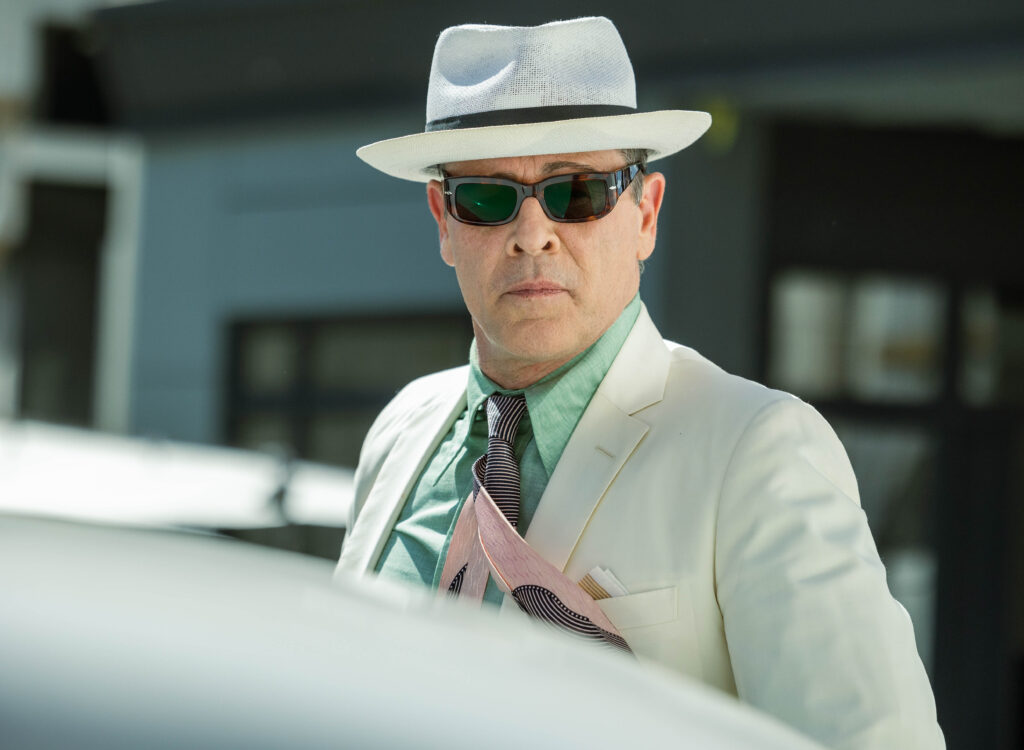

Sicilian mafioso Tommaso Buscetta broke the sacred oath of omertà 40 years ago

In April 1988, mafioso-turned-informant Tommaso Buscetta testified before the U.S. Senate’s Permanent Subcommittee on Investigations, which was investigating the state of organized crime in America, 25 years after Joe Valachi gave the first public testimony against the Mafia. Buscetta offered testimony about cooperation between the American Mob and the Sicilian Mafia:

“My name is Tommaso Buscetta. I am a member of the Mafia, or Cosa Nostra, in Sicily, known within the Cosa Nostra as a man of honor. Since 1948, I have been part of this organization both in Sicily and later as a favored and protected guest in the United States. I have known, among others, Salvatore, or ‘Lucky’ Luciano, Carlo and Paolo Gambino, Paul Castellano and Joe Bonanno. I have spent many years in prison for my activities as a mafioso.”

Also known as Don Masino, Buscetta rose to international infamy in the mid-1980s as the first prominent Italian Mafia leader to shatter the sacred code of omertà and reveal the hidden workings of Sicily’s clandestine society. His pivotal choice began a decade-long disclosure of the Mafia’s secrets, starting in 1984. His information was instrumental in dismantling some of the most formidable crime organizations in Italy and across the globe.

The early years

Born on April 13, 1928, in Palermo, Sicily, Buscetta’s early life was steeped in the shadows of a burgeoning Mafia influence. As he matured amid the tumult of postwar Europe, he formally aligned himself with Cosa Nostra, joining the Porta Nuova clan. His criminal endeavors began with minor offenses such as cigarette smuggling and extortion, but as the years progressed, his activities escalated into more serious and dangerous crimes.

The 1960s ushered in the infamous “First Mafia War” in Sicily, ignited by a “lost” shipment of drugs that sparked a violent rift. The conflict divided Palermo’s Mafia into two factions: East and West. Buscetta found himself aligned with the western side, yet he would later disclose that the drug incident was merely a distraction. The real motivations behind the conflict were power struggles and the treachery of clans feeling overshadowed by more dominant and affluent groups.
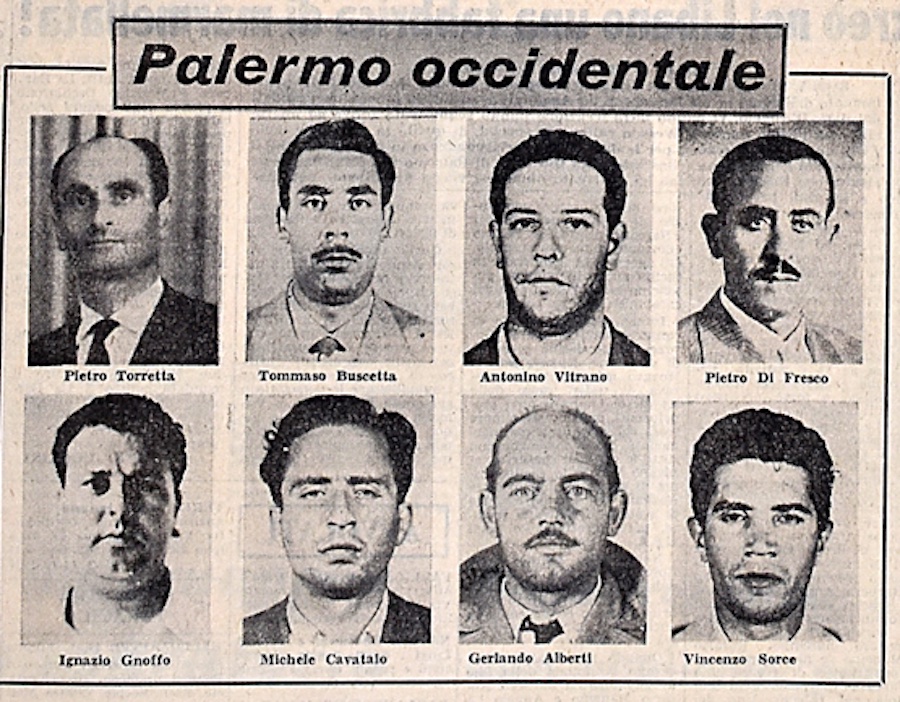
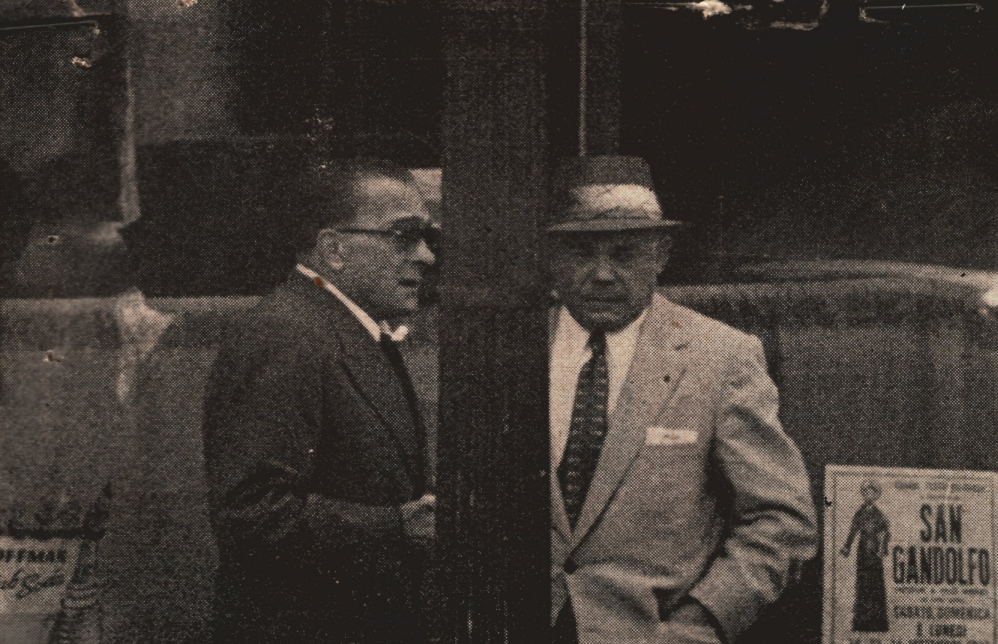
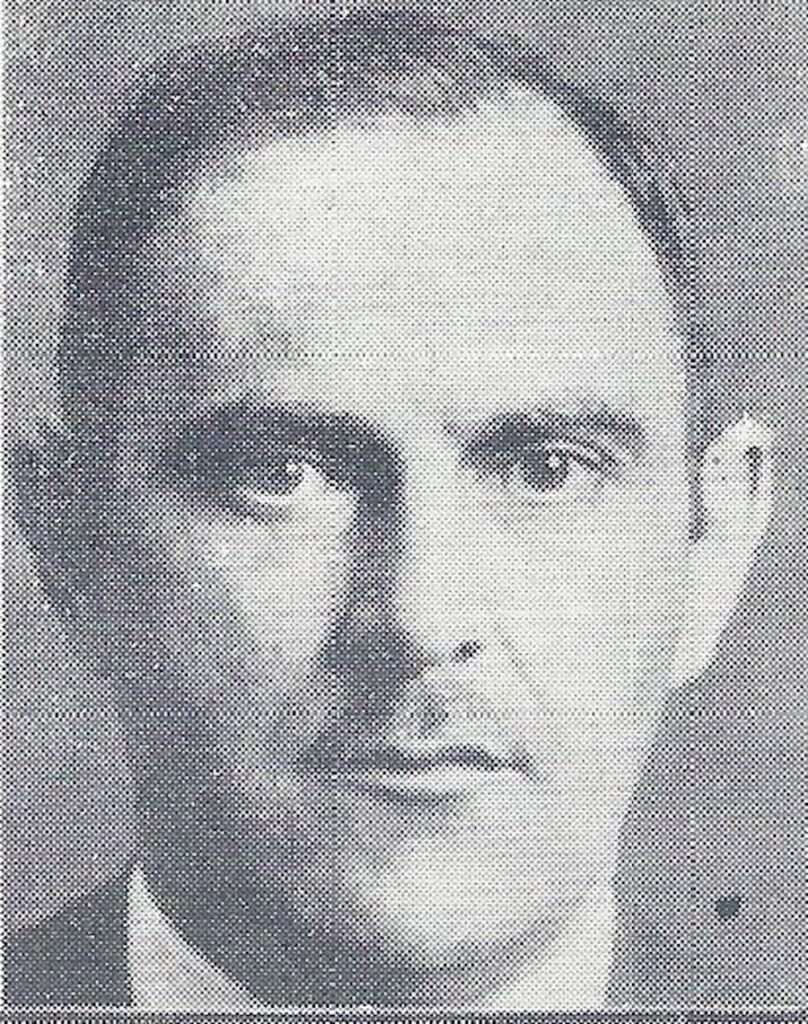
The Sicilian publication L’Ora regularly featured investigative reports on the Mafia. In 1963 amid what would become known as the “First Mafia War,” the newspaper showcased a collection of notorious figures from Palermo’s rival Mafia factions, including Tommaso Buscetta. L’Ora

Repentance, sort of

As tensions brewed and arrest became imminent in Sicily, Buscetta embarked on journeys to the Americas throughout the 1970s. He forged alliances in Venezuela, Mexico, Brazil, Canada and the United States, earning him the title “The Boss of Two Worlds.” Meanwhile, Sicily was bracing for another wave of violence. The so-called “Second Mafia War” concerned control of the heroin trade, led by the ruthless Corleonesi faction and Salvatore “Toto” Riina. The rivalry between Riina and Buscetta would become legendary, with Buscetta enduring devastating personal losses along the way.
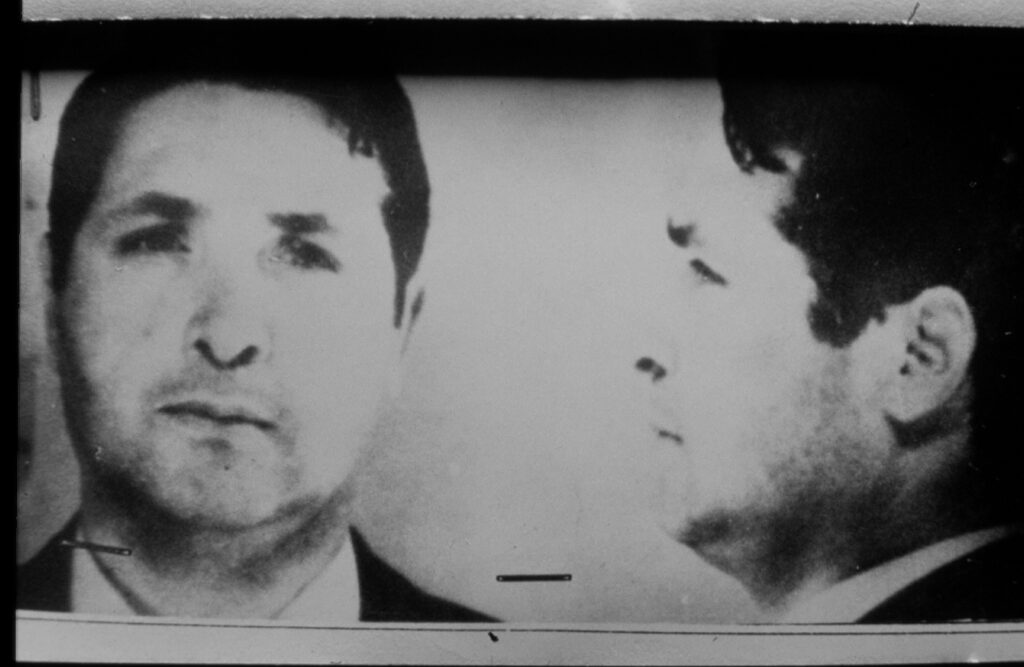
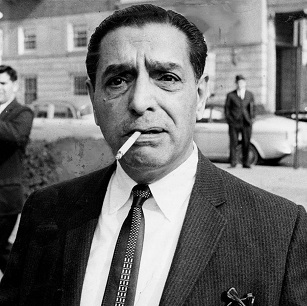
Salvatore “Toto” Riina, pictured in mugshots around 1969, led the Corleonesi Mafia faction with unprecedented violence in its efforts to gain and hold power. Courtesy of Cipollini Collection

Buscetta’s jet-setting came to an end in 1983 when Brazilian authorities arrested and jailed him. He was also wanted in Italy and the United States, but the former was granted extradition first. Buscetta attempted, and failed, to commit suicide by strychnine in July 1984.

Once in Italy, he was met by anti-Mafia magistrate Giovanni Falcone. Though reticent at first, Buscetta had plenty of reasons to consider turning “pentito,” an Italian word meaning “repentant” that became synonymous with informant when he flipped. Many of his family members had been murdered in the Mafia wars, including two of his sons. He steadfastly believed in the version of Cosa Nostra he grew up in but despised what the organization had become. For this reason, he would say, the decision to talk became justified. Soon, he and Falcone became close allies. Thereafter, the United States took Buscetta into the Witness Protection Program. Over the next 10 years, Buscetta testified in trials and before government committees in both nations.

Pizza Connection and the Maxi Trials

The 1980s and early 1990s saw Buscetta give damning testimony during the Maxi Trials in Palermo. Of the 475 indicted mafiosi, 338 were convicted thanks to his and other pentito witnesses’ testimonies. The Mafia’s civil war over heroin dominance was responsible for much of the violence plaguing Sicily and prompted the massive crackdown.

Riina’s allies sought control over the incredibly lucrative drug supplies, which were largely smuggled into North America, leading to the Pizza Connection. This landmark event not only unveiled the pervasive influence of the Sicilian Mafia in America but exposed the intricate web of drug trafficking linking Italy to the United States.

Between 1979 and 1984, Sicilian and American mafiosi smuggled at least $1 billion worth of heroin and cocaine (about $4 billion today) into the United States. The Pizza Connection trial, which took place from 1985 to 1987, focused on the use of pizzerias as fronts for drug distribution, heroin in particular. The case began when undercover DEA agents infiltrated the Sicilian faction operating in Philadelphia. During the extensive investigations leading to the trial, law enforcement officials uncovered a shocking level of coordination and collaboration between various Mafia crime families from the Northeast and Midwest. Gaetano Badalamenti, the former head of Sicily’s Mafia Commission, was charged with overseeing this operation, but the case revealed far more than just one man’s misdeeds. The investigation unveiled an entire ecosystem of crime supported by corruption and fear.

In November 1985, Buscetta made his debut in the Pizza Connection trial in New York City with testimony that reinforced the prosecution’s case. Contrary to popular belief, Buscetta was not the key figure or the key witness in Palermo’s Maxi Trial. The Pizza Connection case had already been solid, and its primary defendant, Gaetano Badalamenti, was a close friend of Buscetta’s. Then-State’s Attorney Rudy Giuliani made clear in a press conference that Buscetta only had a “supporting” role in the trial.

Former DEA agent Frank Panessa not only infiltrated the Mob and broke the Pizza Connection case but got to know Buscetta quite well. In a conversation with Panessa, he said Buscetta was a likable guy, albeit a cold-blooded killer. He was an incredibly important figure in taking down organized crime both in the U.S. and abroad but served a different role in the Pizza Connection case. “Buscetta was not part of the Pizza Connection case, but Badalamenti was,” Panessa explained. “See, Badalamenti was the mastermind behind it, and Buscetta worked for him.”
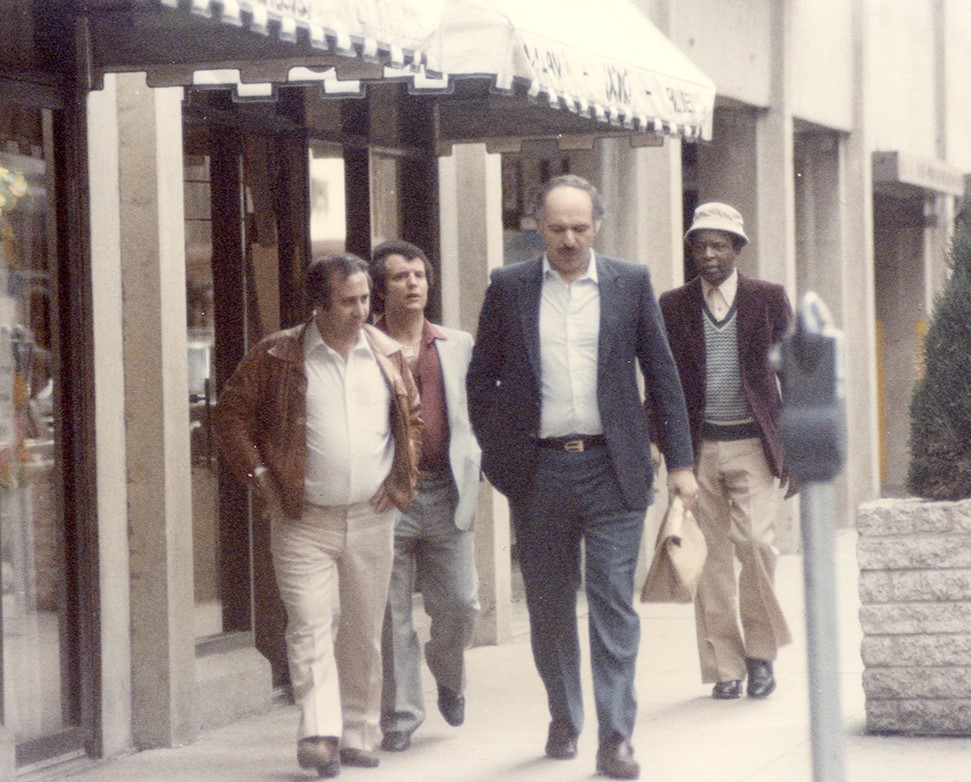
DEA Agent Frank Panessa, who went undercover as “Frankie Pagano” to investigate the Pizza Connection, carries a brown paper bag with $85,000 inside. On his right are two Sicilian mafiosi, Alberto Ficalora and Paolo La Porta, who were buying heroin from him — and digging their own holes. The Mob Museum Collection

It’s worth noting that Buscetta often tried to minimize his own direct involvement in the heroin trade, but his own words betrayed him at times. He also had a verifiable list of close friends and business associates immersed in the drug game.

Panessa commented on Buscetta’s dismissiveness about drugs. “We had many conversations, and he was proud of what he was able to do,” he recalled. “To me, he admitted to distribution. He and Badalamenti.”

Besides a long friendship with Badalamenti, Buscetta carried on a tight friendship with another Sicilian transplant, whom he met in 1963. Giuseppe Catania Ponsiglione, a self-described haberdasher based in Mexico City, was the premier Mafia broker in Latin American drug trafficking during the French Connection and through the Medellín Cartel’s heyday. Catania often traveled with Buscetta, introduced him to connections, and even helped facilitate Buscetta’s first plastic surgery procedure.
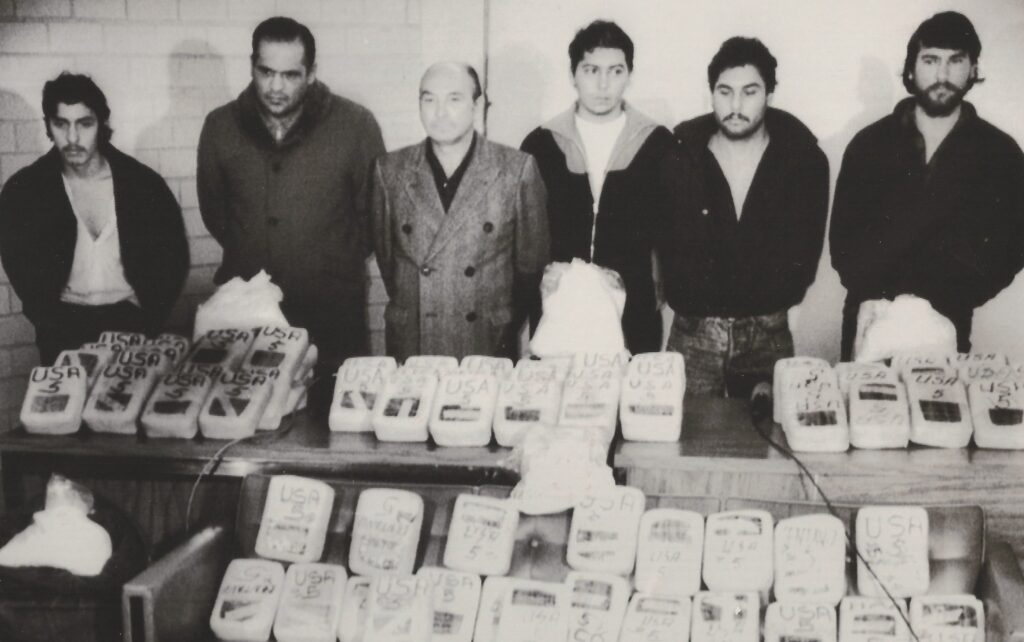
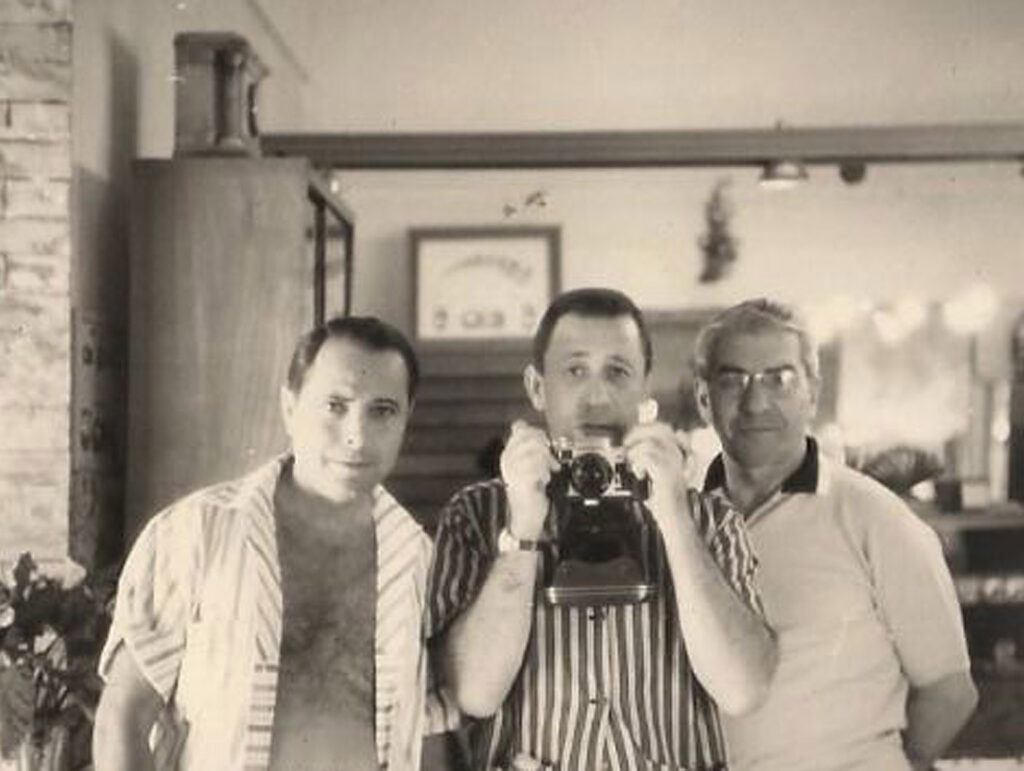
Giuseppe Catania Ponsiglione, third from left, was a narcotics middleman and a long-time friend of Buscetta. Pictured here in 1989, he poses with Mexican and Colombian co-conspirators following a large-scale cocaine bust in Ciudad Juarez, Mexico. Courtesy of Cipollini Collection

The ultimate revelation

Panessa recalled Buscetta offering a vague yet foreboding statement: “Be careful.”

“Well, why? Do you have word that the Sicilians are going to do me?” Panessa replied.

“No, no, no. Just be careful.”

Later, Panessa figured out why the warning was so cryptic. “He didn’t want to tell me that the people that I’m dealing with are bought. They’re owned by the Sicilian Mafia.”

The Washington Post summed it up in a 1993 article: “Whenever Italian investigators moved to the subject of Italian politics — to the crucial question of whether the Sicilian Mafia survived and flourished because of high-level protection in Rome — Buscetta clammed up. Politics was just too dangerous to discuss, he insisted again and again.”

What changed? The final straw was the murders of two anti-Mafia crusaders in 1992. Giovanni Falcone and Paolo Borsellino were killed in car bombings in May 1992 and July 1992, respectively. Buscetta, under the protection of the United States, received visiting Italian investigators and offered them a crucial missing piece of the broader puzzle: the political ties.

“The tragic murders of Falcone and Borsellino have deeply struck me,” Buscetta said. “After painful reflection, this has made me review my previous attitude.”
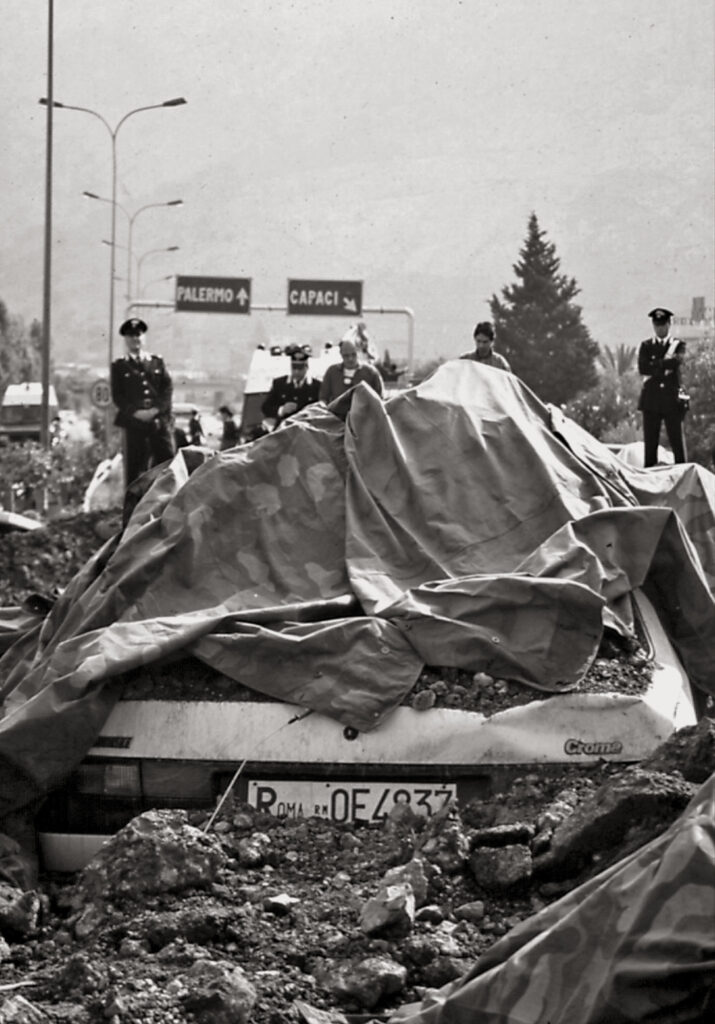
(DOUBLE RATES APPLY) Carabinieri guarding the stretch of the motorway destroyed by the Mafia bomb attack which claimed the lives of Italian prosecuting magistrate Giovanni Falcone, his wife Francesca Morvillo and police officers Vito Schifani, Rocco Dicillo and Antonio Montinaro. Capaci, 23rd May 1992. (Photo by Enzo Brai/Mondadori via Getty Images)

At the tail end of Italy’s Maxi Trials and the subsequent trials of former Prime Minister Giulio Andreotti, Buscetta’s entrance shed additional light on how the Mafia used corruption to manipulate Italian political processes. He illustrated a systemic issue that compromised law enforcement and governance in Italy. His testimony also helped shift public perception regarding the Mafia’s influence on Italy’s sociopolitical fabric. Or so it seemed.

Andreotti managed to get two acquittals in his 1990s trials. Buscetta was quite outspoken in his discontent with what he viewed as an overall failure on the government’s part. “I do not see any interest by the state. There is no final aim anymore.” He then returned to living in Florida with his third wife and children in the Witness Protection Program.

Riina, Buscetta’s archenemy, had been a fugitive since 1969 and was captured in January 1993. He received 26 life sentences in total and died in prison in 2017.

Tomasso Buscetta succumbed to cancer in 2000. He is buried under an assumed name.

Christian Cipollini is an organized crime historian and the award-winning author and creator of the comic book series LUCKY, based on the true story of Charles “Lucky” Luciano.
The world’s top 5 cybercrime schemes

Last year a ransomware gang took control of the networks of two major casino corporations in Las Vegas. Caesars Entertainment reportedly paid the $15 million ransom, while MGM Resorts did not, resulting in losses of $100 million while it worked to regain control.

The September 2023 cyberattack was not an isolated incident. According to a 2023 report, there were 3,205 data compromises in the United States, affecting more than 350 million people. In today’s digital world, anyone with a connected device can become a victim of cybercrime.

While extortion via ransomware is the most prevalent form of cybercrime, other types of crime have moved online, too. Bank heists, drug empires and human trafficking are all elements found in the internet underworld. The scale of these crimes ranges from single-person operations to state-sponsored cybergangs.

Here we explore criminals who fit the organized crime bill, motivated at least in part by financial gain. Not included are people, such as infamous hacker Kevin Mitnick, who commit cybercrimes just to see if they can. Neither are the so-called “hacktivists,” such as Anonymous, who create digital disruptions to further a cause. Instead, criminals on this list have racketeered in ways straight out of the Mob’s playbook.

5. Joseph Popp and the first ransomware

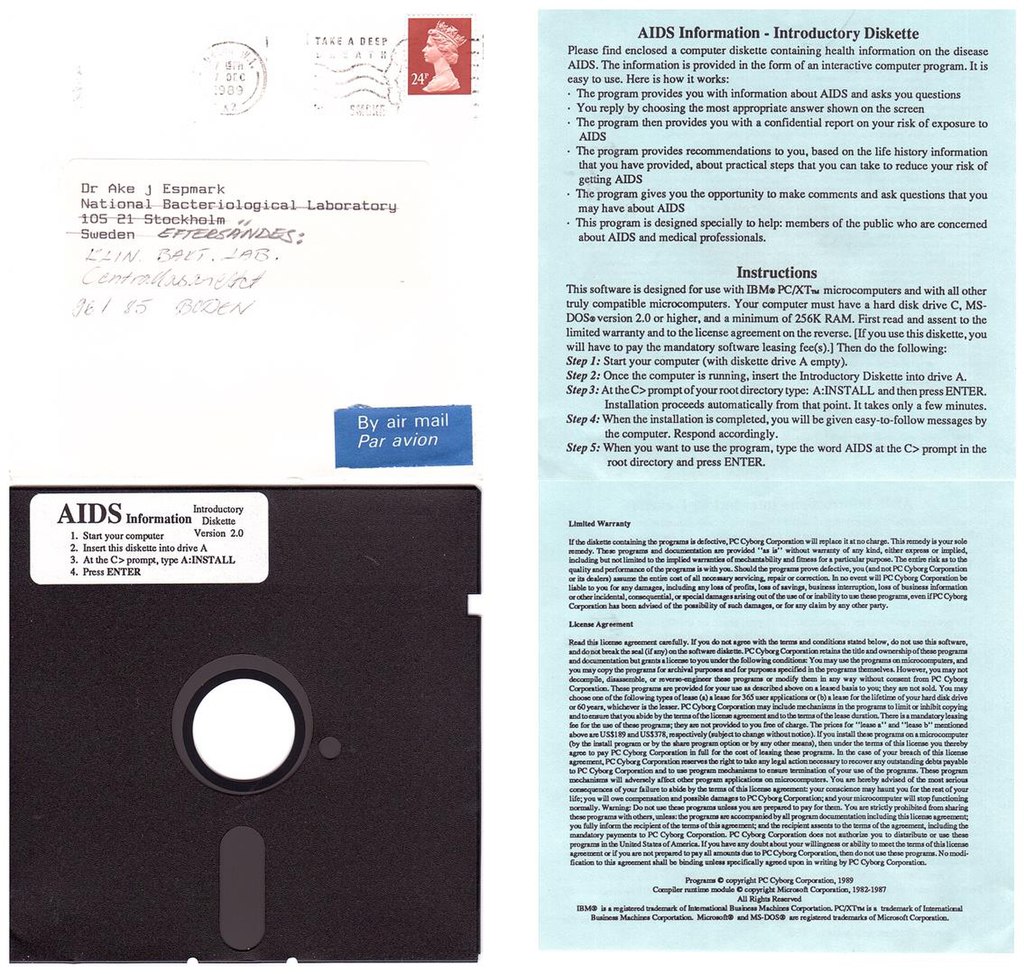
In 1989, the world’s first ransomware arrived in European mailboxes in the form of a floppy disk. The AIDS Trojan prevented users from accessing their files unless they mailed $189 to a P.O. Box in Panama. Ollie Gustavsson

With every new technology comes new ways to commit crime. Malware, short for malicious software, has been around since Intel made the first microprocessor widely available to consumers in 1971. While most were nuisances with hidden messages or mild annoyances, the late 1980s saw an increase in destructive malware. In 1989, a new kind of malware emerged: ransomware.

Ransomware typically comes in the form of a Trojan horse, a type of malware disguised as legitimate software. Like viruses, Trojans cannot automatically infect a computer. A human must interact with them to function, such as clicking a link, downloading a file or inserting a USB drive or its precursor, a floppy disk.

In December 1989, thousands of Europeans received a floppy disk in the mail, labeled “AIDS Information Introductory Diskette Version 2.0.” The recipients were either tech magazine subscribers or attendees of the 4th International Conference on AIDS in Stockholm, Sweden. Those who installed the software found a simple questionnaire that assessed the user’s risk of contracting HIV. Underwhelmed, users closed the program and forgot about it – until 90 startups later.

Upon the 90th time booting up the PC, a new message appeared: “It is time to pay for your software lease from PC Cyborg Corporation. Complete the INVOICE and attach payment for the lease option of your choice.” The message concluded with instructions to send $189 to a P.O. box in Panama. It’s not uncommon for software to ask for money to keep using it, but this one prevented users from accessing the rest of their files.

Eddy Willems, a systems analyst for an insurance company at the time, was one of the victims who received a disk — now framed in his living room. He quickly figured out how the program worked and reversed the encryption, but others weren’t so savvy. In a panic, some victims wiped their hard drives, which got rid of the malware — and their data, too. Around the same time that Willems was sharing his solution, the January 1990 issue of Virus Bulletin, an international newsletter, offered free disks with programs to remove the AIDS Trojan and recover encrypted files.

Law enforcement traced the Panamanian P.O. box to a Harvard-educated anthropologist and World Health Organization consultant named Joseph Popp. Popp had returned to the United States after an apparent nervous breakdown at a Nairobi AIDS seminar upon learning that his AIDS Trojan was making international news. On February 1, 1990, the FBI arrested Popp at his parents’ home in Willowick, Ohio, and he was extradited to the U.K. to face blackmail charges.

British courts ruled Popp “was mentally unfit to stand trial” and sent him back to the United States. Scotland Yard officials reported he had been “wearing hair curlers in his beard and a box around his waist” that he believed “could detect radiation.” Popp’s increasing paranoia also led him to believe that Panamanian dictator Manuel Noriega was trying to kill him. An Italian court sentenced him in absentia to two and a half years in prison, but the U.S. declined to extradite him.

Popp acted alone, but his ransomware scheme inspired a trend in organized crime that is still thriving today.

4. Silk Road and “Dread Pirate Roberts”

A screenshot of Silk Road, taken in 2013 by a cybersecurity researcher. While many kinds of illicit goods were sold on Silk Road, drugs were the main products available. Anthony Minaar
A screenshot of Silk Road taken in 2013 by a cybersecurity researcher. While many kinds of illicit goods were sold on Silk Road, drugs were the main products available.  Anthony Minaar

In 2010, struggling entrepreneur Ross Ulbricht began working on a side business, a website where “people could buy anything anonymously, with no trail whatsoever that could lead back to them,” according to his digital journal entries. Drugs were part of his business model from the beginning. Ulbricht grew psychedelic mushrooms to sell on his new marketplace, which he called Silk Road.

On June 1, 2011, an article on the gossip blog Gawker thrust Silk Road into the spotlight. This was a pivotal moment for the dark web marketplace, both in terms of growth and notoriety. After the article was released, New York Senator Chuck Schumer called for law enforcement to shut down Silk Road.

Silk Road was only accessible through Tor, an anonymous web browser that prioritizes privacy above all else. Originally conceived by the U.S. Navy, “the onion routing” browser adds enough layers of encryption to mask a user’s web traffic and is a prerequisite for accessing the dark web. Silk Road added another layer of anonymity by having Bitcoin as the only method of payment.

Ulbricht enjoyed anonymity as the owner of Silk Road, known to the public only by his handle, “Dread Pirate Roberts.” Perhaps by using that name, an inherited title from the film and novel The Princess Bride, Ulbricht believed he had plausible deniability. During an extended interview with Forbes journalist Andy Greenberg in July 2013, Ulbricht, under his pseudonym, claimed he was not the first administrator of Silk Road nor the first to use that name. Ulbricht boasted he was confident his security measures prevented law enforcement from closing in on him. He was wrong.

Undercover federal agents had already breached Ulbricht’s operation, posing as drug dealers and impersonating a Silk Road moderator whose account had been seized. He had also revealed his identity when using his personal email address to recruit staff on a Bitcoin forum.

On October 1, 2013, Ulbricht was sitting at a table in a San Francisco library when he received an urgent message from the seized moderator account. After logging into Silk Road, a nearby couple began fighting. As he turned to look, a woman snatched his laptop while a man grabbed him. What Ulbricht didn’t know was that everyone around him, including the bickering couple, were federal agents. They had to catch him by surprise, with his laptop open, to get past his computer’s encryption. Federal law enforcement soon took over Silk Road, replacing it with the now familiar notice, “THIS HIDDEN SITE HAS BEEN SEIZED.”

Ulbricht was convicted on seven counts related to operating Silk Road. His “Dread Pirate Roberts” defense did not convince the jury. In May 2015, he received two life sentences plus 40 years without the possibility of parole. A group of his supporters, who run the website freeross.org, argued that his sentence was excessive for nonviolent charges (a murder-for-hire charge was dropped after his sentencing). In May 2024, then-former President Donald Trump pledged to commute Ulbricht’s sentence if re-elected.

3. The Lazarus Group

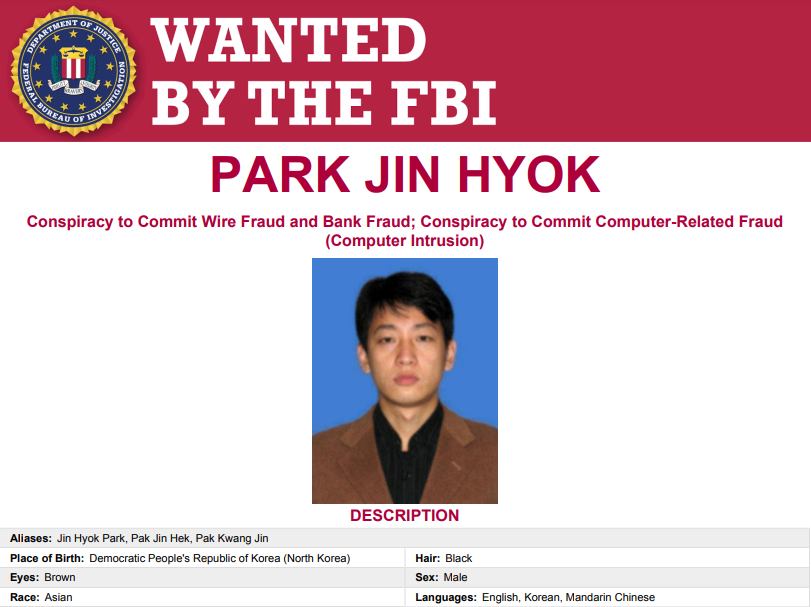
Park Jin Hyuk is a North Korean hacker suspected of being involved in attacks attributed to the Lazarus Group. North Korea claims he doesn’t exist. Federal Bureau of Investigation

On November 14, 2014, employees at Sony Pictures logged into their company’s network to find doctored images of the severed heads of two Sony executives and gunshot sounds coming from their speakers. The shocking images were accompanied by a strange message and a threat: “If you don’t obey us, we’ll release data shown below to the world. Determine what will you do till November the 24th.” The executives depicted received a similar warning a few days earlier.

At the same time, malware began erasing data across Sony’s network and making systems inoperable. Sony had to take its network offline, which would take weeks to repair, but there was worse to come. The hackers publicly released the personal information, private emails and internal copies of movies and scripts to the internet, devastating Sony’s reputation, morale and profits. Who could have been motivated enough to carry out such a destructive cyberattack against an entertainment company?

The casus belli for the hackers was The Interview, a 2014 comedy film by Sony Pictures. The political satire stars James Franco and Seth Rogen as a reporter and his producer tasked by the CIA to assassinate North Korean leader Kim Jong Un. After the trailer was released in June 2014, the North Korean government decried the movie as an “act of war.” Sony responded by toning down the film’s violence but otherwise cautiously allowed the movie to proceed. Rogen, also a director of the movie, was unmoved by the threats, writing on Twitter: “People don’t usually wanna kill me for one of my movies until after they’ve paid 12 bucks for it.” After the cyberattack, however, Sony canceled the film’s release before allowing a very limited theatrical release — major theater chains opted not to show the film for fear of violence — alongside a digital release on streaming platforms.

On December 19, 2014, the FBI formally blamed North Korea for the cyberattack. Analysis of the malware revealed similarities to other attacks by North Korean threat actors, including the 2013 cyberattacks on South Korean media companies and banks. Although they called themselves the “Guardians of Peace” in the Sony Pictures attack, the cybersecurity community labeled them the “Lazarus Group” for their ability to vanish and reappear with a new identity in each attack.

The Lazarus Group has an extensive rap sheet beyond the Sony Pictures cyberattack. In February 2016, the state-sponsored hackers attempted to steal nearly $1 billion from the Bangladesh Bank via its New York Federal Reserve account. While authorities stopped or intercepted most of the transfers, the Lazarus Group got away with $81 million, making it one of the largest bank heists in the world. They are also suspected of engineering the WannaCry ransomware attack in 2017, which infected more than 300,000 computers worldwide.

This year, a United Nations report on North Korean cyberattacks between 2017 and 2023 put the amount of money stolen at $3 billion, with a quarter of that in 2023 alone. The plunder funds North Korea’s technology and military programs, including nuclear weapons.

2. Pig-butchering rings

A scam labor camp in Myanmar can be seen just across the Thailand border along the Moei River. Trafficked workers are forced in these camps to deceive people online into giving them money in “pig butchering” scams. Google Maps
A scam labor camp in Myawaddy, Myanmar, can be seen just across the Thailand border along the Moei River. Trafficked workers are forced to deceive people online into giving them money in “pig butchering” scams. Google Maps

In August 2024, Heartland Tri-State Bank CEO Shan Hanes was sentenced to more than 24 years in federal prison for embezzling $47 million from the bank, which failed as a result. The stolen money, which included funds from a local church and his daughter’s college savings, went to a cryptocurrency wallet that belonged to someone he had been communicating with since 2023 on What’s App, a popular instant messaging service. This person, whose identity is still unknown, convinced Hanes to send bigger and bigger investments for a cryptocurrency scheme that would never pay out.

The scam is called “pig butchering.” It begins with a contact through a dating app, social media or even a wrong-number text message. The scammer builds trust with flattering comments, attractive “selfies” and meetup proposals. The conversation inevitably turns to how much success they’ve found investing in cryptocurrency. If the target doesn’t have a cryptocurrency wallet, their “new friend” helps them set it up on a legitimate cryptocurrency exchange.

The scammer continues the ruse for weeks, even months, “fattening up” their victim until it’s time for the “slaughter.” They instruct the target to send money to a crypto wallet or download a fake crypto app, starting off with small amounts but gradually ramping up to life savings-draining investments. The fake apps show the victims having successful returns on their investments, and even allow the victims to withdraw money. But once the scammers have received as much money as they can get from the victim, they cut and run.

When the Covid-19 pandemic shut down international tourism, Chinese organized crime groups turned to pig butchering as a new source of income to make up for the lack of gambling tourists. However, there’s something even more sinister happening behind the scenes.

The person on the other side of the messaging app is often a victim as well. CNN reported last December about an Indian man who moved to Thailand for a promising IT job, but when he got there, his new employers smuggled him into Myanmar and confiscated his passport. They trained him to be a scammer, forced to coerce targets by posing as a blond woman. If he didn’t cooperate, he would be jailed, beaten, tortured or worse.

KK Park, a facility in Myawaddy, Myanmar, is one of the compounds engaged in modern slavery. While the trafficked workers are forced to scam, their families are ransomed for their loved ones’ freedom. Unproductive workers are sold to other compounds and their ransoms increased. In a 2024 report, the United Nations estimated that at least 300,000 people are held against their will at labor camps in Cambodia, Laos and Myanmar. Political leaders in these countries are passive, at best, in combating these compounds. In Cambodia, law enforcement may help people who escape but otherwise allow the labor camps to continue operating.

1. ALPHV/BlackCat

Last year, a cyberattack forced MGM Resorts to shut down its systems, which made some slot machines inoperable and prevented online reservations. Marvin Clemons/Las Vegas Review-Journal
Last year a cyberattack forced MGM Resorts to shut down its systems, which made some slot machines inoperable and prevented online reservations. Marvin Clemons/Las Vegas Review-Journal

For this last entry, we return to last year’s cyberattack in Las Vegas. In August 2023, MGM’s IT help desk received a call from an employee who needed a new password. MGM staff only had to provide their name, employee ID number and date of birth for a password reset. However, the caller was not the actual employee — they used information publicly available on LinkedIn to impersonate them. By the time the real employee reported the password reset notification to MGM security, the hackers had already gained access.

MGM tried to mitigate the damage by shutting down its systems, which conspicuously disrupted slot machines and prevented reservations. However, the ransomware was already in place, stealing their data and locking them out. Around the same time, Caesars Entertainment was going through a similar ordeal.

The attacks that crippled two of Las Vegas’ largest resort corporations only took a 10-minute phone call. Manipulating people into performing an action or divulging information, called social engineering, is one of the most effective skills in the hacker’s toolkit. Aspiring cybercriminals no longer need to have coding skills for a successful infiltration.

Two groups are attributed to this cyberattack: ALPHV/BlackCat and Scattered Spider. The world of extortion-related cybercrime has a business model: ransomware as a service (RaaS). Ransomware operators, such as ALPHV/BlackCat, create the extortion software and offer it through subscription models or affiliate programs. According to cybersecurity company CrowdStrike, the operators also create payment portals for victims to pay ransoms, offer tech support and help with ransom negotiations. Scattered Spider, an affiliate, carried out the attack using ALPHV/BlackCat’s software, which features an icon of a black cat.

In December 2023, the Justice Department announced it had disrupted ALPHV/BlackCat’s operation, taking over its website with the familiar notice, “THIS WEBSITE HAS BEEN SEIZED.” The takedown screen was replaced hours later with “THIS WEBSITE HAS BEEN UNSEIZED” after the criminals apparently recovered their website. The FBI, however, had retrieved decryption keys that helped more than 500 organizations regain their data, saving them a collective $68 million in ransom payouts.

Last March, the seizure announcement again appeared on ALPHV/BlackCat’s website. But law enforcement claimed to have had nothing to do with the alleged takedown. Furthermore, evidence that the seizure announcement was a fake was found in the website’s source code. Cybersecurity experts reported this was an exit scam, a way to cash out without having to pay what they owed to their affiliates.

The fight against cybercrime is often a game of whack-a-mole. A new ransomware platform, Cicada3301, emerged in June 2024 that some cybersecurity experts have noted is very similar to ALPHV/BlackCat. Although it could be that ALPHV/BlackCat sold its code to a new group, it also wouldn’t be the first time the hackers have reappeared under a different name. The FBI has linked the group as a successor to DarkSide, a ransomware operator responsible for the 2021 Colonial Pipeline attack that cause gasoline shortages in the South.

While the hackers behind ALPHV/BlackCat disappeared into the shadows, members of Scattered Spider were not so lucky. Several arrests were made this year of individuals allegedly connected to the group, including an unnamed 17-year-old teen in the United Kingdom. One of the suspected members, Noah Michael Urban, a 19-year-old whose online identity is “King Bob,” was arrested in Florida and linked with stealing more than $800,000 in cryptocurrency scams.

Author explores ties between mobsters and U.S. presidents

On a hot summer day in the early 1980s, Eric Dezenhall, then in his 20s and working in President Ronald Reagan’s White House communications office, mentioned to a person on the team that he was from Cherry Hill, New Jersey.

“Isn’t that Mafia?” she asked, regarding the city’s reputation.

This led to a general conversation about the Mob, a discussion that stayed with the now 62-year-old author and crisis management executive as he pursued a “lifelong endeavor” examining organized crime’s connections to U.S. presidents.

Dezenhall’s interest in these connections has resulted in a well-researched book to be released January 14, Wiseguys and the White House: Gangsters, Presidents and the Deals They Made. The book is coming out only days before a new president is sworn in at the Capitol in Washington, D.C.

Eric Dezenhall, author of Wiseguys and the White House, worked at the White House communications office under Ronald Reagan. It was there he found the inspiration to research the intersection between the criminal underworld and the commander-in-chief. Dezenhall Resources
Eric Dezenhall, author of Wiseguys and the White House, worked at the White House communications office under Ronald Reagan. It was there he found the inspiration to research the intersection between the criminal underworld and the commander in chief. Dezenhall Resources

Mafia alliances

An author whose published works include fiction and nonfiction, Dezenhall, in his newest book, explores how White House occupants sometimes joined forces with underworld operatives. Some of these alliances were for personal political advancement. Others were for then-secret government objectives, including unsuccessful efforts during the Kennedy administration in the early 1960s to assassinate Cuban leader Fidel Castro with the Mob’s help.

The Kennedy episode is just one example. Years earlier, during World War II, the White House struck a deal with New York mobsters Meyer Lansky and Charles “Lucky” Luciano to protect the waterfront from wartime sabotage.

Other presidents, whether in office or not, had similar dealings with the Mafia or their associates. Harry Truman’s connection to Kansas City racketeers and political kingmaker Tom Pendergast is examined in detail in Wiseguys and the White House, as is the association that Dezenhall’s former employer, Reagan, an actor and Screen Actors Guild president, once had with syndicate-connected Hollywood insiders.

Ranking system        

In the book, Dezenhall offers his own numerical grading scale to evaluate how closely presidents worked with mobsters. The scale goes from No. 1 (“Tangential Mob links at best”) to No. 5 (“Wouldn’t have been president without Mob”).

For instance, Dezenhall gives Franklin D. Roosevelt a No. 2 ranking (“Mob links are not very impactful”) for his administration’s efforts during the first half of the 1940s to guard against Nazi incursions at U.S. ports.

“FDR authorized wartime measures under conditions of great peril,” Dezenhall writes. “He was likely aware of Mob involvement in one intelligence aspect of national defense in World War II, but it was a risk worth taking.”

Missouri’s Truman is viewed more unfavorably, given the worst rating, a No. 5.

“Few believe he greatly benefited in the material sense, but he saw dealing with racket-connected people as a necessary evil and advanced accordingly,” Dezenhall writes.

In an email, Dezenhall elaborated on Truman’s low score.

“Harry Truman would not have been president without the Mob,” Dezenhall said. “We know that Truman came out of the political machine in Kansas City, but many historians gloss over that this was an out-and-out Costa Nostra-controlled enterprise, and brazenly so. There is no evidence that Truman ever took a dime from the Mob, but he owed his career to them and helped them out along the way, both on his rise and as president.”

Truman was surprisingly candid about his involvement with the underworld, Dezenhall said. “So, the president who ended World War II with the atom bomb owed his career to the Mafia,” he said. “That’s a lot to get your head around.”

Wiseguys and the White House examines the relationships, or in some cases the lack thereof, that presidents had with organized crime. Presidents rank from being tangentially linked to owing their presidency to the Mob.

That long-ago conversation on the White House South Lawn, starting with a discussion about Dezenhall’s hometown, led to his extensive research over the years into mobsters and U.S. public officials at the highest level. In an email, Dezenhall reflected on this decades-long obsession.

“I’ve been cooking this one for 40 years, ever since I told one of my bosses in the White House where I grew up,” he said.

Recalling that conversation, Denzenhall noted that his hometown in New Jersey had been in the news a lot “because the Philly-South Jersey Mob war was raging and the Pizza Connection heroin racket was headquartered down the street.”

“You couldn’t grow up where I did and not have a relative, neighbor or family friend involved with gangsters,” he said. “We were standing 20 feet from the Oval Office and my colleagues were talking about how the Mob ran the country. I was in my early 20s, but I thought they were out of their minds and became obsessed by the gap that separates pop culture fantasy from day-to-day reality.”

Who’s being naïve?’

While researching the book, Dezenhall learned that high-ranking mobsters were concerned that national politicians would take advantage of them.

Over time, it has been reported that the mobsters who worked to get John F. Kennedy elected felt betrayed when the administration, led by his brother, Attorney General Robert Kennedy, launched an anti-Mob crusade. Others from the underworld suspected their loyalty would result in betrayal.

“Meyer Lansky in particular expected to get knifed in the back, and even the Chicago Outfit guys who helped with labor in the 1960 election were wary about the project,” Dezenhall said. “The politicians usually got the better end of the deal, as Meyer predicted.”

Mobsters such as Meyer Lansky harbored no illusions about the politicians they allegedly supported. According to Dezenhall, Lansky expected betrayal from the political elites. Library of Congress

Dezenhall, who had access to Lansky’s private records, diaries and correspondence, said, “The way Meyer spoke and wrote was not the rhetoric of a man who was pulling all the strings; rather, it was of a man besieged.”

The only mobsters who believed they controlled things “were the small-timers who needed to justify their way of life,” Dezenhall said.

“The top guys knew it was a dog’s life,” he said. “You can get away with more if you’re making the laws than if you’re breaking them. I think about how Kay told Michael Corleone in The Godfather that he was naïve to believe that presidents and senators have men killed. Michael responded, ‘Who’s being naïve, Kay?’ The Mob has long been a gear in the engine of presidential politics, sometimes by design, other times by opportunity.”

According to Dezenhall, there’s a lot to learn from these alliances. 

“The big lesson  — and a Machiavellian one — is that the players who knew the power of appearances and hypocrisy fared better than the ones who dismissed it,” Dezenhall said. “Nixon’s law-and-order crusade, not to mention very real prosecutions of organized crime, drowned out how he benefited from gangsters. Reagan’s career was sponsored by Lew Wasserman, who built MCA on the back of the Mob, but with his sunny disposition combined with select prosecutions, the Mob lurking beneath the surface of Reagan’s career didn’t register in the heartland despite relentless reporting by my friend (journalist and author) Dan Moldea.”

President Ronald Reagan, right, used his charismatic demeanor to ward off suspicions of organized crime connections. However, Reagan’s rise as president of the Screen Actors Guild was boosted by his agent Lew Wasserman, left, who helped him navigate a Mob-infested Hollywood. The Ronald Reagan President Library
President Ronald Reagan, right, used his charismatic demeanor to ward off suspicions of organized crime connections. However, Reagan’s rise as president of the Screen Actors Guild was boosted by Lew Wasserman, left, who helped him navigate a Mob-infested Hollywood. The Ronald Reagan Presidential Library

Dezenhall’s newest book also marks a career turning point. On January 1, he is retiring from his Washington, D.C.-based crisis management firm to write full time. The firm, Dezenhall Resources, will remain in operation but will be run by a “new generation,” he said. Dezenhall will be available at the firm as needed, but his main focus will be on book-writing.

“I’ve been noodling on a humorous book about what it was like to employ hundreds of human beings over the years,” he said. “It wasn’t funny at the time, but looking back over 40 years, I don’t know how I got anything done while dealing with the lunacy of personnel problems. Come to think of it, I could have used some help from the Mob to keep people in line, but I’m way too straight.”

Larry Henry is a veteran print and broadcast journalist. He served as press secretary for Nevada Governor Bob Miller and was political editor at the Las Vegas Sun and managing editor at KFSM-TV, the CBS affiliate in Northwest Arkansas. Today, he is a senior reporter for Gambling.com.

Charles Luciano survived ‘gang ride’ 95 years ago

With unseasonably warm weather for a mid-October evening, Officer Henry A. Blanke dropped the convertible top of his Ford patrol car and set out from Staten Island’s Tottenville Station. He likely expected a quiet cruise down Hylan Boulevard. Blanke’s shift, however, would be anything but uneventful as the twilight hours commenced.

During the hazy purgatory between darkness and daylight, the young cop happened upon an unusual scene. A staggering silhouette appeared on a sparsely populated stretch of road near Huguenot Beach. As Blanke drove closer, he could see a disheveled figure stumbling in the beach terrain.

The officer pulled up to the individual, a battered and confused man covering much of his face with a bloodstained handkerchief.  Blanke quickly scanned the immediate area for any signs of an auto accident, but there was nothing but sand and brush.

“What happened?” Blanke asked.

“I was taken for a ride,” the wounded man muttered.

Blanke discovered the mysterious man about 6 a.m. on October 17, 1929. The victim, in a bewildered state, had not identified himself yet. He asked if he was in New Jersey and presented the cop with a deal: “Get me a cab and I’ll give ya fifty bucks.” Dismissing the overture, Blanke counteroffered, “What you need is an ambulance.”

A rescue vehicle arrived and rushed the bleeding man to Richmond Memorial Hospital, where medical staff worked to stitch up and bandage the lacerations on his back, cheek, chin, neck and wrists. Detective Gustave Schley of Tottenville Station questioned the patient, who revealed himself to be “Charles Lucania.”

The detective asked him who would have committed such an assault. Lucania was largely evasive. However, he did divulge that after receiving a call from a woman to meet with him, he stood at the corner of 50th Street and 6th Avenue in Manhattan when a sedan full of assailants kidnapped him at gunpoint. The abductors put adhesive tape over his mouth and bound him. Then they threw him to the car’s floor and repeatedly beat and stabbed him. He claimed to have kicked out one of the car windows, which got him pummeled into unconsciousness. Beyond describing a few additional details, Lucania offered nothing of substance, except that he had no idea why it happened but would “take care of it himself.”

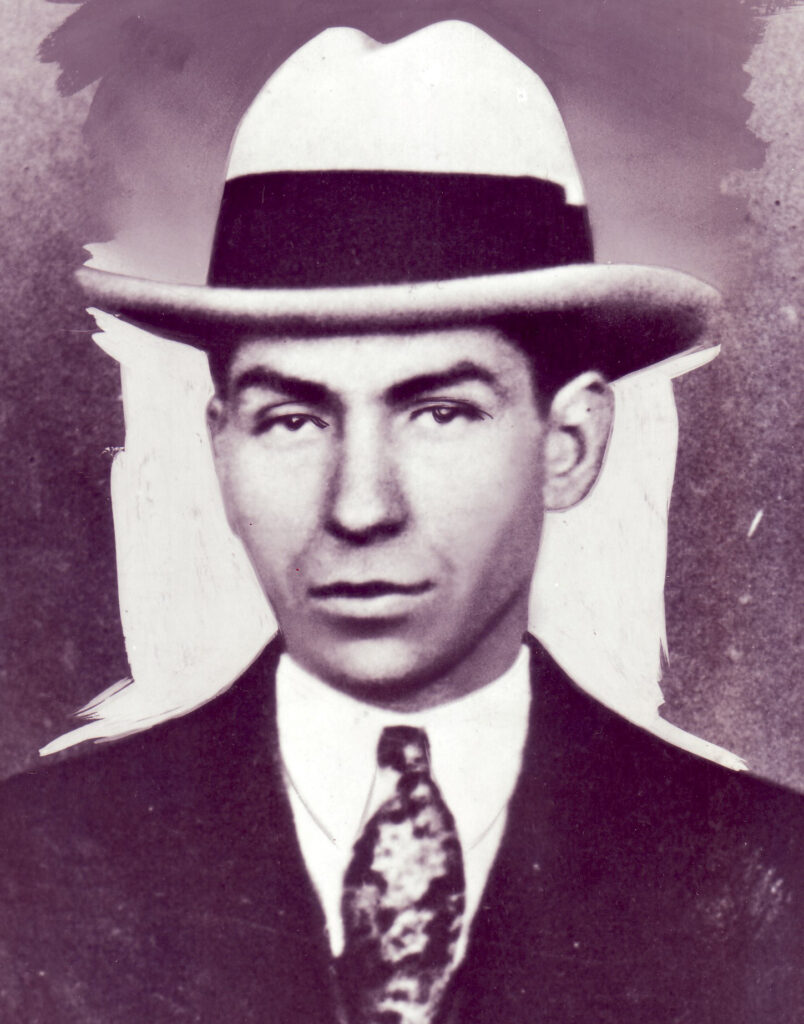
This mugshot from a 1926 arrest reveals Luciano’s appearance before his face-altering “ride.” Cipollini Collection

Schley ruled out robbery, because Lucania’s valuables were all intact: a gold watch, necklace and $300 tucked inside a hidden pocket sewn inside silk underwear. The patient withdrew $50 from the secret pocket. “Here’s fifty bucks,” he offered the attending doctor, “for getting your shirt all splattered with my blood.”

Detective Schley took the bandaged stranger back to the station and called Detective Thomas Tunney of Manhattan. Tunney, familiar with the 33-year-old Lucania’s reputation and history, told Schley about the suspect’s five previous arrests, a nickname (“Lucky”) and known associates, including notable gangland figures Jack “Legs” Diamond and Thomas “Fatty” Walsh (shot dead in Miami that March). Police had recently questioned Lucania about a double homicide in the Hotsy-Totsy Club speakeasy on Broadway, for which Diamond was charged, but he claimed to know nothing about it.

Considering the new information, Schley booked “Lucky” on the pretense of “protecting” him from further underworld harm. Police summarily placed him into a lineup, took his mugshot and booked him on a felony charge of automobile theft. Bail was set at $25,000.

Lucky walked out of jail, but not without the remnants of his ordeal. Though he had returned, barely, from an intended one-way trip, he was left with a drooping right eye and scarring down his cheek, neck and across the chin. The healed wounds gave him a more “sinister” appearance.

But another alteration would be of his own making. At his October 29 court appearance, Lucky, upon being addressed as “Mr. Lucania” by the presiding judge, stated he no longer went by the name because he’d grown tired of people mispronouncing it. He now wanted to be known as Charles “Luciano.”

The press latched onto the story, and versions of the “gangland ride” spread across newspapers throughout the country with cleverly penned headlines. The incident forever seared the “Lucky” moniker into underworld history, but not without an abundance of mistaken folklore and foggy conjecture to follow. Although most articles were accurate in reporting that Lucky was an established nickname (visibly written in a tattoo he acquired at age 13), all it took was one or two incorrect or misleading lines of text to kickstart the idea that he’d earned the label “Lucky” on October 17, 1929.

Over the following decades, misreporting and incorrect historical accounts created a monstrosity of the original events, which were recorded in books, magazine articles, movies and  documentaries long after 1929.

The young cop who found Luciano in 1929 gave an interview to reporter Josephine Cortes in 1962. He recalled returning to the scene after taking Luciano to the hospital that day. He told the reporter he found the impressions of both male and female shoeprints in the sand, along with wire and adhesive tape. He said the police had a list of underworld suspects, many of whom ended up dead, including one “encased in cement.” He also mentioned a rumor that circulated: Luciano was friendly with a cop’s daughter at the time and allegedly had been scheduled to meet her on that fateful night.

Ironically, it was Lucky who maintained the most uniformity, albeit loosely, in telling the tale. From the 1950s through his death in 1962, he began entertaining the questions of curious journalists. During an interview with sports columnist Oscar Fraley in 1960, Luciano dismissed some of the “gangland” elements of his 1929 ride. He admitted the attack was carried out because the aggressors were interested in the whereabouts of Legs Diamond, but they weren’t fellow mobsters.

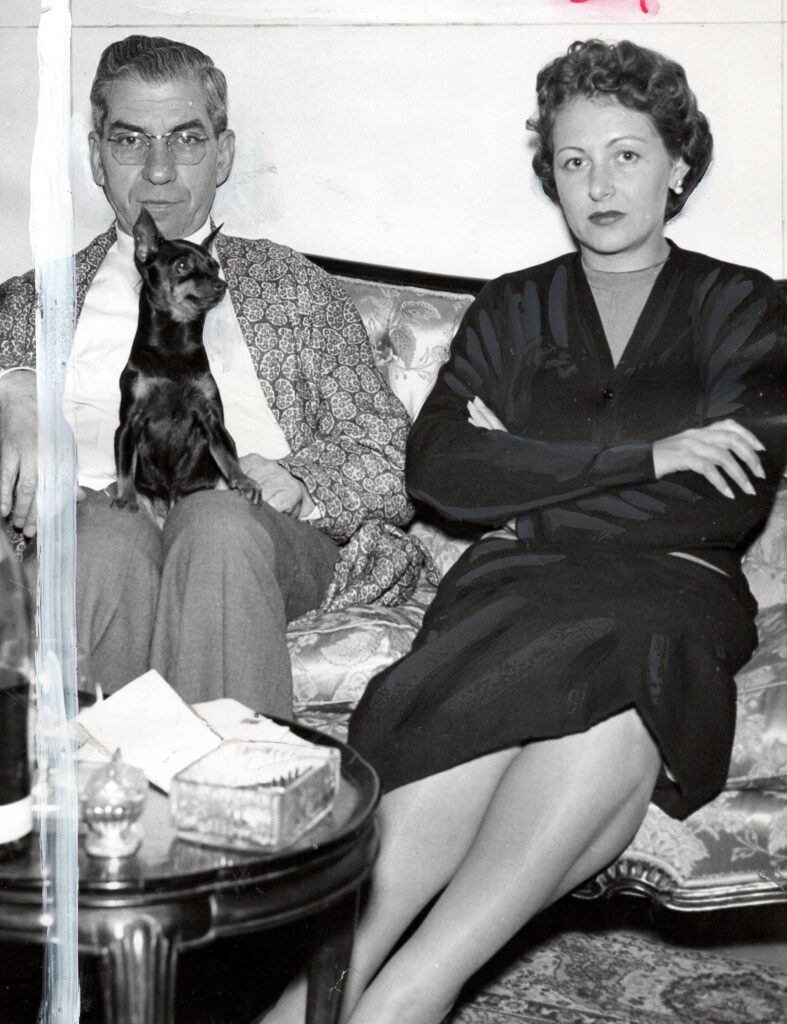
After he was deported, Luciano lived the remainder of his life in Italy. In the 1950s, he began giving interviews to reporters, who took photos that showed the home life of a retired mobster. Here, Luciano poses with his paramour, Igea Lissoni, and his miniature pinscher, Bambi . Cipollini Collection
After he was deported, Luciano lived the remainder of his life in Italy. In the 1950s, he began giving interviews to reporters, who took photos that showed the home life of a retired mobster. Here, Luciano poses with his paramour, Igea Lissoni, and his miniature pinscher, Bambi. Cipollini Collection

“Now I know this is no gang job,” Luciano said. “They don’t put a pistol to your head and make bargains.”

According to Luciano, the kidnappers were cops — racket squad cops to be exact. He admitted to Fraley that shortly after he recovered from the assault, he put out the word that he’d “pay them back.” However, once another carload of men tried to pay him a follow-up visit, Lucky quickly issued a retraction through the grapevine: “I ain’t squealin’ on nobody, and the incident is closed.”

By the 1950s, Luciano had developed a burning desire to tell his life story, particularly in film, and entertained several propositions. Fraley claimed to be writing a script, while other would-be producers, such as Phil Tucker, threw in the towel. The team who won the deal was the duo of Barnett Glassman and Martin Gosch, though no film ever came out of it.

Barnett Glassmen, left, and Martin Gosch, center, pose for a photograph with an aging Luciano. Luciano allowed them to make a film about his life, but it never materialized. Gosch later wrote a biography of Luciano. Cipollini Collection

The infamous “ride” wasn’t the first of Lucky’s forays into police blotters, but it certainly propelled his name into the consciousness of both law enforcement and the public at large. Time magazine named him one of the “100 Persons of the Century” in 1998. As a mobster, he played cards with Al Capone, chess with Bumpy Johnson and helped restructure the underworld landscape with the likes of Meyer Lansky and Frank Costello. As a socialite, he kept company with stunning showgirls and celebrity crooners. As a poster boy for international narcotics traffic (be it real or imagined by his accusers, the jury is still out), he remained a thorn in the side of government entities, domestic and abroad, until the day he died.

On January 26, 1962, Luciano stood waiting at the Capodichino airport in Naples, Italy, for Gosch, who was reportedly interested in doing a book, not a film, on Lucky. But Luciano dropped dead of a heart attack before Gosch arrived.

Luciano’s name has since been correlated or compared to virtually every major icon of the outlaw underworld of the 20th century and into the 21st, from Pablo Escobar to John Gotti to El Chapo. His slightly disfigured face has become an iconic image of organized crime.

When reporter Llewellyn Miller visited Naples in 1952, however, the exiled mobster granted her an interview, during which she quietly observed: “The famous drooping eyelid must have been fixed by a plastic surgeon because both eyes open now to the same extent.”

Christian Cipollini is an organized crime historian and the award-winning author and creator of the comic book series LUCKY, based on the true story of Charles “Lucky” Luciano.

Columbus Day and its ‘Mafia’ origins

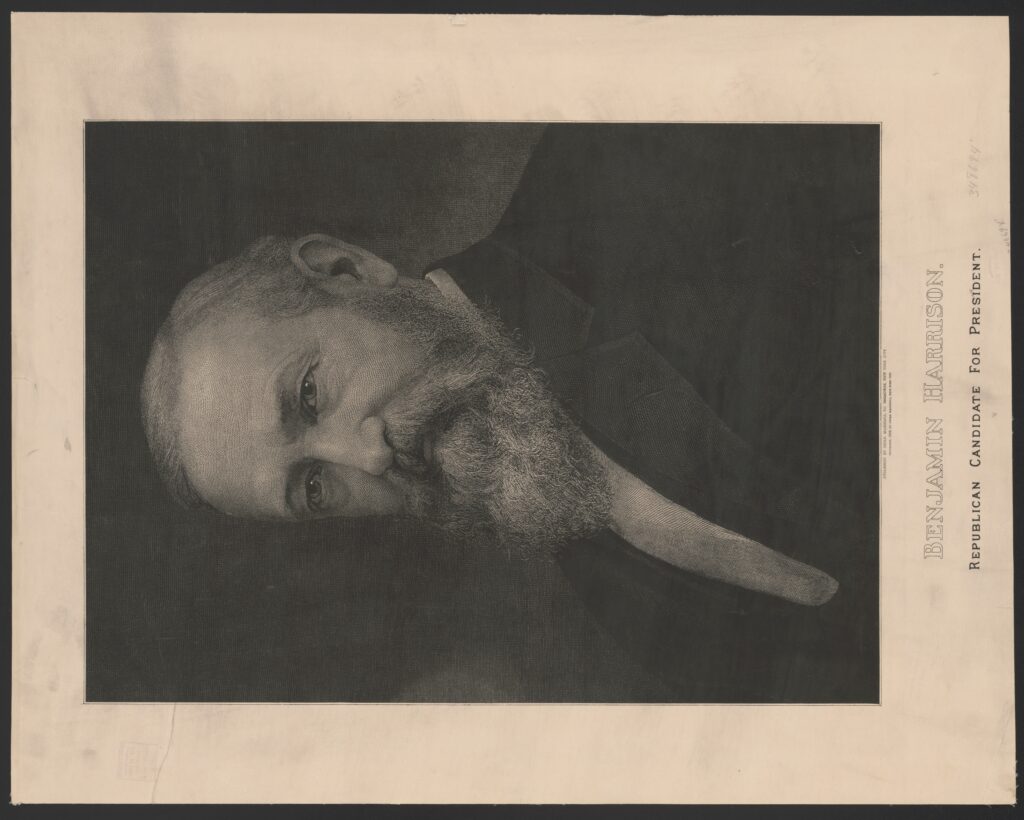
On July 21, 1892, President Benjamin Harrison proclaimed that Friday, October 21st, would be a celebration of the 400th anniversary of Christopher Columbus’ discovery of America. But the quadricentennial celebration had a pragmatic origin: It was an attempt in an election year for Harrison to quell anti-Italian sentiments and present an olive branch to both Italy and the Italian American community. The xenophobic hysteria against Italian immigrants had risen to a climax a year earlier.

A storm in New Orleans

In the late 19th century, New Orleans was a popular destination for Italian immigrants. Since the 1830s, the Crescent City had been a port of call for ships carrying Italian citrus fruits, dubbed “lemon boats.” Immigrants arrived in these trade vessels, too. From the 1880s to the 1910s, 60,000 Sicilians migrated to New Orleans, so many that the French Quarter became known as “Little Palermo.”

Like America’s other urban centers, street gangs of thieves and ruffians were a common element in the New Orleans underworld. The influx of Italian immigrants added another ethnicity into the mix. But fears of a secret society of Sicilian mafiosos began to creep into the minds of New Orleans residents. Some Italian criminals, after fleeing Italy to escape prosecution, arrived in the city and further stoked those fears. One of them was Giuseppe Esposito.

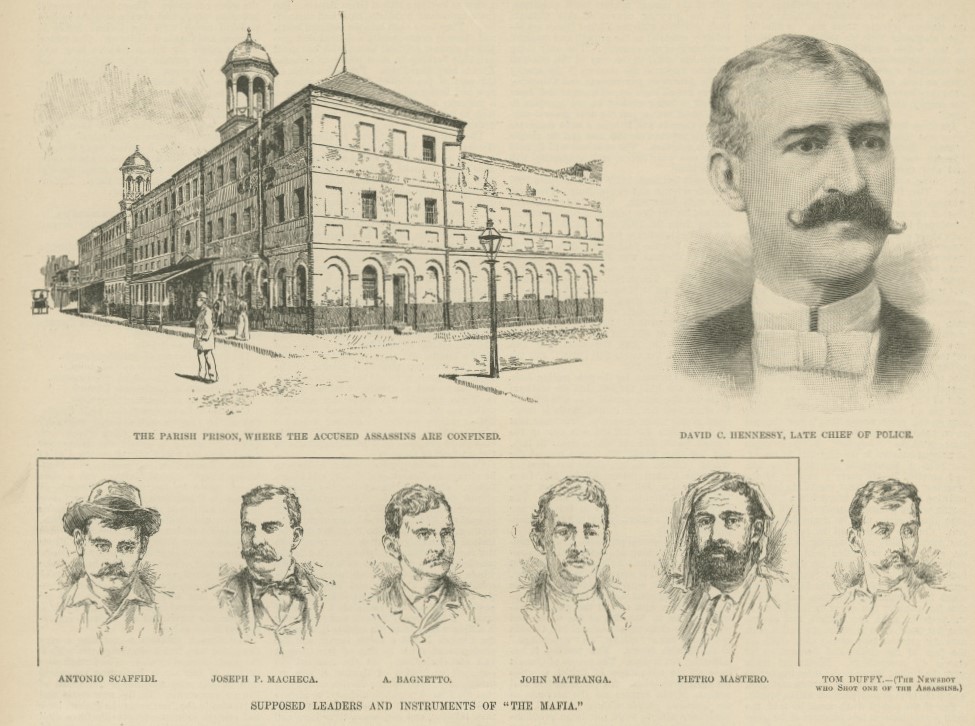
Esposito, a Sicilian kidnapper and extortionist, emigrated after bribing his way out of an Italian jail. Arriving first in New York, he made his way to Little Palermo in New Orleans where he flaunted his outlaw status. Wasting no time, Esposito restarted his kidnapping racket, targeting wealthy Italians in Louisiana. Consequently, his non-furtive presence allowed the Italian government to discover his location in no time. New Orleans Police Detective David Hennessy and his cousin Michael aided two New York detectives in apprehending Esposito, and he was extradited to Italy where he received a life sentence in prison.

This career break for Hennessy was shortlived, however. When he didn’t get a promotion after the Esposito arrest, Hennessy and his cousin Michael shot and killed the chief of detectives, Thomas Devereaux. Claiming self-defense, the Hennessys were acquitted but were fired from the force. Hennessy worked as a private detective until 1888, when the new mayor, Joseph Shakspeare, hired him back, with a promotion to chief of police.

Hennessy became entangled with crime in the Italian community again in May 1890 when a group of dockworkers were shot at and wounded. The victims were members of a stevedore company, the Matrangas. They accused their business rivals, the Provenzanos, of perpetrating the assault. Charles Matranga, leader of the group, started the feud after he edged out the Provenzanos on a ship-unloading contract a few years before. The Matrangas pursued criminal charges against the Provenzanos for the shooting, and six were convicted. Although the word “Mafia” was absent from any court proceedings or law enforcement press releases, the local newspapers used the term frequently.

Hennessy disagreed with the verdict, primarily because of his relationship with the Provenzanos. He had been friendly with the group and allegedly involved in their brothel side business. In the Provenzano trial, Hennessy provided witnesses from the police force to back up the defendants’ alibis. After the guilty verdicts, he pledged to aid in their appeal. It was even rumored that Hennessy would testify himself, but that would never happen.

On October 15, 1890, four days before the retrial, Hennessy was walking home when a group of assassins ambushed him. Wielding sawed-off shotguns, they shot him multiple times before running off. Hennessy died 10 hours later. He only offered one clue as to who did it: “The Dagoes shot me.”

After Hennessy was killed, 19 Italian residents were in custody awaiting trial, including Charles Matranga. None of the prisoners had been found guilty when the angry mob descended on the jail. The Historic New Orleans Collection

The lynch mob

Immediately, New Orleans Police began rounding up any Italians who were slightly suspicious, including any who possessed a firearm. Mayor Shakspeare ordered them to “arrest every Italian you come across, if necessary.” He also organized the Committee of Fifty, a citizens’ group to investigate and eliminate “Mafia” groups in the Crescent City. The main suspicion fell on anyone remotely associated with the Matrangas, who certainly had a motive for taking out a top Provenzano ally.

While accusations of “Mafia” were thrown around, it is not clear that any of the Italian American players were members of a secret society imported from Sicily. The Matrangas and Provenzanos were stevedores who dabbled in vice rackets. They went to the court system to settle their disputes against one another, not typical for those who adhere to the Mafia’s strict code of silence, omertà. The factions used “Mafia” as a way to disparage each other. Shakspeares’ Mafia crusade was born from nativist fervor rather than actual evidence. Nevertheless, the prevailing anti-Italian sentiments in the community expected that the courts would avenge the slain chief of police.

Most of those arrested were released, save for 19 who remained in jail to await trial. Of the nine who went to trial in February 1891, six were acquitted, including Charles Matranga, while a hung jury resulted in a mistrial for the others. Outraged, the Committee of Fifty organized a public meeting the following morning to decide what to do next.

William Parkerson, a local attorney, political leader and ally of the mayor, addressed the crowd of thousands of angry citizens:

“When courts fail, the people must act. What protection or assurance of protection is there left us when the very head of our police department, our chief of police, is assassinated in our very midst by the Mafia society and his assassins are again turned loose on the community? Will every man here follow me and see the murder of Hennessy avenged?”

William Parkerson called for mob justice after six of the Italian prisoners were acquitted in the Hennessy case. Parkerson later referred to the lynchings as “a wonderful thirty-minute experience.”

The mob responded by marching to the Orleans Parish Prison. The swarm of belligerents easily breached the walls of the jail. The mob proceeding to lynch 11 of the prisoners, shooting them to death. One of the victims was reportedly shot 42 times. The mob took two of the prisoners who didn’t immediately perish from their wounds and hung them outside the jail. Eight prisoners escaped the carnage, including Matranga, who hid under a mattress.

Newspapers in New Orleans praised the lynchings, but publications in other states condemned them, while conceding it was a necessary evil. Most bought into the idea that the Italian community harbored “bandits and assassins” who had to be stopped even if it came to mob justice. In a letter to his sister dated a week after the lynchings, future U.S. president Theodore Roosevelt wrote: “Various dago diplomats were present, all much wrought up by the lynching of the Italians in New Orleans. Personally I think it a rather good thing, and said so.”

The Italian consul in New Orleans, Pasquale Corte, petitioned Mayor Shakspeare and the Louisiana governor to bring in the National Guard, to no avail. Corte later revealed that he had given the prosecution in the Hennessy case a lead on a group of Americans implicated in the chief of police’s murder, which they disregarded. Immediately after the mob’s assault, he sent a telegram to Baron Francesco Saverio Fava, Italy’s first ambassador to the United States:

“Mob led by members of committee of fifty took possession of jail; killed eleven prisoners; three Italians, others naturalized. I hold mayor responsible. Fear further murders. I am also in great danger. Reports follow.”

Sava and the Italian prime minister reached out to Secretary of State James Blaine, whose defiant stance created an impasse. Italy was outraged by the lynchings, particularly because three of the victims were Italian nationals. Both countries recalled their respective ambassadors. Further stoking the flames, members of Italy’s parliament introduced a resolution calling for a retributive naval assault on the Eastern Seaboard. President Harrison had an international crisis on his hands.

President Harrison’s damage control

Harrison was already facing a difficult battle in the upcoming 1892 election. Although he had a comfortable electoral lead in the 1888 election, incumbent Grover Cleveland narrowly won the popular vote. Undeterred by his defeat, the former president was determined to get back into the Oval Office. In the leadup to 1892, Cleveland was gaining momentum for a comeback. If he wanted to clinch the win, Harrison needed the immigrant vote as his saving grace. But the 1891 lynchings in New Orleans delivered a severe blow to his support in the Italian community.

Harrison had Attorney General William Miller launch an investigation into the Hennessy case, which concluded there was no evidence connecting the victims to an alleged Mafia. Furthermore, Miller’s report scrutinized a list of 94 Mafia murders over the last 25 years produced by Mayor Shakspeare and the Committee of Fifty in reaction to the Hennessy murder. Miller found no evidence to link them to a secret Sicilian society, casting doubt on the very existence of the supposed “Mafia.” In the eyes of the Harrison administration, the Mafia was little more than a bogeyman fabricated to justify nativist persecution of Italians.

President Harrison was losing ground in the 1892 rematch against Grover Cleveland. He tried to appeal to the immigrant vote to make up for his hemorrhaging support. The 1891 lynchings dealt a severe blow to his support from the Italian American community. Library of Congress

That’s not to say that there weren’t Italian criminals or gangs in New Orleans. Consul Corte admitted there was a criminal element in the New Orleans Italian community. But the xenophobic fear of a secret Mafia society in the Crescent City was unproven. Charles Matranga, alleged by some to be the founder of the New Orleans crime family, lived his remaining years quietly with no documented criminal activity. Italian organized crime grew in New Orleans in the early 1900s with Black Hand extortion gangs but had no meaningful connection to the Matrangas.

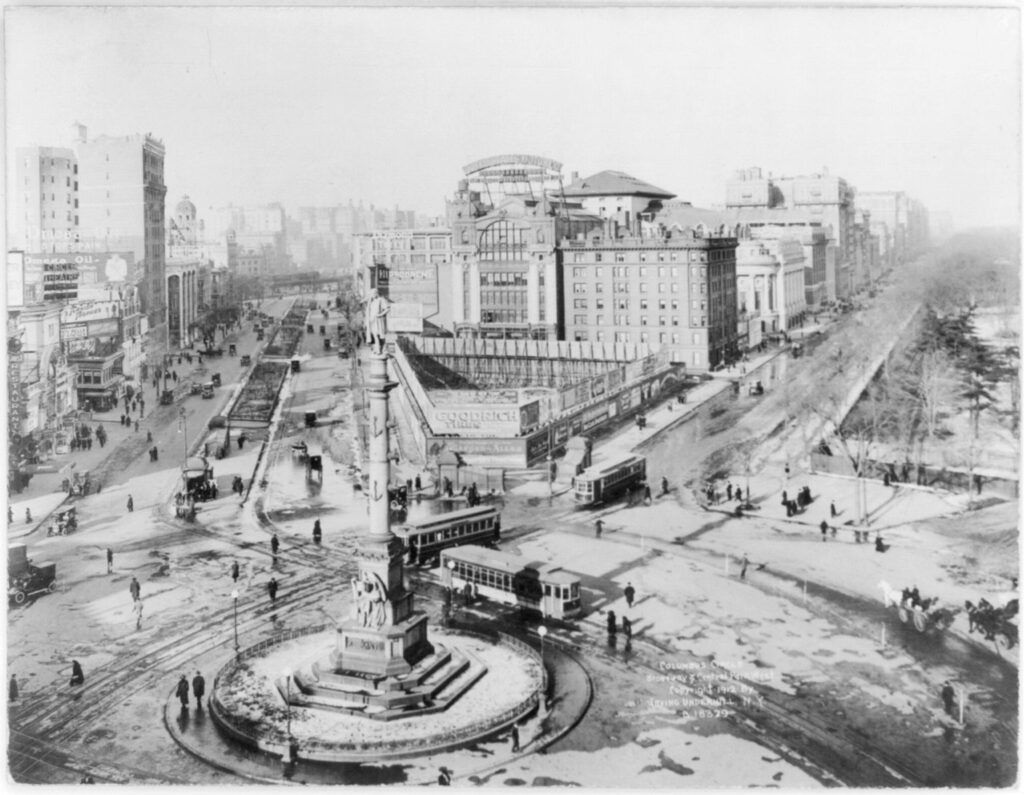
The president resolved the international conflict with a $25,000 indemnity payment to the Italian government. With the issue behind them, Italy proceeded with its plan to gift a statue of Christopher Columbus (Cristoforo Colombo, to them) to the United States to commemorate the quadricentennial of Columbus’ landing in America. After the statue was installed on a traffic circle at the southwest corner of Central Park, the area became known as Columbus Circle. Nearly 80 years later, New York Mob boss Joe Colombo was shot and left with permanent brain damage about 100 feet from the statue.

Harrison still had to deal with outrage in the Italian American community. On July 21, 1892, his proclamation of “Discovery Day,” a one-time celebration of Columbus, served as an apology and a formalization of an event already celebrated in Catholic and Italian communities. The 15th century explorer was a revered figure in those circles, with celebrations already happening every year across the country. The Knights of Columbus organization, founded in 1882, further promoted these festivities as a rallying point to unite American Catholics, who faced opposition from the Protestant majority.

Harrison’s last-ditch effort proved unsuccessful. Cleveland defeated Harrison in a landslide victory. While it was the end for Harrison, Columbus Day was just beginning.

The 77-foot monument in the center of Columbus Circle in New York is topped with a 13-foot granite sculpture of Christopher Columbus. Baron Fava, having returned to his ambassadorship after the 1891 conflict, delivered a speech at its unveiling on America’s first official Columbus Day. Library of Congress

The Knights of Columbus lobbied for the day to become a yearly tradition, and in 1934, President Franklin Roosevelt declared October 12 as Columbus Day. In 1968, President Lyndon Johnson signed legislation making it an official federal holiday beginning in 1971, now occurring on the second Monday of October.

While today’s holiday has become a point of contention regarding its namesake, its origins had little to do with 1492. It emerged as a recognition of the Italian American and Catholic communities, established by a president who urgently needed support in an upcoming election. And it remains an opportunity to memorialize the 11 Italians slain in 1891, victims of an angry mob that saw Italian immigration as nothing more than a pipeline of criminals invading New Orleans.

Veteran crime reporter Anthony M. DeStefano doubles as Mafia author

In the mid-1970s, New York reporter Anthony M. DeStefano didn’t know much about the Mafia. But working at Fairchild News Service, he and two other staff members, at an editor’s request, wrote a 10-part series for Women’s Wear Daily on organized crime’s control of the Garment District.

“It created a stir,” DeStefano said in a telephone interview. “I was a little stunned.”

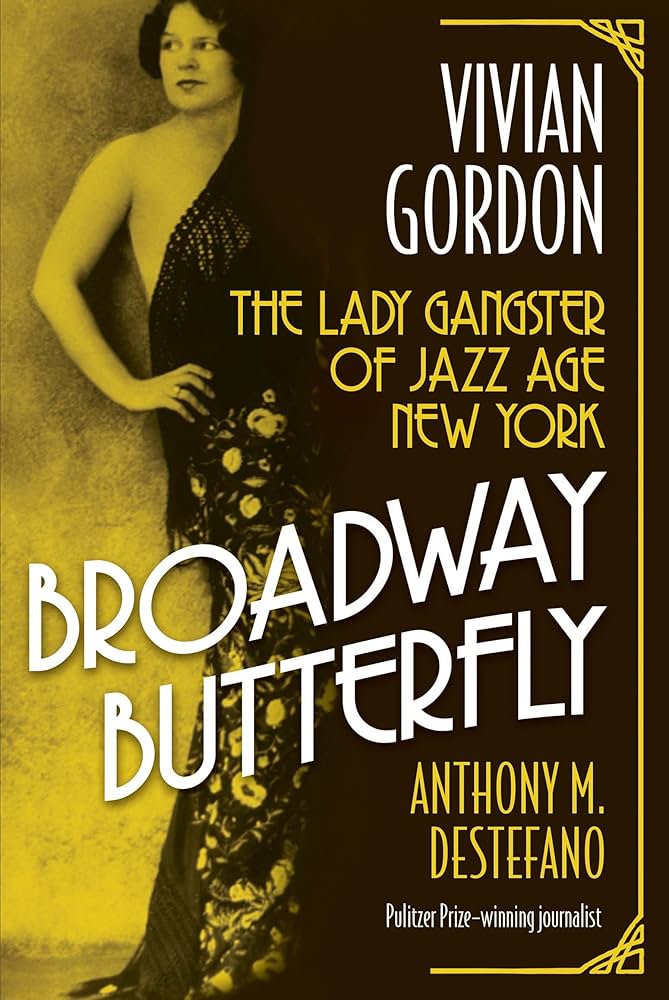
The series led to criminal investigations and prompted other news outlets to chase the story. It also launched DeStefano’s career as a crime-and-courts reporter and author of 10 nonfiction books on the Mafia. His latest, Broadway Butterfly, was released last summer. Subtitled Vivian Gordon: The Lady Gangster of Jazz Age New York, the book delves into the unsolved mystery of Gordon’s death. Her battered body was found in a Bronx park in February 1931.

DeStefano’s latest book, Broadway Butterfly, tells the story of Vivian Gordon, a high-end call girl and blackmailer whose murder is an unsolved mystery.

In addition to making a name for himself as an author, DeStefano, 78, is a special writer for the New York newspaper Newsday, where he first went to work in February 1986 after a stint at The Wall Street Journal. He has no plans to retire.

“I’m still having fun,” the Bronx native said.

Although he stays busy working for the newspaper, DeStefano finds time to research and write true crime books. “You just do it on weekends and time off,” he said.

‘A force to be reckoned with’

As an Ithaca College graduate in media studies, DeStefano joined the Army during the Vietnam War. Serving in the enlisted ranks, he was sent to Vietnam with the 1st Aviation Brigade, assigned to a press office north of Saigon, assisting civilian reporters. Those reporters, he noticed, “had quite the life.” He decided he wanted a job like that.

From there he spent time in Europe, freelancing for American newspapers. “It wasn’t a way to make a solid living,” he said.

He returned to the United States, graduating from New York Law School and finishing a master’s degree he had begun earlier at Michigan State University in the film and media program.  But his desire to get back into the news business was strong.  He wanted to keep digging out stories.

“I never lost interest in journalism,” he said.   

His work at The Wall Street Journal included a story co-written with Jonathan Kwitny linking the real estate business of vice presidential candidate Geraldine Ferraro’s husband to certain Mob figures. The story further cemented DeStefano’s reputation as an enterprising reporter.

“That was my baptism in big-time political journalism,” he said.

Around this time, Long Island-based Newsday was starting a New York City edition. DeStefano was contacted. He spoke with Newsday investigative stalwarts Bob Greene and Thomas Renner. They wanted him on board. DeStefano was told, “You can have a nice career here.” 

They were right.

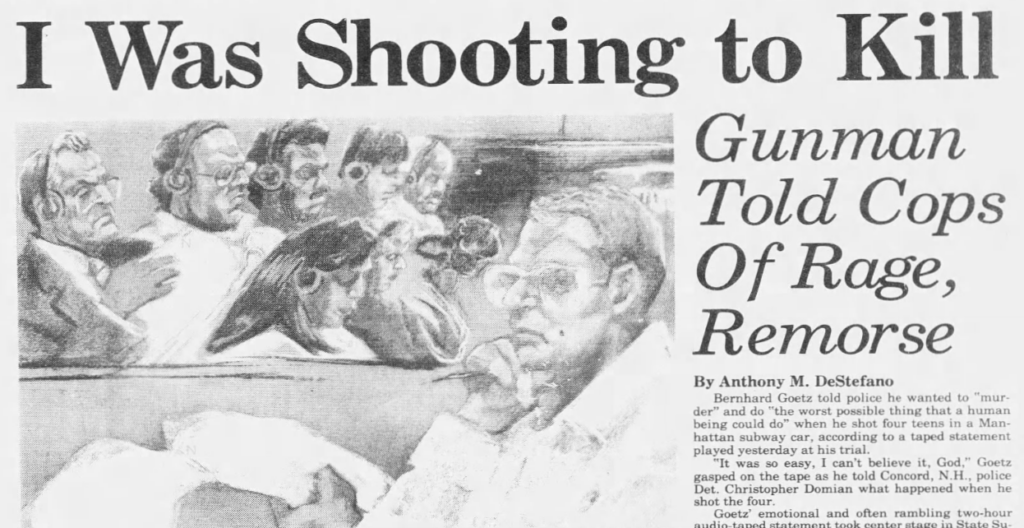
At Newsday, DeStefano has reported on a long list of sensational stories in the nation’s most-populated city, where newsworthy events are a daily occurrence. Working under Greene, he played a role in covering the 1986 Mafia Commission trial. Soon afterward, he was the lead reporter for the trial of subway gunman Bernhard Goetz. “Both the Commission coverage and the Goetz trial gave notice that Newsday was a force to be reckoned with in the media world,” DeStefano said on the paper’s website.

DeStefano began working for Newsday in 1986, covering high profile criminal cases, including the 1986 Mafia Commission trial and the 1987 trial of subway gunman Bernhard Goetz.

DeStefano’s résumé includes many more major stories like those for Newsday. Recently, he has contributed to coverage of the Gilgo Beach serial killings and the arrest of a suspect, Rex Heuermann, a 60-year-old Long Beach resident and Manhattan architect.

Over the years, DeStefano’s work has resulted in accolades for the newspaper and himself. He was on the Newsday team that won the 1992 Pulitzer Prize for spot news in the coverage of a Manhattan subway crash, and, more recently, was awarded an Emmy for his work on the video presentation “Gilgo Beach Investigations, 10 Years, 10 Bodies, 0 Arrests,” now available on the Newsday YouTube channel.

From printed page to silver screen

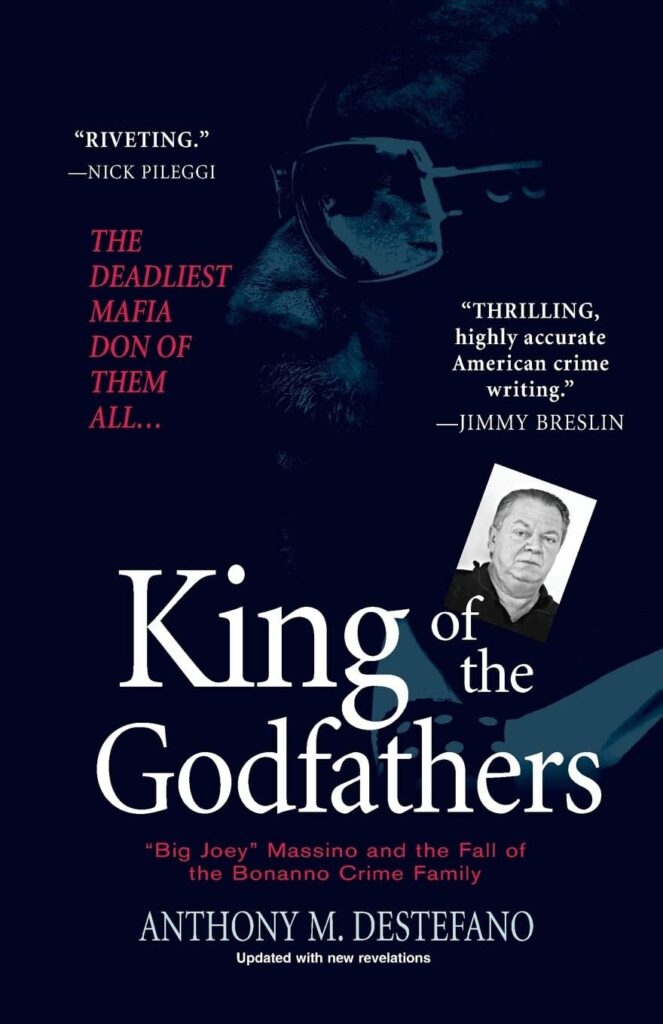
Covering cops and courts, DeStefano interacts with people who give him inside information on big stories. This has included the family of Joseph Massino, the first New York-area Mafia boss to become a government informant. DeStefano even once gave up a couple of Mets tickets to interview Massino family members. His coverage of this high-ranking mafioso led to his first Mob book, King of the Godfathers: “Big Joey” Massino and the Fall of the Bonanno Crime Family.

DeStefano covered the 2004 trial of Bonanno crime family boss “Big Joey” Massino for Newsday, which led to his first Mob book, King of the Godfathers.
DeStefano covered the 2004 trial of Bonanno crime family boss “Big Joey” Massino for Newsday, which led to his first Mob book, King of the Godfathers

Other true crime books followed, including one that journalist and author Nicholas Pileggi suggested while digging into the life of mobster Frank Costello.

“There’s a book there,” Pileggi told DeStefano about the man once known as the underworld’s “Prime Minister.” By then, Pileggi was the author of two highly acclaimed Mob books, Wiseguy and Casino: Love and Honor in Las Vegas. These books became the basis for the now-classic Mob movies Goodfellas and Casino, which Pileggi co-wrote with director Martin Scorsese.

The Costello idea hit home with DeStefano. He contacted his publisher and soon was on his way to writing what became the biography Top Hoodlum: Frank Costello, Prime Minister of the Mafia. Pileggi used that book and another by DeStefano, The Deadly Don: Vito Genovese, Mafia Boss, in researching the script for an upcoming movie, Alto Knights, set in 1950s New York. Starring Robert De Niro in dual roles as Costello and Genovese, the movie is scheduled to be released in March.

Book underway on ‘Jimmy the Gent’

DeStefano is not slowing down. Now that a lot of information is online, the research that goes into putting a project together is less time-consuming. The Garment District series he and others wrote in the 1970s took about six months to complete but probably could be done in two months these days, DeStefano said.

As he notes in his book Gotti’s Boys: The Mafia Crew that Killed For John Gotti, previously unobtainable FBI archives also have become available since the 1990s. These developments speed up the research process and help in finding new angles to historical stories. 

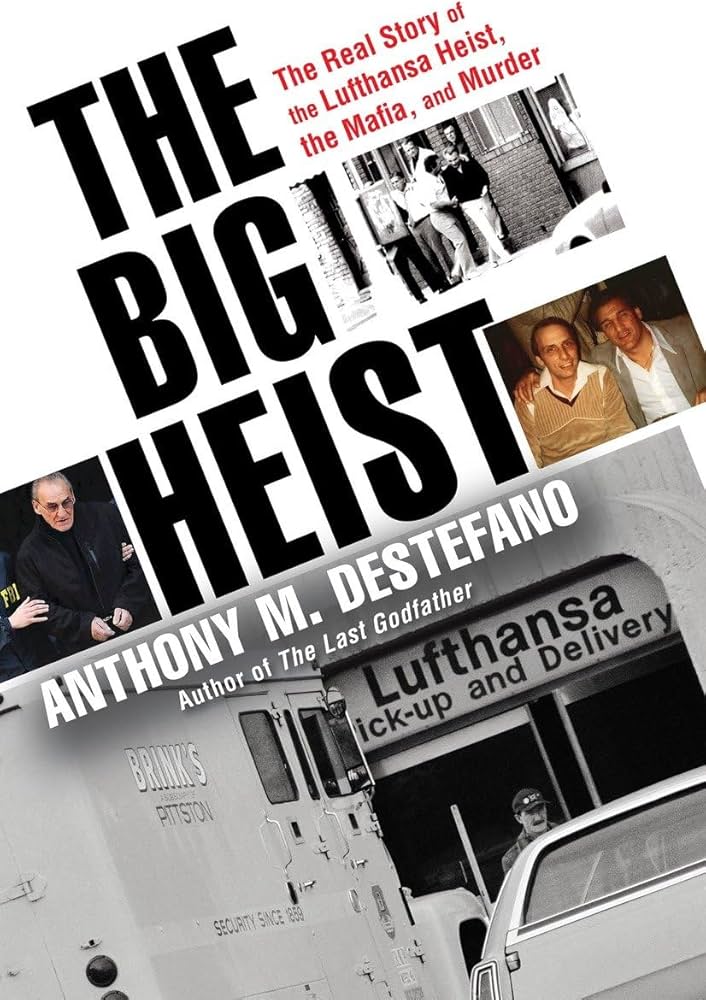
DeStefano has a biography in the works on James “Jimmy the Gent” Burke, the Lucchese associate who orchestrated a brazen December 1978 armed robbery at John F. Kennedy International Airport in Queens. One of DeStefano’s earlier books, The Big Heist: The Real Story of the Lufthansa Heist, the Mafia and Murder, explores that “obsessively covered news event,” but now the author is zeroing in on the mastermind, Burke.

According to DeStefano in The Big Heist, Burke was a sinister individual who ran Robert’s Lounge, a Mob bar with “a dark reputation,” crawling with “killers, highjackers, cigarette smugglers, credit card scammers, overall thieves and assorted outlaws.” Criminal plots such as the Lufthansa heist were hatched in settings like this.

Published in 2017, DeStefano’s The Big Heist is the story of the Lufthansa heist depicted in the 1990 movie Goodfellas. He is working on a new book about James “Jimmy the Gent” Burke, the mastermind of the Lufthansa heist.

In Goodfellas, De Niro portrays a character based on Burke, described by DeStefano in The Big Heist as “a complex man who mixed homicidal terror with smoothness and courtesy as he served his Mafia bosses.”

During the Lufthansa heist, Burke’s crew came away with more than $5 million in currency and nearly $1 million in jewels, equal to more than $29 million today. The haul has never been recovered.

DeStefano’s biography of Burke is expected to be published in late 2025 or early 2026.

Reflecting on why the public is drawn to stories about mobsters like Burke, DeStefano said these tales have “become part of the American folklore,” with some bad characters and some good.

“Certain crime stories create a lot of impact,” DeStefano said, adding that “the Mob because of Gotti became a very big story” that still attracts attention.

Over time, critics and psychologists have given different reasons for why this appeal exists — the primal need to understand danger, is one theory — but a reader once speaking with DeStefano defined it in simpler terms: “I just find it interesting.”

Larry Henry is a veteran print and broadcast journalist. He served as press secretary for Nevada Governor Bob Miller and was political editor at the Las Vegas Sun and managing editor at KFSM-TV, the CBS affiliate in Northwest Arkansas. Today, he is a senior reporter for Gambling.com.

The top 5 heists in Mob history

What makes a “good” heist? Is it an exceptionally detailed plan, a cast of colorful characters or an unfathomable amount of stolen money or goods?

Armed robberies have never been the bread and butter of organized crime activities, but the Mob has been involved in some large, high-profile heists over the past century. Here are the top five heists in Mob history, selected for their strong Mob ties, incredible stories and the exceptionally high value of the stolen goods.

5. Plymouth Mail heist, Plymouth, Massachusetts

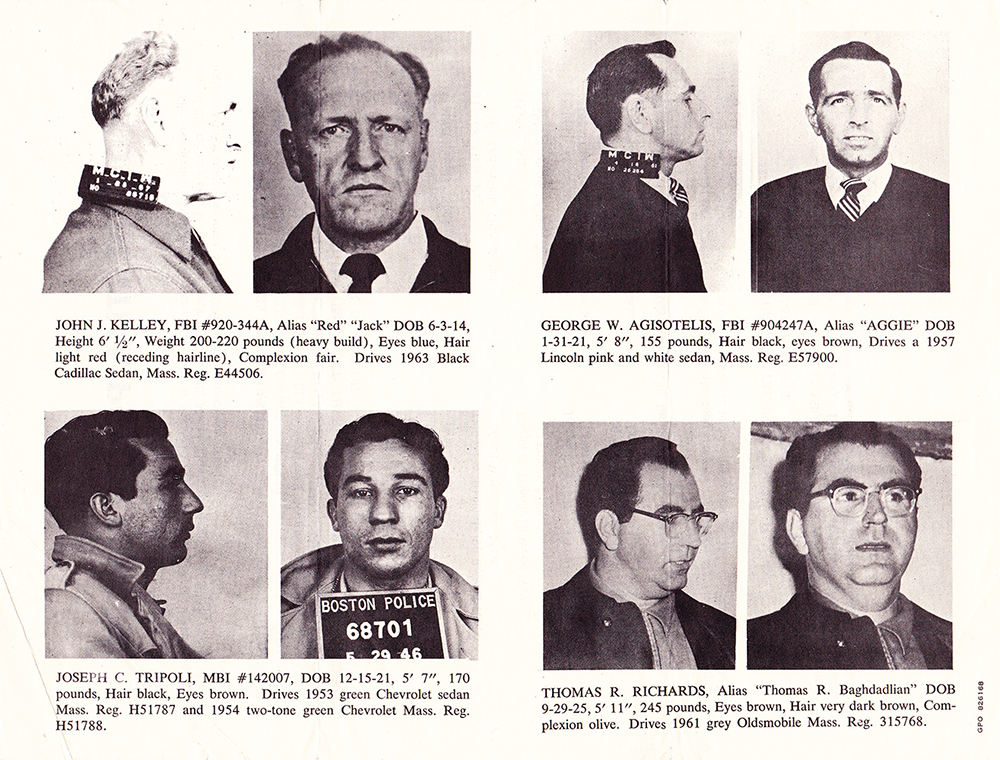
Law enforcement narrowed their investigation to a small group of suspects during the five-year investigation but struggled to build a case against the suspected individuals.
Law enforcement narrowed their investigation to a small group of suspects during the five-year investigation but struggled to build a case against them.

In what the press dubbed the “Great Plymouth Mail Robbery,” a group of armed men robbed a mail truck en route to Boston at about 8 p.m. on Tuesday, August 14, 1962. At the time, the theft of $1.5 million was the largest cash robbery in U.S. history, a record that later Mob-related heists would break. The mail truck was carrying cash deposits from Cape Cod banks to the Federal Reserve Bank in Boston. The robbers wore police uniforms to detain the mail truck and detour other traffic.

Early in the investigation, postal inspectors and law enforcement looked at John “Red” Kelley and George “Billy Aggie” Agisotelis as prime suspects. In early August 1967, with the five-year statute of limitations approaching, they indicted Kelley, Aggie, Thomas Richards and Patricia Diaferio. Richards disappeared before the trial. Aggie cooperated with authorities, but he also mysteriously went missing — Mob hitman Maurice “Pro” Lerner later claimed that he killed him. Kelley and Diaferio were both acquitted. No one was ever convicted, and some estimated the investigation cost as much, if not more than, the robbery itself.

Kelley was not a made man, but he operated within a criminal network that included armed robbers, mobsters and hitmen. He committed a string of robberies alongside other Mob affiliates and associates, including Boston mobsters Phil Cresta, Vincent Teresa and Carmello Merlino. While cooperating as a government witness, he admitted to being a hitman for hire for New England Mob boss Raymond Patriarca.
In Teresa’s book, My Life in the Mafia, he details how Kelley and associates planned and orchestrated the Plymouth Mail Robbery. In Teresa’s account, Aggie and Kelley led a group of bank robbers and holdup men to plan the robbery. For weeks leading up to the heist, Billy Aggie followed the mail truck to learn the route and determine necessary precautions.

In The Mob and Me: Wiseguys and the Witness Protection Program, former U.S. Marshal John Partington, who served as Kelley’s handler, outlined how Kelley folded Boston Mob boss Jerry Anguilo into the operation. Kelley claimed Anguilo gave the crew $7,000 for fake police uniforms, masks and shotguns and helped the crew launder the stolen money. His involvement illustrates an important point about heists: The men who pull them off may not all be mobsters, but the Mob expects a cut no matter what.

4. Pierre Hotel heist, New York City

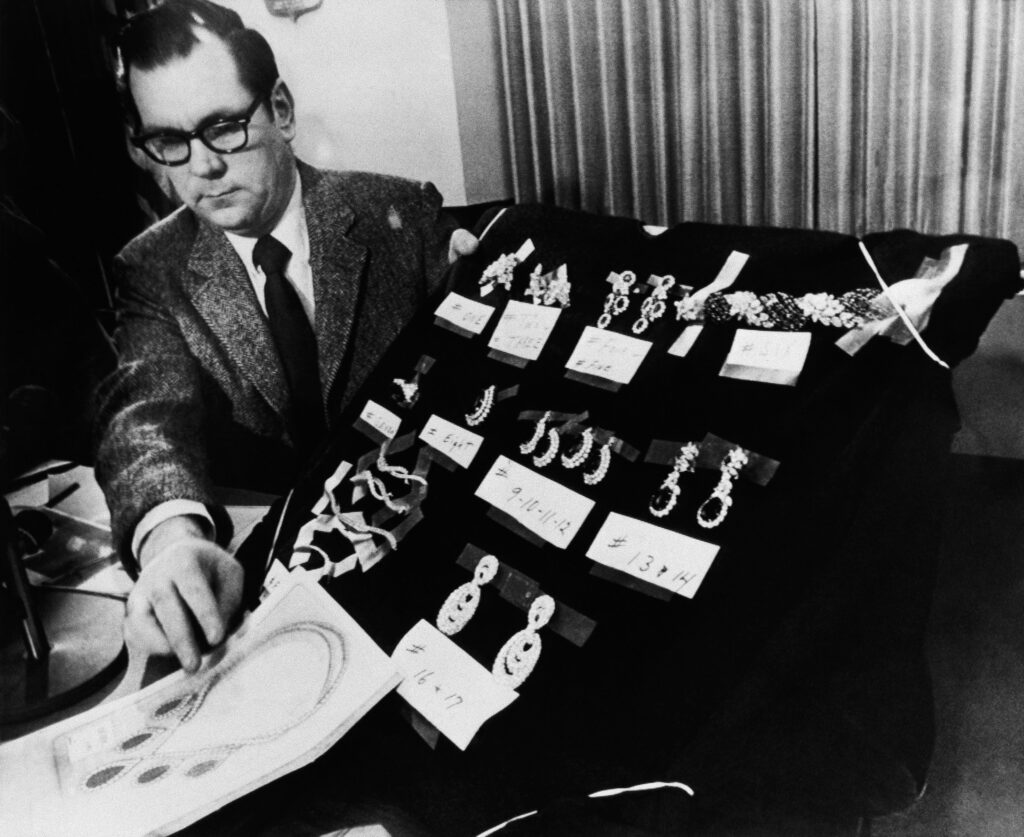
A week after the Pierre Hotel heist, the Detroit FBI recovered some of the missing jewelry, worth $750,000. Associated Press

In the early morning hours of January 2, 1972, seven armed men walked into the lobby of New York’s storied Pierre Hotel. They took about two dozen people hostage and stole a reported $3 million worth of money, bearer bonds, jewelry and other valuables from the hotel’s safe deposit boxes in less than three hours. Considered the largest hotel heist in history, experts estimate they likely stole much more than that, but victims of the crime underreported their losses.

Sammy Nalo and Bobby Comfort were professional burglars with a lengthy rap sheet, including the theft of $1 million in cash and jewelry from actress Sophia Loren at the Sherry Netherland Hotel. They claimed to have robbed and burglarized hotels across New York City, including the Drake and the Carlyle. They set their sights on the Pierre next and went to work selecting a team. They connected with Lucchese crime family associate Christie “The Tic” Furnari, who gave Nalo and Comfort the family’s blessing. According to Daniel Simone’s book, The Pierre Hotel Heist, which he wrote with Nick “The Cat” Sacco, another man who worked the heist, Furnari pulled in skilled burglar and fellow Lucchese associates Bobby Germaine and Al Visconti. To round out the team, they recruited Turkish hitman Ali Ben, his brother-in-law Al Green (not the singer) and contract killer Donald “The Greek” Frankos.

Nalo and Comfort selected the Pierre because it had only two security guards on duty overnight. It also had some of the city’s wealthiest guests. They picked January 2 because the morning after New Year’s Day was typically quiet, and safe deposit boxes at the hotel were likely filled with fancy jewels worn the evening before.

The men pulled up to the Pierre in three cars. Nalo, Comfort and Sacco were in a limousine driven by Green. Green stayed outside as the getaway driver, while the others entered the hotel. The group wore tuxedos, fake wigs and moustaches to conceal their identities. After entering the lobby under the ruse of a reservation for Dr. Forster, one of Comfort’s aliases, the men took hostage the security guards, hotel staff and guests in the lobby, totaling at least 19 people. Nalo and Germaine got to work opening the safe deposit boxes.

During early reconnaissance, Comfort had an affair with the hotel’s assistant bookkeeper, who told him how the hotel logged the contents of the safe deposit boxes. Comfort made the concierge share those logs to target specific high-value boxes. The thieves had until the 7 a.m. shift change to finish the job, so time was of the essence.

The heist is remembered not only for being one of the largest hotel heists in history, but for the hitches the robbers encountered. When a Brazilian guest, Mr. de Montejo, called down for an elevator, the crew took three more hostages: Montejo, his new bride and mother-in-law. Upon arriving in the lobby, they were met with a surprise. One of the other hostages was Montejo’s mistress — yes, he had a mistress in the hotel while on his honeymoon – leading to an uproarious confrontation with the newlyweds.

Another surprise occurred when hotel resident Jordan Graff came to the front door. As Frankos led him in at gunpoint, he began to suffer a heart attack. Not wanting to add murder charges to their criminal activity, the men called the first doctor they found in the registry, but the vacationing physician was too inebriated to be of much use. Comfort made the decision to call 911. Nalo and Germaine temporarily halted their efforts in the safe room to hide the hostages there. When a group of three police officers and two paramedics arrived and took Graff to a hospital, they had no clue they’d been greeted by the culprits of a robbery in progress.

Once that was over, the robbery resumed. Shortly after 6 a.m., the group began to clean up. Before leaving, they put the hostages back in the safe room and asked them not to act as witnesses for the police. Then they slipped $20 tips to each of the detained hotel employees — except for the security guards, who Comfort allegedly said had cop mentalities.

The police investigation into the robbery faced several uphill battles. The hostages did not provide useful descriptions or information, and many of the victims denied they had high-value items in their safes. Stolen jewels were later traced to Detroit and Rochester, New York, but the crime is still technically unsolved. Nalo and Comfort served time for possessing stolen goods connected to the heist, but none of the robbers was convicted of the crime itself.  

3. Bonded Vault heist, Providence, Rhode Island

Providence Mob boss Raymond Patriarca has been implicated in the organization of the Bonded Vault heist. The vault housed ill-gotten gains belonging to members of the Patriarca family.
Providence Mob boss Raymond Patriarca has been implicated in organizing the Bonded Vault heist. The vault housed ill-gotten gains belonging to members of the Patriarca family.

What happens when a Mob boss decides to rob his own criminal organization’s unofficial bank? The answer is found in the 1975 robbery known as the Bonded Vault heist. On the morning of August 14, 1975, about 8 a.m., eight men arrived at Hudson Fur Storage in Providence, Rhode Island. The men were not looking to rob Hudson Fur, but instead had their eye on what was called the Bonded Vault Company, a series of 146 large safe deposit boxes housed within the Hudson Fur building. It was commonly known that the Patriarca crime family and its associates stored cash and goods there.

One of the eight men, Robert “The Deuce” Dussault, had no problem corralling the storage facility’s five employees into an office with their heads covered by pillowcases. The storage facility had minimal security because of its association with the Patriarca family. Dussault then called six of his associates into the building and they began stealing the contents of the safe deposit boxes. To conceal their identities, the men called each other “Harry.”

First, they tried to drill open the safes. When that failed, they used a crowbar to pry off the solid steel doors. Ultimately, the seven “Harrys” left with millions of dollars — estimates range from $2 million to $30 million — in cash, gold and silver bullion, gems, guns and more.

The men then went to a hideout in East Providence where they each took $64,000 in cash and made plans to fence the rest of the valuables. Dussault took his cash share to Las Vegas, where he gambled it away and ran into trouble. In the meantime, one of the hostages from the heist cooperated with police, providing them with a description of two of the culprits, including Dussault. A  Patriarca family associate also provided the names of the perpetrators.

Dussault decided to cooperate with law enforcement and testified along with another one of the robbers, Joe Danese. Ultimately, three of the six men who stood trial were convicted and three were acquitted.

As part of Dussault’s deal with the FBI, he revealed that Raymond Patriarca, then the Patriarca family’s leader, was the one behind the robbery. Dussault said most of the money went straight to Patriarca. Dussault alleged that Patriarca orchestrated the crime because he felt he was not getting his fair share from the family’s criminal activities while in prison for the murders of Rudolph “Rudy” Marfeo and Anthony Melei. The heist remains the largest in Rhode Island’s history.

2. Lufthansa heist, New York City

Former Lufthansa employee and heist inside man Louis Werner is illustrated in this courtroom sketch. Werner remains the only person connected to the Lufthansa heist to serve time. University of Virginia Law Special Collections

If you have seen the movie Goodfellas, you know a little something about the Lufthansa heist. At the time in 1978, it was the largest cash robbery on American soil and is considered the biggest heist in Mob history.

On December 11, 1978, at the Lufthansa cargo terminal at John F. Kennedy International Airport, six men made off with $5 million in cash and about $875,000 in jewelry. It was two Lufthansa employees, not the Mob, who first came up with the plan to rob the Lufthansa high-value room, which stored money and jewelry ready for transfer from German to American banks. Peter Gruenwald and Louis Werner realized their inside job needed criminal masterminds for a score of this magnitude. Werner, who owed $6,600 in gambling debts, shared the initial plan with bookmaker Martin Krugman, who recruited Lucchese associate Henry Hill.

Hill shared the plan with Jimmy “The Gent” Burke, who received permission from Lucchese capo Paul Vario to move forward with the heist. Werner shared a map with mobster Joe “Buddha” Manri and walked him through the security protocols at the Lufthansa cargo warehouse. On Saturday, December 9, Werner told the crew that a cash shipment of about $2 million had come in and would be in the high-value room until banks reopened on Monday morning.

On Monday, December 11, about 3 a.m., six men in ski masks pulled up to the Lufthansa warehouse. They cut the gate’s padlock with bolt cutters and walked in. They ushered the employees into the break room at gunpoint and forced the shift manager to disable the alarm and open the storage vault. At this point, the men realized that an unexpected second shipment had come in with more than $5 million in cash and jewelry for them to steal. By 4:21 a.m., the men had finished moving everything into their van and left.

Almost immediately, the FBI identified Burke and his crew as likely suspects in the crime. In February 1979, the police arrested Gruenwald, but there was a twist: Werner had boxed Gruenwald out of the plot. Even though Werner had paid Gruenwald a small share of the take, Gruenwald was not part of the final planning that resulted in the heist. With an ax to grind, he cooperated with law enforcement.

Authorities arrested Werner a few days later. He eventually would be sentenced to 15 years in prison. Werner was the only person connected to the heist to serve time for the crime, but not the only one to pay for it.

Exactly one week later, getaway driver Parnell Steven “Stacks” Edwards was shot to death. He had failed to properly dispose of the van used in the heist, and Burke blamed him for the FBI linking their crew to the crime. Krugman went missing and was presumed dead in January 1979. Joe Buddha was killed in May along with another man believed to have assisted with planning the heist. In total, 14 people connected to the heist were killed between December 1978 and May 1987 — 11 of them before the end of 1979.

In 2014, Bonanno family capo Vincent Asaro was indicted and arrested for alleged involvement in the heist but was acquitted of all charges.

As for Henry Hill, the inspiration for the main character in Goodfellas, he did not actually participate in the heist. He was arrested on narcotics charges in 1980 and became an informant, resulting in the revelation of his small role in the Lufthansa heist.

1. Isabella Stewart Gardner Museum heist, Boston

The Isabella Stewart Gardner Museum continues to display empty frames where the stolen paintings once stood. Federal Bureau of Investigation
The Isabella Stewart Gardner Museum continues to display empty frames where the stolen paintings once hung. Federal Bureau of Investigation

On March 18, 1990, at 1:24 a.m., Richard Abath, a security guard at the Isabella Stewart Gardner Museum in Boston let two men in police uniforms into the museum. The two “officers” then duct-taped and handcuffed Abath and another guard. The men stole 13 works of art from the museum in 81 minutes — the largest art theft in history. Works by Vermeer, Rembrandt, Degas and Manet were among the stolen paintings. Before they left, the thieves also grabbed the videotapes from the security cameras that might have given a clue to their identity. Although Abath was never considered a suspect, the police scrutinized his behavior that night and investigated his finances.

In 1994, the museum received an anonymous letter offering to facilitate the return of the paintings in exchange for immunity and $2.6 million. The museum turned the letter over to the FBI, but the lead fizzled out.

In 2010, several news outlets reported that the FBI had submitted physical evidence from the scene for DNA testing. Then in 2017, the Boston Globe reported concerning news that some of the evidence, specifically the duct tape and handcuffs used to restrain the two guards, had gone missing more than a decade earlier.

One early — and lingering — theory placed former Winter Hill Gang boss James “Whitey” Bulger at the head of the heist. In this theory, Bulger planned the heist to funnel money to the Irish Republican Army, known for using valuable art to pay for guns. No evidence supports this theory, and Bulger said nothing about the heist when he was arrested in 2011, 16 years after he went into hiding.

In 1991, Bulger’s FBI handler, John Connolly, allegedly asked him about the heist, and according to Connolly, Bulger had an interesting answer. He did not know who had committed the heist but was just as interested as the FBI, because he believed the criminals responsible owed him tribute for committing the heist on his turf.

The FBI has allegedly investigated a number of people associated with the Boston Mafia in relation to the heist. In 2010, investigators searched the Maine home of Boston Mafia associate Robert Guarente, whom they believed had some of the artwork in his possession at the time of his death in 2004. FBI investigators believe Guarente acquired the stolen works from thieves George Reissfelder and Leonard DiMuzio, who both died in 1991. During the search, the FBI found nothing, but Guarente’s wife claimed he gave two stolen paintings to Connecticut mobster Robert Gentile, which he denied. In 2012, investigators searched Gentile’s home and found a handwritten list of the stolen paintings with their estimated worth.

Another Mob-connected theory involves Bobby Donati, whose body was found beaten, stabbed and stuffed into the trunk of his Cadillac in September 1991. Shortly after the heist, he allegedly visited Boston Mafia capo Vinnie “The Animal” Ferrara in prison and confessed to stealing the artwork as a bargaining chip to trade for Ferrara’s release from prison. According to former Boston jeweler Paul Calantropo, Donati also visited him in the spring of 1990. Calantropo said Donati showed him an eagle-shaped finial — one that looked identical to the one stolen from the Gardner Museum.

Today the case remains unsolved, although ties to organized crime have been suggested ever since the crime was committed. None of the art was reclaimed, and the museum continues to offer a $10 million reward for the safe recovery of the stolen works.

Upcoming film ‘Alto Knights’ depicts mobsters Vito Genovese, Frank Costello in bitter feud

The Mafia movie Alto Knights features veteran actor Robert De Niro playing dual roles as rival mobsters Vito Genovese and Frank Costello.

The movie was written by journalist and author Nicholas Pileggi and directed by Barry Levinson, whose accolades include a best director Academy Award for the 1988 film Rain Man. Among other movies, Levinson also directed Bugsy, starring Warren Beatty as Benjamin “Bugsy” Siegel.

Alto Knights, a Warner Bros. feature film originally titled Wise Guys, is set to be released on March 21, 2025.

Filmed in and around Cincinnati, Alto Knights focuses on two of New York City’s most notorious mobsters, Genovese and Costello, whose rise to power put them at odds with each other decades ago.

“Genovese was no match for Costello’s combination of political power and money-making ability,” Anthony M. DeStefano wrote in his 2021 book The Deadly Don: Vito Genovese, Mafia Boss. “So long as Costello was around, Genovese had a sense of inferiority.”

But on May 2, 1957, Genovese ordered a young mobster named Vincent Gigante to kill Costello, known as the “Prime Minister of the Underworld.” In the attempt, Costello was slightly wounded by a gunshot that grazed his head.

“Costello got the message,” DeStefano wrote, “and in a truce with Genovese, he agreed to ‘retire’ from the Mob, leaving the family in Genovese’s hands.”

The movie’s title reflects an era when underworld operatives hung out at Mafia social clubs. In New York City’s Little Italy, Alto Knights was a Mob club at Mulberry and Kenmare streets, according to DeStefano. Previously named the Café Royale, it was one of the haunts where Genovese and his lieutenants congregated.

Vito Genovese talks with capo Mike Miranda outside of the Alto Knights social club in 1955. The Center for Legislative Archives
Vito Genovese, left, talks with capo Mike Miranda outside of the Alto Knights social club in 1955. The Center for Legislative Archives

“The origin of the name for the place was uncertain, with some thinking it had some connection to opera singing,” DeStefano wrote in The Deadly Don. “During Prohibition, it had been a location for bootlegging deals, and then it was the place that out-of-town gangsters would visit on a trip to New York.”

In an email, Pileggi noted that Alto Knights refers to the Genovese hangout at Mulberry and Kenmare streets, not the former Ravenite social club on Mulberry where, in 1990, Gambino crime boss John Gotti was arrested.

“Gotti made the Ravenite on Mulberry Street so famous people think it was the only club down there,” Pileggi said. “There were dozens.”

Pileggi adds to movie credits

Pileggi, a New York-based writer who also has a home in the Los Angeles area, is one of the nation’s leading authorities on the Mafia, an expertise first developed from his work as a reporter for the Associated Press and New York magazine. During that time, Pileggi collected background information on underworld figures operating in New York City and beyond, creating a large card catalogue with information on Mob bosses and rank-and-file members.

“In my office are four boxes of index cards upon which I compulsively jot the names and various details of every major and minor organized crime figure I run across in the press or court dockets,” Pileggi explained in the prologue to his 1985 true-crime book Wiseguy.

Pileggi’s experiences as a reporter during the Mob’s midcentury heyday led to his work in helping script two of the most acclaimed gangster movies of the past three-and-a-half decades — Goodfellas and Casino. Both were co-written with director Martin Scorsese, based on Wiseguy (named Goodfellas for the film version) and another of Pileggi’s nonfiction books, Casino: Love and Honor in Las Vegas.

Nick Pileggi with Frank Cullotta at The Mob Museum in 2016. Cullotta was a former Chicago Outfit mobster who served as a technical consultant on the movie Casino.

‘A real actor’

During a recent telephone interview from his home in New York City, Pileggi, 91, discussed Alto Knights and addressed what the future might hold for movies based on the traditional Italian-American Mafia.

Dating back to the 1972 release of The Godfather, and even before then, movies focusing on the Mafia have had a long run of successful hits, including the two that Pileggi co-wrote with Scorsese.

However, with the gradual weakening of New York’s Five Families, the focus for filmmakers interested in movies about organized crime could shift to other underworld factions, including drug cartels, Pileggi said, adding that “crime moves on.”

Below are excerpts from Pileggi’s phone interview with The Mob Museum. The excerpts have been edited and rearranged for clarity and brevity.

Pileggi began the conversation by saying a media campaign for Alto Knights, which also stars Debra Messing and Katherine Narducci, is expected in the coming months. 

The Mob Museum: What can viewers expect from Alto Knights?

Pileggi: It’s about the relationship between Genovese and Costello at the end. It’s the end of that life. That’s really what it’s about.

They both looked at life quite differently. Vito was more of a street guy and had been a boss, and Frank Costello was one of those middle men. That was his background, but he changed. He got to be very known politically. He was appointing judges. He was trying to take the Mob in another direction. Even though they knew each other, it was two different attitudes of life.

Robert De Niro plays both parts without CGI (computer-generated imagery), by the way. He just imbues the two characters. He makes himself look different. I saw Raging Bull the other night, and in one scene he’s 220 pounds, and the next time I see him he’s 140 pounds in the same movie. He just does that. He’s a real actor.

When you see the movie, he becomes a different character. He’s able to do it. I don’t know how. Actors can do that. He’s not the only one, of course, but he’s really good at it.

Costello is escorted by a police detective after getting shot. Although the assassin’s bullet only grazed his head, Costello took the attempt as a sign to step down from Mob leadership. Corbis

TMM: What is the future for Mafia movies?

Pileggi: I don’t know. It’s sort of, ‘What’s left?’ When was the last Mob movie? The Godfather really laid it out. That was Gone With the Wind for the Mob, right?

You look at the newspapers now. I’ve been covering this stuff all my life. You’d wake up in the morning. You’d pick up all the papers. I’d clip them, and I had files. Now I get the papers every day, and there’s nothing to clip.

Is it over? Is there a Mob? If I was covering the drug dealers in the world, in Mexico, or wherever, in Colombia — there’s a lot of stuff going on, but none of the traditional organized crime stuff that we were used to.

Crime moves on.

Larry Henry is a veteran print and broadcast journalist. He served as press secretary for Nevada Governor Bob Miller and was political editor at the Las Vegas Sun and managing editor at KFSM-TV, the CBS affiliate in Northwest Arkansas. Today, he is a senior reporter for Gambling.com.

Chicago crime boss Al Capone transferred to Alcatraz 90 years ago this month

Depression-era mobsters and outlaws often found themselves locked up in undeniably unpleasant jails and prisons, but being sent to Alcatraz was said to be “the end of the line.” Widely recognized as one of the most iconic correctional institutions in America, and possibly the world, Alcatraz earned the unflattering nicknames of “The Rock” and “America’s Devil’s Island.” The 90th anniversary of the arrival of the prison’s most infamous criminal presents an opportunity to address some of the facts and myths surrounding Alcatraz.

Becoming a federal prison

Long before it joined the Bureau of Prisons, Alcatraz was a desolate island jutting from the San Francisco Bay. The island showed little promise in the eyes of early observers, but by 1854, the island proved otherwise.

In a detailed 1979 report, National Park Service historian Erwin N. Thompson highlighted Alcatraz’s pre-penitentiary years: “On the island stood the first lighthouse on America’s Pacific shores. A light that has guided ships in and out of the magnificent bay for almost 125 years. For nearly 75 years, the island served as a military prison for Army convicts from both the western states and overseas possessions. And for 50 years, Alcatraz played a key role in the defenses of San Francisco.”

Eventually the economic drain on the Army’s budget led to discussions of transition. According to Thompson, the Army “seriously considered abandoning Alcatraz Island” twice in the early 20th century, first in 1906 and again in 1913. But on October 13, 1933, “the third time counted.”

A modern view of Alcatraz Island from Pier 33 in San Francisco. The former prison is now a museum and tourist attraction. Courtesy of Natasha Cipollini

After an agreement was made, the Justice Department began renovations. Some Bay Area residents were not thrilled about having a maximum-security prison in their backyard, but the press and public outcry failed to convince the government to abandon the plans. Alcatraz was officially handed over on June 20, 1934.

When the Justice Department took over, 32 of the Army’s prisoners (described as an “unsavory lot”) remained on Alcatraz. In early August 1934, the first load of federal transfers arrived from the McNeil Island Penitentiary in Washington. Authorities tried to shroud the entire process. The “freight” was described as “pieces of furniture,” but the local press quickly deciphered the code and even managed to confirm the identities of some convicts.

Putting the Al in Alcatraz

The next big shipment of “53 crates of furniture” required additional efforts at secrecy, primarily because of one inmate in the lot. That, of course, was Alphonse Capone. Nobody wanted the security risks nor the chaos that the press and general fanfare would create. Trying to minimize the exposure, authorities played a logistical game of cat and mouse. The train from Atlanta did everything but travel the most direct path. The train arrived in Tiburon, California, where two passenger rail cars were placed on a barge and floated south to Alcatraz on August 22. The men were processed, photographed, inspected for contraband and assigned numbers and cells.

Capone, registered as No. 85, quickly made headlines and thrust Alcatraz Federal Penitentiary into the larger public psyche, which may have been exactly what the bureau hoped. “The feds never explained why Capone was assigned to Alcatraz,” wrote Jonathan Eig in his 2011 book Get Capone, “but it seems fairly clear it was a public relations move.

“It (the federal government) wanted everyone to know that Alcatraz was the toughest slammer in the land.”

Eig contends Capone’s presence in the new prison was publicity gold. “The man got headlines.” They also made a point to treat him just like the other inmates. Unlike his fully furnished cell at Eastern State Penitentiary in Philadelphia, Al Capone did not enjoy any special amenities in Alcatraz.

Al Capone was transferred to different cells three times while he was incarcerated at Alcatraz. His second cell, pictured here, was cell 181.

Although he was noted as a “model prisoner,” his stay at Alcatraz was not without incident. He was assaulted at least once. The attack occurred in June 1936, when inmate James “Tex” Lucas stabbed Capone in the back with shears from the barbershop. The injuries were minor, but the story took on a life of its own, including a version in which Al broke a banjo (sometimes said to be a mandolin or mandola) over Lucas’s head.

Records state that Capone did return a push or punch before a guard intervened. Capone certainly played musical instruments at Alcatraz, but stories of him smashing one over his assailant’s head are most likely false. The story gained traction following the writings of former inmate A.W. Davis in 1937. Other arguably embellished stories about Capone were pushed in paroled inmate Roy Gardner’s tell-all book, Hellcatraz: The Rock of Despair, published in 1939.

Four years into Capone’s term, the effects of improperly treated syphilis were taking a toll. He was treated in the prison hospital until January 1939 when he was transferred to Terminal Island in Los Angeles for a stint, then to Lewisburg, Pennsylvania. He was released on November 16, 1939, and sought treatment at Union Memorial Hospital in Baltimore. In March 1940, Capone drove with his family back to their Palm Island, Florida, home. Capone died at home on January 25, 1947.

Other residents of “the Rock”

Aside from Capone, Alcatraz was home to many other infamous criminals over the course of its service to the Bureau of Prisons:

  • Harlem kingpin Ellsworth “Bumpy” Johnson served most of his heroin trafficking sentence there from 1952 to 1963.
  • Before he ascended to the leadership of Boston’s Winter Hill Gang, James “Whitey” Bulger was transferred to Alcatraz while serving an armed robbery sentence. He was there from 1959 to 1962.
  • After escaping from federal prison in New York City, con man and counterfeiter Robert V. Miller, aka Count Victor Lustig, served his sentence at Alcatraz from 1935 to 1946. He used more than 60 aliases during his career, although Alcatraz booked him under his birth name.
  • George “Machine Gun” Kelly, mastermind of the 1933 Urschel kidnapping, arrived a month after Capone and was there until his transfer to Leavenworth in 1951.
  • Alvin “Creepy” Karpis, co-head of the Barker-Karpis Gang, was incarcerated at Alcatraz from 1936 to 1962. He was there longer than any other prisoner in its history.
  • Arthur “Doc” Barker, member of the Barker-Karpis Gang, was transferred to Alcatraz in 1935. He was shot and killed during an attempted escape from the island in 1939.
  • Los Angeles mobster Mickey Cohen served two stints at Alcatraz between 1961 and 1963, separated by a seven-month reprieve while out on bail.
  • Convicted murderer Robert “The Birdman” Stroud spent 17 years in Alcatraz from 1942 to 1959. While imprisoned at Leavenworth, he was permitted to breed birds, but Alcatraz denied him that privilege.
  • Roy Gardner, aka “King of the Escape Artists,” served his time on the island from 1934 to 1938. He was the first inmate to write a book about his life in Alcatraz.
Count Lustig, international swindler, was transferred to Alcatraz as Robert V. Miller, inmate No. 300, in 1936. Years before their respective incarcerations, Lustig purportedly attempted to con Capone once, then realized the error of his ways and returned the money. Courtesy of Cipollini Collection

Contrary to the long-held belief that only the worst were sent to the island prison, some inmates were not particularly dangerous nor incorrigible. Some were white-collar criminals, and a few were federal inmates who asked for a transfer to Alcatraz for its better living conditions. Capone, while having a reputation for violence, was convicted of tax evasion, which normally would not warrant serving time in a maximum-security prison.

Alcatraz was not a first-stop facility, nor was it an inmate’s last stop — unless he left in a body bag. One had to be transferred to Alcatraz from another facility. Inmates usually transferred to another facility when leaving.

While Alcatraz was known as one of the strictest prisons in the correctional system, there was one upside to living there: Most former prisoner accounts concur the food was much better than at most other facilities.

A typical cell in Alcatraz’s B and C block measured 9 feet by 5 feet and offered limited amenities: toilet, cold water sink, folding tabletop/seat and cot. Courtesy of Christian Cipollini

Escaping the “inescapable” island

Escape attempts, successful and not, have occurred at Alcatraz since its years as an Army detention center. Although it was rumored that Alcatraz had secret tunnels that could have aided prisoner escapes, Park Service historian Thompson reported that a communications tunnel from its fortification days had been sealed up in advance of transitioning to the Bureau of Prisons.

The post-military era documented 14 escape attempts by 36 inmates from 1934 to 1963. The most famous and still controversial one occurred on June 12, 1962. The plot involved John and Clarence Anglin, Frank Morris and Allen West.

As summarized by the FBI, “the routine early-morning bed check turned out to be anything but. Three convicts were not in their cells: John Anglin, his brother Clarence and Frank Morris. In their beds were cleverly built dummy heads made of plaster, flesh-tone paint, and real human hair that apparently fooled the night guards. The prison went into lock-down, and an intensive search began.”

Clarence Anglin created a replica dummy head meant to fool prison guards after he escaped through the vent. The head is on display in cell 152. Courtesy of Christian Cipollini

The escapees had spent months chipping away (with stolen and makeshift tools) deteriorating concrete surrounding the vent in the back of each cell to access the utility corridor. West remained behind as he couldn’t squeeze through his vent hole on the eve of the escape. None of the three escapees have been found, only some remnants of the makeshift rafts and other items they had upon entering the turbulent San Francisco Bay waters.

Investigators kept a look-out for the escaped convicts for more than 15 years, but eventually it was time to move on: “The FBI officially closed its case on December 31, 1979, and turned over responsibility to the U.S. Marshals Service, which continues to investigate in the unlikely event the trio is still alive.”

Alcatraz officially closed on March 21, 1963. The last prisoner to walk out of Alcatraz was 29-year-old Frank C. Weatherman, who had been transferred there in 1962 for trying to break out of an Alaskan prison.

The Bureau of Prisons states: “It did not close because of the disappearance of Morris and the Anglins” but rather, as with the Army’s decision decades earlier, had everything to do with economics. “An estimated $3-$5 million was needed just for restoration and maintenance work to keep the prison open. That figure did not include daily operating costs – Alcatraz was nearly three times more expensive to operate than any other federal prison.”

Christian Cipollini is the author of Murder Inc.: Mysteries of the Mob’s Most Deadly Hit Squad and LUCKY, a gangster graphic novel.

CIA, Mob team up to topple Fidel Castro in Paramount Plus docuseries ‘Mafia Spies’

The CIA’s alliance with the Mafia during the Kennedy years to assassinate Cuban leader Fidel Castro is at the center of a new Paramount Plus original docuseries called Mafia Spies.

Using historical footage and contemporary interviews, the six-part series brings viewers inside 1950s wide-open Havana, when mobsters controlled the Cuban capital’s casinos, and then examines Castro’s takeover of the island nation and the U.S. government’s clandestine efforts to kill him.

Among other schemes, including the failed 1961 Bay of Pigs invasion, attempts to eliminate Castro included poison pills and a scuba-diving wetsuit laced with a deadly substance. None of this was successful, strengthening Castro’s image among his followers. Castro ruled Cuba for decades, dying of natural causes at age 90 in 2016.

“Mr. Castro’s defiance of American power made him a beacon of resistance in Latin America and elsewhere,” the New York Times reported at his death, “and his bushy beard, long Cuban cigar and green fatigues became universal symbols of rebellion.”

‘Incredibly wild’ story

The Paramount Plus series is based on the book Mafia Spies: The Inside Story of the CIA, Gangsters, JFK, and Castro by Thomas Maier. Executive producers Tom Donahue and Ilan Arboleda were made aware of the book and became “instantly captivated by the incredible true story and its vast potential,” Donahue said in an email.

Mafia Spies Producer Thomas Maier authored the book of the same name that inspired the docuseries. Paramount+

As the series explains, U.S. officials were concerned that Castro’s compact with the nuclear-capable Soviet Union posed a security threat, since the Caribbean country is only 90 miles south of Florida. Meanwhile, Mafia figures were upset at Castro for tossing them off the island after he overthrew the previous regime in early 1959, ending the Mob’s lucrative gaming empire in Cuba. 

Johnny Rosselli, played by Nick Annunziata, was one of the mobsters approached by Robert Maheu on behalf of the CIA. Rosselli’s casino interests in Havana provided enough motive to join the hit team. Greg Lewis/Paramount+

From that cauldron, the CIA-Mafia alliance was born, involving a James Bond-like world of subterfuge and betrayal, resulting in U.S. congressional hearings. By 1976, two mobsters involved in the anti-Castro effort, Sam Giancana and Johnny Rosselli, were slain, presumably to keep them quiet about the plot, though neither killing has been solved. Giancana was shot to death at his home in Oak Park, Illinois, west of downtown Chicago. Rosselli’s body was recovered from a 55-gallon oil drum in a bay near Miami.

A third mobster, Santo Trafficante Jr., was thought by some to have been a double agent secretly assisting Cuba, too. He died in 1987 in Houston, where he had gone for heart surgery.

Tampa Mob boss Santo Trafficante Jr., played by Joseph Leone, outlived his co-conspirators and, unlike Giancana and Rosselli, died of natural causes. Paramount+

The Paramount Plus series ties together the sex scandals, deceit and tragic events, including President John Kennedy’s 1963 assassination in Dallas, that marked this period as a dark chapter in U.S. history.

Donahue said the true story of that era is so “incredibly wild” that he and his team didn’t need to embellish any facts to make it compelling. One compelling aspect is that the story is told from both U.S. and Cuban points of view.

“We traveled to Cuba and interviewed former Castro intelligence operatives and former child soldiers who fought on the Cuban side during the Bay of Pigs,” Donahue said.

According to the New York Times, Castro throughout his years in power repeatedly defied the U.S., “bedeviling 11 American presidents and briefly pushing the world to the brink of nuclear war.” Castro wielded power “like a tyrant,” overseeing a totalitarian government that had “admirers and detractors in Cuba and around the world.”

“Some saw him as a ruthless despot who trampled rights and freedoms,” the newspaper reported, while others hailed him “as a revolutionary hero for the ages.”

CIA-Mafia plots fail

The Paramount Plus series features popular personalities such as Frank Sinatra and Phyllis McGuire, who were linked to underworld figures. Also featured are U.S. cities that had an important connection to what was going on in Cuba.

These people and places are examples of the way dangerous global politics can have a lasting impact even on popular culture.

Antoinette Giancana, Sam Giancana’s daughter, is a commentator on Mafia Spies. She offers details about her father’s personal life. Paramount+

“With its retro atmosphere, entertaining narrative, and even a cameo from Sinatra, we saw a chance to create something both fun and historically significant,” Donahue said.

He added that the project stands out for its “unique blend of espionage, organized crime and political intrigue.”

“Set against the vibrant backdrop of 1960s Los Angeles, Palm Springs, Las Vegas, Chicago, Miami and Havana, the series offered a thrilling opportunity to explore classic spy and gangster movie tropes while shedding light on a pivotal moment in American history,” Donahue said.

Johnny Rosselli was close to Judith Campbell, played by Rachel Comeau. Campbell was romantically involved with both Sam Giancana and President John Kennedy. Paramount+

The executive producer said as viewers watch the series, he hopes they take away from it a “crucial lesson about accountability and the dangers of unchecked power.”

“The series sheds light on the darker aspects of U.S.-Cuba relations and the consequences of secretive organizations like the CIA operating with impunity,” Donahue said.

This theme runs throughout the series, beginning with the hedonistic pre-Castro years and ending in the public’s awareness that U.S. authorities at the highest level joined forces with criminal operatives in attempting to assassinate a foreign leader.

In the first episode, Todd Fisher, son of entertainers Debbie Reynolds and Eddie Fisher, sums up the way visitors viewed Cuba when the casinos were in full swing. Havana’s popularity as a free-wheeling gaming destination overshadowed Las Vegas, which would blossom in the desert and attract more than its share of mobsters, especially after Castro’s takeover in Cuba.

“My parents would go party in Cuba,” Fisher says, adding that it was “a cool place” with gambling and drinking.

By the final episode, change had occurred there and in the United States. The U.S. government’s efforts to topple Castro would cast a dark cloud over its covert operations.

As Castro’s dictatorship began to take hold, the mindset north of Cuba had been that the United States was a superpower that “could play the game of risk and win,” journalist and author David Corn says.

“But the secret war against Castro and Cuba failed,” he says, “and Castro survived for decades.”

Larry Henry is a veteran print and broadcast journalist. He served as press secretary for Nevada Governor Bob Miller and was political editor at the Las Vegas Sun and managing editor at KFSM-TV, the CBS affiliate in Northwest Arkansas. Today, he is a senior reporter for Gambling.com.