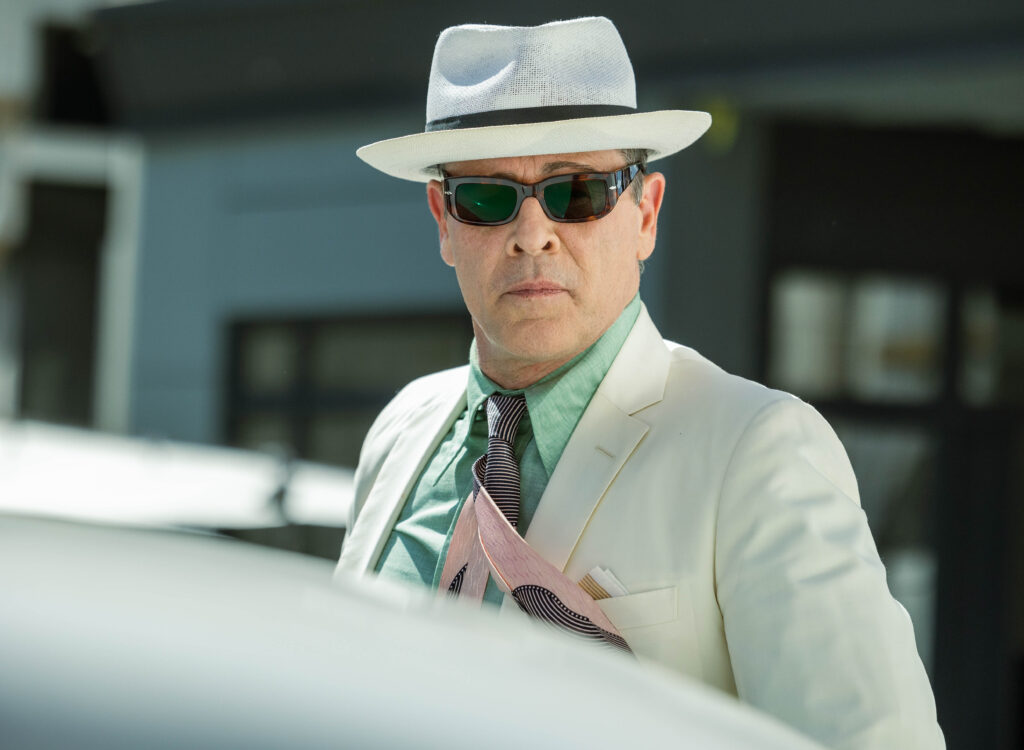
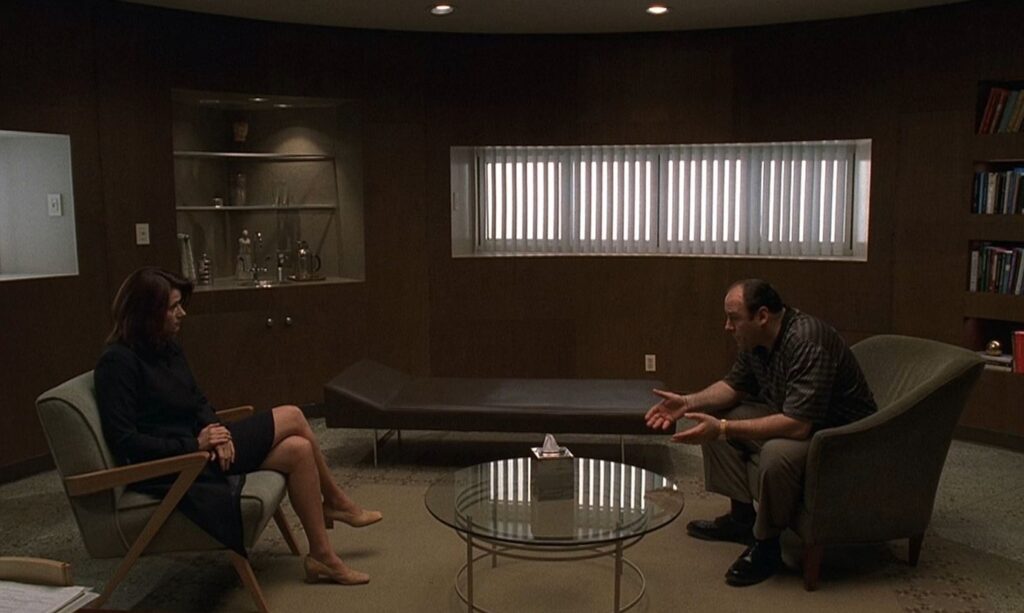
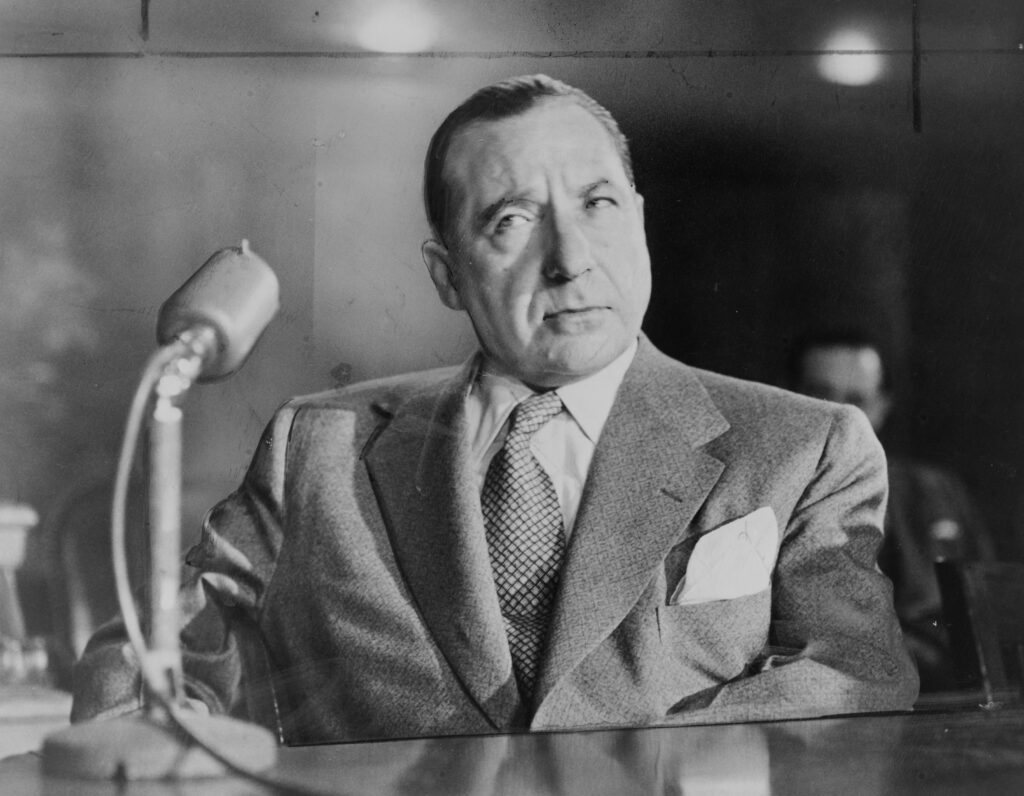
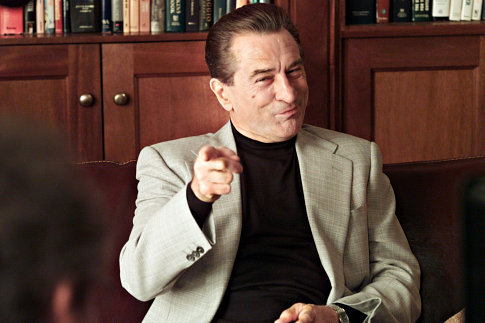
The CIA’s alliance with the Mafia during the Kennedy years to assassinate Cuban leader Fidel Castro is at the center of a new Paramount Plus original docuseries called Mafia Spies.
Using historical footage and contemporary interviews, the six-part series brings viewers inside 1950s wide-open Havana, when mobsters controlled the Cuban capital’s casinos, and then examines Castro’s takeover of the island nation and the U.S. government’s clandestine efforts to kill him.
Among other schemes, including the failed 1961 Bay of Pigs invasion, attempts to eliminate Castro included poison pills and a scuba-diving wetsuit laced with a deadly substance. None of this was successful, strengthening Castro’s image among his followers. Castro ruled Cuba for decades, dying of natural causes at age 90 in 2016.
“Mr. Castro’s defiance of American power made him a beacon of resistance in Latin America and elsewhere,” the New York Times reported at his death, “and his bushy beard, long Cuban cigar and green fatigues became universal symbols of rebellion.”
‘Incredibly wild’ story
The Paramount Plus series is based on the book Mafia Spies: The Inside Story of the CIA, Gangsters, JFK, and Castro by Thomas Maier. Executive producers Tom Donahue and Ilan Arboleda were made aware of the book and became “instantly captivated by the incredible true story and its vast potential,” Donahue said in an email.
Mafia Spies Producer Thomas Maier authored the book of the same name that inspired the docuseries. Paramount+
As the series explains, U.S. officials were concerned that Castro’s compact with the nuclear-capable Soviet Union posed a security threat, since the Caribbean country is only 90 miles south of Florida. Meanwhile, Mafia figures were upset at Castro for tossing them off the island after he overthrew the previous regime in early 1959, ending the Mob’s lucrative gaming empire in Cuba.
Johnny Rosselli, played by Nick Annunziata, was one of the mobsters approached by Robert Maheu on behalf of the CIA. Rosselli’s casino interests in Havana provided enough motive to join the hit team. Greg Lewis/Paramount+
From that cauldron, the CIA-Mafia alliance was born, involving a James Bond-like world of subterfuge and betrayal, resulting in U.S. congressional hearings. By 1976, two mobsters involved in the anti-Castro effort, Sam Giancana and Johnny Rosselli, were slain, presumably to keep them quiet about the plot, though neither killing has been solved. Giancana was shot to death at his home in Oak Park, Illinois, west of downtown Chicago. Rosselli’s body was recovered from a 55-gallon oil drum in a bay near Miami.
A third mobster, Santo Trafficante Jr., was thought by some to have been a double agent secretly assisting Cuba, too. He died in 1987 in Houston, where he had gone for heart surgery.
Tampa Mob boss Santo Trafficante Jr., played by Joseph Leone, outlived his co-conspirators and, unlike Giancana and Rosselli, died of natural causes. Paramount+
The Paramount Plus series ties together the sex scandals, deceit and tragic events, including President John Kennedy’s 1963 assassination in Dallas, that marked this period as a dark chapter in U.S. history.
Donahue said the true story of that era is so “incredibly wild” that he and his team didn’t need to embellish any facts to make it compelling. One compelling aspect is that the story is told from both U.S. and Cuban points of view.
“We traveled to Cuba and interviewed former Castro intelligence operatives and former child soldiers who fought on the Cuban side during the Bay of Pigs,” Donahue said.
According to the New York Times, Castro throughout his years in power repeatedly defied the U.S., “bedeviling 11 American presidents and briefly pushing the world to the brink of nuclear war.” Castro wielded power “like a tyrant,” overseeing a totalitarian government that had “admirers and detractors in Cuba and around the world.”
“Some saw him as a ruthless despot who trampled rights and freedoms,” the newspaper reported, while others hailed him “as a revolutionary hero for the ages.”
CIA-Mafia plots fail
The Paramount Plus series features popular personalities such as Frank Sinatra and Phyllis McGuire, who were linked to underworld figures. Also featured are U.S. cities that had an important connection to what was going on in Cuba.
These people and places are examples of the way dangerous global politics can have a lasting impact even on popular culture.
Antoinette Giancana, Sam Giancana’s daughter, is a commentator on Mafia Spies. She offers details about her father’s personal life. Paramount+
“With its retro atmosphere, entertaining narrative, and even a cameo from Sinatra, we saw a chance to create something both fun and historically significant,” Donahue said.
He added that the project stands out for its “unique blend of espionage, organized crime and political intrigue.”
“Set against the vibrant backdrop of 1960s Los Angeles, Palm Springs, Las Vegas, Chicago, Miami and Havana, the series offered a thrilling opportunity to explore classic spy and gangster movie tropes while shedding light on a pivotal moment in American history,” Donahue said.
Johnny Rosselli was close to Judith Campbell, played by Rachel Comeau. Campbell was romantically involved with both Sam Giancana and President John Kennedy. Paramount+
The executive producer said as viewers watch the series, he hopes they take away from it a “crucial lesson about accountability and the dangers of unchecked power.”
“The series sheds light on the darker aspects of U.S.-Cuba relations and the consequences of secretive organizations like the CIA operating with impunity,” Donahue said.
This theme runs throughout the series, beginning with the hedonistic pre-Castro years and ending in the public’s awareness that U.S. authorities at the highest level joined forces with criminal operatives in attempting to assassinate a foreign leader.
In the first episode, Todd Fisher, son of entertainers Debbie Reynolds and Eddie Fisher, sums up the way visitors viewed Cuba when the casinos were in full swing. Havana’s popularity as a free-wheeling gaming destination overshadowed Las Vegas, which would blossom in the desert and attract more than its share of mobsters, especially after Castro’s takeover in Cuba.
“My parents would go party in Cuba,” Fisher says, adding that it was “a cool place” with gambling and drinking.
By the final episode, change had occurred there and in the United States. The U.S. government’s efforts to topple Castro would cast a dark cloud over its covert operations.
As Castro’s dictatorship began to take hold, the mindset north of Cuba had been that the United States was a superpower that “could play the game of risk and win,” journalist and author David Corn says.
“But the secret war against Castro and Cuba failed,” he says, “and Castro survived for decades.”
Larry Henry is a veteran print and broadcast journalist. He served as press secretary for Nevada Governor Bob Miller and was political editor at the Las Vegas Sun and managing editor at KFSM-TV, the CBS affiliate in Northwest Arkansas. Today, he is a senior reporter for Gambling.com.
On July 22, 1934, “Public Enemy Number One” – John Dillinger – was killed by federal agents moments after he walked out of the Biograph Theater in Chicago. The cat-and-mouse game between the Dillinger Gang and law enforcement had finally reached its conclusion after 14 months.
Ten years earlier, Dillinger debuted on the criminal scene with life-changing consequences. At 21 years old, he robbed a grocery store owner. It was his first major crime. His well-meaning father encouraged him to plead guilty for lenience, but the judge doled out the maximum sentence. After nearly a decade behind bars, Dillinger came out a bitter and hardened man with underworld connections and training from veteran bandits.
Dillinger began robbing banks only a month after his parole in May 1933. He also paid a visit to Indiana State Prison and threw guns over the wall to help his buddies – and future Dillinger gang members – escape. Dillinger had been arrested by the time they pulled off their escape, so the fugitives returned the favor. Eight of the escaped inmates broke Dillinger out of jail in Lima, Ohio, and killed Sheriff Jesse Sarber in the process.
With his new gang in tow, Dillinger spent the rest of 1933 robbing banks and police armories. When the new year rolled around, most of the Dillinger gang had gone to Tucson, Arizona, to find a new hideout. Meanwhile, Dillinger led a smaller crew to rob a bank in East Chicago, Indiana, on January 15, 1934. During their getaway with $20,000, Dillinger exchanged fire with Officer William O’Malley and killed him. The gang had a short-lived reunion in Tucson before they were arrested on January 25.
The wooden gun escape
Dillinger was extradited to Indiana to face charges for the murder of Officer O’Malley. Authorities flew him to Indiana and held him at the Lake County Jail in Crown Point. Despite calls to move the prisoner to the higher-security state penitentiary in Michigan City, Sheriff Lillian Holley was confident the local jail was more than enough to contain him.
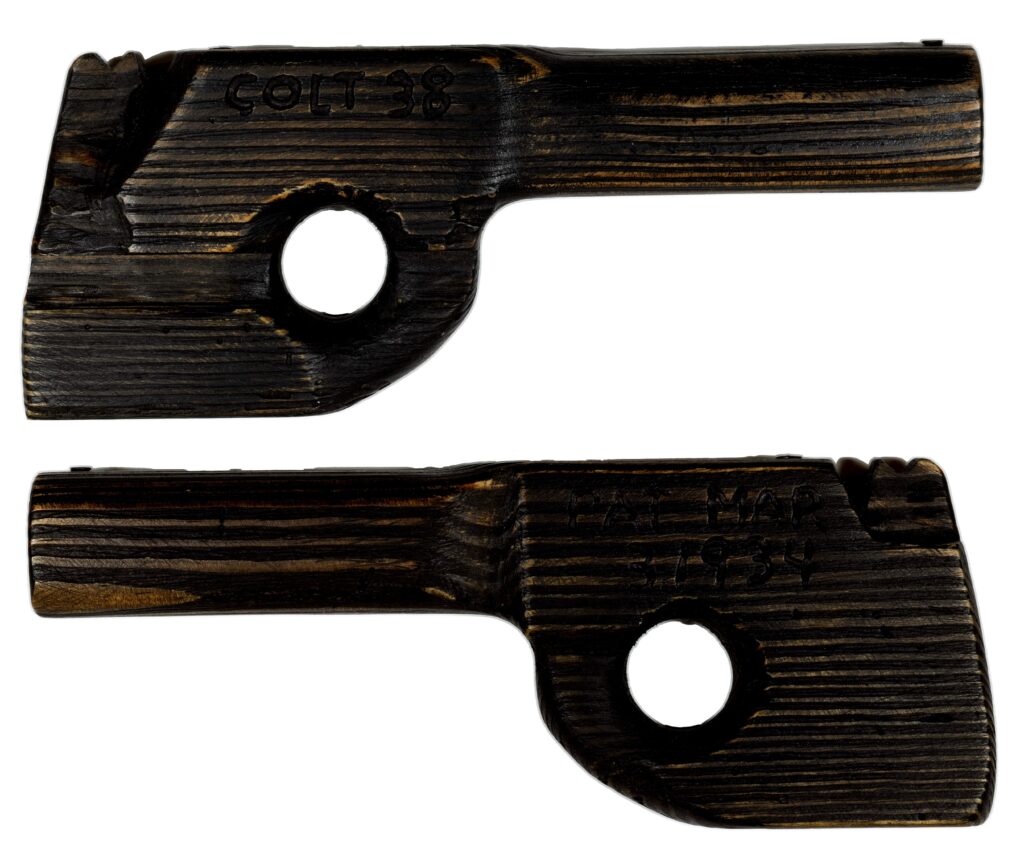
John Dillinger used this wooden gun to escape from the Lake County Jail. The inscriptions “COLT 38” and “PAT MAR 3, 1934” were added later. The latter refers to the date of the jailbreak. The Mob Museum Collection
“We do not expect to have any trouble with our newest prisoner,” Holley told reporters. “Of course, I warned him the first thing that we would stand for no monkey business. If he starts anything there will be a half-dozen deputies about the place with machine guns to take care of him.”
The jail did not hold him. Dillinger escaped on March 3, 1934.
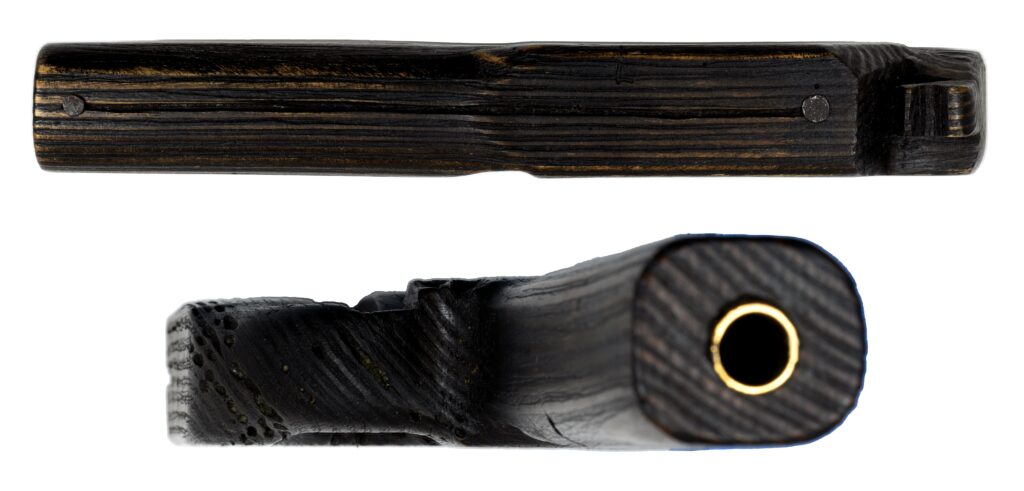
A few ornamentations add details to make the gun look more real. Two nails on top act as sights and a safety razor handle makes the barrel. The Mob Museum Collection
The details of the escape were revealed by Dillinger’s attorney, Louis Piquett, in interviews with G. Russell Girardin, whose unpublished 1935 manuscript was released by William Helmer in 1994 as Dillinger: The Untold Story. Dillinger’s first idea was to have his gang bust him out with dynamite, but that didn’t pan out. He then asked Piquett to get him a gun, but Ernest Blunk, the sheriff’s deputy who was on the take, refused. Dillinger settled for the next best thing: a wooden gun.
While Dillinger later claimed he whittled the wooden gun himself, it was the attorney’s investigator, Arthur O’Leary, who procured the gun from a woodworker. On the morning of the escape, the gun was delivered to Dillinger.
According to Dillinger’s attorney, Deputy Sheriff Ernest Blunk was paid off for his involvement in Dillinger’s escape. Blunk was charged with aiding Dillinger but was acquitted for lack of evidence. The Mob Museum Collection
While out of his cell for exercise, Dillinger pressed the fake gun into a prison trustee’s back and, with the help of Deputy Blunk’s convincing performance – he was later acquitted for lack of evidence – began forcing the prison guards into jail cells. Herbert Youngblood, a Black inmate and murder suspect bound for death row, joined Dillinger in his escape.
At first glance, the wooden gun is not terribly convincing. The 5.75-inch piece of wood has a quarter inch-diameter safety razor handle as the “barrel” and two nails on either end to simulate the sights. Shoe polish gives the gun it’s dark finish. It also lacks a grip.
Dillinger didn’t need the wooden gun to stand up to close scrutiny for his escape to work. It only had to work long enough for Dillinger to obtain real guns. Once Dillinger and Youngblood found two Thompson submachine guns, the wooden gun’s job was over, which Dillinger smugly pointed out to the now-confined warden and guards.
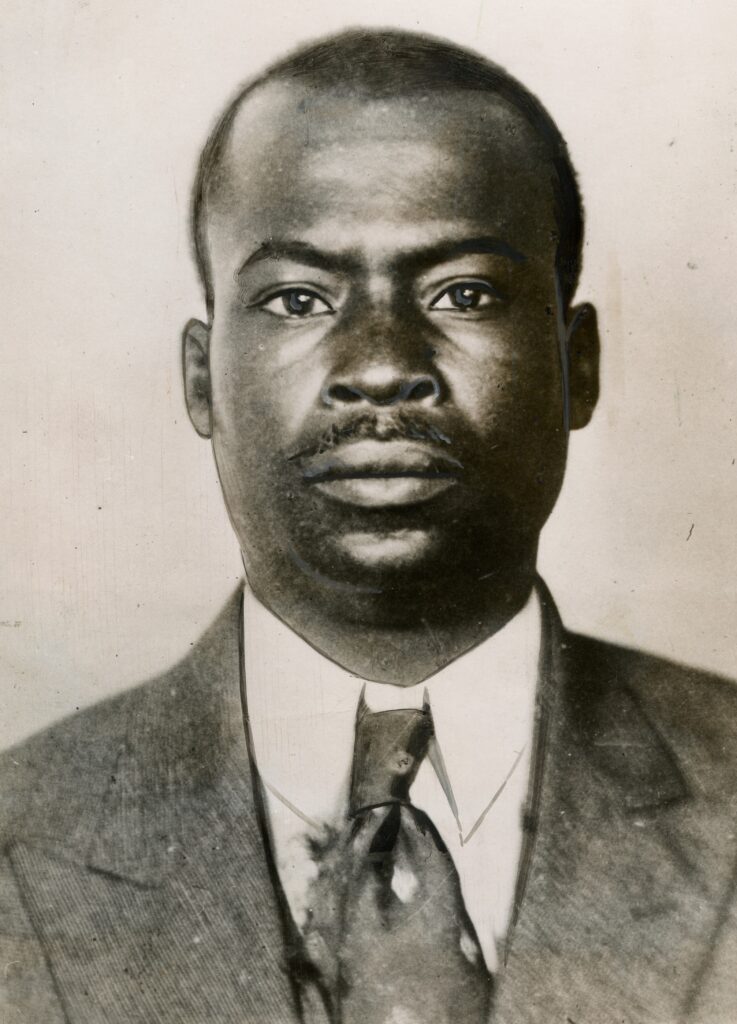
Herbert Youngblood, in jail awaiting trial for murder, joined Dillinger in his escape. Two weeks after the breakout, he was killed in a shootout with police. Some accounts say it was an uninvolved bystander who shot and killed him. The Mob Museum Collection
Edwin (sometimes mistakenly called Edward) Saager, a mechanic paid off to supply a getaway car, had Sheriff Holley’s 1933 Ford V-8 ready for Dillinger’s escape. With Blunk and Saager as “hostages,” Dillinger and Youngblood escaped to Illinois where they parted ways. Youngblood was killed in a shootout with police two weeks later.
In the coming days, the harshest criticism from the press was laid on the “lady sheriff.” One report wrote she “became hysterical” and “shrieked into the telephone” when she learned of Dillinger’s escape. Sheriff Holley defended her actions and placed the blame on those who were at the jail when he escaped. “I feel that I’m getting the blame for this just because I’m a woman. I can’t see where I was at fault,” Holley told the Chicago Tribune.
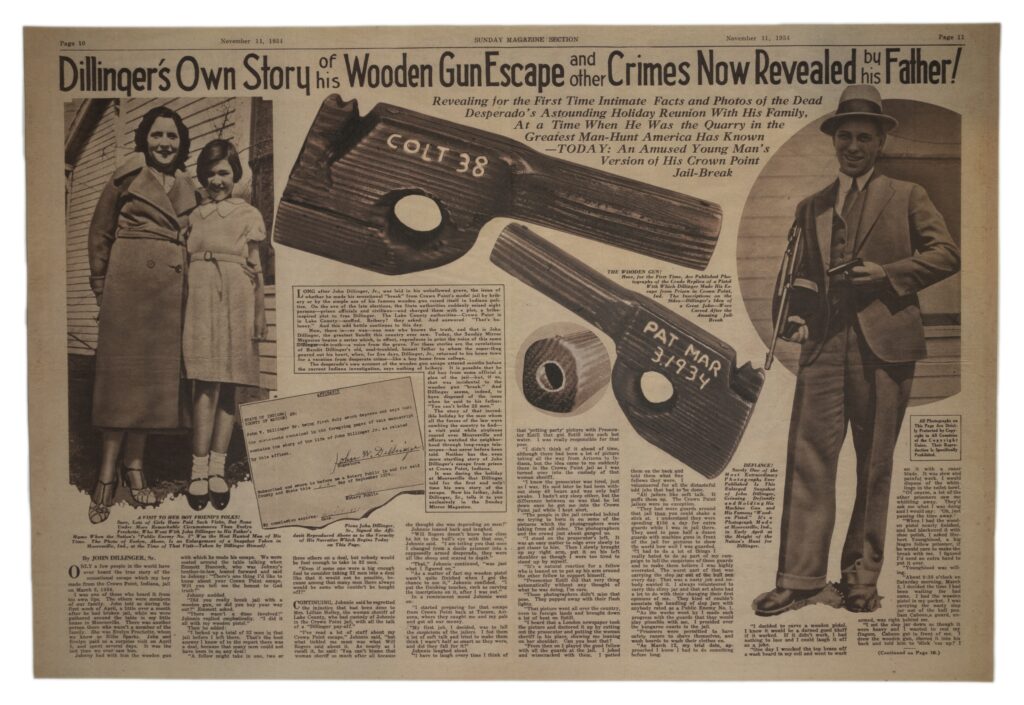
This article about Dillinger’s wooden gun escape was published four months after his death. John Dillinger’s father is credited as the author. The article features detailed photos of the wooden gun and of Dillinger posing with it. The Mob Museum Collection
Humorist Will Rogers agreed with her: “You can’t blame that woman sheriff so much after all because she thought she was depending on men!” In a post-escape visit to his home in Mooresville, Indiana, Dillinger reportedly said to his father, “Will Rogers doesn’t know how close he hit to the bull’s eye with that one.”
Sheriff Holley was clear about what would happen to Dillinger if he returned to Crown Point in a remark to the judge in the Dillinger case: “If I get him back, you won’t try him, judge. You may try me instead.”
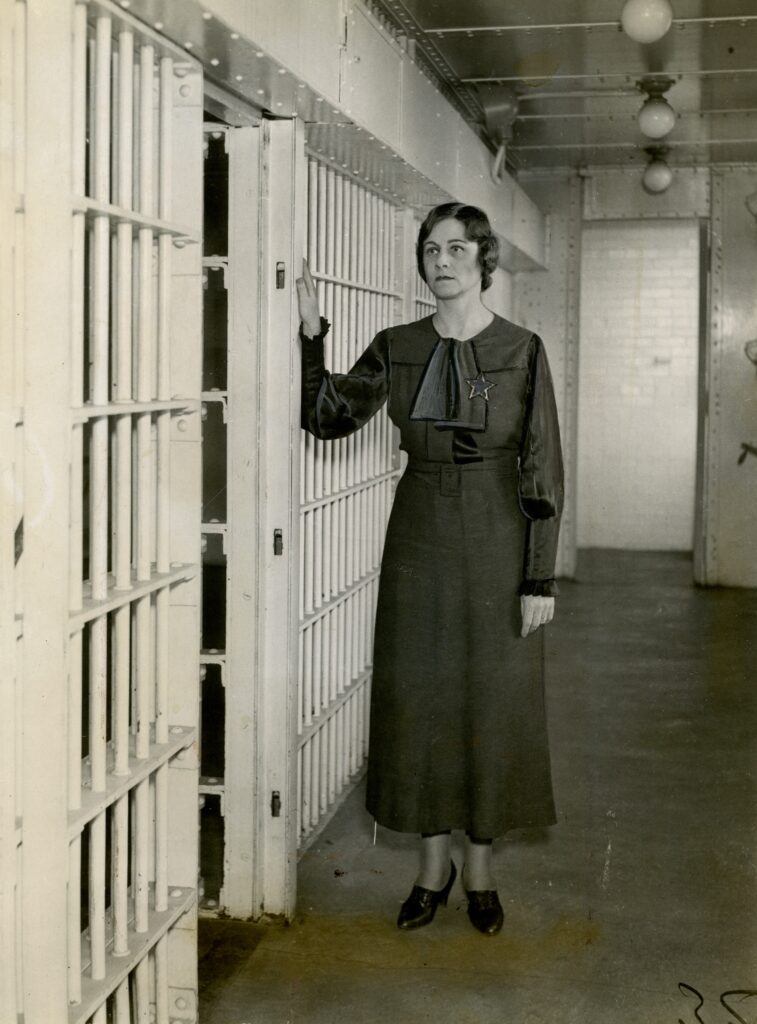
Sheriff Lillian Holley took over after the previous sheriff, her husband, was killed in a shootout. Holley announced she would not seek another term two days after Dillinger escaped. The Mob Museum Collection
War on “public enemies”
The response to the epidemic of folk-hero bank robbers transformed federal law enforcement. J. Edgar Hoover originally envisioned his fledgling Bureau of Investigation (renamed the Federal Bureau of Investigation in 1935) as a force of lawyers and accountants who took down criminals with paperwork. He was reluctant to get involved with the problem of violent crime. The Kansas City Massacre in 1933 changed all that when a group of law enforcement officers, including one of Hoover’s agents, were ambushed and killed in a botched attempt to free bank robber Frank “Jelly” Nash. Hoover learned the hard way that FBI agents needed to be armed after losing four agents between June 1933 and November 1934.
In response, Attorney General Homer Cummings and President Franklin Roosevelt became dedicated to fighting crime on a federal level. 1934 saw a slew of new laws passed: federal agents received a congressional mandate to carry firearms, robbing banks became a federal crime, and the feds could pursue stolen cars and kidnappers across state lines.
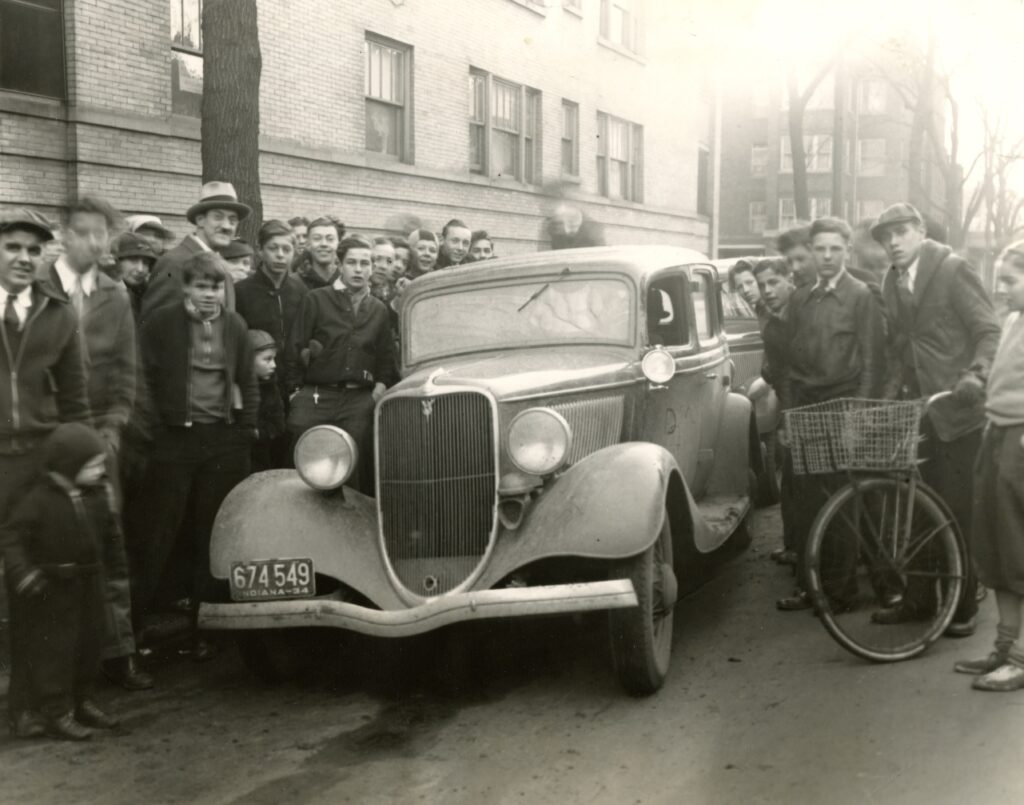
Authorities found Sheriff Holley’s stolen car abandoned on Chicago’s North Side the night of Dillinger’s escape. Police kept surveillance on the vehicle in case the fugitive or an accomplice returned for it, to no avail. The Mob Museum Collection
Dillinger crossing into Illinois with the sheriff’s stolen car put him in the FBI’s crosshairs. From March to July, federal and local law enforcement played a cat-and-mouse war of attrition with the Dillinger Gang. Dillinger’s allies were gradually arrested, wounded or killed during each skirmish.
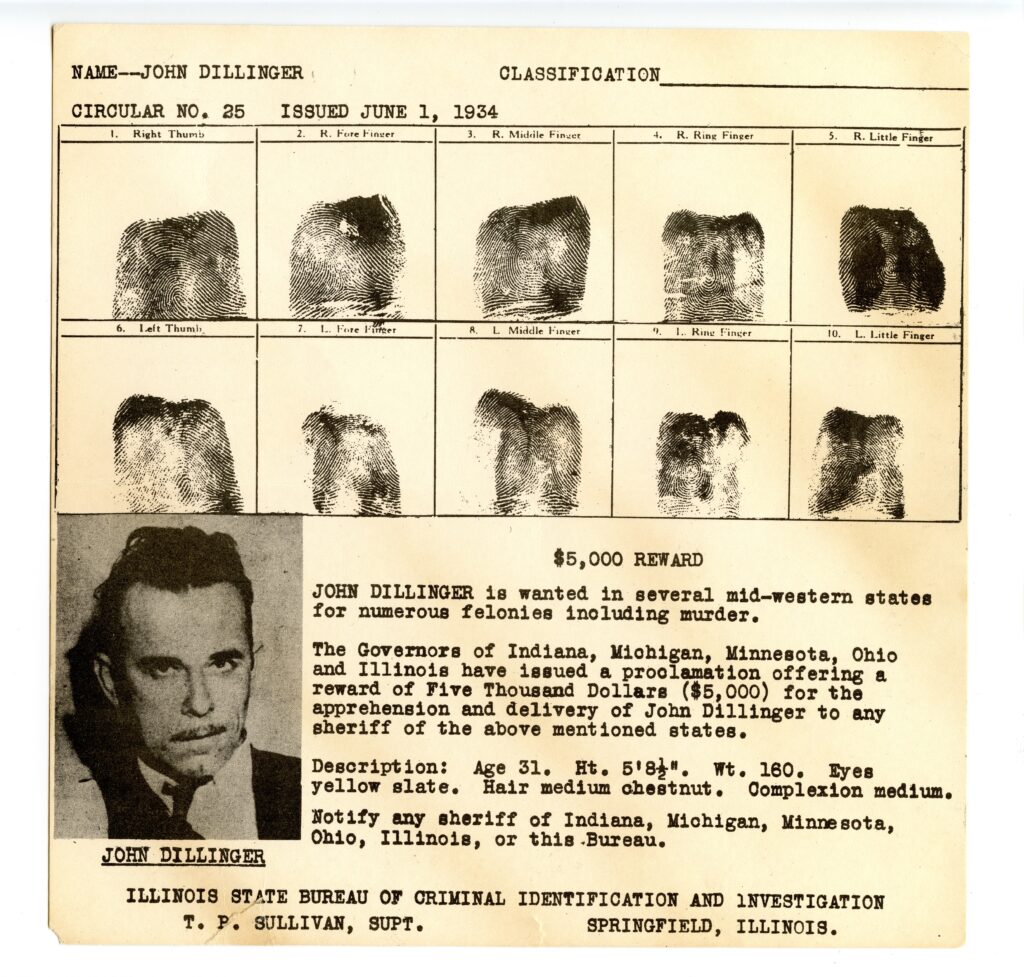
While hiding out in Chicago in May 1934, the increasingly desperate Dillinger had plastic surgery to change his facial features and attempted to have his fingerprints surgically removed, although they eventually grew back mostly intact. With a new face, Dillinger committed his final bank robbery on June 30, 1934, in South Bend, Indiana, alongside Homer Van Meter and “Baby Face” Nelson. Shortly after, Dillinger found a new hideout at the Chicago home of brothel madam Anna Sage (née Cumpănaș), an association that would have fatal consequences.
Days after the release of this fingerprint card and wanted poster, Dillinger had his fingerprints surgically removed by physician Wilhelm Loeser, who also performed plastic surgery on him a week earlier. The Mob Museum Collection
The death of Dillinger
On July 22, 1934, Dillinger went to the movies with two lady companions, Sage and Polly Hamilton, a new girlfriend after Billie Frechette was arrested three months earlier. He had fittingly gone to see Manhattan Melodrama, a gangster movie starring Clark Gable.
Sage, trying to stave off her looming deportation, secretly met with Melvin Purvis, the special agent in charge of the FBI’s Chicago field office, and revealed Dillinger’s theater plans.
Dillinger walked out of the theater with the two women to an ambush. The agents knew it was Dillinger because Sage wore an orange skirt as a signal, which led to the press mistakenly labeling her the “woman in red.” As Dillinger fled down an alley, he was shot from behind. The bullet entered through the back of his neck and exited under his right eye.
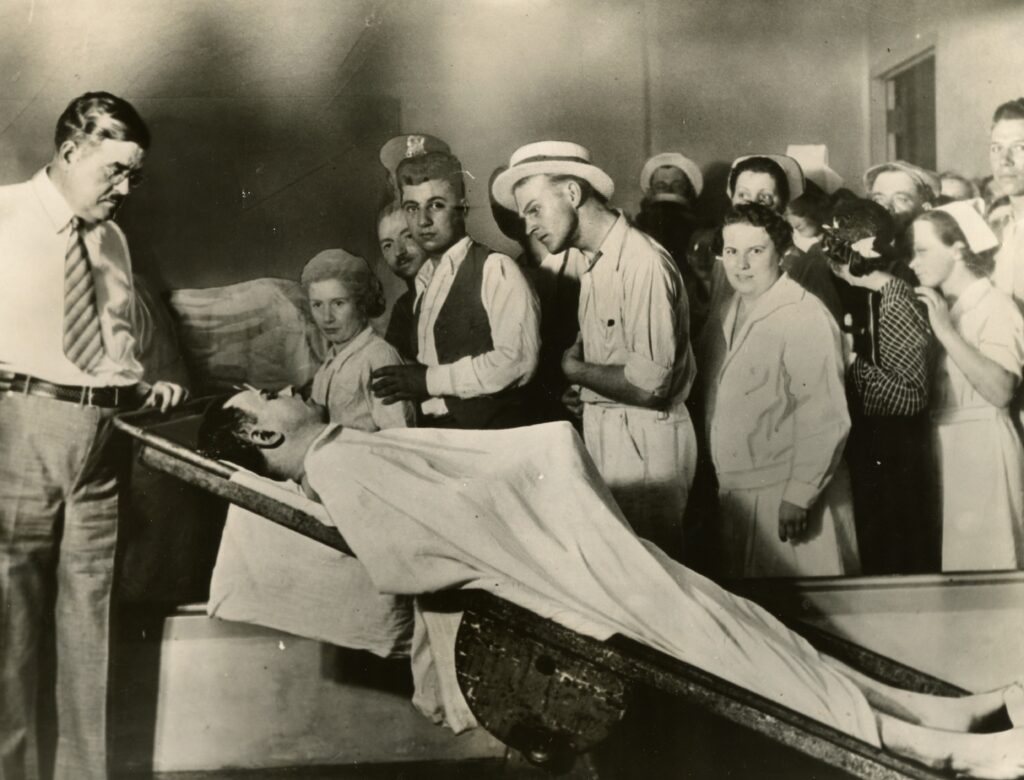
Dillinger’s corpse at the morgue attracted crowds of onlookers in the days following his death. The photo, which shows sheet draped over Dillinger’s arm set in with rigor mortis, led to sensational interpretations by the public. The Mob Museum Collection
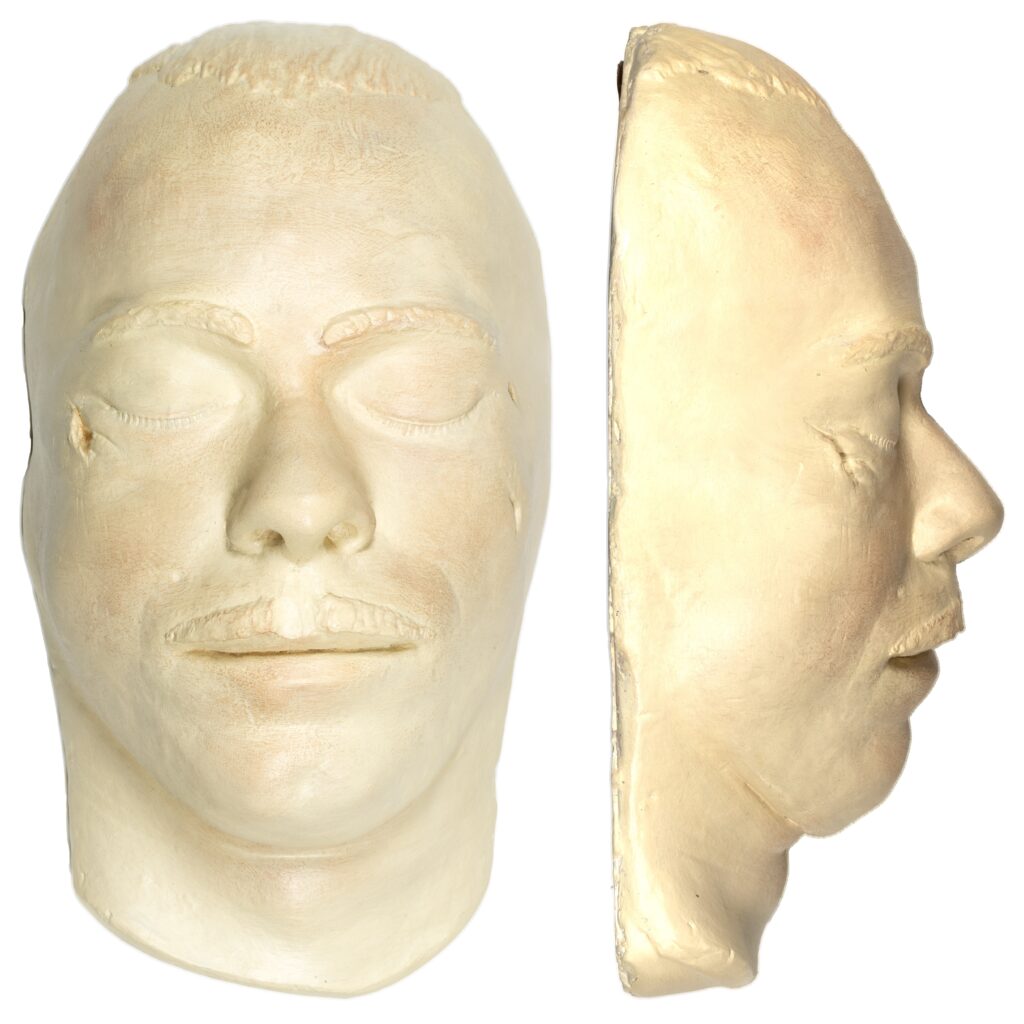
Dillinger’s older sister, Audrey Hancock, identified his body in the morgue. His body received many more visitors, including those who wanted to make a death mask of the slain outlaw. Four different molds were created of his face of varying quality. The funeral home director later noted that Dillinger’s face was missing facial hair and skin from all the molds.
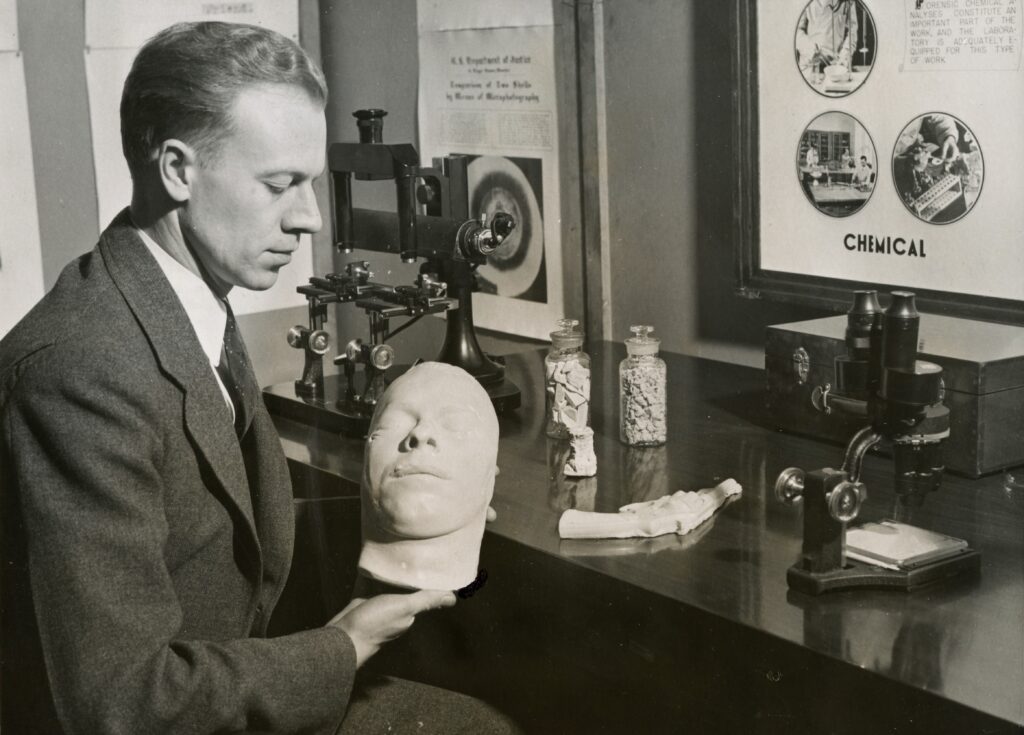
Harold May, president of the Reliance Dental Supply Company, made the second mold of Dillinger’s face, supposedly to show off a new mold-making material called “Reprolastic.” May sent a cast of the death mask to FBI Director Hoover, who allowed trainees at the FBI National Academy to make copies of the mask as part of a forensic modeling training program.
This plaster cast from May’s mold was colorized slightly to add contrast for facial features and hair. The exit wound from the fatal shot can be seen below Dillinger’s right eye. The Mob Museum Collection
Before the advent of photography, death masks preserved the appearance of deceased famous people, such as Beethoven, Sir Isaac Newton and Mary Queen of Scots. The masks served as references for sculptures and portraits. Death masks took on renewed interest in the 1800s because of phrenology, the belief that the size and shape of the skull and face revealed psychological characteristics, often used to justify racism, classism and sexism. The practice of making death masks was uncommon by 1934, but America’s Dillinger fever made an exception.
D. J. Parsons of the Federal Bureau of Identification shows off a cast of John Dillinger’s death mask at a convention of the American Association for the Advancement of Science in St. Louis, Missouri. The Mob Museum Collection
Dillinger’s death was just one of the successes the FBI had in its crusade against bank-robbing outlaws. By the end of 1936, most of Hoover’s “public enemies” were either dead or in custody. The newly armed FBI could now go toe-to-toe with well-armed criminals, although it would be a few decades before they would take an active role in the fight against America’s organized crime syndicates.
The 1983 movie Scarface, featuring Al Pacino in the title role, continues to attract attention more than 40 years after it premiered.
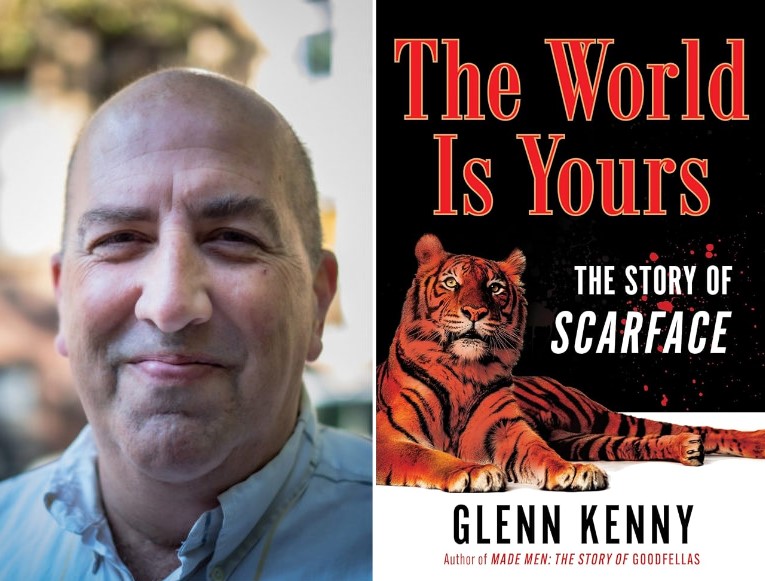
Regarded as a cult classic, the Brian De Palma-directed gangster movie, focusing on South Florida’s violent drug wars of the 1980s, is back in the news with the recent publication of The World Is Yours: The Story of Scarfaceby film critic Glenn Kenny.
As with his earlier book, Made Men: The Story of Goodfellas, Kenny, in The World Is Yours, interviews people involved in making the movie, providing insights into how it came together and what its impact has been culturally through the years.
In Scarface, Pacino portrays Tony Montana, an outlaw who arrives in the United States as part of the Mariel boatlift from Cuba. He starts out working at the small El Paraiso sandwich shop in Miami before finally becoming a major drug lord.
Written by Oliver Stone, the movie is a remake of Scarface: The Shame of a Nation, released in 1932. That version stars Paul Muni as Tony Camonte, a Prohibition-era bootlegger loosely based on Chicago’s Al “Scarface” Capone. The earlier version even includes a depiction of the 1929 St. Valentine’s Day Massacre, in which seven Chicago gangsters and associates were shot dead in a North Clark Street garage. Though no one was ever prosecuted for the killings, Capone’s Chicago Outfit was thought to have ordered the hit.
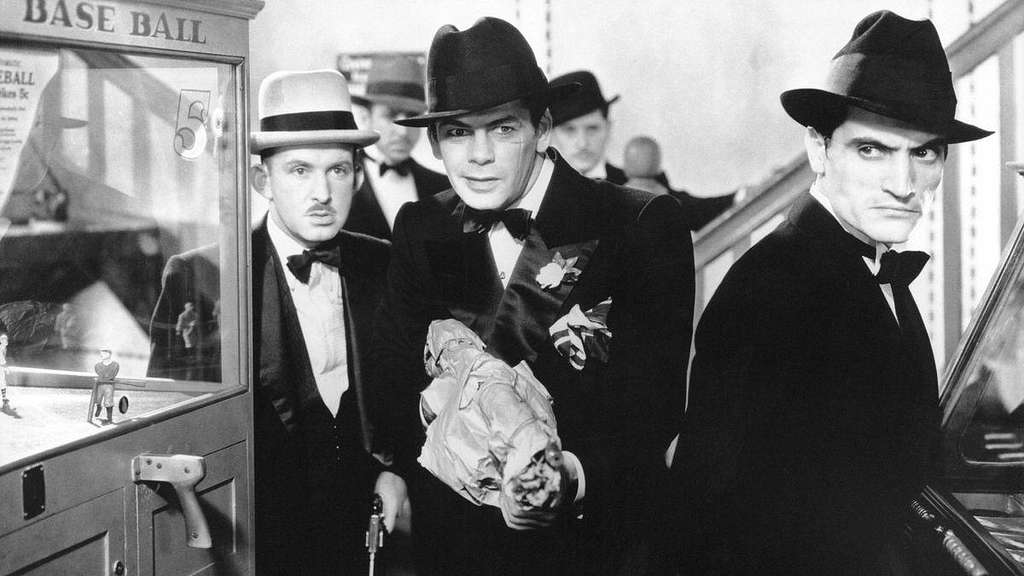
Paul Muni, center, stars in the original 1932 Scarface as Tony Camonte, a violent gang leader loosely based on Al Capone whose rise to power is as bloody as his demise.
The 1932 version of Scarface, directed by Howard Hawks and produced by Howard Hughes, was written by Ben Hecht. As a former newspaper reporter, Hecht was familiar with the Chicago underworld. According to published accounts, Hecht said he spent time during those years at “police stations, courtrooms, theater stages, jails, saloons, slums, madhouses, fires, murders, riots, banquet halls and bookshops.”
A few years before Scarface was released, Hecht teamed with another Chicago journalist, Charles MacArthur, in writing The Front Page, a stage play later made into several radio dramatizations and movies.
According to Kenny in The World Is Yours, Hecht was lured to Hollywood by writer Herman J. Mankiewicz, who, in a telegram, mentioned the money he could make in the movie industry: “Millions are to be grabbed out here and your only competition is idiots.”
Stone, a former Vietnam War combat soldier who wrote 1983’s Scarface, also achieved success in Hollywood. In addition to other films, Stone’s Academy Award-winning resume includes writing and directing the Vietnam War movies Platoon and Born on the Fourth of July.
Pacino rants and raves
The two versions of Scarface, appearing 50 years apart, are similar in several ways, including the lead gangster in each film being obsessed with his sister’s love life. Both men also are inspired by the slogan “The World is Yours.”
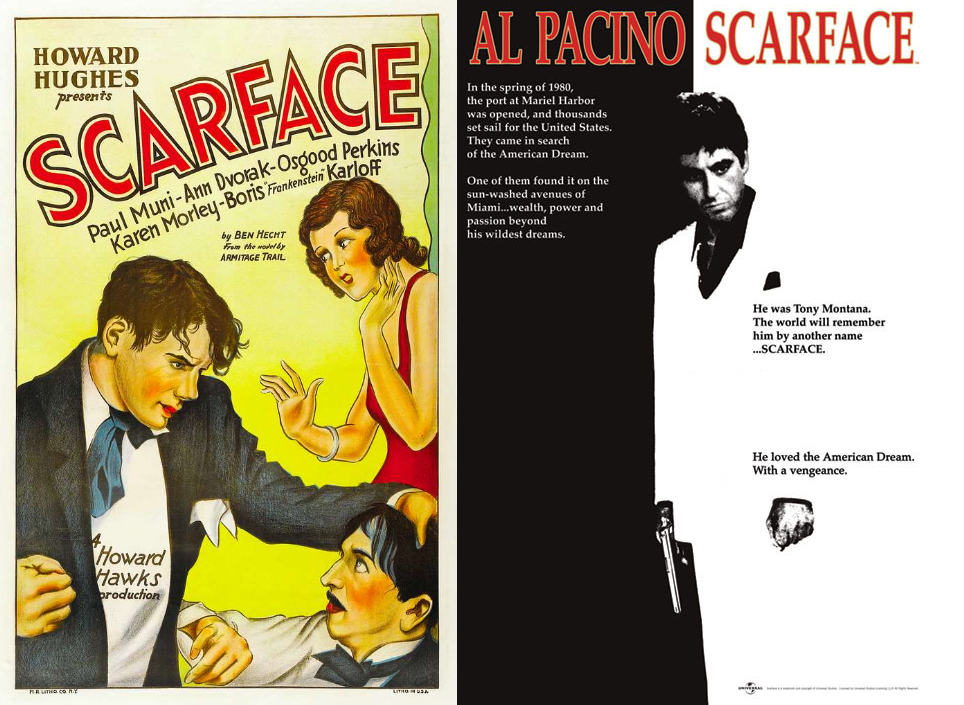
The 1983 Scarface is a remake of the 1932 movie of the same name inspired by Al Capone but changes the setting from Prohibition-era Chicago to the 1980s in Miami. Scarface (1983) poster courtesy of Universal Pictures
During each movie, the main character is gunned down at the end. In the 1983 film, the final shootout leads to Pacino’s famous line, “Say hello to my little friend,” as he uses a heavy firearm equipped with a grenade launcher to blast assassins sent to take him out.
In The World Is Yours, Kenny notes that the director had Pacino play the role to the hilt. By then, Pacino, an experienced stage actor, also was a major film star dating back to his role as Michael Corleone in 1972’s The Godfather.
De Palma said Pacino approached the role in Scarface “a little operatically.” “Being the great stage actor that he is, he could, you know, rant and rave with great skill,” De Palma said. “And it worked, as he gets crazier and crazier and drug-filled as the movie goes on.”
Other similarities exist between the two Scarface movies. For instance, the Pacino and Muni characters employ thick accents, and each has a facial scar, though the scar is only mentioned early in both movies. In each case, the source of the scar is vague.
The Muni character, Tony Camonte, dismisses his scar as a war wound. Camonte’s Mob boss jokes that it was from a war “with a blond at a Brooklyn speakeasy.”
In the 1983 version, the Pacino character, whose scar rips through an eyebrow and down one cheek, said it was something he got as a kid. “You should see the other kid,” he says. “You can’t recognize him.”
‘High fun,’ not ‘high art’
In writing The World Is Yours, Kenny, whose work appears in The New York Times and other media outlets, said he was happy to “explode some myths” in the book.
“People frequently ask me if the filmmakers were on cocaine while making the picture,” he said in a Facebook direct message. “If they had been, there certainly would have been some deaths on the set. Just as Al Pacino did not do heroin to research Panic in Needle Park, he’s never touched cocaine and neither has director Brian De Palma.”
Kenny added that Stone had a cocaine habit when he was commissioned to write the script. “This came in handy when he went to Miami and Bimini to hang out with drug runners to do his research,” Kenny said. However, when the time came to write, Stone went to Paris, “where the drugs were harder to come by.”
Film critic Glenn Kenny tells the behind-the-scenes story of Scarface in his latest book, The World is Yours: The Story of Scarface, published in May of this year. Photo of Kenny by Zach Barocas
In his books on Scarface and the Martin Scorsese-directed Goodfellas, Kenny explores the characters who keep gangster films like these in the limelight.
“While Henry Hill in the Scorsese picture is a freewheeling foot soldier, Tony Montana is a self-made kingpin, a guy who has to win no matter the cost,” Kenny said. “In his first meet with the Colombian traffickers he’s immediately cognizant of the fact that he’s in a binary situation in which he can either win or die. No other options. And he’s steely enough to be comfortable with that. It’s his environment. That’s why he is such an iconic character.”
Organized crime expert and author Scott Deitche said the 1983 version of Scarface remains popular in part because of its influence on pop culture, “whether in hip hop, art or other mediums.”
Deitche, a Mob Museum Advisory Council member, said the movie never takes itself too seriously. “Scarface is not high art, it’s high fun, and Pacino’s performance takes it over the top,” Deitche said in an email. “It’s an incredibly rewatchable, and quotable, movie.”
A Florida resident, Deitche is the author of several Mob-related nonfiction books, including Cigar City Mafia: A Complete History of the Tampa Underworld.
Deitche said Scarface, though fictional, mirrors the Miami drug scene of the 1980s.
“When the Mariel boatlift occurred, that brought a cadre of Cuban criminals that merged in with the existing drug scene in Miami, setting up conflicts both between different groups and intra-organization violence,” he said. “This was depicted well in the movie. Miami had the highest murder rate of any major U.S. city in 1980 and 1981. That was primarily due to the drug wars.”
Larry Henry is a veteran print and broadcast journalist. He served as press secretary for Nevada Governor Bob Miller and was political editor at the Las Vegas Sun and managing editor at KFSM-TV, the CBS affiliate in Northwest Arkansas. Today, he is a senior reporter for Gambling.com.
Ten years ago, the confessions of a California-based hitman revealed new information on decades-old unsolved cases and offered a glimpse into the shadowy domestic operations of Mexican drug cartels.
In the summer of 2013, the national media began to report on a developing story from Lawrence County, Alabama. The news of the potential capture of a serial killer caught the attention of many, with headlines and television reports spreading the information, albeit limited and brief in scope. The reports began when local officials announced a surprising confession from a man in custody on a murder charge.
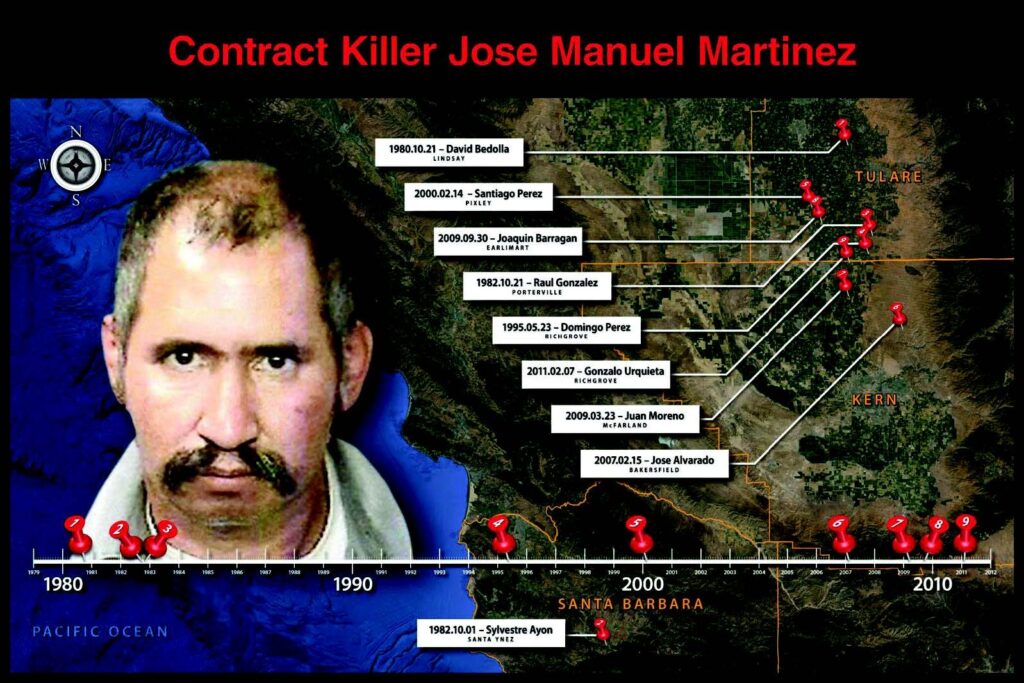
A visual aid presented at a press briefing in 2014 highlighted the individuals and areas where Jose Manuel Martinez was accused of committing murders in three different counties. Courtesy of Tulare County District Attorney’s Office
Jose Manuel Martinez, a charismatic, 50-year-old father and grandfather from California’s Central Valley, was apprehended in Arizona on May 17, 2013, by Border Patrol agents on an Alabama murder warrant.
Martinez was extradited to face charges for the murder on March 4 that year of Jose Ruiz in Danville, Alabama. He confessed to the killing, saying the crime was a matter of honor rather than business, reportedly due to disparaging remarks Ruiz made about his daughter.
He also claimed responsibility for more than 30 unsolved murders across the country as a freelance sicario.
A sicario is born
Born in 1962 in Fresno, California, Martinez had a unique upbringing that exposed him to contrasting worlds. He spent part of his early childhood in Mexico but returned to California as a preteen. There he witnessed the daily struggles of hardworking migrant farm workers who strived to make ends meet. He was also surrounded by the secretive and ever-present influence of organized crime, including his own stepfather, a heroin trafficking ringleader convicted in 1977 and sent to Lompoc prison for several years.
Martinez’s formative years were marred by a devastating loss when his older sister was raped and murdered in 1978. That family tragedy ignited a deep desire for vengeance, which led him down a dark path. The 16-year-old Martinez hunted down and murdered the three men he believed were responsible for his sister’s death and buried them “on top of each other” in a shallow grave. Martinez had discovered a vocation from which there was no turning back.
On October 21, 1980, Martinez carried out his first professional murder contract by killing 23-year-old David Bedolla in a drive-by shooting.
The black hand
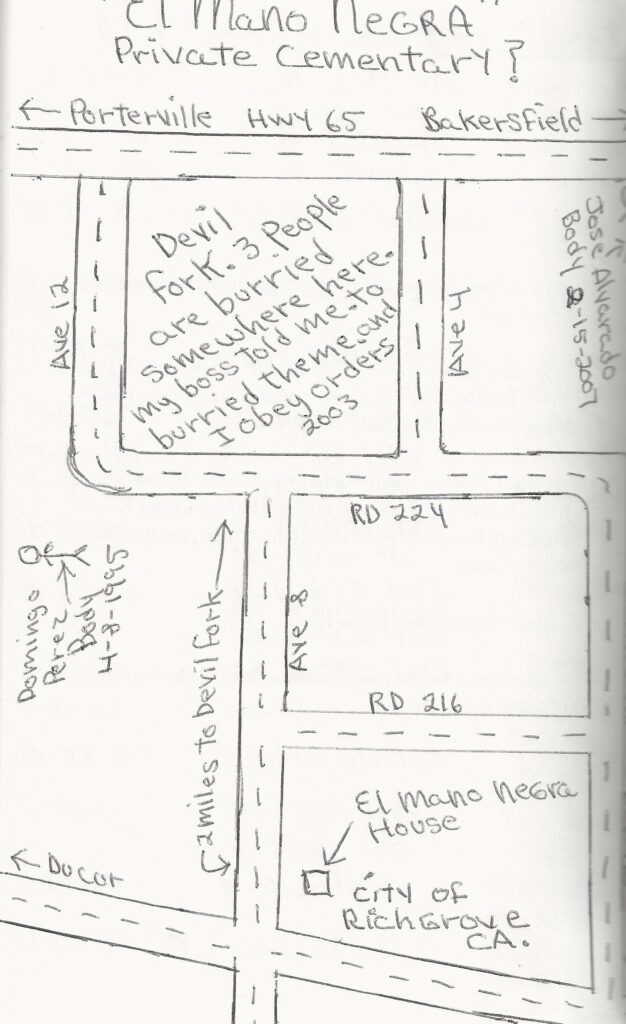
Although the headlines about the alleged cartel serial killer eventually faded, law enforcement continued to explore Martinez’s claims in hopes the discoveries would bring closure to cold cases. While awaiting trial in Alabama, investigators periodically interviewed him, and many of Martinez’s claims held true. He provided intricate details that only the perpetrator could have known, such as victim descriptions and the types of spent ammunition left at some scenes. He also drew maps and diagrams of the crime scenes. This was productive information regarding unsolved murders in Martinez’s California hometown and neighboring counties.
A visual aid presented at a press briefing in 2014 highlighted the individuals and areas where Jose Manuel Martinez was accused of committing murders in three different counties. Courtesy of Cipollini Collection
A 2013 summary report from the Santa Barbara County Sheriff’s Office divulged details about the sicario’s method and nickname:
“For Martinez’s contract killings, he would usually conduct surveillance on the target for a few days. One particular job Martinez spent one week doing surveillance, establishing the target’s pattern. Martinez usually has a bodyguard with him. The client supplies the firearm for the job; this way he never uses the same weapon for different targets. Martinez practices his shooting regularly. When he was a young man, he shot guns so much an old man called him ‘the black hand’ because of the gunpowder that was darkening his skin on his shooting hand. This became more relevant after establishing his career, with an aka of El Mano Negra.”
When he was arrested, Martinez had a considerable rap sheet and several stints in jail. Most were drug and human trafficking charges and probation violations, but no major violent crime charges. He somehow remained largely off the radar and was effectively a phantom sicario for more than three decades. From an economic perspective, his work yielded the greatest results when he managed to collect debts from his victims, from which he earned a generous percentage. In 2018 he wrote: “Killing people is not where the money is; collecting drug that is where the money is.”
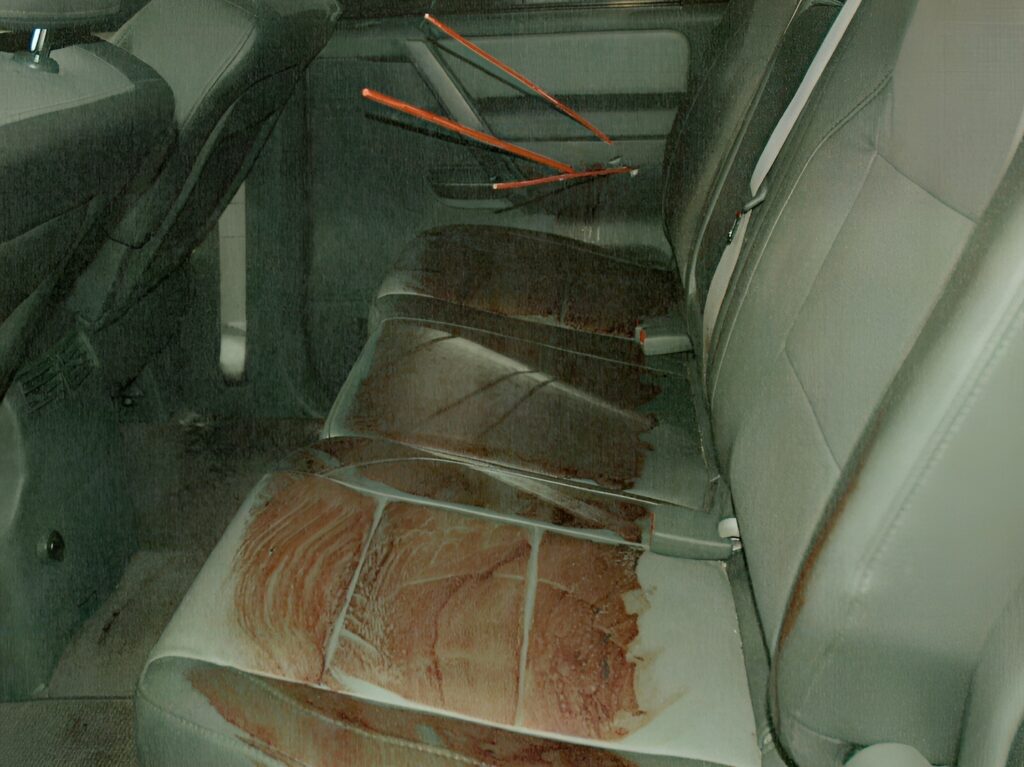
Truck interior where the bound bodies of Javier Heurta and Gustavo Olivares-Rivas were shot in 2006. Florida prosecutors pursued the death penalty for Martinez in this double homicide, but the jury opted for life in prison. Courtesy of Cipollini Collection
Killing for the cartel
Martinez was cooperative to a certain extent with investigators. However, he staunchly declined to reveal the identities of his partners, employers or the locations of buried bodies. When Tulare County detectives tried to pry information from him, he told them bluntly, “I’m not your teacher.”
Furthermore, tensions escalated whenever drug cartels were mentioned, as demonstrated in a 2014 interview:
DETECTIVE: “Let me ask you this: Do you have connections and information on the cartels?”
MARTINEZ: (Laughs)
DETECTIVE: “No, hear me out before and whether you do or not, just hear me out.”
The conversation took a few different turns as the detective revisited other unsolved cases from Tulare County. Martinez later denied them once more:
MARTINEZ: “Uh-huh, I don’t talk about cartels.”
DETECTIVE: “All right. Well, that’s your choice then. I can’t force you to.”
MARTINEZ: “Yeah.”
DETECTIVE: “But I’m just throwing that offer out there. I’ve already spoken to people at the federal level, and they would love to come and talk to you, but they’re not going to waste their time coming here.”
MARTINEZ: “I understand. Yeah.”
Martinez’s affiliation with the cartel gradually became apparent during numerous interviews and statements, even though he was hesitant to disclose precise information. When asked about Joaquin “El Chapo” Guzman, Martinez vaguely responded, “I cannot give — yes, I know El Chapo, something like that.” He gave subtle hints at his Sinaloa connections in discussions with investigators from Alabama and Florida, as summarized in police reports.
What isn’t so vague is the Sinaloa Cartel’s notoriety. The loosely associated drug traffickers of Sinaloa, Mexico, saw more cohesion by the early 1980s. Their leaders, based in Guadalajara, earned international infamy in 1985 after the brutal murder of DEA agent Enrique “Kiki” Camarena. It was this organization, later known collectively as the Sinaloa Cartel, that had tentacles reaching into California by the 1960s and ’70s. Martinez claims to have done freelance work, but his role in the United States was predominately to carry out enforcement and collection for the Sinaloa Cartel network.
His unpublished memoir provides more hints about his affiliation with El Chapo and the Sinaloa Cartel. “The state of Sinaloa had lost the best hitman,” he wrote about his 2013 arrest. Martinez also recounted a story about his superior, referred to only as “Mr. X,” hosting with “special friend”: “At 1:30 pm my compadre arrived … with El Chapo. They talked for almost an hour. El Chapo had three other men with him. Keep in mind – back in 1991 El Chapo wasn’t famous. He was very rich, but not famous yet. He became famous after escaping Puente Grande prison in Mexico.”
It’s not business, it’s personal
“I left dead people everywhere, rivers, lakes, trucks, roads, orange fields, grape fields, you name it,” Martinez wrote in a 2018 postcard to the author. El Mano Negra’s bloody reign began with the revenge killing of his sister’s murderers and concluded with another act of retaliation in the Ruiz case. Most of the murders in between were sanctioned hits or contract jobs.
The Alabama trial reached a resolution when Martinez pleaded guilty and was sentenced to 50 years in prison in June 2014. California authorities extradited Martinez soon after.
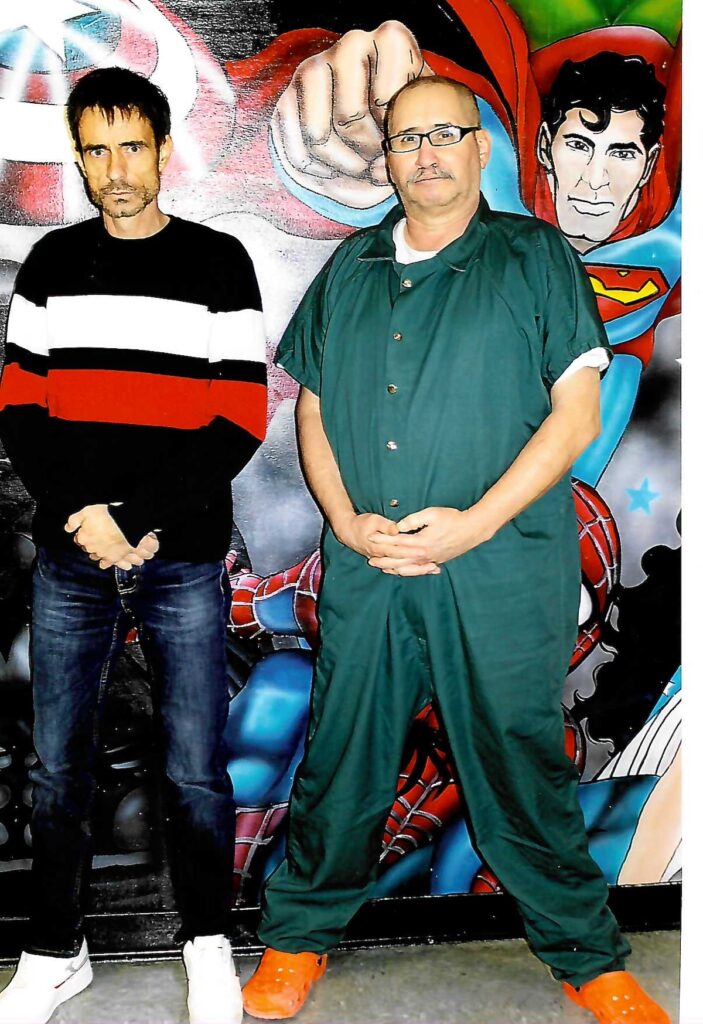
Author’s prison visit with Jose Manuel Martinez in December 2023 in a California penitentiary where he is still serving his time today. Courtesy of Cipollini Collection
They formally charged him with nine counts of first-degree murder and one count of attempted murder. These charges also encompassed “special circumstances,” including lying in wait, kidnapping and murder for financial gain. Because the murders occurred in three different counties, officials agreed to consolidate them into a single trial in Tulare.
In September 2014, U.S. marshals moved Martinez to the Tulare County Adult Pre-Trial Facility in Visalia for arraignment. After waiting more than a year for the trial to start, he received 10 consecutive life sentences. Authorities in Florida announced their intent to pursue the death penalty and initiated the extradition process for Martinez for the double homicide of Javier Huerta and Gustavo Olivares-Rivas in 2006. The trial began and ended in June 2019 with Martinez’s fate in the jury’s hands. The panel opted for life in prison, saving Martinez from death row. He is currently serving his time in a U.S. penitentiary in California.
If all his claims are true, then there remain at least 23 unresolved murder cases.
Author’s note: Since 2018, I have maintained communication with Jose Manuel Martinez via mail, phone, video visitation and in-person meetings, and collected materials related to his cases. In late 2024, Gorilla Convict Publications will release his handwritten memoir, accompanied by an extensive collection of investigation materials, photographs and diagrams. This publication will mark the first time these materials have been made available to the public.
Christian Cipollini is the author of Murder Inc.: Mysteries of the Mob’s Most Deadly Hit Squad and LUCKY, a gangster graphic novel.
On the Waterfront, which debuted 70 years ago this summer, is a ground-breaking tale about dockworkers standing up to a Mob boss on the piers along the Hudson River.
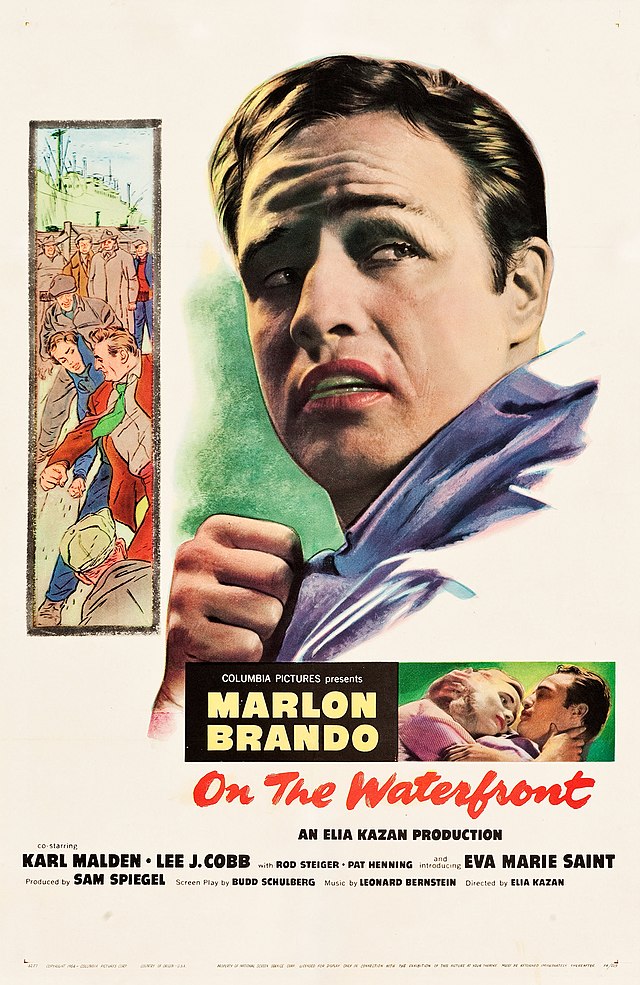
Starring Marlon Brando as Terry Malloy, a longshoreman and former prize fighter, the 1954 movie won eight Oscars, including a Best Actor award for Brando. It also won the Academy Award for Best Picture.
Filmed mainly in Hoboken, New Jersey, the black-and-white movie depicts an era when organized crime figures ruled the docks and determined which obedient longshoremen got paychecks. The Hoboken Historical Museum website has a map showing locations from the movie. “Much has changed since On the Waterfront was filmed in 1953,” the website states.
For years, however, the harbor docks were a rough place, run by Mafia families exerting influence over the International Longshoremen’s Association (ILA).
“Since the 1930s, the Genovese and Gambino borgatas had divided the waterfront loot, which was derived mainly from employee payoffs and from defrauding union welfare and benefit funds,” wrote former New York Times reporter Selwyn Raab in his book Five Families: The Rise, Decline, and Resurgence of America’s Most Powerful Mafia Empires.
The world Raab describes in Five Families is dramatized in On the Waterfront.
“The Gambinos controlled the ILA locals and chicaneries in Brooklyn and Staten Island,” Raab wrote,“and the Genovese domain was the Manhattan and New Jersey piers.”
The movie’s authenticity is enhanced by the casting, which includes real dock workers and others who weren’t professional actors.
In TheUltimate Book of Gangster Movies, authors George Anastasia and Glen Macnow note that three tough characters in the movie are portrayed by “real ex-boxers who fought Joe Louis for the heavyweight title — Tony Galento, Tami Mauriello and the gargantuan Abe Simon.”
Boxing plays an important part in the film. At one time, Malloy believed he had a promising career in the ring, but instead he was part of the Mob’s scheme to throw fights to win rigged bets.
The 1954 film On the Waterfront was inspired by a series of articles titled Crime on the Waterfront by Malcolm Johnson, a New York Sun reporter whose work won a Pulitzer Prize in 1949. Courtesy of Columbia Pictures
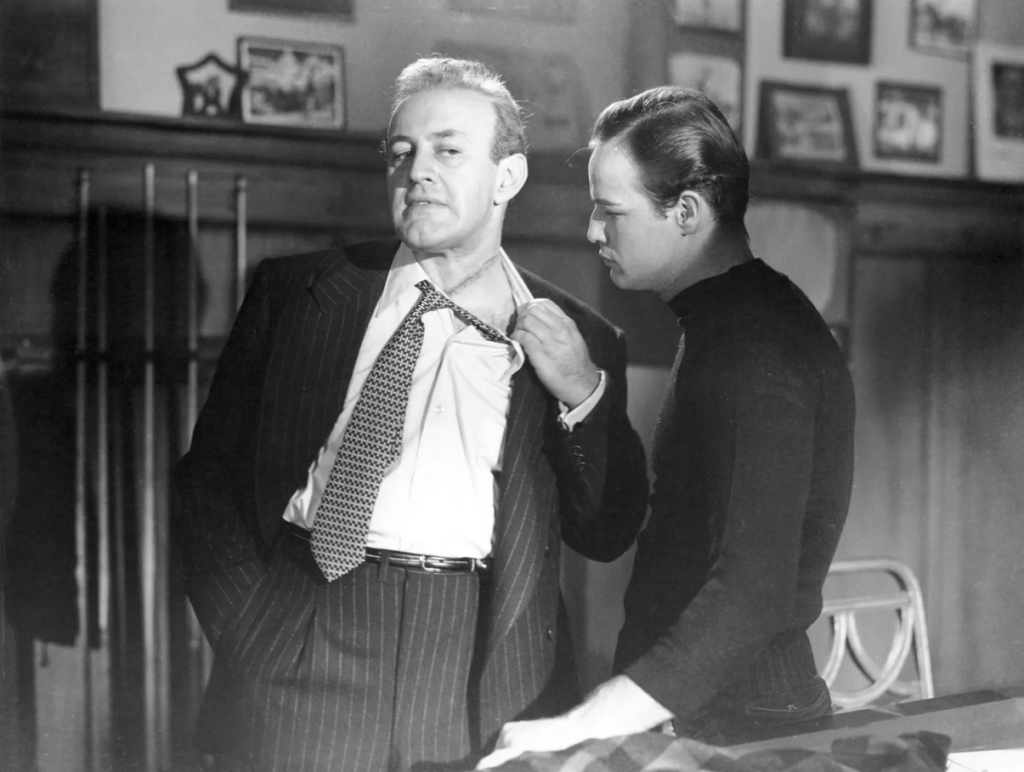
For many viewers, On the Waterfront is remembered for Brando’s line, “I coulda been a contender,” spoken to his big brother, Charley “The Gent” (Rod Steiger), in a taxicab. Charley works for Mob boss Johnny Friendly (Lee J. Cobb) and took part in fixing a fight involving his brother, Terry, costing him a shot at the title.
These intertwined relationships form what Raab calls “the film’s graphic portrayal of mobster treachery, outrageous working conditions, and corruption on the Hoboken piers in New York harbor.”
As TheUltimate Book of Gangster Movies points out, the film also features a “crusading waterfront priest, Father Barry (Karl Malden), and Edie Doyle (Eva Marie Saint, in her movie debut).”
The treachery along the docks has an impact on Malloy’s sense of right and wrong. Edie Doyle is the sister of a man Terry earlier set up to be killed for disloyalty to the Mob. “Of course, he falls for the girl, making things all the more complicated,” Anastasia and Macnow write.
Aligned with Edie at last, Terry turns on the mobsters who abuse and discard others.
Lee J. Cobb, left, plays Johnny Friendly, a ruthless waterfront Mob boss who serves as the primary antagonist throughout the film. Courtesy of Columbia Pictures
‘A muckraking work of art’
The betrayal shown in On the Waterfront reflected experiences the movie’s director and screenwriter encountered, according to TheUltimate Book of Gangster Movies.
Elia Kazan, the director, and Budd Schulberg, the screenwriter, “became Hollywood pariahs” for outing former associates to the House Un-American Activities Committee, the book states. This U.S. congressional committee targeted suspected Communists, resulting in members of the film industry being blacklisted.
“When On the Waterfront came out,” Anastasia and Macnow wrote, “many filmgoers watched the story of a man betraying old friends and colleagues and deemed it an attempt by its two creators to justify their actions.”
Kazan did not disagree, writing in his 1988 autobiography that every day he worked on the film he was “telling the world” where he stood and telling off his critics, according to Anastasia and Macnow. “Regardless of where anyone stands on that issue,” the authors wrote, “it should not detract from the film’s brilliance — and its importance as a muckraking work of art.”
Enduring masterpiece
In a recent email, Anastasia said On the Waterfront is a masterpiece — “one of the best and most realistic Mob movies ever made.”
Anastasia is a veteran Philadelphia newspaper reporter whose other books include The Last Gangster, Blood and Honor and Gotti’s Rules.
George Anastasia, shown here at The Mob Museum as part of a panel about the Mob in Philadelphia, is a Mob historian and co-author of The Ultimate Book of Gangster Movies.
“The theme of cooperator-vs.-rat is universal in the underworld, and Brando captures the internal conflict perfectly,” Anastasia said. “Where does your loyalty lie? Where should it? Those are questions that come up every time the government puts a cooperating witness on the stand.”
Larry McShane, a recently retired reporter who worked for the New York Daily News and Associated Press, noted in an email that On the Waterfront is “routinely praised as one of the greatest films in the history of American cinema.”
McShane’s books include Chin: The Life and Crimes of Mafia Boss Vincent Gigante, and, with co-author Dan Pearson, Last Don Standing: The Secret Life of Mob Boss Ralph Natale. McShane has a new Mob book coming out, The Orena Faction: Little Vic and the Last Mafia War, about the Colombo crime family battles of 1991-93. A release date has not been set.
McShane said On the Waterfront “continues to resonate in the new millennium” and still turns up on lists of Hollywood’s most enduring productions.
“The film was widely credited with changing the standard Hollywood approach to filmmaking, with Brando improvising his dialogue and the movie shot in 36 days across the Hudson River at locations around Hoboken, New Jersey — a long way from a Hollywood movie lot,” McShane said.
Docks ‘infested’ with mobsters
To this day, 70 years after the movie premiered, the Mob’s influence on the docks is still a problem, Anastasia said. “The docks in Hoboken, Jersey City and Union City, as well as those in Brooklyn and Manhattan, have always been infested and, to varying degrees, still are,” he said.
McShane said the question of whether the Mob continues to wield influence on the docks led to a recent schism between authorities in New Jersey and New York.
The bi-state Waterfront Commission of New York Harbor, formed decades ago to combat Mob control of dockside unions, “was scuttled just last year in a sign of the changing times on the docks of the nation’s largest city and its New Jersey neighbors,” McShane said.
“New Jersey opted out of the Waterfront Commission in April 2023 after a five-year court fight to win its departure, signaling the end of an organization launched in 1953 — one year before the film,” he said.
At that point, New Jersey Governor Phil Murphy directed the state police to watch the docks on their side. In response, New York launched its own commission to monitor organized crime inside the industry, “while taking a shot at their neighbors across the Hudson River,” McShane said.
New York Governor Kathy Hochul and state Attorney General Letitia James delivered the shot, McShane said, in the following joint statement: “For decades, the Waterfront Commission has been a vital law enforcement agency protecting essential industries at the port and cracking down on organized crime.”
Getting rid of mobsters in the workplace is the right thing to do, Anastasia concluded. That comes through in the movie, which exposes “the greed and treachery that are really the true characters of organized crime.”
“No union worker benefits from the Mob’s control of a union,” Anastasia said.
Larry Henry is a veteran print and broadcast journalist. He served as press secretary for Nevada Governor Bob Miller and was political editor at the Las Vegas Sun and managing editor at KFSM-TV, the CBS affiliate in Northwest Arkansas. Today, he is a senior reporter for Gambling.com.
This is The Mob Museum, but it has never been a mobbed-up museum.
As surprising as it may seem, that is exactly what the Intrepid Sea, Air & Space Museum, located in Manhattan, unwittingly became in the 1980s. Members of an Irish American Hell’s Kitchen gang infiltrated the museum, siphoned off hundreds of thousands of dollars in ticket sales and placed union members in no-show jobs.
This lucrative racket might have gone on for years if the Intrepid hadn’t filed for bankruptcy in July 1985. Bizarrely, the museum’s bankruptcy filing had little to do with the Mob scheme, but its skimming was discovered during financial investigations connected to the bankruptcy proceedings. It was a complex arrangement, one of many cooked up by the Westies, based on the time-honored Mob penchant for union racketeering. And it’s a reminder that organized crime infects so much of American history.
Now known simply as the Intrepid Museum, the Intrepid Sea, Air & Space Museum opened in 1982. Organized as a nonprofit, the institution operated as a museum of American military and maritime history. The museum is housed in the USS Intrepid, an aircraft carrier from World War II moored at Pier 86 along the Hudson River. Located in the Hell’s Kitchen neighborhood of West Side Manhattan, the museum was firmly established in the Westies’ sphere of influence.
In the 1980s, that sphere was a ruthless and violent one. The Westies were a relatively small outfit — estimates range from 20 to 60 members. In the 1960s, Mickey Spillane (not the author) took control of the Hell’s Kitchen rackets. In addition to bookmaking and loansharking, the gang controlled unions at Madison Square Garden, the New York Coliseum and the docks.
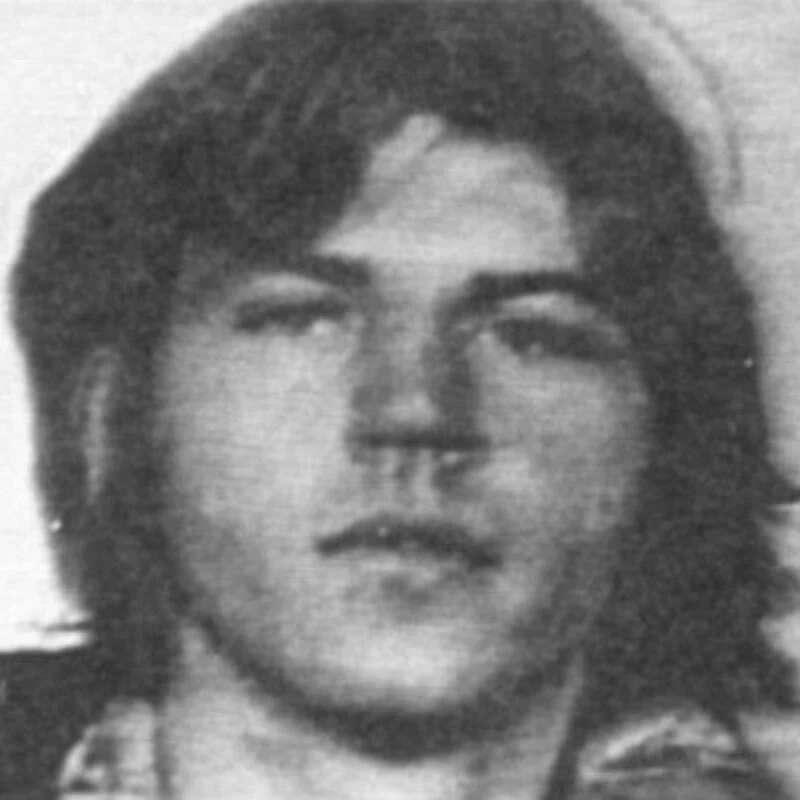
Baby-faced Mickey Featherstone’s involvement with the Westies allowed him to act on his most violent impulses. His wife Sissy participated directly in the intrepid racket.
On August 20, 1976, Spillane’s main muscle, Eddie Cummiskey, was shot and killed at the Sunbrite Bar. Up-and-comer Jimmy Coonan was ready to take over the neighborhood — Spillane’s loss was Coonan’s gain. Spillane began to retreat from his rackets. Coonan had been working with established loan shark Ruby Stein, who also worked with “Fat Tony” Salerno of the Genovese crime family, and he stepped in to control some of Spillane’s business. Coonan also recruited Mickey Featherstone, a violent and emotionally troubled Vietnam War veteran born into a working-class, Irish American family in Hell’s Kitchen.
Coonan also began meeting with Gambino crime family hitman Roy DeMeo and one of his crew members, Danny Grillo. It was probably this relationship more than any other that set up Coonan for underworld success. In May 1977, Coonan orchestrated the deaths of Stein and Spillane, and just like that, a new generation took charge.
According to author T.J. English in his 1990 book The Westies, DeMeo killed Mickey Spillane as a present to Coonan. This brought Coonan to power and shifted the Westies’ trajectory. By working with DeMeo, he ultimately agreed to an alliance with the Gambino family within Hell’s Kitchen, although some of his crew were hesitant about the connection.
Throughout the 1970s and ’80s, the Westies were plagued with prison sentences, but this never upended their stranglehold on Hell’s Kitchen and the West Side docks. When a new museum was under development along the Hell’s Kitchen waterfront, it may have been inevitable that the Westies would become involved.
The USS Intrepid launched in 1943 as an aircraft carrier. It was used in World War II, the Korean War and the Vietnam War before being decommissioned in 1974. Many wished to see her preserved, and, in 1978, New York real estate developer Zachary Fisher established the Intrepid Museum Foundation. The Intrepid came home to Pier 86 in June 1982, two months before the museum opened officially on August 3.
The Museum was staffed in part by members of the Local 1909 chapter of the International Longshoremen’s Association (ILA), the largest maritime workers’ union. ILA Local 1909 assembled in the 1960s to represent marina and boatyard employees during the 1963-1964 New York World’s Fair. In 1968, it shifted to representing employees for the Kinney Parking System at the North River Passenger Terminal, which by the 1980s also handled parking for the Intrepid Museum.
One of the Westies’ more lucrative connections during this period was Vinnie Leone, business manager for ILA Local 1909. Coonan and Featherstone worked with Leone, who was also connected to the Gambino family. This arrangement benefited them all, and union racketeering helped the Westies stay in power while Coonan and Featherstone served prison sentences in the early 1980s. In fact, both were incarcerated when the museum opened in 1982. In February 1984, Leone was found dead, but the Westies maintained control of Local 1909.
The ILA controlled about 30 staff positions at the museum, including ticket sellers, engineers and maintenance personnel. Featherstone’s wife, Sissy, was one of the ILA members employed as a ticket seller. Sissy devised a scheme wherein she and a few other women saved previously sold tickets, resold them and kept the profits. Later, Kenny Shannon, a Westie allegedly involved in Leone’s death, became the museum’s timekeeper. That’s when Sissy Featherstone went from corrupt ticket agent to no-show employee.
In addition to the staff actively employed in this criminal enterprise, the union also charged several no-show jobs to the museum. No-show jobs are just what they sound like — paid positions for which the employees have no actual duties and do not even need to show up to earn their pay. No-show jobs are a form of corruption found in political and corporate environments and are particularly common in labor unions. They are a common way for mobsters to earn what appears to be legitimate income without working.
No-show jobs can be lucrative. The month the Intrepid opened, Bobby Huggard was given a no-show job as a gift for perjuring himself in a murder trial. He earned $227 a week, or roughly $725 in today’s dollars.
Ultimately, the museum’s executive director, Wayne Schmidt, reported that the museum lost $100,000 to $120,000 annually to the Westies’ combined racketeering activities. In the early 1980s, this loss was still unknown to Schmidt and other foundation leadership, but it was far from the only financial setback for the new museum.
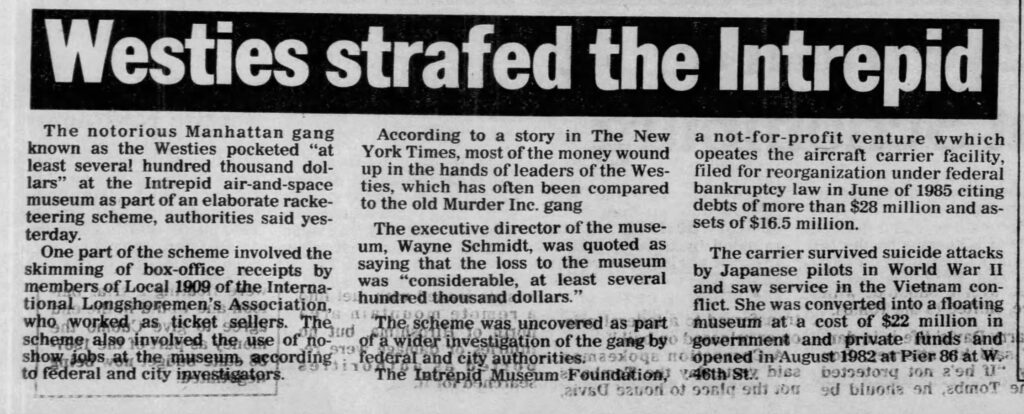
This New York Daily News article from April 4, 1987, outlines the Westies’ schemes at the intrepid Museum.
In the first few years of operation, the museum struggled in part because of its location in a rundown area, lack of other nearby attractions and near-constant construction in the area at the Javits Center. In July 1985, the Intrepid Museum filed for Chapter 11 bankruptcy. The organization had failed to raise adequate funds or attract enough visitors. According to an April 16, 1987, New York Daily News article, the Intrepid hosted 400,000 guests annually, but the expenses for running a museum in a 40-year-old aircraft carrier amassed quickly. Schmidt blamed poor attendance and poor weather. In the bankruptcy filings, the foundation listed $16.5 million in assets and $28.4 million in debt.
In March 1987, five ticket sellers were let go from the museum after the box-office skimming scam was discovered. Schmidt claimed these positions were filled with no input from him or his team. The following month, investigations revealed the museum had been subject to extortion and theft schemes by the Westies that expanded beyond the initial five fired workers.
In an April 4, 1987, article in the New York Times, journalist Selwyn Raab outlined information obtained from federal and New York City investigators. Raab, who later authored Five Families: The Rise, Decline, and Resurgence of America’s Most Powerful Mafia Empires, was an investigative reporter at the time known for his extensive coverage of New York organized crime. Federal and local law enforcement had begun conducting entirely coincidental investigations into the Westies and their criminal activities in the late 1970s.
The intrepid Museum is still in operation today. In 2012, the same year The Mob Museum opened, they added a new pavilion for the space shuttle Enterprise.
On March 26, 1987, U.S. Attorney for the Southern District of New York Rudolph Guiliani and Manhattan District Attorney Robert M. Morgenthau announced the indictments of 10 members of the Westies. The Westies faced charges under the Racketeer Influenced and Corrupt Organizations Act (RICO). Their crimes included eight murders, numerous attempted murders, kidnapping, loansharking, extortion, gambling and drug dealing. These indictments came out of a deal with Mickey Featherstone, who offered to testify against his crew when faced with 25 years in prison. Featherstone likely was also motivated by a falling out with Coonan related to his management of the gang.
In 1988, Coonan was sentenced to 75 years in prison. He remains incarcerated although he has since been granted a mandatory release date of June 1, 2030. Eight other Westies were also convicted. Mickey Featherstone has been in the Witness Protection Program since he became an informant.
The Intrepid Museum is still open. It restructured and had a second chance after its brush with bankruptcy. The neighborhood no longer suffers from the blight associated with it in the 1980s, and the museum is one of many popular attractions in the area today.
“You come into my house on the day my daughter is to be married and you ask me to do murder … for money.”
In The Godfather, Don Corleone rebukes his guest while stroking the head of a gray tabby cat sitting in his lap. In a spontaneous decision, director Francis Ford Coppola placed a stray cat that had wandered onto the set into Marlon Brando’s lap, allowing him to display the Mafia boss’s tenderness and ruthlessness simultaneously.
Like the fictional Vito Corleone, some real organized crime figures cared for pets. Their animal companions offer a glimpse into their personal lives, which are often distinct from their street reputations. The same person who orders a hit on a rival might go home and, in a jarring juxtaposition, speak with their furry friends in a gentle, high-pitched voice.
Some, however, kept pets for nefarious purposes. For example, the Neapolitan Camorra used parrots as drug mules and kept tigers for intimidation.
Others were collectors, such as Pablo Escobar with his private zoo at his Hacienda Nápoles estate, part of which still operates today decades after his demise.
The animals associated with mobsters don’t get a lot of attention in the history books. They may not have had a significant impact in the course of Mob history, but they certainly meant something to their owners. To tell some of their stories, here are the top five pets of organized crime.
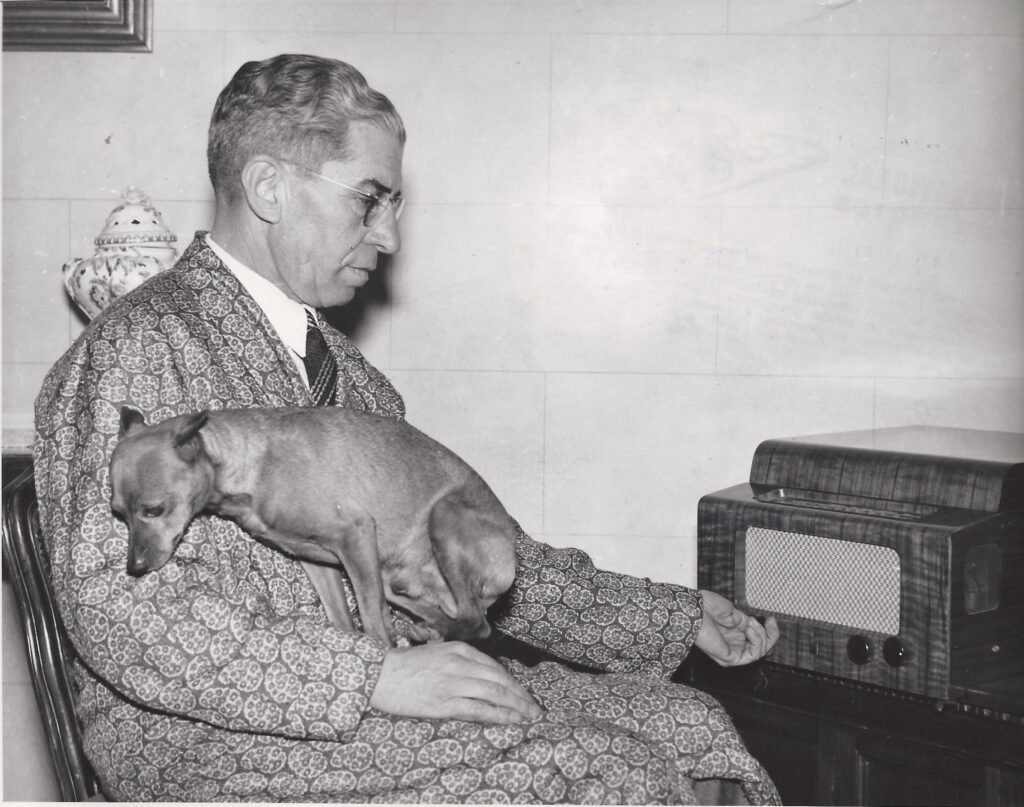
5. Bambi, miniature pinscher – Charles “Lucky” Luciano
Bambi (pronounced “Bombi”) was one of Luciano’s miniature pinschers. Luciano named Bambi after the Disney movie because, according to an encounter with actor Marc Lawrence, he liked fairy tales. Courtesy of Cipollini Collection
After his early release from prison and subsequent deportation in 1946, Charles “Lucky” Luciano struggled to find a new home. He tried to start anew in Havana, Cuba, but the U.S. government threatened to withdraw shipments of medicine unless the Cuban government got rid of him. His next stop was Rome, but he was banished from the city in 1949 because of a drug trafficking investigation. He and his paramour, former ballet dancer Igea Lissoni, finally settled down — for good this time — in Naples.
In 1952, Luciano and Lissoni had moved into a six-room apartment that was modest for a former Mob boss. Surveillance from the Italian police made it difficult to fight boredom in his semi-retirement. One thing that did occupy his time were two miniature pinschers and a Lakeland terrier.
“Igea once told a reporter how both children and animals like Lucky,” says Mob historian Christian Cipollini. With no children of his own, his canines became the objects of his affection.
“The one-time boss of the vice racket, believe it or not, talks baby talk to the pet miniature pinscher he calls ‘Bambi,’” wrote journalist Llewellyn Miller in The American Weekly after a 1952 interview with Luciano. Miller reported that said baby talk included phrases such as: “Whose dog are you?” “Are you a good dog?” “Do you wanna go ride?” Luciano doted on his other dogs too, but Bambi (pronounced “Bombi”) is the only one known by name.
In 1996, seasoned gangster film actor Marc Lawrence recalled running into Luciano walking Bambi in Rome. “I laughed and asked him if the dog was named after the Disney movie,” Lawrence said in a radio interview. “Luciano says, ‘Yeah, I like fairy tales.’”
4. Cleo, lion – “Crazy Joe” Gallo
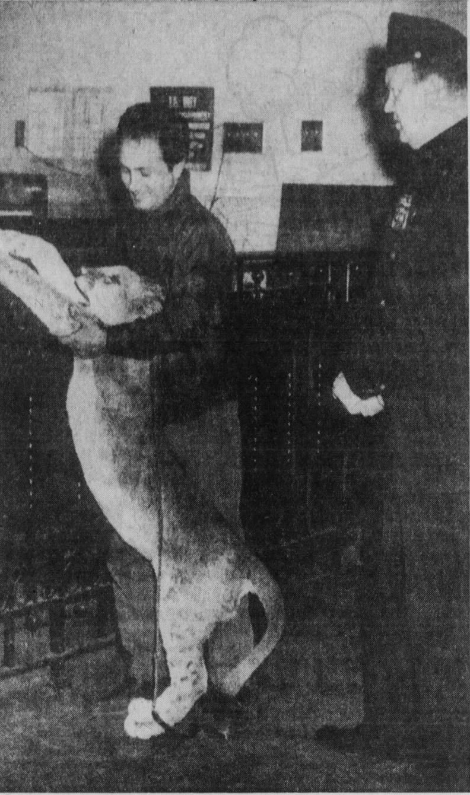
Gallo associate Anthony Ortolano was brought to the police station when an officer discovered a lion in his backseat. He had to pay a $25 fine and give up the lion, putting an end to Gallo’s unique method of intimidating debtors. Courtesy Unifax Photo / Mansfield News-Journal
“Crazy Joe” Gallo would drag his delinquent debtors to the cellar door of his crew’s hangout, where the non-payer would hear a chain rattling, followed by a menacing growl. Failure to pay up meant an encounter with the creature lurking within. Behind the door was a hungry lion cub named Cleo, barely old enough to produce a baritone roar, who posed little threat. Cleo was just expressing his enthusiasm about a raw steak dinner, but the debtors didn’t need to know that.
Gallo earned his nickname from his ruthless loansharking antics and a psychiatric diagnosis of paranoid schizophrenia. His eccentric persona inspired the character “Kid Sally” Palumbo, played by Jerry Orbach in the 1971 comedy The Gang That Couldn’t Shoot Straight, which also featured a pet lion. Threatening debtors with an apex predator fit right into Gallo’s modus operandi.
According to former Gallo crew member Frank DiMatteo, Larry and Joe Gallo bought a lion cub from an exotic pet dealer in Manhattan (from whom they also bought a monkey). They kept it in the basement of a social club owned by Armando Illiano, a Gallo associate with dwarfism. Illiano could be seen on occasion taking Cleo out for walks.
On November 18, 1960, Gallo associate Anthony Ortolano was stopped by a patrol officer, who was surprised to see a lion in the backseat. Ortolano claimed ownership of the big cat and was charged with harboring a dangerous animal. The connection between Ortolano’s Cleo and the lion mentioned on the Gallo brothers’ wiretaps wasn’t discovered until later.
Cleo was sent to an ASPCA shelter and eventually found a new home in Fairlawn, New Jersey, at Bob Dietch’s Kiddie Zoo alongside 14 other lions and tigers. The staff changed his name to “Buster,” and he did well in his new home. In 1961, the New York Daily News spoke with the zookeeper, who reported that “Buster is a friendly lion and that he often plays with him.”
3. Bruzzer, shih tzu – Meyer Lansky
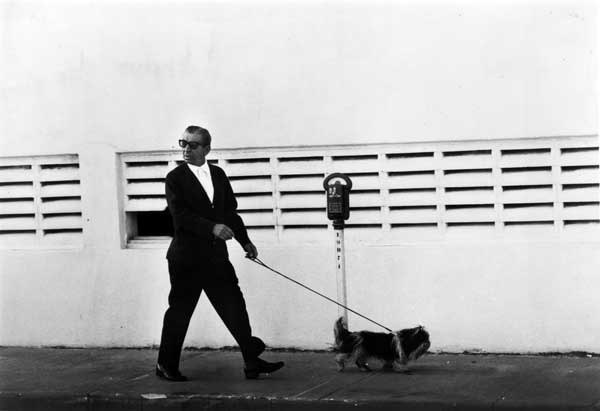
Meyer Lansky walked his shih tzu, Bruzzer, twice a day outside of his Miami home. The regularly scheduled walks were convenient for the surveillance teams keeping an eye on him. HistoryMiami Museum
Twice a day, Meyer Lansky could be seen walking a brown and white shih tzu named Bruzzer down the road outside his Miami home. A careful observer might notice FBI agents or paparazzi secretly snapping photos during his daily outings.
Before Bruzzer, Lansky was not much of an animal lover. His first wife, Anne, adopted a bulldog and a fox terrier for their children in the 1930s, but according to Lansky biographer Robert Lacey, Meyer hated the dogs. In 1966, his second wife, Teddy, adopted a blond shih tzu named Tiger, for whom he had a similar disdain. When Tiger died unexpectedly two years later, Teddy was devastated. Her sympathetic husband adopted for her another shih tzu, this time naming the dog himself, Bruzzer (Some family sources, such as Sandra Lansky, his daughter, and Gary Rapoport, his grandson, spell it as “Bruiser,” but handwritten notations on family photos confirm the spelling as “Bruzzer”).
Lansky and the puppy had an immediate connection. “He really took a liking to this dog,” Lansky’s son Buddy told Lacey. “In fact, he took it away from her.” Dog walks became a part of his daily routine. In 1970, Bruzzer accompanied the Lanskys during their brief sojourn in Israel until Meyer was deported back to the United States in 1972. At a time when it seemed the world was against him, Bruzzer’s loyalty never wavered.
Lansky’s health began to decline in 1980 when he was diagnosed with lung cancer. Then, in 1981, Bruzzer died at the old age — for a shih tzu — of 13. The Lanskys held an open casket funeral for Bruzzer and laid him to rest in a plot alongside Tiger at the Pet Heaven Cemetery in Miami. A bronze plaque beside their graves reads, “Too well loved to ever be forgotten – The Lanskys.”
Lansky himself died not too long after in January 1983. “Bruzzer’s death seemed to sap Daddy of his will to go on,” Sandra Lansky wrote in her memoir.
2. Vanessa, hippo – Pablo Escobar
Isolated from her herd, Vanessa has grown accustomed to human interaction. Vanessa is a descendant of two of the four original hippos brought to Hacienda Nápoles by Pablo Escobar. Luis Bernardo Cano/picture-alliance/dpa/AP Images
On the grounds of Hacienda Nápoles, Pablo Escobar’s lavish estate east of Medellín, Colombia, wanders a young, lone hippo. Her name is Vanessa, and she was abandoned by her herd for unknown reasons. Now a theme park and zoo, Hacienda Nápoles has become a tourist attraction with dozens of semi-captive hippos. The park adopted Vanessa as its mascot. Park staffers say she loves to play with branches and other objects and responds to her name.
Vanessa is a descendant of the original four hippopotami that Pablo Escobar imported to Colombia for his private zoo. Altogether he acquired about 1,200 exotic animals, including elephants, giraffes, a soccer-playing kangaroo and four hippos — one male and three females.
After Escobar was killed in 1993, most of the animals were shipped off to zoos. But the hippos, weighing at least 2,900 pounds apiece, were deemed too difficult to move and left to roam the grounds of Hacienda Nápoles. The bull hippo and his harem of three soon began to reproduce. In 10 years, the herd had grown to 10, and now, in 2024, there are about 170 hippos. Some remained in Hacienda Nápoles, while others escaped and live in the nearby Magdalena River basin.
The environment in Colombia, it turns out, is better suited for a hippopotamus than sub-Saharan Africa. With ample vegetation, plentiful rainfall and few predators, Escobar’s hippos are thriving. In Africa, female hippos begin to reproduce at age 9, but in Colombia it’s as low as three years old.
In 2009, a bull hippo named Pepe (the subject of a 2024 docudrama) escaped from Hacienda Nápoles, and a Colombian environmental agency ordered him killed. After two professional hunters shot him, local soldiers saw the dead hippo as a photo op. The published photo outraged the public so much that Colombian officials had to find other ways to cull the herd.
Sterilization is a viable alternative, but in a mating system where one bull can have a harem of 20 cows, total male sterilization is necessary. Yet capturing a four-ton bull hippo and transporting him to a proper facility is as difficult as it is expensive.
Locals have mixed feelings about their new wildlife. The hippos have become a tourist attraction that boosts the local economy. On the other hand, territorial hippos can be dangerous to humans, they are displacing native wildlife such as the capybara, and their excrement is changing the chemistry of the Magdalena River. If the population growth can’t be curbed, there could be more than 1,000 hippos by 2050.
1. Highball, German shepherd – John May
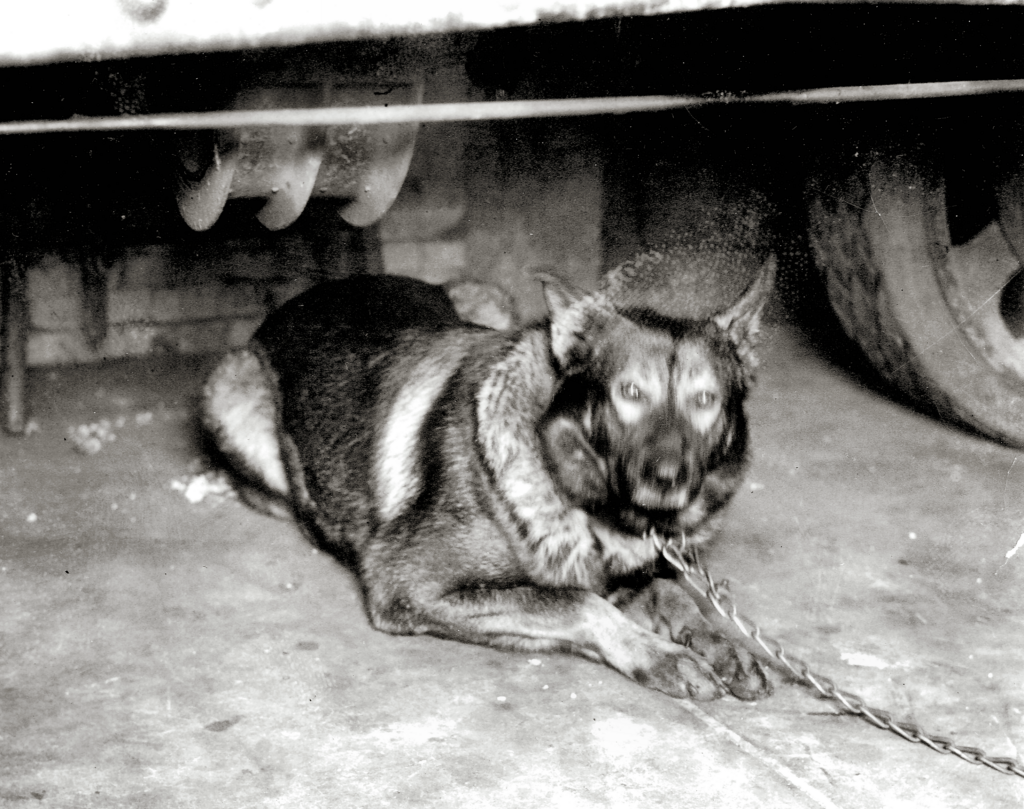
Highball, a German shepherd who belonged to John May, was spared by the killers during the St. Valentine’s Day Massacre. Neighbors discovered the scene because of his howling. Courtesy John Binder
On February 14, 1929, seven men were gunned down in a garage on Chicago’s North Side in what came to be known as the St. Valentine’s Day Massacre. The only victim who could share what happened, Frank Gusenberg, died three hours later in a hospital bed.
Yet there was another eyewitness, leashed to the axle of a truck, a German shepherd named Highball. Highball belonged to one of the victims, John May, an auto mechanic who did jobs for the North Side Gang to provide for his wife and seven children. Highball’s traumatized wailings are what alerted neighbors that something terrible had happened.
At the time, Highball’s breed was called “Alsatian wolf dog.” Along with sauerkraut and frankfurter, the name “German shepherd” had fallen out of favor because of Germany’s antagonistic relationship with the Allied powers. The UK Kennel Club reinstated the original term for the breed in 1977.
Information about Highball is sometimes contradictory. The Cook County coroner, Herman Bundesen, believed the dog was named Fritz and belonged to Albert Weinshenk, the North Side Gang’s business operator and a victim of the Massacre. One of the photographers at the scene, Russell V. Hamm, wrote that Highball was locked in the cab of the truck, not chained to the axle.
There are also conflicting accounts of what ultimately happened to Highball. Photographer John “Hack” Miller wrote, “I got the police dog. I had him for a couple of years, then they stole him back from me.” In a letter to John Faber, a historian for the National Press Photographers Association, Hamm disputed Miller’s account, “As for Hack Miller, he did not take the so called Pupy home … the dog was raving mad and was destroyed.” Most historians side with Hamm, that Highball was so traumatized that he had to be put down.
What we do know for sure is that Highball was witness to the carnage that took place that day. Regardless of his fate, he has been immortalized as the only truly innocent victim of the St. Valentine’s Day Massacre.
The longtime head of an Irish drug and weapons cartel has been posting Google restaurant reviews and travel tidbits from luxury locations overseas while evading justice, according to recent reports.
Under the alias “Christopher Vincent,” the posts, numbering in the hundreds, are from Christopher Kinahan Sr., according to the Sunday Times, a London-based newspaper, and the Dutch online investigative journalism site Bellingcat.
According to Bellingcat, some of the cartel kingpin’s posts disclose the identity of people he has met with, while others reveal less significant details such as his status as a Platinum Ambassador in “an international hotel group’s reward program.”
The 67-year-old Kinahan, whose first and middle names are Christopher Vincent, also offers his opinion on dining experiences. For instance, his August 2022 review of an Istanbul restaurant notes that the place is “chic and plush.”
“The service was good,” he concludes, “but not outstanding.”
While many of Kinahan Sr.’s reviews are of fine dining restaurants and luxury hotels, he also reviews chain restaurants, such as Pizza Hut and P. F. Chang’s. Courtesy of Christopher Vincent / Google Reviews
In another food post, Kinahan, known as the Dapper Don, comments on the good service he received from “pleasant and helpful” staff members at the Cycle Bistro Jumeirah in Dubai. The Kinahans are believed to be living in that United Arab Emirates city on the Persian Gulf.
“I had the açai bowl, followed by eggs with almond bread and green salad,” Kinahan writes. “My meal was well presented and tasty. I give this establishment five stars.”
The reviews include his opinion that Dubai’s City Walk shopping precinct is a top-rated attraction. “Wonderful place to stroll around, particularly in the evening, lots of restaurants to choose from,” he writes. “I unreservedly rate this area five-star but not cheap.”
In some posts, Kinahan is identified by his unintended reflection in mirrors and other objects, according to Bellingcat. “For example, a picture taken at a restaurant named Tasha’s at the Dubai Marina in November 2022 showed Kinahan Sr.’s face reflected in a nearby window,” the Amsterdam-based website notes.
Also on its website, Bellingcat details additional methods it used to identify Kinahan by his digital footprint.
Kinahan Sr. is visible in a bathroom mirror in this photo from his review of the Hyatt Regency Barcelona Tower in Spain. “Christopher Vincent” helped investigators identify him by occasionally posting unintentional selfies. Courtesy of Christopher Vincent / Google Reviews
Regency Hotel assassin team
The Kinahan cartel is led by Kinahan Sr. and his sons, Daniel and Christopher Jr. The operation originated decades ago in Ireland but has branched out into different countries. The gang has aligned with global narco-traffickers and others involved in illegal activity, including money laundering. Kinahan Sr.’s fortune is estimated at $1.5 billion.
During earlier years, the Kinahans were a major underworld operation in Dublin, flooding the capital city with illegal narcotics while engaging in betrayals and deadly encounters with criminal organizations such as the Hutch clan.
The feud with the Hutches exploded on February 5, 2016, when a six-member hit team, including one dressed as a woman and others as police officers, entered Dublin’s Regency Hotel, looking for Daniel Kinahan at a weigh-in for an upcoming boxing match. Active in promoting boxers, Daniel Kinahan escaped before any harm could come to him, but a Kinahan lieutenant, David Byrne, a 33-year-old father of two, was shot to death in the lobby. Since then, the Regency has been renamed the Bonnington.
On February 16, 2016, Daniel Kinahan escaped from gunmen before a boxing weigh-in at the Regency Hotel in Dublin, now called the Bonnington Hotel. Kinahan lieutenant David Byrne was shot dead in the lobby. Courtesy of Larry Henry
This was not the first time Ireland was left reeling by a high-profile killing involving underworld assassins. In June 1996, Veronica Guerin, a newspaper reporter who exposed Dublin drug dealers in print, was shot to death at age 36 by hitmen who pulled up to her car on a motorcycle. Her plight reached a wider audience with the release of the 2003 feature film Veronica Guerin, starring Cate Blanchett as an investigative journalist shining a spotlight on the corrosive impact that illicit drugs had on residents in the capital’s inner-city neighborhoods.
Bounty set on Kinahans
As in Guerin’s era, journalists in Dublin and elsewhere continue to investigate local and international drug and weapons cartels. Among these cartels is the Kinahan crime family, which still operates, at least through associates, in Ireland and other nations.
Stephen Breen, the Irish Sun’s crime editor, said the Kinahan organization doesn’t exist locally the way it did in 2016 and 2017 during the Kinahan-Hutch feud, but it hasn’t gone away.
“There is no question that their drugs and weapons network still exists, but just not at the same level before the Irish State responded to the killing spree they embarked on in 2016 and 2017,” Breen said in an email.
The arrest and conviction of some of the cartel’s key members, Breen said, “has caused huge disruption to the group, but they do still pose a threat considering the networks that they have established over the years.”
Breen and Owen Conlon, also a journalist, co-wrote The Cartel: The Shocking Story of the Kinahan Crime Cartel. An updated edition was released in 2018.
The organized crime group’s story also is being told in other formats. In 2023, the Irish Sun released a multi-part podcast, The Kinahans, exploring the cartel “and its 40-year history of violence and mayhem.”
One unresolved issue regarding the Kinahans is whether they will be returned to Ireland to face prosecution. The U.S. government is involved in the effort, offering a $5 million bounty for information leading to the arrest of “the heads of the Kinahan cartel — Christy and his sons Daniel and Christy Jr. — as well as four lieutenants,” according to Politico.
The State Department’s Transnational Organized Crime Rewards Program currently has a $5 million reward for information about Christy Kinahan and his sons, Daniel and Christopher Jr. Courtesy of U.S. Department of State
In Ireland, investigators “would be confident of seeing criminal prosecutions,” Breen said, mainly with a legal case built around the older of the two Kinahan sons, Daniel. He is thought to be in charge of the cartel’s day-to-day operations.
“The focus of the Irish authorities in 2024 is on Daniel Kinahan, especially with him being the subject of two major investigative files being sent to the director of public prosecutions in Ireland,” Breen said. “Christy Kinahan Sr. and his youngest son, Christopher, remain the subject of $5 million rewards for information leading to their prosecutions, but it’s Daniel, at the moment, who faces the prospects of criminal charges being brought against him in relation to the murder of Eddie Hutch in February 2016 and the attempt to kill [Hutch associate] James Gately in April 2017.”
The Irish Sun journalist added that Kinahan Sr. and the younger son are not in the clear.
“Christy Sr. and Christopher Jr. could also face prosecution as they have been identified traveling on false passports, and I understand these investigations are continuing,” Breen said.
In March, the Irish Sun reported that Ireland and the UAE do not have an extradition deal, but efforts are underway to change that.
Meanwhile, as the newspaper noted, concerns have arisen that the Kinahans could leave Dubai for some other location “as the net continues to tighten around the Irish gang.”
Kinahan Sr. has resided in Dubai since the failed 2016 assassination attempt on his son Daniel. He was still in Dubai as of March 29, 2023, the date of his last Google review. Courtesy of the Irish Sun
A taste of home
Based on his Google reviews, Kinahan Sr. likes to try out Irish pubs in foreign cities. He seems to regard some as a letdown.
In the Kinahans’ hometown, Dublin, pubs are a fixture, with the city’s historical literary figures connected to some. Pubs associated with authors such as James Joyce, Oscar Wilde and Brendan Behan are pointed out to visitors. A pub called Davy Byrnes, mentioned in Joyce’s 1922 novel Ulysses, is still popular among Joyce fans who stop in for the same meal that a character in the book had — a gorgonzola cheese sandwich with mustard and a glass of burgundy.
Against that backdrop, Irish pubs elsewhere apparently don’t hold up to Kinahan Sr.’s standards. As Bellingcat noted, Kinahan Sr., under the Christopher Vincent alias, has posted Google reviews for three Irish bars: O’Reilly’s Irish Pub in Amsterdam, the Netherlands; the Corner Irish Bar in Lisbon, Portugal; and Paddy’s Emerald Sports Bar in Malaga, Spain. None received his five-star designation, while one, the Corner Irish Bar in Lisbon, was granted only three stars, the same rating he gave to a Pizza Hut in Harare, Zimbabwe.
Larry Henry is a veteran print and broadcast journalist. He served as press secretary for Nevada Governor Bob Miller and was political editor at the Las Vegas Sun and managing editor at KFSM-TV, the CBS affiliate in Northwest Arkansas. Today, he is a senior reporter for Gambling.com.
A bootlegger, enforcer, dopeman and erstwhile folk hero, Jack “Legs” Diamond was like a charming archvillain in a lurid detective novel or serialized crime drama, with death-defying, law-evading cliffhangers closing each episode.
Unfortunately for Diamond, the years of partying hard, seducing showgirls and dodging bullets finally came to an end on December 18, 1931, in Albany, New York. Today, he is not a particularly well-known gangster. Which is ironic, considering his pivotal role in the larger landscape of a burgeoning new underworld structure and economy during the 1920s.
No good reason to become a criminal
Diamond was born on July 11, 1898, in Philadelphia to working-class, Irish American parents. According to biographer Patrick Downey, Legs’ formative years didn’t fit the typical profile of a future gangster. In his book Legs Diamond: Gangster, Downey writes, “He didn’t live in an overcrowded squalid tenement, nor did he have to face the problems and confines that those new arrivals from Europe had to face.” The family did, however, endure the loss of several children, and after his mother died the remaining members wound up living in a boarding house. An uncle took the kids in, says Downey, but they were soon sent to another relative who couldn’t handle the increasingly rowdy bunch. Jack found himself shipped off to New York.
Little is known about Diamond’s teenage years, except that he went to a juvenile reformatory briefly, got married and then quickly divorced. He entered the military in 1917 but went AWOL and subsequently served a prison stint at Leavenworth. Thereafter, Jack and his brother, Eddie, embarked on a life of crime. Jack soon gained influence in the New York City underworld. He met Manhattan’s contentious crime mogul Arnold Rothstein, forming a mutually beneficial business relationship that would flourish during the early 1920s.
1926 Police lineup of Ed Diamond, Jack Diamond, Fatty Walsh and Lucky Luciano. Courtesy of Cipollini Collection
By the mid-’20s, Diamond’s associations had grown to include a roster of notable criminals. Often found in his personal company were the boisterous fellow Irishman Fatty Walsh, a then-unknown Salvatore Lucania (Charles “Lucky” Luciano), Charles “Charlie Green” Entratta and his brother Ed. Other questionable characters in his business circles included Salvatore Arcidiaco, international con man Count Victor Lustig, and the duo of Salvatore Spitale and Irving Bitz.
Diamond gained plenty of enemies over the years, but what may have contributed to his demise was a failed mission to acquire narcotics in the summer of 1930. The State Department received a tip that Diamond was heading to Europe, but they weren’t sure which ship he boarded nor what alias he may have used. The government believed he was traveling with others: Entratta, Lucania, Arcidiaco and someone known as Traeger. While customs agents, police and the press agencies pursued Diamond from Ireland to France, his companions evidently slipped into the shadows of Antwerp, Belgium. From there they spread out, purportedly to carry out the mission without him. Diamond’s trip finally ended when German authorities detained him as an “undesirable” and shipped him back to Philadelphia empty-handed.
Deported by Germany in September 1930, Legs Diamond was sent by ship to Philadelphia and promptly booked by police. Courtesy of Cipollini Collection
The ‘clay pigeon’
During his criminal career Diamond accumulated more than 20 arrests, but he walked away mostly unscathed each time. His reputation made him a usual suspect in many sensational and scandalous crimes of the 1920s. He was accused in some of the most shocking underworld homicide cases, including the murders of Rothstein in 1928, Fatty Walsh in 1929 and a 1929 double murder inside the Hotsy-Totsy nightclub.
The charges didn’t stick, and bullets often proved ineffective. From 1924 to 1931, Legs miraculously survived four assaults, altogether shot with more than 70 buckshot pellets and nearly a dozen pistol slugs. The assassination attempts only brought him more heat. “Every time I get shot, they arrest me instead of looking for the guy who shot me,” Diamond said in July 1931.
Legs probably knew he lived on borrowed time. John O’Donnell of the New York Daily News, one of the few reporters Diamond liked, struck a deal with him in the spring of 1931 that would serve to divulge some truths, offer a positive spin and hopefully save some face for Legs. Marion “Kiki” Roberts, Jack’s Ziegfeld Follies mistress, had been indicted along with him and others for involvement in a kidnapping and torture. Legs was acquitted but knew Roberts, who had been avoiding the police, would eventually have to surrender herself. O’Donnell offered to escort her and have the paper cover her legal costs, if in return, she and Jack would give interviews. Legs agreed with one caveat: “When I’m dead,” he told O’Donnell, “you can print this stuff.”
The last drink
On December 18, 1931, Diamond and his wife, Alice, celebrated yet another acquittal on that fateful night. After becoming quite inebriated, he took a cab from a roadhouse back to the boarding house, alone.
Minutes after he fell into a drunken slumber, assassins entered his bedroom and shot him. He died instantly. There was no glamorous last stand, no dramatic throes of death. He never saw it coming.
The boarding house proprietor was the first person to discover the blood-soaked aftermath and promptly called the club to alert Diamond’s wife, who raced to the scene. The police were phoned next. Authorities arrived on scene to find Alice in an inconsolable state, cradling Jack’s head in her arms, repeating the phrase, “I didn’t do it.”
The body of Jack “Legs” Diamond is carried out from the Albany boarding house at 67 Dove Street on December 18, 1931. Courtesy of Cipollini Collection
According to the proprietor, two men exited the building and drove off in a burgundy sedan bearing Brooklyn license plates. One perpetrator carried a flashlight and the other a revolver. Later, a .38 revolver and flashlight, wrapped in silk, were recovered from the lawn of St. Paul’s Church barely a mile from the crime scene.
Diamond’s body was delivered to the morgue where the coroner established that three shots were fired at close range, aimed just below his left ear. Two of those bullets lodged in Diamond’s head, and the third round passed entirely through his neck.
Diamond’s death garnered no sympathy from law enforcement. “So they got him at last!” said New York City Police Commissioner Edward P. Mulrooney. “It’s no loss to the community — not this community anyhow.”
Theories still circulate around the circumstances of Diamond’s death, but one of the most plausible goes back to the failed mission in Europe. On October 12, 1930, shortly after his deportation from Germany, Diamond survived an attempted hit at the Monticello Hotel in Manhattan. Details about the trip began to trickle out shortly thereafter. Salvatore Arcidiaco and Count Lustig, both under questioning, admitted they were, in fact, on the Europe trip. The former dismissively said it was just a liquor deal, but letters found at Diamond’s residence seemed to corroborate suspicions of a narcotics deal, not booze. After Diamond’s death in 1931, rumors surfaced that Salvatore Spitale and Irving Bitz had given Diamond more than $200,000 to secure a drug deal. Diamond came back with no money and no drugs, which may have sealed his fate.
Salvatore Spitale and Irving Bitz, suspects in Diamond’s murder, later gained notoriety for involvement in the infamous Lindbergh kidnapping case. Courtesy of Cipollini Collection
Diamond’s mistress, Kiki Roberts, capitalized on the publicity for a short time before drifting into obscurity. His wife, Alice, tried to cash in on Diamond’s notoriety, but she too fell on hard times. She became involved with some questionable characters, and in June 1933 was found dead in her apartment from a gunshot wound to the head. Just like Jack’s murder, nobody knows for certain who killed Alice.
The Albany boarding house at 67 Dove Street, where Diamond was murdered, still stands and is now a townhouse. It was sold in November 2023 for $375,000.
Christian Cipollini is the author of Murder Inc.: Mysteries of the Mob’s Most Deadly Hit Squad and LUCKY, a gangster graphic novel.
When the movie Analyze This premiered in theaters 25 years ago, it portrayed a Mob boss far different from the previous tough guys typical of gangster films.
The Mafia don in Analyze This, Paul Vitti, played by Robert De Niro, is an unstable gangster prone to panic attacks and uncontrolled sobbing. He is being treated by a psychiatrist, Dr. Ben Sobel (Billy Crystal).
Paul Vitti was a departure from cinematic figures such as Michael Corleone (Al Pacino), a Marine combat veteran who becomes head of a New York crime family in The Godfather movies.
Directed by Harold Ramis (Caddyshack, Groundhog Day), Analyze This debuted in March 1999, two months after The Sopranos debuted on HBO. The Sopranos also featured a high-ranking mobster, Tony Soprano, undergoing therapy for mental health concerns.
Writing in The New Yorker in March 1999, Nancy Franklin said the fact that Analyze This and The Sopranos were released during the same period was “one of the odder pop culture coincidences.”
“But Analyze This and The Sopranos don’t actually have much in common, beyond perhaps implying that the best candidates for long-term therapy these days are people with access to a suitcase of cash,” Franklin wrote. “The De Niro movie sends up and reinforces stereotypes, while The Sopranos, which was created by David Chase, gives you something — almost too many things — to think about.”
Most episodes of The Sopranos, which debuted two months before Analyze This, contain scenes between Tony Soprano and his therapist, Jennifer Melfi (Lorraine Bracco). They give the audience a glimpse into Tony’s thoughts and feelings without resorting to an inner monologue voiceover. Courtesy of HBO
‘Corrective emotional experience’
Analyze This was not the first big-screen spoof on the Mob. In 1971, The Gang That Couldn’t Shoot Straight, based on a novel with the same title by New York newspaper columnist Jimmy Breslin, turned a Joe Gallo-like character and his world of criminal misfits into an amusing take on organized crime.
Almost three decades later, mobsters like Paul Vitti and Tony Soprano were being portrayed as anxiety-ridden and, by their own admission, in need of help.
In Analyze This, Vitti secretly visits Sobel, a bit of a burn-out who imagines himself yelling at other clients to knock some sense into them. After Mob goons throw the reluctant Sobel into a shark tank to encourage him to continue helping their boss, the psychiatrist works with the temperamental Vitti to control further meltdowns.
Dr. Ben Sobel, played by Billy Crystal, is a psychiatrist who reluctantly helps Mafia boss Paul Vitti (Robert De Niro) deal with panic attacks and mental breakdowns. Courtesy of Warner Bros.
A Mob sidekick known as Jelly (Joe Viterelli) demonstrates loyalty toward the boss but not always discretion. In one scene, Jelly, told beforehand to close his ears, listens in anyway as the don tells Sobel about a dream in which milk turns black. Jelly loudly states that the dream is “weird.”
Throughout the movie, a rival ranking mobster, Primo Sidone (Chazz Palminteri), is lurking in the wings, plotting a power grab.
In the end, after a shootout leaving the newly married Sobel wounded, the De Niro character is arrested and imprisoned for 18 months at New York’s notorious Sing Sing prison. When Sobel visits him there, Vitti thanks the psychiatrist for curing him.
“We don’t say cure,” Sobel says. “We say you had a corrective emotional experience.”
A 2002 sequel, Analyze That, picks up the story from there.
Underworld’s Prime Minister befriends psychiatrist
While Paul Vitti and Tony Soprano are fictional characters, a bond was developed decades ago between high-profile Mafia figure Frank Costello and a mental health professional.
Costello, a mobster and powerful New York City political fixer, became “good friends” with a psychiatrist, Dr. Richard Hoffman, according to Costello’s longtime attorney, George Wolf.
Like the bosses depicted in Analyze This and The Sopranos, Frank Costello, the “Prime Minister of the Underworld,” is known to have consulted a psychiatrist, Dr. Richard Hoffman, according to Costello’s attorney. Courtesy Library of Congress
The 1974 book Frank Costello: Prime Minister of the Underworld, by Wolf and Joseph DiMona, details the relationship between Costello and the doctor.
On occasion, Hoffman would talk with Wolf’s wife, Mina, about his analysis of Costello. Mina and the psychiatrist were cousins. She introduced Costello to Hoffman.
“An enormously fascinating man,” Hoffman told her. “Egocentric — but with insecurities in several directions.”
“What does that mean?” Mina asked.
“He is absolutely sure of his own ability, and his own intelligence,” Hoffman said. “And he has a thirst for power that’s extraordinary. But this thirst for power, conversely, springs from certain insecurities.”
However, the psychiatrist ultimately “made a mistake” by talking with a journalist, according to Wolf.
“A reporter somehow found out that Frank was being seen around town with a psychiatrist,” Wolf wrote. “Dr. Hoffman told the reporter that he had advised Frank that to satisfy his inner drive he ‘should associate with the better people in our society.’ The newspaper report made Frank as angry as I have ever seen him. He said to me, ‘Tell that bum I already know more better people than he ever heard of.’”
Mobsters put on a ‘brave front’
According to New York journalist and author Anthony M. DeStefano, it’s not a stretch to believe that mobsters would seek mental health or spiritual guidance. It has happened in real life, he noted.
Among other books, DeStefano is the author of Top Hoodlum: Frank Costello, Prime Minister of the Mafia and The Deadly Don: Vito Genovese, Mafia Boss.
“In the world of the Mob it is not too far-fetched in my mind for a gangster to seek psychological help,” DeStefano said. “I know that Vito Genovese was close to the Catholic chaplain in prison, so I don’t think it is too great a reach for an incarcerated mobster to seek psych help. These guys put on a brave front but we know that some of them felt losses greatly, particularly of a sibling or close friend.”
George Anastasia, an author and veteran Philadelphia reporter, said a mobster seeing “a shrink is not far-fetched, but so is keeping quiet about it.”
“In the macho world of the Mafia it might be perceived as a weakness,” he said. “This is not the most enlightened or progressive group of people. The guy who has enough self-awareness to realize he needs that kind of care probably should find another line of work.”
How does ‘Analyze This’ rank?
In The Ultimate Book of Gangster Movies, published in 2011, Anastasia and co-author Glen Macnow rank Analyze This as No. 73 on their Top 100 list of greatest gangster films. It is one place behind American Me and one ahead of The Roaring Twenties.
Anastasia and Macnow note that Crystal is “perfectly cast” in Analyze This and that De Niro plays Vitti “as a satire” of his other Mob roles.
De Niro is “relaxed and subtle,” the authors wrote, “but with a glimmer of menace” and a comic delivery foreshadowing his performance in Meet the Parents.
“He’s the peacock in the flashy suits you’ve seen in Casino, and he’s still got the trademark De Niro smirk,” according to Anastasia and Macnow.
In Analyze This, Robert De Niro plays Mob boss Paul Vitti, a satirical version of his many other roles in Mob movies. Courtesy of Warner Bros.
Overall, the movie is good for laughs “without falling into silliness,” the authors wrote.
Anastasia and Macnow are less kind to the sequel, Analyze That.The sequel “took the one-joke pleaser that was Analyze This and tried to squeeze another 96 minutes out of it,” the authors said.
“The first movie worked, because — even though it came out two months after The Sopranos hit HBO — the notion of a mobster seeing a shrink carried creative possibilities,” Anastasia and Macnow wrote. “The sequel has the same cast and the same jokes and the same basic plot. It seems nothing more than a compilation of skits that weren’t good enough to make the original, including De Niro mincing around singing ‘I Feel Pretty.’ Hey, there are retreads and then there are bald tires.”
Back to Analyze This, the authors offer a caution for those wanting to compare it to The Sopranos.
“The Sopranos is a storytelling feast,” the authors wrote. “By comparison, Analyze This is a bag of French fries. But you know what? Sometimes a bag of French fries is just fine.”
Larry Henry is a veteran print and broadcast journalist. He served as press secretary for Nevada Governor Bob Miller and was political editor at the Las Vegas Sun and managing editor at KFSM-TV, the CBS affiliate in Northwest Arkansas. Today, he is a senior reporter for Gambling.com.