


More than 30 years after his death, Colombia is still struggling with the consequences of Pablo Escobar’s reign. This week, the Colombian government announced that a culling of its invasive hippos—descendants of animals introduced by the drug trafficker—will begin soon. The decision comes after years of attempts to control the country’s growing hippo population, which has ballooned from the original four imported by Escobar in the early 1980s.
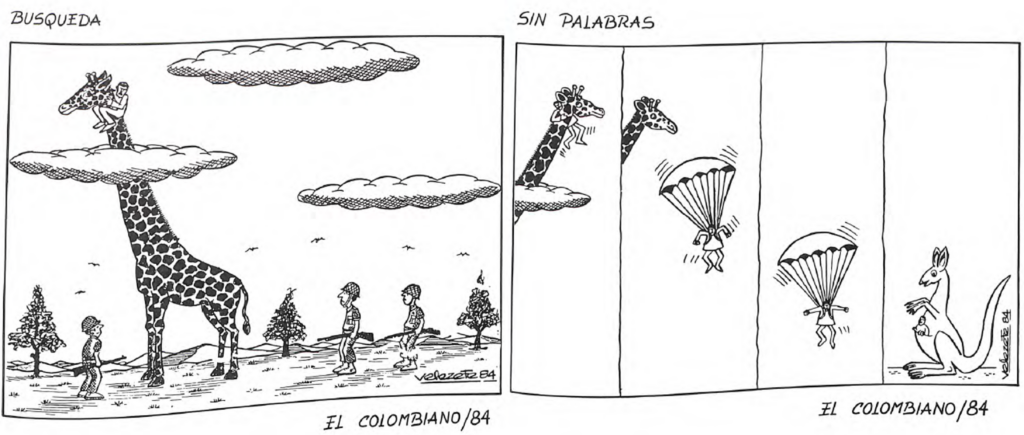
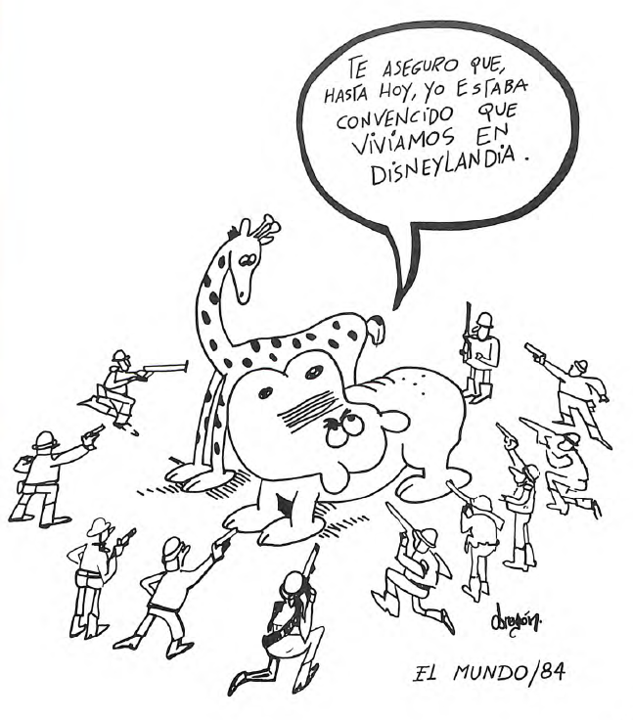
At the height of his cocaine empire, Escobar imported a host of animals, including four hippos, to his Hacienda Nápoles estate to create his own private zoo. The menagerie of hippos, giraffes, kangaroos and elephants became common fodder for political cartoonists. A pair of 1984 illustrations for the El Colombiano newspaper depict Escobar clinging to a giraffe’s neck above a cloud while armed soldiers search for him. The next panel shows Escobar parachuting into a kangaroo’s pouch.
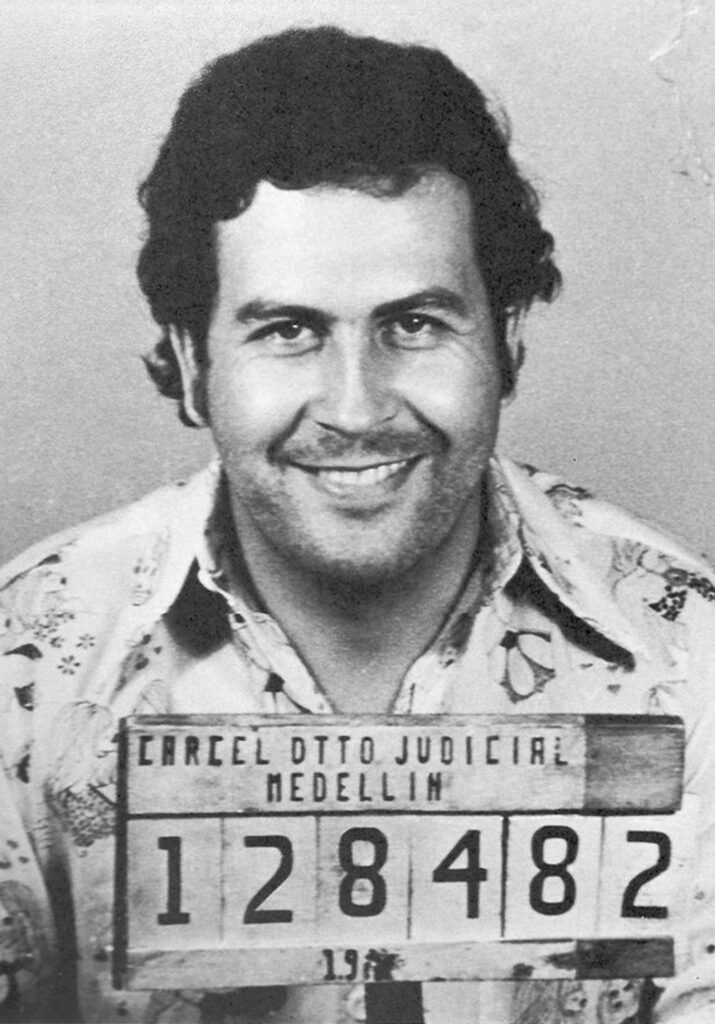
On December 2, 1993, Colombian forces shot and killed Escobar after cornering the fugitive in Medellín. Following his demise, officials deemed the zoo too expensive to keep open and relocated most of the animals, except for the hippos. They were too impractical to move given their immense size. Colombian authorities apparently believed they would die on their own.
Elements of Escobar’s zoo live on today. In 2014, a private company transformed Hacienda Nápoles into a tourist attraction, complete with a water park and a new zoo. Some hippos, descended from the original four, still live on the grounds, including one named Vanessa, the zoo’s mascot. Escobar’s mansion, however, fell into disrepair and collapsed in 2015.
Beyond the estate, the marshy environment of the Magdalena River Basin has turned out to be a paradise for the “cocaine hippos.” With plenty of greens to eat and no natural predators in a warm, moist environment, the hippos faced ideal conditions for multiplying. Colombia has no equivalents to the lions and crocodiles that help control the hippo population in Sub-Saharan Africa, their native habitat. What started as one male and three females has now grown to at least 169 hippos, a conservative estimate. Colombian officials predict that number could rise to at least 500 by 2030 if left unchecked. One of the most immediate ecological consequences is the impact on Colombia’s waterways.
Every night, the hippos come out of the water to eat about 110 pounds of vegetation—and what goes in must come out. According to researchers at Florida International University, one hippo produces up to 13 pounds of waste per day, which is becoming a major pollutant to Colombia’s rivers.
“They only eat on land, then they come into the water and crap all day,” University of California, San Diego biologist Jonathan Shurin told Los Angeles Times reporter Peter Rowe in 2020. The high concentration of waste can fuel algal blooms, micro-organisms that consume massive quantities of oxygen, suffocating fish and other wildlife.
Despite their herbivorous lifestyle, hippos are highly territorial and one of the world’s most dangerous mammals. They may seem slow, but they can run up to 30 mph, outrunning even the fastest humans.
In October 2021, fisherman John Aristides Saldarriaga experienced this firsthand in Doradal, Colombia. Until then, he had no issues with fishing in the same lake that a pod of hippos called home. But this time, a two-ton hippo cow charged at him, bit down on his arm and tossed him away. Saldarriaga believed the hippo spared his life. “It was looking at me as if it was saying, ‘I forgive you this time, but if you come back, I’ll kill you,’” he told Diana María Pachón of environmental news outlet Mongabay.
Colombia has tried increasingly expensive methods of controlling the hippo population. They tried to relocate the animals, but there were no takers. Sterilization has also proved difficult and expensive. Colombian biologist Jorge Moreno Bernal told Scientific American that sterilization procedures require a crane and are dangerous to humans.
Sterilizing bulls is an efficient strategy, but it’s hard to find them. Hippo bulls form harems of female hippos for mating, while younger bulls keep among themselves but occasionally challenge the bull for dominance. Sterilizing the bull would help reduce births, but a subadult male could step in and take his place. And distinguishing the males from females is not easy. Hippos are not sexually dimorphic, meaning there are no distinguishable differences between males and females. On land, adult males can be identified by their more pronounced jaw and neck muscles, but hippos spend most of their time nearly completely submerged in water.
Culling bulls is another option, but not without controversy. In 2009, Colombian hunters shot and killed a bull hippo named Pepe, which some believed to be one of the original hippos Escobar brought to Colombia (it’s plausible given their lifespan of 35-50 years but unlikely). In 2024, filmmakers released a movie about Pepe that tells his story from Escobar’s zoo to when he was killed. The public sympathy for the hippos has made culling an unpopular choice.
With few good options remaining, Colombia is now resorting to mass euthanasia. They plan to cull up to 80 hippos—nearly half the population. Decades after his death, Escobar’s legacy lingers in Colombia’s rivers and wetlands, where the country continues to face the environmental consequences of his excesses.




















![The opening of the Mirage in 1989 marked the beginning of the megaresort era and the end of the Mob’s involvement in Las Vegas’s casino properties. Stan Shebs [ZJ2.1]/ CC BY-SA 3.0](https://commons.wikimedia.org/wiki/File:Mirage_hotel_exterior.jpg)