

Mob Museum debuts ‘Rise of the Cartels’ exhibition

Pablo Escobar, the ruthless Colombian drug kingpin and world’s first billionaire criminal, pioneered mass-market drug trafficking, fueled by bribery and murder, in the mid-1970s. His legacy is still unfolding today.

Escobar’s strategy more than 40 years ago of smuggling tons of cocaine from Colombia into the United States remains a staggeringly successful, and frustrating, reality, if done somewhat differently now. Since the 1980s, Colombia, which produces more cocaine than any other country, has outsourced through Mexico’s drug cartels its secret exports into America — by land, air and sea. The annual proceeds, divvied up among the Latin American crime groups, amount to $19 billion to $29 billion, according to the U.S. Department of Homeland Security.

The exploits of the late Escobar, his former Medellin Cartel, his henchmen, his heinous crimes and criminal successors make for a fascinating tale, and the subject of the Mob Museum’s latest major exhibition, Rise of the Cartels: International Drug Trafficking in the Americas, which debuted June 20.

The exhibition tells the story by weaving true stories and artifacts with contemporary pop culture narratives about the clash of the Colombian and Mexican cartels with the U.S. Drug Enforcement Administration, as showcased in Netflix’s popular series Narcos and Narcos: Mexico. Key to that story are the DEA’s special agents assigned to dangerous parts of Mexico and Colombia, who risked their lives to pursue Escobar and other infamous traffickers.

One such agent highlighted in the exhibition is Enrique “Kiki” Camarena, who, after busting marijuana ranches in central Mexico, was kidnapped, tortured and murdered by conspirators that included Guadalajara Cartel boss Miguel Felix Gallardo, in 1985. Camarena’s death led the DEA to pull out the stops to find his killers. The effort ended in more than 30 arrests, including Gallardo, later convicted of murder, and the collapse of Gallardo’s cartel.
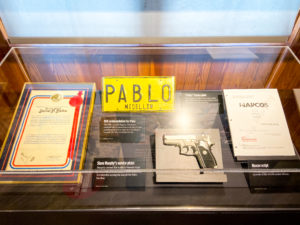
The exhibition includes a range of artifacts, including the service firearm carried by DEA special agent Steve Murphy when he was hunting Pablo Escobar in Colombia in the early 1990s.

To assist in producing the exhibition, the Mob Museum enlisted former DEA agents whose work in Colombia and Mexico in the 1980s and 1990s is dramatized in the Narcos series.

The first two seasons of Narcos depict the timeline chronicled by DEA special agents Steve Murphy and Javier Pena in their 2019 book Manhunters: How We Took Down Pablo Escobar. Murphy and Pena worked alongside Colombian National Police – on raids, investigations, interrogations — in the search for Escobar in Colombia from 1992 to the drug lord’s violent death by police in 1993.

Both Murphy and Pena provided valuable background information and artifacts saved from their careers in the DEA. Artifacts include the former agents’ DEA badges they wore while serving in Colombia, the Distinguished Service Crosses awarded to them after Escobar’s death, a wanted poster for Escobar, cocaine bags seized from his drug lab, Murphy’s 9mm firearm and a Los Tombos hat like those worn by members of the Colombian Police’s elite Search Bloc unit.

Murphy and Pena say the producers of Narcos took a number of liberties in the show to move the storylines along, including scenes involving their characters that never happened. On one of the panels in the exhibition, Murphy and Pena explain what things the show got exactly right and what amounted to dramatic license. Overall, they both believe Narcos succeeded in bringing the requisite points of their narrative to light.

Former DEA agent Pete Hernandez, who graduated from the DEA Academy with Camarena, served with him in Guadalajara and became his close friend, delivered for the exhibition the cowboy hat he wore while with the anti-drug agency in that city from 1979 to 1983. Hernandez also furnished a photo showing him and Camarena in the Zacatecas Mountains of central Mexico.

Another colleague of Camarena’s, former DEA special agent James “Jaime” Kuykendall, furnished a photo for the exhibit of a sign from the Rancho Santa Fe, a marijuana ranch that he and Camarena helped raid in 1983, resulting in one ranch hand shot to death by police. Kuykendall also made available a photo of him posing beside seven-foot marijuana plants at a trafficker’s farm in Mexico in 1992.
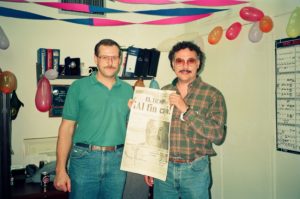
DEA special agents Steve Murphy and Javier Pena pose with a copy of a Colombian newspaper that reported on Pablo Escobar’s demise at the hands of the Colombian National Police in 1993. Courtesy of Steve Murphy

Kuykendall is himself an important character in Narcos: Mexico (portrayed by actor Matt Letscher), shown working as a DEA supervisor alongside Camarena (played by Michael Pena). He and Camarena were good friends in real life. Kuykendall served as the source for the exhibition’s panel on fact vs. fiction in Narcos: Mexico.

Two artifacts in the exhibition come from the Museum’s collection. One is a copy of a rare leather-bound book, commissioned by Escobar, containing a collection of editorial cartoons about him from Colombian newspapers. Escobar had a limited number of the books printed, and only 10 are believed to still exist today.

There is also a security officer’s ball cap from Escobar’s Hacienda Napoles, a ranch and theme park that was home to an array of exotic animals, including hippos, elephants and giraffes.

The exhibition portrays the beginning of Escobar’s career as a drug trafficker in the mid-1970s. A map shows the smuggling route created by his partner, Carlos Lehder, a pilot who bought most of an island, Norman’s Cay, in the Bahamas to use as a stopover to surreptitiously fly loads of cocaine from Escobar’s processing labs in Colombia into southern Florida, where their cohorts fanned out the drugs to distributors. It worked beautifully for several years until Lehder’s capture and the closing of the island in 1983. Lehder, originally sentenced in 1988 to life plus 135 years in a U.S. prison, won release from federal prison on June 15 and now lives in Germany.

The exhibition notes Escobar’s rise as a street hoodlum in Medellin, indulging in kidnapping, murder and police bribery until he happened upon a small cocaine ring. Coming at the time (about 1975) of increased popularity of powdered cocaine among America’s rich urbanites, it was an unbelievable opportunity that would lead to his trafficking of billions in cocaine, plus heroin and other illegal drugs, from Colombia to the United States.

After seizing control of the ring, Escobar vastly increased production of cocaine paste – the “base” for the drug – to make powdered cocaine and used ever-larger low-flying planes to transport more of it than anyone else. Escobar also resorted to more violence than the lessor drug lords dared – wholesale murder and terrorism, such as ordering the downing of a passenger airliner in 1989, innumerable bombings, the assassinations of Colombian Supreme Court judges, a presidential candidate, a cabinet minister, and paid hits on hundreds of police officers, amounting to literally thousands of deaths. His goal was to intimidate and promote fear within the public and police and discourage government officials from agreeing to sign a treaty with the United States for the extradition of wanted criminals like him.

Escobar’s exploits could not last. The exhibition shows his dead body on the roof of a house, the fatal result of a shootout with Colombian National Police in suburban Medellin after police intercepted his radiophone message from one his hideouts on December 2, 1993.
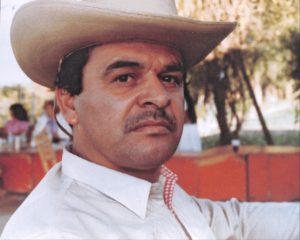
Kiki Camarena was a DEA special agent stationed in Guadalajara, Mexico, who was kidnapped, tortured and killed by a Mexican drug cartel in 1985. Courtesy of James Kuykendall

The dramatic focus of Narcos: Mexico is Miguel Felix Gallardo’s difficulties in maintaining control of his massive illegal drug business, in person and by phone, on the road and in the air, consisting of a confederation of “plazas,” or trafficking territories, in Mexico. Gallardo’s claim to fame was making a major deal with Colombians to supply him with tons of cocaine bound for the United States, smuggled by his coterie of plazas. Amid the tensions, in addition to assuaging corrupt politicians and police, he dealt with the competing personalities and egos of his partners, male and female, and their intervening family members.

Meanwhile, the DEA and Mexican authorities targeted Gallardo and his partner Rafael “Rafa” Caro Quintero for their complicity in the torture-murder of Camarena. They arrested Quintero in 1985 and obtained a murder conviction in court. Gallardo lasted longer, having cut deals with high-level Mexican officials, until his arrest in 1989 and subsequent 40-year prison sentence. (Quintero was released from a Mexican prison on a technicality after serving 28 years, and he remains a fugitive from American prosecutors). With his downfall, Gallardo’s drug federation split into separate cartels, triggering a years-long armed conflict among criminals, called the Mexican Drug War, which has taken the lives of more than 100,000 people since the 1990s.

Today, after the bloody years since the splintering of Gallardo’s Guadalajara Cartel, Mexico’s drug cartels, more or less, include the Beltran-Leyva, Gulf Cartel, Jalisco New Generation, Juarez, La Familia Michoacana. Los Zetas, Sinaloa and Tijuana/Arellano Felix. All owe their existence in many ways to what Escobar started 45 years ago, nurtured and killed for until his inevitable demise.

Cocaine trafficking breeds violence in ZeroZeroZero

About 10 cartel assassins armed with AK-47s and grenade launchers stormed the deputy police chief’s house at 5 a.m., snuffed out him, his police officer wife and their seven-year-old son, then lit the house on fire, killing three daughters.

This incident, which occurred in Mexico in July 2009 and is detailed in Italian journalist Roberto Saviano’s book ZeroZeroZero, is one example among many of the grim toll occurring today in global drug trafficking. During one especially deadly nine-month period in 2011, drug violence resulted in 12,903 people being killed in Mexico, according to the country’s prosecutor general. This year, in only one month since a March 23 stay-at-home order was imposed because of the coronavirus pandemic, an estimated 100 people were killed in drug-related incidents in Ciudad Juarez, across the border from El Paso, Texas.

This sort of violence is played out in several crime series now available on streaming services such as Amazon Prime Video and Netflix.

One of these, an eight-episode series airing on Amazon Prime, was adapted from Saviano’s book and also is titled ZeroZeroZero. The series paints a dramatic picture of the murderous betrayal and treachery common among cartels and Mafia clans, specifically in cocaine trafficking. The term “zero zero zero” describes the purest, whitest flour, but narco traffickers use it to signify pure cocaine. “The more zeros, the purer it is,” Saviano writes in the book. “The best cocaine: 000.” As the book points out, though, cocaine often is diluted, sometimes with flour or other substances, including a mild laxative, to stretch out the supply for street sales.

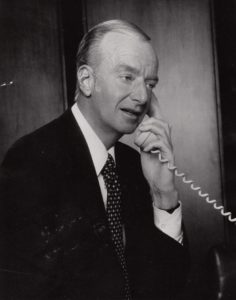
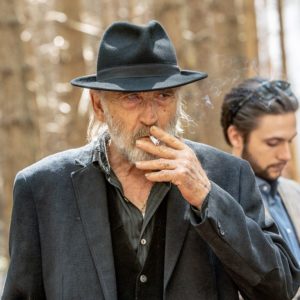
Italian actor Adriano Chiaramida plays an aging Mob boss in ZeroZeroZero.

The Amazon Prime series follows a fictional large shipment of cocaine from Mexico to Italy and dramatizes the difficulties in getting it there as organized crime factions attempt to control the payload (hidden in cans of sliced jalapeño peppers). A New Orleans shipping company, which also handles legitimate cargo, is the broker providing the transportation. Multiple spoken languages and stunning visual settings give the series an appealing global backdrop, but the deadly outcomes — human-eating pigs, children caught in the crossfire and killed in gun battles — erode any notion of glamor in this illegal enterprise.

The goal in such a cutthroat environment is the attainment of money and power, and, as the series makes clear, anyone can be betrayed, including family members. The payoff of millions of dollars is the motivating factor. As one of the show’s characters puts it, “Money solves everything.”

The lure of money will always be what draws people into this violent underworld, says Thomas Salme, a documentary filmmaker living in Italy. This lure is especially attractive to those from impoverished circumstances who see little opportunity in their surroundings and therefore look beyond the serious downsides, he said. Salme directed the 2019 documentary Rescued from Hell about Jota Cardona, a former Colombian drug dealer.

“A lot of money is involved, and nice cars and gold chains,” Salme said over the phone from his home in Milan. “Everybody wants to live this kind of dream life.”

Financial considerations were a factor in Salme’s own career with his decision to fly commercial aircraft in Europe without a license for more than a decade, according to court testimony that resulted in a $2,700 fine but no jail time for him in 2010. His lawyer said Salme was “unable to find other work and had financial difficulties due to a divorce, young children and an ailing father,” according to the Associated Press. From this experience, he since has turned to documentary filmmaking, focusing on international crime.

The cocaine-trafficking series based on Saviano’s book is one of several multiple-episode crime shows involving drug cartels recently airing on streaming services. Others include Narcos: Mexico and Ozark, both on Netflix.

In ZeroZeroZero, Gabriel Byrne plays the head of an American shipping company involved in global drug trafficking.

Salme said shows about drug cartels and the Mafia are popular in part because viewers enjoy the vicarious experience. “You are inside the danger,” he said, “but you aren’t in danger yourself.”

As for Saviano, author of ZeroZeroZero and other books, his writings about the Mafia have put him in a constant state of danger. The 40-year-old journalist has been under police protection in Italy since the 2006 publication of his book Gomorrah: A Personal Journey into the Violent International Empire of Naples’ Organized Crime System.

“I have traveled everywhere with seven trained bodyguards in two bullet-proof cars,” he wrote in 2015 for The Guardian, a British newspaper. “I live in police barracks or anonymous hotel rooms, and rarely spend more than a few nights in the same place.”

Saviano is active on social media sites and recently has spoken out against organized crime groups taking advantage of the coronavirus pandemic to win support in Italy from those who cannot get help elsewhere.

In April, Saviano wrote that “Italian Mafia clans – and in particular the Camorra of Naples” — have established a door-to-door service delivering essentials to the public.

“In the most disadvantaged neighborhoods of Naples, where many people had jobs in the black economy and are now out of work, it is the clans that step in to provide welfare, giving families bread, milk and other basics,” he wrote in the Guardian.

For this service, “desperate people who today receive the Camorra’s help will be grateful or, rather, will have to express their gratitude when everything gets back to normal and the clans need labor for their illicit enterprises,” Saviano wrote.

Noting that Mexican cartels are doing the same thing, Saviano offered a final warning: “Today we are in an emergency, and the imperative is to survive. But parallel to this pandemic, criminal interests are mobilizing. For us to know that – and know them – will be part of that survival.”

Larry Henry is a veteran print and broadcast journalist. He served as press secretary for Nevada Governor Bob Miller, and was political editor at the Las Vegas Sun and managing editor at KFSM-TV, the CBS affiliate in Northwest Arkansas. Henry taught journalism at Haas Hall Academy in Bentonville, Arkansas, and now is the headmaster at the school’s campus in Rogers, Arkansas.

One hundred years ago: Murder of ‘Big Jim’ Colosimo spawned one of the most powerful crime syndicates in American history – the Chicago Outfit

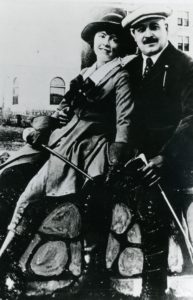
Three weeks after his marriage to the beautiful singer Dale Winter, James Colosimo remained giddy, and nervous. Known as “Big Jim” or “Diamond Jim” for his obsession with the gems, Colosimo reigned as boss of a whorehouse empire in Chicago’s Levee vice district. Celebrities, powerful pols and opera performers crowded his Colosimo’s restaurant, with a café-cabaret and separate late-night fine dining room.

On May 11, 1920, Colosimo and Winter set a date for dinner in the city’s fashionable and exclusive Loop area, along the shore of Lake Michigan. But Colosimo phoned Winter to tell her he’d be late, due to a sudden appointment. “Angel, just got a call,” he said to her. “Gotta meet a guy at the restaurant. It’s important.”

Colosimo with his second wife, the singer Dale Winter. They had been married just a couple of weeks before he was killed. William J. Helmer Collection / The Mob Museum

Colosimo had his chauffer drive him in his Pierce-Arrow to the restaurant that afternoon. Inside the still-closed restaurant, he asked a porter, Joe Gabrela, if he’d seen a man looking for him. Gabrela said no. Colosimo entered his office. Soon, Gabrela noticed a man in the dining room. “Mr. Colosimo’s in the office,” he told the man before leaving the room. Then the restaurant’s accountant noticed Colosimo exit the office. About a minute later, he heard a gunshot.

Colosimo had just peered out a windowed door to the large foyer of his café toward the street, when a gunman strode behind him and fired a .38-caliber revolver into the base of his brain, killing him instantly. The suspect fled, but Gabrela provided police with a detailed description. Chicago Police, acting on tips, shrewdly theorized that Brooklyn mobster-killer Frankie Yale did it. Gabrela did identify Yale in a photo lineup. But as things often wound up in gangdom in those days, his fear got the best of him. Taken to view a live police lineup in New York that included Yale, Gabrela declined to finger him. Practically everyone knew it was Yale, but lack of evidence meant no murder charges filed against anyone.

Johnny Torrio, Colosimo’s righthand man and Yale’s former saloon partner in Brooklyn, leapt into action. He organized an extravagant funeral for his dead boss that would serve as the template for future over-the-top, flowery send-offs for murdered mobsters of the 1920s. In a tribute to Colosimo’s political influence, mourners at the funeral inside his home included the all-powerful First Ward alderman and Cook County Democratic committee member Michael “Hinky Dink” Kenna, the second First Ward alderman “Bathhouse” John Coughlin, several other aldermen, a couple members of Congress, a state legislator and a few judges. About 5,000 people, some holding banners for the Democratic Party and street laborers union, trailed a hearse carrying Colosimo’s body in a $7,500 silver and mahogany casket to Oakwood Cemetery.

When people outside Colosimo’s brownstone watched Torrio enter Kenna’s waiting car, they realized who had moved in as Big Jim’s heir apparent in the First Ward. The Chicago Outfit was born.

Torrio most surely planned Colosimo’s assassination, enlisting Yale, his friend, former business partner and experienced hitman. His motivation to off his boss, acknowledged by history, came from his understanding that Prohibition, effective that January 17, clearly offered massive profits, based on his and Colosimo’s existing model of payoffs to police and local office holders to look the other way from Colosimo’s many prostitution houses in the area. Torrio read that the federal Prohibition enforcement agents would be political appointees, not subject to U.S. civil service rules. In other words, low-paid, low-skilled hacks, ripe for bribery and inattention to liquor smuggling.

But Colosimo, still in rapture with his new bride, disagreed with Torrio, fearing the prospect of federal law enforcement without the protection he was used to. Better to keep things the way they are locally, in the Levee and Loop, he thought. He nixed Torrio’s idea to make a major racket out of bootlegging.

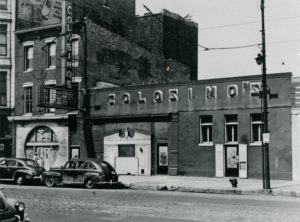
Colosimo’s restaurant on South Wabash Avenue, where he met his second wife and where he was shot to death. The restaurant continued to operate as Colosimo’s for many years after his demise. William J. Helmer Collection / The Mob Museum

However, it is rarely reported that Colosimo did in fact approve Torrio’s scheme to reopen closed breweries to make and sell illegal, real beer to underground merchants and barkeeps in Chicago. Earlier, before Prohibition, Colosimo invested $25,000 in a brewery operated by one of his saloon owners, Jake “Greasy Thumb” Guzik (one author claimed Guzik garnered his nickname for serving beer with his thumb in the stein). Still, this didn’t go far enough for Torrio. Just as he convinced Colosimo to expand the brothel business to the rising suburbs and towns bordering Chicago, he rightly predicted that unbridled bootlegging of beer and hard liquor would produce far more money — millions. Colosimo was dead set against going much beyond prostitution in Chicago and the suburbs, and his popular restaurant. For Torrio, to build this new domain, his shortsighted boss had to go.

Colosimo, born in 1878 in Palermo, Sicily, moved with his parents to the Windy City at age 1. He would not have reached his height as top pimp in Chicago – the nation’s brothel capital – without Hinky Dink Kenna’s well-paid protection. Hinky Dink and Bathhouse Coughlin represented the First Ward, when wards had two city alderman each, from the 1890s to the early 1920s. Two masters of influence and graft, Hinky Dink, thin, stoic and not quite five feet tall, and the floppish, flamboyant Coughlin, helped themselves to payments, not only from the vice businesses in the Levee, but on everything awarded by the city council in their ward – licenses, permits and utilities needed for hotels, banks, shops and clubs in the Loop as well as federal and state offices, the police, courts and jails. Colosimo, as Torrio after him, served at the pleasure of Kenna as his vice gang underlings and made sure he received his cut of the proceeds. Kenna let the illicit gambling operators and brothel madams run as long as they, as precinct captains, delivered him the votes to win elections.

Colosimo’s links to Hinky Dink started in the 1890s when Jim was an engaging young bootblack inside Kenna’s rowdy Workingman’s Exchange saloon. Kenna took a liking to the kid and later arranged for a city patronage job as a street cleaner. Colosimo ingratiated himself with Italian immigrants and got them to support Kenna. The boss in return promoted Colosimo to street cleaning supervisor. Colosimo organized his Italian men into a street cleaners union.

By the early 1900s, prosperous Chicago had been a bastion of illegal but tolerated prostitution for decades. Colosimo, with Kenna’s approval, made the move to the brothel business by marrying Victoria Moresco, a madam – six years older than Big Jim — of a pair of dollar-a-go whorehouses. Kenna elevated him to precinct captain to deliver the Italians to the polls. Colosimo was second only to Ike Bloom, the First Ward’s vice money bagman, in political power, under bosses Kenna and Coughlin.

After Colosimo died, his righthand man, Johnny Torrio, took control of the crime syndicate and went heavy into bootlegging. After barely surviving a hit by rival bootleggers in 1925, Torrio retired and Al Capone took over what came to be known as the Chicago Outfit. Courtesy of Library of Congress.

In 1909, the dangers of Chicago vice life intruded on Colosimo’s rising stardom. Black Hand extortionists, by letter and then at gunpoint, demanded Colosimo pay them $50,000. He needed a bodyguard. Victoria knew someone who might be right for it – her cousin, Johnny Torrio (born in southern Italy in 1882), who co-owned a saloon called the Harvard Inn in Coney Island, Brooklyn, with Frankie Yale. They offered to pay Johnny’s expenses and put him up in their Chicago brownstone. Torrio, weary of years of gang wars in the New York area, decided to make the move, and sold his share in the Harvard to Yale.

Unsure of the calm, squat, chubby Torrio, Colosimo told him about his problem. Torrio, a veteran Black Hand-style extortionist himself in Brooklyn, assured Big Jim he had it covered. Driving a horse-drawn carriage with two Colosimo gunmen hiding inside, he lured the three extortionists one night with the promise of a payment. The gunmen stood up, shot and killed two of them and mortally wounded the third. Colosimo hired Torrio as his bodyguard. As time went by, Colosimo noticed Torrio’s talent for finances and leadership and delegated responsibility for managing prostitution houses to him as a “male madam.”

In the 1910s, Colosimo rose to vice boss and Kenna’s collector in the First Ward, thanks both to Hinky Dink’s sway with police, judges and prosecutors, and Torrio’s business acumen. With the Loop district’s thriving businesses and fancy residences, the First Ward developed into perhaps the richest area in the whole Midwest.

For Torrio’s headquarters, Colosimo bought a four-story building at 2222 S. Wabash Avenue. Torrio opened an office, a saloon – the Four Deuces – a gambling house and fourth-floor brothel. While there, his old friend Frankie Yale sent him a letter, asking if he could give a 19-year-old roustabout bar worker of his, Alphonse Capone, a job. The teen cut up a man in a fight and needed to leave New York. Torrio made Capone his front door bouncer and then, after seeing his violent side, his bodyguard.

By his death in 1920, Colosimo had unknowingly fathered the shell of an organization that Torrio, and Capone who succeeded Torrio in 1925, would transform into the Outfit, one of the most powerful crime syndicates in American history.

Citing coronavirus risks, Italy releases four imprisoned Mob bosses

During the coronavirus pandemic, the world’s prisons are among the hotspots for the disease. Inmates living in close proximity create an ideal environment for the contagion to spread. That has prompted officials in multiple countries to grant early release to hundreds of thousands of criminals, including organized crime bosses.

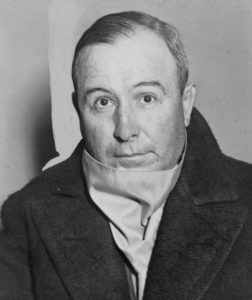
Rocco Santo Filippone
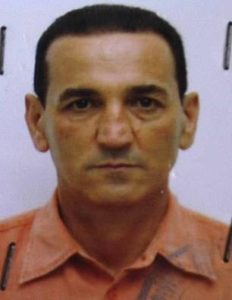
Rocco Santo Filippone, 72, a leader of the powerful ’Ndrangheta Mob of the southern province of Calabria, was released to house arrest. A court convicted him and another boss, Giuseppe Graviano, in the 1993-1994 attacks on Italian police patrols in Reggio Calabria that killed two officers and wounded two others.

In the United States, those permitted to walk from county jails or state and federal prisons to home confinement, as least temporarily, include former Donald Trump lawyer Michael Cohen and Michael Avenatti, ex-attorney for one-time porn actress Stormy Daniels.

But in Italy, with its extraordinary number of Mob-connected inmates, the impact of COVID-19 — and perhaps a surplus of government compassion — has led to the recent release from prison of four notorious crime bosses.

As many as 70 other Italian bosses may prove eligible for conversion to home confinement based on their advanced age and recognized health problems.

Despite the unsavory reputations and criminal acts committed by these men, a law passed by the Italian government aimed at releasing prisoners older than 70 and in poor physical shape to protect them from the virus.

One prominent boss already permitted to walk from prison, into house arrest, is Francesco Bonura of Palermo, who, at 78, served eight years of the 23-year sentence imposed on him for racketeering and cocaine trafficking in a case involving other top Sicilian bosses in 2012.

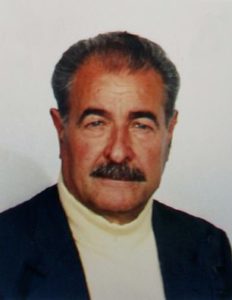
Vincenzino Iannazzo
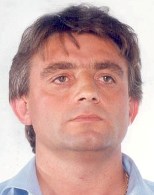
Lawyers for Vincenzino Iannazzo, 65, a ‘Ndrangheta boss, convinced a judge to release him to house confinement, even though he is younger than 70, claiming he was at risk to the virus based on his gender, age and various pathologies such as “immune deficiency from chronic anti-rejection therapy for transplantation.

Decades earlier, Bonura got off on a technicality in a case in which authorities charged him with five murders. Still considered the head of the Uditore, one of more than 100 crime families in Sicily, Bonura was imprisoned in the wake of major anti-Mafia legal reforms since the 1990s that imposed harsher prison sentences, the seizure of criminal assets and greater protections and incentives for witnesses to testify in organized crime trials.

Italian judges have also set free three other infamous crime leaders. Two are members of the powerful ’Ndrangheta of the southern province of Calabria: 65-year-old Vincenzino Iannazzo, and Rocco Santo Filippone, 72. The fourth is Pasquale Zagaria, 60, of the Casalesi clan with the Camorra family based in Naples.

Lawyers for Iannozzo, serving 14 years in a federal prison in Umbria, convinced a judge to release him to house confinement, even though he is younger than 70, claiming he was at risk to the virus based on his gender, age and various pathologies such as “immune deficiency from chronic anti-rejection therapy for transplantation.”

Filippone offered a more straightforward plea for release to house arrest: He’s older than 70 and suffers from heart disease. Of the two ’Ndrangheta bosses, Filippone’s exit from prison is more troubling.

Pasquale Zagoria
Pasquale Zagaria, 60, of the Casalesi clan with the Camorra family based in Naples, had been in prison since 2007, when a court sentenced him to 27 years. But his declining health has placed him at risk for the coronavirus, and doctors claim he needs cancer treatments that cannot be adequately provided in prison.

A court convicted him and another boss, Giuseppe Graviano, in the 1993-1994 attacks on Italian police patrols in Reggio Calabria that killed two officers and wounded two others. Filippone and Graviano acted on orders from their boss, Salvatore “Toto” Riina, who in the 1990s sought to intimidate the Italian government to halt or soften anti-Mafia measures through terrorism-style murders of public officials. Riina orchestrated the assassinations of prosecutors Giovanni Falcone and Paolo Borsellino, both killed in bombings in 1992, which shocked the country and triggered the passage of anti-Mafia legislation and new crackdowns on crime families. While serving a life sentence, Riina died in prison in 2017 at age 87.

The Italian news media refers to Zagaria, less of a boss with the Camorra than his brother Don Michele Zagaria, as the “economic mind” of the crime family’s Casalesi subgroup. He has been in prison since 2007, when a court sentenced him to 27 years. But his declining health has placed him at risk for the coronavirus, and doctors claim he needs cancer treatments that cannot be adequately provided in prison.

Concerns about the coronavirus have reached such a height in Italy, where more people have died from the malady than any country except the United States, that the society seems willing to let loose crime bosses, even if that means they may resume their illegal deeds remotely from their homes.

Some Italian officials have complained publicly about the judicial reasoning behind the releases. Matteo Salvini, leader of the Italian far-right party, the League, posted his reaction on Facebook: “That is crazy. It’s a lack of respect for people, magistrates, journalists, policemen and victims of the Mafia.”

Leo Beneduci, secretary general of the largest prison police officers’ union in Italy, in an interview with the British newspaper The Guardian, pointed out just how pervasive organized crime is in his country, in and out of its prisons.

“It is a very alarming situation,” Beneduci said. “In Italy there are approximately 12,000 members of criminal organizations in prison. Members of the penitentiary police have begun reporting detainees who embrace each other with the alleged goal of increasing the possibility of contracting the virus and getting released from prison.”

Mexican cartels deliver care packages to citizens amid pandemic

From mobster Al Capone’s Chicago soup kitchen that served three meals a day during the Great Depression to Colombian cocaine kingpin Pablo Escobar’s donations to soccer teams and housing projects in the 1980s, organized crime figures have often resorted to acts of charity to polish their tarnished public personas.

Now in Mexico, where the pandemic wrought by COVID-19 has killed about 700 people and damaged the economy, some of the country’s murderous drug cartels are making a show of distributing packages to the poor containing essentials such as food, cooking oil, sugar, protective masks, hand sanitizer, toilet paper and shampoo.

Representatives of the Jalisco New Generation, Gulf, Los Durango and Sinaloa cartels have passed out care boxes to Mexican residents to cope with the effects of the coronavirus on public health, businesses and laid-off or furloughed employees.

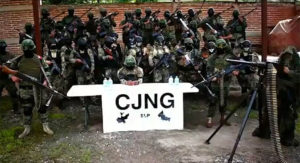
In images posted on social media, members of the cartels, some carrying firearms, dressed in military clothes or wearing hoods, are shown distributing packages of food and sanitary supplies to the public.

Jalisco New Generation, known as the CJNG, printed the cartel’s logo and the message, “From your friends, CJNG, COVID-19 contingency support” on the boxes. The Gulf Cartel, based in the eastern Tamaulipas state, printed “Señor 46, Vaquero” on boxes, apparently a reference to a leader of the crime group, Evaristo “El Señor 46” Cruz.

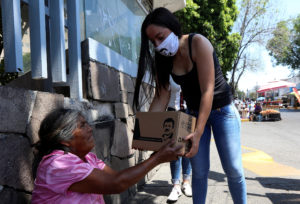
Representing the Sinaloa cartel, at least from a branding standpoint, is Alejandrina, the daughter of imprisoned former Sinaloa cartel boss Joaquin “El Chapo” Guzman. On a video posted on Facebook, she loaded provisions into boxes bearing her company’s brand name “El Chapo 701,” with a stenciled drawing of her infamous father’s smiling face as its logo.

The “701” refers to El Chapo’s purported ranking on a 2009 list of the world’s billionaires published by Fortune magazine.

An employee of the El Chapo 701 clothing brand, owned by Alejandrina Guzman, daughter of convicted cartel kingpin Joaquin “El Chapo” Guzman, hands a box with food, face masks and hand sanitizers to an elderly woman as part of a campaign to help cash-strapped people during the coronavirus outbreak in Guadalajara, Mexico. The number 701 refers to El Chapo’s 2009 world billionaires ranking given by Forbes magazine. Reuters/Fernando Carranza

Workers passed out the El Chapo-branded boxes to people on the street in Mexico’s second largest city, Guadalajara.

Alejandrina’s effort also is aimed at enhancing the El Chapo 701 brand, which also adorns clothing items and booze. While placing items into the cardboard boxes during the Facebook video, Alejandrina wore a protective mask with the El Chapo 701 logo.

Guzman, convicted in federal court in New York in 2019 of a host of felony charges relating to his 30-year drug trafficking ring from Mexico to the United States, is serving a life sentence at a “super max” high-security prison in Florence, Colorado.

The cartels’ public relations campaigns amid the coronavirus scourge fell on deaf ears with Mexico President Andrés Manuel López Obrador. The president has weathered criticism that his government has not done enough to assist Mexican businesses and the unemployed during the pandemic.

In a message published by the Associated Press, the president rebuked the cartels, saying that issuing care packages is unhelpful when compared with the gang violence that has ravaged the country and its families for decades.

“What helps is them stopping their bad deeds,” he said.

“I don’t want to hear them saying, ‘we are handing out aid packages,’” the president said. “No, better that they lay off, and think of their families, and themselves, those that are involved in these activities and who are listening to me now or watching me.”

Lopez Obrador has faced skepticism for his softer approach than previous presidents to dealing with the cartels, in favor of focusing policy and government funding on tackling the social ills that he believes promote crime.

Mexico’s murder rate, traced to inter-cartel battles, has been among the world’s highest for many years. The number of homicides totaled a record 34,582 in 2019, the president’s first year in office.

Who bombed Frank “Lefty” Rosenthal’s car?

Flames two or three inches high emerged from the defroster vent as he sat in his car with takeout food in the parking lot of Tony Roma’s restaurant on East Sahara Avenue in Las Vegas.

That was the first thing Frank “Lefty” Rosenthal saw, according to what he told author Nicholas Pileggi. The flames were reflected on the interior windshield. Rosenthal asked himself, “Why is my car on fire?”

As Rosenthal struggled with the door to get out, the car filled with sheets of flame, and a strong jolt might have thrown him against the steering wheel, hurting his ribs, but he couldn’t remember any of that. Outside the car, with his clothes on fire, he rolled on the ground to snuff out the flames. Two men assisted him as the car’s gas tank ignited, causing an explosion “like an atom bomb.” Rosenthal saw the 4,000-pound Cadillac Eldorado jump a few feet, flames shooting through the roof two stories high.

“That’s when I realized for the first time it hadn’t been an accident,” he told Pileggi. “That’s when I knew somebody put a bomb in my car.”

Lefty Rosenthal survived the car bomb attack, but he left Las Vegas soon afterward. Courtesy of Las Vegas Review-Journal Archive

Today, authorities still do not know who planted the bomb that blew up Rosenthal’s car on October 4, 1982. Investigators speculated his life was saved because the 1981 model of that car had a steel stabilizing plate beneath the driver’s seat, which deflected the blast.

Along with uncertainty over who killed Benjamin “Bugsy” Siegel in 1947 and the 1975 disappearance of labor leader Jimmy Hoffa, the Rosenthal car bombing remains one of the top unsolved organized crime mysteries in the country. The car bombing came up during a panel discussion at The Mob Museum in 2017. The discussion can be viewed here.

This year, the Rosenthal incident is back in the public eye with the 25th anniversary of the movie Casino, based on Pileggi’s 1995 nonfiction book, Casino: Love and Honor in Las Vegas.

Rosenthal’s description of what happened that October night is detailed in the book and depicted in the movie, which Pileggi co-wrote with director Martin Scorsese. For the movie, the characters were given fictional names to avoid legal difficulties, though their real names are used in the book. Robert De Niro stars in the movie as Ace Rothstein, the character based on Rosenthal.

Rosenthal, a Chicago Mob associate, ran the now-demolished Stardust hotel-casino on the Las Vegas Strip for Midwestern crime families that received untaxed gambling revenue skimmed from there and other resorts. The Stardust and other Argent Corp. properties — the Fremont, Hacienda and Marina — were owned by San Diego businessman Allen Glick, but Mob bosses who helped Glick secure Teamsters Union loans installed Rosenthal to run things.

That era, punctuated by the car bombing, resulted in several Midwestern mobsters being imprisoned a few years later in casino skimming trials.

Several theories have surfaced regarding who tried to kill Rosenthal. The most prominent is that it was the work of mobster Anthony “Tough Tony” Spilotro, who, like Frank Rosenthal, was an underworld transplant from Chicago. Spilotro also was having an affair with Lefty’s wife, Geri.

Tony Spilotro, who worked side by side with Rosenthal for years as associates of the Chicago Outfit, has long been suspected of orchestrating the car bombing but evidence linking him to it is lacking. Courtesy of Las Vegas Review-Journal Archive

Another theory pins the crime on the outlaw bikers Geri Rosenthal knew in Southern California during a downward spiral that resulted in her apparent drug overdose death there at age 46 a month after the car bombing. In the movie, Sharon Stone plays the Geri Rosenthal character, while Joe Pesci portrays the character based on Spilotro. Spilotro and his brother, Michael, were beaten to death in 1986 and buried in an Indiana cornfield.

Another suspect in the car bombing is former Milwaukee crime boss Frank “Mad Bomber” Balistrieri. A History Channel publication released in 2020 titled The American Mafia states that “most evidence” points to Balistrieri. According to the publication, Balistrieri blamed Rosenthal for the Chicago Outfit’s demand that he “surrender 25 percent of the take from his skimming operation.”

Some who were around in those days view it differently, believing Kansas City mobsters were responsible for the bombing. Frank Cullotta, a Chicagoan who reconnected with childhood pal Spilotro in Las Vegas in the 1970s, becoming his Mob lieutenant in town, said in a recent telephone interview that the Kansas City Mafia suspected Rosenthal of being a government informant and therefore wanted to take him down.

Las Vegas Review-Journal reporter Jane Ann Morrison later confirmed through her law enforcement sources what some mobsters sensed, that Rosenthal had been a Top Echelon federal informant. Morrison even discovered that Geri Rosenthal also talked to the FBI.

Frank Rosenthal’s involvement as an informant went back a long time, according to what Pileggi said over the telephone recently from his Manhattan apartment. The screenwriter said Frank Rosenthal likely had been a Top Echelon informant as far back as his Chicago years, when he was a prominent oddsmaker. When the Mob finally learns that about someone, arrangements are made to silence the person.

“Once you are a Top Echelon informant, you are a target,” Pileggi said, adding that mobsters from somewhere in the Midwest — Cleveland, Chicago, Milwaukee, Kansas City — probably were responsible for trying to kill Rosenthal with the car bomb.

Unlike others from that period, Rosenthal never was held criminally responsible for the widespread skimming that took place then. He moved away from Las Vegas not long after the bombing, first to California, then to Florida, where he offered sports-betting advice on his own website before dying in 2008 of an apparent heart attack at age 79.

Cullotta said the Kansas City crime family, led by Nick Civella, adhered to omertà, the Mafia code of silence. In their world, people who talked had to be dealt with.

“These guys were tough,” Cullotta said of the Kansas City family. Cullotta was somewhat familiar with Kansas City, having participated in a couple of jewelry store heists in town with Spilotro and Chicago mobster Vincent “The Saint” Inserro, scoring about $70,000 in stolen goods, he said.

Cullotta and a burglary crew called the Hole in the Wall Gang were captured in 1981 breaking into what was then Bertha’s Gifts and Home Furnishings on East Sahara, not far from where Rosenthal’s car would be firebombed the next year. (The Tony Roma’s restaurant later closed, becoming a Hustler Hollywood store, selling adult apparel and novelties.)

Some believe Frank “Mad Bomber” Balistrieri, boss of the Milwaukee Mob, was behind the bombing of Rosenthal’s car. Balistrieri was well known for using explosives to solve his problems.

Believing he was targeted for death himself, Cullotta cooperated with the government and entered the federal Witness Protection Program. He spoke at length with Pileggi for the book and even briefly appeared in the movie as a Mafia hitman, a role he had taken on in real life. Cullotta now hosts a YouTube program titled Coffee With Cullotta.

Another who thinks the Kansas City Mob probably engineered the car bombing is Gary Jenkins, a former Kansas City Police Department intelligence detective now running Gangland Wire, a website about the Mafia.

Jenkins, named in Pileggi’s book as a local cop who investigated the Civella crime family back then, said Rosenthal not only was suspected of being an informant, but he was drawing attention to himself in Las Vegas. Rosenthal waged a public battle with state gaming regulators, including future U.S. Senator Harry Reid, and hosted a television show broadcast from the Stardust featuring celebrity guests such as Frank Sinatra. This public notoriety was jeopardizing the skim that enriched mobsters in the Midwest. Jenkins’ 2016 book Leaving Vegas includes wiretap transcripts of Kansas City mobsters expressing disappointment with Rosenthal’s high-profile antics.

“He was creating a stir,” Jenkins said in a recent telephone interview.

Jenkins noted that Kansas City during its Mob wars in the 1970s was known as a town where car bombings took place. Of the Rosenthal bombing, Jenkins said, “It fits the mold of what Kansas City was doing at that time.”

Jenkins is among those who doubt there will ever be an answer to who tried to kill Rosenthal. Most people who might have known probably are dead, he said.

Pileggi sees it the same way. There might be some aging, former federal agent who knows something, Pileggi said, but so far, nothing definitive has emerged, and each passing day closes the door a little more.

“The clock is running out,” Pileggi said.

Larry Henry is a veteran print and broadcast journalist. He served as press secretary for Nevada Governor Bob Miller, and was political editor at the Las Vegas Sun and managing editor at KFSM-TV, the CBS affiliate in Northwest Arkansas. Henry taught journalism at Haas Hall Academy in Bentonville, Arkansas, and now is the headmaster at the school’s campus in Rogers, Arkansas.

The Camorra and the garbage racket in the ‘Land of Fires’

This is a condensed version of a longer case study, “Organized Crime and Environmental Issues in Naples, Italy,” that will appear in the forthcoming book Sustainable Planet (ABC-CLIO, February 2021)

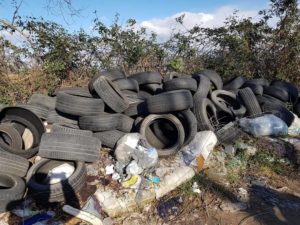
Naples, Italy’s fourth-largest city, is located in Campania, a region in southwest Italy with a population of about six million. From the 1980s through the present, Naples and the broader Campania region have been dealing with a major environmental issue, the illegal dumping and burning of toxic waste. Because of this activity, the region has seen major cancer clusters leading to numerous deaths of children and young adults, damage to the surrounding environment, and significant effects on agriculture and food production in the region. This issue continues to be one of the more pressing environmental justice topics in the European Union.

The Camorra

The group behind the illegal waste disposal is the Camorra, an organized crime syndicate based in Naples. Along with the other major Italian organized crime groups – the Calabrian ‘Ndrangheta, Pugliese Sacra Corona Unita, and the Sicilian Mafia – the Camorra controls various illegal rackets, as well as legitimate businesses, in Italy and abroad. The Camorra operates in more than a dozen countries and has investments across Europe, primarily in Western Europe, as well as a presence in the United States and Canada. Though hierarchal in nature, the Camorra is not a monolithic organization. It consists of dozens of individual clans that vie for control of pieces of territory to expand their criminal empire.

Inter-clan violence is commonplace. One Camorra boss who turned informant, Antonio Iovine, told an Italian court that he committed so many murders, he lost count (McKenna, 2014). There have been numerous clan wars, including a war between the Di Lauro clan and a break-off group that resulted in more than 60 murders between 2004 and 2005.

‘Garbage is gold’

Chemical discharge through a canal in the province of Salerno, August 2019. Courtesy of Angelo Ferrillo, www.laterradeifuochi.it

In the mid-1980s, in the aftermath of the Naples earthquake of November 23, 1980, the Camorra moved into waste hauling, primarily dumping garbage and toxic materials directly into quarries and other areas. It was a diversification away from their primary source of illicit income, narcotics. In 1992, a former Camorra boss told investigators, “I don’t deal with drugs anymore. Now I have another business. It pays more and the risk is less. It’s called garbage. For us, garbage is gold” (DeRosa, 2016). It was estimated that in 2013 alone, illegal disposal of garbage and toxic waste generated 16.3 billion euros for organized crime syndicates throughout Italy, including the Camorra (Newcomer, 2015).

The success of the waste-hauling operation is predicated on a steady supply of customers willing to go along with the Camorra. In many cases, the Camorra did not have to actively seek out willing partners, nor strong-arm companies to use their services. By bypassing environmental regulations, taxes and legal disposal methods, which, for toxic waste, can be costly, the Camorra-run companies are able to provide a service to potential customers at a far cheaper price, undercutting legitimate waste-hauling companies (D’Alisa et al, 2015). The cost to properly dispose of hazardous material in Italy ranges from 21 to 62 cents/kilo. The Camorra waste network can process that waste for 9 to 10 cents/kilo, a significant cost savings for companies (DeRosa, 2016).

The businesses that went along with the Camorra paid a tax to the Mob to assist with bribery of public officials. The Camorra then bribed officials to close incinerators, forcing more refuse to be trucked away, and by cornering the market on trucking firms, the Camorra was able to control virtually all the private refuse management in the region. This is not dissimilar from the way the American Mafia controlled waste hauling in New York City for decades.

‘Land of Fires’

Smoke from fires over Campania in 2017. Courtesy of Angelo Ferrillo, www.laterradeifuochi.it

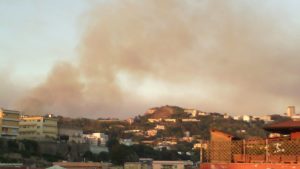
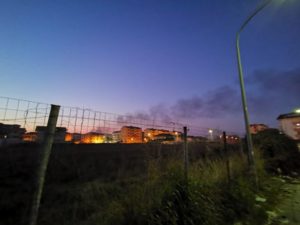
The region of Campania is the epicenter of the waste crisis. Known as the Land of Fires, from the constant burning of garbage, Campania is one of the most densely populated, yet one of the poorest regions of Italy. It’s GDP in 2016 was €18,600, corresponding to 66 percent of the Italian average (European Commission, 2017). The Italian government has identified more than 5,000 dump sites in an area of 55 communities in the Campania region.

All the dumping of waste, coupled with the fires from burning garbage, have caused a major human health crisis. Starting around 2000, local doctors in the town of Maddaloni, 25 kilometers from Naples, began seeing a dramatic increase of patients coming in with cancer. The types of cancer ranged from rare bone cancers and childhood leukemia to bladder and breast cancers. The other thing that mystified doctors was the age of patients, which had decreased significantly compared to years past.

The town of Acerra, halfway between Naples and Maddaloni, saw a rash of aggressive cancers and farmers with high levels of dioxins in their blood. Follow-up studies found high levels of dioxins and polychlorinated biphenyls, both considered human carcinogens by the World Health Organization’s International Agency for Research on Cancer, in animal milk and high levels of dioxin in breast milk of local women. Cancer rates in Acerra have risen 30 percent while other smaller towns have seen rates increases of up to 47 percent (Newcomer, 2015). Acerra and the nearby towns of Nola and Marigliano are referred to as the “Triangle of Death” (Mazza et al, 2018).

A fire in the commune of Teverola, in the Caserta province of Campania, October 31, 2019. Courtesy of Angelo Ferrillo, www.laterradeifuochi.it

The Italian Cancer Research Institute in Naples found a 47 percent increase in tumors for men in the Naples area compared with the rest of Italy. The U.S. Navy, which has staff and families living in bases at the Gricignano Support Site and Capodicino, undertook a $30 million study from 2008 to 2011 and found that servicemen and family members who lived at these sites for more than three years would be exposed to health risks (Newcomer, 2015).

The economy of the area was affected as well. In 2014, the minister of agriculture prohibited the sale of buffalo mozzarella, one of the region’s signature agricultural exports, after it was found that the milk of buffalo was contaminated with dioxins. Wine and olive oil exports from the region were also banned in 2014.

Local activism

For many people outside southern Italy, the fact that a major environmental crisis was unfolding in one of the richest countries in the world was not widely known. Nor was the pervasive influence of the Camorra. But in 2006, a best-selling book, Gomorrah (later made into a movie and successful TV series) brought the underworld of Naples to international attention.

Legambiente, founded in 1980, is one of Italy’s largest environmental activist organizations. It became aware of the waste problem in Campania and worked on a number of studies looking into Campania. In 2013 it published a summary of 82 investigations into toxic waste dumping in southern Italy, illustrating the pervasiveness and economic impact of the criminal activity.

There are activist Facebook groups, such as La Terra dei Fuochi, which offer a sounding board for residents of the area, places where they can report complaints and work with other activists to raise awareness of continued illegal dumping and fires in their areas. Protests and marches had become a regular occurrence in Naples. Activists work together to address various aspects of the crisis, from hyper-local issues to a broader social and environmental justice platform (DeRosa, 2016).

Government action

Fire over the commune of Trentola Ducenta, in Caserta, January 2020 . Courtesy of Angelo Ferrillo, www.laterradeifuochi.it

Local activism was targeted at a government that many felt was indifferent to the plight of Campania and did not seem to be interested in tackling the serious issues that so many had brought to light. But the government had tried to take on the problem previously. In 1994, regional governments in Campania started to make efforts to wrest waste hauling from Camorra control, and the central government declared a state of emergency. It appointed a special commissioner to oversee the issue, but he was primarily focused on urban refuse issues and not the burgeoning illegal toxic waste situation. This only led to more influence by the Camorra into illegal dumping.

In response to large protests in Naples about the waste crisis, the Italian Senate adopted Legislative Decree No. 136 in 2014, referred to as “Urgent Measures to Tackle Environmental and Industrial Emergencies and the Facilitate the Development of the Concerned Areas.” (Slaybaugh, 2017). The decree created a government group tasked with protecting the public health. The new law also made it a crime to burn illegal waste and strengthened existing laws enacted to combat the pervasive influence of the Camorra in the region (Slaybaugh, 2017).

Current status

Italy has been slow to address the situation in Campania. It was only in 2014 that the government declared the area an environmental disaster (DeRosa, 2016). But pressure from environmental groups and exposure in the news media have kept the pressure on the government to strengthen and enforce the laws and remediate dump sites.

An illegal dump near Villa Laterno, in Caserta. After reports from the Facebook page La Terra dei Fuochi, authorities cleaned up the site in December 2019. Courtesy of Angelo Ferrillo, www.laterradeifuochi.it

More than a dozen major epidemiological studies have been done in the Campania area since the early 2000s supporting residents’ claims of health hazards from the dumping, in addition to many more studies on the wildlife, livestock and vegetation. Campania is now the most investigated area in Italy relating to environmental conditions (Mazza et al, 2018).

Italian law enforcement efforts against the Camorra also increased. Camorra members, facing long prison sentences, began to turn against their former criminal compatriots, and new regulations increased prosecutors’ ability to go after Camorra money. In March 2019, Marco DiLauro, son of former Camorra kingpin Paolo Di Lauro, was arrested after 14 years as a fugitive.

As for the toxic dumping and fires, the situation has not been completely resolved. According to La Terra dei Fuochi, between August 24 and 25, 2019, 70 illegal waste fires burned between Naples and Agro Aversano, a city in the Caserta province of Campania. And fires were still being reported as of February 2020.

Further reading

D’Alisa, G., P.M. Falcone, A.R. Germani, C. Imbriani, P. Morone, F. Reganati. 2015. “Victims in the ‘Land of Fires’: A case study on the consequences of buried and burnt waste in Campania, Italy.” A study compiled as part of the EFFACE project, University of Rome “La Sapienza.”

DeRosa, Salvatore, “Drivers of Illegal Waste Disposal: The Case of Campania, Italy,” Entitle Blog. European Network of Political Ecology, August 2, 2016.

European Commission. 2017. “Campania.”

Mazza, A., p. Piscitelli, A. Falco, M.L. Santoro, M. Colangelo, G. Imbriani, A. Idolo, A. DeDonno, L. Ianuzzi, A. Colao. 2018. “Heavy Environmental Pressure in Campania and Other Italian Regions: A Short Review of Available Evidence.” International Journal of Environmental Research and Public Health. 15 (January 2018).

McKenna, Josephine. 2014. “Mafia boss ‘lost count of killings.’” The Telegraph, June 8, 2014.

Newcomer, Daniel. 2015. “Coping With Naples Toxic Waste Crisis.” Earth Island Journal, August 25, 2015.

Slaybaugh, Jason. 2017. “Garbage Day: Will Italy Finally Take Out Its Trash in the Land of Fires?” Washington International Law Journal 26 (2017): 179-205.

DEA attacks top Mexican drug cartel with 600 arrests across U.S.

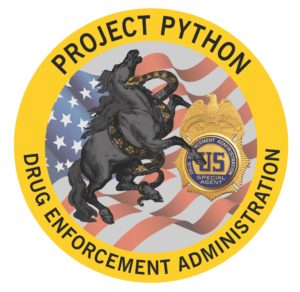
The operation was named “Project Python,” presumably reflecting an effort by federal law enforcement to squeeze the life out of its prey – members of a Mexican drug cartel described by the U.S. Justice Department as “one of the five most dangerous transnational criminal organizations in the world.”

The Justice Department and the Drug Enforcement Administration announced earlier this month that about 600 suspects across the United States were arrested on suspicion of taking part in a drug ring organized by the Cartel Jalisco Nueva Generacion (Jalisco New Generation cartel, or CJNG), based in southwest Mexico.

Project Python took place over six months, culminating in early March with the arrests, along with 350 grand jury indictments of CJNG defendants. The busts have included seizures of 44,000 pounds of drugs, according to a report by WLS Eyewitness News in Chicago.

El Mencho’s son and second in command, Ruben Oseguera Gonzalez, known as El Menchito, was extradited to the United States in February and is awaiting trial.

Assistant Attorney General Brian A. Benczkowski of the Justice Department’s Criminal Division said the targeted attack on the CJNG followed the President’s Executive Order 13773 to identify and topple the largest crime groups in America.

“When President Trump signed an executive order prioritizing the dismantlement of transnational criminal organizations, the Department of Justice answered the call and took direct aim at CJNG,” Benczkowski said. “We deemed CJNG one the highest-priority transnational crime threats we face. And with Project Python, we are delivering results in the face of that threat for the American people.”

In addition to the arrests, the Justice Department and DEA, in a superseding indictment, enhanced the drug trafficking, murder conspiracy, firearms and criminal racketeering allegations against the widely acknowledged kingpin of CJNG, Nemesio Ruben Oseguera Cervantes, aka “El Mencho,” who remains at large.

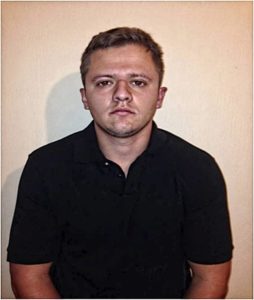
U.S. authorities have apprehended two of El Mencho’s children, who are considered among the higher-ups in the CJNG. His son, Ruben Oseguera Gonzalez, whose nicknames include “Menchito,” “Rojo” and “El Nino,” is considered El Mencho’s second in command. He was formally extradited in February from Mexico to the United States to face charges of trafficking narcotics and using a gun to facilitate drug smuggling.

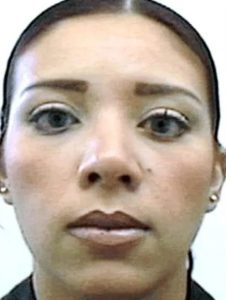
El Mencho’s daughter, Jessica Johanna Oseguera Gonzalez, who allegedly handled money laundering activities for the cartel, was arrested in February in the United States.

Meanwhile, on February 26, authorities located and arrested the kingpin’s daughter, Jessica Johanna Oseguera Gonzalez, aka “La Negra,” in the United States. In December, a federal grand jury indicted her on charges of laundering profits from CJNG’s international drug smuggling scheme. The indictment claims she owned an advertising business, cabin rental firm, sushi lounge and tequila company in Guadalajara, Mexico, to serve as fronts to hide CJNG’s money on behalf of her father.

In the three cases against El Mencho and his children, federal prosecutors asked the court to order the forfeiture to the U.S. government of all money, property and other gains the defendants received from the drug trafficking if they are convicted.

The Treasury Department has used the Foreign Narcotics Kingpin Designation Act to list El Mencho as a “specially designated narcotics trafficker,” and the U.S. State Department offered a $10 million reward for information leading to his arrest.

According to El Mencho’s indictment, the CJNG, from the Mexican state of Jalisco, worked with its drug trafficking partner, called Los Cuinis, to arrange the shipment of multiple tons of cocaine from Colombia and elsewhere in Latin America to Mexico. Both groups allegedly still oversee the transport and sales of the cocaine to the United States and supervise the movement of numerous kilos of methamphetamine and fentanyl to the States as well.

Prosecutors contend that El Mencho started trafficking cocaine and methamphetamine in 2000. By 2007, he allegedly distributed large quantities of narcotics in an international organization spanning Colombia, Guatemala, Mexico, the United States, Australia and elsewhere. The U.S. government also charged him with conspiring to kill or inducing others to kill one or more people.

The DEA created this dramatic logo, showing a python wrapping around and biting a horse, for its massive Project Python investigation.

Los Cuinis, as with CJNG, has been a family affair for years, led by members of the Gonzalez Valencia clan. The family patriarch, Abigael Gonzalez Valencia, ran the trafficking gang before his arrest in Mexico in 2015 (he is still awaiting extradition to the United States). His sister, Rosalinda Gonzalez Valencia, who is El Mencho’s wife, was released from a Mexican jail in 2018 following her arrest on money laundering and other charges. Some authorities maintain that Los Cuinis currently functions primarily as the money laundering wing of CJNG.

Abigael Gonzalez Valencia’s brother, Gerardo Gonzalez Valencia, known as “Lalo” and another leader of Los Cuinis, left Mexico to manage drug trafficking from Argentina and then Uruguay, a country seen as a haven for money laundering. But soon after he was charged with drug trafficking in the United States in 2016, authorities in Uruguay arrested him. His extradition to the U.S. is still pending.

The Jalisco New Generation cartel, known in Mexico as CJNG, is highly militarized and ruthless in its violence against rival cartels.

In an indictment filed in Washington, D.C., in 2014, U.S. prosecutors charged that the “CJNG and Los Cuinis carried out numerous acts of violence, including murders, assaults, kidnappings, assassinations, and acts of torture.” The Justice Department has deemed the CJNG “one of the most dangerous transnational criminal organizations in the world.” The group smuggles as much as five tons of cocaine and methamphetamines into the United States on a monthly basis and smuggles in fentanyl-laced heroin as well. According to news reports, CJNG’s sphere of influence in the drug trade extends as far as Europe, North Africa and China.

The CJNG emerged as a powerful winner in 2011 during an internal struggle with a splinter group. Based in Guadalajara, CJNG exercised brute force, killing 35 gangsters in one battle and using a rocket-propelled grenade to shoot down a Mexican military helicopter. Years later, it made further gains in the confusion left after the arrest of Sinaloa cartel kingpin Joaquin “El Chapo” Guzman (now imprisoned in the U.S.). It also commands the illegal drug business in the Mexican states of Colima and Veracruz.

The crime gang is considered a significant reason for the high increase in murders that has befallen Mexico since 2014.

From shoe-leather reporter to Mob movie screenwriter, Nick Pileggi remembers it well

Author and screenwriter Nicholas Pileggi is enjoying a couple of major career milestones this year. Two groundbreaking Mob movies he wrote with director Martin Scorsese — Goodfellas and Casino — are undergoing anniversaries.

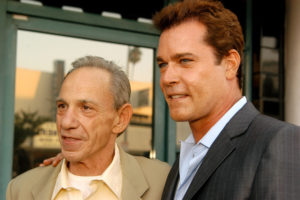
Goodfellas, starring Robert De Niro, Joe Pesci and Lorraine Bracco, and featuring Ray Liotta as Irish-Italian gangster Henry Hill, premiered 30 years ago in September. The movie is based on Pileggi’s 1985 book Wiseguy about Hill’s criminal ascent from juvenile gofer for neighborhood Mafiosi in Brooklyn (“As far back as I can remember, I always wanted to be a gangster”) to his turncoat adult life as a protected government witness.

Casino, the Las Vegas Mob movie based on Pileggi’s nonfiction book of the same title, is celebrating its 25th anniversary. Starring De Niro, Pesci and Sharon Stone, Casino is a fictionalized account of Las Vegas casino executive Frank “Lefty” Rosenthal’s rocky relationship with his wife, Geri (De Niro and Stone), and her romance with the Pesci character, based on Tony Spilotro, the Chicago Outfit’s overseer in Southern Nevada during the 1970s and early ’80s.

In a recent telephone interview, Pileggi, who celebrated his 87th birthday in February, recalled his early days as a New York City crime reporter, the times he spent in Las Vegas with his wife, the writer Nora Ephron, and the years working with Scorsese on scripts for the duo’s now-classic gangster movies.

Goodfellas is the story of Henry Hill, left, who was portrayed in the movie by Ray Liotta. Rebecca Sapp/Wireimage

Pileggi stumbled into journalism, having set out at Long Island University in the class of 1955 to become an English teacher and maybe a novelist like Ernest Hemingway. He read famous authors — James Joyce, Aldous Huxley — and typed out published books word for word to learn the tricks that make writers successful — the pacing, the tone, etc.

“You get into the rhythm,” he said.

Needing a job, he followed a friend’s suggestion and went for an interview with the AP, thinking it was the Atlantic and Pacific grocery store chain, but instead was the Associated Press wire service. He was hired.

“You couldn’t do that today,” he said, noting that candidates for journalism jobs these days often need a degree from a prestigious college program.

On the job, he covered labor leader Jimmy Hoffa, New Jersey mobster Anthony “Tony Pro” Provenzano and others, creating a card file on underworld figures.

“My timing was absolutely perfect,” he said of his start in journalism.

Pileggi even labored in the press building called “the shack,” across from what was then police headquarters on block-long Centre Market Place in Lower Manhattan, where other New York journalists, including the legendary tabloid photographer Weegee, worked. Pileggi became acquainted with Weegee (real name Authur Fellig), but by then the famed street photographer was near the end of his career.

Moving into long-form writing at New York magazine, Pileggi worked with some of the best-known reporters then practicing the New Journalism, including Tom Wolfe, Jimmy Breslin, Pete Hamill and Gloria Steinem.

The magazine’s editor, Clay Felker, pulled Pileggi in by saying to the wire service reporter, who wrote under tight deadlines, “What the hell are you doing at the AP? I’ll match your salary.”

Magazine work led to an interview with gangster Henry Hill, who was seeking a writer to tell his story. Mob authors such as Peter Maas also were considered, but Pileggi, who had built that card file, knew a lot of the same people as Hill, even down to their nicknames.

“Henry and I hit it off,” Pileggi said.

After the success of Goodfellas, Scorsese approached Pileggi, looking for something new. “What are you doing next?” Scorsese asked him.

As it happened, Pileggi had seen a news story about the illegal skimming of casino revenue at the Stardust hotel-casino on the Las Vegas Strip and got in touch with Frank “Lefty” Rosenthal, the Chicago bookmaker who oversaw the skim for mobsters in the Midwest.

But Rosenthal said no, even with the possibility of some money on the table.

Pileggi then located Frank Cullotta, a Spilotro lieutenant in Las Vegas who had testified against his associates and, like Hill, had entered the Witness Protection Program. Cullotta had led the so-called Hole in the Wall Gang, which burglarized businesses and homes in Southern Nevada by punching holes in the walls and ceilings. The crew was arrested in 1981 attempting to break into what was then Bertha’s Gifts and Home Furnishings on East Sahara Avenue. The store also sold jewelry.

With Rosenthal reluctant to talk and Spilotro murdered by then, Cullotta would be the focus of Pileggi’s new book. Cullotta opened up about Spilotro, including the Chicago mobster’s romance in Las Vegas with Rosenthal’s wife, a former showgirl at the Tropicana, who also was dead by the time Pileggi began digging into the story.

Pileggi said of Cullotta, “He was fabulous.”

After Scorsese green-lighted the project, word got out that a Las Vegas Mob movie was in the works, with De Niro slated to portray the Rosenthal character.

“The phone rings. It’s Rosenthal,” Pileggi said. “He said, ‘I heard on the radio that De Niro is supposed to play my part. Could I talk to De Niro?’”

Nick Pileggi and his wife, the late Nora Ephron, at the Tribeca Film Festival in 2010. Courtesy of David Shankbone

Soon after, De Niro was on a plane to Boca Raton, Florida, just north of Miami, where Rosenthal was living, to meet with the sports handicapper and former Las Vegas casino operator.

“They hit it off right away,” Pileggi said.

In no time, Rosenthal’s home filled with people wanting to meet De Niro, including Rosenthal’s daughter and, by 5 p.m., even Rosenthal’s pool guy.

“He told everybody De Niro was there,” Pileggi said.

From that point on, “Lefty opened up to me,” Pileggi said. Others in Las Vegas also helped with the project, including Oscar Goodman, a Mob lawyer and future Las Vegas mayor, and casino owner Steve Wynn. Pileggi and his wife, the film director and screenwriter Nora Ephron (Sleepless in Seattle, When Harry Met Sally), hung out at Wynn’s Golden Nugget on Fremont Street downtown, playing craps and enjoying their time in Las Vegas. Ephron, who died in 2012, also had liked shooting craps with her husband at the Sands on the Strip, which since has been torn down and replaced by the much larger Venetian hotel-casino. The Stardust also has been demolished. Resorts World Las Vegas is going up at the same location.

“We all had a good time,” Pileggi said of those earlier days in Las Vegas.

With Rosenthal on board, the focus for the book and movie shifted from Cullotta to the love triangle involving the Rosenthals and Spilotro, and to the skimming operation. The names were changed for the movie, but many of the details, including the still unsolved bombing of Rosenthal’s car in the early 1980s outside what then was a Tony Roma’s restaurant on East Sahara Avenue, mirror real-life experiences. Rosenthal moved away from Las Vegas not long after the bombing and died in Florida in 2008.

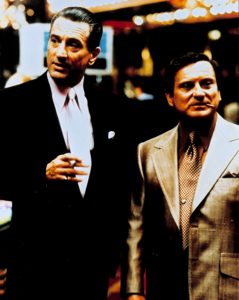
Robert De Niro, left and Joe Pesci starred in Casino, portraying characters inspired by Frank “Lefty” Rosenthal and Tony Spilotro. Pileggi interviewed Rosenthal extensively before completing his screenplay.

To this day, Pileggi speaks fondly of his experiences in Las Vegas and is grateful to those who assisted in pulling the Casino story together.

“Oscar was unbelievably helpful,” he said of Goodman, who is on The Mob Museum board of directors. Goodman and Cullotta also had minor roles in the movie, Goodman playing himself and Cullotta playing a hitman.

Wynn also gave freely of this time, Pileggi said, adding that he got along well with Wynn. Pileggi and Ephron were present when the casino operator accidentally punched a hole in an original Picasso painting in his office at the Wynn hotel-casinop. Years later, Wynn stepped down as chairman and chief executive of Wynn Resorts amid sexual misconduct allegations that he has denied.

Pileggi liked Rosenthal but found him to be complicated, on one hand “a pain in the ass” and on the other “a charming guy.”

“He was a loner,” Pileggi said of the longtime bookie. “He only rooted for the odds. He couldn’t root for anybody. It kept him distant.”

Now with Goodfellas and Casino being celebrated during their anniversary years, Pileggi is continuing to work on new projects. At heart, he is still a shoe-leather reporter digging out stories, as he was in New York City while working for the Associated Press — the AP.

“I’d go back in a minute if they would take me,” he said.

Larry Henry is a veteran print and broadcast journalist. He served as press secretary for Nevada Governor Bob Miller, and was political editor at the Las Vegas Sun and managing editor at KFSM-TV, the CBS affiliate in Northwest Arkansas. Henry taught journalism at Haas Hall Academy in Bentonville, Arkansas, and now is the headmaster at the school’s campus in Rogers, Arkansas.

DEA report: Drug overdoses top cause of death for Americans

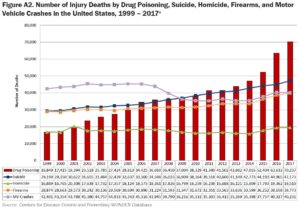
Drug poisoning was the chief cause of injury deaths among Americans from 2011 to 2017, more than the loss of life from firearms, car accidents, suicide or murder, while overdose deaths from illegal opioids and prescription opioids declined somewhat in 2018.

These lethal drugs include fentanyl and other illegal synthetic opioids trafficked by transnational organized crime groups from Mexico and China, heroin and methamphetamine sourced from Mexican drug cartels, and cocaine manufactured and distributed by Colombian gangs.

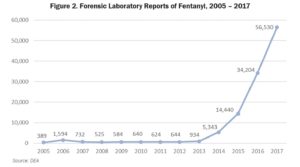
This chart shows the sharp increase in the availability of fentanyl, based on test results from laboratories across the United States. Lab reports of fentanyl rose 65 percent from 2016 to 2017, according to the DEA. Courtesy of DEA

The most drug-involved deaths of Americans arise from people abusing domestic prescription pain relievers such as hydrocodone, oxycodone and other controlled opioid narcotics prescribed in the United States, which in 2018 amounted to 11 billion doses. More than 17,000 people died from prescription overdoses, about 47 per day, in 2017. More than 50 percent of people surveyed who admitted to misusing a prescription pain drug said they received the pills from a friend or relative for free.

New guidelines and crackdowns on prescriptions in all 50 states have reduced the amount of prescribed opioids in society, and the once serious rash of robberies of prescription opioids has greatly declined. But many opioid abusers unable to get them legally have turned to street gangs selling counterfeit prescription drugs secretly laced with fentanyl and heroin that contribute to overdose deaths.

That’s all according to the latest “National Drug Threat Assessment” by the U.S. Drug Enforcement Administration. The 2019 report examines drug crimes and deaths in America based on the most recent reports, as of 2018, from federal, state, local and tribal law enforcement, intelligence and public health agencies and DEA field divisions in 22 American cities and the Caribbean.

The good news is that in 2018, deaths from drug overdoses overall fell by four percent, and deaths from prescription opioids dropped by 13 percent. Furthermore, seizures of deadly fentanyl sent to the United States from China sank by 57 percent from 2017 to 2018, a sign of declining availability likely a result of tighter rules and restrictions by Chinese officials on manufacturers of chemicals used to create synthetic opioids.

Drug poisoning has been the leading cause of injury deaths in America for every year since 2011, greater than deaths by suicide, homicide, firearms and automobile crashes, according to the Centers for Disease Control and Prevention. Courtesy of DEA

Directly responsible for the human carnage from drug overdoses are organized gangs from Mexico, Central and South America and China. Drug poisoning killed more than 70,000 Americans in 2017, which is steep when compared with the more than 47,000 deaths from suicide, 19,500 from homicide, 39,000 from firearms and 40,000 in auto crashes that year.

Despite the decline in deaths in 2018, America’s illegal fentanyl problem is still frightening. The 2017 figure for drug deaths was more than 10 percent higher than in 2016 — and close to double the 38,000 drug poisonings in 2010. As of 2017, the states with the highest rates of overdoses traced to fentanyl were West Virginia, Ohio, New Hampshire, Maryland and Massachusetts.

Fentanyl is a synthetic opioid originally designed as a prescription drug to relieve severe pain. To abusers, fentanyl’s appeal is a “high” similar to heroin. But it is up to 100 times stronger than the pain reliever morphine and can cause death if ingested in amounts as tiny as two milligrams, like grains of salt on a fingertip. By comparison, it takes about 75 milligrams of heroin to trigger an overdose.

“Fentanyl remains the primary driver behind the ongoing opioid crisis, with fentanyl involved in more deaths than any other illicit drug,” according to the DEA report.

The chemically mixed opioid is smuggled into the United States from Mexico and China, sent directly across the Southwestern border or within packages by international postal mail or express shipping services. The pushers deliver it in powder form or press it into counterfeit pills meant to pass as prescription drugs.

More than ever, crime organizations are mixing fentanyl with heroin, cocaine and methamphetamines to provide ever-higher intoxications for customers, and a far higher risk of overdoses. The DEA said that from 2016 to 2017, laboratories that tested samples of drugs seized throughout the country found that instances of fentanyl mixed with heroin had climbed by 97 percent, fentanyl with cocaine up 74 percent, and mixtures with methamphetamine increased by 174 percent.

Mexican crime groups

“Mexican TCOs [transnational crime organizations] remain the greatest criminal drug threat to the United States,” the DEA states.

In Mexico, crime cartels control the flow of illegal drugs through the southern U.S. border, partnering with independent crime groups, American street gangs, prison gangs and Asian money laundering organizations. The Mexican TCOs smuggle and sell bulk quantities of heroin, cocaine, methamphetamine, fentanyl and other drugs at wholesale prices to street gangs in U.S. cities that in turn peddle them to users at higher “retail” prices. The cartels typically deal with independent contractors in the U.S. who serve in specific roles in a supply chain to distribute drugs, receive payments and launder the proceeds, but the contractors know little about each other’s functions.

The DEA identifies six major TCOs in Mexico that smuggle drugs into the U.S.: the Sinaloa Cartel, Jalisco New Generation, the Beltran-Leyva Organization, the Juarez Cartel, Gulf Cartel and Los Zetas Cartel. While a huge number of drug-related murders occur in Mexico each year, little of that violence spills over into the United States, as cartels seek to avoid the attention of U.S. law enforcement, the DEA reports.

According to the agency, as has been the case for years, “the Sinaloa Cartel maintains the widest national influence [in the U.S.], with its most dominant positions along the West Coast, in the Midwest, and in the Northeast.” The next biggest narcotics trafficker to America is the Jalisco cartel. Beltran-Leyva, also seen throughout the United States, is heavily involved in heroin trafficking.

DEA field offices in San Diego, Atlanta and Los Angeles report that the Sinaloa and Jalisco are the top Mexican TCOs running drugs in their jurisdictions.

Police and fire officials in Phoenix in 2018 seized this illegal cannabis oil “still,” used to extract intoxicant-producing THC from marijuana plants to distill the concentrate tetrahydrocannabinolic acid (THCA) with up to 99 percent THC. THCA is typically used in e-cigarettes and vaping devices. Courtesy of DEA

The Sinaloa, Jalisco, and Beltran-Leyva have recently expanded their presence in the Miami area, shipping in cocaine, methamphetamine, heroin, and fentanyl from Mexico. In New England, the Sinaloa dominates drug trafficking, selling on a wholesale basis heroin, fentanyl and cocaine to members of Dominican Republic-based TCOs that distribute the drugs to street gangs in the region. In Denver, the Sinaloa, Jalisco and Beltran-Levy control methamphetamine, cocaine and heroin sales.

Techniques used by Mexico-based gangs to sneak drugs (mostly synthetic opiates, cocaine, heroin, methamphetamine and marijuana) into the United States include tunnels beneath the Southwestern border, stashing supplies in commercial cargo trains and passenger buses and assigning individual “backpackers” or mules to walk supplies over land.

They also have drugs dropped across the border by air, using manned ultralight aircraft, unmanned aerial vehicles (UAS) and smaller drones. The cartels also deploy UAS crafts to monitor American law enforcement officers and find vulnerable areas to airdrop drugs.

Mexican gangs also captain sea vessels to transport drugs to locations off the coast of California, the state where more than 75 percent of all fentanyl seizures took place in the U.S. in 2018 (Arizona was next with 20 percent of the fentanyl confiscated).

As for laundering, or secretly hiding, the money earned from drug trafficking, Mexican TCOs favor moving mass amounts of U.S. currency. They deposit proceeds into U.S. banks, use money brokers and money service businesses to transfer money electronically to Mexico, park money in front and shell companies or simply purchase cars and other property.

One significant recent trend involves Mexican TCOs teaming with China-based money launderers to hide drug money. This developed after the Chinese government placed a cap on foreign exchange transactions to only $50,000 a year and $15,000 a year on withdrawals from credit and debit cards. Criminals in China seeking to exchange more than the government allows are increasingly interested in switching their money into U.S. dollars. These Asian criminals will buy Mexican pesos on the black market and then sell the pesos to Mexican TCOs for the U.S. dollars the TCOs obtained from trafficking drugs. Both sides thus succeed in laundering each other’s funds.

To complete the laundering process, the Chinese gangs resell the dollars at a profit to Chinese nationals living in the United States, usually in exchange for payments in Renminbi, the official Chinese currency used in mainland China.

This relatively new method of converting dirty money “has provided an outlet for Mexican TCO drug proceeds that is changing the landscape of money laundering within the United States,” the DEA states.

Colombian TCOs

Colombia, the South American nation that infamously reigned as the center of the cocaine trade in the 1980s and 1990s, remains the country of origin for most of the cocaine seized in the United States. Colombian TCOs collaborate with Mexican TCOs, providing multi-ton supplies of Colombian cocaine made from raw coca leaves, along with smaller caches of heroin that Mexican crime groups prepare for sale in America.

The Gulf Clan is the most significant crime organization trafficking cocaine out of Colombia. The clan is one of the country’s so-called Grupos Armados Organizados (GAO), or Armed Criminal Organizations that run the powdered drug trade with dissident members of the Revolutionary Armed Forces of Colombia (FARC). The Gulf Clan routinely traffics tons of cocaine to Mexico, Ecuador and Venezuela, Panama and the Caribbean, using speedboats, fishing boats, near-submersible vessels and aircraft, ultimately bound for the massive U.S. market.

In America, Colombian TCOs use money launderers assigned to large cities, including Boston, Chicago, Miami and New York, to deposit drug profits into U.S. banks and then send the money to Colombia disguised as payments for nonexistent products and services.

Dominican TCOs

Another growing country of origin for illegal drug exports is the Dominican Republic. Dominican crime gangs dominate the mid-level distribution of cocaine and white powder heroin, using friends and family members of Dominican nationals and U.S. citizens in the Northeastern states and Florida. Most of the coke and heroin in the Dominican Republic is ferreted in small boats to Puerto Rico, a U.S. territory. The traffickers then arrange to fly the drugs on airlines to New York City and Florida. Other quantities arrive in the U.S. by boat or in packages via the U.S. Postal Service.

TCOs in tribal lands

This chart depicts the steady increase in illegal drug cases in Indian Country since 2012. Cases surged by 47 percent in 2018 alone, according to the Bureau of Indian Affairs. Courtesy of DEA.

Crime gangs operating on Native American tribal enclaves also import illegal narcotics. Drug seizures in Indian Country have increased every year since 2011, and soared by 47 percent in 2018. The Tohono O’odham Nation Reservation, on a remote area in southern Arizona, has been a hotbed for Mexican drug smugglers. Canadian drug pushers cross the St. Lawrence River on the northern U.S. border from Ontario into the St. Regis Mohawk Reservation in New York State.

American gangs

Dozens of street gangs, prison gangs and outlaw motorcycle gangs, often overlooked on the American home front, continue to permeate the country. The gangs, on a local retail level, traffic heroin, synthetic opioids, methamphetamine, cocaine and marijuana from Latin America and China in addition to engaging in murder, robbery, extortion, burglary, sex trafficking and illegal firearms sales. Turf wars for dominance in the drug trade prompt members to turn to gun violence in residential neighborhoods.

Some of the gangs mentioned by the DEA include the Latin Kings, the California Mexican Mafia (prison group), MS-13, the 18th Street gang, the Nortenos, Surenos, Tango Blast, Aryan Brotherhood, the Bloods, the Rolling 90s Crips, and the Banditos and Pagans outlaw motorcycle gangs.

These crime hosts are found to operate in cities with DEA field offices: Atlanta, Chicago, Dallas, Denver, Detroit, El Paso, Houston, Los Angeles, Miami, Louisville, Boston, New Jersey, New Orleans, New York, Omaha, Philadelphia, Phoenix, San Diego, Seattle, St. Louis and Washington, D.C.

“As long as illicit drugs remain in high demand in America, street-level drug sales will continue to rank among the top criminal activities conducted by street gangs, who are lured by the prospect of huge financial gains,” the DEA states. “For the near future, street gangs will fight to remain major distributors of street-level drugs in the DEA [areas of responsibility], and assaults, intimidation, and homicide will be their means to this end.”