One frequently asked question at The Mob Museum revolves around a legendary scene in The Godfather. It’s the one in which Peter Clemenza, after a successful hit on Paulie Gatto, tells Rocco Lampone: “Leave the gun. Take the cannoli.”
Museum guests often want to know: Did hitmen really leave their weapons behind after a murder? No one is surprised that they take the cannoli. But why not take both? Many assume it would be safer to take the gun and ensure the police are not able to link your DNA, fingerprints or firearm license back to the murder weapon.
Historically, many hitmen did intentionally leave firearms at or near the scene of a crime. Guns left behind were usually hard to trace back to the shooter — either they were registered in someone else’s name, or the serial number had been altered or obliterated. Hitmen knew it was far better to risk the police finding an errant fingerprint or restoring a serial number than it was for the obvious murder weapon to be found in their possession. With the firearm in their possession, especially shortly after a crime was committed, they risked serious incrimination. They also frequently risked additional weapons charges, particularly if they were already registered felons or carrying out a hit away from their state of residence.
With modern forensic techniques, leaving a gun at a crime scene seems shortsighted at best. A guiding rule within forensic science — known as Locard’s Exchange Principle — states that “every contact leaves a trace.” First formulated by pioneering French forensic scientist Dr. Edmond Locard, this principle suggests that everything a person touches will bear evidence of his or her presence. Forensic science is based on these trace contacts: latent fingerprints, misplaced soil, drops of blood or gunshot residue. Popular forensics television shows have introduced many of these techniques to the public, but they oversimplify the work and detail needed to process this evidence. And people often forget how recently some of these fields of forensics were developed.
The Godfather, which debuted in 1972, was created before DNA profiling was possible. The movie also is set in the 1940s. And although other fields of forensic science such as serial number restoration and fingerprinting were well established by then, Mob hitmen often possessed the know-how to ensure that a discarded firearm could not be traced back to them.
Many mobsters used straw buyers to obtain guns, a common tactic in use to this day. Straw purchasing is when a person buys a gun on behalf of someone else. The straw buyer legally obtains a gun and sells or gives the gun to its intended owner. Other common ways for mobsters to obtain firearms used in hits were by stealing them or illegally purchasing them through unlicensed dealers or larger trafficking operations.
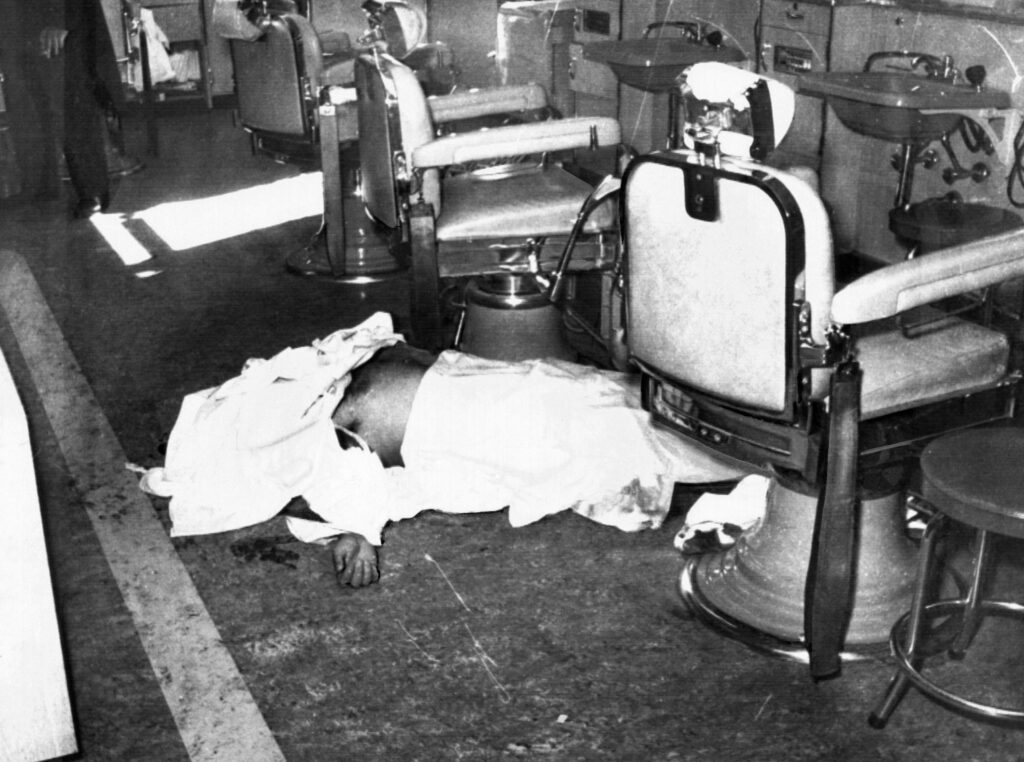
These guns, which are more challenging to trace back to their owner than a licensed firearm, are ideal candidates for crime scene abandonment. When Albert Anastasia was killed in a barber chair at the Park Sheraton Hotel in Manhattan 1957, his assassins tossed their guns. Police found a cast-off .38-caliber Colt Police Positive in the corridor outside the barbershop. Later that afternoon, they retrieved a .32-caliber Smith & Wesson from the bottom of a waste baler in the 57th Street BMT subway station. The police accurately predicted that one of the shooters might discard his gun while fleeing by train.
New York Mafia boss Albert Anastasia was shot to death in a barber shop on October 25, 1957. Although his killers ditched their firearms near the scene of the crime, police were not able to connect the guns to the culprits. Alamy Stock Photo/Everett Collection
In the October 27, 1957, issue of the Elmira (New York) Star-Gazette, an article outlines exactly the mentality that led to discarded guns:
“The police were trying to check the history of the two guns tossed aside by the slayers but they said they did not believe the guns would be of much help in tracing the killers.
“The slayers apparently believed the same thing — that the guns had passed through too many hands to be traced to them and that it was safer to leave the weapons behind than possibly to be picked up in possession of them.”
Firearm examination could match the guns to the crime, but detectives had no further luck in their investigation. The .32-caliber Smith & Wesson was shipped to an out-of-town dealer in 1920, and the trail turned cold. The .38-caliber Colt was traced back to Chicago, where it had been sold in August 1934, but police were never able to figure out to whom. This particular detail led some newspapers to report that the killer may have been imported from Chicago.
Anastasia’s murder stemmed from a dispute over leadership between the Genovese and Anastasia crime families. Anastasia’s death created an opening for Carlo Gambino, for whom the crime family was later named. Possible suspects were plentiful. As explored in Selwyn Raab’s Five Families, police suspicions first focused on Santo Trafficante Jr., a Tampa Mafia boss registered at the time as a guest of the Park Sheraton under the name B. Hill. Detectives later concluded the Gambino and Genovese families, in a desire to distance themselves from the crime, hired a crew from Joe Profaci’s family led by up-and-comer “Crazy Joe” Gallo. Gallo and Carmine Persico have been credited with the hit, although it remains unsolved, due in part to lack of evidence. It might have been possible to build a case against the killers had they kept their guns. Instead, abandoned in an alleyway and a subway tunnel, the firearms proved untraceable.
Decades earlier, in a different barbershop, the story was the same. Loanshark Martin Krompier, aide to Dutch Schultz, was shot at the Hollywood Barber Shop in Midtown Manhattan just after midnight on October 24, 1935. Less than two hours before, Schultz and three associates were shot at the Palace Chop House restaurant in Newark, New Jersey.
Eyewitnesses said that one man entered the barbershop while three others stood watch on the outside stairs. The gunman fired at Krompier and his companion Samuel Gold, who were not expected to survive the assault. According to New York Times coverage, police found a .38-caliber revolver near the door of the barbershop. The attack on Krompier attack was never prosecuted.
It may be simple to chalk this up to law enforcement’s lack of concern for the life of known mobsters, or even more practically, the simplistic forensic techniques available to them at the time. Neither of these claims would be entirely accurate. After the Schultz and Krompier shootings, which were just two in a string of violent Mob clashes in the fall of 1935, New York Police ordered a roundup of known gunmen.
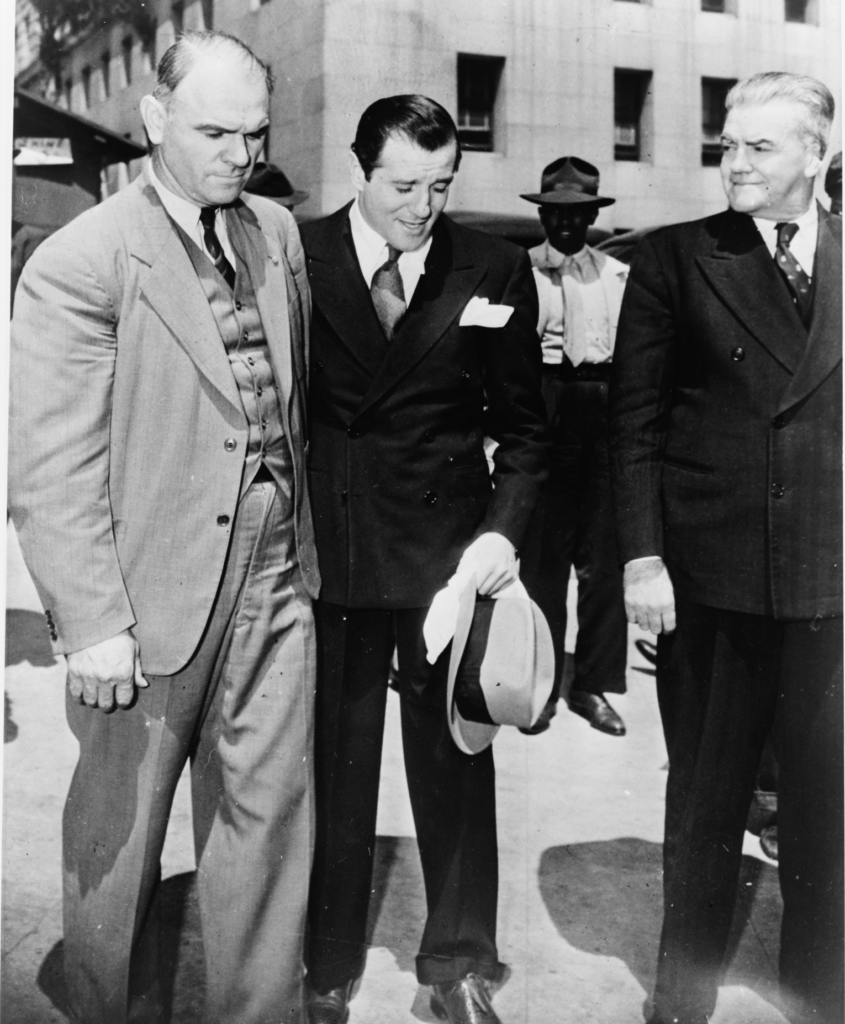
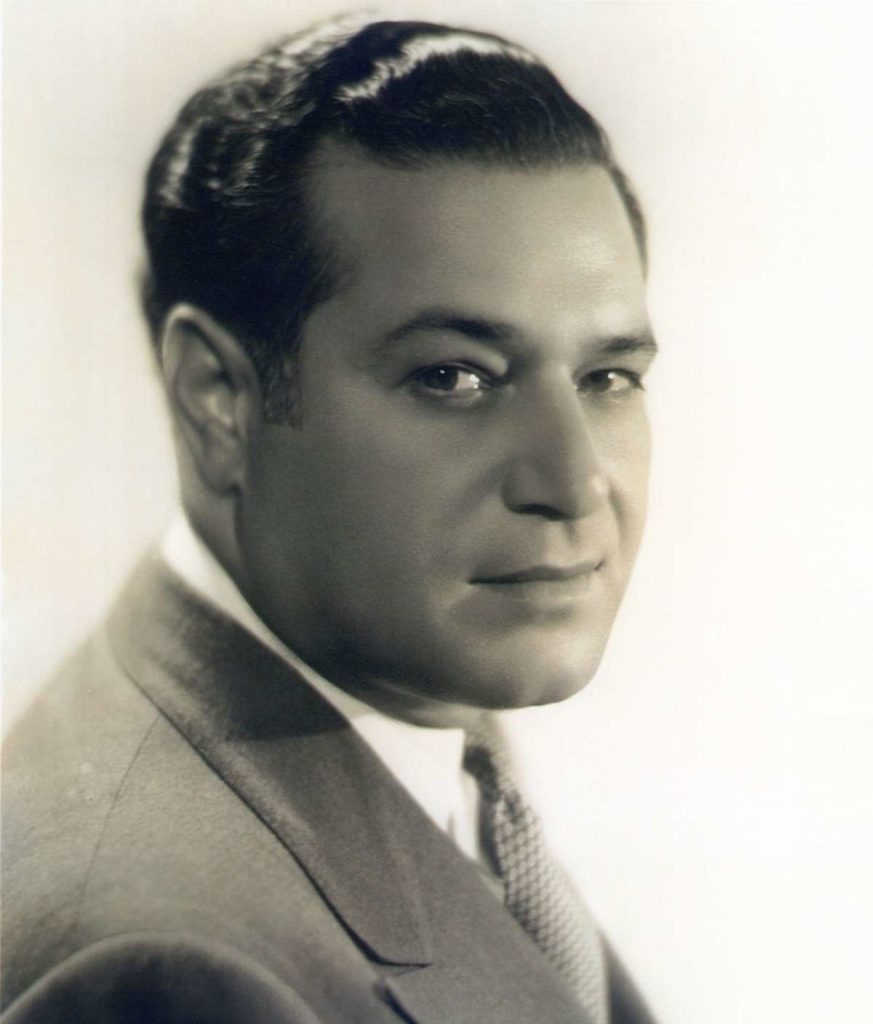
Benjamin “Bugsy” Siegel, pictured here with U.S. marshals, was a prime suspect in Harry Greenberg’s death, but his case was dismissed. Courtesy of Library of Congress
When this failed to produce any leads, Mayor Fiorella La Guardia ordered New York City Police Commissioner Lewis J. Valentine to break up the connections among racketeers with violence and force. In a New York Times article from October 30, 1935, Commissioner Valentine was quoted telling city law enforcement leaders:
“We want these men for questioning in these and other murders, and in connection with law violations of various kinds . . . every detective in the city knows tonight that he is not only expected to bring in any of these men he can find, but also to ‘muss them up.’”
Valentine also pressed New York ballistics experts to take mobsters to task. He announced that they were analyzing bullets from recent gang war victims. Preliminary analysis determined five recent victims had been shot with bullets fired from the same gun. Although this crackdown did ultimately lead to some criminal convictions, it did not yield evidence related to the attempted hit on Krompier.
In the end, after five blood transfusions, Krompier pulled through, but he was either unwilling or unable to provide additional information that could have linked the gun to the gunman. It was another unsolved crime regardless of the physical evidence at the scene.
On November 22, 1939, in Hollywood, California, Harry Greenberg was shot to death while still seated in his car outside his home by two gunmen who escaped by car. Greenberg was a New York mobster associated with Benjamin “Bugsy” Siegel and Louis “Lepke” Buchalter who had been deported to Poland in 1935. He reentered the country and settled in Los Angeles.
Police discovered the killers’ getaway car on November 24 just six blocks from Greenberg’s home. Inside the black Ford sedan, they found a .45-caliber automatic pistol and .38-caliber revolver with five exploded shells. The serial numbers of the guns had been filed off. The guns and even the inside of the car had been wiped clean, so police were not able to find fingerprints. The vehicle, which was missing license plates, had been stolen only a few hours before the murder. Police were able to take casts of footprints discovered near the car, but they found no other clues.
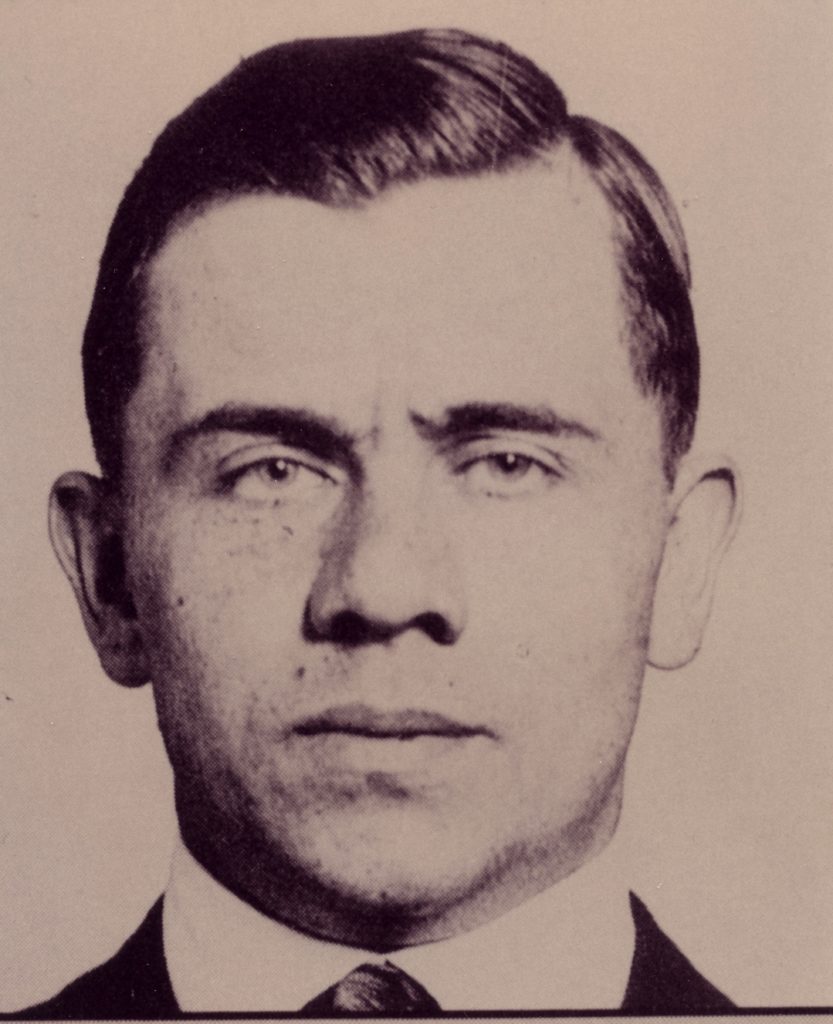
Frankie Carbo narrowly avoided punishment for Harry Greenberg’s death thanks to a 10-2 hung jury that failed to convict him in 1942.
In an interesting twist, police believed Greenberg may have served as an armorer for Murder Inc., providing untraceable firearms for hits across the country. In 1940, Siegel and Frankie Carbo were arrested for the murder. During the 1942 trial, New York hitman and prolific rat Allie “Tick Tock” Tannenbaum traveled to Los Angeles and testified that he had supplied the guns used by Siegel and Carbo in the hit. He also explained the reason behind Greenberg’s fate: He had allegedly threatened to become an informant.
Both Siegel and Carbo provided alibis. Siegel’s case was dismissed, and Carbo’s fate was left up to a jury that ended with a 10-to-2 deadlock for conviction. A second trial was set for March 30, but the Supreme Court of the State of New York refused a request to transfer Tannenbaum back for a second trial, and the case fizzled. The court dismissed Carbo’s case on March 24. Once again, abandoned weapons failed to yield sufficient evidence.
Criminals continue to abandon guns at crime scenes into the present. Although forensic science techniques are more advanced, hitmen have found ways to stay a step ahead of law enforcement. Some of the firearms left behind today are self-manufactured unserialized firearms (SMUFs), often called “ghost guns.” These firearms are assembled from kits, which are not classified as weapons. As Ioan Grillo explains in Blood Gun Money, people began selling SMUF-style gun kits in the United States in the 1980s, although the idea of privately assembled guns dates back centuries. The kits are not classified as weapons, so dealers do not need to be licensed, and the guns do not need serial numbers. Once assembled, they do become firearms, and standard licensing requirements apply, but it is easy for criminals to possess these guns without any paper trail.
In Blood Gun Money, Ginger Colburn, spokesperson for the Southern California ATF, states that about 30 percent of firearms seized in the region are SMUFs. Of those 30 percent, many are linked to drug cartels and affiliated gang activity, seized through search warrants as well as at crime scenes. Although firearm licensing and centralized police databases are meant to make it more challenging to commit violent crimes, would-be hitmen continue to find ways to obscure their connection to specific guns.
Ultimately, discarding murder weapons does pose a greater risk today, as DNA analysis, serial number restoration and many other forensic techniques have become more advanced with each passing year. But leaving a gun at a crime scene has always been a calculated risk meant to avoid a criminal being detained or arrested with the murder weapon in his possession. There are legitimate reasons why hitmen may opt to leave their gun at a crime scene, but of course, no one is going to pass up a free cannoli.
As The Godfather celebrates its 50th anniversary this month, the movie is regarded as one of the best ever made, a Mob classic centered on timeless themes of family, loyalty and justice.
The novel came out three years before the movie was released. Written by Mario Puzo, it is a fictional tale of a New York Mafia don and his empire. It was popular from the start, selling nine million copies during its first two years on bookstore shelves. Since then, the novel has sold millions more.
The names associated with the novel and movie, including Puzo and director Francis Ford Coppola, are widely recognized today, having transformed Puzo’s imagined underworld into three Godfather movies, the first appearing in March 1972.
In the beginning, however, executives at Hollywood’s Paramount Pictures had little faith in the creative team’s ability to pull off a marketable movie, much less a masterpiece.
Don’t miss The Making of The Godfather: The 50th Anniversary of a Mob Masterpiece on Wednesday, March 16
This program will explore the making of The Godfather with actor Johnny Martino, who played Paulie Gatto. The discussion also will dig into the real-life Mob’s involvement with the film.
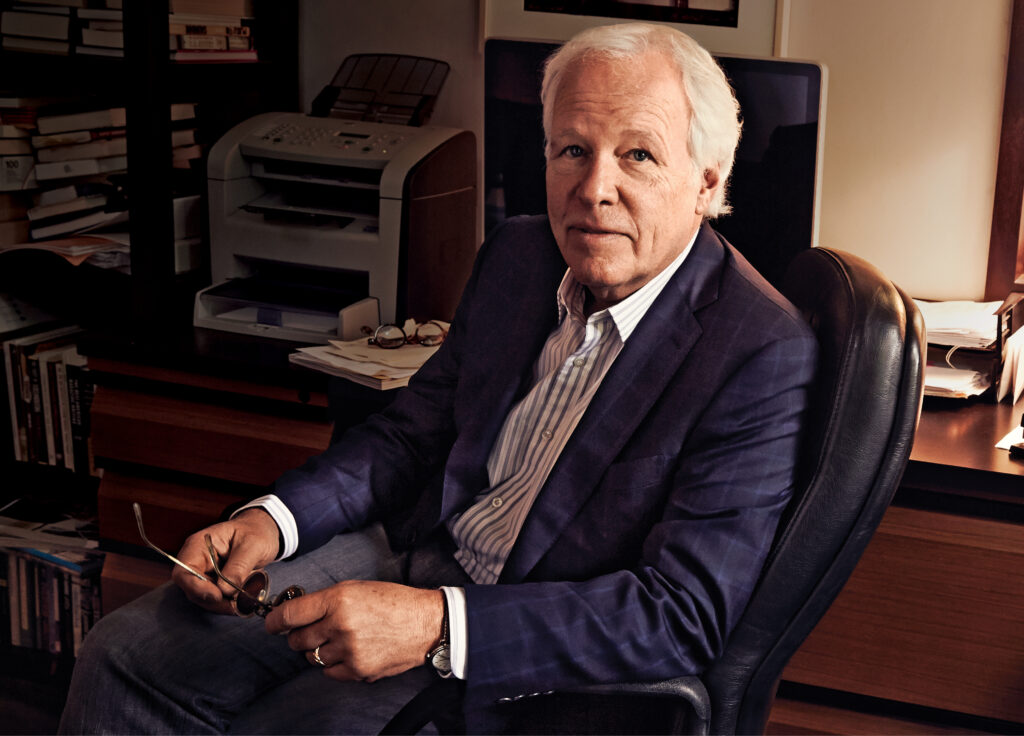
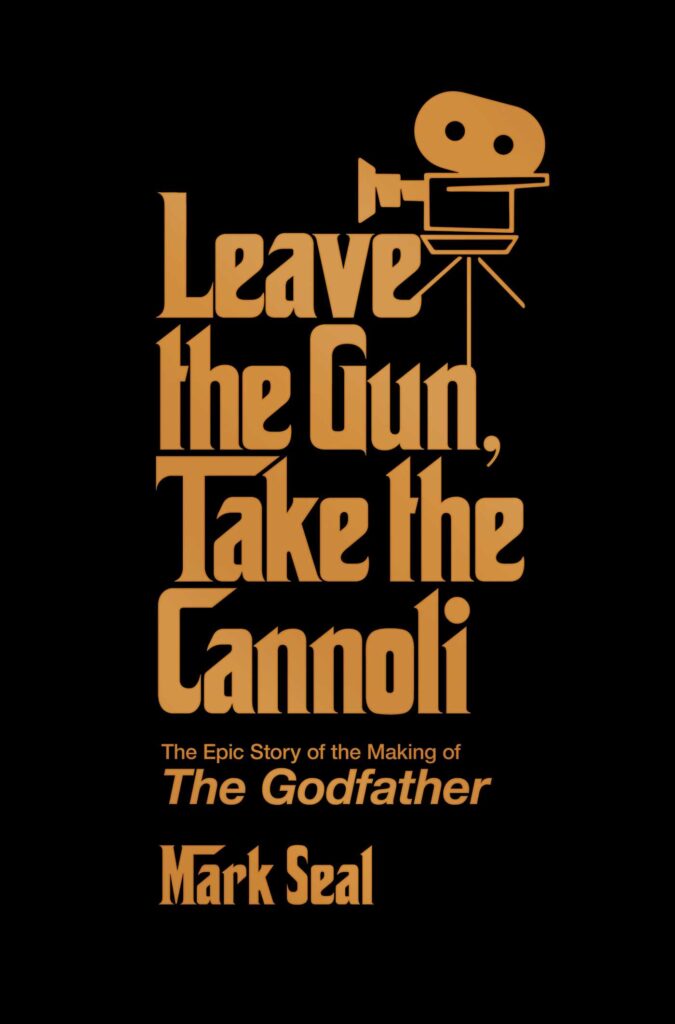
Faced with obstacles at every turn, The Godfather “is the result of a series of miracles” that led to the movie’s 1972 debut, according to journalist and author Mark Seal. Seal is the author of Leave the Gun, Take the Cannoli: The Epic Story of the Making of The Godfather, published in 2021.
As the book points out, Puzo himself was a surprise success.
Mark Seal is the author of the recently published Leave the Gun, Take the Cannoli: The Epic Story of the Making of The Godfather. Courtesy of Art Streiber
Before making a splash at age 48 with his blockbuster novel, the former Army private, a compulsive gambler with a large family to feed, churned out lurid stories and adventure tales for mass-market publications. One of these stories, published in Male magazine, focused on a Hawaiian gangster and “the ultimate in hot-fleshed women and cool-chip gambling.”
Puzo had published two obscure literary novels, earning a few thousand dollars combined. The other writing job for men’s magazines helped him stay afloat. In his 1976 nonfiction book Inside Las Vegas, Puzo, whose favorite Southern Nevada casinos during his flush years included the Sands and Tropicana, wrote about an earlier period in his career when he had to move with his wife and children into a new Bronx housing project. At the time, Puzo’s obsession with gambling frequently left him in a deep financial hole, but it paid off a time or two.
“It cost $85 to move,” he wrote. “I only had $20. I bet the $20 on a baseball parlay taking two underdogs with big odds. I won. I didn’t have to borrow the money. I kept my pride.”
Puzo’s early struggles as an author came as one of the biggest surprises to Seal when researching and writing the book.
“I had read about his gambling and indebtedness, but didn’t know the extent of that until I read some of the letters he had written asking for extra time to pay various bills, which are included in his papers at Dartmouth College,” Seal said in an email.
‘Going places’
Coppola had not done much better at first. Though he had success as a screenwriter, winning an Oscar for co-writing the World War II movie Patton, Coppola was not a prominent filmmaker. His early experience as a director included work in the 1960s sexploitation industry, where films were called “nudies.”
Marli Renfro appeared in one titled Tonight for Sure and saw promise in the young Coppola. She later had a role in Alfred Hitchcock’s Psycho as Janet Leigh’s body double during the shower scene. In an Esquire article recalling those years, she spoke fondly of Coppola.
“He reminded me so much of Hitchcock, just the way he did things, the way he directed me,” Renfro said. “I remember thinking at the time, ‘This young man is going places.’ He was so methodical and knew exactly what he wanted and was just very creative.”
Until Coppola hit it big, some in Hollywood didn’t see him on the same level as Hitchcock.
When The Godfather was being cast and filmed, the studio was struggling, led by meddling executives who pinched pennies and planted a spy on the set. Real Mafia members protested during filming, claiming the movie would stereotype Italian Americans.
Except for Marlon Brando, who was thought to be problematic and washed up, the other actors were not well-known. A studio executive described Al Pacino, because of his short stature, as “a runt.” Pacino lost sleep, worried about being fired. Coppola, already concerned he would be replaced, was undercut and betrayed along the way. At one point, a mountain of worries caused his frustration to boil over.
“One night, after another hellish day of filming, he returned to his borrowed apartment, passing his pregnant wife, two young sons, and other family members and headed into the bedroom,” Seal wrote in Leave the Gun, Take the Cannoli. “He stripped the blanket off the bed and started furiously tearing. Rip, rip, rip, until the blanket was in shreds and he collapsed on the naked bed.”
Combined, the people working with Coppola to pull The Godfather together represented the “unlikeliest of teams in a movie that few believed would succeed, much less sweep the world,” Seal said.
“Its author, Mario Puzo, was usually broke and saddled with sizable gambling debts,” Seal said. “Its studio was on the brink of collapse. Its director had just turned 30 and accepted a job that most bankable directors had turned down. Coppola took it because he needed the money.”
Seal said the cast was “comprised of almost unknowns” — James Caan, Robert Duvall, Diane Keaton and John Cazale.
“Its leading man, Marlon Brando, at 47, was considered a has-been and box-office poison,” Seal said. “Against those odds, which no Las Vegas casino would take today, The Godfather endures, fifty years later, as perhaps the greatest movie ever made.”
Family first
Looking back, many credit The Godfather’s popularity with its focus on the patriarch, Don Vito Corleone (Brando), and his family.
In Seal’s book, the movie’s producer, Al Ruddy, says, “There is one reason that movie is successful and one reason only. It may be the greatest family movie ever made.”
Having this family life at the center of the movie gives The Godfather its “heart and soul,” Seal said. “In creating the Corleone family, Mario Puzo in his novel and Francis Ford Coppola, who directed the film and co-wrote its screenplay with Puzo, created a family of gangsters, not merely as criminals and killers, but as family men.”
Puzo’s own family shaped his work. He grew up in the rough Hell’s Kitchen section of New York City.
“Even though Puzo would say he had never met an actual gangster when he wrote his novel,” Seal said, “he came from a strong Italian American family with a strong Italian American mother, who wielded language like a weapon and, Puzo said, first uttered some of the famous lines he would give to Don Corleone, including, ‘A man who doesn’t spend time with his family can never be a real man.”
Seal’s favorite Mob productions are the first Godfather film, followed by The Sopranos, Goodfellas, Casino and The Irishman. “All of them embrace their subjects as family first, criminals second,” Seal said.
Mob movies and shows like these continue to generate interest because they are “the new American Western,” he said.
“In the book,” Seal said, “I quote the media scholar Robert J. Thompson, who wrote in the 2002 reissue of Mario Puzo’s novel, The Godfather: ‘The Western has been replaced by the Mob story as the central epic of America.’”
Included in this is “an unbreakable code, a solid sense of family, and an ability to bypass bureaucratic loopholes and inefficiencies,” according to Thompson. “These people could get things done, and while some of those things were horrible, most of their victims deserved what they got and were usually outlaws themselves.”
A seat at the table
At age 82, Coppola continues to focus on his work, including a project titled Megalopolis. The new project “remains something of a mystery,” according to Variety, but could turn out to be a sort of Roman epic, “set in a utopian version of New York City called New Rome.”
For Godfather fans, there is more to look forward to. On April 28, Paramount+ is planning to debut The Offer, a 10-episode series looking at Ruddy’s experiences in producing the movie.
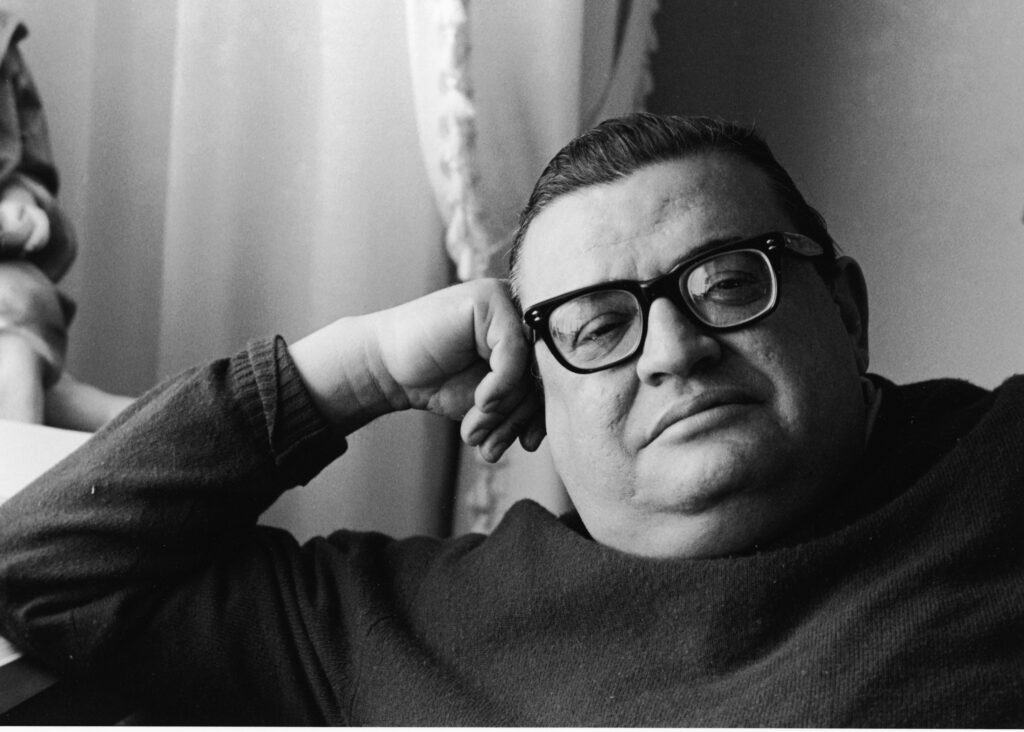
Mario Puzo, pictured in New York in 1969, the year his best-selling third novel, The Godfather, was published. Bernard Gotfryd/Getty Images
As this upcoming series indicates, people are still fascinated by the underworld that Puzo dramatized in his 1969 novel. After the book came out, Puzo did not slow down. For years, he continued writing novels and screenplays. By the time he died in 1999 at age 78, he had become a celebrity author, featured on the covers of Time and New York magazines, earning recognition seldom granted to literary figures.
That recognition was a long way from his job writing potboilers and adventure tales for the Magazine Management company in his hometown, New York City.
Magazine Management’s editorial director, Bruce Jay Friedman, later an acclaimed author himself, said its writers “seemed not so much to have been hired as to have washed ashore at the company like driftwood.”
“We were all slightly ‘broken’ people,” he wrote in Lucky Bruce: A Literary Memoir. “A few had gifts, but we were ‘rejects’ all, having clearly been unable to cut the mustard at the Luce and Hearst empires.”
Puzo was one who ultimately broke through. A hint of this ascent occurred one night in 1966 during a dinner at the Long Island home of writer Gay Talese’s aunt, Susan Pileggi. Talese during this period was a New York Times reporter, and his friend Puzo was working on the The Godfather novel-in-progress. One of Puzo’s earlier novels featured a minor Mob character. An editor suggested Puzo play up the Mafia in future work.
In Leave the Gun, Take the Cannoli, Seal captures the significance of this dinner.
“That night, assembled at the table, sat the future of Mob literature: Talese, who would write the organized crime classic Honor Thy Father; his first cousin Nick Pileggi, who would write Wiseguy (the basis for the film Goodfellas); and Puzo, who was in the process of writing The Godfather.”
Gay Talese’s wife, Nan, was there, soon to become “a celebrated publisher of some of the greatest authors of her time,” Seal wrote.
Seated with members of the Talese and Pileggi families, Puzo was beginning his rise to the top, based on a fictional family of his creation, the Corleones.
In this transition from a world of literary “rejects” to dinner with “the future of Mob literature,” Puzo had found his place at the table.
Larry Henry is a veteran print and broadcast journalist. He served as press secretary for Nevada Governor Bob Miller, and was political editor at the Las Vegas Sun and managing editor at KFSM-TV, the CBS affiliate in Northwest Arkansas. The Mob in Pop Culture blog appears monthly.
With a Mob history dating back decades, Kansas City’s influence in the underworld has long extended beyond its Midwestern borders.
Characters inspired by the city’s Mob figures have appeared in movies and television shows over the years, drawing attention to organized crime’s presence in Kansas City and the region.
That trend continues this year, as the Netflix series Ozark returned January 21 for its fourth and final season. The fourth season is broken into two parts of seven episodes each. The first seven episodes are available now on Netflix for subscribers to watch at any time. Netflix has not indicated when the second part will air, though it is expected to come out this year.
The series follows financial adviser Marty Byrde (Jason Bateman) and his family from Chicago moving to a lakeside community in the Missouri Ozarks, where, under threat of death, they must launder millions of dollars in drug cartel money.
The world the Byrdes have fallen into involves federal authorities, Mexican cartel assassins, local heroin growers and Kansas City mobsters. Against a backdrop that includes riverboat casinos and political intrigue, the Byrdes are confronted with constant violence and betrayal as they cope with their own family disputes and criminal activity.
Ozark sparks social media buzz
After the fourth season became available to Netflix subscribers, Ozark viewers went onto social media sites to express their enthusiasm. The third season ended almost two years ago, requiring fans to endure a prolonged wait for the show to return.
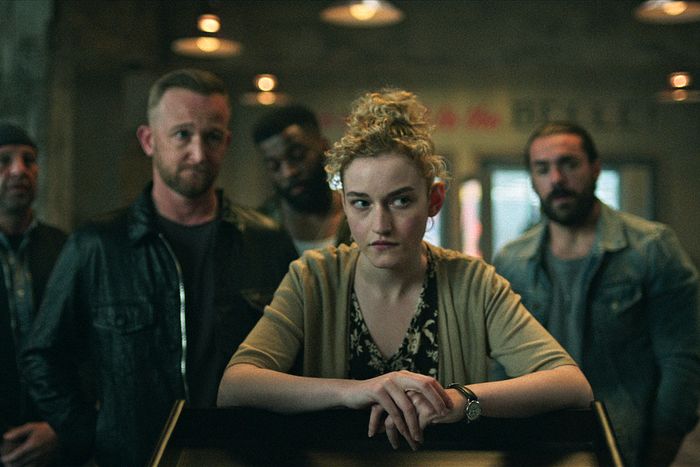
Julia Garner plays Ruth Langmore, one of the most popular characters in Ozark. Joseph Sikora, left, plays Frank Cosgrove Jr., son of the Kansas City Mob boss. Courtesy of Netflix
“Oh, happy day,” novelist and screenwriter Robert Ward wrote on his Facebook page, noting that the “sick, twisted” Byrde family is back on the air, along with their “sicko, greedy friends.”
Ward wrote that Ozark is the series that “makes most of us feel like we were good parents after all.”
“And if you are still a teen,” he wrote, “you can say, ‘Well, mom and dad aren’t that bad. At least they didn’t murder mom’s brother.’”
Ward, whose work in Hollywood includes writing for the 1980s television series Hill Street Blues, concluded that Ozark is “the show that makes the bourgeois feel like champions.”
Ben Fawkes of the Vegas Sports Information Network tweeted his support for the fourth season, which premiered on a Friday, one day before a Saturday sports schedule that included two televised NFL playoff games. Fawkes is VSiN’s vice president for digital content.
“A day of Ozark Season 4 and NFL playoffs,” Fawkes tweeted. “What more could you want on a Saturday?”
Even Imo’s Pizza, a regional chain based in St. Louis, tweeted about Ozark after one of its pizza boxes showed up in a scene. The thin-crust pizza from Imo’s, cut into coaster-sized squares, is recognizable to many in Missouri and neighboring states.
“Yes, it’s true,” the tweet reads. “You did see the Imo’s pizza box during Ozark Season 4, Episode 4. We appreciate them keeping it really authentically MO!”
New York to Kansas City
Another crime series, this one with Sylvester Stallone in the lead role, will feature an outsider who ventures into Missouri and encounters interesting local characters.
The veteran actor, remembered for his roles in the Rocky and Rambo series, will play a New York City “legendary mobster” named Sal, who moves to “modernized” Kansas City to reestablish his Mafia family in Missouri, according to the Deadline website.
“There, Sal encounters surprising and unsuspecting characters who follow him along his unconventional path to power,” the website state
The series is being developed for Paramount+ by Taylor Sheridan and Terence Winter. Sheridan created the shows Yellowstone, Mayor of Kingstown and 1883, while Winter had a direct hand in two popular Mob series, The Sopranos as writer and Boardwalk Empire as creator.
No date has been set for when the Stallone series will air.
Kansas City-Las Vegas connection
The series with Stallone will not be the first on-screen instance of Kansas City mobsters involved in a power play.
The 1995 Las Vegas movie Casino is one example of how the Kansas City crime family has been portrayed. In the movie, Kansas City mobsters play an important role in the Las Vegas casino skimming scandals of the 1970s.
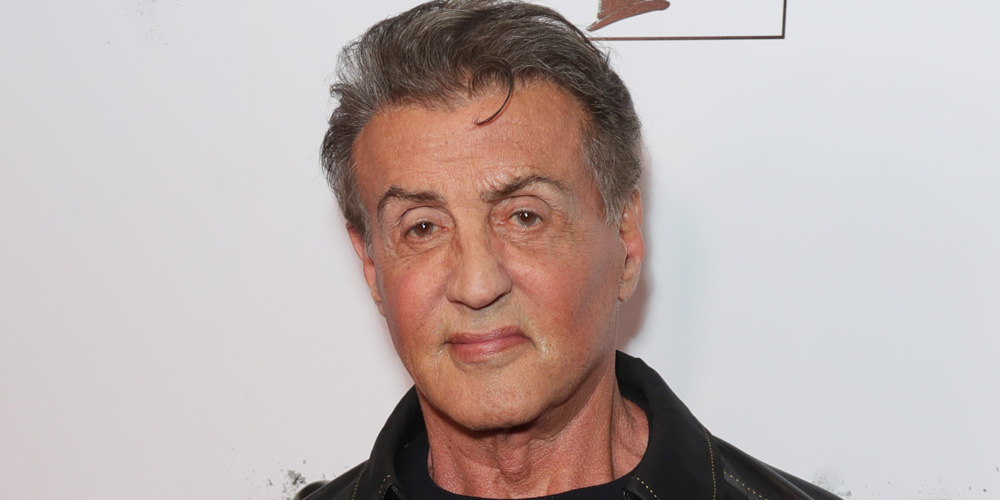
Sylvester Stallone will star as a mobster in an upcoming series set in Kansas City.
One memorable scene occurs when authorities listen in on a wiretapped conversation inside a Kansas City grocery store. With federal agents taking notes from a nearby hidden location, mobster Artie Piscano (Vinny Vella) expresses frustration about his role in the Las Vegas operation.
In this scene, director Martin Scorsese’s mother, Catherine Scorsese, portraying Piscano’s mom, becomes irritated by the mobster’s vulgar language as he voices his concerns.
The Artie Piscano character is based on Kansas City underboss Carl “Tuffy” DeLuna, whose detailed notes about the skim, which investigators discovered in his home, helped authorities unravel the criminal enterprise.
In federal skimming trials in Kansas City during the 1980s, DeLuna and other mobsters from the Midwest were convicted and sent to prison.
Unlike the scene in the movie, the actual wiretapped conversation took place in June 1978 in the Villa Capri, a pizza joint and cocktail lounge on Kansas City’s Independence Avenue. Authorities tapping into a bug planted in the restaurant heard members of the Civella crime family discuss casinos in Las Vegas.
This conversation inside the Villa Capri “detailed for the first time in the Mob’s own voice the influence and power organized crime exerted in Las Vegas,” wrote Nicholas Pileggi in his book Casino: Love and Honor in Las Vegas. Pileggi and Scorsese cowrote the screenplay for the movie. The characters’ real names were used in the book but were changed in the movie for legal reasons.
Another bugged conversation that helped authorities foil the skim occurred five months later in a Kansas City neighborhood, Filumena Acres, where crime boss Nick Civella and other family members lived.
Inside the home of Civella relative Josephine Marlo, Las Vegas casino executive Carl Thomas was recorded on surveillance audio explaining to Kansas City mobsters how the skim works at Las Vegas casinos. In 1993, after serving a prison sentence, Thomas died at age 60 in a single-vehicle crash in Oregon.
According to Pileggi, these events in Kansas City had a lasting impact. It would not be an exaggeration, Pileggi wrote, “to say that the Marlo meeting and Carl DeLuna’s notes are responsible for knocking the Mob out of Las Vegas casinos.”
The Kansas City Mob’s “outsized” influence is one reason Hollywood keeps coming back, said Gary Jenkins, a retired Kansas City Police Department Intelligence Unit detective. Jenkins is named in Pileggi’s book as one of the authorities who discovered DeLuna’s notes during a search of the house. Jenkins now runs the Gangland Wire website and podcast.
“Kansas City was right in the mix,” Jenkins said.
Larry Henry is a veteran print and broadcast journalist. He served as press secretary for Nevada Governor Bob Miller, and was political editor at the Las Vegas Sun and managing editor at KFSM-TV, the CBS affiliate in Northwest Arkansas. The Mob in Pop Culture blog appears monthly.
In researching American organized crime through decades-old newspapers available online, it’s amazing how many significant Mob figures gained infamy and broad coverage of their exploits in their time, only to virtually disappear from memory.
The history of the 20th century contains many stories of notable true crime characters who dared to flout state and national laws, some through violence, and others avoiding it, for profit. They had their ride of “success” as criminals, came and went, and now exist only in imperfect, fast-written, snapshot news articles, official police and court documents, interviews and unreliable but entertaining gossip and hearsay.
We found quite a few compelling stories about forgotten members of one-time syndicates, large and small, and picked a handful of the best. Below is our list of the top five mobsters you’ve probably never heard of.
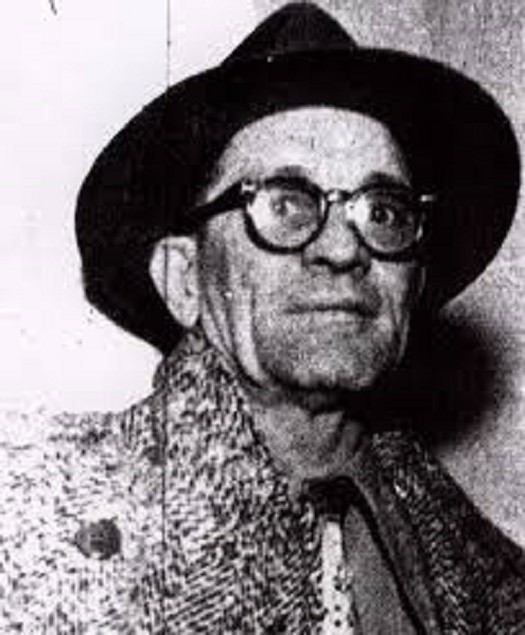
Frank McErlane
Upon his death from a torturous, four-day bout with pneumonia in 1932, Frank McErlane was described by Chicago Police as the “toughest gangster of them all.” His ruthless bootlegging peers in the Windy City feared him so much they reportedly paid him a “pension” of hundreds of dollars a week just to stay out of town.
Frank McErlane was one of the most trigger-happy bootleggers in Chicago during Prohibition. William J. Helmer Collection / The Mob Museum
McErlane, with the Saltis-McErlane Gang of the city’s South Side, was as cruel and mean as any in gangdom and a maximum danger when blackout drunk and armed. Chicago lore credits him as the first mobster to use a Thompson submachine gun in an attempted gang hit, and with originating the term “one-way ride” to describe a doomed hit target. During his marathon pneumonia delirium, medical attendants heard him scream, “Don’t let them take me for a ride!”
Born in Chicago in 1894, McErlane slid into crime by his late teens. During Prohibition in 1922, with his partner Joseph Saltis, he signed up with the Outfit bootlegging gang led by Johnny Torrio and Al Capone. McErlane proved himself a merciless killer during the Outfit’s “beer wars,” slaying three members of a rival liquor gang run by Edward “Spike” O’Donnell.
McErlane’s ill-famed debut of the Tommy gun during the beer wars occurred on September 25, 1925, with O’Donnell his intended victim. The Thompson, created as a military weapon, could fire 100 .45-caliber shots in five seconds. O’Donnell, standing outside a drugstore at 63rd Street and Western Avenue, ducked below a nearby auto as McErlane’s burst shattered the store’s window. His next episode with a Thompson took place that October 3 at the Regan A.C. Clubhouse on 52nd Street. Again, his rata-tat-tat missed the wished-for gangster, “Dynamite Joe” Brooks, but killed an innocent bystander.
As of 1926, McErlane’s liquor gang had murdered 15 people, beating the raps time after time – as witnesses dreaded retribution — and robbed a mail train of $135,000. The gang at that time of open street combat controlled the South Side illicit beer and liquor racket. McErlane somehow avoided death while the object of a dozen shootings. In 1927, he and his gang member brother Vincent rebuffed attempts by police to undergo mental testing for a possible hold in a psychiatric hospital. The Chicago Crime Commission placed Frank on the city’s 28-member “public enemies” list, headed by Al Capone.
Even worse, in what Chicago cops then regarded as the most brutal killing of the century, in October 1931, a drunken McErlane used a Thompson to unload slugs into the rear of an open car containing his common law wife, Marion, killing her and her two dogs. McErlane abandoned his vehicle and made his way out of town. Police right away suspected McErlane as the triggerman, figuring, in one news account, “no one but Frank could be so cruel.” Officers looked for him for eight weeks as he stayed on the lam in Madison, Wisconsin, then turned himself in. Arrested and held on $25,000 bail, McErlane won out again. A coroner’s jury ruled that Marion had been murdered, but since there were no witnesses, McErlane got off scot-free.
He served time in jail for robbery, assault to murder, assault to kill, accessory to murder, burglary and aiding a prison escape (he helped a convicted murderer out of the Cook County jail). Though he killed multiple people, he never did time for murder. While on the sauce, he tended to go wild, roaming up and down the streets of the South Side firing a shotgun at imaginary pedestrians. In one such case, after police picked him up, he told of seeing a “large army of green snakes and pink elephants. They tried to bump me off, but I beat them to it.”
Once, in an argument with his wife Marion, she shot him in the leg, causing a fracture. While in a Chicago hospital with the broken leg, a group of gunmen thrust into his room, guns blazing. McErlane, wounded three times, grabbed a pistol from under his pillow and returned fire as the assailants took off.
In the last months of his life, McErlane lived on a houseboat far from Chicago, in Beardstown in western Illinois, with his mother. He entered a hospital there on October 4, 1932, and died four days later. Considered a pauper, McErlane was buried in a cheap coffin. But his reputation lived on for a bit. According to TheCourier newspaper of Waterloo, Iowa, his family opted to keep the location of his funeral a secret since “it was feared enemies might attempt to maim the body.”
Salvatore and Rosario Maceo
Salvatore “Sam” Maceo joined his brother Rosario, or “Rose,” at the Gulf Coast island city of Galveston in southern Texas around 1915. Both were immigrants from Palermo, Sicily, in the early 1900s, not members of the Mafia per se, but surely acquainted with Mafia activities while growing up.
After serving in the Army during World War I, the 30-year-old Sam returned to Galveston, where he and Rose (age 33) served as barbers, but strained to make a living at only 25 cents a cut. Rose’s shop stood on Murdock’s Pier over the beach and gulf. There, in 1921 during Prohibition, a man named Dutch Voight became a regular customer. Voight was the leader of Galveston’s Beach Gang of bootleggers. Voight paid Rose $1,500 to hide some bottles of illegal liquor for a few days.
The brothers determined to switch to running illicit booze, with Sam opening a soda stand on the pier as a front. They soon took advantage of the instability and weaknesses of the Beach Gang, and its lessor rival Downtown Gang, and won the leadership of both. Their organized crime rackets would remain in business there until 1957, after their deaths.
Sam Maceo was the organized crime boss of the island city of Galveston, Texas, where, among other things, he operated several swanky restaurants and nightclubs.
The Maceos, in an unusually short time, expanded their bootlegging racket with a speakeasy offering illicit gambling, called the Hollywood Dinner Club. Sam served as the main operator and public face of their “gang,” and Rose as the discreet enforcer. They took over and reopened a Chinese restaurant in 1926, called Maceo’s Grotto. In 1927, local sheriff deputies raided the Hollywood Dinner Club and bashed in its slot machines, roulette and other gaming tables.
The brothers soon resumed bootlegging and gambling, expanded to houses of prostitution and bookmaking, and paid off city officials. They used the end of the pier to quietly unload bootlegged liquor from Cuba, trucked it east to New Orleans and as far north as Cleveland. Meanwhile, residents of Galveston, long an “open city,” tolerated the vice racket as tourism, jobs and prosperity boomed with it.
Sam, affable, kind and a sharp dresser, gained fame as the chief spokesman for the sandbar island city as a tourist mecca. At the end of the glittering pier, the Moorish-style Hollywood speakeasy, with its lavish interior, included a palm tree-lined drive used by wealthy high-rollers lining up in limousines and luxury cars. He booked top national big band leaders such as Guy Lombardo. After a hurricane damaged the Grotto, Sam reopened it in 1932 as the Sui Jen, a high-class, Chinese-themed café. He held sought-after cruise parties on the gulf in his yacht in Galveston Bay. Newspapers referred to him as the “Night Club King.”
In 1934, Sam told an interviewer: “We break the law, but in a way that people like. We give them what they want.” He added that the island had to be accessible to vice services to survive. “No resort can be a resort unless it’s wide open. Otherwise, Galveston would be nothing.”
Ever the crowd pleaser, Sam sprung for large Christmas parties for adults and local orphans, bankrolled professional and amateur boxing matches and owned the area’s minor league baseball team, the Galveston All-Stars.
Disaster struck in 1937 when narcotics investigators claimed Sam had joined a $10 million national heroin-smuggling syndicate that imported the drug in ocean liners to New York and trafficked it in New Orleans, Waco, Houston and San Antonio. Sam admitted he knew two of the dozens of people indicted, but vehemently denied taking part. In 1942, he and his wife, Edna, wept in court in New York after a jury found him not guilty.
Now in the clear, he built his best nightspot yet, the Balinese Room, a private club with dinner, dancing, gambling, bookmaking and an ocean view from the pier. He also held interests in swank establishments such as the Studio Lounge, Western Room, Turf Club, Crystal Palace and Murdoch Bathhouse and Pier.
The Texas Rangers raided the Balinese Room many times, but Sam was ready – using electric buzzers as a warning, the staff hid the gambling tables and had patrons innocently play checkers and dominoes. Sam booked Frank Sinatra and Tony Bennett to perform. In the late 1940s, the Maceos made a hefty investment with Cleveland Mob figure Moe Dalitz in the Desert Inn hotel-casino in Las Vegas.
In 1950, Sam debuted a new restaurant, The Corner, a taproom and oyster bar, downtown. However, the Galveston kingpin had little time to enjoy it. The next year, stricken with cancer in his digestive tract, he traveled to Johns Hopkins Hospital in Baltimore where he died from complications of surgery.
In a case of better late than never, merely weeks after his death, the Texas statehouse launched a probe of Sam’s financial interests and subpoenaed Rose and others to testify. It turned out that the Maceos ran the largest illegal gambling operation in Texas. Lawmakers reported the men grossed $5.6 million (about $60 million in 2021 dollars) from 1949 to 1950 alone, $4.6 million from illegal gaming – dice games, tip books, bingo, 500 slot machines and five bookie venues. They employed 600 people with a $1 million payroll.
The director of public safety for Texas, Colonel Homer Garrison Jr., remarked, more than somewhat after the fact, “The people there (in Galveston) seem to think because they live on an island they are immune from the laws of the state.”
It still took some time for officials to act. New Texas laws soon made operating slot machines a felony and prohibited telephone companies from servicing bookie joints.
Rose died in 1954. The Maceo empire finally unraveled in 1957, amid a state crackdown on illegal gambling. Anthony and Vic Fertitta, new owners of the venerable Balinese Room (and related to the Maceos via marriage), sold the club. Anthony Fertitta then left for Las Vegas, where he worked as a greeter at the El Rancho Vegas. Fertitta’s family would later build a casino empire of their own in Las Vegas.
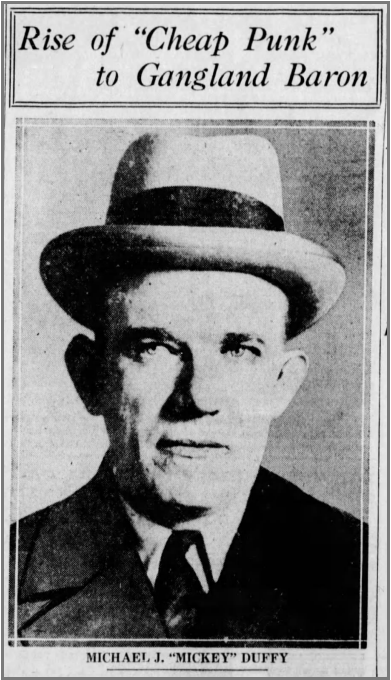
Mickey Duffy
It was a classic Hollywood-style gangster attack. On February 25, 1927, during the criminal heyday of Prohibition, Mickey Duffy, touted as the boss of beer, vice and extortion from New Jersey to eastern Pennsylvania, was leaving his nightclub in Philadelphia with his wife, Edith, and a bodyguard.
Suddenly, a large sedan sped by and a gunman inside unleashed a burst from a Thompson submachine gun toward Duffy, wounding him five times. His bodyguard died on the spot. A doorman was seriously injured. Duffy’s wife had entered their car before the fusillade. In critical condition at a hospital, Duffy survived.
Duffy, however, had only four years to live, when other gangland shooters would win out. By then the couple had been living in the lap of luxury, from his bootlegging sales, in top-flight hotel suites and an expensive “modernist” home in the tony “blue blood” Philadelphia suburb of Overbrook. The Philadelphia Inquirer stated that before Duffy’s violent death in 1931, he “held South Jersey’s beer and other rackets in the palm of his hand.”
Mickey Duffy was the boss of beer in Philadelphia during Prohibition until his gangland-style killing in 1931. Newspaper image courtesy of Philadelphia Inquirer
He was the son of immigrants from Poland — his real name was Michael J. Cusick, but he chose an Irish pseudonym — and spoke and read Polish. He came up the hard way, as a violent criminal with 28 arrests going back to 1908, including suspicion of robbery, assault and battery, larceny, breaking and entering, burglary and attempted murder.
In a county jail in New York for petty larceny in 1916, he escaped until his capture in Philadelphia a year later. In 1919, a judge sentenced him to three years in Pennsylvania state prison for aggravated assault and battery with intent to kill, carrying concealed weapons and assault with intent to steal.
Out of prison in 1922, Duffy struggled again, not learning from his past. He promptly got himself arrested for another alleged robbery and assault and battery, but got off.
In 1924, he racked up still more arrests for alleged possession of illegal liquor, a jewelry robbery and assaulting a police officer. Duffy cajoled and beat his way into the policy numbers racket until he lost money and turned to bootlegging beer. He acquired illicit breweries in Camden and Egg Harbor, sold his suds in New Jersey and Pennsylvania, and held pieces of some area speakeasies.
That year, he opened his own cabaret and dance cafe, the Club Cadix, in a chic part of downtown Philly. As of 1925, police did not arrest him, likely a result of his cash payoffs. A grand jury in Philadelphia in 1928 described Duffy as the “King of Racketville,” but it did not charge him either. Wealthy and arrogant, Duffy and partner Harry Mercer embarked on an extortion racket, targeting drivers of trucks delivering illegal liquor, forcing from them “protection” payments to avoid attacks from his henchmen.
Meantime, Duffy and Edith moved to their new $65,000 Spanish villa-style home — which some of his pals claimed he bought with 65 $1,000 bills — and spent $50,000 more on luxury furnishings. The abode sported an ornate interior, cactus garden, talking parrots, a modern electrical alarm system and staff of armed guards. They bought several large new cars. He purchased Edith a diamond solitaire ring and a $30,000 bracelet. He lavished more money on outlandish “snappy” clothes and “liked to refer himself as a modern Beau Brummel,” as the Inquirer put it. The Duffys vacationed in Florida and lived for weeks on end in suites of expensive hotels, such as Philadelphia’s Ritz-Carlton at $1,000 a week (about $18,000 in 2021 dollars).
As of 1930, he was pulling in $10,000 a week and had $500,000 in the bank. He made sure to pay his federal taxes. Still, Duffy felt insecure as an ex-con and gangster and tried to rehabilitate himself within the law-abiding community. He donated to charities and their church. But it didn’t work. An orphanage denied the couple’s request to adopt a child.
On the last days of his life in summer 1931, Duffy told police of seeing strangers hanging around his property. He checked into the Ambassador Hotel in Atlantic City, hired two heavily armed bodyguards and never left the hotel alone. He started injecting himself with morphine to ease his nerves.
On August 30, 1931, at the hotel, Duffy met with his lawyer, then-U.S. Congressman Benjamin Golder, to discuss his upcoming truck racketeering trial, set for September 14. That early afternoon, he allowed two men to have lunch with him in his fourth-floor suite. Afterward, he crawled into bed for a nap. But the men returned and quietly fired several shots into his head as he slept. They escaped unseen.
Duffy’s funeral at his extravagant home drew about 3,000 onlookers. He left Edith $400,000 cash plus $150,000 in property. Who killed him remained a mystery until 1935, following an inquiry by the Pennsylvania Bar Association into underworld corruption among lawyers and police. Philadelphia Police detective James Ryan concluded that two of Duffy’s trusted henchmen, Sammy Grossman and Al Skali, killed their boss to take over the beer racket. But soon, Grossman and Skali became “too cocky” as beer overlords of a competing gang in New York, the 69th Street Mob. The 69th gang sent hitmen to kill both men a few months after Duffy’s demise, and took over their beer business.
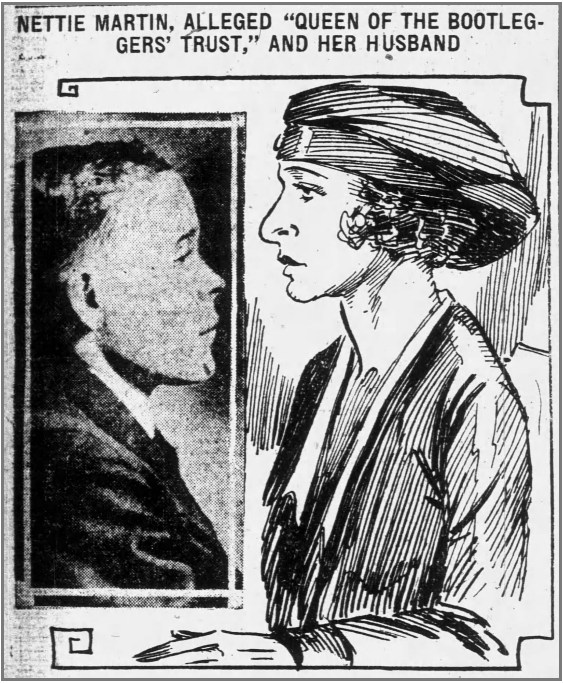
George and Nettie Martin, “The Martin Gang”
In August 1934, nine months after the end of Prohibition, Nettie H. Martin applied for a license in Baltimore, Maryland, to serve wine, beer and hard liquor at her new restaurant downtown. Maybe she appreciated the irony. Or, she finally learned her lesson, from arrests and jail meted out to her and her husband, George, as leaders of the Martin Gang.
Nettie, a former beauty shop owner, and George, a one-time used car lot owner, were among the early organized outlaws of Prohibition, even in 1919, before the official ban on producing, buying or transporting liquor went into effect in 1920. The first reports came from officials in Virginia, who wondered about a “mysterious blonde” woman associated with illicit liquor trafficking along the Richmond Highway.
The Martin band of bonded whiskey thieves, led by George, attracted real attention in 1921. The Martins were part of a so-called “Bootlegger’s Trust” consisting of five large liquor-stealing and dealing gangs. The trust maintained a pool of savvy lawyers to represent the gangsters in court, a crew of experienced rumrunners and a fleet of vehicles to transport pinched legal whiskey. Their thefts stretched from Virginia and Maryland to Washington, D.C., Pennsylvania and New York.
This newspaper report about bootleggers George and Nettie Martin was published on December 19, 1922, in the York (Pennsylvania) Dispatch.
On September 9, 1921, George, 34, and Nettie, 24, and their associates raided the Outerbridge Horsey bonded distillery in Burkittsville, Maryland. About 15 gang members and a half-dozen trucks arrived. George and several men dressed as federal Prohibition agents flashed badges to make the security guard feel at ease. Then George put a pistol in the guard’s face and they proceeded to remove 1,100 cases of whiskey worth about $200,000 ($3 million in 2021 dollars). While George tied up the guard, Nettie used pencil and paper to check off the barrels the gang loaded into trucks. Later, a barn owner three miles away told police that after George compelled him to house the stolen liquor, Nettie supervised the unloading.
George and Nettie were arrested and among 10 gang members indicted in the robbery. Attorneys for the Bootlegger’s Trust’s got the court to drop the charges against Nettie, and gained an acquittal for George.
U.S. prosecutors then suspected the Martin Gang when 20 bandits stole $75,000 in whiskey from the Standard Distillery in Baltimore by siphoning the liquor out of barrels. They also held the gang responsible for a robbery at the Gwynnbrook booze plant in Baltimore and the Foust Sons Distillery in Glen Rock, Pennsylvania.
In one account, police reported that Nettie helped a couple of drunken liquor thieves, who had veered off the road. Nettie removed two cases of whiskey from the trunk of the disabled car before police arrived, bailed the men out of jail and returned the whiskey to them.
In late 1922, George’s fortunes went south when he racked up his sixth arrest. Federal officers took him and Nettie to jail in the Foust raid. That November, while at a federal office, George assaulted U.S. investigator (and later famed undercover agent) Michael F. Malone after Malone’s efforts resulted in George’s indictment in the Foust robbery. George received 30 days behind bars for the assault.
Newspapers noted that the feds nicknamed Nettie the “queen of the bootleggers” for her roles in the Foust robbery and raids on six other distilleries resulting in $500,000 (about $8.2 million in 2021) worth of liquor.
Frustrated Prohibition agents marveled at Nettie’s scheming and driving ability. At one point in 1922, according to the Harrisburg Telegraph, as George fought off officers attempting to arrest him, Nettie “who is a very daredevil driver, stepped on the gas in a crowded street and made a clean getaway.”
George plotted the theft strategies while Nettie scouted out places to rob, the best routes to maneuver whiskey-loaded trucks between Baltimore and Washington and aided the gang in eluding police and dry agents.
“Dashing at high speeds across the borderline of Maryland and Washington, the ‘mystery woman’ succeeded in escaping the police dragnet and safely landed liquor into the hands of whiskey rings, it is alleged,” reported the York Dispatch in December 1922.
While in court after Nettie’s arrest in the Foust case that December in Harrisburg, Maryland, a reporter labeled her a “young petite, pretty blonde of the flapper type” who was “dressed in a sports costume and flashed a big cluster diamond ring.” George’s unfortunate nickname in the news was “Monkey Face.”
George received the brunt of the law. In 1926, a federal court convicted him of robbery and conspiracy in the Standard Distillery raid and, after a long trial, sentenced him to two years in prison.
Nettie waited for him and remained his devoted partner in crime. The depleted Martin Gang came alive briefly in December 1928, when the not-rehabilitated George tried to rob a truck in Pennsylvania of U.S.-approved liquor headed for consumption by diplomats in Washington.
Nettie tried to bribe the truck driver not to testify. In the end, George got five years in prison for assault to rob, and Nettie 30 days for obstructing justice.
Both faded into obscurity. But Nettie determined to go straight post-Prohibition with a license to buy and sell liquor, legally, at 117 N. Eutaw Street, Baltimore. Today it serves as the site of the Eutaw Liquor Store.
Theodore Roe
Shortly before 11 p.m. on August 4, 1952, Theodore “Teddy” Roe, numbers gambling boss of Chicago’s South Side, was about to enter his car outside his Michigan Avenue apartment when someone yelled his name. After he turned, two men fired five blasts from 12-gauge shotguns at him. Hit by double-o pellets in the head and chest, Roe died at a local hospital.
Three days later, a crowd estimated at more than 6,500 showed up for the funeral at a church on Wabash Avenue and thousands more walked past the $5,000 open casket of the wealthy man known as “Robin Hood” for his many donations, gifts and small loans to his employees that he regularly forgave.
No sooner had the burial ended than Chicago Police drew controversy by arresting his five pallbearers to furnish information to help solve the case. More interestingly at the time, 15 or so hoodlums were also arrested for questioning — a Who’s Who of the Chicago Outfit, including Anthony Accardo, Jake “Greasy Thumb” Guzik, Sam “Golf Bag” Hunt, Sam Giancana, Sam Battaglia, Leonard Gianola and Marshall Caifano. But the murder inquiries never produced any chargeable suspects.
Homicide detectives figured Roe’s rubout had to do with the Outfit’s longtime goal to take over the predominantly black South Side’s illegal policy wheel business from African-American kingpins such as Roe (who, ironically, was half-Italian). While other policy bosses, black and white, gave in to the Outfit’s intimidation and surrendered their businesses, Roe stridently resisted, even challenged the hoods to come get him. He hired some ex-cops as bodyguards and carried a loaded .38-caliber pistol with extra shells.
As equal partners in one of the 16 or 17 big numbers rackets in the South Side, Roe, Edward P. Jones and three other partners netted $4.9 million from 1945 to 1950, employing 70 people plus 300 bet writers on commission. The partners’ net profits hit a height of $1.1 million in 1946.
Jones had led their policy game (illegal by Illinois law since 1905) in the 1930s. Back during Prohibition in the 1920s, Outfit chief Al Capone made a deal with South Side racketeers, ceding control of policy gambling in exchange for not competing in the beer racket.
Jones himself broke the rules of the street by associating with the Outfit, more often than accounts that paint him as a blameless dupe of the Mob. While he and Giancana served time together in an Illinois state prison in 1939, Jones is said to have told Giancana how his policy wheel worked to lure South Siders to lay their mostly fruitless nickel, dime and quarter wagers.
Theodore Roe, numbers boss of Chicago’s South Side, successfully resisted the Chicago Outfit’s efforts to take over the street lottery until he was murdered in 1952.
In the early 1940s, Giancana and the Outfit, based on the West Side, set their sights on the South Side policy racket, the only illegal gambling scheme left in the city that they did not command. A study by Illinois officials found that the South Side ran at least 66 policy games and operators paid about $25,000 a week in protection money to police and politicians.
After his release from prison, Jones tried to negotiate an investment deal with Giancana to buy 2,000 jukeboxes from the Outfit to place in South Side locations. Meanwhile, Chicago Mayor Edward Kelly’s Democratic Party political machine, on the receiving end of millions in gambling profits from the Outfit, allowed the gang to have its way in vice, at Jones’ expense. The numbers games employed many hundreds in Chicago’s Black communities. Nevertheless, Jones lost credibility among some South Side residents for dealing with white gangsters.
In May 1946, Giancana, desiring to wrest control, had his goons kidnap Jones and hold him for a $250,000 ransom. Roe negotiated that down to $100,000 and assisted in raising the money for Jones’ release. Intimidated, and with a grand jury investigation on the city’s policy racket looming, Jones and his brother George fled to an estate they owned in Mexico.
Roe took over as boss of the Maine-Idaho-Ohio policy game and wired shares of the profits to partners Edward and George in Mexico. Roe used the South Side’s Boston Club as his roost of operations. The club also ran casino games. Roe and his partners often used their profits to invest in real estate and other legitimate businesses.
Top members of the Outfit approved Giancana’s plan to muscle in on Roe’s policy racket. Basking in the successful Jones kidnapping, Giancana made Roe their next victim.
That September 7, several gangsters stormed the Boston Club and fired shots at Roe, but he escaped unhurt and continued to run his games. The Outfit would terrorize other policy racketeers, ousting the Italian-American Benvenuti brothers — Julius, Caesar and Leo — after bombing their homes. “Big Jim” Martin, policy chief of a mostly Black part of the West Side, gave up when gangsters sprayed his car with bullets.
In Chicago in December 1950, both Roe and Edward Jones testified openly before the U.S. Senate’s Kefauver Committee. Roe answered in remarkable detail how his policy business worked. He said they made $12,000 per game, drew two games a day and that about 60 percent of Black South Side residents played regularly. Their year-by-year tax reports, entered into the Senate record, revealed their net profits of nearly $5 million from 1945 to 1950.
Seven months later, on June 18, 1951, four armed men blocked Roe’s car on a South Side street. In a gun battle with Roe and a bodyguard, Leonard “Fat Lenny” Caifano, a higher-up in the syndicate, was shot through the head and killed and another gunman wounded. Police could not figure if Roe or the bodyguard shot Caifano as the bullet went missing. Meanwhile, Roe, under arrest, claimed self-defense against a kidnapping, and a jury acquitted him of murder charges. The shooting of an Outfit torpedo made Roe a neighborhood hero.
After the end came for Roe in 1952, his death attracted widespread outrage in the South Side’s Black community. But once the Outfit grabbed his policy racket, the gang employed local people in the business, made Capone-like charitable donations and succeeded in currying favor among game players.
Within a couple of years, citywide policy games became the Outfit’s most profitable racket, with a net estimated at $150 million per year.
No one was ever charged in Roe’s murder. However, in 1958, before the U.S. Senate’s Rackets Committee, Chicago Police Lieutenant Joseph Morris testified he believed members of the “Young Bloods” faction of the Outfit were responsible for Roe’s killing. Those in the group included Giancana, Caifano (Fat Lenny’s brother), Battaglia and William “Smokes” Aloisio.
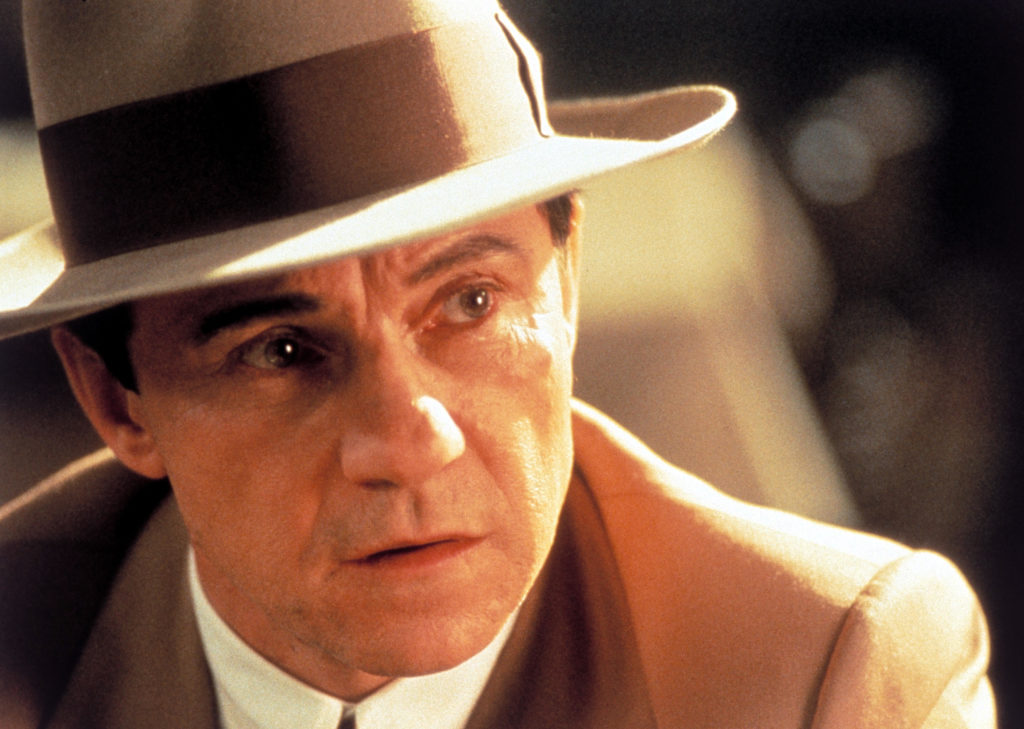
In the 1991 movie Bugsy, Warren Beatty, portraying mobster Benjamin “Bugsy” Siegel, stands in the desert near Highway 91 south of Las Vegas. He scans the empty terrain, imagining, during an “epiphany,” its potential. In a car nearby are his girlfriend, Virginia Hill (Annette Bening), and Los Angeles mobster Mickey Cohen (Harvey Keitel).
Harvey Keitel plays Siegel’s sidekick, Mickey Cohen, in Bugsy. United Archives / Alamy Stock Photo
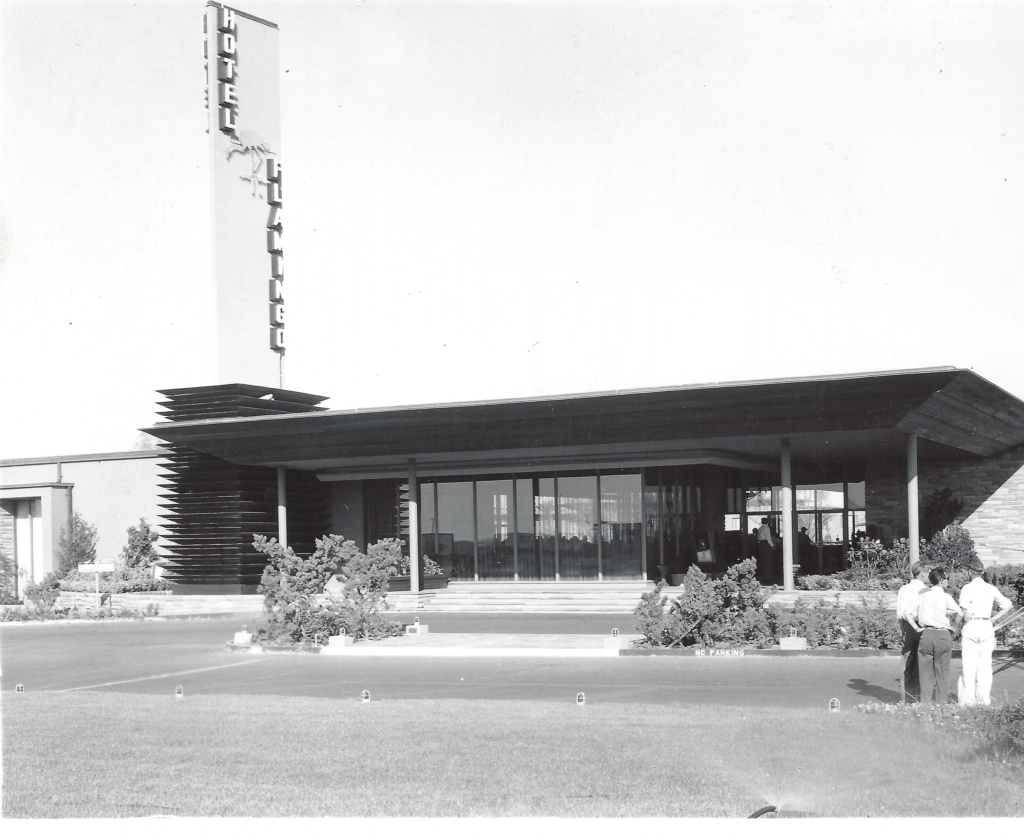
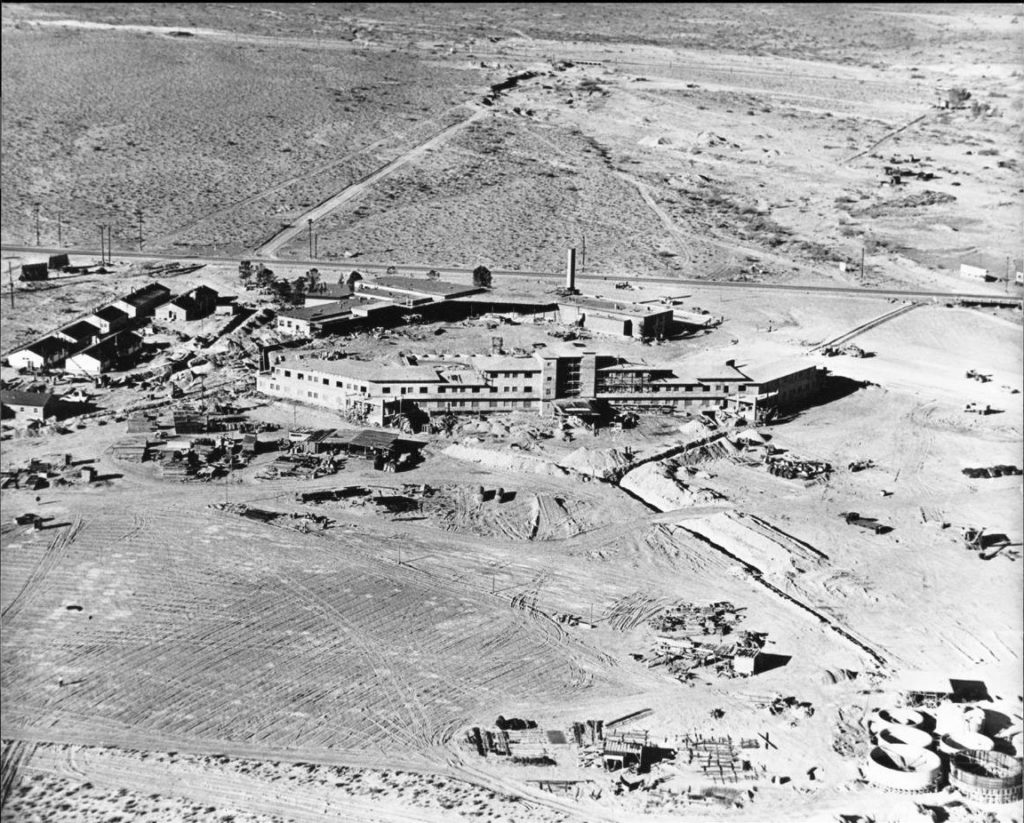
The scene is a pivotal moment in the movie, highlighting a major event in Southern Nevada history, the apparent creative spark that led to the December 26, 1946, opening of the Flamingo Hotel. During the post-World War II years, the lavish resort would attract widespread attention.
“The Flamingo, the most respected casino of its time in America, put Vegas on the map,” writes Jeff Burbank in his 2005 book Las Vegas Babylon.
Like many movies based on true stories, however, Bugsy, directed by Barry Levinson, compresses some events to save time and invents others, such as the “epiphany” scene, for dramatic effect. The goal is to create a compelling story, not a documentary. But inevitably the guessing game — “Did that really happen?” — becomes part of the movie’s legacy.
Below are important storylines in Bugsy that are based on true events but aren’t always factual.
1.Though Siegel saw the Flamingo through to completion, as the movie depicts, the idea for it originated not with him, but with Billy Wilkerson, publisher of the Hollywood Reporter and owner of successful Los Angeles nightclubs.
A compulsive gambler, Wilkerson had been going to Las Vegas since the late 1930s, drawn to the action in legal casinos. A friend suggested that since he visited the place so often on gambling excursions, he should build a casino there, where he could gamble, but also own the house, said historian Larry Gragg, author of Benjamin “Bugsy” Siegel: The Gangster, the Flamingo, and the Making of Modern Las Vegas, published in 2015.
That suggestion inspired Wilkerson, but he didn’t want his project to fall in line with the Old West theme popular in Southern Nevada at the time. Wilkerson labeled his planned resort the Flamingo.
“He wanted to bring the element of Southern California lavish nightclubs to Las Vegas to attract that celebrity crowd he was used to, and the high-rollers,” Gragg said.
2.The movie creates an impression that nothing but tiny sawdust joints were operating during this period in Las Vegas — a “canker sore,” Hill calls one such place in the film.
By the time the Flamingo opened in late 1946, two Western-themed resorts, the El Rancho Vegas and Hotel Last Frontier, already were in business on Highway 91, now known as the Strip. Both of these early World War II-era hotel-casinos, which no longer exist, were built in open spaces along the highway, with a gaming floor, restaurants and other tourist amenities. But the Flamingo upped the ante, employing a more contemporary and costly design in attracting visitors to the desert.
“The Flamingo was going to be, if you will, this kind of Southern California or Miami, Florida, kind of nightclub,” Gragg said, “very, very different” from the El Rancho Vegas and Hotel Last Frontier.
Siegel, a New York mobster affiliated with childhood friend Meyer Lansky and other powerful underworld figures, had been in Hollywood and Las Vegas, overseeing the East Coast syndicate’s affairs, including handling the race wire, a valuable service that transmitted horse race results to local bookies from tracks across the country. Nevada was the first state to allow off-track betting, and Siegel capitalized on that.
Ben Kingsley plays Meyer Lansky in Bugsy. Allstar Picture Library Ltd. / Alamy Stock Photo
Siegel also had been involved with other gangsters in downtown Las Vegas casinos and unsuccessfully attempted to buy the El Rancho Vegas on Highway 91. Seeing value in what the cash-strapped gambler Wilkerson was doing, Siegel pushed him aside in mid-1946. The resort’s construction would be financed with Mob money.
Michael Green, associate professor of history at UNLV, said the Flamingo, the first Mob-built resort on the highway to Los Angeles, sent a signal to the underworld that “the money is here, come and get it.”
“The gates were swung wide open,” Green said.
Several Strip resorts built after that were backed by Mob interests. Many of these, such as the Desert Inn, Sands and Dunes, have been demolished. Now, corporate-run casinos dominate the Strip, including the newest, the $4.3 billion Resorts World Las Vegas, which opened in June 2021. The Flamingo, still at the same location but with none of its original buildings, is owned by Caesars Entertainment, a publicly traded company.
3. During the movie, a rainstorm in the Las Vegas Valley dampens the Flamingo’s grand opening, keeping visitors away and leaving bored casino employees with little to do.
In reality, the Flamingo was packed when it opened the day after Christmas, Gragg said. People came from Southern California and throughout the region. Local residents also attended the opening. Siegel and Hill were there, greeting guests.
Gragg said there was rain in the valley that day, but only 0.12 of an inch, not “a terrific thunderstorm.”
Despite the impression left by the movie, the Flamingo’s opening run saw huge turnouts. According to newspaper columnist and radio commentator Walter Winchell, the Flamingo in its first three nights attracted 28,000 visitors, Gragg said. Among the celebrities were Jimmy Durante and Rose Marie.
“The local people wanted to see it,” the author said, “and celebrities that came over from Hollywood were excited to see it.”
The problems started, however, when the casino had a bad run of luck at the gaming tables, losing large amounts of money. Local residents, after they’d seen the Flamingo, began to frequent familiar nightspots again, such as the El Rancho Vegas on Highway 91 and the El Cortez on Fremont Street downtown.
Another problem was that the casino floor at the Flamingo had opened before the resort’s 100 guest rooms were ready. For some visitors, it was an inconvenience to spend an evening at the Flamingo and then drive to another hotel for the night.
“Not enough people were coming from out of town to fill up the casino,” Gragg said, “and if they did come, there were no hotel rooms yet.”
Mounting financial pressures resulted in the resort temporarily closing. It reopened in March 1947 and was beginning to turn the corner financially, but Siegel would not be around to help overcome the earlier difficulties. The 41-year-old gangster was shot to death on June 20, 1947, at Hill’s rented Beverly Hills residence, while she was out of town. Just six months earlier, Siegel and Hill had been together at the Flamingo’s grand opening, thanking visitors for being there.
4. As portrayed in the movie, Siegel flies home the night of the rained-out opening and is shot to death, apparently on orders from his syndicate benefactors.
Almost 75 years later, the circumstances surrounding Siegel’s murder, and the killer’s identity, remain a mystery. Because the investigation officially is still open, the Beverly Hills Police Department won’t release the Siegel file.
Over time, several theories have emerged regarding Siegel’s death.
Some people have speculated he was killed over control of the lucrative race wire. Others insist his underworld allies orchestrated the killing, upset by mismanagement of their money at the Flamingo and suspicious that he was skimming. One of Hill’s brothers, reportedly angry at Siegel for brutally mistreating Virginia, also has been mentioned as a suspect. According to another theory, mobster Moe Sedway, believing his volatile longtime friend had begun to target him for death, arranged for a gunman to carry out the task.
The person who shot Siegel was positioned outside the home late on the night of June 20, 1947, with a rifle, firing though a window. Seated on a sofa, Siegel was struck four times. One round blasted an eyeball out, sending it 15 feet onto the tiled dining room floor, according to authors Ed Reid and Ovid Demaris in their 1963 book The Green Felt Jungle.
Siegel was not alone in the room the night of the shooting, as the movie indicates. An associate, Allen Smiley, was sitting on the sofa near Siegel. When the gunfire started, Smiley ducked under a coffee table.
Less than half an hour after Siegel was shot, Sedway and two other mobsters, Morris Rosen and Gus Greenbaum, took control of the resort, Gragg said. This rapid turnaround indicates that Sedway, a Las Vegas fixer and partner with fellow New Yorker Siegel in the race wire, must have had some connection to the shooter, the author said. Clearly there was a phone call not long after the incident.
“Who organized it I cannot say with great confidence, although Moe Sedway was probably involved in some way,” said Gragg, who is working on a biography of Sedway.
Gragg has been unable to determine who pulled the trigger. “I still have not seen sufficient persuasive evidence for a particular killer,” he said.
Historical perspective
The movie also twists the historical record in its portrayal of some people important to the overall narrative.
In one scene, Siegel humiliates powerful Los Angeles Mob boss Jack Dragna (Richard Sarafian), forcing him to bark like a dog. Green pointed to this scene as one of the movie’s inaccuracies. “That definitely wasn’t Dragna,” Green said.
“Someone who knew Dragna told me that one time Dragna had Siegel and Mickey Cohen come to his office and, with my friend sitting in the corner, said, ‘Quit fighting, start getting along, or I’ll kill both of you,’ and they hugged,” the historian said.
Green said he struggles “with inaccuracies in films that deal with history,” but added he is also a believer in “getting people into the tent.”
Interest in a topic popularized by a movie such as Bugsy can guide the curious to books that delve more deeply into the subject matter.
“If they watch the movie and think, hmm, I want to know more, and pick up, say, Larry Gragg’s biography (of Siegel) or Sally Denton and Roger Morris’ The Money and the Power, they get a fuller picture,” Green said.
Larry Henry is a veteran print and broadcast journalist. He served as press secretary for Nevada Governor Bob Miller, and was political editor at the Las Vegas Sun and managing editor at KFSM-TV, the CBS affiliate in Northwest Arkansas. The Mob in Pop Culture blog appears monthly.
In 1974, Nevada Lieutenant Governor Harry Reid decided to run for the U.S. Senate. Reid, a Democrat, would face former Nevada Governor Paul Laxalt, a Republican, for the seat being vacated by longtime Senator Alan Bible. In the wake of Watergate, which left the Republicans in turmoil, the odds looked good for Reid. But he lost the race by 600 votes.
Reid served on the Gaming Commission during the late 1970s and early 1980s, when state regulators and federal prosecutors were trying to drive the Mob out of Las Vegas. Courtesy of Las Vegas Review-Journal
Stung by the defeat, Reid jumped into the race for Las Vegas mayor the following year. He lost that election too. “I woke the day after the mayoral election a 35-year-old has-been,” Reid wrote in his memoir, The Good Fight: Hard Lessons from Searchlight to Washington. “I assumed I was finished with political office.”
But Nevada Governor Mike O’Callaghan, who had known and mentored Reid since he was a teenager, threw him a lifeline: an appointment to the chairmanship of the Nevada Gaming Commission in 1977. Reid was excited about the opportunity, but he really didn’t know what he was getting into.
“I was completely naïve about the inner workings of Las Vegas casinos,” Reid recalled. “I don’t gamble, never have.”
Not only was Reid naïve about how casinos operated, but he didn’t understand the grip the Mob still had on many casinos. He described his experiences serving on the Gaming Commission as “an intense, surreal time when it sometimes felt as if I’d wandered into some kind of terrible funhouse.”
Reid wasn’t on the Gaming Commission long before someone tried to bribe him. Reid ultimately called the FBI, which set up a sting operation. The three men trying to buy Reid’s vote – Jack Gordon, Sol Sayegh and Joe Daly – were caught on videotape delivering $12,000 in cash to Reid. Gordon and Daly were convicted and sent to prison. The case against Sayegh never went to trial.
There was never a dull moment during Reid’s tenure on the Gaming Commission, which occurred during the most tumultuous period in the history of Nevada casino regulation — the period depicted in the 1995 movie Casino when state regulators and federal prosecutors pushed hard to drive the Mob out of Las Vegas.
When the FBI bugged the conversations of Joe Agosto, entertainment director at the Tropicana Hotel, they heard the mobster telling his Kansas City bosses that he had a Nevada gaming regulator in his pocket. Agosto used coded language to describe this person, calling him “Mister Clean” or “Cleanface.” The FBI suspected that Reid was Agosto’s “Cleanface.”
Nevada Governor Mike O’Callaghan appointed Reid to chair the Nevada Gaming Commission, a move that resurrected Reid’s public service career after he lost a couple of election races.
The Nevada Gaming Control Board hired independent investigators to look into Agosto’s claims. They examined every financial transaction of more than $250 that Reid was involved in over the previous two years. He took a polygraph test. The investigators interviewed dozens of people. “Every rock they saw, they picked up and turned it over, twice,” Reid remembered. In 1980, the results of the investigation cleared Reid of any wrongdoing.
Reid was involved with putting both Chicago Outfit mobster Tony Spilotro and associate Frank “Lefty” Rosenthal in the Black Book, Nevada’s list of individuals excluded from stepping foot in Nevada casinos. A verbal confrontation between Rosenthal and Reid after a Gaming Commission meeting later was re-created in Casino, with Robert De Niro playing Rosenthal and Dick Smothers playing Reid.
All during this time, Reid received an array of death threats that put him and his family in jeopardy. The scariest moment came when his wife, Landra, was driving the family’s Oldsmobile station wagon and it wasn’t running right. She lifted the car’s hood and discovered a wire attached to a spark plug that ran to somewhere out of sight. Opening the gas tank, she found the same wire. She ran into the house and called her husband. “Don’t start your car!” she told him.
“The bomb squad arrived to examine the station wagon,” Reid recalled. “Apparently, the gas tank hadn’t detonated because the tip of the spark plug had broken off.”
After that incident, Reid and his wife started their vehicles using remote control devices, and a patrol car was stationed outside their house each night. Reid began carrying a gun for the first time in his life. The terror of that close call for Reid’s family haunted him for years afterward. “What my wife and children endured during my time on the Gaming Commission has stayed with me through all these years and through all the places I’ve lived since,” Reid said in his memoir.
Dick Smothers played a character patterned after Reid in the Martin Scorsese movie Casino.
The place where Reid spent much of the next three decades was Washington, D.C., where he rose through the congressional ranks to become Senator majority leader. He retired from public office in 2016.
Reid’s service on the Nevada Gaming Commission was remembered fondly by Jeff Silver, who served on the state’s Gaming Control Board at the same time. Today, Silver is a private attorney and chairman of The Mob Museum’s Board of Directors.
“I was very fortunate to have worked with this remarkable man during his tenure on the Nevada Gaming Commission,” Silver said. “He was extremely bright, and was always willing to listen to opposing viewpoints, good preparation for the U.S. Senate.
“Obviously, it took great skills for a gentleman from a small state (one that had not gained universal acceptance from sister states) to have risen to such prominence. Most importantly, he was a devoted family man who deeply loved his wife, children and grandchildren. As busy as he was, he took the time to greet fellow Nevadans in the Capitol and was most generous in always making me feel welcome. He is and was Nevada’s senior statesman, and agree with his politics or not, you had to respect his stature and accomplishments.”
Part of The Mob Museum’s Reel History: Video Archive
Reid died on Tuesday, December 28, at his home in Henderson, Nevada. He is survived by his wife, Landra, his children Rory, Lana, Leif, Josh and Key, 19 grandchildren and one great-grandchild.
Much of what Americans know about Benjamin “Bugsy” Siegel comes from watching the 1991 film Bugsy. That certainly applies to the general view of the opening of the Flamingo Hotel in Las Vegas on December 26, 1946. In the film’s portrayal of the event, there are virtually no guests, and a powerful thunderstorm strikes, knocking out the power to the casino. Warren Beatty, who plays Siegel, announces that the Flamingo will close the following day. While certainly influential, Bugsy is not the only source to depict the Flamingo’s opening as a disaster. One sees the failure in the 1974 HBO film Virginia Hill: Mistress of the Mob, which featured Harvey Keitel as Siegel, and in novels such as The Vegas Legacy (1983) by Ovid Demaris and Sin City (2002) by Harold Robbins. Similarly, in Las Vegas: A Desert Paradise (1986), Las Vegas historian Ralph Roske said the opening drew “small crowds.”
The reality was strikingly different. First, there were no powerful thunderstorms in Las Vegas. There was heavy rain in Southern California, and six inches of snow fell on Mount Charleston, but the weather bureau at McCarran Field reported no thunderstorm and only 0.12 inches of rain for Las Vegas. To be sure, the West Coast storms grounded flights, which kept Hollywood celebrities from participating in the first night’s activities, but that was not terribly important because the third night was the one dedicated to having celebrities. While some of the promised big names such as William Holden, Lucille Ball and Ava Gardner did not appear, there were still recognizable Hollywood figures present on the evening of December 28. George Jessel served as master of ceremonies and introduced Eleanor Parker, Charles Coburn, George Raft, Vivian Blaine, George Sanders, Lon McAllister and Sonny Tufts, not only to those in attendance at the Flamingo, but also to a nationwide radio broadcast that originated from Las Vegas station KENO.
Benjamin “Bugsy” Siegel and Virginia Hill presided over the three grand openings, greeting celebrities and guests who lined up to enter the casino. Siegel image courtesy of UCLA Special Collections; Hill image courtesy of Alamy
Second, for the special three-night grand opening — two dedicated to residents and then the third focused on the celebrities — the Flamingo was packed. On opening night there was a traffic jam at the entrance to the parking lot, and, according to travel writer Roland Hill, when they opened the doors “it was like the rush of olden days on to the newly opened lands of the West.” Louis Wiener Jr., Siegel’s lawyer, recalled, “You couldn’t get in with a shoehorn. Everybody was there.” In his article on the opening, Wally Williams wrote in the Las Vegas Review-Journal, “It appears the proprietors will have to disjoint the walls to take care of the mob.” Columnist Walter Winchell reported that in the first three nights the Flamingo attracted 28,000 people.
Third, rather than the frustrated and concerned Ben Siegel as Warren Beatty portrayed him, Bugsy was actually upbeat, greeting guests wearing a black tuxedo with a pink carnation. His mistress Virginia Hill attended each of the first three nights, with a different hair color each evening — platinum blond, jet black and then her natural red. There was a floor show featuring popular comic Jimmy Durante, the Xavier Cugat orchestra, singer Rose Marie and dancer Tommy Wonder. Rose Marie recalled that at the end of the show “everyone was standing and yelling.” It was “one helluva night.” Texas gambler Benny Binion, who had recently arrived in Las Vegas, remembered opening night as “the biggest whoop-do-do I ever seen.”
The opening festivities took place in a type of casino no one in Las Vegas had ever seen. Dealers and guests later described the Flamingo as “posh,” “ritzy” and “elegant.” Thelma Coblentz recalled “knee-deep carpeting and elegant draperies and beautiful dinner service.” And then there were the flowers, “truckloads” of them, “in the shapes of wreaths, horseshoes and in baskets.” After surveying the scene, Jimmy Durante walked up to Siegel and exclaimed, “Benny, da place looks like a cemetery wid dice tables and slot machines.” One columnist in attendance wrote about the large bar, which was “full of mirrors, green leather walls, a black ceiling and tomato red furniture.” The approach to the casino also impressed visitors. According to the Las Vegas Age, guests walking from their cars saw “a forest full of evergreens,” palm trees and “semi-tropical shrubs.” Besides the large spotlights in the sky, they saw the shrubs lit up in bright blue and red colors.
Entertainment columnists wrote glowing accounts of the three opening nights. Jimmy Starr called the Flamingo a “magnificent spa,” an adult’s “fairyland,” with buildings and landscaping that were “lush, plush and fantastic.” Starr concluded that the Flamingo was “the most fantastic gambling casino . . . ever constructed.” Aline Mosby agreed, writing that this “junior size Taj Majal” was “the world’s most super-colossal saloon.” Bob Thomas described a casino that looked “like a set that M-G-M wanted to build but couldn’t because of budget limitations.”
Despite all the hyperbole over the opening, Siegel faced serious financial challenges. He had yet to raise enough money to cover the construction costs that had escalated from an original budget of $1.2 million to about $5 million, a figure that would continue to soar with the completion of the hotel rooms in February. An FBI memo indicated that the “patronage” at the Flamingo “was large but not lucrative.” Observers at the opening claimed hundreds of thousands of dollars were gambled. As Wiener remembered, “there was so much money you couldn’t believe it.”
The Flamingo as it looked in early 1947, just after the grand openings in late December.
Yet the Flamingo casino was not the big winner. As Wiener claimed, “If they had dealt lucky the first few days they were open, they would have won the cost of the hotel.” Opening the Flamingo before the hotel was ready for occupancy was part of the reason for the losses. Rather than continuing to play at the tables, many winners left to stay at the El Rancho Vegas and the Hotel Last Frontier. The losses continued into the following month. An informant told columnist Dorothy Kilgallen, for example, that the famed gambler Nicholas “Nick the Greek” Dandolos won about a half-million dollars in four nights at the tables during the second week of January. Scams by the croupiers at some of the tables made matters worse.
After the novelty of the Flamingo waned, fewer local patrons made their way to the new casino. Rose Marie recalled, for example, that after the big opening nights, it was not uncommon for Jimmy Durante to perform in front of fewer than two dozen people. When new acts such as Lena Horne opened, the crowds came back, but then would dwindle once more. Siegel cut wages and poured more of his own diminishing bankroll into the property, but the losses continued and triggered an ominous rumor. An informant told an FBI agent that Siegel told him that Joe Adonis, Frank Costello and his old friend Meyer Lansky “may want to kill him” for losing the money they had invested. In the wake of all these troubling developments, Siegel announced that the Flamingo shops, restaurant and casino would close on February 6 and would not open again until the hotel rooms were ready on March 1.
The response to the opening of the hotel was as enthusiastic as it had been for the casino. Designed by Las Vegas architect Richard Stadelman and Los Angeles interior designer Tom Douglas, the 100-room Flamingo, according to Douglas, would be hailed as “the most luxurious hotel in America.” It featured green carpeting, a large Lucite chandelier in the lobby, and the rooms had green, yellow, lime or pink draperies and wallpaper. Each bedroom included handmade beds, Venetian glass ashtrays and green leather wastebaskets. In all, Douglas claimed the total cost of furnishing each room was about $3,500.
This aerial image of the Flamingo from early 1947 shows the amount of work that still needed to be done after the casino opened.
Columnist Erskine Johnson said that the “swanky” hotel looked “like an M-G-M movie set,” all in “flamingo pink, pale lime chartreuse and palm trees.” Bob Considine wrote that the hotel was “built apparently from blueprints taken from a chorus girl’s dream of heaven.” Ed Sullivan informed readers that he had heard the new hotel “is out of this world,” and Malcolm Bingay spoke for most in concluding that with the completion of the hotel portion of the property, “Bugsy reigns supreme in all his grandeur.”
The glorious publicity did little to stop the financial challenges for Siegel, however. Two of his checks totaling $150,000 to Phoenix builder Del Webb bounced. He tried all sorts of things to improve revenue. The Flamingo began hosting small conventions, and his publicist Hank Greenspun promoted the hotel with special buffet nights, afternoon bingo games and drawings for cars to attract more gamblers.
Although he completed both the casino and hotel, Siegel did not get to see the success that the Flamingo enjoyed shortly after his murder on June 20, 1947 in Beverly Hills. The Flamingo became the model for the successful Las Vegas hotel-casinos of the 1950s with luxurious accommodations, big-name headlining performers and an array of gambling options.
Larry Gragg is Curators’ Distinguished Teaching Professor Emeritus at Missouri University of Science and Technology where he served as chair of the history and political science department for 17 years. He is the author of 10 books, including Bright Light City: Las Vegas in Popular Culture (2013); Benjamin “Bugsy” Siegel: The Gangster, the Flamingo, and The Making of Modern Las Vegas (2015); and Becoming America’s Playground: Las Vegas in the 1950s (2019).
Being married to violent Mafia boss Vito Genovese, according to wife Anna Genovese in a court filing, “endangered her health and made her life extremely wretched,” the New York Times reported in 1952.
This high-profile divorce case resulted in explosive testimony from Anna Genovese regarding her husband’s involvement in organized crime. It also brought her name to the forefront. Mob wives customarily did not step boldly forward with such revelations.
Anna Genovese, standing in an office in Trenton, New Jersey, on December 12, 1957, revealed details of her Mafia boss husband’s criminal activities during divorce proceedings in the early 1950s. Her story has been memorialized in a popular podcast that is being developed into an HBO series. AP Photo
By midcentury, Anna Genovese, in addition to making news regarding her marriage to Vito, had been active on the New York scene, running nightclubs. She died in 1982 at age 77 from a stroke.
Nearly four decades after her death, Anna Genovese is the subject of an HBO limited series, Mob Queens, now in production, with Ruth Wilson set to appear in the lead role.
The television series is one of at least two current projects about women in the Mob. The other, Mafia Mamma, is expected to begin filming in Italy next spring. Starring Toni Collette, Mafia Mamma will follow a suburban U.S. woman who inherits the syndicate operation her grandfather once ran.
As these projects are going into development, two other major Mafia productions, one focusing on a fictional crime family and the other on the real-life Mafia in Sicily, were released in the second half of 2021.
In the fall, The Many Saints of Newark, came out to a lot of fanfare, but mixed reviews. The prequel movie focuses on characters from the popular HBO series The Sopranos during their younger years. The television series features James Gandolfini, who later died of a heart attack at age 51, as fictional New Jersey mobster Tony Soprano. In the prequel, Gandolfini’s son, Michael, plays a young Tony Soprano.
Around the same time, a true-crime series, Vendetta: Truth, Lies and the Mafia, premiered on Netflix, and is still available to subscribers. In six episodes, Vendetta examines a feud between a television reporter and judge in Sicily, both labeling themselves as “anti-Mafia,” but both entangled in apparent ethical missteps that led to dramatic courtroom conclusions for each.
Writing in the Guardian, film critic Stuart Heritage says directors such as Francis Ford Coppola and Martin Scorsese, and Sopranos’ creator David Chase, have left the public with an impression that the Mafia is “something that happened long ago and far away from us.”
However, Vendetta shows that the Mafia is still powerful, Heritage notes. The Netflix series begins during the pre-coronavirus years and ends with people wearing face coverings in court.
“The most chilling aspect of Vendetta is that it underlines how virulent (the Mafia) still is – and how inescapable,” Heritage writes.
‘An opportunist’
Vito Genovese’s role in the Mafia has seen a revival recently, not just with the Mob Queens podcast and upcoming HBO series, but also in print.
Vito Genovese, New York crime family boss, spent the final years of his life in prison after being convicted of narcotics trafficking. This image was taken in 1959. Library of Congress
Last spring, Anthony M. DeStefano, an author and reporter for New York’s Newsday, released The Deadly Don: Vito Genovese, Mafia Boss, a nonfiction book about the Italian-American don.
Rising through the New York underworld with associates such as Charles “Lucky” Luciano, Genovese made his way to the top by violent means and through involvement in illegal enterprises. The Genovese crime family still bears his name
“Vito was an opportunist,” DeStefano said in June during a Mob Museum virtual discussion about the book.
That opportunistic instinct paid off. Thomas Dewey, a prosecutor in New York before becoming governor, called Genovese the “king of the rackets in the United States.”
Mob life
The 12-part podcast on Anna Genovese, also titled Mob Queens, was released in 2019, and is produced and narrated by Jessica Bendinger and Michael Seligman.
The two producers first ran across Anna Genovese’s story while researching 1950s New York gay nightlife. As the pair began to learn more about her, they came to understand that she was “more complicated than they’d hoped,” the podcast website states. “Anna Genovese is a New York drag club maven, self-styled entrepreneur and badass Mob wife.”
The HBO series, based on the podcast, is being written by Lena Dunham, a filmmaker, actor and writer, and Dennis Lehane, author of several best-selling novels, including Mystic River,Shutter Island and Gone Baby Gone.
As the podcast indicates, more than a few aspects of the Genoveses’ lives have been shrouded in mystery. Even the circumstances surrounding Anna’s Depression-era marriage to Vito have been controversial.
After Vito’s first wife died of tuberculosis in 1931, “he fell in love with a married cousin, Anna Vernitico,” according to Selwyn Raab in his book Five Families: The Rise, Decline, and Resurgence of America’s Most Powerful Mafia Empires.
According to Raab, a former New York Times investigative reporter, it was thought that Vito might have had Anna’s husband strangled to death so he could marry her. Others dispute that claim.
Narcotics conviction
Decades later, during divorce proceedings, Anna Genovese generated news by publicly revealing her husband’s criminal activities.
In a New Jersey Superior Court, she said he brought in $40,000 a week from illegal gambling, narcotics trafficking, and more, including control of labor rackets on the New York waterfront. In today’s money, that would be more than $414,000 per week.
In the end, her lawsuit in the divorce case, and his countersuit, were dropped. From that point on, their separate lives, sometimes intersecting, went through highs and lows.
In 1959 Vito Genovese was convicted on a narcotics charge and sentenced to 15 years in prison. He would not come out alive. At age 71, Genovese died of a heart ailment in the U.S. Medical Center for Federal Prisoners in Springfield, Missouri.
Vito’s death occurred in 1969 on Valentine’s Day. After Anna died 13 years later at the start of a new year, her remains were placed in the Genovese family vault next to Vito’s in Saint John Cemetery in Queens, New York.
“She would spend the rest of time with the crime boss she once told the world she feared but who in the end still cared deeply about her,” DeStefano wrote.
Larry Henry is a veteran print and broadcast journalist. He served as press secretary for Nevada Governor Bob Miller, and was political editor at the Las Vegas Sun and managing editor at KFSM-TV, the CBS affiliate in Northwest Arkansas. The Mob in Pop Culture blog appears monthly.
By 1964, two brothers secretly working for the FBI had been informing on the Communist Party for 10 years. One brother, Morris Childs, had risen to the position of official courier of funds from Moscow to the Communist Party of the USA. They were so highly regarded in the party that they often interacted with leaders of Communist nations. That June of 1964, they met with an unwitting Cuban leader Fidel Castro in Communist-run Cuba, seven months after the assassination of President John F. Kennedy in Dallas on November 22, 1963.
The brothers listened to Castro tell them about a trip by Kennedy’s accused assassin, Lee Harvey Oswald, to the Cuban embassy in Mexico City in September 1963. During the visit, Oswald sought a visa to immigrate to Cuba, but grew desperate when he could not get one right away.
“These were two of the best sources in the history of the FBI,” said Gus Russo, author and one of the world’s foremost experts on the JFK assassination. “I interviewed their case officer, Ray Wannall, who said these guys never exaggerated, never made a mistake in 25 years of reporting.”
President Kennedy rides in the presidential limousine on Main Street in Dallas minutes before the assassination. Also in the limousine are first lady Jackie Kennedy, Texas Governor John Connally and his wife, Nellie. Walt Cisco/Dallas Morning News. Work in public domain.
“What they reported was that Castro told them that Oswald had come into the embassy in Mexico City – and Castro said, ‘I knew about it when it happened,’ it was reported to him – and he [Oswald] offered to kill President Kennedy,” Russo said. “He said, ‘I’ll kill that bastard Kennedy,’ ostensibly for the [Cuban] revolution.”
The Childs brothers reported the conversation to the FBI. The information was given to the Warren Commission, but nothing was done about it and the written report was kept top secret until the mid-1990s, a document “that said what Castro knew about Oswald’s intention,” Russo said. It is believed to be the last Warren Commission document declassified, the bulk having been released in the 1960s.
To Russo, the Cuban connection is key to understanding Oswald’s motive for – and what led to – the Kennedy assassination, a shocking, history-altering act of terrorism that marks its 58th anniversary this week.
Oswald fired at Kennedy from the sixth-floor window of the Texas School Book Depository building where Oswald had started working several weeks before. He used a Mannlicher-style Carcano bolt-action rifle (more correctly, an Italian-made, World War II military surplus Model 91/38 Carcano with a Japanese-made 4×18 telescopic sight). He hit Kennedy twice, once in the upper right back (exiting through the throat) and fatally in the top rear of the president’s head, exiting through the upper right side of Kennedy’s skull. A third shot missed completely. As Russo explained, after the missed shot, Oswald had nine full seconds — not 5.6 seconds, as mistakenly reported for years — plenty of time to get off the two shots that struck the president.
The Cuban connection
After decades of speculation, the release in the 1980s, 1990s and 2000s of troves of long-suppressed American, Russian and Cuban intelligence documents, and statements from former Cuban and Russian spies who defected and told their stories to the U.S., the Cuban connection emerges as the most plausible explanation for the JFK assassination.
And, no, according to Russo, despite the sale of hundreds of conspiracy books on the topic, the Mob was not involved in killing Kennedy – nor were the CIA, FBI, Dallas Police, rich right-wingers, Vice President Lyndon Johnson, et al. There was no gunfire from the “grassy knoll” of Dealey Plaza on Elm Street in Dallas, and no shooter other than Oswald. In fact, Russo said, the story of the JFK assassination stopped being about Dealey Plaza the moment of the fatal head shot.
Russo, a member of The Mob Museum’s Advisory Council, served as co-lead reporter for the 1993 documentary Who Was Lee Harvey Oswald? for the Frontline show on PBS. He has written two books, Live by the Sword and Brothers in Arms, based on government documents and interviews, detailing efforts by John Kennedy and his brother, Attorney General Robert Kennedy, to eliminate Castro, how Oswald’s obsession with Castro led him to murder Kennedy, and how Castro and his intelligence agents knew in advance about Oswald’s intentions. Russo has been a reporter, writer or producer on 10 other major-network Kennedy shows.
Gus Russo, one of the foremost experts on the JFK assassination, says Cuban officials were aware of Lee Harvey Oswald’s intention to kill Kennedy and encouraged him.
Russo was part of a 2005 German TV team researching the assassination that made trips to Mexico, Cuba and South America to speak with witnesses, among them retired former Cuban spies who reported that they had been aware of Oswald since late 1962, when the KGB forwarded his Russian sojourn file to Havana (Oswald left for the USSR in 1959 and spent more than two years in Minsk, where he interacted with both KGB and Cuban agents, who trained just blocks from his apartment).
“We also learned that Oswald made his offer out of left field in the Cuban embassy,” Russo added, “and the Cuban agents sort of huddled together later, wondering, ‘What do we do with this guy?’”
“The decision was made to encourage him” to kill Kennedy, Russo said. “[Oswald] was there for six days in Mexico City. . . . But the witnesses that we’ve uncovered say that he was meeting for lunches and dinners and going to Communist get-togethers. He was meeting with Castro’s intelligence officers, and they were encouraging him.”
“One officer told us that, ‘We offered him money, but he wasn’t interested in money. It was all ideological for him.’ So [the Cuban agents] gave him a few dollars to go to the bullfights and to walk around Mexico City. But that wasn’t his intent. He wanted to prove himself to the [Cuban] revolution. And, so [the ex-agents said], ‘We encouraged him to go ahead and try. We didn’t know if he would do it, or be lucky, but what could it hurt?’”
The Cuban spies in Mexico City knew that the Americans under President Kennedy had been trying to assassinate Castro for years, “so why not let some nut take a shot?” Russo said. “They didn’t know if it would be successful.”
However, while the Cubans encouraged Oswald to carry out his plan to kill Kennedy, that was the extent of their participation.
“They made promises to Oswald, from what we were told, and again this has never been adjudicated, but I can tell you what they told us. Two sources in Mexico City who were with Cuban intelligence said that, ‘We promised Oswald we’d rescue him if he was successful. And we would fly him to Havana.’”
“Now, it turns out there were a lot of reports that a plane was at a private airfield in Dallas that day, and that it took off for Havana after the assassination. And one of these Cuban sources told us, ‘We weren’t going to rescue him and take him to Havana, we were going to dump him over the Gulf of Mexico. We didn’t want to have anything to do with this guy.’ Their idea was to get him and kill him, and that was going to be the end of it.”
But as Oswald walked along a Dallas street an hour after the shooting, with a police bulletin out on his general description, police officer J.D. Tippit happened along in a patrol car. When he got out to encounter the suspect, Oswald shot him dead, three shots to the body, and one point-blank to the head. Tippit, Russo said, “possibly stopped him on the way to this [Cuban] rendezvous, and that changed the whole layout of things.”
Russo makes it clear that neither Castro nor his Cuban cohorts played a part in the shooting of JFK, that Oswald acted alone on that. They, of course, did not report Oswald’s threating statements to U.S. authorities. They only lied to him about a rescue and sat back to see if he would actually do it.
Hours before the murder, the cunning Castro had instructed an intelligence officer to steer shortwave radio antennas away from surveilling U.S. transmissions from Washington, D.C., and Miami and toward Dallas, Russo said. He needed to be the first to know if this crazy guy actually pulled it off.
First lady Jacqueline Kennedy cradles her husband, President John F. Kennedy, seconds after he was shot to death in Dallas on November 22, 1963. This image was made from a restored version of a film showing the assassination of President Kennedy. AP Photo/APTN
About 12:22 p.m., Castro listened in to the sudden, frenzied live broadcast accounts of the president’s mortal wounding in an open limousine.
“So, yes, it comes from the fact that Castro was told in real time that this nut came into the embassy, was going to do something, try something when Kennedy came to Dallas. He remembered that. ‘Oh, Kennedy’s coming to Dallas? Turn the antennas. Let’s see if it really happens. I want to hear the news when it comes out.’ And lo and behold, he heard immediately.”
Russo advanced this Cuban connection theory based not only on interviews, but on documentary evidence from the American, Russian, Mexican and other governments, many unclassified and released since the 1990s. They continue to arrive in Russo’s mailbox: In 2020, Russo received long-suppressed pages from the Mexican government’s own investigation.
The Warren Commission, created by President Johnson to investigate the assassination, failed to seriously investigate Oswald’s doings in Mexico City with the Cubans, Russo said. The problem was, the U.S. government kept JFK’s intrigues – plots to kill Castro and attempts to destabilize Cuba with covert U.S. commando raids on the island – an official secret, even from the Warren Commission. This cover-up denied the commission the ability to follow that critical lead, Russo said. Conversely, Oswald, a Castro fanatic, did know, based on what he read for months in pro-Castro newspapers such as The Militant, and possibly from conversations with Cuban contacts.
Those higher-ups who knew about the anti-Castro schemes – and did not want them revealed – included the President’s brother, Robert; President Johnson; and former CIA director Allen Dulles. Dulles, appointed to the Warren Commission and a close Kennedy family friend, misled commissioners so they would not closely examine Oswald’s activities with Cubans in Mexico City, Russo said.
“So the Warren Commission was as kept in the dark as the average American,” he said. “They weren’t told. Thus they had no motive for the crime of the century.”
Mark Lane and the Russians
The commission released its report in the fall of 1964. Then in 1966, the great JFK conspiracy movement exploded with lawyer Mark Lane’s bestselling book, Rush to Judgment, criticizing the Warren Commission’s conclusion that Oswald acted alone, and written as a kind of legal defense of Oswald.
The book caused a sensation for years, and influenced many young people into believing others may have been responsible for the assassination. Lane started such infamous conspiracy tales as a second shooter at the grassy knoll, that the CIA planned it all and set up an innocent Oswald, that someone other than Oswald killed Officer Tippit, and that the Mafia sent Dallas nightclub owner Jack Ruby to gun down and silence Oswald. The reports tarnished the Warren Commission’s findings with the public.
However, Lane’s work turned out to be “completely inaccurate, there were a lot of falsehoods in it . . . it was a total fiction,” Russo said.
In fact, Vasili Mitrokhin, who for years had been the Russian KGB archivist, claimed in a 1999 book he co-authored, The Sword and the Shield, that the KGB spy agency clandestinely fed disinformation on the JFK killing to an undercover KGB source in America, a faux journalist named Genrikh Borovik. Mitrokhin contended that Lane (unawares) trusted and used this disinformation to write his book, falsely alleging CIA involvement, meant to discredit the U.S. government in the eyes of Americans. It proved effective in doing that.
Then, in 1975, the Zapruder film, a color 8mm home movie of Kennedy’s limousine as the shots hit him, was shown on the “Good Night America” ABC television show. Many people thought the film showed the fatal shot to Kennedy’s head came from the front, not the rear – suggesting that a second assailant shot the president.
Amid public concern over the Zapruder film, and allegations of a CIA cover-up, the U.S. House Select Committee on Assassinations investigated the JFK case in 1978. Its report, based on a recording from a police motorcycle on November 22, concluded that a fourth shot had been fired at Kennedy, indicating a conspiracy and a second shooter from the grassy knoll.
A divided House committee theorized that the Mafia hired the supposed grassy knoll shooter. It found that the Cuban government was not involved, but anti-Castro Cubans may have been.
However, not long after, another acoustic analysis discredited the value of the police recording, and dealt another blow to the multiple shooter conspiracy theory. The destruction of the recording theory has continued over the years with a number of follow-up scientific studies.
Jim Garrison and Oliver Stone
The next major episode in the JFK conspiracy saga came in 1991 with the release of director Oliver Stone’s movie JFK. (Russo initially consulted for the project, but withdrew after he read the script. Later, he agreed to help Stone’s researcher footnote the book of the movie.) The film, with a cast of Hollywood stars, portrayed most of the leading conspiracy notions, ending with the criminal case brought by New Orleans District Attorney Jim Garrison.
Garrison argued against the Warren Commission’s “single bullet theory” that a shot from Oswald’s rifle wounded both Kennedy and Texas Governor John Connelly in the limousine. Garrison also believed Oswald did not shoot Kennedy, that Oswald was actually “a hero” wrongly blamed for the shooting, and that the CIA engineered what amounted to a coup against the president.
“Jim Garrison was another really crazy guy,” Russo said. “And when he decided that he was going to go after the assassination theory, [arguing] that the CIA killed Kennedy and Oswald was some innocent patsy, he was influenced by Mark Lane [who] was part of his counsel, his inner circle telling him all these things.
“The KGB was also feeding him things, unbeknownst to Garrison. He was being fed outright lies by the KGB psychological warfare division, Service A. That’s what they did. They really jumped on the Kennedy case and planted disinformation all around that Garrison would glom on to. They even wrote an entire book manuscript [later released as Farewell, America], under a pseudonym, and delivered it to him. The next day, Garrison held a press conference, claiming that he solved the case.”
In no way a hero, Oswald, Russo said, continually beat his wife, Marina, tried to kill General Edwin Walker – with the same rifle he used to shoot Kennedy – earlier in 1963, murdered President Kennedy and Officer Tippit, and finally tried to shoot a second Dallas officer while resisting arrest.
He was “a serial murderer wannabe and a violent sociopath, not exactly the kind of guy the CIA would hire as an officer or asset,” Russo said.
“So that’s who he was. And everything you hear about conspiracies and so forth, you have to take that into account and color it with that knowledge. “
What about the Mob?
While working on the Frontline show on Oswald, Russo and other researchers determined early on that Oswald shot Kennedy by himself, a vitally important fact.
“The ‘Mob did it’ theories conveniently ignore that. Oswald did it. And once you accept that, you have to look at his life and see if he was ever connected to anybody remotely in organized crime, which he wasn’t. He was all about Cuba. He was all about Communism. He didn’t know anybody in that world. Nobody. He pulled the trigger. So how do you turn this into a ‘Mob did it’ thing?”
Organized crime had nothing to do with the Kennedy assassination, Russo said.
“This whole concept of the Mob killing Kennedy is based on nothing, other than they were blaming the Mob for everything in those days,” Russo said. “Organized crime did everything. There’s no evidence that would come close to standing up in court. There’s nothing. So, it just took hold because the Mafia is the worst thing in the world and they do everything. But they’ve never killed a mayor, a governor, a president or a cop that I know of. They have rules, and they certainly had rules back in those days about you don’t mess with politicians, law enforcement, because they’ll come down on us. And so they are going to kill Kennedy with [aggressive anti-Mob prosecutor] Bobby Kennedy as attorney general? It makes no sense.”
Russo added:
“I interviewed so many mobsters for my other books on organized crime, and they would tell me things like, ‘Yeah, we hated Bobby, but we loved Jack. He was one of us. We used to party with him.’ One of the guys said, ‘We used to party with him in the steam room at the Sands Hotel [in Las Vegas]. We loved Jack. We shared girlfriends with him. Why would we shoot him?’ And there’s just nothing there. And again, there’s no link of these guys to Oswald, who was obsessed with Kennedy’s Cuba policy and was a very violent guy.”
What about Ruby?
Yet another Mob-related conspiracy theory centers on Jack Ruby, the man who shot Oswald on live television on November 24, 1963, as officers were transferring the suspect from the Dallas Police Department to the county jail. The viewpoint is that Ruby was associated with the underworld and received orders to kill Oswald to prevent him from revealing a Mob conspiracy.
Dallas nightclub owner Jack Ruby shot and killed Oswald two days after the assassination. Assassination expert Gus Russo says Ruby worshipped Kennedy and shot Oswald to avenge the president.
“The ties of Ruby to organized crime are beyond loose,” Russo said. “I mean, when he was young, he was in Chicago a quote-end-quote ‘numbers runner’ for the Mob, which a lot of young guys on the West Side of Chicago were involved with. It didn’t mean he was a gangster. As a matter of fact, both FBI and police intelligence agents in Chicago told me Ruby was forced out of Chicago when he moved to Dallas because he was an informant on the Mob for the police. And you look in his file, FBI file, you see ‘potential criminal informant.’ . . . They interviewed Ruby all the time.”
Russo elaborated on Ruby’s alleged connections:
“He loved law enforcement. He was a friend of the Dallas cops. His club was a block or so away from the Dallas police station. He was not a borderline Mob guy, really. That’s been exaggerated beyond all measure. He dealt with organized crime like every other Southern nightclub owner who had a strip club. The only place you could get strippers and cheap booze was through dealing with Southern Mob guys who were controlling all of that stuff. Sure, he knew Mob guys. Dean Martin knew Mob guys . . . [so did] Frank Sinatra. Everybody knew Mob guys who were in the nightclub business. But you can’t turn that into a Mob theory. So that was the extent of his Mob thing.”
Another problem with Ruby is motive.
“He worshiped JFK,” Russo said. “I mean, he worshipped all presidents. He worshipped the city of Dallas. He worshipped the police department. He had a card in his wallet, ‘Honorary Sheriff, Jack Ruby.’ All the cops would go to his bar and get comped. And he practically lived at the police station. He was there almost every day of his life, just hanging out with the cops. OK, so this Mob guy who hangs out with cops . . .
“[What] you have to know that’s key to this is his love of Judaism. His name was Jacob Rubenstein and he was a devout Jew. In Dallas, he was worried that locals believed ‘the Jews did it.’ Why? Because there was a full-page ad in the local paper the day Kennedy came to town, calling Kennedy a traitor, and it was paid for by a man with a Jewish last name, Bernard Weissman. And Ruby said after the assassination, ‘They’re going to think we did it. We worshipped Kennedy. We didn’t do it.’ Ruby, when he wasn’t at the police station that weekend, he spent hours and hours driving around Dallas looking for Weissman. He was going to kill him, because he was destroying Jews — Ruby thought he was going to destroy the reputation of Jews. And when he shot Oswald, he did it to avenge the president, to show that the Jews didn’t kill Kennedy, ‘We avenged him.’ And he said that in his diary and to anyone who would listen to the day he died. He tried to tell [Warren Commission Chairman] Earl Warren that, that he did this to show there’s a conspiracy against Jews in Dallas that’s making it look like we did it. For him, it was about Judaism and his worship of JFK.”
Russo dismisses the idea that Ruby was acting as a Mob hitman.
“When Oswald came out [of the police station] – and Ruby was a very mentally ill person himself, he had a lot of his own personal issues, very short fuse, temperamental guy, always carried a pistol because he had been mugged years earlier. So the pistol just happened to be there. He saw Oswald and lost it. And he said, I’ll just fix it all in one fell swoop. He arrived at the scene in the police basement with about 10 seconds to spare, because he wasn’t looking for Oswald. He went downtown to do something else. He ambled down the ramp, there’s Oswald, boom. What Mob hit man is going to casually show up 10 seconds before the guy is exposed for only a few seconds walking to a van? He just happened to be there at the right time and he snapped. And that is what he said to the day he died.”
Why do so many Americans believe to this day that more than one shooter, aside from Lee Harvey Oswald, fired at and hit Kennedy?
One reason is the lasting impact of JFK on the American public’s perception of the assassination. Stone’s film, which showed a blow-up of the Zapruder film clip of the fatal head shot, advanced many since-debunked conspiracy theories, principally that Kennedy was shot in the front, not the rear, meaning more than one shooter took part.
“Movies are powerful,” Russo said, “and especially in an era when young people aren’t reading. Movies are their main influence, and it’s terrible that that movie JFK got the last word, so to speak, on what happened for a generation who doesn’t read. I’m always hoping that someday the other movie will come out, the true story, and I try and get that done because that’s the only way we can get to young people.”
What about ballistics?
The second gunman idea really took hold when the Zapruder film was finally released in the 1970s, Russo said. “And to the untrained eye, when you look at it, you see Kennedy’s head go back when it’s shot, and well, he must have been shot from the front. And so it really took off from that. And even I believed it. I was a young person. I saw the head go back, so I thought it must have been a shot from the front. Doesn’t work that way when you actually talk to forensic people and ballistics people. The only way something would make your head go back that violently is a bazooka. A bullet doesn’t do that. A bullet enters cleanly and blows out the opposite side. Especially this particular bullet, the cartridges were so big, and they tumbled so violently. So it entered Kennedy’s head cleanly in the back, but it caused an explosion coming out the front.”
Russo also dismisses the notion that Oswald could not have killed Kennedy from that distance.
“Oswald was every bit a good enough shot to pull this off. One of the reasons people think that he wasn’t was a long time ago we were given the wrong foundation of what happened. You know, garbage in, garbage out. We were told by conspiracy-minded writers and authors that he fired three accurate shots in 5.6 seconds, which is, admittedly, impossible. In fact, there were actually just two hits in about nine seconds. At zero on a clock, the first shot misses. He’s got nine seconds left until you see the final head shot. There’s two hits in that remaining nine seconds. That’s extremely easy in a space that small, with a car going slowly away from you … almost not moving. With a four-power scope, you couldn’t miss . . . fish in a barrel.
“Oswald was a good shot in the Marines. He had a sharpshooter’s rating. He hit 48 out of 50 rapid-fire bullseyes from 200 yards, with a bolt-action weapon. Kennedy was much closer than that in Dealey Plaza, and Oswald had been practicing rapid-fire bolt action shooting all summer. Marina [Oswald’s wife] said he would sit on the front porch in their little apartment and dry fire at cars going by, rapid fire. He was going to rifle target ranges. He could make two good shots in nine seconds. But we were told he fired three in five seconds. So how could he do that? He didn’t.
“A lot of people who think there was a conspiracy haven’t been to Dallas. And when you go there, it can change you pretty quickly. Number one, you see how small it is, how easy the shots were. People all the time say, ‘I had no idea it was this small.’ And the other thing is they realize that the grassy knoll isn’t in front of him anyway. The grassy knoll is at a 90-degree angle to Kennedy. If the bullet had hit here [the right side of Kennedy’s head], it would hit Jackie coming out here [the left side]. It’s not in front. There’s a railroad overpass in front. So even if you think he was shot from the front, it ain’t the grassy knoll. It’s where over a dozen railroad workers were standing watching the parade, and they never saw a rifleman. You have to go there. If you think about it and you watch the cars, you realize everything you’ve been told is wrong. The grassy knoll is to the side, Oswald’s practically on top of him.”
Postscript
Based on his research, Russo described the aftermath of Kennedy’s death, and the devil’s bargain President Lyndon Johnson felt he had to make. At the White House in the evening of November 22, 1963, newly sworn President Johnson sat bewildered, as did the rest of the nation, in the hours following the assassination. But Johnson that night would hear more disconcerting news.
CIA Director John McCone told Johnson of confidential intelligence reports about a trip Kennedy’s alleged assassin, Lee Harvey Oswald, took only weeks before, in September, to the Cuban embassy in Mexico City. LBJ, then 55 years old, recalled how an assassination of a head of state in an open car in Serbia in 1914 triggered World War I. Meanwhile, still fresh in most people’s minds, the United States and the Soviet Union had barely averted nuclear war in a crisis over Russian missiles in Cuba little more than a year before in October 1962.
According to assassination expert Gus Russo, President Lyndon Johnson decided to cover up intelligence reports of the Cuban connection to Oswald in order to prevent war with Cuba and its ally, the Soviet Union.
McCone surmised that the Cubans were involved in Kennedy’s murder. And outside pressure was building. Authorities in Mexico detained Silvia Duran, a Cuban embassy employee said to have met with the suspect Oswald in Mexico City. Castro himself recently made public threats against JFK and JFK’s brother, Robert Kennedy. McCone’s reports that day refer to Cuban officials acting in great alarm.
McCone, after reviewing his agency’s secret statements, had come to a conclusion about the assassination. “It was the Castro connection,” he told the new president.
Johnson also spoke by phone with his own longtime sources in the Mexican government, as well as CIA and FBI officers stationed in Mexico City.
Thus, Johnson knew the troubling story within only hours of Kennedy’s death, the connections Cuban intelligence and Cuban leader Fidel Castro had to Oswald. Should he reveal this link to the American people?
LBJ also heard about efforts by the Kennedy administration to destabilize Cuba and kill Castro. Johnson would later remark, more than once, that “Kennedy wanted to kill Castro, but Castro got him first.”
According to a former LBJ speechwriter, Leo Janos, Johnson phoned a friend, Georgia Democratic Senator Richard Russell, who advised him not to. “Don’t let it out,” the senator said. “If you do, it’s World War III.”
If Americans heard that Castro and the Cubans took part in the president’s murder, Johnson felt that calls for military retaliation could be too strong to stop, leading to war with Cuba and then a likely escalation from Cuba’s ally and patron, the USSR. Johnson also feared conservatives would bury Democrats in elections if it came out that the Kennedys had operated what Johnson described as a Mob-like “Murder, Incorporated” out of the White House. He made the calculation to cover up the Castro/Cuban news on JFK. He halted U.S. investigations into Oswald’s activities in Mexico City.
Johnson’s decision may have saved the country and the world from nuclear destruction, according to Russo. But it also created an incredible wave of speculation, misinformation and mass confusion surrounding the JFK assassination that continues to this day.
In the late summer of 1939, John C. Grayson, casino manager of the Mt. Baker illegal gambling ship, was arrested with nine other crew members off the coast of Long Beach, California. The state’s attorney general, Earl Warren, ordered all four floating casinos, lurking three miles out in the Pacific Ocean, closed down for good.
Released from jail, Grayson moved back to Phoenix, where he once ran several illicit gambling houses and later a horse race betting business with Chicago Outfit-connected bookmaker Gus Greenbaum. But, according to Grayson, East Coast racketeer Benjamin “Bugsy” Siegel cut off Grayson’s access to the wire service transmitting race results.
Grayson, out of business, was at a loss – a casino expert living in Phoenix where gambling was unlawful, Mob-controlled and required juice and political payoffs to operate. But then an opportunity came his way. In December 1939, Marion Hicks, one of Grayson’s partners (including Bennie Benson and George Perry) in the defunct Mt. Baker, turned up from Southern California.
Marion Hicks, along with John Grayson, built the El Cortez and opened it on November 7, 1941. Courtesy of Las Vegas Review-Journal Archive
“Marion Hicks drove in, in Phoenix, asked me if I had $75,000 in cash, and I told him I could get it,” Grayson recalled in a 1983 oral history for the University of Nevada, Las Vegas. “He asked me to meet him in Las Vegas tomorrow at noon.”
Nevada had legalized casino gambling in 1931, but the industry was slow to develop in Las Vegas. Hicks, from Los Angeles, wanted to use Grayson’s investment to buy the Frontier Club on Fremont Street, offered by owner Guy McAfee. Grayson jumped at the chance.
“I got up the next morning, drove to Las Vegas and we met Mr. McAfee,” he said. “There was no business in Las Vegas – they had no money, no business.”
Yet when McAfee raised his price to $80,000 and then $85,000, Hicks looked for another opportunity.
“The next day, Hicks met with the city commission in Las Vegas, and they were so desperate for hotels that they agreed to give a gambling license and a liquor license if we would build a 60-room hotel down in that lot where the El Cortez is today. We put up a thousand dollars, I put up a thousand dollars, for an auction, $15,000 for that block . . . the entire block.”
The two men, part of a group of ex-pat Southern California casino pros ousted during anti-gambling crackdowns in the late 1930s, were on their way to create the El Cortez hotel-casino, which celebrates its 80th birthday on November 7.
The El Cortez, opened in 1941 at Sixth and Fremont streets, would become an important milestone in the development of Las Vegas, the first luxury (such as that was then) hotel to grace downtown, and at an auspicious time.
“Here’s a brand new hotel, the only really modern hotel in town,” Grayson recalled. “Everything else had been here for 30 years or more, you know. But the only thing that [came] close to it was the Apache . . . an old hotel” several blocks west on Fremont Street.
By the end of 1938, Las Vegas had hit a slow patch, as the “dam boom” of tourism from the 1935 debut of Hoover Dam faded. Many visitors made only brief trips to check out the dam, 25 miles south of Las Vegas. The populace of greater Las Vegas stood at fewer than 10,000 people, far smaller than the Southern California gambling market that Grayson and Hicks once exploited.
Ria Gable boosts Las Vegas
However, in January 1939, Las Vegas benefited from an unexpected infusion of national publicity, and a resultant building surge. After Nevada in 1931 approved a law requiring only six weeks of residency to file for divorce, most would-be divorcees flocked north to the more well-established city of Reno to kill the time to become a legal Nevadan. Judges typically granted divorces at hearings taking only minutes to complete. Reno achieved fame coast-to-coast as the state’s divorce capital.
But that distinction was about to change. Maria “Ria” Gable, estranged wife of Hollywood matinee idol Clark Gable, opted to end her marriage in Las Vegas instead – citing its “nice” people – and began her 42-day wait to file. At the time, Clark was dating movie actress Carole Lombard and acting in Gone with the Wind.
McAfee, the former Los Angeles police vice commander who quit the force to make money running illegal casinos, had already relocated to Las Vegas to start anew as a legal gamer. Following the September 1938 recall of corrupt L.A. Mayor Frank Shaw, new “reform” Mayor Fletcher Bowron declared war on vice rackets and crooked cops, closing the city’s illicit casinos, including McAfee’s Clover Club on the Sunset Strip.
Others experienced in the once-flourishing L.A. illegal gambling profession and the banned gambling vessels, such as the Mt. Baker, also took off to Las Vegas to look for jobs. Those included L.B. “Tutor” Scherer, Farmer Page and, a bit later, Tony Cornero, owner of the closed casino ship, the S.S.Rex.
“Everybody that came to Las Vegas came from the boat – the waitresses, the shills, the dealers, the cooks, all of them,” Grayson said. “That’s all there was. There was no place to go.”
Meanwhile, McAfee moved to capitalize on the enormous publicity Ria Gable’s scheduled divorce generated for Las Vegas. Ria quietly entered Las Vegas – via an arduous car drive from Los Angeles – the night of January 20, 1939. News about her intended legal action hit the front page of the Las Vegas Evening Review-Journal the next day. Her residence complete as of March 3, she would file for divorce March 4.
McAfee accelerated plans to open two Las Vegas casinos. He acquired a two-story building at 113 Fremont Street downtown that housed a Cornet Five and Dime store and a skating rink. There he would build the Frontier Club, what a Los Angeles newspaper described as a “high-class sawdust” place. Second, he would revamp the old Pair-O-Dice casino on Los Angeles Highway (aka Highway 91, later Las Vegas Boulevard) for his new gaming establishment, the 91 Club, set to open on February 15. The 91 Club would have table games, a café, nightclub, bungalows and an airstrip, all of interest, he hoped, to fashionable Southern Californians.
On January 23, McAfee sent his associate, Fred Krieger, to request gaming permits from the Las Vegas city commission for the two casinos. Not only did the commission members grant McAfee licenses for roulette, craps and other games, in their zeal to foster more development, they voted unanimously to rescind the city’s set limit of five gaming licenses and 16 tavern permits.
“Neither the taverns nor the gambling operators appear to want the limitations,” Mayor H.P. Marble stated.
Word about McAfee’s projects, and the increase in available gaming and liquor licenses, persuaded owners of the city’s top casinos on Fremont Street – the Boulder, Apache, Northern and Las Vegas clubs — to announce improvements and expansions. At the time, the city had only four hotels and 18 bars.
The opportunity to cash in on Ria Gable wasn’t lost on other local businesses. The Las Vegas Chamber of Commerce launched a drive to publicize the town and raised raised $6,000 (about $111,000 today) from donations ranging from $5 to $300.
That winter, after McAfee tried to sandbag Grayson and Hicks on the Frontier, the partners walked into the better deal for the future site of the El Cortez. Working with the city, Grayson put up another $1,500 to buy the vacant city block behind the site.
Ensenada inspiration
Grayson returned to Phoenix to pack. Before returning to Las Vegas, he and Hicks took a quick detour, to Ensenada, 70 miles south of the border on the west coast of Baja California. They intended to design their El Cortez project based on a beachside resort there, the Playa Ensenada Hotel (aka Playa del Ensenada, or Playa de Ensenada), built by boxing legend Jack Dempsey and partners in 1930. They obtained the resort’s construction plans.
The Playa Ensenada, a hotel in Ensenada, Mexico, was the architectural inspiration for the El Cortez in Las Vegas.
“We liked that old hotel down there,” Grayson remembered. “It’s an old Spanish-style hotel. I went, started in, I got a crew of four men and made 240,000 concrete blocks. Marion took the architect, started drawing up the plans.”
The architect was Raymond Abos of Beverly Hills. “Reason we got him,” Grayson said, “is because he worked cheap. He was one of the young Mexican architects. He drew up the plans, and I had the blocks made, and we started the hotel.”
Next, they hired local general contractor C.W. Jorgensen to install wiring and plumbing into the ground to show “intent” to construct a building, the first step to qualify for a loan from First National Bank. Grayson explained that, for some reason, they bypassed the bank’s Las Vegas manager Cyril Wengert and got the loan from the Reno branch, an early example of a Nevada bank financing a casino.
“And we made [received] a very substantial loan because they wanted to get into the gambling business,” he said. “And Marion showed that I had been a successful operator and arranged a good loan. Then we started to build the building.”
For the construction team, Grayson said that while Las Vegas “was a strong union town,” the El Cortez partners resisted hiring union carpenters who hailed “from Long Beach that didn’t know how to do anything and wouldn’t work.”
Instead, they heeded advice from “the old man,” town pioneer and lumber magnate Ed Von Tobel Sr., to “go to Cedar City, get those Cedar City Mormons. He said, ‘They’ll build this hotel for you.’ And he sold us the material. So we contacted the Cedar City Mormons. . . . [T]hey came down here. They wouldn’t join the union, we paid their dues, they never went to a meeting. . . . We paid union wages.”
Grayson related how Hicks basically appropriated interior design ideas for the El Cortez from a professional based in Los Angeles. “Oh, Hicks was pretty good. We hired a decorator, he came here, Hicks got him drunk, talked to him all night, fired him . . . and then Hicks decorated.”
Los Angeles turned out to be their salvation for ordering plumbing, carpeting and other materials required during construction, and for two or three years after completing the El Cortez.
“This [Las Vegas] was a – you couldn’t buy anything,” Grayson said. “You couldn’t buy a ham sandwich here. There was nothing here but poker games. . . . This was a pretty small town —wasn’t any people here. I think there was two doctors here.”
Still, for veteran casino operators Grayson and Hicks, Las Vegas, for all its faults, was the “only place there was. It wasn’t a good place — there was no more.”
Also, while in town, both men recognized some of their old gambling customers. “And we saw a lot of the players from the boat [Mt. Baker] walking up and down the street, looking in the windows.”
Grayson claimed, after the El Cortez’s grand opening on November 7, 1941, that 15 to 20 percent of their early patrons used to gamble at the Mt. Baker.
El Cortez opens
After about eight months of construction, the $325,000 (also reported as $350,000) El Cortez debuted to hundreds of guests. MGM studios bandleader Jack Martin and his five-piece ensemble, with vocalist Margaret Lewis, provided the entertainment. A 125-seat dining room run by Phoenix restaurateurs Max and Janet Van der Bilt served special dinners at $2.50 a head.
The not-yet-completed three-floor hotel – air conditioned throughout, unusual and very expensive in those days – had a reported 91 “sound-proofed” guest rooms, including eight luxury suites, a casino open from 11 a.m. to 3 a.m. the next day, a beauty parlor, cocktail lounge with dance floor, outdoor porch and patio and a staff of 125 employees. Management cited the hotel’s Western-style décor as providing a “last frontier” atmosphere.
As recounted in the Review-Journal on November 8: “The off-white walls of the lounge are accentuated by the colorful carpet of light maroon. . . . The bar is very modern in design, having a series of connected mirrors as the back bar, with wide carved mirrors at the extreme ends. The latter show artistic cowboy action scenes which will be lighted indirectly. . . . All [guest room] baths are tiled and plumbing fixtures are in color, harmonizing with the color scheme of the bedroom. All baths have both showers and tubs and some of the rooms have stall showers. . . . The powder room off the lounge is the most elaborate in the city of Las Vegas.”
World War II started only weeks later, and wartime restrictions made Freon for the resort’s air conditioning hard to get. Grayson said they had to “bootleg” the refrigerant gas on the sly. Then Nevada’s well-connected Democratic senator, Pat McCarran, pulled strings to deliver them the Freon. McCarran located his Las Vegas political office at the El Cortez for several years.
“He didn’t think he was going to stay in a room that wasn’t conditioned,” said Grayson, who served as president of the hotel and casino.
Grayson later hired back the band and female dancers who performed at the Mt. Baker.
In the early 1940s, the hotel had no formal security, just Grayson and his casino floor employees.
“Those days, you had no protection — you had no police protection,” he said.
“Everyone that came along wanted to either borrow something, get drunk, kick a table over, steal something, or cheat you out of something. . . . But you had to stop it. Of course, I had help. I had dealers that would help me, but that’s the way it was.”
This 1950s-era image of the El Cortez shows its closest neighbor, a JC Penney store, across Sixth Street.
However, Las Vegas had only one highway out of town, a fact that Grayson said discouraged robberies. “No way to get out of here much — [we] had no problems that way. If somebody was caught cheating, you just went over and told him, shook your head at him, nodded at the door, and he was smart enough to know that he was caught and he’d walk on out.”
And since most of his dealers worked for him at the Mt. Baker and knew him well, they were honest and worked “open tables,” meaning he trusted them to deliver the cash their gambling games collected.
“We had very little problem with money, and very little check on their [dealers] money. . . . Somebody cashed in a couple, three hundred dollars [in chips], you just pull out the drawer and hand them the money, and that was all there was to it. . . . We had no box men . . . I had to take care of all those things. If there was a big cash-in, I’d take it to the office, or if a man wanted to cash a check, I’d have to go over and okay his credit. It was a different operation.”
Enter the Mob
By 1945, Grayson started to grow weary of working 16-hour days on his feet. In March, he and Hicks decided to sell the El Cortez. In the oral history, he identified the buyers as “Gus Greenbaum and Bugsy Siegel,” although the names of the infamous gangsters did not appear in newspapers at the time.
The Review-Journal mentioned the purchasers as Edward Berman (a racketeer and surely fronting for his cousin, Minneapolis gangster Davie Berman) and Moe Sedway (Siegel’s close associate). The sale price was reported as $800,000 (about $12 million today), a tidy profit for Grayson and Hicks.
However, the purchase figures for the El Cortez in 1945 and the subsequent sale in 1946 are in dispute. Part of the reason is that both deals involved Sedway and other organized criminals seeking to hide their assets and famous for avoiding or evading federal taxes.
From news reports, in a reorganization in December 1945, Edward Berman left the El Cortez as an investor and Greenbaum officially was in (mentioned in the Review-Journal), with Sedway, who not surprisingly refused to name others in their investment syndicate to reporters.
Then in July 1946, the Sedway-Greenbaum group sold out to local casino owner J. Kell Houssels and his partner Raymond Salmon, neither of whom had Mob ties. The reported sale price was $629,314.44, which, if the $800,000 sale price was accurate, would amount to a loss for the mobsters of about $170,000, which is not believable.
Subsequent research of records of the Internal Revenue Service, according to some historians, indicate that hidden stakeholders, including Siegel and Meyer Lansky, actually made a profit of about $160,000 on the 1946 sale.
The criminal conspiracy of Sedway, Greenbaum, Siegel, Lansky, et al then turned to their clandestine investments in the Flamingo Hotel project on the L.A. highway. The El Cortez amounted to a springboard for behind-the-scenes organized crime infiltration in Las Vegas casinos that continued, to a declining degree, into the 1980s.
After selling the El Cortez, Grayson and Hicks moved to Reno and started the Frontier Club there, but they didn’t like the city and soon left. Both reentered the casino game in Las Vegas. Hicks would join Houssels as partner in the El Cortez a few years later, and then he spearheaded the development (with Lansky as a silent partner) of the Thunderbird Hotel on the Las Vegas Strip in 1948. Grayson retired to Arizona until the mid-1950s, when he returned to assist casino mogul Major Riddle for a while as casino manager of the then-troubled Dunes Hotel. Hicks died in 1961 and Grayson in 1987.
The El Cortez remains a popular downtown hotel-casino today, in part by promoting its history.
Today, the El Cortez lives on quite well, as a sort of time machine. Unlike nearly all other vintage Las Vegas resorts, it looks a lot as it did originally, following an exterior renovation in the early 1950s and numerous interior redecorations over more than 70 years. With a new hotel tower in 1980 and other improvements, the place now boasts of 364 guest rooms, luxury suites and modern amenities like a fitness center and in-room wi-fi.
In 2013, the National Park Service added the El Cortez to the National Registry of Historical Places. The Park Service observed that the hotel stands as an example of “Spanish Colonial Revival” architecture. Just the way Grayson and Hicks intended.