



The rise of Lawrence Bishnoi and India’s global organized crime syndicate
Punjabi Mob boss calls the shots and orders assassinations from prison
Sidhu Moose Wala was one of the biggest music stars in the world to come out of the Punjabi music industry. The 28-year-old’s gritty, gunslinging lyrics redefined Indian hip-hop, making him popular across India and the South Asian diaspora. He collaborated with other international artists, including Nigerian singer Burna Boy and British rapper Stefflon Don.
The rapper once told an interviewer that he was inspired by Tupac Shakur. Sadly, he would resemble Shakur more than he hoped.
On a warm summer evening in 2022, Moose Wala took his black SUV for a spin on the dusty roads outside his village in Punjab in northwestern India, when his path was blocked by two cars. A group of men opened fire with pistols and AK-47s. Bullets ripped through the windscreen. By the time he reached the emergency room, Moose Wala was dead.
![Superstar Punjabi rapper Sidhu Moose Wala was murdered by members of the Punjab-based Bishnoi Mob in 2022. Shekha Gill [ZJ2.1]/ CC BY-SA 4.0 via Wikimedia Commons](https://themobmuseum.org/wp-content/uploads/2026/09/Sidhu_Moose_Wala-869x1024.jpg)
.jpg)
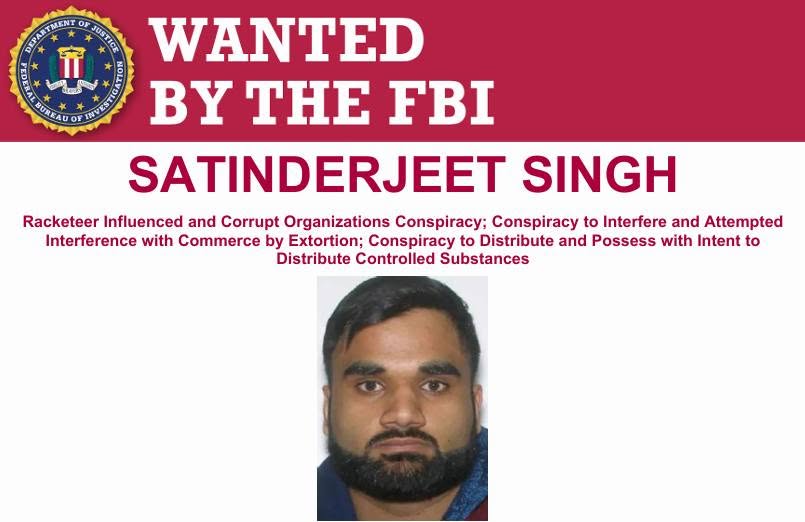
Hours later, Indian gangster Satinderjeet Singh, aka Goldy Brar, went on Facebook to take credit for the hit. Brar was the right-hand man of his childhood friend and jailed criminal mastermind, Lawrence Bishnoi.
“They have given multiple reasons [for the killing],” explained Ritesh Lakhi, an Indian journalist who was the first to interview Brar shortly after the murder. “One reason was that one of their close associates got killed in 2021. He was a very close friend of both Goldy Brar and Lawrence Bishnoi called Vicky Middukhera. … Another reason was attributed to Sidhu Moose Wala’s involvement and indulgence in the killing of Goldy Brar’s brother. … But they have not been able to directly link Moose Wala with those killings.”
In July, Brar and Bishnoi were indicted in the United States and accused of running a global criminal empire.
A history of the Indian Mafia
India has a long history of organized crime, which is a popular subject in Bollywood films. Indeed, the word “thug” derives from the Hindi word thuggee, referring to 19th century bandits who robbed and strangled their victims on lonely country roads. Banditry, or dacoity, remained a menace in lawless rural areas as late as the 2000s, a product of India’s deeply unequal society and caste system.
Just like the Mob in the United States, the Indian Mafia earned its riches during India’s prohibition, which was imposed in several states after independence from British rule in 1947. Bombay’s booze baron was Varadarajan “Varda” Mudaliar, a Tamil crime boss from southern India. Varda kept his illicit distilleries in Dharavi, the slum from Slumdog Millionaire, then a humble collection of huts chiefly inhabited by Tamil immigrants next to a swamp where the police dared not tread.
Varda squeezed out his competitors and before long had a near-monopoly on the liquor racket in Bombay. He provided the slum with electricity, and helped immigrants get residency papers and find work. Word got around, more immigrants came flooding in, and Dharavi became the biggest slum in Asia.
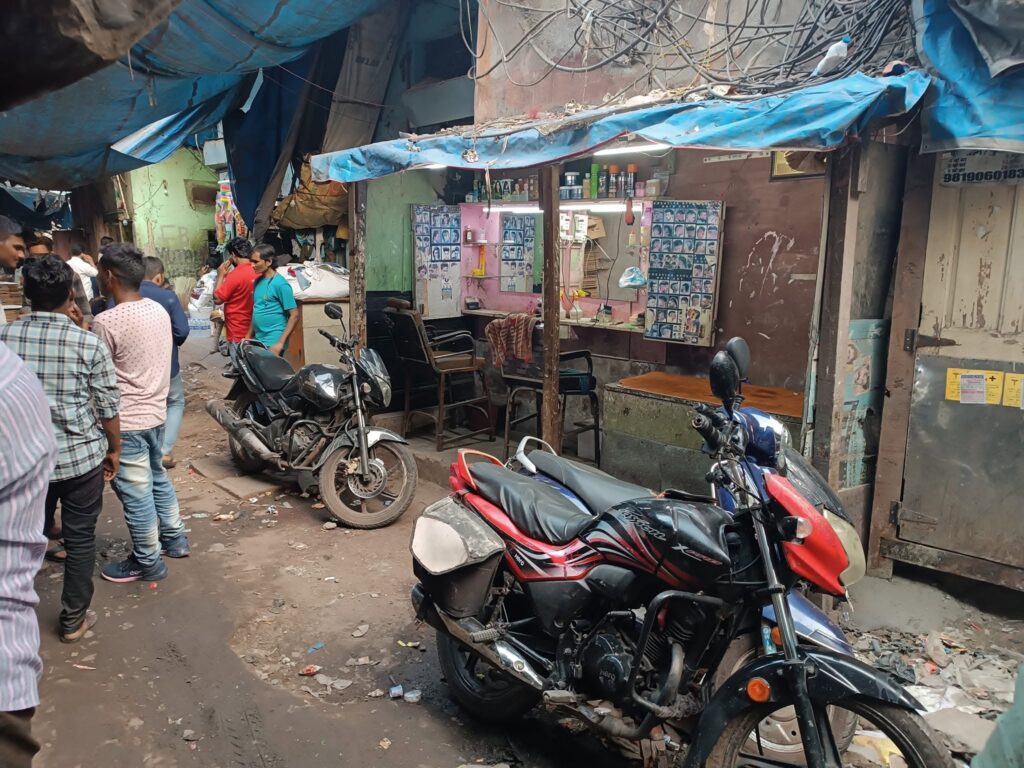
But he was still a gangster. Once when his men were brewing late at night, a neighbor came to yell at them for making noise. That neighbor was never seen again.
In the 1970s, Dawood Ibrahim, the son of a police constable, led a street gang in the slums of Bombay (now Mumbai) that hired themselves out as muscle to established dons. After winning a turf war against the Afghan mafia and rising through the underworld, the gang became D-Company, Bombay’s top crime syndicate. Their main business was smuggling gold from Dubai, evading India’s steep import tax.
But in December 1992, a Hindu mob spurred by nationalist politicians tore down the historic Babri Masjid mosque, provoking riots that left 2,000 dead. India’s geopolitical nemesis, Pakistan, saw an opportunity to sow chaos. With the help of Dawood’s men, Pakistan’s ISI (Inter-Services Intelligence) smuggled in eight tons of explosives and recruited a group of young Muslims flown into Pakistan for training. In March 1993, a series of highly coordinated explosions tore through India’s financial capital, leaving 257 dead and hundreds wounded.
The Mumbai blasts splintered D-Company along sectarian lines: Muslim gang members sided with Ibrahim, while Hindu mobsters defected to the faction led by Ibrahim’s lieutenant, Chhota Rajan. In 1998, the Mumbai police announced a fierce operation to rein in underworld lawlessness. Hundreds of gangsters were shot dead in extrajudicial “encounter killings”—executions that police officially report as shootouts.
![The most prominent organized crime groups have taken root in western and northern India. Cacahuate / Ravikiran Rao / Nichalp [ZJ1.1]/ CC BY-SA 4.0 via Wikimedia Commons](https://themobmuseum.org/wp-content/uploads/2026/09/Map_of_India-877x1024.png)

The killing of a sacred animal
Like Ibrahim, Lawrence Bishnoi was born in 1993 into a relatively well-off family in Punjab. His criminal career began while studying law at university in Chandigarh, Punjab, where he began racketeering on campus.
“They started with student politics,” said Jupinderjit Singh, author of the book Gangs of Punjab. “When they couldn’t win the student elections, they started bullying people and eventually formed a gang.”
After catching cases for robbery, arson, and intimidation—including setting another student’s car on fire—Bishnoi moved to the nearby state of Rajasthan, where he was arrested for shooting his gun in the air in a road rage incident.
While sitting in a jail cell in Rajasthan, Bishnoi built up his criminal contacts. His followers briefly managed to break him free from a cop car taking him to a courthouse, but he was recaptured two months later just south of India’s capital, New Delhi. He’s been imprisoned ever since, but prison bars haven’t been a major obstacle for him. He continues issuing orders via contraband cellphones, even giving video interviews on national television.
“In 2023 people started getting calls from extortionists who would say that they are from the Lawrence Bishnoi gang,” Lakhi explained. “I remember reporting a story where Lawrence Bishnoi himself video-called a businessman based in California. And until that moment he saw Lawrence Bishnoi himself on the video call, he could not believe it. Lawrence Bishnoi was supposed to be in jail in Gujarat at that point.”
As a devout Hindu, Bishnoi is said to live a pious lifestyle, spending each morning in his cell meditating. Within India’s complex caste system, his community, the Bishnoi, practices strict vegetarianism and a reverence for nature.
“The community is totally nonviolent—even if they burn a log of wood to make food, they will make sure there is no insect inside,” Singh said. “So when a guy called Lawrence Bishnoi started killing people, it was a huge deal. … But at the same time, they also have this culture that if someone has wronged Bishnoi, the families for generations will not rest till they avenge it. And [Lawrence] Bishnoi draws his power from that.”
In the arid savannah of Rajasthan, the Bishnoi community runs a nature reserve home to the blackbuck or Indian antelope. In 1998, Bollywood star Salman Khan was caught red-handed poaching one of the antelope, which the Bishnoi families consider sacred. The case dragged through the courts for decades, and in 2018, Lawrence Bishnoi publicly issued a death threat against Khan.
![The Bishnoi community reveres blackbuck deer, seen here at a sanctuary surrounded by Bishnoi villages. Lawrence Bishnoi became known for sending death threats to Bollywood actor Salman Khan in 2018 over his poaching of a blackbuck deer 20 years earlier. Tisha Mukherjee [ZJ3.1]/ CC BY-SA 4.0 via Wikimedia Commons](https://themobmuseum.org/wp-content/uploads/2026/09/Blackbuck_in_Tal_Chhapar_Sanctuary_November_2025_by_Tisha_Mukherjee_04-1024x683.jpg)

“That was his rise to stardom,” Lakhi said. “The moment [the] Salman Khan thing happened it was like, who is this guy? People wanted to really know more about Lawrence Bishnoi and his name started being more prominently featured in the organized crime circuit.”
In modern India, which centers Hindu identity, Bishnoi considers himself a patriot and has injected his gang into the Indian government’s long-running conflict with Sikh separatists.
In the 1970s and ’80s, an insurgency gripped Punjab. Sikh militants sought independence from India to form a separate state called Khalistan. The rebellion culminated in the 1984 Golden Temple massacre, when the Indian army stormed Sikhism’s most holy site, killing hundreds. In revenge, Prime Minister Indira Gandhi was assassinated by her Sikh bodyguards, sparking frenzied anti-Sikh rioting across the country.
The Khalistan movement went into exile, notably to Canada. One such exiled leader was Hardeep Singh Nijjar, who immigrated to Surrey, British Columbia. On June 18, 2023, Nijjar was shot dead by a pair of masked gunmen as he left the parking lot of his gurdwara, a Sikh temple. According to the indictment in the United States, Bishnoi and Goldy Brar orchestrated the assassination and provided a photo of the target to the killers. A diplomatic row erupted as Canada blamed India for hiring Mob assassins to carry out political slayings on Canadian soil and branded the Bishnoi gang a terrorist organization. India fired back, accusing the Canadian government of pandering to Sikh extremists.
‘I’m going to cut off your ears’
Besides high-profile political violence and threats, the Bishnoi group is responsible for more everyday gangsterism, such as arson attacks and protection rackets preying on Canada’s Indian community.
“I know who you are. I’m going to get the Mexicans to cut off your ears,” Brar allegedly threatened an extortion victim over voice message. “You’ll wish you could wear glasses your entire life afterwards.”
What he didn’t know was that the man was an undercover agent from the U.S. government. Last July, 24 suspects were rounded up across the United States, Canada, and Spain in Operation Hard Ball, a joint operation involving the FBI, DEA, Royal Canadian Mounted Police (RCMP), and the Spanish Civil Guard, as well as local police departments. Eleven arrests were made in California alone. Thirty-seven were indicted, including Bishnoi and Brar. Brar allegedly heads the North American branch of the organization and remains a fugitive.
The charges include extortion, racketeering, and narcotics distribution, namely cocaine and meth. Bishnoi’s crew allegedly robbed drug dealers in California and sold the goods elsewhere in the United States and Canada. The murders of Moose Wala and Nijjar also feature in the indictment.
Besides the Bishnoi gang, two other criminal organizations were indicted in Operation Hard Ball: an Indian-run drug ring transporting truckloads of coke and meth from Los Angeles to Canada and another outfit led by Jaggu Bhagwanpuria, one of Bishnoi’s capos who split off to form his own organization. One of Bhagwanpuria’s men is accused of attempting to extort $400,000 from a Los Angeles family by colluding with a corrupt police officer to frame their relatives for a murder back in Punjab.
Now a household name in India, Bishnoi has been incarcerated for more than a decade and still faces dozens of pending charges, from smuggling heroin from Pakistan to the murder of Moose Wala. Whether he’ll ever face the American justice system is another question.
“There is definitely someone very powerful helping Lawrence Bishnoi,” Singh said. “Whether it is some deep state, a powerful group of gangsters, or some [foreign] agency. … Because the way he has become the topmost gangster is possible only with the help of police and politics.”
Niko Vorobyov is a Russian British freelance journalist, convicted drug peddler, and author of the book Dopeworld. He can be found on X @Narco_Polo420 and Bluesky @narco-polo.bsky.social.
Feedback or questions? Email blog@themobmuseum.org