


‘November 1963’ puts Chicago Outfit at center of JFK assassination
New movie claims Mob helped rig 1960 presidential election, then felt betrayed by Attorney General Robert Kennedy
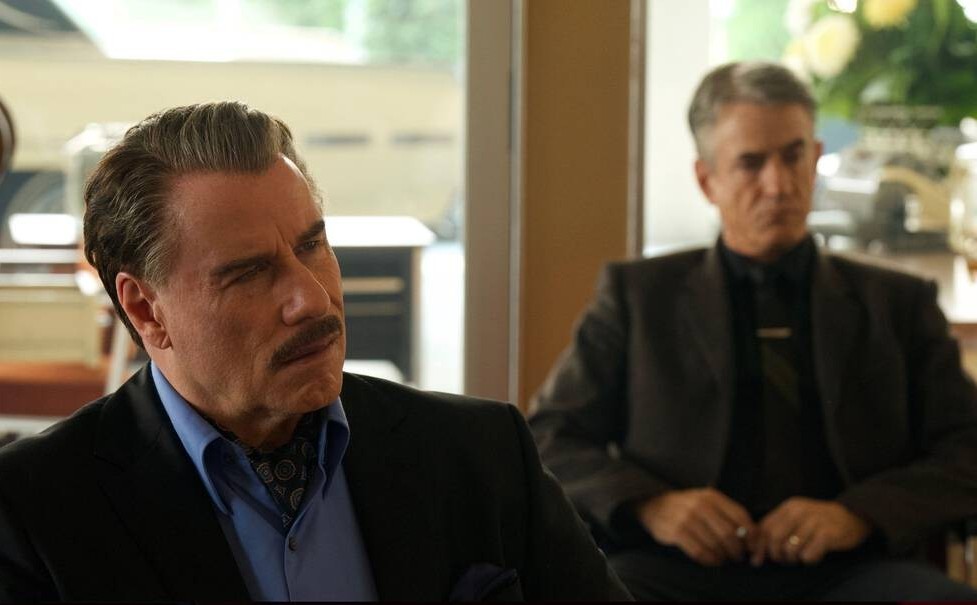
A new feature film about the Kennedy assassination puts the Chicago Outfit at the center of a plot to kill the nation’s 35th president.
Directed by Roland Joffé, November 1963 stars John Travolta as mobster Johnny Rosselli, Jefferson White as accused assassin Lee Harvey Oswald, and Mandy Patinkin as Outfit boss Tony Accardo. It also features Robert Carlyle as Jack Ruby, the Dallas nightclub owner with suspected Mob ties who fatally shot Oswald on live TV two days after President John F. Kennedy was assassinated.
The movie, filmed in Winnipeg, Manitoba, is set to debut in theaters on December 4.
The official details of the shooting have been well-documented. The 46-year-old president was killed on November 22, 1963, while riding beside his wife in an open convertible limousine through downtown Dallas streets lined with an estimated 150,000 onlookers. At 12:30 p.m., while the presidential motorcade rolled at 25 mph past the Texas School Book Depository in Dealey Plaza, Kennedy was hit with two bullets, including a fatal shot to the head. Texas Governor John Connally was in the same car and was wounded but survived. Thirty minutes later, Kennedy was pronounced dead at nearby Parkland Memorial Hospital.
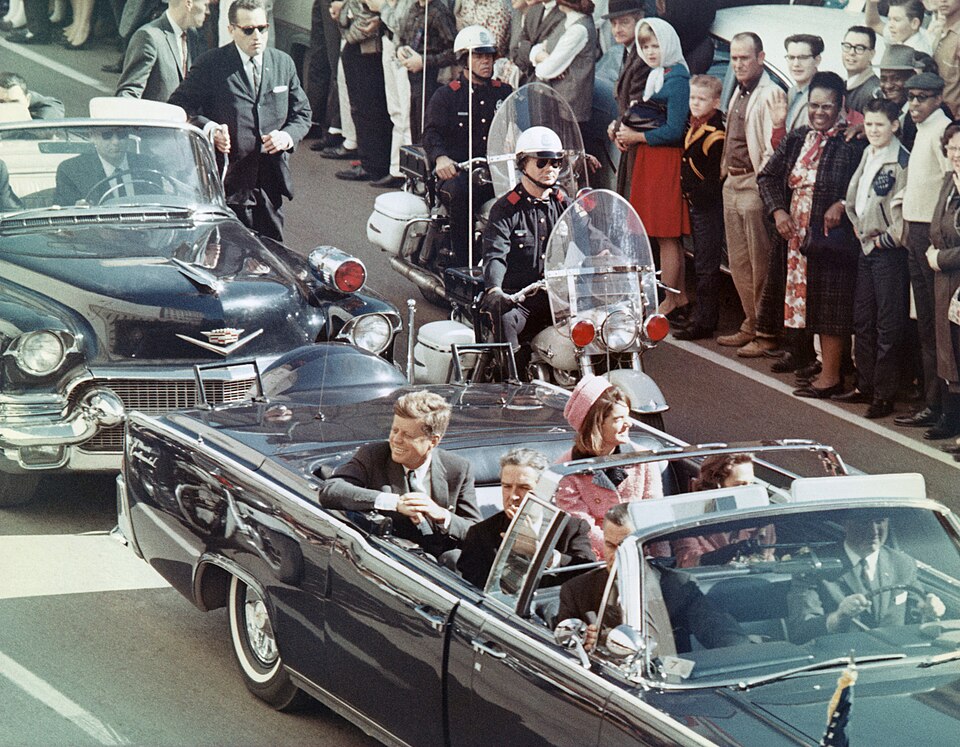
From there, the story has become mired in conspiracy theories that challenge the official conclusion that Oswald acted alone. Countless books and articles have been written with alternative theories about who else might have been involved. Some say the CIA was behind the assassination or that then-Vice President Lyndon Johnson had a hand in the plot. Others contend the Mob and Teamsters Union leader Jimmy Hoffa were angry at the Kennedys and turned Oswald into the unwitting fall guy.
According to the theory depicted in the movie, Chicago mobsters participated in the planning. The thought is that the Outfit had helped Kennedy secure votes to win the 1960 presidential election. They then felt betrayed when Kennedy’s crime-fighting brother, Robert, became attorney general and aggressively went after organized crime nationwide.
Nicholas Celozzi, who wrote the screenplay, told The Mob Museum he heard this from people with inside information, such as Joseph “Pepe” Giancana, brother of Chicago Outfit boss Sam Giancana. Celozzi, the son of a Chicago Chevrolet dealer, holds a bachelor’s degree in theater arts from Marquette University in Milwaukee. He has a family connection to the Chicago underworld—Sam Giancana was his grandmother’s brother.
Years ago, Celozzi was told that JFK’s father, Joseph P. Kennedy, sought help from Chicago mobsters during the 1960 campaign. Their support implied that the Kennedy administration would lay off the Mob in return for rigging the vote. However, the opposite happened. Robert Kennedy, known as Bobby, turned up the heat.
“Apparently, Bobby became furious,” Celozzi said. “He could not believe his father actually made a deal. So what did he do? He overreacted, I believe trying to atone for the sins of the father. He overreacted and went after organized crime harder.”
But historians such as John Binder dispute the notion that the Outfit had any influence over Kennedy’s election. In a statistical analysis published in 2007, Binder found no evidence that “Outfit-controlled wards/suburbs around Chicago or members of Outfit-influenced labor unions voted unusually heavily Democratic in the 1960 presidential election.”
“Therefore, if anything,” Binder wrote, “the Outfit ‘double-crossed’ the Kennedys by not delivering the promised votes, as opposed to vice versa.”
Assassination theories
For 63 years, since the November day the president was killed, many theories have surfaced about the shooting, primarily focusing on whether Oswald was the sole gunman or a third party supported him.
The 888-page Warren Report, compiled for the President’s Commission on the Assassination of President Kennedy, was released in 1964 with the conclusion that Oswald acted alone “without advice or assistance,” according to excerpts on the National Archives website.
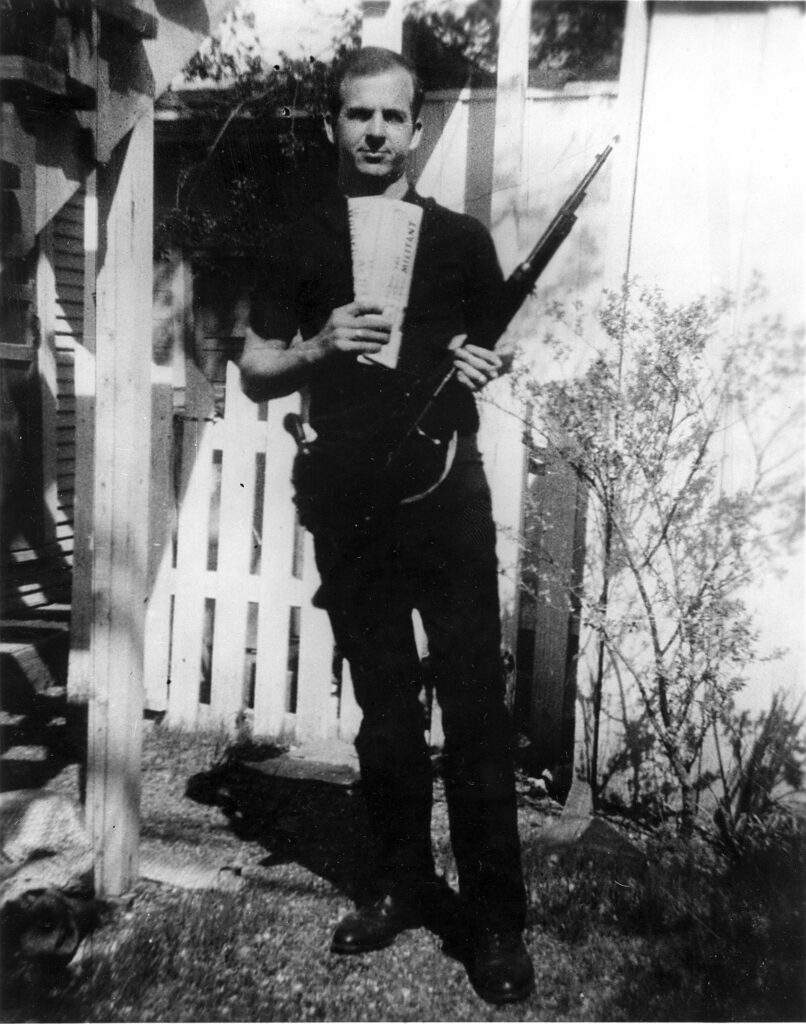
Oswald fired three shots from the sixth-floor window of the Texas School Book Depository, investigators concluded. The 24-year-old Marine Corps veteran, who had defected to the Soviet Union during the Cold War but returned to the U.S. with his Russian wife and their daughter, had been working at the book warehouse for a little more than a month.
For his part, Ruby told authorities he killed Oswald two days later at the Dallas police station because he was upset the president had been assassinated. “Someone had to do it,” Ruby told a prosecutor. “That son of a bitch killed my president.” Battling cancer, Ruby died of a blood clot in his lungs in early 1967 while awaiting another trial. He died in the same Dallas hospital as Kennedy. He was 55.
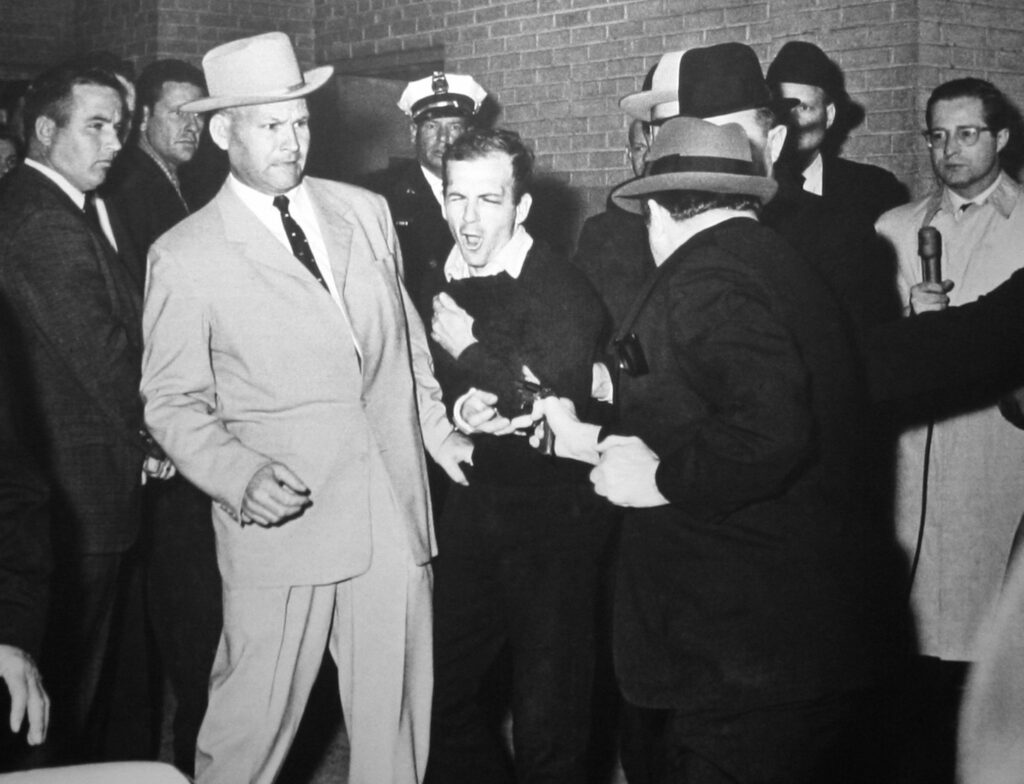
The two main culprits arrested in the immediate aftermath, Oswald and Ruby, were solitary participants, not puppets in some larger scheme, according to the Warren Commission and others who have researched the incident. Among those who have concluded that Oswald acted alone are author Gerald Posner and Vincent Bugliosi, the Los Angeles prosecutor who brought down the murderous Charles Manson crime family and wrote about it in the 1974 book Helter Skelter. Bugliosi’s other books include Reclaiming History: The Assassination of President John F. Kennedy. In a review of Reclaiming History for the University of Georgia School of Law, Donald E. Wilkes Jr. wrote that the 1,612-page book presents a twofold thesis that Oswald, “acting alone, assassinated JFK and that the evidence supporting the Oswald-was-the-sole-assassin theory is practically conclusive.”
Theories that Oswald was a “patsy,” as he told reporters after his arrest, continue to pop up, although, as the official report on the National Archives website states, the Warren Commission “found no credible evidence that (Oswald) was a member of a foreign or domestic conspiracy of any kind.”
“Nor was there any evidence that he was involved with any criminal or underworld elements or that he had any association with his slayer, Jack Ruby, except as his victim,” the report states.
That conclusion has led to debate over the years, with some contending that Oswald, armed with an Italian mail-order military rifle, was not the sole gunman. Some who hold this view say shots originated from a grassy knoll as the presidential motorcade came through.
Chicago mobsters weren’t the only underworld operatives with an alleged motive to kill Kennedy. In a recent “The Rest Is Classified” podcast, Anthony Scaramucci, who served briefly as White House communications director during President Trump’s first term, participated in a discussion focusing on whether Mafia leaders Santo Trafficante Jr. of Tampa and Carlos Marcello of New Orleans had something to do with the planning. The podcast is co-hosted by David McCloskey, a former CIA analyst and spy novelist recently profiled by the New York Times, and Gordon Corera, a former BBC security correspondent.
According to a theory that Scaramucci supports, Marcello was upset that the federal government, at Bobby Kennedy’s direction, deported the New Orleans Mafia boss to Guatemala, requiring him to make his way back to Louisiana while injured. Scaramucci said the fatal shot in Dallas was fired by “Jimmy Blue Eyes,” a 5-foot-1 Marine sniper who worked for the Mob and moved afterward to Florida.
Scaramucci may have been referring to Vincent “Jimmy Blue Eyes” Alo, a New York mobster who ran gambling operations and nightclubs in South Florida and held hidden interests in Las Vegas casinos. Alo, however, was 5 feet 7 and never served in the military.
In the years following the release of the Warren Report, the U.S. House Select Committee on Assassinations added its own summary, concluding that Kennedy was assassinated probably as the result of a conspiracy. However, as NBC News reported, the committee “was unable to identify another gunman or the extent of the plot.”
On his Mobology Substack site, author and investigative reporter Dan Moldea wrote that in July 1979, the House committee released its final report, declaring that Hoffa, Marcello, and Trafficante had the “motive, means, and opportunity” to kill the president.
In an Associated Press story cited by Moldea, reporter John Diamond described Moldea’s 1978 book, The Hoffa Wars, as “the first book to lay out the theory that Teamsters boss Jimmy Hoffa recruited mobsters Carlos Marcello and Santo Trafficante to arrange the assassination.” Moldea added that federal Mob prosecutor Robert Blakey, the committee’s chief counsel, stated, “The Mob did it. It’s a historical fact.”
Another veteran investigative journalist, Pulitzer Prize winner Seymour Hersh, came to a different conclusion. He researched the shooting for his 1997 book The Dark Side of Camelot and found, after five years of reporting, that nothing changed “the detailed finding of the Warren Commission—Oswald and Ruby acted alone.”
What’s next?
While the debate continues over what happened in Dallas, others have weighed in with fictional accounts based partly on facts. These include filmmaker Oliver Stone and novelists such as Don DeLillo, Norman Mailer, and James Ellroy, whose dramatized versions focus on historical figures connected to the assassination. The Joffé-directed movie, November 1963, is the latest to present a dramatized account.
During the weeks leading up to the movie’s release, Celozzi told The Mob Museum the assassination plot was put together by mobsters including Giancana and Accardo from Chicago and Trafficante from Tampa. Chicago mobster Johnny Rosselli had a role as a liaison between federal authorities and organized crime figures, Celozzi said. Trafficante brought Marcello on board from New Orleans, the screenwriter said, adding that one of Marcello’s captains was related to Oswald, which is how the young gunman was roped into it.
Oswald hated America and the Kennedys, “so he was already radicalized, and he was already down there in Dallas,” Celozzi said. “They offered him up.”
Celozzi said the public has “always known that there’s something not right about what they’re being told” regarding the JFK assassination. He also believes the lone gunman theory is inaccurate.
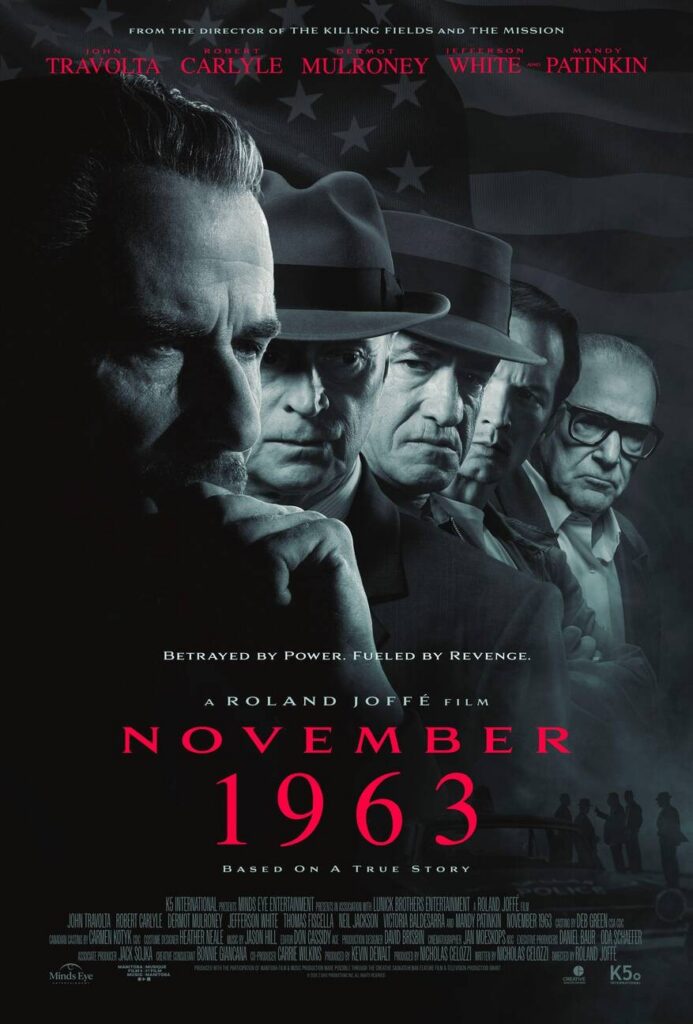
After seeing November 1963, people can “make up their own minds” about what happened, Celozzi said. “What I can tell you is you’ve been fed nonsense,” he said. “Let people watch it. Let people make their own determination.”
Currently, Celozzi has several other projects in the works, including a previously announced film titled The Legitimate Wiseguy about his relationship with Tony “The Ant” Spilotro, the Chicago Outfit’s enforcer in Las Vegas for more than a decade beginning in 1971.
As it stands, the Spilotro project will come after Celozzi completes work on a second film about the Kennedy assassination, tentatively titled The Trial of Jack Ruby.
Larry Henry is a veteran print and broadcast journalist. He served as press secretary for Nevada Governor Bob Miller and was political editor at the Las Vegas Sun and managing editor at KFSM-TV, the CBS affiliate in Northwest Arkansas.
Feedback or questions? Email blog@themobmuseum.org