

Benny Binion’s million-dollar gamble lives on 75 years later
The controversial Texas racketeer opened the Horseshoe Club in 1951
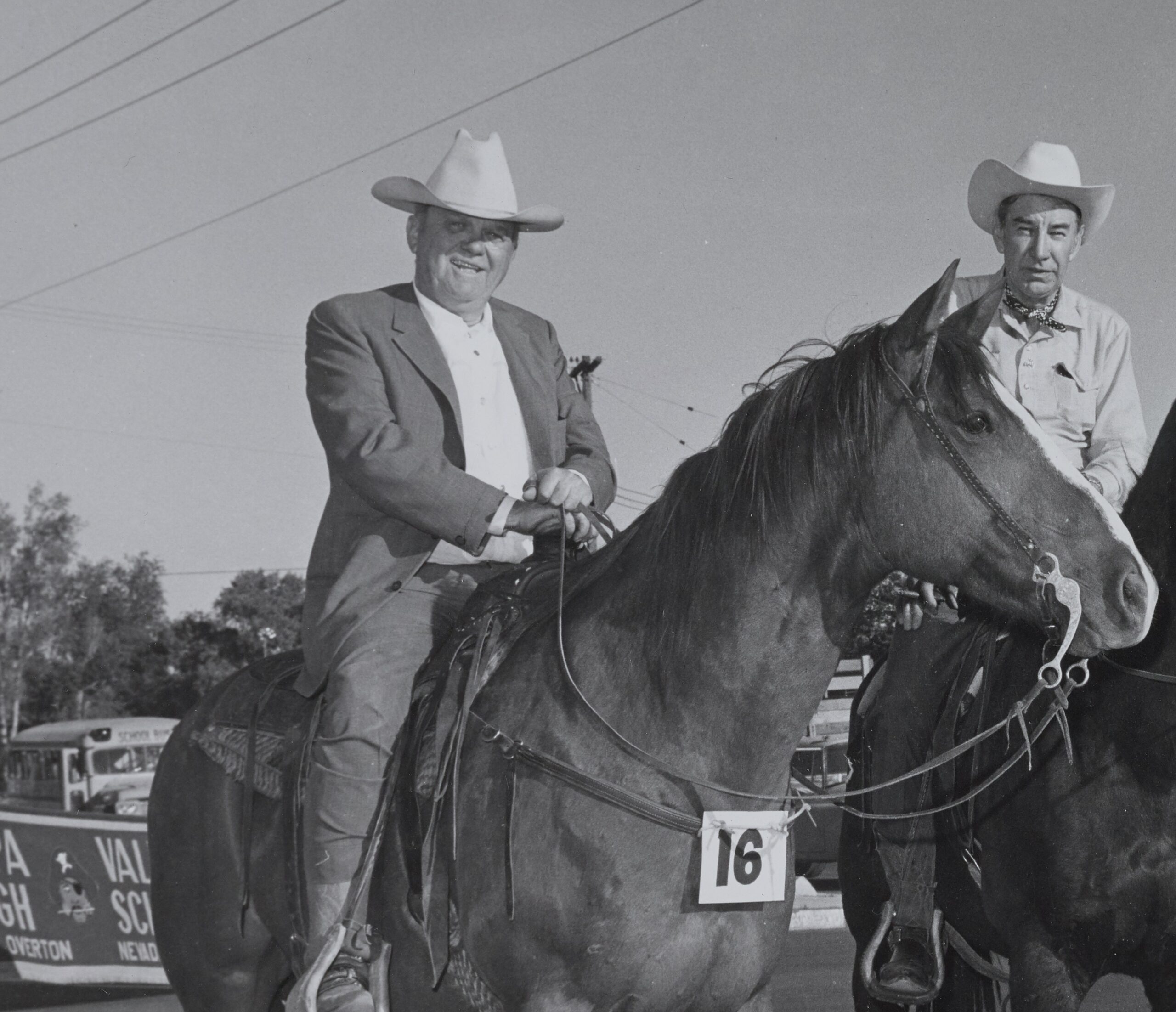
On August 14, 1951, Benny Binion opened the Horseshoe Club in downtown Las Vegas. Binion’s Horseshoe would become a cornerstone of the casino industry, particularly for downtown. It also made Binion a household name for both locals and tourists, as well as poker players the world over. But when the Horseshoe Club first opened, Binion’s footing was uncertain.
His struggles in obtaining a gaming license also offer a fascinating case study for 1950s Las Vegas and just how committed—or not—state officials were in keeping the Nevada casino industry free from organized crime entanglements.
From Texas rackets to Las Vegas casinos
Binion moved to Las Vegas in 1946. He grew up outside of Dallas, and he learned how to gamble while still a boy. According to biographer Doug Swanson in Blood Aces, an 18-year-old Binion moved to El Paso, where he became a bootlegger in the early 1920s, before settling in Dallas. In Dallas, he continued his bootlegging career and added illegal dice games and a numbers lottery to his growing rackets. Binion continued to run illegal gambling operations in Texas throughout the 1930s and ’40s.
Binion’s criminal career was also violent. In 1931, he was convicted of killing Frank Bolding, a Black bootlegger. Binion took responsibility for the death and called Dallas County Chief Deputy Sheriff Bill Decker to confess. Binion received a two-year suspended sentence for the murder. In 1936, he killed again, this time shooting rival numbers operator Ben Frieden. Binion claimed self-defense, and his indictment was dismissed.
While Decker and County Sheriff Smoot Schmid were in charge, Binion seemed to live a charmed existence. But in 1946, Sheriff Schmid lost to Steve Guthrie, who had no interest in aligning himself with Binion. In fact, he maintained a far friendlier relationship with Herbert Noble, another illegal gambling racketeer who began to bristle at the payoffs he owed Binion. Noble found himself in a long-running feud that would end in his death, along with his wife and some of his associates. With new heat on his back, Binion packed up his life, filled the trunk of his Cadillac with $1 million in cash, and drove to Las Vegas to start fresh.
Binion first invested in the Las Vegas Club, a casino on Fremont Street owned by J. Kell Houssels. Binion’s bold way of operating a casino immediately drew patrons. He placed higher limits on craps bets, which enticed high-rollers away from other casinos, and paid dealers more than neighboring properties.
This success led Houssels to invest in a larger property across the street, where he built a new Las Vegas Club in 1948. In Nevada, gaming licenses are tied to physical property, so Houssels applied to the Tax Commission in May 1948 for a new license. In fact, he submitted two applications: one with just his name, and the second with his name and those of his nine financial backers (including Binion). The Tax Commission denied the application for the 10 men, opting to license only Houssels, and Binion decided to move on.
In 1949, Binion invested in the Westerner, which had taken over the property of the old Las Vegas Club. He had no problem getting a gaming license this time, but he did not like his business partner and sold his shares in the spring of 1950.
At this point, Binion might have returned to Dallas or moved on to greener pastures. His wife and children were not sold on Las Vegas, and his old friend, Bill Decker, had become the sheriff in Dallas. But Harry Claiborne, Binion’s attorney, told the Las Vegas Review-Journal in June 1950 that his client wasn’t going anywhere.
“I presume, sooner or later, I again will be engaged in the gambling business somewhere in the city,” Binion said, according to Claiborne. “I have no intentions of leaving Las Vegas, although my plans currently call for long-range planning.”
An elusive gaming license
In less than a year, that long-range planning came to fruition. On May 1, 1951, Binion announced he had purchased controlling shares in the Eldorado Club, along with the leasing rights to the building. He also leased the adjoining Apache Hotel. The Eldorado Club had closed six weeks earlier, and Claiborne announced Binion’s intentions to reopen it soon as the Horseshoe Club.
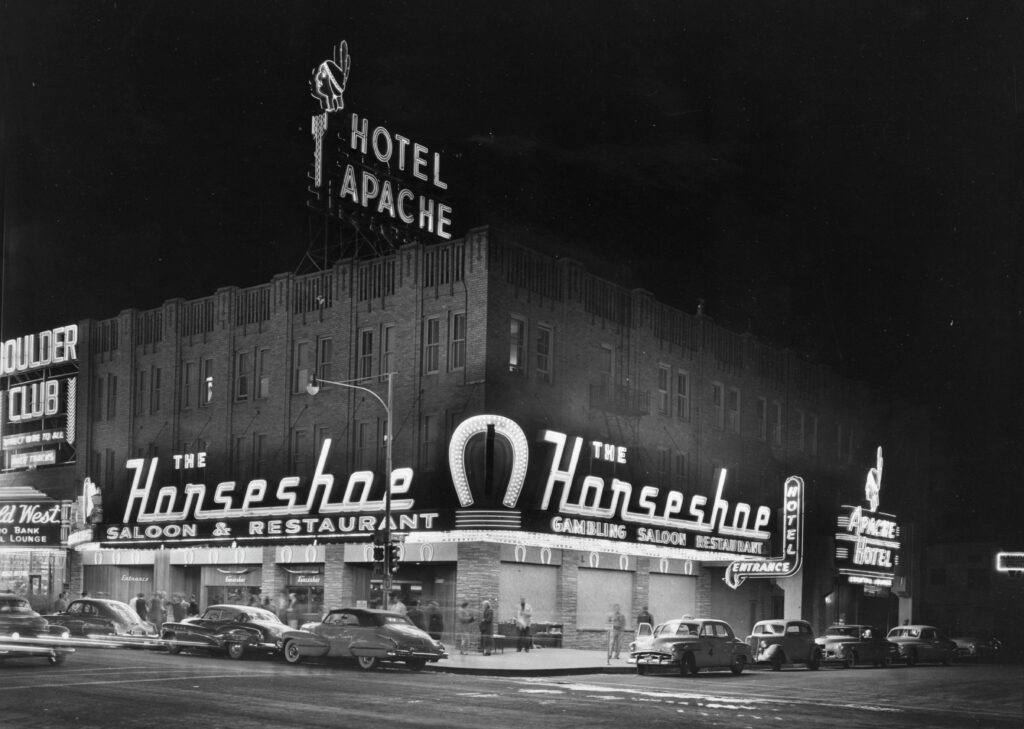
But the club would not reopen that soon. Binion filed a request for a casino license, also listing Nick “the Greek” Dondolas and Claiborne as operators. But 10 days later, the Tax Commission refused his application. Although the commission gave no formal reason for the refusal, as was customary, it coincided with Tennessee Senator Estes Kefauver and his national committee investigating organized crime, including in Las Vegas.
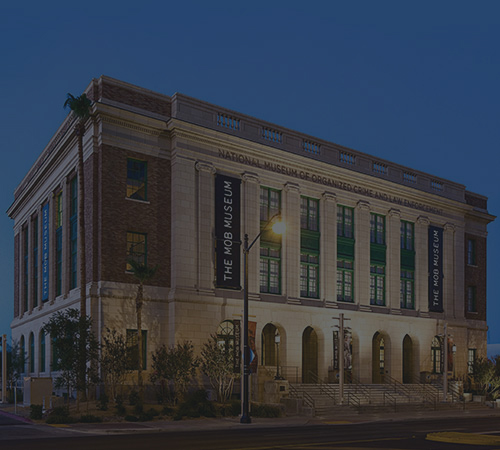
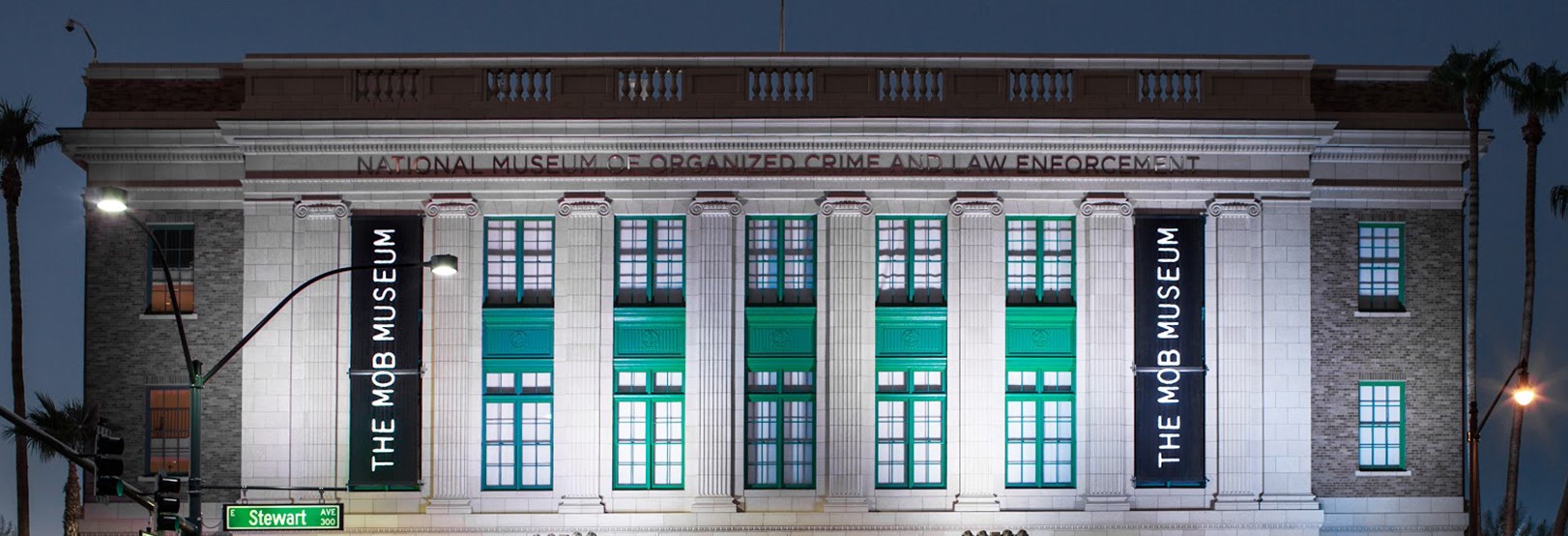
Throughout 1950 and ’51, Kefauver traveled across the country with a Special Senate Committee bearing his name investigating the influence of organized crime. When the committee came to Las Vegas on November 15, 1950, it convened in the downtown federal building, which now houses The Mob Museum. Seven people testified, including William Moore, state tax commissioner and part-owner of the Hotel Last Frontier. The committee found Moore’s dealings to be lacking in integrity. Although Binion did not testify, Kefauver singled him out, along with the late Benjamin “Bugsy” Siegel, as examples of violent, crooked mobsters who infiltrated the Las Vegas casino industry.
However, Kefauver was hardly the only person who might have tipped off the Tax Commission to Binion’s illegal activity. In January 1950, Binion voluntarily surrendered himself on a fugitive warrant from Dallas, where he faced policy racketeering charges. He denied the charges and fought hard to stay in Nevada, an ongoing battle throughout 1950 as the state of Texas repeatedly indicted him.
Binion regrouped and went back to the Tax Commission in July 1951. It once again refused to issue him a gaming license, but the Horseshoe Club license was approved under the names of Dr. Monte Bernstein, Clarence Hibbs, and Minnie Chandler, three former casino operators who promised that Binion would have no connection to the property’s gambling activities.
Binion bets on the gambler
The Horseshoe finally opened on August 14. Those three extra months allowed Binion to create a casino experience unparalleled in downtown Las Vegas. “Lush carpeting, beautiful walls and ceiling, attractive furniture and decorations, all have been used by [architect Stan] Harris to make the casino completely modern, though intimate,” as reported in an August 2, 1951, article in the Las Vegas Review-Journal. Harris, who also built the Desert Inn, created a casino that visually communicated Binion’s lifelong business theory.
“Maybe you drove a Rolls and lived in Malibu, or maybe your suit came from Sears, and the wife clipped coupons at the kitchen table,” Swanson wrote in his Binion biography. “It didn’t matter to Binion. The way to get rich, he loved to say, was to treat little people like big people.”
Binion brought carpet to Fremont Street casinos, which historically had sawdust or wood floors. His craps tables had padded armrests. But he did not spend money on luxurious stage shows or chorus lines like other high-class properties. He focused on gamblers, which brought him a level of success that few downtown properties had seen before—or since.
After the Horseshoe Club opened, Binion still was determined to get his casino license. Throughout the fall of 1951, he appeared to plead his case around town. “Bankers, attorneys, businessmen, city officials, and even women’s club leaders have indicated they favor issuance of a gambling license to Binion,” a Nevada State Journal article reported on November 16, 1951. (Although later coverage from the Reno Gazette-Journal claimed that Governor Charles Russell never saw any petitions or letters of support on Binion’s behalf.)
Murder and taxes
On Saturday, December 1, 1951, the Tax Commission, chaired by Governor Russell, met in the Las Vegas federal building to consider a license for Binion once again. Nevada Highway Patrol officers stationed outside the courtroom kept out the public and the press. During the hearing, the commissioners questioned Binion about the two murders he committed in Texas. He once again claimed self-defense, calling Ben Frieden “a very bad man” and describing Frank Bolding as, “just a n—– I caught stealing some whiskey.”
“Binion had this very engaging style, and he had the Tax Commission in stitches, just laughing at his killing a man,” rather than provoking reproach or concern, Robbins Cahill, the Commission’s executive officer, said.
State Senator E.L. Nores testified on Binion’s behalf, describing him as a “man of high character.” Nores never mentioned the Hudson Hornet he was driving thanks to Binion’s generous spirit.
With that, the Tax Commission voted 7-0 to approve Binion’s license. After the hearing, Governor Russell told reporters that the commission’s investigation could find no concrete evidence that Binion was involved in the recent murder of his former rival Herbert Noble, who was killed by a bomb in his driveway one week before the Horseshoe Club opened.
In a 1973 oral history, Binion was asked how he convinced the commission to grant him a license. “They was on the take,” he said. “There would’ve been some you could’ve bribed, if you’d wanted to, but I wouldn’t give ’em nothing.”
Even with a license in hand, Binion’s troubles persisted. In 1952, the IRS in Dallas revived its tax evasion case against Binion. Binion agreed to plead no contest and pay a modest fine, but the Justice Department demanded a full investigation.
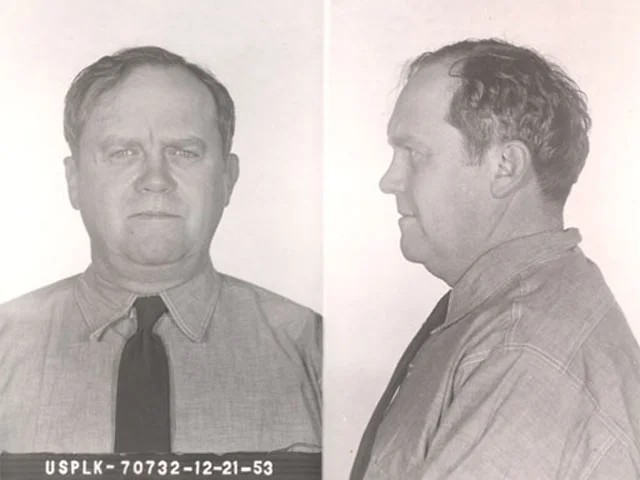
In 1953, Binion pleaded guilty and received a five-year prison sentence. He sold 15 percent of the Horseshoe shares to New Orleans gambler Joe W. Brown, who operated the casino in his absence. Binion also reportedly sold shares to mobsters Meyer Lansky, Doc Stacher, Abner “Longie” Zwillman, and Jerry Catena.
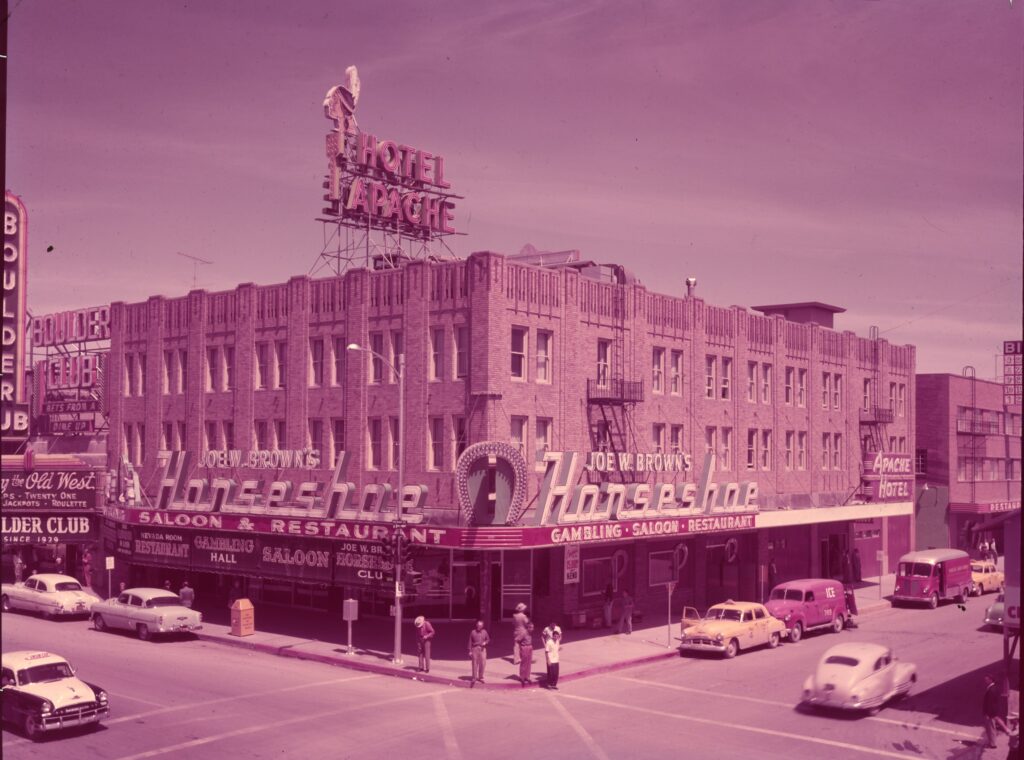
Binion served his time in Leavenworth federal prison and returned to Las Vegas after his release in 1957. In 1964, the Binion family bought back the Horseshoe, with Binion’s son Jack officially at the helm.
Binion remained a part of the Horseshoe right up until his death in 1989. On the payroll, he was officially listed as a consultant. Until the end, Binion focused on gambling. The property never had stage shows; it didn’t even have a pool. Its biggest non-casino attraction was a photo-op display of one hundred $10,000 bills—one million dollars—surrounded by a giant horseshoe, a fitting symbol for the gambling-focused property.
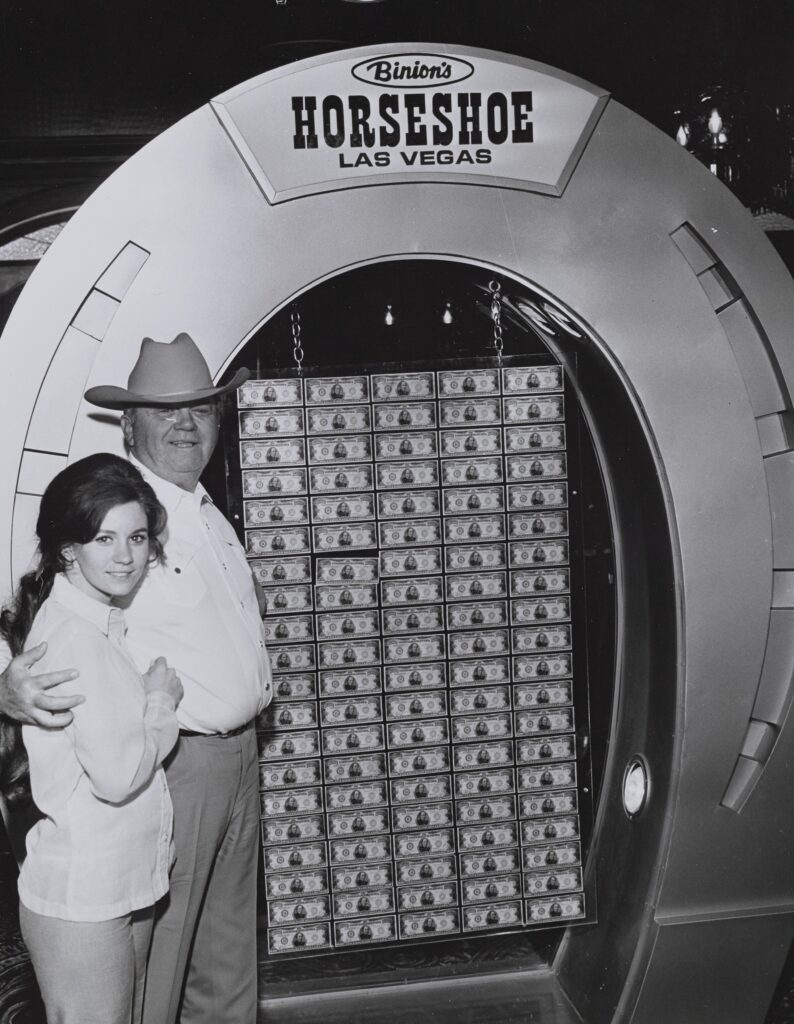
In 1970, Binion and son Jack created the World Series of Poker, held annually at Binion’s Horseshoe until 2004. This further cemented the Horseshoe’s reputation as the gambler’s casino, and the WSOP brand has become as enduring as Binion’s itself.
In 1998, controlling interest passed to Binion’s daughter, Becky, who then sold the property to Harrah’s Entertainment in 2004. Today, as the property celebrates its 75th birthday, Binion’s is known as Binion’s Gambling Hall & Hotel. It is owned by TLC Casino Enterprises, and has no claim to the Horseshoe name, which now belongs to Harrah’s and adorns the former Bally’s on the Las Vegas Strip.
Feedback or questions? Email blog@themobmuseum.org