

Piracy became patriotism during the American Revolution
The Founding Fathers hired privateers to disrupt British power at sea 250 years ago
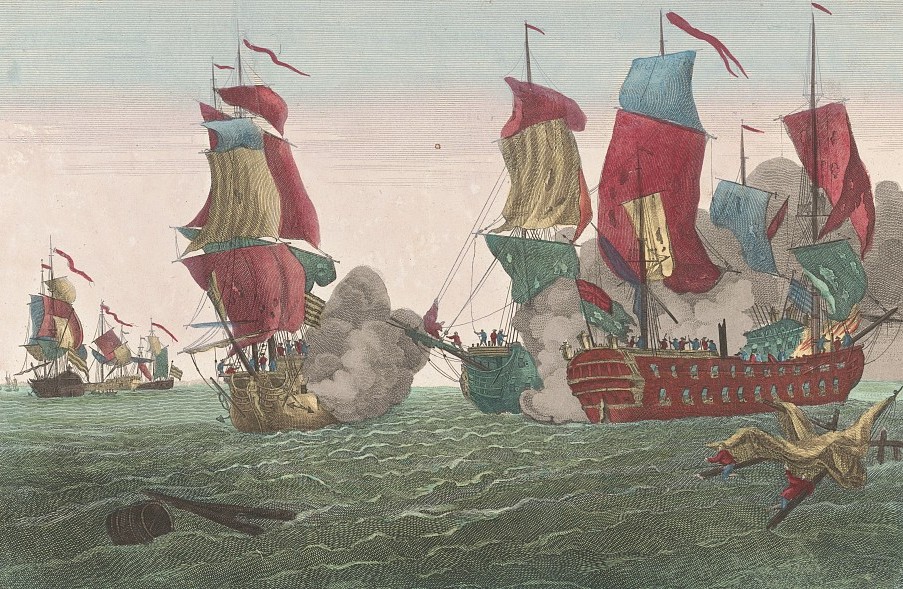
In late 1775, the Thirteen Colonies were in trouble. The British Parliament had enacted the Prohibitory Act in response to the series of escalating conflicts that began that April with the Battle of Lexington and Concord in Massachusetts. The Prohibitory Act, essentially a declaration of war, established a naval blockade cutting off colonial trade and allowed British ships to capture American vessels.
By October 1775, General George Washington had established the beginnings of America’s naval forces, but the new fleet was too small to confront the British Royal Navy, the largest in the world at the time. Instead, the Continental Congress turned to private citizens to fight on the open seas—for a price.
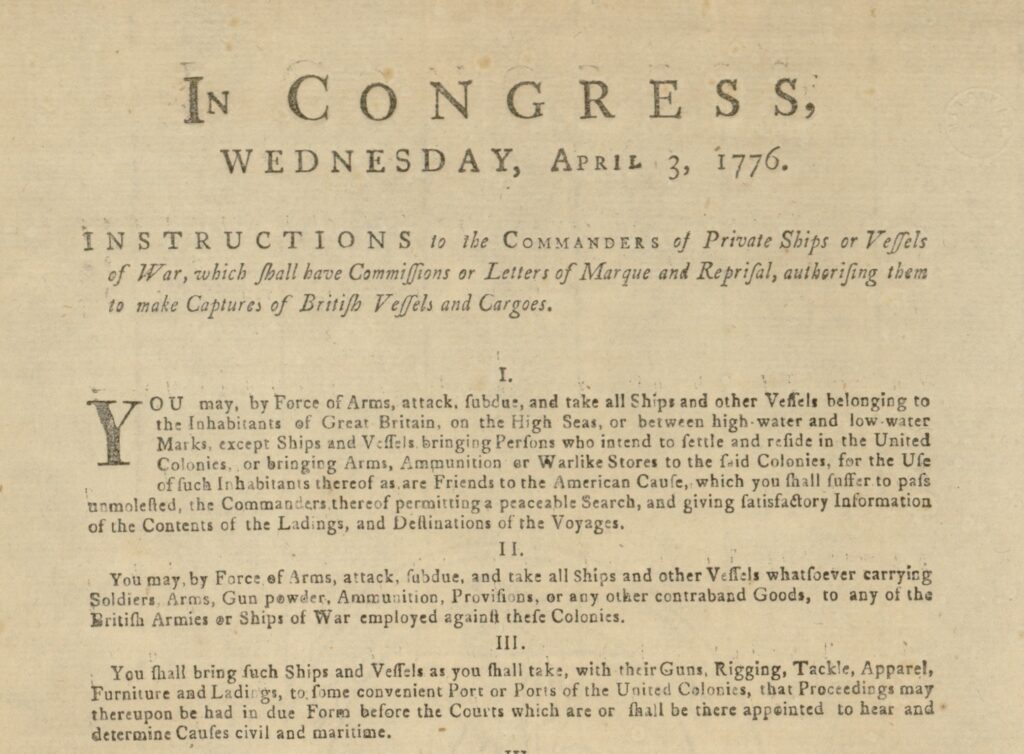
Privateering, often described as legalized piracy, would bolster the war effort by disrupting British commerce rather than challenging its navy head-on. On April 3, 1776, John Hancock, then-president of Congress, issued official instructions “to the Commanders of Private Ships or Vessels of War, … authorizing them to make Captures of British Vessels and Cargoes.” For the rest of the Revolutionary War, Americans could engage in this piracy-adjacent activity so long as they followed the rules, which included not harming any surrendering targets “in cold blood” and preserving the seized ship and spoils until they could be evaluated by the proper authorities. These rules were what separated privateers from pirates.
On the open seas, however, the distinction was less clear.
An ‘exceedingly thin’ line
“The line between pirates and privateers is often exceedingly thin, to the point of sometimes being indetectable,” Eric Jay Dolin wrote in his 2018 book Black Flags, Blue Waters: The Epic History of America’s Most Notorious Pirates. “One person’s pirate may be another person’s privateer.”
In the Age of Sail, bands of pirates were maritime organized crime groups that seized and plundered ships for their own economic gain without submitting to any government. By contrast, government-sanctioned privateers often had a naval hierarchy and investor funding.
To the targets of attacks from either group, however, the difference was negligible. To illustrate how close pirates and privateers can be, consider two examples.
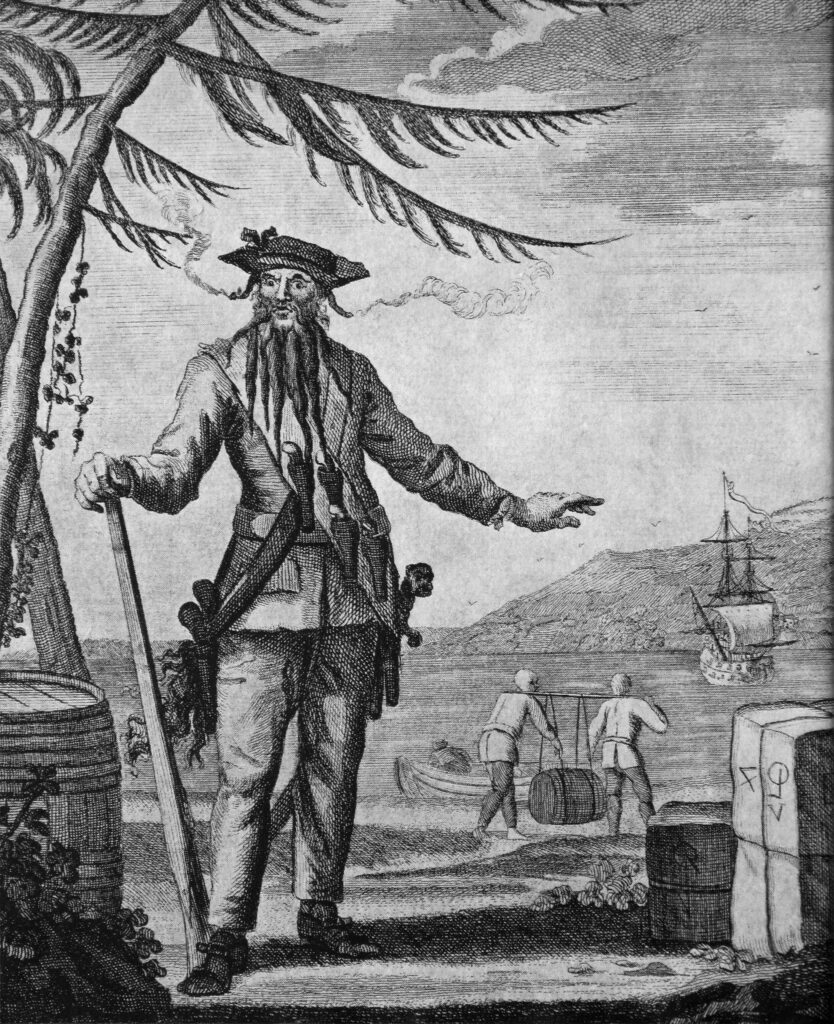
In March 1718, off the coast of present-day Honduras, Captain William Wyer and the crew of the Boston-based Protestant Caesar escaped a skirmish with a 10-gun, single-mast ship, only to be ambushed by a flotilla bearing black flags a few weeks later. He and his crew were forced to abandon ship in fear of their lives. Having been soundly defeated, the imprisoned captain and crew watched the Protestant Caesar burn.
The man behind this attack was Edward Teach, aka Blackbeard, one of the most notorious pirates of the Golden Age of Piracy. The Protestant Caesar had survived an attack by Stede Bonnet, then an inexperienced ally of the legendary pirate. Once he received word of the encounter, Teach pursued Captain Wyer to ensure there would be no tales of a ship escaping his pirate fleet.
Although he is best known for piracy, Teach is believed to have started his maritime career as a British privateer.
In August 1780, Captain Robert Dillon of the Mercury, a British mail vessel called a “packet ship,” was attacked by three heavily armed ships near the end of an eight-week voyage from Falmouth, England, to New York. According to Dolin’s 2022 book Rebels at Sea: Privateering in the American Revolution, aboard Dillon’s vessel were seven wives of British officers set to reunite with their husbands. Eager to preserve the lives of his passengers, Dillon lowered the Mercury’s flag, a universal signal of surrender.
The three attacking ships were the Holker, Enterprize, and the Fair American, American privateering vessels operating during the Revolutionary War.
What separates these two tales of plunder is a piece of paper called a “letter of marque.” Pirates and privateers both used privately owned vessels to capture and steal from other ships. Privateers, however, possessed a government-issued license, the letter of marque, to capture any ships flying the flag of an enemy nation. But even that distinction was sometimes blurred. During the American Revolution, the privateer label was widely applied to all ships in the American navy. According to Dolin, “Washington almost always referred to them as privateers, as did his contemporaries,” even without a letter of marque.
Poor Richard’s fleet
During the Revolutionary War, more than 1,500 privateering vessels set sail to harass enemy ships. By raiding merchant ships, the privateers forced the British to devote extra time and resources to protecting maritime commerce. The use of privateers aligned with Washington’s general strategy of wearing down the British in a war of attrition until their attempts to stop the rebellion were no longer worth it.
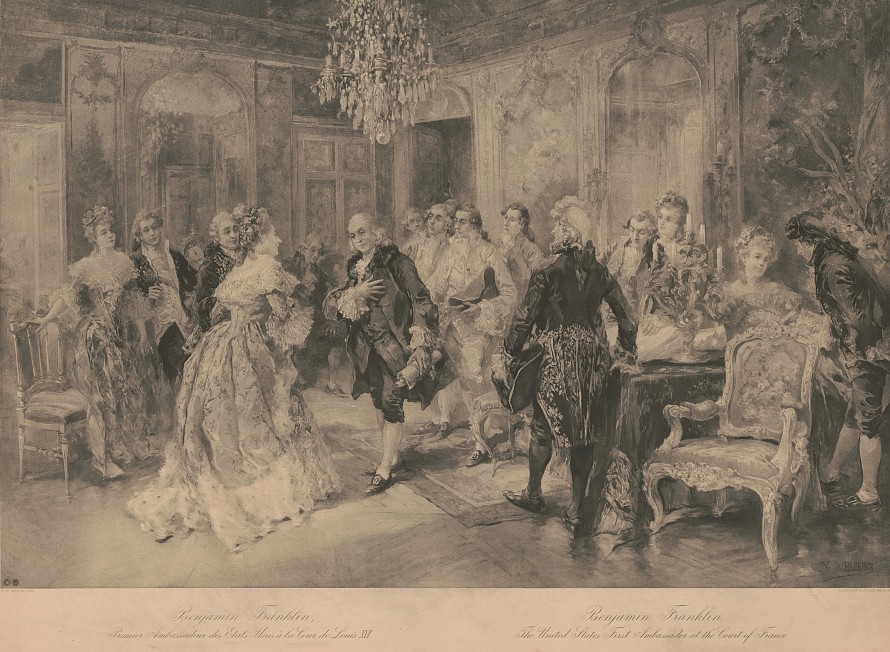
Several Founding Fathers enthusiastically supported the privateer effort, including Benjamin Franklin, who funded a few vessels himself. According to Dolin in Rebels at Sea, Franklin’s primary goal was for his privateers to capture British sailors to exchange for American prisoners to resupply the navy. He wouldn’t have to look hard for privateers to fund because they came to him.
In early 1779, Captain Luke Ryan, a British privateer and smuggler, sailed into Dublin with a captured ship, the Friendship. However, the smuggler’s onboard contraband drew the ire of British customs officials, who arrested his crew. After he broke his men out of jail, they fled Ireland, changed the name of their ship to the Black Prince, and sought new opportunities in Dunkirk, France.
Ryan sought out Franklin, but his nationality posed a problem. Ryan was Irish, and American privateers had to be captained by Americans. As luck would have it, an experienced American sailor, Stephen Marchant, was in Dunkirk and looking for a ship to lead.
“A meeting was arranged, and Ryan concluded that Marchant was a weak-willed and easily manipulated man with an out-sized ego whom they could use for their purposes,” Dolin wrote. “He would be presented to Franklin as captain and another Connecticut man, Jonathan Arnold, would be offered as first mate, but in reality, Ryan would be in charge,” unbeknownst to the Americans.
On the Black Prince’s fourth voyage, the covert captain finally broke the news to Marchant that the crew followed Ryan’s orders, not his. When Franklin found out about the ruse, he was “amused and accepting” and allowed Ryan to continue privateering on his dime.
Franklin was proud of his privateer’s accomplishments. In late 1779, he wrote to Congress president John Jay:
“We continue to insult the coasts of these lords of the ocean with our little cruisers. A small cutter, which was fitted out as a privateer at Dunkirk, called the Black Prince, has taken, ransomed, burnt, and destroyed above thirty sail of their vessels within these three months. … The prisoners brought in serve to exchange our countrymen, which makes me more willing to encourage such armaments, though they occasion a great deal of trouble.”
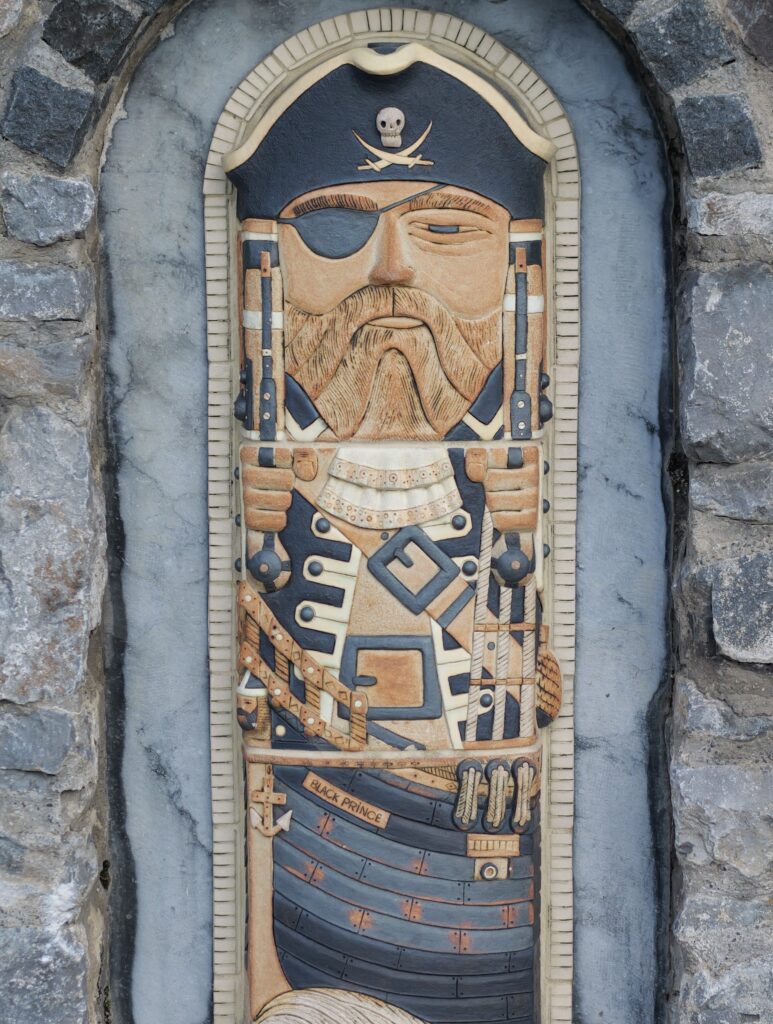
So pleased was Franklin that he commissioned two more vessels, the Black Princess and the Fearnot, captained by Ryan and his most trusted men. However, by 1780, he was having second thoughts. First, Ryan and his other privateers recruited French sailors for their crew, which led to complaints by French authorities for drawing men away from their navy. Second, his original goal of freeing American prisoners bore less fruit than he had hoped. Making matters worse, the few freed sailors preferred to become privateers rather than rejoin the navy.
After Franklin withdrew the privateering commission, Ryan and his sailors privateered for the French instead and continued attacking British ships. In 1781, the British captured Ryan, found him guilty of piracy, and sentenced him to death. When the war ended in 1783, British officials gave him a royal pardon “as a gesture of goodwill toward the French and the Americans.”
John Paul Jones: privateer or pirate?
America may have labeled its ad hoc fleet as privateers, but the British didn’t see it that way. Parliament treated them as pirates. The Pirate Act of 1777 allowed British authorities to hold American privateers without trial and without treating them as prisoners of war. Distinguishing between pirate and privateer was a matter of perspective.
One of the best examples was Captain John Paul Jones, whose deeds—and misdeeds—blurred the lines between naval officer, privateer, and pirate.
President Theodore Roosevelt was the first to label John Paul Jones as the “Father of the American Navy” while trying to find a naval hero to help champion his “Great White Fleet” project to modernize the navy. But that is a misnomer, according to Bob von Bargen, a retired U.S. Air Force colonel and co-founder of the Armed Forces Heritage Museum.
“Well, it turns out he was never much of a father or founder,” von Bargen wrote in an article for the museum’s website. The famed seaman was “definitely a fugitive from justice and an erratic leader, and his real name wasn’t even Jones.”
Originally just “John Paul,” Jones captained his first ship at age 21, but his short temper and harsh discipline made for mutinous crews.
As captain, Jones killed two of his sailors. The first was a failed mutineer. As punishment, Jones whipped him so severely that he eventually died from his wounds. The second also staged a mutiny, which ended when Jones stabbed him in the chest with a sword. He claimed self-defense in both instances but decided to flee to America to avoid facing trial. To help avoid any pursuing British authorities, he added Jones as a new surname.
In 1776, Jones joined General Washington’s nascent navy. Although he didn’t carry an official letter of marque as a naval officer, he is often referred to as a privateer for using many of the same methods. Congress issued him “unlimited orders,” giving him carte blanche to cause havoc on the British.
As captain of the USS Ranger in April 1778, Jones led a raid on British shores in Whitehaven, where he grew up. “He maintained that torching Whitehaven would further the Patriot cause, but everyone knew he was also out to settle some personal scores,” von Bargen wrote. The raid was the first of several failures, leading to more attempted mutinies.
After the failed raid, the British gained a new villain. British political cartoons soon featured “Paul Jones the Pirate,” drawn head-to-toe in swashbuckling getup.
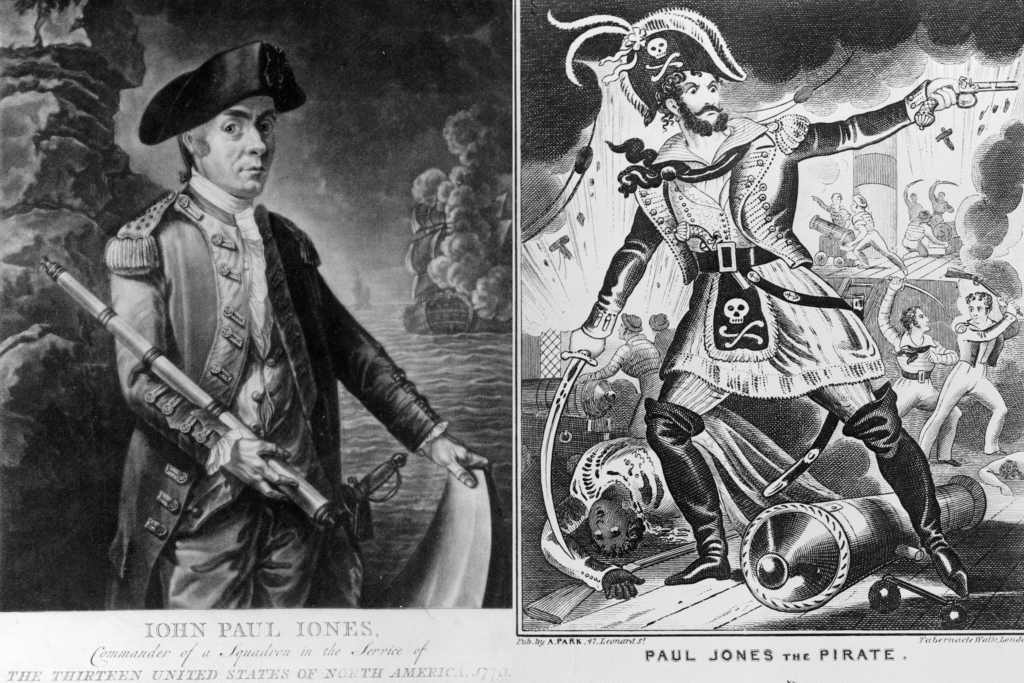
Jones’ greatest achievement came in 1779 when he captained the Bonhomme Richard, a French vessel he renamed as a nod to Benjamin Franklin’s pseudonym. In September 1779, the Bonhomme Richard engaged in a four-hour battle with the HMS Serapis in the North Sea. During the battle, the British captain demanded Jones’ surrender, to which he responded, “I have not yet begun to fight!” Many historians, however, chalk the quote up to legend.
The Bonhomme Richard prevailed, but the victory was fleeting. Both ships were badly damaged, with heavy casualties on both sides. Two days later, the Bonhomme Richard sank, forcing Jones’ crew to board the captured Serapis, which limped into a Holland port for repairs.
Jones’ victories, failures, and atrocities complicate his modern legacy as a naval hero and reinforce the ambiguities between pirate, privateer, and naval officer during the American Revolution. Privateering allowed America to sanction organized crime-like activity for a patriotic cause, which certainly aided the country in its fight for independence 250 years ago. But that permission created an uncomfortable gray area, sanctioning actions that would be considered crimes in times of peace.
The War of 1812 was the last time the U.S. government issued letters of marque to privateers. In 1856, 55 countries agreed to the Paris Declaration Respecting Maritime Law, which outlawed privateering. Although the U.S. did not sign, it informally followed the treaty after the Civil War. While piracy remains an issue around the world today, privateers are a thing of the past.
Feedback or questions? Email blog@themobmuseum.org