




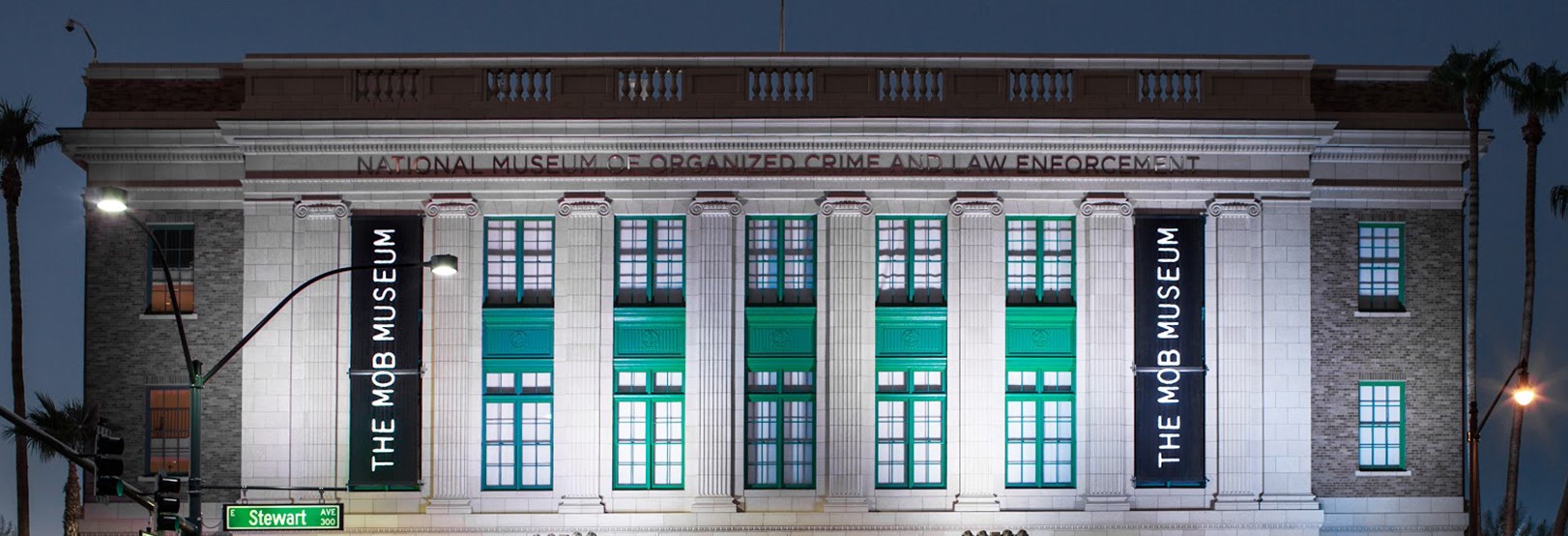
Did Gregory Scarpa Sr. mastermind the attempted assassination of Joe Colombo?
New book reveals a late confession from the Colombo capo months before his death in 1994
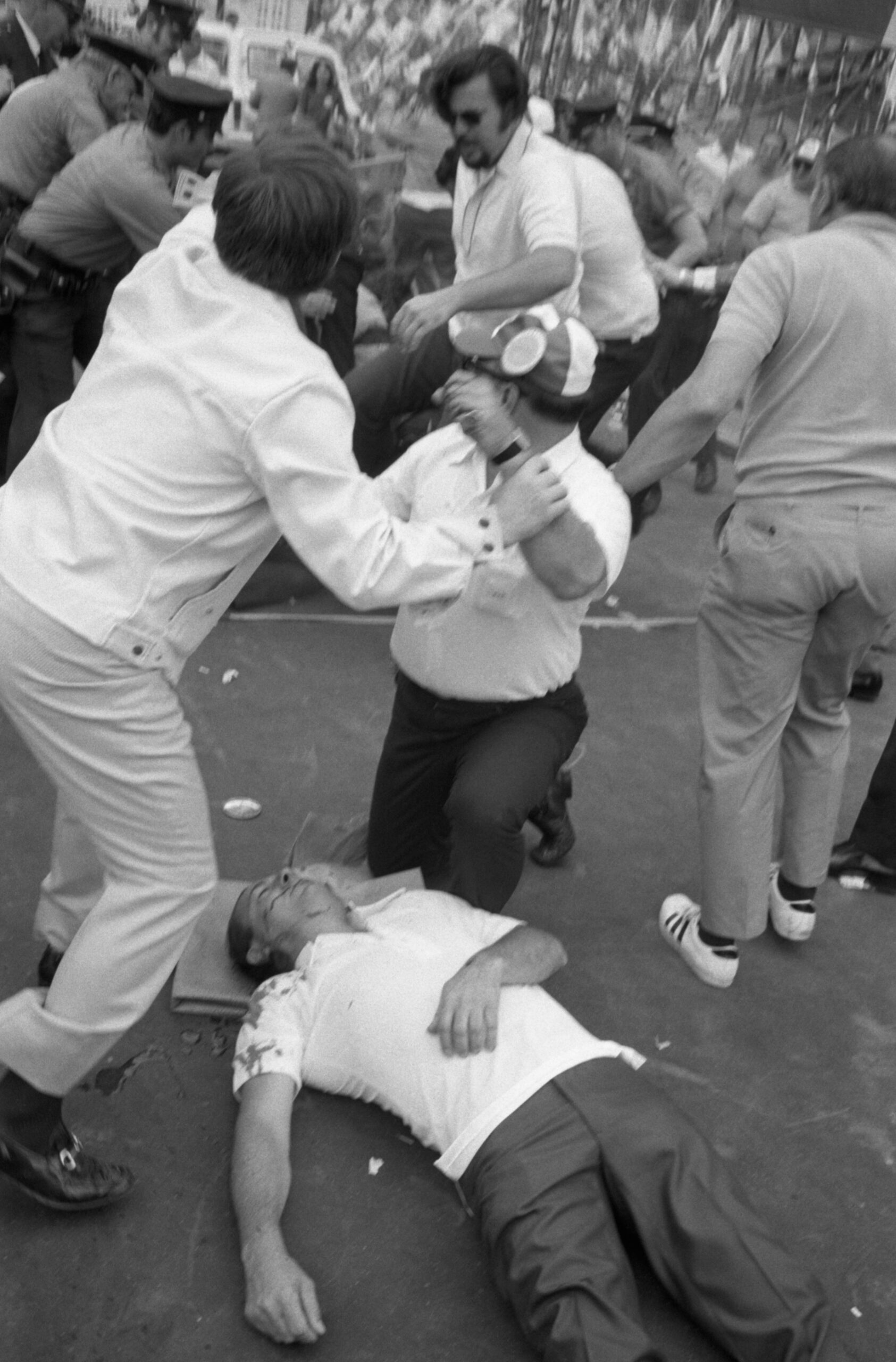
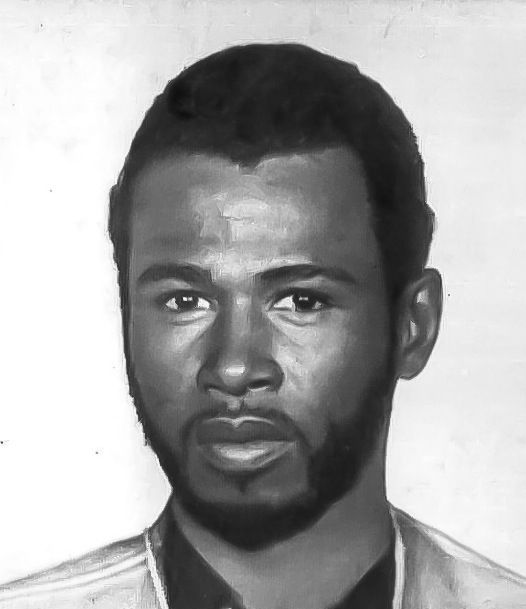
On June 28, 1971, 55 years ago, Mafia boss Joe Colombo’s march in Manhattan’s Columbus Circle would be his last. During the second annual “Unity Day” rally of the Italian American Civil Rights League, a gunman posing as a photographer approached Colombo. Jerome Johnson, a con man loosely connected to the Gambino crime family, fired three debilitating bullets into his neck and head.
The grievous wounds left Colombo permanently paralyzed and comatose. Seven years later, he died of cardiac arrest, barely able to move two fingers as he lay in a hospital bed.
Today, Johnson’s motive remains a mystery. Immediately following the shooting, Colombo’s bodyguards seized Johnson, and one of them shot him dead. Any explanation for the assassin’s actions died with him.
It’s likely that Johnson acted on behalf of one of Colombo’s many enemies, but exactly who remains up for debate. Theories have ranged from rival Mob bosses to the upper echelons of the FBI. However, a new book suggests that the plot came from within the Colombo crime family itself.
The 11th-hour confession
In early 1994, former Colombo crime family captain Gregory Scarpa Sr. arrived at FCI McKean, a federal penitentiary in rural northeastern Pennsylvania. A notoriously violent mobster believed to have committed at least 50 murders, Scarpa was beginning a 10-year prison sentence, which had been reduced from life on account of his poor health.
Suffering from late-stage AIDS, the aging hitman knew he lived on borrowed time. He decided that someone needed to know the truth of his misdeeds. He chose a familiar face, Alan Taglianetti, a Mob associate and fellow inmate teaching a screenwriting class in the prison’s library.
“He’s telling me something’s going to come out in the near future, and I want to protect myself,” Taglianetti told The Mob Museum in a phone interview. “He says, I want you to take a statement, and I want you to write a story.”
The infamous capo wanted to get ahead of the news that he was secretly an FBI informant, which came out the following year. FBI documents confirm Scarpa’s status, but he didn’t see it that way. According to Taglianetti, Scarpa repeatedly told him that “he wasn’t a rat.” Despite his hesitancy to associate with an informer, Taglianetti chose to hear him out.
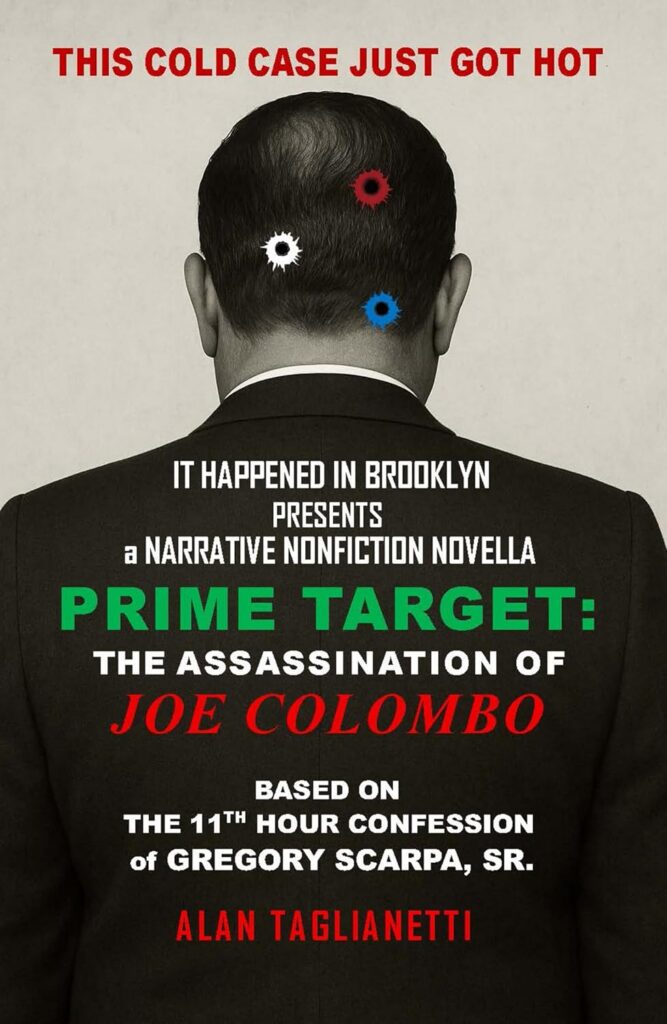
Taglianetti reveals the details of his conversation with Scarpa in his recent book, Prime Target: The Assassination of Joe Colombo. As the title suggests, the self-published book recounts Scarpa’s prison confession in which he discussed his work in Mississippi and his involvement in the Colombo shooting.
On two separate occasions, the FBI recruited Scarpa to aid in investigating murders committed by the Ku Klux Klan. In 1964, he used extralegal methods to help the FBI find where the Ku Klux Klan had buried three civil rights workers in Mississippi. Two years later, he returned to the Magnolia State, this time to find those responsible for the murder of another civil rights leader killed in a firebombing. In both cases, Scarpa used violence and threats of torture to coerce confessions. The events are the subject of the upcoming film By Any Means, starring Mark Wahlberg as Scarpa. News of the film prompted Taglianetti to finally publish his story.
The FBI element of the story was missing from Scarpa’s confession to Taglianetti. “He never said that he was an informant or never gave any inkling to me that he was hired by the FBI, by [J. Edgar] Hoover, to go down to Mississippi,” Taglianetti said.
Despite Scarpa’s attempt at damage control, the informant title has stuck long after his death. In his book Deal With the Devil: The FBI’s Secret Thirty-Year Relationship With a Mafia Killer, Peter Lance traces Scarpa’s history as an informant as far back as 1962, evident in more than a thousand FBI airtels, a letter delivery system used within the agency for decades.
While FBI records confirm the Mississippi story, Scarpa’s involvement in the Colombo assassination plot is more circumstantial. Still, Taglianetti’s account and Lance’s analysis create a plausible scenario in which Scarpa masterminded the assassination attempt that ended Colombo’s reign.
Gunning for the boss
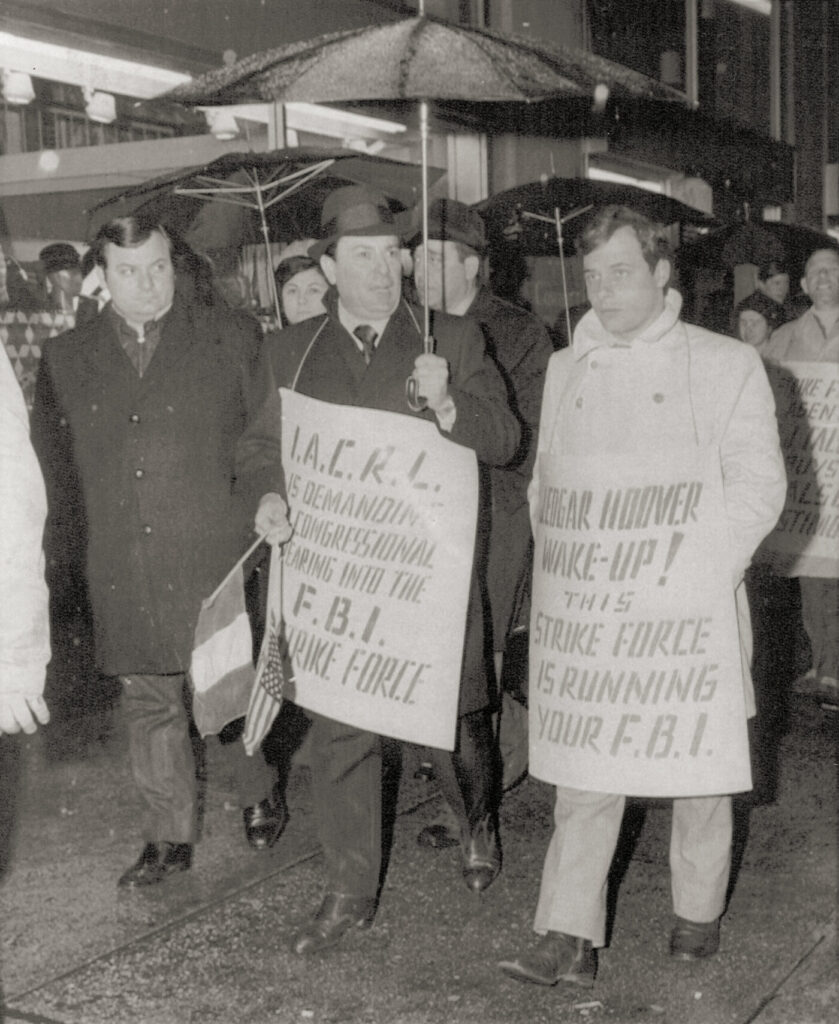
On April 30, 1970, Colombo staged a weeks-long protest outside the FBI’s New York Office following the arrest of his son, Joseph Jr. Earlier that month, he had formed the Italian American Civil Rights League. On the surface, the organization existed to fight against harmful Italian stereotypes by law enforcement and the media. However, it was really Colombo’s high-profile attempt to stave off prosecutions by labeling the FBI’s investigation into his criminal activity as discrimination.
The protest gave the FBI the urgency—and Scarpa the opportunity—to go after Colombo in force. As a participant in the April 30 assembly, Scarpa was well positioned to report on his boss’s activities. During Colombo’s first “Unity Day” rally, the FBI reported that “the informant participated on a regular basis in all activities and was able to keep the Bureau advised on a current basis as to exactly what COLOMBO’s intentions were.” Scarpa’s information pipeline gave him an opportunity to manipulate the narrative and set up another rival, fellow Colombo capo Joseph “Crazy Joe” Gallo, at the same time.
According to Deal With the Devil, an FBI airtel dated June 16, 1971, noted that Scarpa informed his handlers that Gallo was “planning to begin hostilities against COLOMBO.” Another reported that Black “hoodlums,” whom Gallo “became friendly with … while incarcerated,” were observed in his territory. The day after the shooting, Scarpa told his handlers that Johnson was “the kind of person who if approached correctly, would ‘do anything’ for a price.”
Taken at face value, the evidence points to Gallo as the prime suspect in planning the Colombo shooting, which is what authorities suspected at the time. However, Scarpa’s history of providing conflicting information to the FBI, evident in retrospect, suggests that pointing the finger at Gallo may have been part of his plan to divert attention away from himself.
While Scarpa tried to use his FBI connections to pave the way to the top of the Colombo family, Taglianetti proposed that there was another, more dire motive to eliminate the boss. Based on Scarpa’s prison confession, Colombo knew about his work with the FBI and confronted him about it.
“But then when Colombo told him about knowing about his trip to Mississippi, now he had a problem,” Taglianetti said. “Because he didn’t know how much more [Colombo knew].”
Scarpa had been feeding the FBI information about his boss as early as 1964, according to Deal With the Devil. In fact, Colombo was just his first target in leveraging his informant status to aid his ascent. With Colombo out of the picture and Gallo in the federal crosshairs, Scarpa moved on to his next rival: Carmine “The Snake” Persico.
“Now [Scarpa] shifted any potential blame away from himself by suggesting to the FBI that Carmine the Snake was responsible for the aborted hit, and that he’d used Johnson to make it look like Joe Gallo was involved,” Lance wrote.
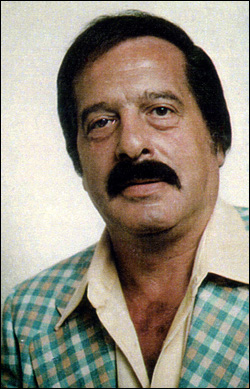
Scarpa’s machinations ultimately fell short. Although Scarpa continued to use his informant status to his advantage while rising in the underworld, a tainted blood infusion in 1986 that infected him with HIV halted his grand plans.
Lance argues that the diagnosis was the only thing that stood in the way of Scarpa’s rise. “Had Scarpa remained in good health, given his cold-blooded willingness to wipe out all enemies in his path—and the extraordinary protection and intelligence he received from the FBI—there is every likelihood that he would have ascended to the position of boss.”
Who really pulled the strings?
Scarpa’s alleged confession adds another layer to a case already crowded with competing theories. Lance and Taglianetti separately craft compelling and plausible narratives that place Scarpa at the center of the Colombo shooting. However, alternative theories point to a case that is far from solved.
Like Scarpa, Gallo’s ambition gave him a similar motive for wanting the boss dead. Having been released from prison just two months earlier, the attempted assassination would have given him a prime opportunity to stage a comeback and seize control of the Colombo family. Gallo would have been a suspect even if Scarpa hadn’t whispered his name to his handlers.
In a 2025 interview with Jerry Capeci of Gang Land News, Anthony Colombo Jr., Colombo’s grandson, pointed to powers higher than Scarpa. After Scarpa reported to the FBI that Colombo knew about his cooperation, they had to act to save their “top echelon informant,” Anthony Jr. told Capeci. “This was the chattel the FBI needed to eliminate my grandfather.”
Another theory points to Carlo Gambino, then-head of the Mafia Commission. While Gambino preferred to keep a low profile, Colombo went the opposite route. Colombo’s loud public persona and high-profile media appearances, in which he antagonized the FBI and government officials, endangered the Mob at a time of heightened law enforcement scrutiny. The big boss may have decided that Colombo needed to go.
More than five decades later, the question of who masterminded the shooting that put Colombo out of commission remains unsolved. But overwhelming evidence does support one fact: Despite his attempts to spin the story, Scarpa was indeed an FBI informant.
Feedback or questions? Email blog@themobmuseum.org