




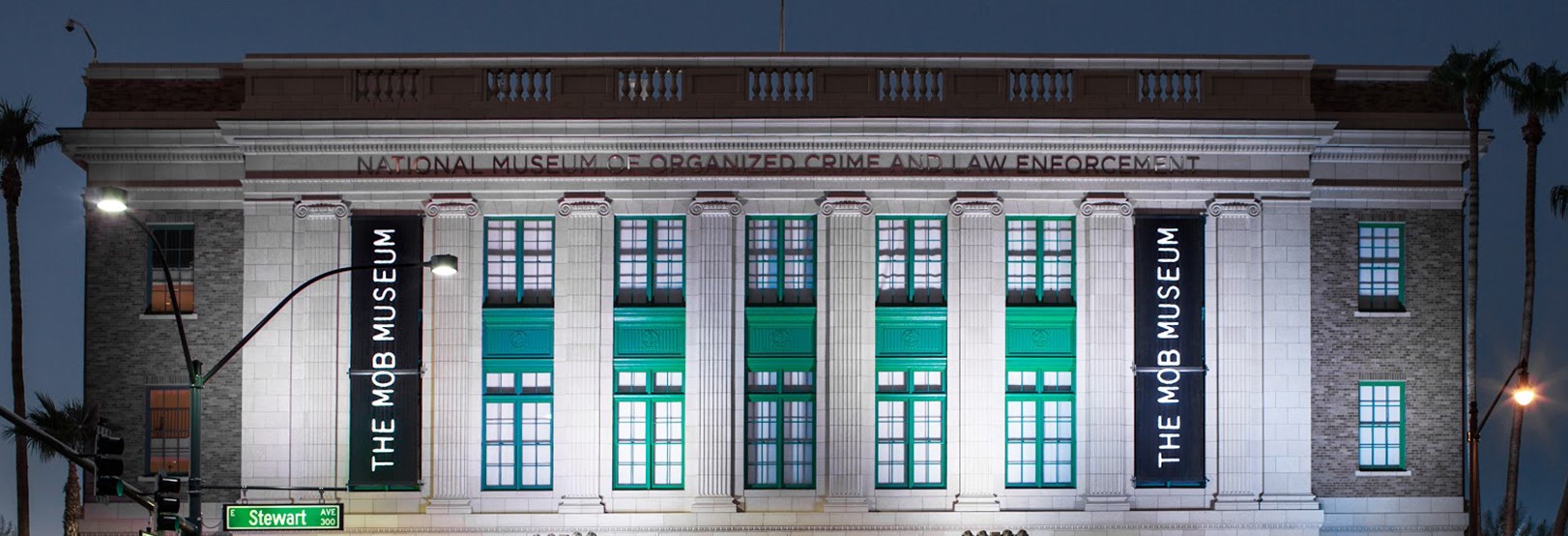
Virginia Hill, reputed ‘Queen of the Mob,’ died in Austria 60 years ago
Haunted by a mobbed-up reputation, the one-time girlfriend of Bugsy Siegel overdosed on sleeping pills
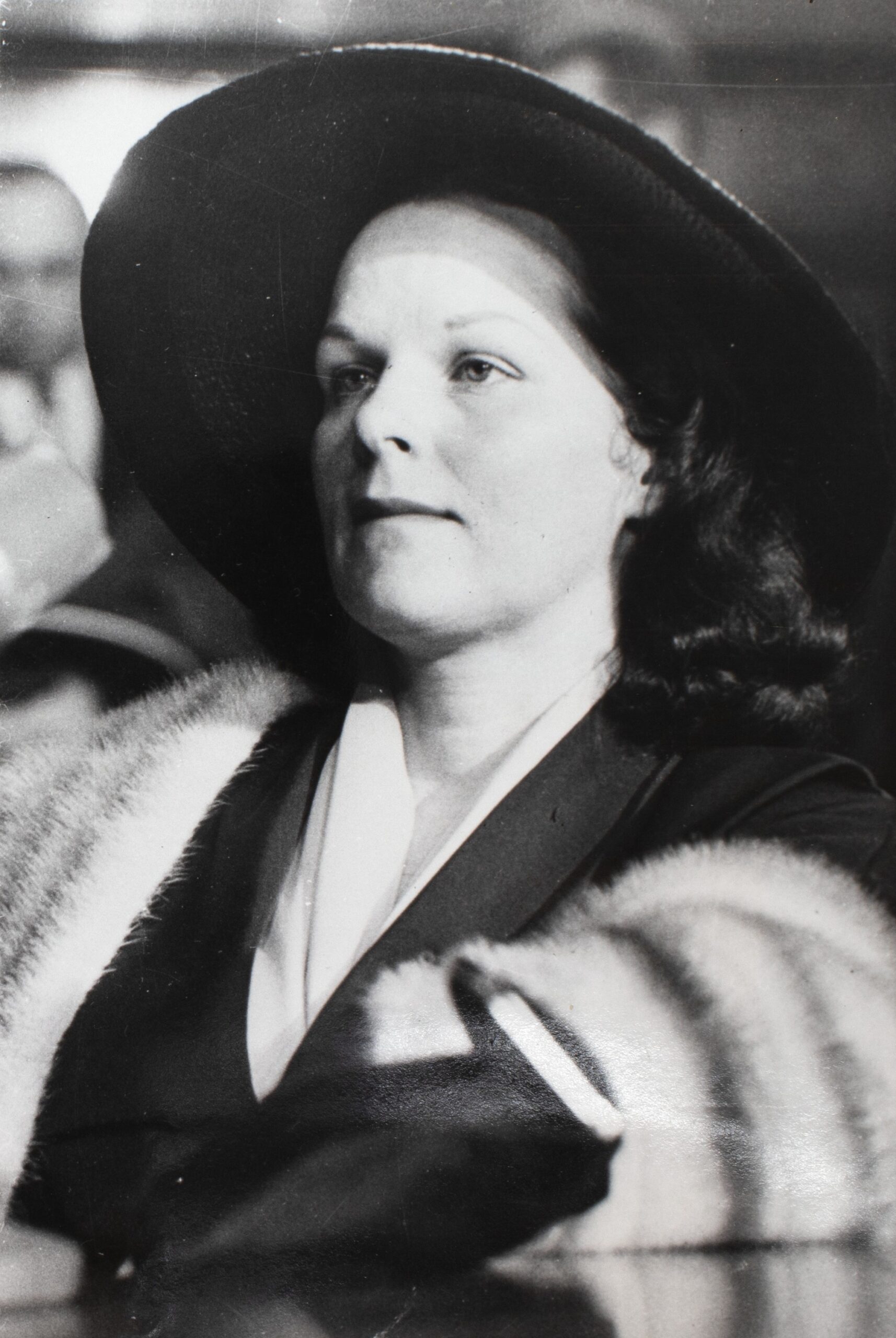
On March 24, 1966, Virginia Hill died far from the life that made her famous. Sixty years later, she has become a legend in organized crime lore. But the distance between that legend and the historical record demands a reconsideration of the stories built around her.
Hill has long existed more as a symbol than as a person. In midcentury newspapers, she was alternately portrayed as a glamorous accomplice, a Mob insider or a dangerous beauty orbiting powerful men. The reality appears narrower and more human. Her influence came largely from her proximity to mobsters rather than any kind of authority—a distinction that faded as her notoriety grew.
Accounts of the Alabama native’s early life consistently point to hardship. Poverty, instability and survival shaped her upbringing long before she became involved with organized crime or Hollywood. Married at 15 and divorced three years later, Hill was navigating independence at an age when few women were expected to do so alone.
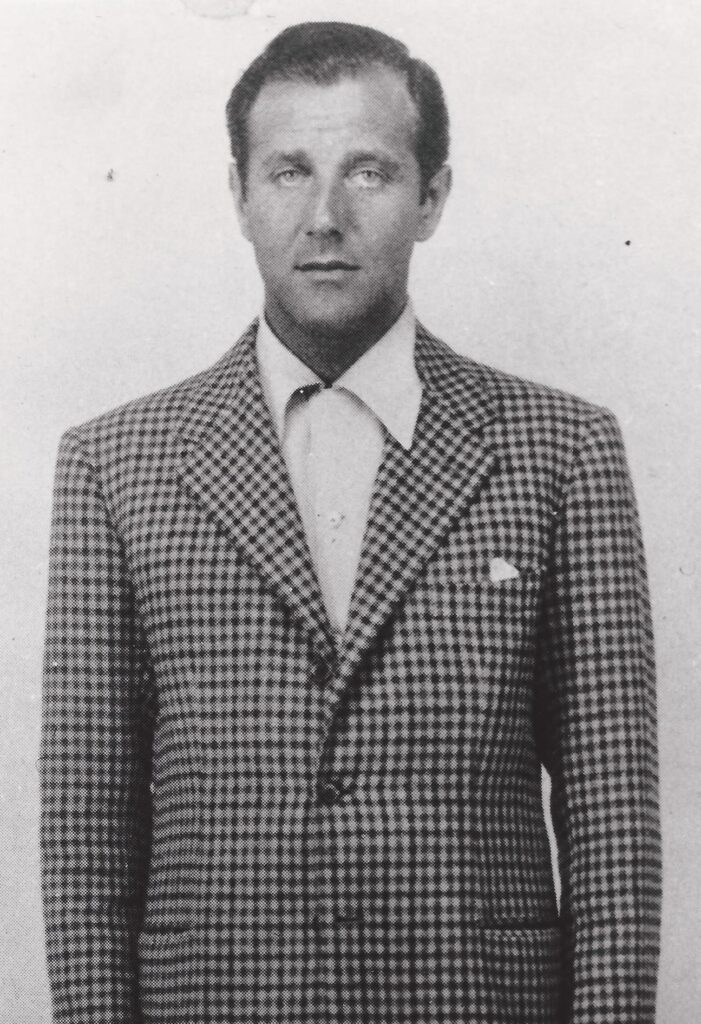
When she reached Illinois in 1933, she encountered men connected to the Chicago Outfit. These relationships, particularly with bookmaker Joseph Epstein, introduced her to a world in which association could open doors as easily as it created risk. Her later romantic connection to Benjamin “Bugsy” Siegel was not the start of her story, but it did make it far more visible.
Hill was already a known figure within law enforcement circles by the mid-1940s, but she became a national figure only after June 20, 1947, when Siegel was shot and killed through the window of her Beverly Hills home. While she was overseas at the time, her absence did little to quiet speculation. Instead, it placed her at the center of a story she had not witnessed, transforming her almost overnight from a peripheral figure into a subject of public fascination.
The making of a reputation
That fascination hardened during the 1950-1951 U.S. Senate investigation into organized crime led by Tennessee Senator Estes Kefauver. Called to testify, Hill arrived already framed by headlines as both an insider and a spectacle. Coverage focused as much on her appearance and demeanor as on her testimony, describing her as defiant or glamorous depending on editorial mood.
The hearing transcripts reveal Hill as a more restrained witness. She answered cautiously, frequently claimed limited knowledge and avoided dramatic confrontation. Even at the time, some observers recognized the gap between image and reality.
Columnist Drew Pearson wrote in 1951 that while television audiences imagined Hill’s life as glamorous, “the underworld … knew every time Virginia had a large chunk of cash,” describing repeated assaults and robberies that exposed a harsher existence. As Pearson concluded after her testimony: “Some television viewers thought Virginia Hill’s life was a bed of roses. But it wasn’t.”
Many of the sharp remarks later attributed to Hill appear to be inventions. One infamous vulgar quote widely linked to her Senate appearance cannot be found in official transcripts or reliable contemporary reporting—an example of how repetition gradually cements speculation into accepted fact.
Even familiar stories surrounding Hill remain uncertain. One persistent tale claims that Siegel named the Flamingo Hotel after her nickname, “Flamingo.” But in fact, the casino was named by its first developer, Billy Wilkerson, not Siegel.
As Marc Romano, a Paris-based researcher and biographer currently completing a forthcoming biography of Hill, notes, Hill was never known by the nickname “Flamingo” among friends or family—another instance in which legend expanded beyond documentation.

A similar pattern appeared in discussions of narcotics trafficking. Federal Bureau of Narcotics files from the late 1930s into the early 1940s describe the emergence of a Mexico–U.S. heroin pipeline and repeatedly reference Siegel, Meyer Lansky and California associates connected to Anthony “Black Tony” Parmegini.
Hill never appeared as an operational participant in FBN documents, but Romano says that FBI reporting noted she was “in constant contact with dope peddlers in the Los Angeles area,” suspicion rooted largely in association. Romano’s research reflects that distinction clearly. While no evidence places Hill in trafficking itself, her proximity to figures long suspected by federal narcotics officials ensured she appeared repeatedly in investigative reporting, in which association often became implication.
Context matters. Federal narcotics officials were already publicly linking exiled Mob boss Charles “Lucky” Luciano to West Coast drug trafficking, and newspapers amplified the claim. Several suspected figures were killed in the months before Siegel’s death, encouraging theories of a broader syndicate.
By the time Siegel was murdered—and Hill’s rented home became central to the story—organized crime, narcotics and internal violence had fused in the public imagination, making her almost inevitably part of a narrative still searching for shape. She likely knew more than history can prove, but even aggressive investigations stopped short of implicating her directly.
Reinvention abroad
The years following Siegel’s death were marked by instability. Hill struggled emotionally and financially, surviving multiple overdose attempts. The mythology often freezes at the height of her notoriety, but the record shows a woman increasingly trying—and failing—to outrun her reputation.
In 1950, while visiting Sun Valley, Idaho, she met Austrian ski instructor Hans Hauser. Their swift marriage suggested an attempt at reinvention and distance from American scandal. Europe offered anonymity and, briefly, the possibility of an ordinary life.
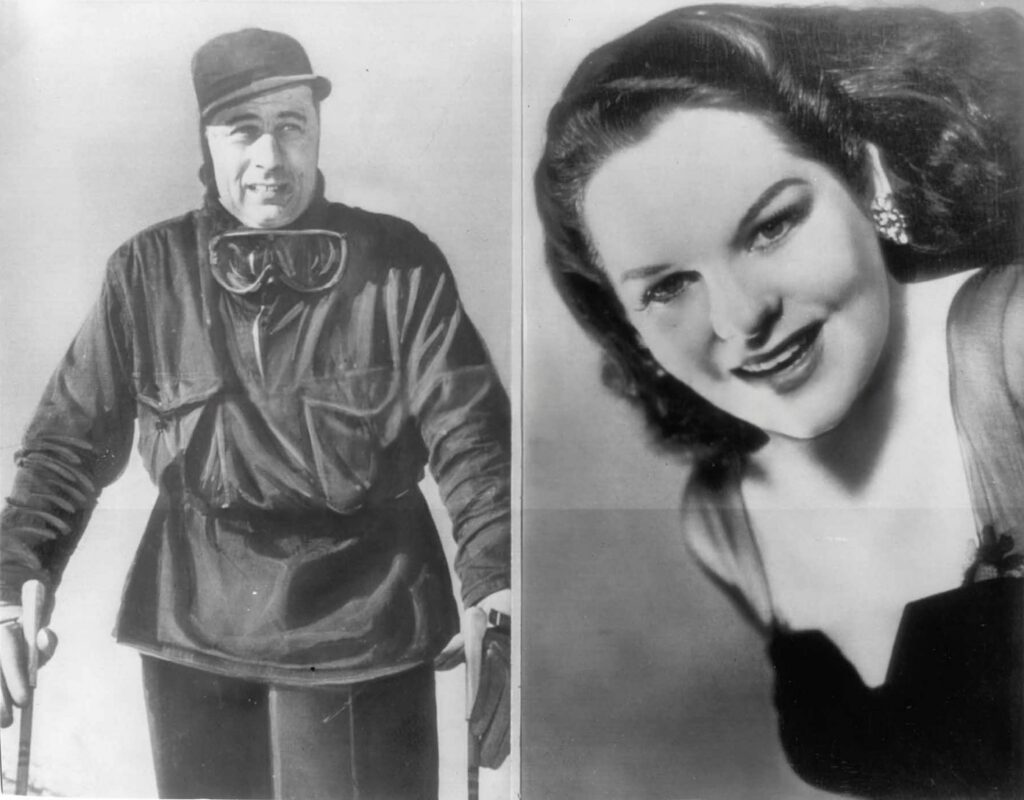
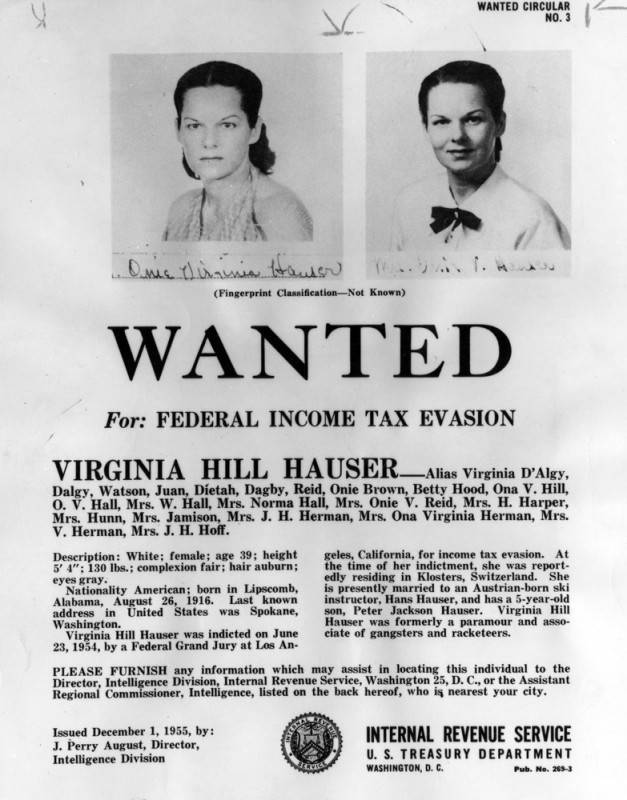
That distance proved incomplete. Throughout the 1950s, the Internal Revenue Service pursued Hill aggressively, challenging the income behind her former lifestyle. Asset seizures and prolonged scrutiny limited her ability to return comfortably to the United States. Family difficulties, including legal trouble involving her brother around 1960, further narrowed an already shrinking circle of stability.
An inescapable past
In March 1966, Hill died in Austria from an overdose of barbiturates and alcohol. She was 49. Her body was discovered outdoors near a small brook outside Salzburg, a detail that immediately fueled speculation of foul play despite authorities ruling the death a suicide.
Romano’s research emphasizes how long the decline had been underway. “Having already made seven or eight suicide attempts since the age of 30 (attempts for which accounts exist, because there may have been others, including earlier in her life, that are unknown), there is absolutely no doubt that she took her own life,” Romano said. “Anything else recounted is pure invention worthy of a Hollywood gangster film or a roman noir.”
Conspiracy theories nevertheless followed almost immediately. Her son Peter, then 15, didn’t believe her death was a suicide, according to what he told the press publicly at the time.
Another theory speculated that exiled Mob figure Joe Adonis arranged her death, a claim rooted more in shared history than documentation. By 1966, many figures once connected to Hill were dead, imprisoned or publicly exposed. Whatever secrets she possessed had long since lost urgency.
Nearly six decades later, Hill remains suspended between myth and reality. She likely knew far more than history can prove and perhaps participated in ways that left no trace. Strip away the mythology and her story reflects a slow, fading life shaped by proximity to power—and an ending that was, ultimately, human.
Christian Cipollini is an organized crime historian and the award-winning author and creator of the comic book series LUCKY, based on the true story of Charles “Lucky” Luciano.
Feedback or questions? Email blog@themobmuseum.org