




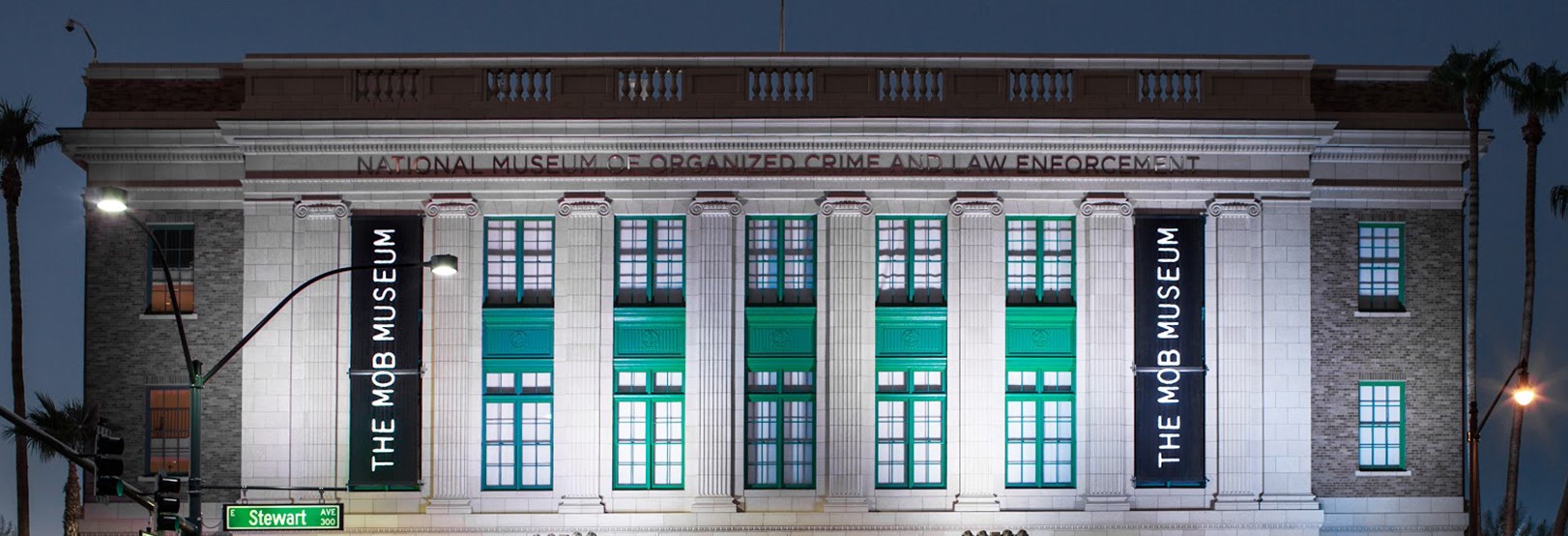

Planned Netflix drama series to focus on ‘dangerous version’ of modern Las Vegas
Scorsese-produced show will follow the boss of city’s ‘hottest’ casino
A Las Vegas-centered drama series is in production for Netflix, focusing on “a dangerous version” of the city and an ambitious, fictional modern-day casino boss.
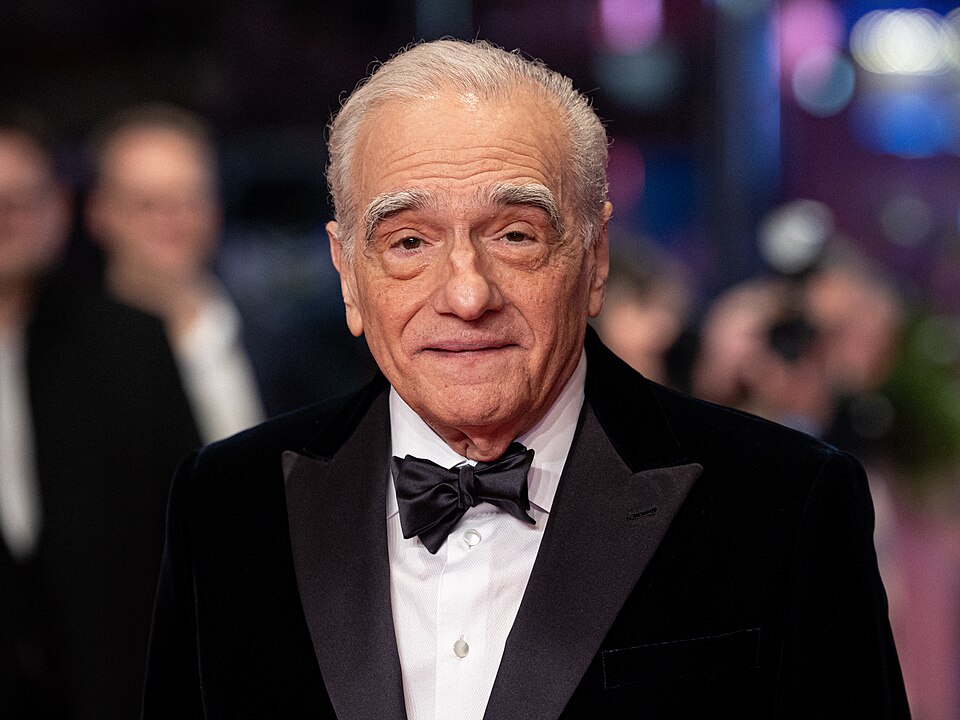
Though Martin Scorsese is an executive producer on the projected eight-part Netflix series, it reportedly has no connection to the 1995 Mob movie Casino, which he directed.
Nicholas Pileggi, an author and journalist who co-wrote the movie with Scorsese decades ago, recently told The Mob Museum he has no involvement in the current Netflix project.
According to UNLV history professor Michael Green, some mention of the older, mobbed-up Las Vegas seems inevitable in a show about today’s hotel-casinos.
“I don’t think you can put together a drama series about the Las Vegas resort, tourism or gaming industry without at least some reference to the old days, if only for background,” Green said in an email.
For many, the 1995 movie still shapes the public perception of Las Vegas, though much has changed over the past three decades in the way casinos do business and how they are managed.
The 1995 movie is based on Pileggi’s nonfiction book Casino: Love and Honor in Las Vegas, centered on Mob control of the now-demolished Stardust hotel-casino on the Strip. Central to the story is a love triangle involving Mob associate and unlicensed casino manager Frank “Lefty” Rosenthal, his wife, Geri, and Tony “The Ant” Spilotro, the Chicago Outfit’s overseer in Las Vegas during the 1970s. In the movie, which is a dramatized version of the book, the names were changed to avoid lawsuits. Robert De Niro stars as a character based on Rosenthal, with Sharon Stone as his wife, and Joe Pesci portrays a Spilotro-inspired mobster. The Stardust was renamed the Tangiers.
Currently, little is known publicly about the upcoming Netflix series, but according to the streaming service’s website, the untitled drama “is set in the high-stakes, sharp-elbowed present-day Las Vegas casino business, which is a modernized but still dangerous version of the legendary city.”
The series will focus on the president of the “hottest hotel-casino” in Las Vegas, Robert “Bobby Red” Redman, who has to make some long-odds moves in attempting to “secure his position and take more ground.” The creative team behind the show includes Brian Koppelman and David Levien, who wrote the screenplays for Rounders and Ocean’s Thirteen. They also produced the TV series Billions.
A run date for the Netflix production has not been set.
Last Mob assassination
In the more than 30 years since Casino was released, the Las Vegas gaming industry, and the role of a casino manager, has undergone a dramatic transformation. The most significant change has been the transition from Mob control of several resorts to corporate ownership over the towering newer hotels.
The change gained steam in the late 1960s after the state Legislature authorized corporations to own casinos. That meant every shareholder didn’t have to undergo a licensing background check, clearing the way for publicly traded corporations to infuse millions into gaming properties, a much larger amount of money than the Mob could muster. During the early stages of this period, billionaire Howard Hughes also gobbled up some Mob-run casinos.
In December 1989, the transition went into overdrive with casino developer Steve Wynn’s opening of the Mirage resort on the Strip. That sparked a boom in megaresort construction, leading to the demolition of previously Mob-affiliated properties such as the Desert Inn, Riviera, Sands, Stardust, Dunes and Hacienda.
![The opening of the Mirage in 1989 marked the beginning of the megaresort era and the end of the Mob’s involvement in Las Vegas’s casino properties. Stan Shebs [ZJ2.1]/ CC BY-SA 3.0](https://commons.wikimedia.org/wiki/File:Mirage_hotel_exterior.jpg)
During the transition from old to new Las Vegas, several organized crime figures familiar to local authorities either died of natural causes or were imprisoned. Others were killed. On January 6, 1997, the last major Mob assassination in the Las Vegas Valley occurred when 62-year-old Herbert “Fat Herbie” Blitzstein, once a Spilotro associate, was gunned down at his townhome on Mount Vernon Avenue in eastern Las Vegas.
With these changes, the Las Vegas depicted in the 1995 Martin Scorsese movie no longer exists but instead is a part of the city’s lore. Green, the UNLV history professor, said if organized crime is still involved in Las Vegas casinos, “they are hiding it well.”
“But the ultimate answer is almost certainly that the Mob we knew, or the Mob as we knew it, is long gone,” Green said.
Any leftover underworld “influence” after the 1980s, when Mob control of casinos mostly ended, involved keeping valued employees from the old days on the payroll, Green said.
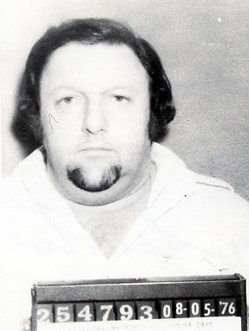
As an example, Green pointed to changes at the Stardust after corporate executives from Las Vegas-based Boyd Gaming took over. During those days, even Chicago Cubs television announcer Harry Caray would mention the Stardust. It was a popular destination for people from the Windy City.
“My dad dealt at the Stardust, and in the 1970s his pit boss was Phil Dioguardi, who had been around forever,” Green said. “After the Mob was driven out, the Boyd people kept him as a host. On Cubs telecasts, Harry Caray would mention him watching the game with a group from Chicago at the Stardust. Certainly, Dioguardi worked for the Mob, as my dad technically did, but by then it was a matter of having someone with a long history here who could bring in and talk to gamblers, as opposed to running a big part of the operation.”
In June 2021, Resorts World Las Vegas first opened on the Strip where the Stardust once stood. A couple of replica Stardust signs are on display inside Resorts World as a nod to the past.
No ‘stupid risks’
In whatever way Netflix intends to dramatize fictional modern casino boss Robert “Bobby Red” Redman, today’s real-life executives are different from the mobsters portrayed in the 1995 movie. For one thing, many in the modern era have been groomed in a corporate culture, not installed by crime families from places such as Chicago and Kansas City to steal untaxed casino revenue.
Eric Dezenhall, an author and organized crime expert, told The Mob Museum that today’s corporate casino executives “have serious credentials and can work anywhere they choose.”
“They don’t need to get mixed up in crime and take stupid risks,” Dezenhall said in an email. “In the Mob era, running a casino was the best those guys could do and the closest thing to legitimacy. They didn’t have the option of being executives at General Motors or Apple. Today’s casino operators do.”
Dezenhall got an inside look at these differences in reviewing Meyer Lansky’s private records, diaries and correspondence. Lansky, who came of age in New York City and was known as the financial genius of the underworld, exerted influence over legal and illegal casinos in Cuba and across the U.S., including in Las Vegas. In 1983, Lansky died of lung cancer in South Florida at age 80.
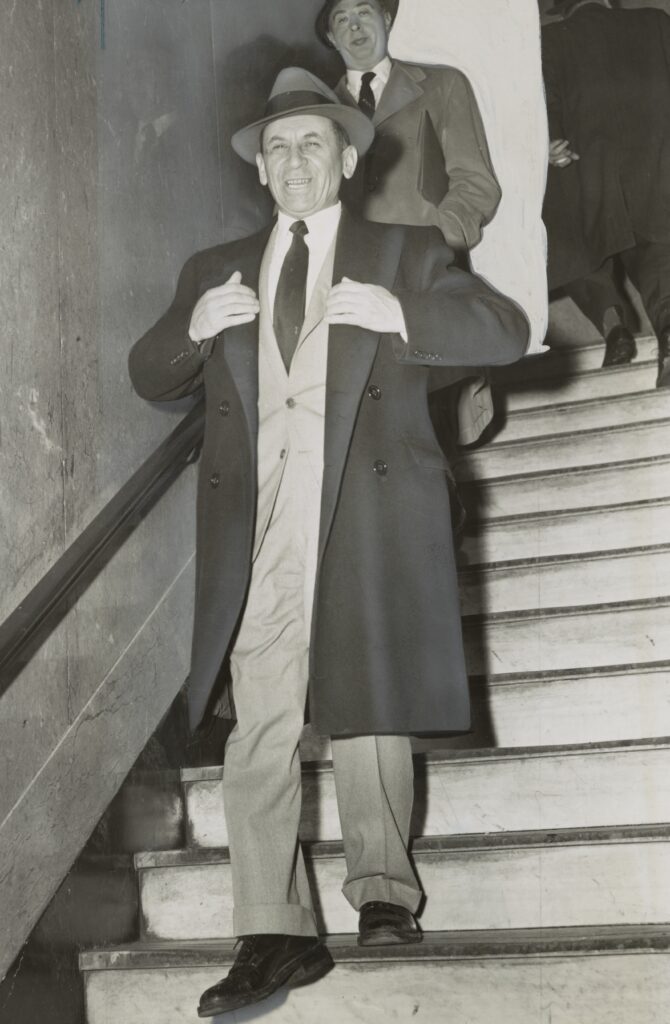
In private records and letters, Lansky lamented that he could never compete “with the large corporations and their IPOs and lobbying power,” Dezenhall said.
“He knew the jig was up in the 1960s and not just because he was being chased by the feds,” Dezenhall said. “He was being muscled out of the business he created by MBAs. His words were not those of a man who was secretly pulling the strings, but who was besieged by those who had more capital—capital to build bigger and better hotels and casinos and to buy backing from the government and law enforcement.”
Dezenhall added that casino managers these days are highly educated financial and marketing people. To some who remember a more affordable version of Las Vegas, that hasn’t always been a plus. With tourism numbers still high but recently in decline, the current environment has led to criticism from those who miss the less-expensive food and entertainment of earlier years and the lower table minimums on casino floors. Nowadays, though, with intense competition from commercial and tribal casinos across the country, and with sports betting legal in most states, Las Vegas officials are attempting to transition the town away from its Sin City image and rebrand the area as the Sports and Entertainment Capital of the World.
“It’s all about the money, whereas in the Mob days it was about the money and the swagger,” Dezenhall said. “The boys finally had their own thing, and they liked being able to say, ‘This is our town. Nobody messes with us.’ Today’s executives are lurching toward vanilla, the theme park and concert scene. Sure, they may wink at sin, but that’s just marketing. They know what happens if they get too cute.”
Larry Henry is a veteran print and broadcast journalist. He served as press secretary for Nevada Governor Bob Miller and was political editor at the Las Vegas Sun and managing editor at KFSM-TV, the CBS affiliate in Northwest Arkansas. Today, he is a senior reporter for Gambling.com.
Feedback or questions? Email blog@themobmuseum.org