





MS-13’s history of brutality led to killing spree in Las Vegas
Three gang members found guilty of 10 murders committed over a year in Southern Nevada
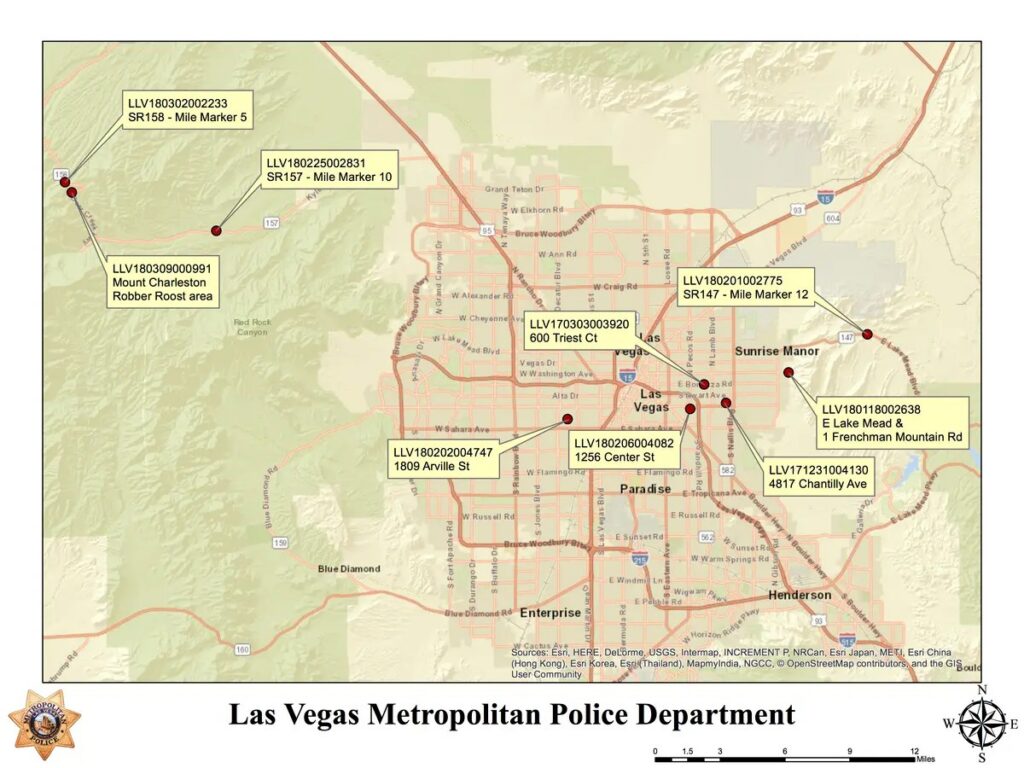
At the end of 2017, Richie Gaudio was launching fireworks in his East Las Vegas driveway to ring in the new year. Before 2018 arrived, a shooter inside a compact car pulled up and fired at least seven shots at him. A neighbor rushed over to help stop the bleeding, but Gaudio died from his wounds.
Less than a month later, Arquimidez Sandoval-Martinez was abducted while partying with friends at a downtown Las Vegas nightclub. Twelve days later, his body was found near Lake Mead, bound by shoelaces with wounds from a machete and gunshots.
These were part of a string of 10 murders between March 2017 and March 2018. By mid-2018, federal investigators and Las Vegas homicide detectives found a common thread among them: Mara Salvatrucha, aka MS-13.
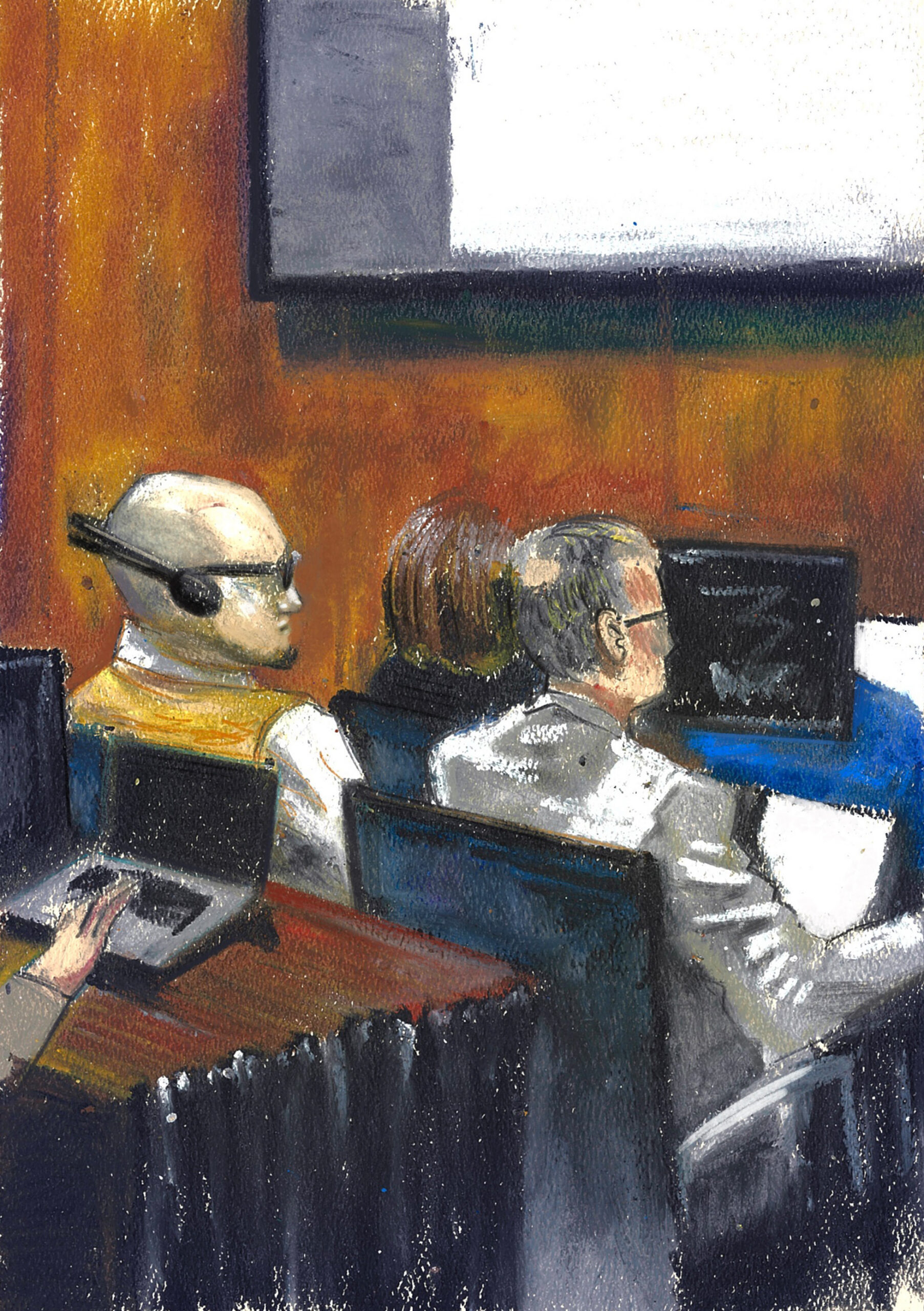
On June 29, 2026, a jury found three alleged MS-13 members guilty of murder, racketeering, and other related charges. Convicted were Jose Luis Reynaldo Reyes-Castillo, aka “Molesto”; David Arturo Perez-Manchame, aka “Herbi”; and Joel Vargas-Escobar, aka “Momia.” All three waived their right to testify during the proceedings.
These are just the latest convictions in a decades-long fight against MS-13. The international gang’s reputation rivals the Mexican cartels as one of the most violent organized crime groups in the world. Violence is embedded in every aspect of the organization, from beatings during initiation to murdering rival gang members to earn full membership.
Recently, the United States has escalated the fight against MS-13’s culture of brutality. In January 2025, an executive order began the process of designating international cartels and other transnational organizations, such as MS-13, as “Foreign Terrorist Organizations.”
“Their campaigns of violence and terror in the United States and internationally are extraordinarily violent, vicious, and similarly threaten the stability of the international order in the Western Hemisphere,” the order reads. A later section states that “it is the policy of the United States to ensure the total elimination of these organizations’ presence in the United States and their ability to threaten the territory, safety, and security of the United States.”
The executive order labels the group as a transnational threat, but MS-13’s origins are closer to home. Although today MS-13 is known as an international organization, it originated among marginalized immigrant communities in 1980s Los Angeles.
Born in Los Angeles
From 1980 to 1992, El Salvador was consumed by a bloody civil war. At the beginning of 1981, the United States backed the Salvadoran government against the communist-leaning rebels, providing aid by using American special forces to train “Rapid Deployment Infantry Battalions.” However, the battalions massacred more than 1,200 civilians in their first 18 months. Facing atrocities from both sides in the war, more than a million Salvadorans fled the country in fear for their lives, and many found refuge in the United States.
The Salvadoran immigrants who settled in Los Angeles faced a “hostile environment,” according to a report by the University of Southern California. Many of these unofficial refugees were young children traumatized by the civil war and smuggled into the United States without their parents. Living in poor, marginalized neighborhoods already dominated by Mexican gangs, survival meant banding together into their own gangs.
Some of these Salvadoran immigrants formed the Mara Salvatrucha, which roughly translates from Central American slang to “alert Salvadoran crew.” The website InSight Crime notes that the earliest incarnation of the gang called themselves the Mara Salvatrucha Stoners. They “spent most of their time listening to heavy metal music, drinking, and smoking,” the website explains. However, they dropped the “Stoner” part once fighting began with their Mexican American rivals, the 18th Street Gang, or Barrio 18 in Spanish.
In the late ’80s, as arrested MS members were sent to California prisons, they faced another threat: the Mexican Mafia, aka “La eMe,” a prison gang that stretched to the streets of L.A. Instead of fighting them, MS worked for them. “In return, the MS provided hitmen and paid the Mafia regular quotas from their criminal proceeds,” InSight Crime wrote. “It also added the number 13, the position M occupies in the alphabet, to their name.”
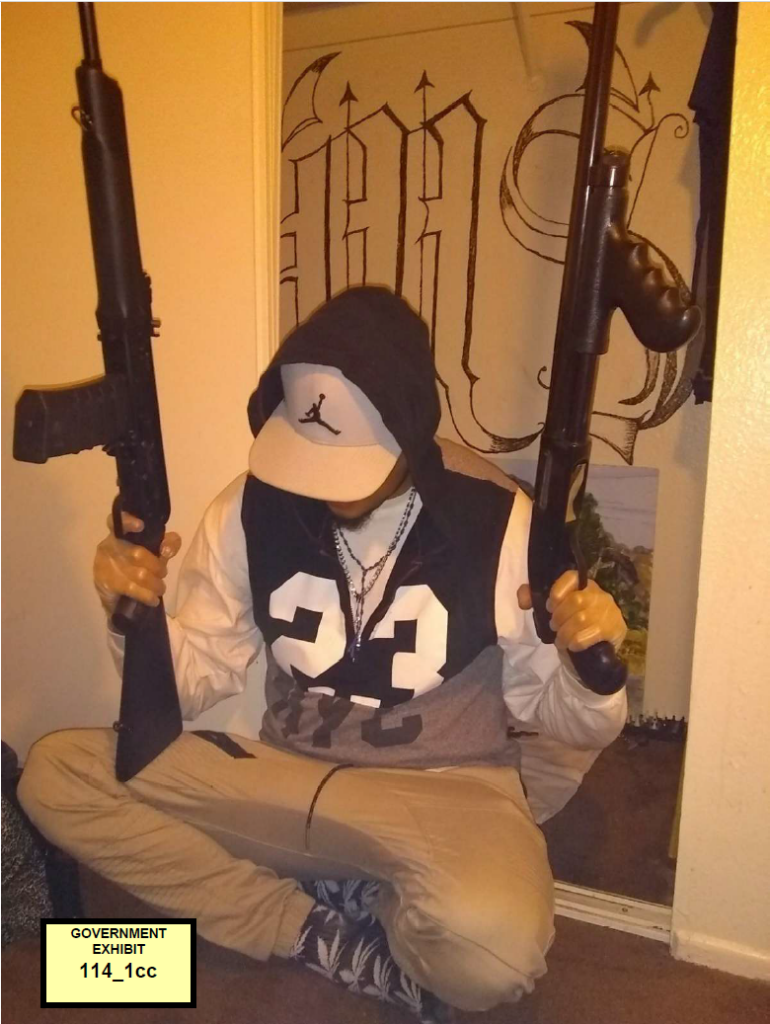
After El Salvador’s civil war ended in 1992, President Bill Clinton’s administration began deporting MS-13 members with a criminal record. The deportations effectively sent an MS-13 enclave to El Salvador, which then spread to Nicaragua and Honduras. Domestically, MS-13 also spread throughout the Southwest, including Las Vegas, and to the East Coast, including Long Island, New York, and the Washington, D.C., area. Since then, MS-13 has evolved into an organized crime network of more than 10,000 members in the United States, according to the Justice Department.
Cliques, shot callers, and homeboys
Like many organized crime groups, divisions of MS-13, called “cliques,” operate differently from one another but share the same internal hierarchies. However, these cliques are more loosely organized vs. a syndicate such as Cosa Nostra in the United States.
According to the 2019 indictment in the Las Vegas case, the Parkview clique operates in three regions: Los Angeles, Mendota in Central California, and Las Vegas. The top leaders in the cliques are called “palabreros,” or “shot callers,” with the top two called “primera palabra” and “segunda palabra” (“first word” and “second word” in English). Beneath the palabreros are “homeboys,” full-fledged members who have been “jumped in”—severely beaten and kicked for 13 seconds by fellow members. Homeboys are like the Mafia’s soldiers, expected to participate in all the clique’s criminal activities, including murder.
Those wishing to join the gang must perform favors and contribute financially, which earns them the lowest rank, “paro”—Central American Spanish slang for “favor.” Paros who advance become “observación,” which can serve as bodyguards and lookouts. The last rank before homeboy is “chequeo,” who have proven their loyalty through violence, including the murders of rivals, called “chavalas.” After enough chavalas, a chequeo can move up to homeboy.
Murder trial in Las Vegas
In the Las Vegas case, Vargas-Escobar was the alleged shot caller of the city’s Parkview clique. He oversaw the beginning of the streak of murders of suspected rival gang members, although with questionable identifications.
“The suspects involved in these crimes are extremely violent and killed their victims over as little as identifying with another gang or participating in street narcotic sales,” then-Sheriff Joe Lombardo said at a 2018 press conference.
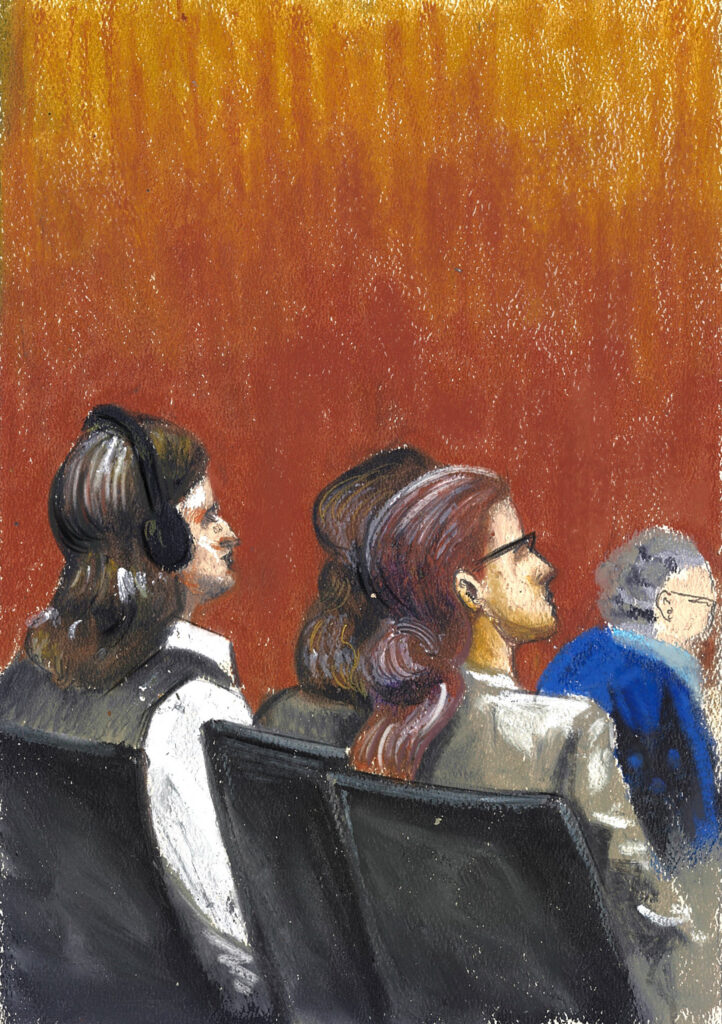
After Vargas-Escobar was arrested at the end of 2017, Reyes-Castillo took over leadership as the clique’s senior-most homeboy and continued the murders. Reyes-Castillo, Perez-Manchame, and Miguel Torres-Escobar (who was named in the original indictment) were arrested in March 2018 in the kidnapping and murder of Sandoval-Martinez. Detectives linked them to the other nine murders soon after.
Several MS-13 members, including Torres-Escobar, became cooperating witnesses for the government during the trial. The defections were essential in helping prosecutors build a solid case against the defendants.
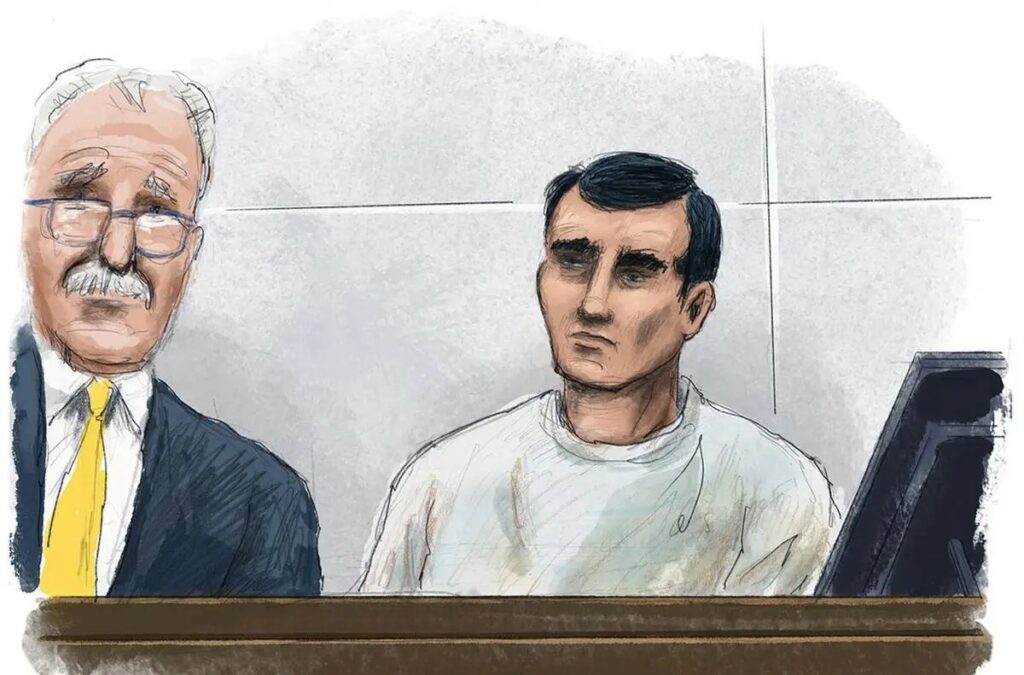
While the jury opted not to declare guilty or not guilty for several of the 34 counts against the defendants, prosecutors indicated they found the defendants guilty on enough counts to “face a mandatory minimum sentence of life in prison without parole,” according to Las Vegas Review-Journal reporter Noble Brigham. Sentencing is scheduled for November.
Between the convictions and cooperating witnesses, Las Vegas and federal law enforcement have dealt a severe blow to MS-13’s operations in the valley. However, with thousands of members just a few hours away in Los Angeles, the threat is far from over.
Feedback or questions? Email blog@themobmuseum.org