

Mobbed-up soccer hooligans create chaos in southern Europe
Some Italian and Serbian ‘ultra’ fanatic groups cross the line into organized crime

This summer, all eyes are on North America as Canada, Mexico, and the United States host the 2026 World Cup. The “beautiful game,” as soccer (or football) is sometimes called, tends to bring people together who otherwise would never cross paths. For instance, citizens of Lawrence, Kansas, welcomed the Algerian national team to set up their home base in the University of Kansas town during the global tournament.
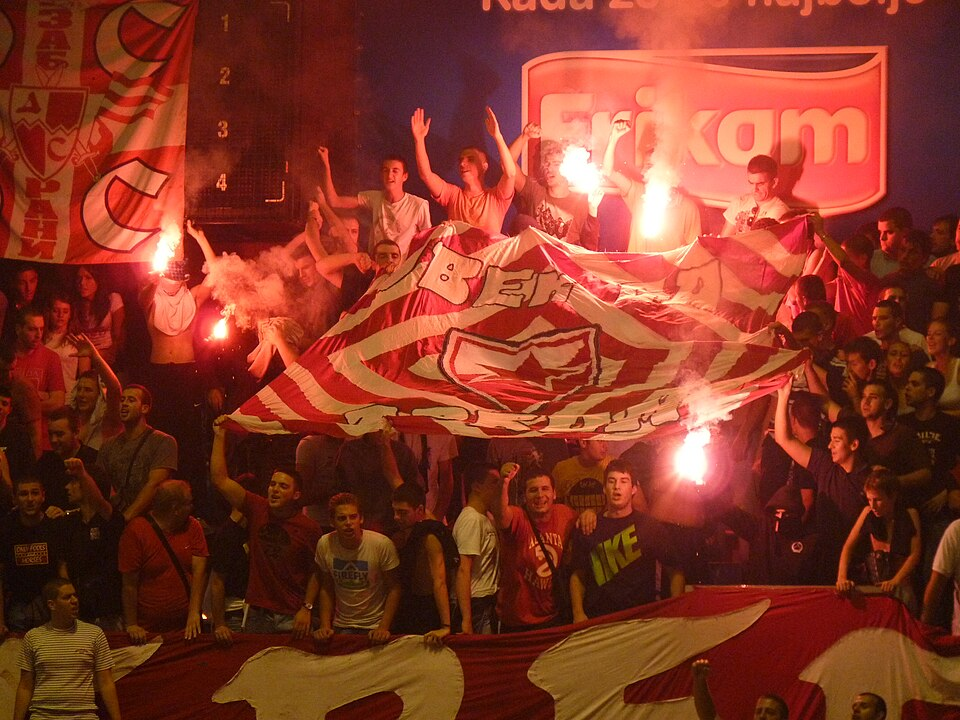
But the sport has a dark side, too. Though most fans only want to cheer for their team and enjoy the game, a small subset takes their diehard support a little too seriously, brawling with supporters of other teams and even becoming involved in far-right politics and organized crime.
Italy: birthplace of the ‘ultras’
The phenomenon of “ultras” first appeared in Italy in the 1960s. Devoted fans of the game, ultras would announce their presence at matches by setting off flares, unfolding banners, coordinating chants via megaphones, and putting on mosaic-style displays. By the 1970s, most major soccer clubs in Italy had at least one crew of ultra supporters. While not all ultras are hooligans, there is a strong crossover between the two.
“They both support the same club, wearing the same colors [and] standing together on the same tribune, but ultras are more responsible for match-day organization, choreography, and songs, while hooligans are more into planning fights [and] attacks on enemy groups,” explained “M,” a guide for the Hooligans Tour of Belgrade in Serbia, who wished to remain anonymous.
But ultras can sometimes wade into hooligan territory. One gang, supporting the Turin, Italy, team Juventus, called themselves the “Drughi,” embracing the sinister and ultraviolent image of the “Droogs” gang in Stanley Kubrick’s 1971 film A Clockwork Orange. Meanwhile, a favorite attack of Roman hooligans is a stab in the buttocks—humiliating, but unlikely to be life-threatening.
Sometimes hooligan activity can be fatal. In 2007, police officer Filippo Raciti was killed in clashes with ultra fans in Catania, Sicily, prompting the government to clamp down.
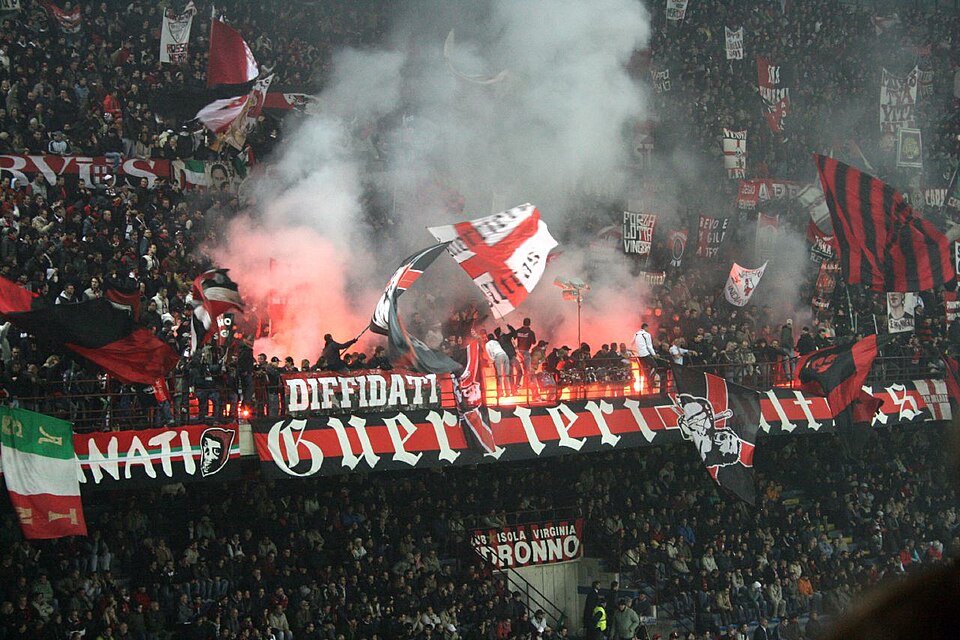

Some Italian soccer clubs tried to pacify their fans and decrease violence by offering them match tickets on credit. But this only led to more criminal activity, as the tickets were often scalped at inflated prices. Although scalping is illegal in Italy, the penalties are minor. To a group of ultras, sales could be worth a million euros (about $1.14 million USD) a year, which didn’t escape the Mafia’s attention. Italy’s three major Mafia groups—Sicily’s Cosa Nostra, Naples’ Camorra, and Calabria’s ’Ndrangheta—infiltrated the ticket-scalping racket, sometimes leading or setting up their own groups of ultras.
Meanwhile, soccer hooligans’ penchant for fighting and lawbreaking sometimes made them near-mafiosi in their own right. On the evening of October 29, 2022, Vittorio “The Uncle” Boiocchi was walking home in Milan when two men on a motorbike pulled up and shot him five times in the neck and chest. During the Inter Milan game that night, supporters lowered their banners and forced spectators to leave their sections out of respect.
A leader of the Inter Milan ultras, Boiocchi spent a third of his life behind bars for armed robbery, kidnapping, and dealing drugs. A year before his death, he was pulled over in a stolen car containing handcuffs, a taser, and a police uniform, reportedly on his way to kidnap a Milanese businessman.
From soccer fanatics to war criminals
Some of the most powerful groups of hooligans are found in Serbia. The two biggest soccer clubs are Red Star and Partizan, fierce rivals both based in Belgrade, Serbia’s capital, with devoted fan bases.
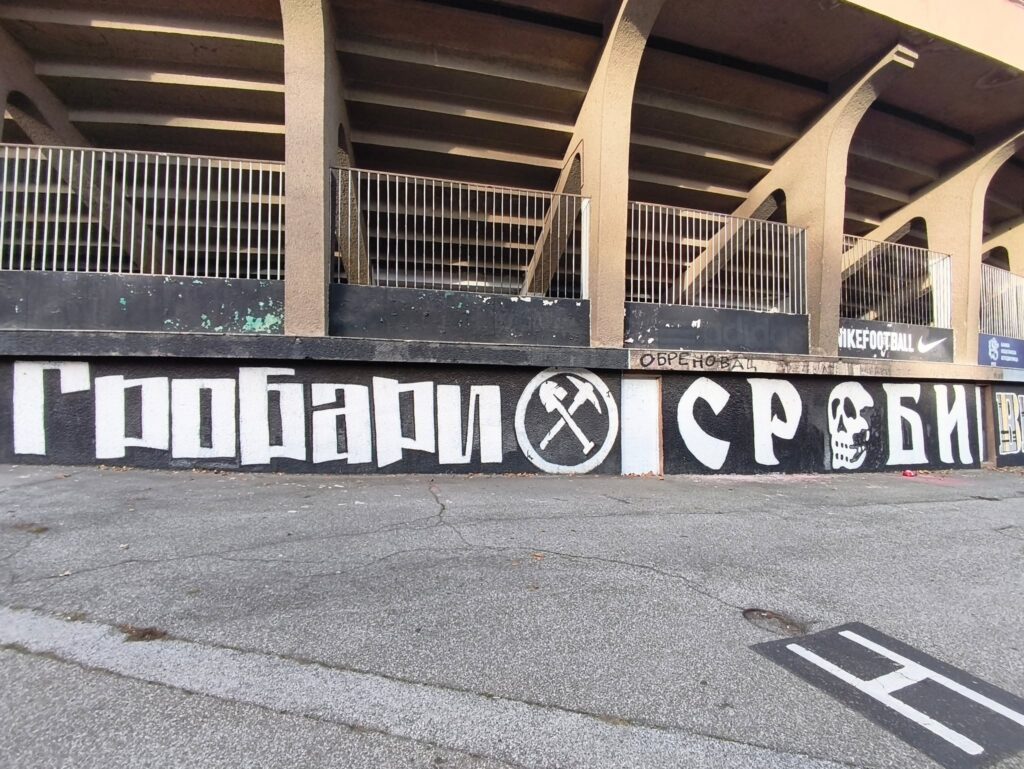
During the communist era, soccer chants were a rare expression of freedom, which inspired gangs of sometimes-armed young men to form. Red Star ultras are known as “Delije,” Serbian for “heroes,” while Partizan fans are nicknamed “Gravediggers.” Between them, the Delije are considered the more hardcore Serbian nationalists.
“Most of them join [ultras] because they are passionate about their club, and they want to show that in a hardcore way compared to regular fans,” said M, a Partizan supporter. “But in the past 10-15 years, there are a lot of people who are joining hooligan groups because they feel stronger in a group or simply they have some interests in small street crime earnings or more serious things.
“Violence has been high in [the] last 30 years, and the hate between Partizan and Red Star fans is insane. Fights can happen any day, any time, because of graffiti, murals, or territory. … Unfortunately, 95 percent of fights in the last 20-30 years are not fair fights, and any kind of weapons can be used, [which has] resulted in lost lives in the double digits since 2001.”
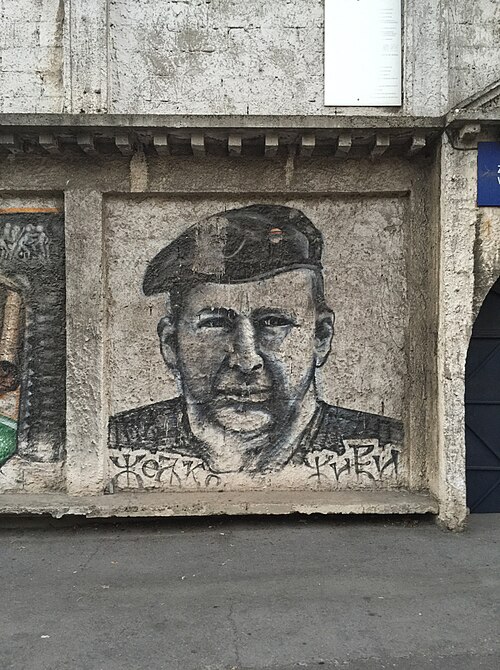
Yugoslavia’s security services recognized the strength of these mobilized young men and recruited Serbian gangster Željko Ražnatović, aka Arkan, to lead the Delije. Arkan was known as a serial bank robber and jailbreaker who escaped from prisons in Germany, Belgium, Switzerland, and the Netherlands. He led Red Star fans against the Bad Blue Boys, a group of local Croatian ultras, in an infamous 1990 soccer riot in Zagreb widely seen as a sign of the beginning of Yugoslavia’s bloody breakup.
Ethnic hatred runs deep in the Balkans, dating back hundreds of years to when the Ottoman Empire ruled the region. The Orthodox Christian Serbs, in particular, resented being second-class subjects under the Ottomans. After the death of dictator Josip Broz Tito, nationalism began filling the void left by communism. Hooligans were among the first to volunteer for the front lines when wars broke out across Yugoslavia.
Arkan recruited Delije into his “Arkan’s Tigers,” a paramilitary unit that robbed villagers and committed atrocities across Bosnia and Croatia. In an infamous photograph, a Tiger is shown kicking a dying Bosnian woman in the face.
Meanwhile, Arkan profiteered from the wartime embargo imposed on Serbia and its neighbors by smuggling gasoline. At the beginning of 2000, his reign as the king of Serbia’s underworld came to an untimely end when a group of men entered the lobby of Belgrade’s Intercontinental Hotel and opened fire with submachine guns. At least three of the bullets struck Arkan in the face, killing him.
After seeing their nation’s defeat in the Yugoslav Wars as having brought Serbia to ruin, hooligans had had enough of their strongman ruler, Slobodan Miloševic, and began joining opposition protests and acting as security at rallies. On October 5, 2000, they led a crowd in storming Serbia’s parliament, overthrowing the dictator. In exchange, some hooligans had their criminal records wiped clean by the new government.
“During the late 1980s and early 1990s, hooligans underwent a significant transformation, becoming increasingly politicized and eventually militarized,” explained Sasa Djordjevic, an expert at the Global Initiative Against Transnational Organized Crime (GI-TOC).
“This connection persisted after the wars, with Serbian groups serving as ‘rent-a-mob’ for politicians and leaders exploiting club stands for organized crime. In Serbia, hooligan groups extend their influence beyond stadiums to act as local power brokers. Their control over specific stands [at the stadium] often translates into control over nightlife protection and drug sales. Some groups serve as political tools, providing force at rallies. Additionally, they channel their influence into legitimate sectors like private security, construction, and hospitality.”
The house of horrors
One of the Serbian Mob’s most brutal crimes in recent years, Belgrade’s “house of horrors,” has ties to hooliganism. In 2021, a series of grisly images shocked a nation already accustomed to bloodshed and war. One photo depicted two men wearing black gloves and smiling at the camera while holding up a severed head. Another showed a nude man laid out on plastic sheets covering the floor. These and other photos of bodies in varied states of anatomical integrity circulated around what the killers believed was an encrypted chat.
“See, honey? Mexico in the middle of Belgrade,” read one message, a reference to drug cartel violence.
From 2019 to 2021, victims were brought to a suburban Belgrade house where they were tortured, killed, and dismembered. The killers then placed their remains in an industrial meat grinder and dumped them in the Danube River. Veljko “The Trouble” Belivuk and his henchmen, the Principi gang—who were also part of Partizan’s Gravediggers—ran the “house of horrors.”
In 2012, Belivuk was just a small-time bouncer and thug when he was asked to join a newly formed Partizan support group, then named the Janissaries. Just like in Arkan’s time, Belivuk allegedly enjoyed a close relationship with Serbia’s security services. Many of the Janissaries’ leaders had no previous connection to the soccer club at all.
In 2016, after the Janissaries’ boss Aleksandar Stanković was killed in a hail of gunfire—part of an ongoing war between Montenegrin Mafia clans—Belivuk succeeded to the top spot and renamed the gang the Principi (after Gavrilo Princip, Archduke Franz Ferdinand’s assassin who triggered World War I in 1914).
The Principi have been major players in Serbian drug trafficking. In 2019, the Spanish Coast Guard found 800 kilos of cocaine bricks, stamped with an image of Gavrilo Princip, on a boat manned by Serbian sailors. The gang even had their own “bunker” at Partizan stadium for stashing drugs and weapons.
When he was arrested, Belivuk claimed he was working for the president of Serbia, Aleksandar Vucic. Belivuk and his men allegedly intimidated political opponents, stopped mocking chants at stadiums, and even apparently put aside their rabid homophobia to provide security for Belgrade’s Pride parade. In the past, hooligans attacked the march, and their running street battles with law enforcement left parts of the city looking like a war zone.
Vucic has angrily denied any ties with mobster hooligans. While Belivuk’s claims should be considered with skepticism, photos of Vucic’s son watching soccer games with Principi members leave many questions.
By virtue of being in a different hemisphere, this World Cup has been spared from the activities of European soccer thugs. Even the Mexican cartels have reportedly told their sicarios not to cause trouble. However, with the 2030 World Cup scheduled for Spain, Portugal, and Morocco, hooliganism will likely be back on the global stage.
Niko Vorobyov is a Russian British freelance journalist, convicted drug peddler, and author of the book Dopeworld. He can be found on X @Narco_Polo420 and Bluesky @narco-polo.bsky.social.
Feedback or questions? Email blog@themobmuseum.org