

Eugene ‘Nick the Blade’ Gesuale was Henry Hill’s infamous ‘Pittsburgh connection’
Pittsburgh Mob associate led narcotics-trafficking network depicted in ‘Goodfellas’
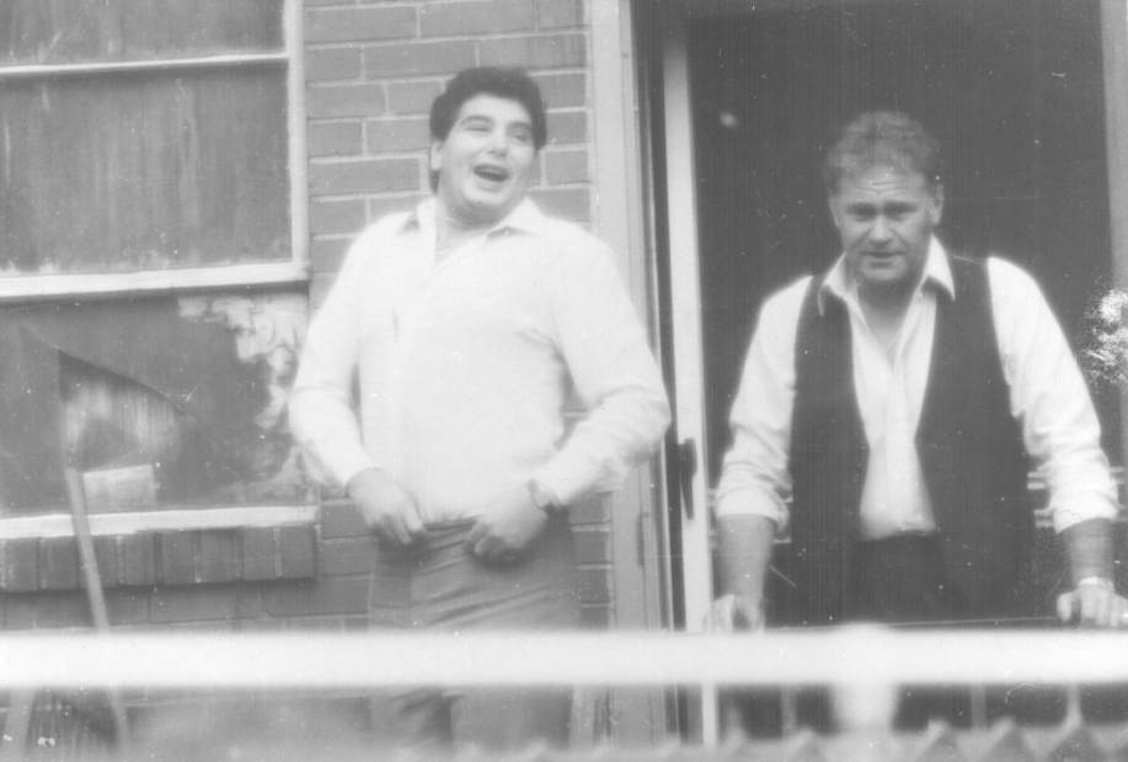
In the 1990 film Goodfellas, Henry Hill’s lucrative drug-trafficking side hustle came from his “Pittsburgh connections.” In real life, that Pittsburgh connection was Eugene “Nick the Blade” Gesuale. Ten years ago, the Steel City’s most flamboyant drug dealer took his last drink, dying of a heart attack shortly after enjoying a glass of pinot grigio. Three decades earlier, he’d been running from the FBI in Montego Bay, Jamaica.
During his criminal career he moved easily between underworld elements, including Cosa Nostra and outlaw motorcycle gangs. Gesuale was a narcotics trafficker whose true reach far outstripped his modest standing as a Mob associate. According to the mobster himself, his life played out like the gangster movie he complained that no one had bothered to make about him.
Legend of a Steel City kingpin
Gesuale was a hard man to lose in a crowd. The 6-foot-4, 250-pound mobster had the unhurried confidence of someone who had never once been convicted of anything, despite a rap sheet of assault arrests long enough to paper a hallway.
Around Pittsburgh’s East Liberty neighborhood, he was known as “Nick the Blade,” a Mafia-connected man who moved drugs with the same quickness he moved a knife. He lived under an assumed name in a $1,200-per-month Highland Park penthouse. He cycled through the aliases of Mark Dax, Dax Zanos, and Marcos Suarez over the years.
He wore Gucci on his feet, flew first class when he flew at all, and drove a Jaguar registered to his mother. A surveillance camera once caught him on a balcony snorting cocaine with one hand and urinating into the night air with the other.
Gesuale was never a made man. FBI files logged him only as a Cosa Nostra associate, a useful earner who stayed one careful step outside the blood oath.
The organization behind Gesuale was Pittsburgh’s Cosa Nostra crime family, headed in those years by John LaRocca and later by Michael Genovese, following LaRocca’s death in 1984. The group never numbered more than two or three dozen made men, a modest roster next to New York’s storied Five Families. They also kept a far lower profile than the Philadelphia crime family across the state, but modesty was the point. The Pittsburgh Mafia preferred to earn without being noticed, making its money through gambling, vending machines, massage parlors, porn shops, and a steady undercurrent of narcotics.
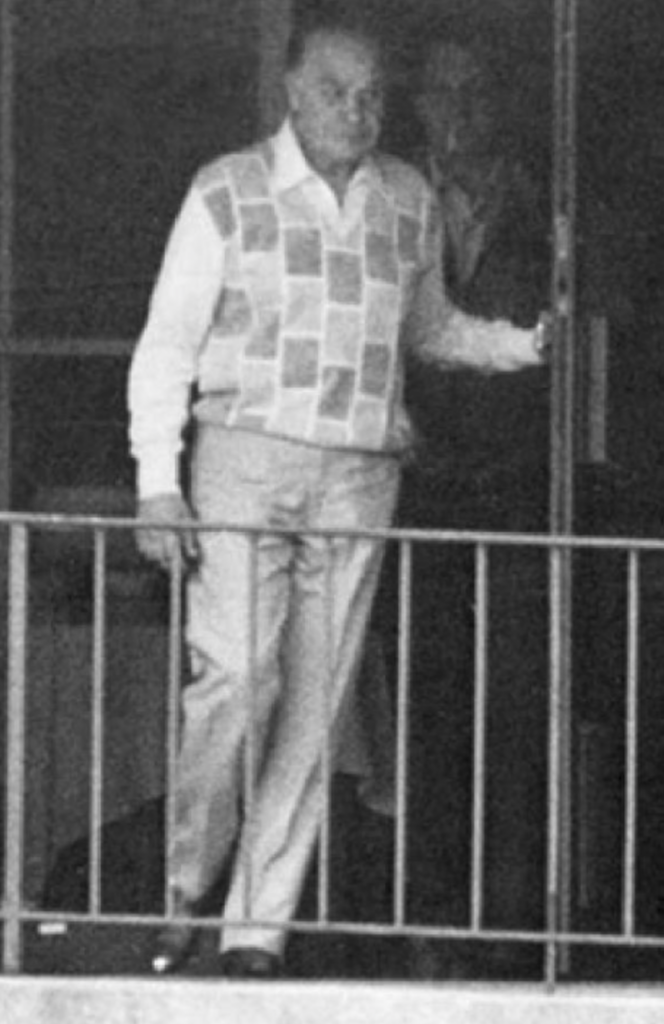
His own circle included his personal bodyguard, Chucky Porter, and LaRocca’s nephew, Anthony “Rocky” LaRocca Jr. LaRocca Jr. doubled as the family’s connection to the Pagans motorcycle club, whose members helped move the drugs, with Louis Raucci and Pagans boss Daniel Zwibel never far behind.
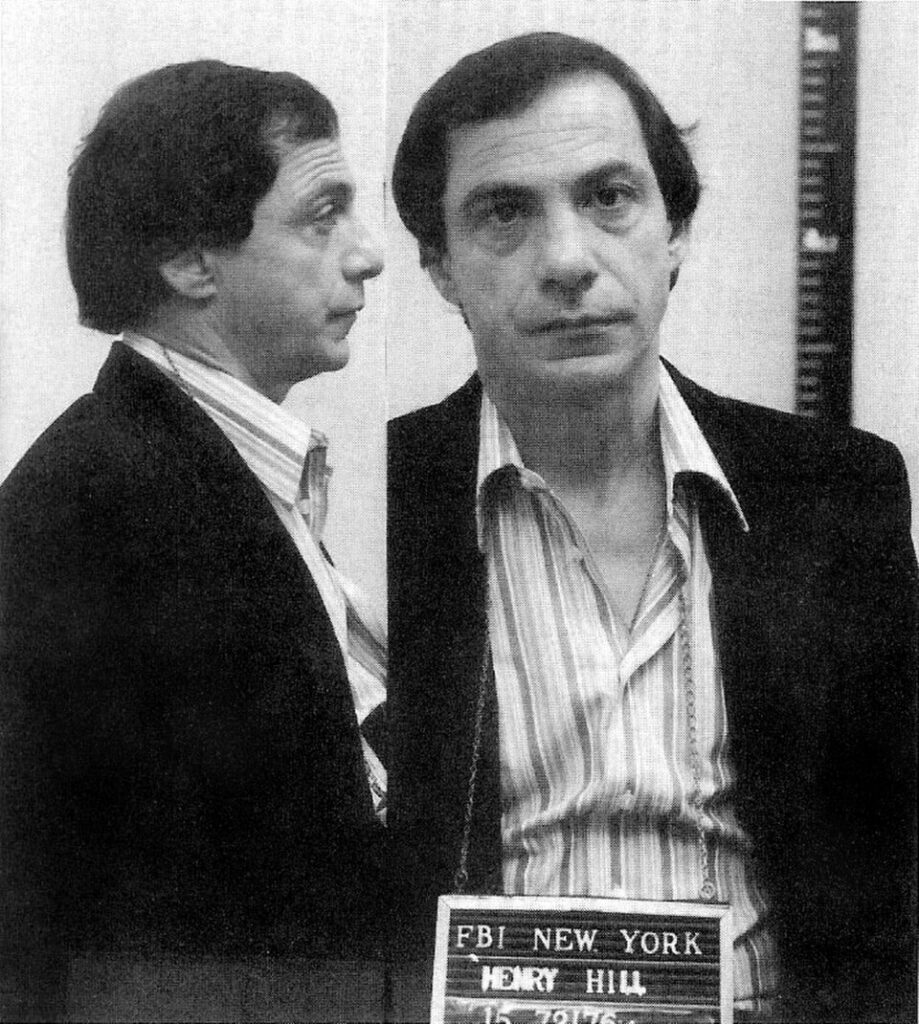
Paul Mazzei, another Pittsburgh native, was the link between Gesuale and the crew made famous in Goodfellas—James “Jimmy the Gent” Burke, Henry Hill, Tommy DeSimone, and the Lucchese contingent. Gesuale was the actual “Pittsburgh connection” depicted in the movie, moving drugs north through Mazzei.
Gesuale had no patience for Hill’s fame after the Goodfellas film release. “They made a movie about that f—ing rat,” the Pittsburgh mobster said, according to Seth Ferranti in the True Crime Newsletter. “They need to make one about a real gangster like me.”
Despite the federal pressure on him over the years, Gesuale refused to cooperate or flip on his associates.
One of his headquarters, which federal surveillance reports named as his base of operations, was a booth at the Beacon Club in Squirrel Hill. A numbers and high-stakes bookmaking den going back decades, the Beacon Club was known for its reinforced steel doors and stairway mirrors meant to spot incoming police raids. He could be found there most afternoons.
On the books
The alias life came apart on April 1, 1980, when a police raid turned his residence over and came up with handguns, Quaaludes, and suspected cannabis. His fake names offered little cover once agents started pulling threads.
One of those threads reached back to 1973, when he was indicted in the so-called Lebanese Connection heroin-smuggling case. A federal judge ultimately threw out the case for lack of evidence, buying Gesuale a few more years of room to move. It was a different thread that finally took him down—Operation Coldwater. The FBI undercover RICO operation out of Tampa spent years quietly assembling the case that would eventually catch up with Nick the Blade.
Gesuale’s documented criminal record spans more than two decades, beginning with repeated Pittsburgh assault arrests from the late 1960s, none of which produced a conviction. In December 1978, Gesuale and Porter beat down a convicted numbers operator with a baseball bat on downtown Pittsburgh’s Boulevard of the Allies. After their subsequent arrest for the beating, they both refused to cooperate.
That same month, an argument among about eight people turned into a shooting outside a First Avenue hair salon. The shooters, blocked by a truck as they tried to flee, were caught by police, who also picked up Gesuale and Porter. Both refused to even identify themselves.
The 1980 raid, however, turned up evidence that helped authorities build the case that would finally put Gesuale behind bars.
The ‘Pittsburgh connection’ dissolves
Once an arrest warrant surfaced a few years later, Gesuale fled. The run finally ended in 1986, when Jamaican police arrested him in Montego Bay after 18 months as a fugitive.
Five days into the Operation Coldwater trial, Gesuale pleaded guilty. The judge gave him 45 years in prison.
He walked out of prison on October 31, 2014, and moved to Florida. Two years later, he died of a heart attack at the Past Times Restaurant and Bar in Ormond Beach, with a glass of his usual pinot grigio in front of him. He was 73.
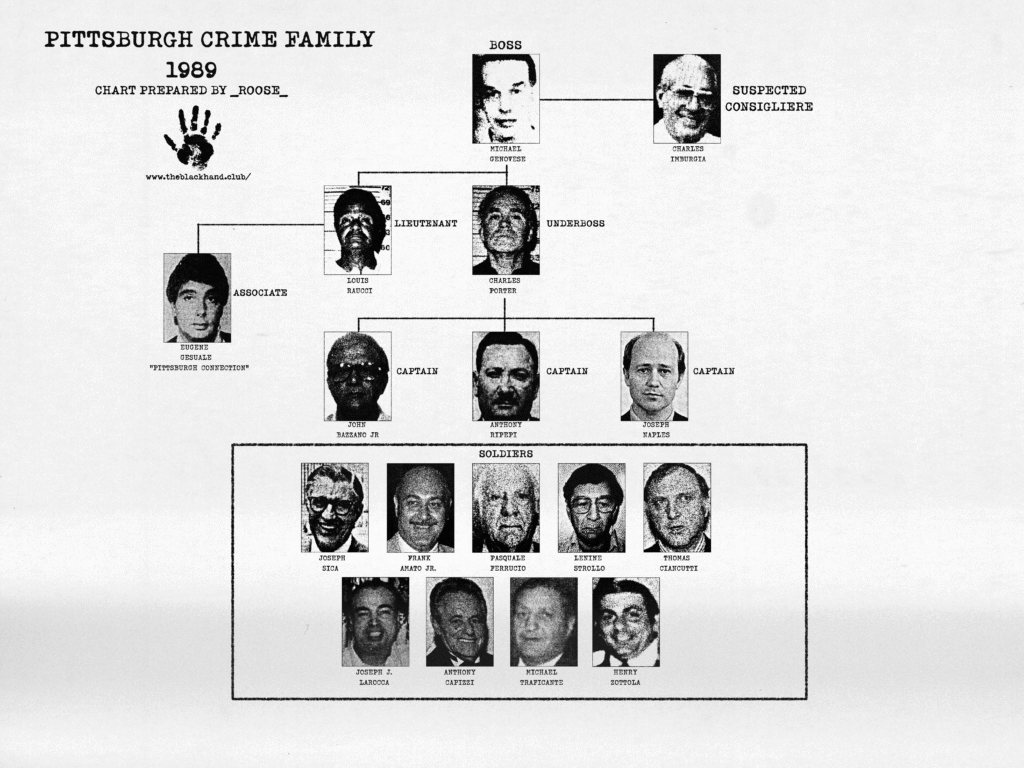
Some of the men around him fared no better. Porter stood trial in 1990 alongside Raucci on racketeering and drug charges. His attorney argued that he was “just a gambler.” Porter later traded the life for the federal Witness Protection program. Raucci died in prison in 1995. LaRocca Jr. served eight years on murder and cocaine trafficking charges and denied, to the end, any tie to the outfit his family built. Michael Genovese, the quiet boss who outlasted them all, died a free man in 2006.
Thirty years separated the fugitive in Montego Bay from the old man with the pinot grigio. On paper, he was only ever a Mob associate, but in practice, he was one of Pittsburgh’s largest cocaine suppliers. Gesuale served as the bridge between the Pittsburgh crime family and the Pagans who helped move it, a bigger player in the city’s drug trade than the FBI’s modest label for him suggested.
Christian Cipollini is an organized crime historian and the award-winning author and creator of the comic book series LUCKY, based on the true story of Charles “Lucky” Luciano.
Feedback or questions? Email blog@themobmuseum.org