





Since World War II, Russian mobsters have traded prison cells for battlefields
Russo-Ukrainian War continues the cycle of releasing imprisoned mobsters to fight in battle
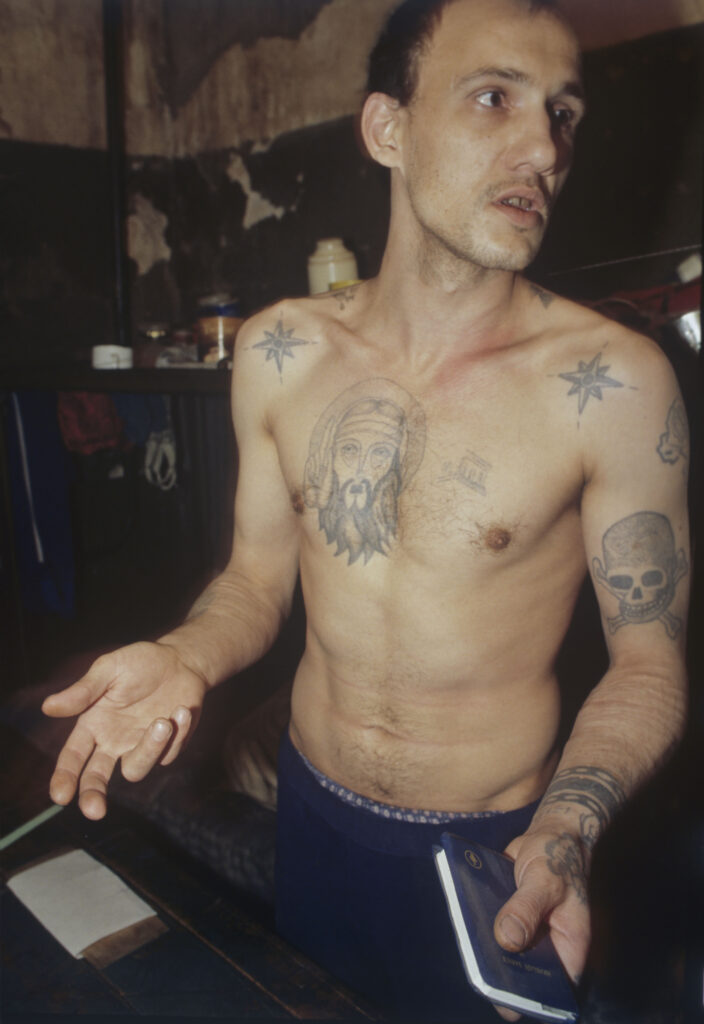
“I like watching historical films,” said the Wolf, a middle-aged ex-convict who wished to remain anonymous. “I don’t watch all those films where the hero shoots 100 people, because I’ve been shot—in the head, in the chest—so I know what it’s like.”
“Stabbed, too,” he continued. “They wanted me under their banner, and I told them to f— off, so they shot me in the head but didn’t kill me. I came back and shot all those f—ers.”
The ex-convict’s nickname comes from a wolf tattoo on one of his forearms. “A wolf is a wild animal; he doesn’t obey or answer to no one,” he said.
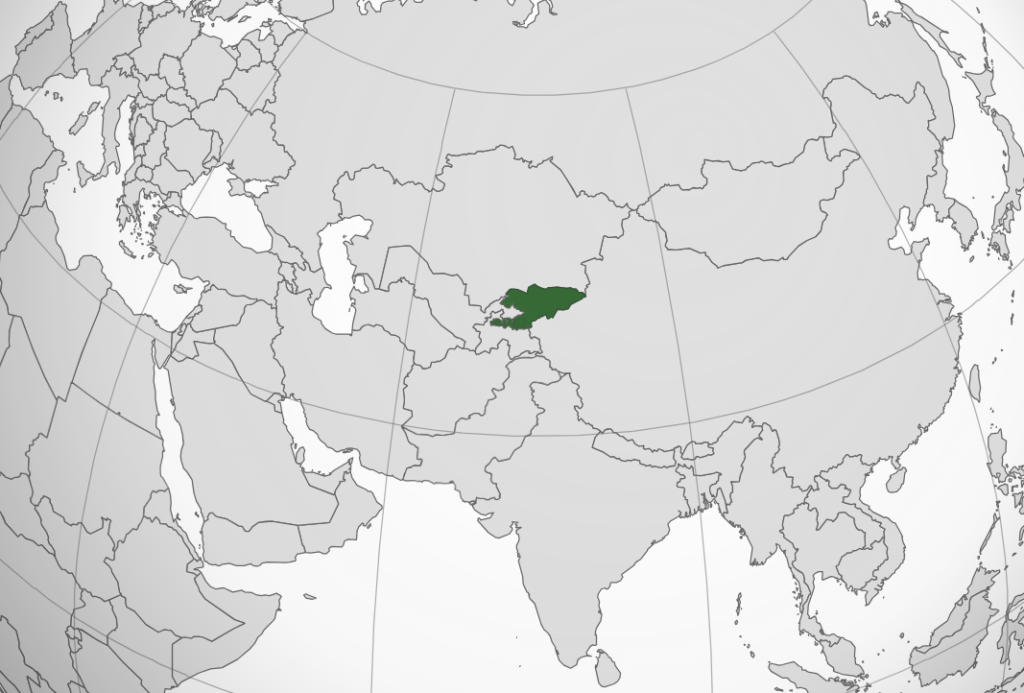
The Wolf recounted his experiences while riding in a car through the steppes of Kyrgyzstan. Once a part of the Soviet Union, Kyrgyzstan lies on the frontiers of Central Asia between the rest of the old Soviet empire and western China.
The Wolf was a member of an underworld subculture: the vory-v-zakone, “thieves-in-law” in Russian. The eight-pointed stars on his shoulders indicated his esteemed status within the hierarchy. Sometimes described as the equivalent of “made men” in the Italian Mafia, the vory are outlaws who command authority and respect within the underworld by living up to a criminal ideal. The vory first appeared in Joseph Stalin’s gulags—bleak prison camps in the frozen wastes of Siberia—in the 1930s as an answer of sorts to the official Communist ideology.
The thieves’ code
Not just any Fyodor, Pyotr, or Stepan could become a vor. One had to be vouched for by at least two established vory and live by a strict set of rules known as the “thieves’ code,” although the strictness has relaxed over the years. For instance, thieves are, in theory at least, supposed to live entirely by stealing and gambling without earning any legitimate income.
The Wolf isn’t quite a vor himself, but vor-adjacent. He still lives by the old-school principles: He’s never held a job, never studied, and never owned a business. He identifies with the subculture and is often as respected as a vor but hasn’t officially been “crowned.”
This “code” extends to prison life, too. “The most important thing is not to lie; you have to answer for your words,” the Wolf explained regarding the brutal prison subculture.
“If you’re an upright fella on the outside, you’ll be one on the inside, in my opinion. Or be a duck [snitch]. They become roosters straight way. You can’t shake hands with them, drink tea with them, say hello to them even. … Once you’re a rooster, there’s no way of climbing back up.”
A “rooster” is the lowest of the low in the prison hierarchy, occupying a space not unlike sex offenders in American penitentiaries.
Another of the vory’s original rules was strict non-cooperation with the authorities in any way, similar to the Mafia’s omertà. However, this went beyond a code of silence.
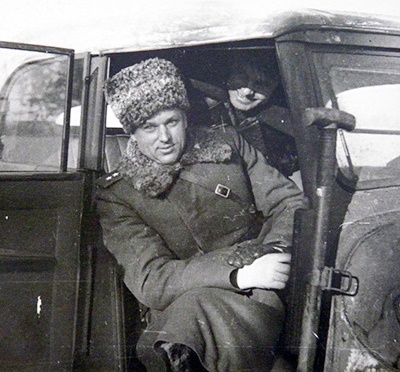
In 1941, Nazi Germany invaded the USSR, marking the opening of the Eastern Front in World War II. Facing a shortage of manpower, the Red Army turned to the gulags. More than a million petty crooks and hardened hoodlums alike jumped at the chance to leave the camps, serving under the command of General Konstantin Rokossovsky (who was himself imprisoned during Stalin’s purges). But enlisting in the army violated the non-cooperation rule.
Upon their return, these criminal-turned-veterans were thrown back into the slammer. But having broken the thieves’ code, they were no longer welcome by the vory who stayed behind. A gang war erupted in the gulags between the thieves-in-law and the “Bitches,” as the returning faction was called. Backed by the camp administration, the Bitches sadistically tortured the thieves to death. Roving detachments of battle-hardened Bitches were transferred from camp to camp, forcing vory to defect by kissing the blade of a knife or face grave consequences.
The Bitches nearly drove the vory to extinction, but enough adapted to survive. Beginning in the 1970s, the thieves’ code eased. The thieves could now take part in black market business, and some contact with officialdom, such as bribery, was permitted.
Decline of the vory
In the early 1990s, Russia began its chaotic transition to capitalism, and everything was up for grabs. Often, the line between crime lord and oligarch was paper-thin. The vory were well-positioned to lead gangs of tracksuit-wearing young men offering businesses “protection,” or krysha (“roof” in Russian slang), in those uncertain times.
But they had competition. Veterans returning from the 1980s invasion of Afghanistan and, later, the wars in Chechnya, began offering their combat skills as enforcers, called “torpedoes,” for the racketeering organizations muscling in on the free market. Veterans’ associations sometimes became fronts.
In 1996, 14 people were killed when a bomb exploded at a memorial service at the Kotlyakovskoye cemetery in Moscow. Authorities linked the attack to an internal dispute in a veterans’ association over duty-free vodka, a tax break extended to these groups.
The thieves may have still commanded respect, but they were no longer the kings of Russia’s gangland. Eventually, President Vladimir Putin and his security forces consolidated power, while most of the 1990s crime bosses wound up dead, in jail, or going legit. In 2019, Putin signed a law punishing the act of “holding a high rank in the criminal hierarchy.” Up to this point, vory would proudly tell the cops their identity on camera, even if they didn’t confess to any felonious misdeeds. Now, simply being a vor was a crime. Three other ex-Soviet republics—Georgia, Ukraine, and Armenia—since have adopted similar laws.
Revolutionary ruffians
Meanwhile, in 2005, mass protests erupted in the now-independent Kyrgyzstan. Sensing an opportunity, the Russian Mob sicced its goons on President Askar Akayev, kicking him out and securing itself positions within the new, post-revolutionary government, which came with perks such as parliamentary immunity.
But a power struggle erupted, and several newly elected MPs became targets themselves, including a crime boss’s brother shot dead during a prison riot orchestrated by Chechen thief-in-law Aziz Batukayev. In 2013, following another national uprising, Batukayev was released after presenting a forged doctor’s note and was immediately whisked away to Russia on a private jet. The president at the time, Almazbek Atambayev, was arrested six years later for enabling Batukayev to vacate the premises, only to be released on medical grounds in 2023 after yet another revolution dethroned his political rivals.
With Aziz Batukayev out of the picture, his fellow thief-in-law Kamchy Kolbayev became Kyrgyzstan’s reigning godfather. Kolbayev was vouched for by Vyacheslav Ivankov, the vor busted by the FBI for running the Russian Mob in New York’s Brighton Beach. Blacklisted by the U.S. State Department as a narcotics kingpin, Kolbayev ruled over a billion-dollar criminal empire and sported a $500,000 wristwatch—once owned by Vladimir Putin—engraved with his initials, “KK.”
“If Kamchy says we’re going to war, all my lads will strap up,” the Wolf said. “If the president of our republic says we’re going to war, we’ll tell him to go to hell.”
In October 2023, Kolbayev was shot dead in a standoff with the police at a bar he owned in the Kyrgyz capital, Bishkek. The official story is that he went down guns blazing, but it seems unlikely he’d take on heavily armed lawmen. Kolbayev’s death was followed by a roundup of his capos and other mobsters, who were forced to videotape confessions renouncing their criminal ways.
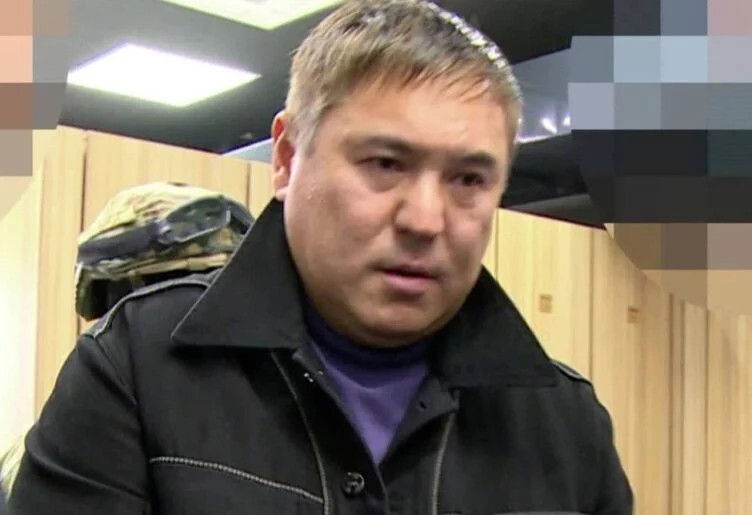
“Kyrgyzstan is one of the last outliers of this subculture of vory-v-zakone that continues to be tightly connected to the Russian underworld, unlike neighboring countries like Uzbekistan,” Dr. Erica Marat, an expert on Kyrgyzstan’s criminal underworld, explained.
“But that subculture is slowly being eradicated by the current regime and also by the rise of non-Russian-speaking Mob leaders who can’t really relate to their Russian counterparts. The notorious extrajudicial killing of Kolbayev by the security forces showed the dominance of the state over the underworld, so that the underworld can’t unite as much as it used to and has to be respectful of the state.”
Across the board, the thieves-in-law are becoming increasingly irrelevant. The task of strong-arming businesses is left to corrupt officials and police, while the largest criminal industry, narcotics, now largely takes place online. The vory still hold sway behind bars, but even there, demographics are changing. A significant portion of Russia’s prison population now consists of practicing Muslims abiding by their own customs, as well as younger inmates held for drugs charges with little interest in upholding archaic traditions.
Plus, with the advent of capitalism, the title of vor can simply be bought by well-connected individuals without proving their devotion to the thievish lifestyle.
“I’ve been to Russia,” the Wolf remarked. “There’s three or four thieves left who are stand-up guys, but the rest only care about pigging themselves out.”
However, a major development suggests that the veteran-to-mobster cycle may be occurring once again.
War in Ukraine
In a crime that shocked the nation in 2010, six masked thugs descended on the home of farmer Server Ametov in the village of Kushchyovskaya in southwest Russia. They tied up everyone they found inside and stabbed them to death before setting the house alight. Altogether, 12 lives were lost, with the youngest being a 9-month-old girl. Ametov had been in a feud with local gang lord Sergey Tsapkov, whose depraved crew had terrorized the village for decades, kidnapping and raping about 200 young women.
Tsapkov died in his cell before justice could be passed, but two of his henchmen, Vyacheslav Ryabtsev and Andrei Bykov, were released early from their 20-year stretch for military service.
In 2022, Putin appeared on national TV to declare a “special military operation”—the invasion of Ukraine. What the Russians anticipated would be a quick march to Kyiv turned into a seemingly never-ending quagmire. Rather than drag middle-class, college-aged men to the trenches, military recruiters looked for expendable manpower. Not only could prisoners—convicted killers included—earn an early release by volunteering to fight in Ukraine, but even those currently under investigation could have their cases dropped. Bykov and Ryabtsev were among the first of more than 120,000 prisoners to enlist.
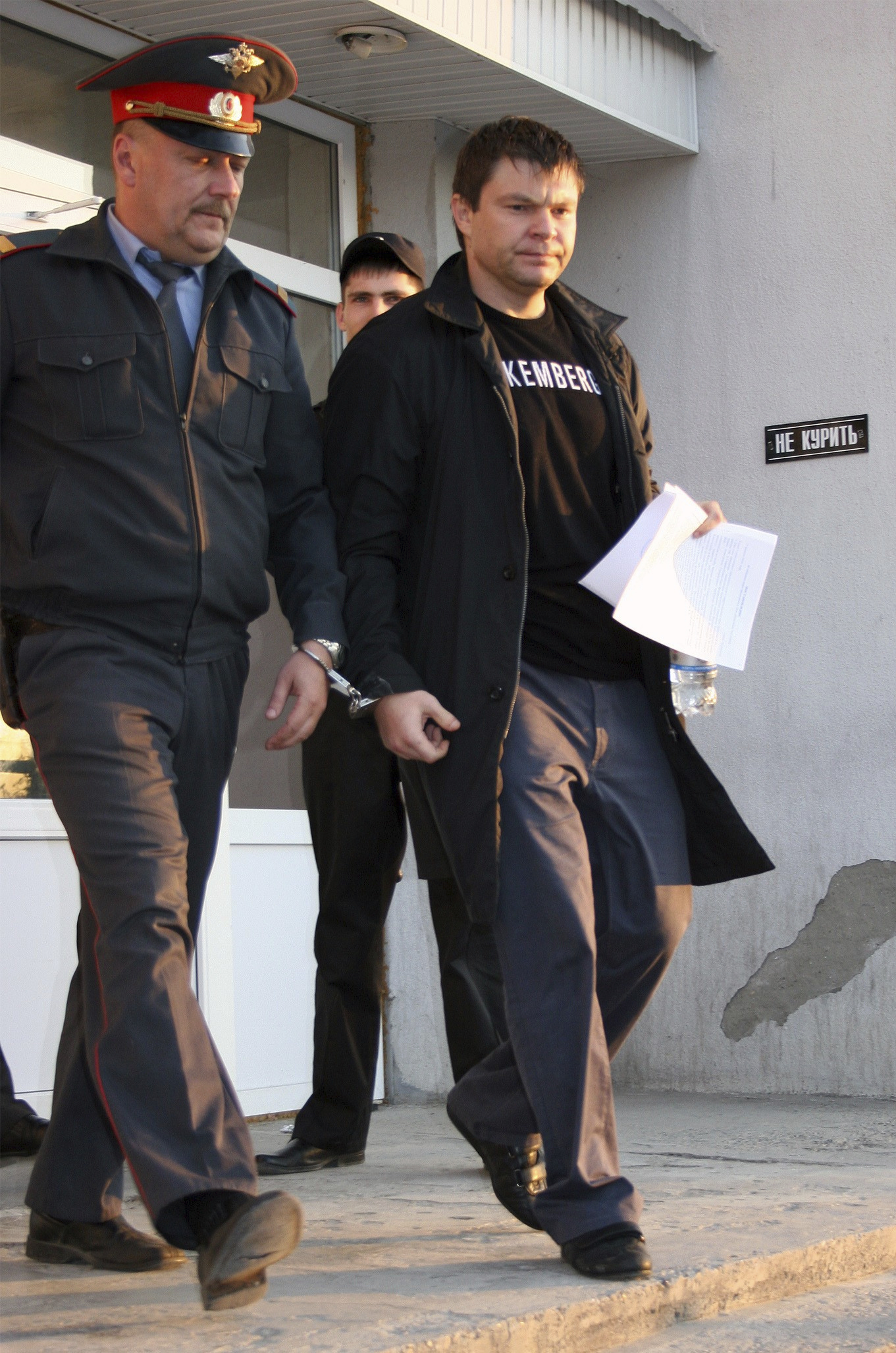
Russia is not the same today as it was in 1945 or 1991, but there are already signs of a new crime wave. As of December 2025, at least 1,000 Russians have been killed or wounded by veterans returning from the Ukrainian front. Official data suggest that 6 percent of veterans are arrested for a crime after being demobilized. When they are re-arrested, judges typically show leniency to heroes of the “special military operation.”
Thanks to the Russo-Ukrainian War, the Russian Mob could be entering a new era.
Niko Vorobyov is a Russian British freelance journalist, convicted drug peddler, and author of the book Dopeworld. He can be found on X @Narco_Polo420 and Bluesky @narco-polo.bsky.social.
Feedback or questions? Email blog@themobmuseum.org