




Grounded in history, ‘Mafia: The Old Country’ is a game you can’t refuse
Latest entry in ‘Mafia’ series transports players to authentic 1900s Sicily
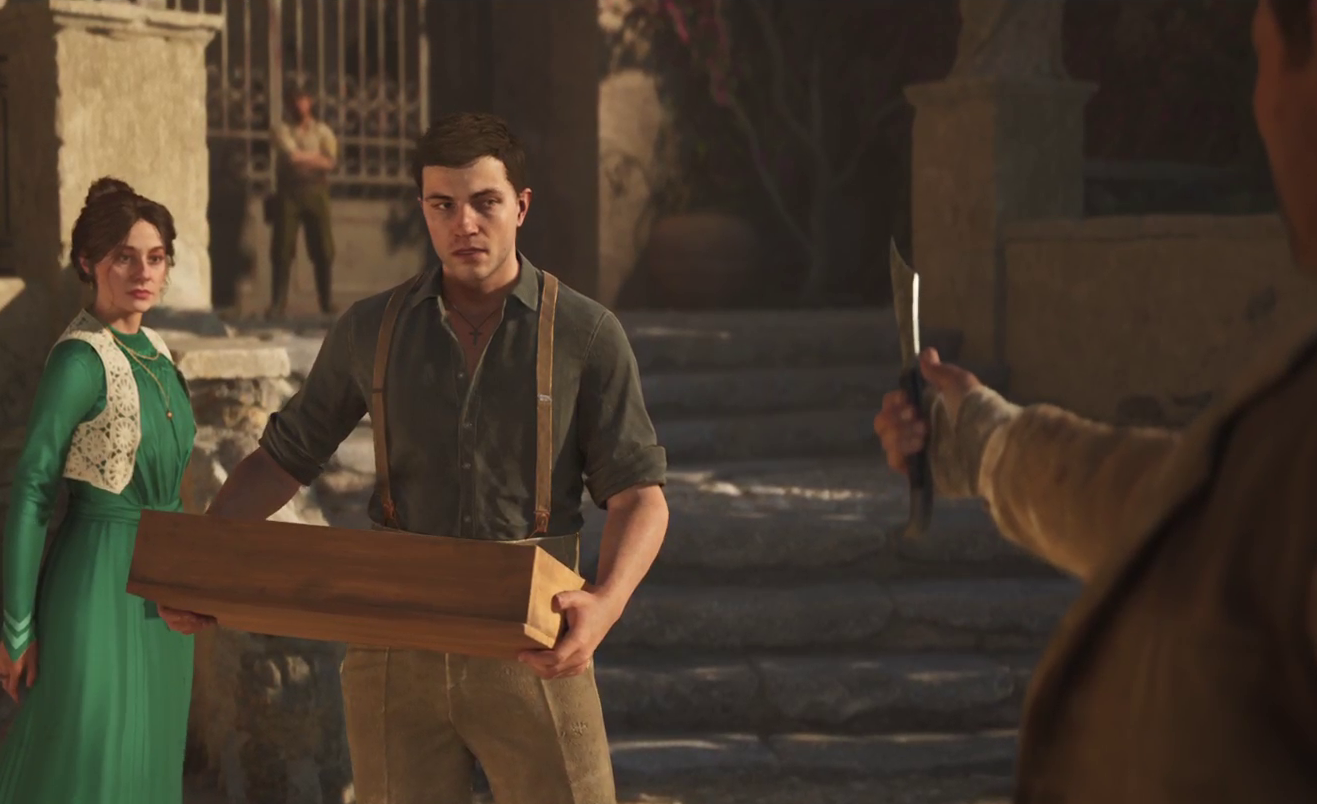
The Mob movie may be experiencing a lull, evident by the lukewarm receptions to this year’s The Alto Knights and Mob Cops, but the Mob video game is thriving. This month, 2K Games released Mafia: The Old Country as the latest entry in the Mafia series.
In the first three games of the series, players explored the streets of Lost Heaven, Empire Bay and New Bordeaux — inspired by Chicago, New York and New Orleans, respectively — representing eras of Mob history from the 1920s to the 1960s. For the latest installment, game developer Hangar 13 takes players overseas to San Celeste, Sicily, and turns the clock back to the beginning of the 20th century. In those days, the American Mafia was in its infancy, but the Mafia in Sicily had been going strong for decades.
‘Play a classic Mob movie’
The Old Country casts aside the modern trend of open-ended exploration in favor of a concise, narrative-driven experience. “Our top goal for every Mafia game is to deliver the promise … that you’re going to play a classic Mob movie,” Alex Cox, the game’s director, said in a panel at PAX East, an annual gaming convention.
Over the 12- to 14-hour playthrough, short by today’s standards, players control Enzo Favara as he works his way up the Mafia ladder. His tasks escalate in severity throughout the game. Enzo starts with intimidation, strikebreaking and counterfeiting, but it doesn’t take long to intensify into gun battles and risky assassinations. By the game’s end, Enzo’s body count is significantly higher than what you would see in a Mob movie, but it’s typical for an action-oriented video game that sacrifices some realism for entertaining gameplay.
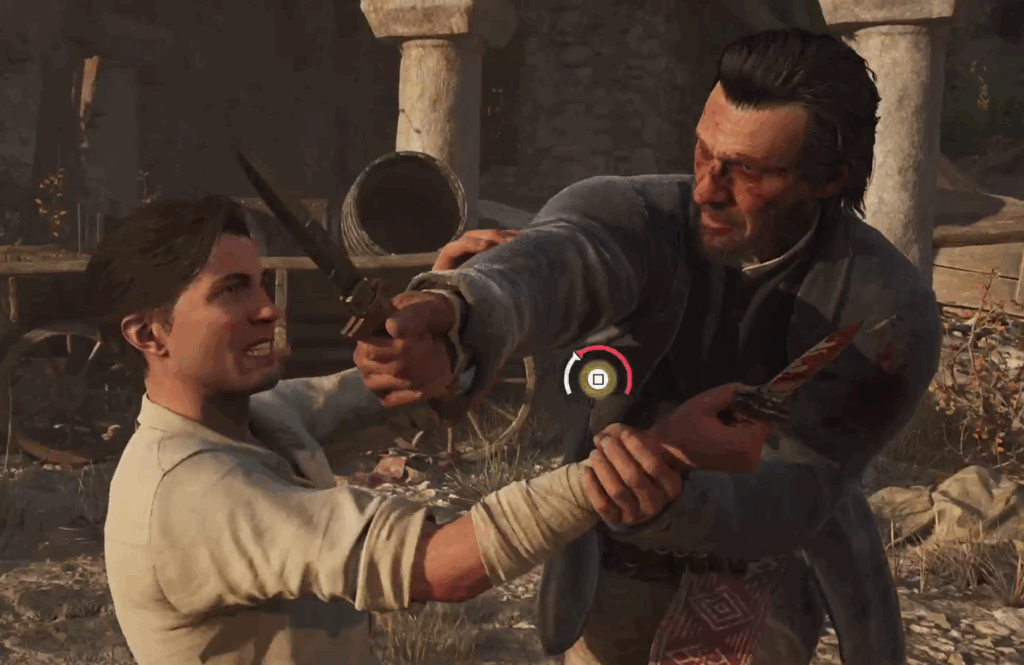
In a review for the gaming website IGN, Luke Reilly praised the game as “a potent and immersive time machine to a rarely explored era.” As the first game fully set in historical Sicily, The Old Country sits comfortably alongside other games that aim to faithfully re-create classical eras, such as the Ancient Egypt and Renaissance-era Rome settings in the Assassin Creed series.
Welcome to San Celeste
The Old Country’s title comes from the opening chapter of Mafia II with the same name, set in the fictional city of San Celeste. In the second game, the player controls Vito Scaletta, a future wiseguy who starts as a U.S. soldier fighting Mussolini’s National Republican Army in San Celeste. As his squad gets overtaken and killed one by one, Scaletta is saved by the arrival of local crime boss Don Calò, who announces Il Duce’s defeat through a megaphone.
The deliverance is straight from the apocryphal tale of Calogero Vizzini, a real-life Mafia don whose modest interactions with the U.S. military inflated to a Paul Revere-style trek across Sicily heralding the arrival of General George Patton’s forces.
The Old Country takes the setting from Mafia II and rewinds time 40 years. Hangar 13 expanded the world around San Celeste into the invented province of Valle Dorata. According to the game’s website, the development team traveled to Sicily for inspiration in building the town of San Celeste and the surrounding countryside. The team also used books, films and historical photos and documents as reference material to make San Celeste an authentic depiction.
Scattered across Valle Dorata are vineyards, sulfur mines and citrus fields, all in the foothills of Mount Etna, the most active volcano in Europe. However, Hangar 13 takes a major creative liberty in grouping these elements together.
Mount Etna is ever present in the background throughout the game. Amid the game’s warring Mafia clans, earthquakes and eruptions threaten to add more chaos to the region. But Etna is located on the east coast of Sicily, while most Mafia activity and sulfur mines were in the western and central provinces. Fruit orchards were also most prominent in the rich, volcanic soil around the base of Mount Etna.
Valle Dorata is a microcosm of Sicily rather than representing a specific region, which gave the developers latitude to draw a more complete picture of the Mafia.
Sicily’s Cosa Nostra
In the mid-1800s, amid Italy’s unification, the nascent government was tasked with establishing order in the newly united country. Sicily, however, was neglected in favor of the mainland.
Without law enforcement keeping the peace, criminal groups plundered Sicily’s rich natural resources. Wealthy landowners hired private guards to defend their estates, although these enforcers were often bandits themselves. As middlemen between their employers and brigands, these security forces capitalized on their position by demanding protection payments.
Gradually these intermediaries embedded themselves into Sicilian society and evolved into the Mafia, filling in the voids left by mainland Italian authorities. Through extortion, blackmail and labor manipulation, the Mafia both assisted and exploited the affluent, gaining influence over the island’s land and industries. It’s this Mafia-dominated Sicily that provides the setting for The Old Country.
The game begins in Sicily’s sulfur mines with Enzo as a young man sold into indentured servitude by his family. The “carusi,” or “mine-boys,” were children as young as 4 years old, forced to labor strenuously until they paid off the debt, which would take until adulthood at least — if they didn’t die along the way. The mine’s cruel overseers use violence to keep Enzo and the other workers toiling for long hours. All this is under the direction of a ruthless Mafia boss, Don Ruggero Spadaro.

Enzo soon escapes from the mines and finds himself in the service of Spadaro’s rival, Don Bernardo Torrisi, head of the most powerful Mafia family in San Celeste. Conflict between the two clans drives the narrative of The Old Country.
Both allies and enemies use Enzo’s origins as a nickname: “Carusu.”
Historian John Dickie, an expert on Sicily and the Mafia, told 2K Games in an interview that a mafioso starting as a “mine-boy” would be plausible in 1900s Sicily. “The sulfur mines … were a real hotbed of Mafia activity,” Dickie said. “It’s one of the key industries in Sicily, and it was a brutal, brutal industry.”
In 2024, a study led by Italian economic historian Carlo Ciccarelli reported a correlation between sulfur mines with primitive, hard-labor working conditions and the presence of the Mafia. Mafiosos provided the muscle needed to push workers to their limits. Larger industrial mines had better and safer working conditions, reducing the need for Mafia motivation.
The horse before the car
Driving vehicles has been a fixture of the Mafia series, and The Old Country is no exception. However, the dirt roads that crisscross Valle Dorata aren’t bustling with cars. Instead, Hangar 13 introduces to the series a more common form of transportation in that era: horses.

As Enzo begins his journey through the Sicilian secret society, horses are his primary mode of getting around. There are hand-cranked cars in The Old Country but with high speed comes poor handling and the risk of catastrophic crashes. And unlike past games, players must wait until Enzo rises a little higher in the Mafia before earning the privilege of driving.
Cars were relatively rare in Sicily at that time. Although Italy was a major producer of automobiles, exports vastly outperformed domestic sales. A 2021 study by Italian researchers at the University of Torino estimated that Italy had only about 6,000 cars in 1907, which amounts to one vehicle per 5,500 residents. Cars were a luxury item reserved for the wealthy, affluent mafiosos among them.
However, the seemingly endless supply of enemy cars in one of The Old Country’s chase sequences defies realism in favor of thrills.
Another use of early Italian automobiles in The Old Country is racing, a regular feature in the Mafia games. In 1906, the Targa Florio debuted as Italy’s first car racing event. In its inaugural rally, drivers navigated the perilous mountain roads surrounding Palermo on a circuit that spanned 148 kilometers. The first champion of the Targa Florio crossed the finish line after more than nine hours. A version of the Targa Florio appears in The Old Country, although Hangar 13 has mercifully shortened it compared with its real-life counterpart.
Mafia lip service
Once Enzo proves his worth, he, like most of the other anti-heroes in the series, is formally initiated into the Mafia. The details of the ceremony — the knife on the table, oath of omertà and burning card of a saint — mostly resemble the later American version with one significant change: Instead of pricking Enzo’s finger, Don Torrisi slices Enzo’s lower lip.

“Usually, it’s the trigger finger. You prick the trigger finger and then you drip some of the blood onto the sacred image. That’s the Madonna of the Annunciation, the Mafia’s patron,” Dickey explains. “I know that in Corleone, which is a town that’s about 50 kilometers from Palermo, they did use the cut on the lip.”
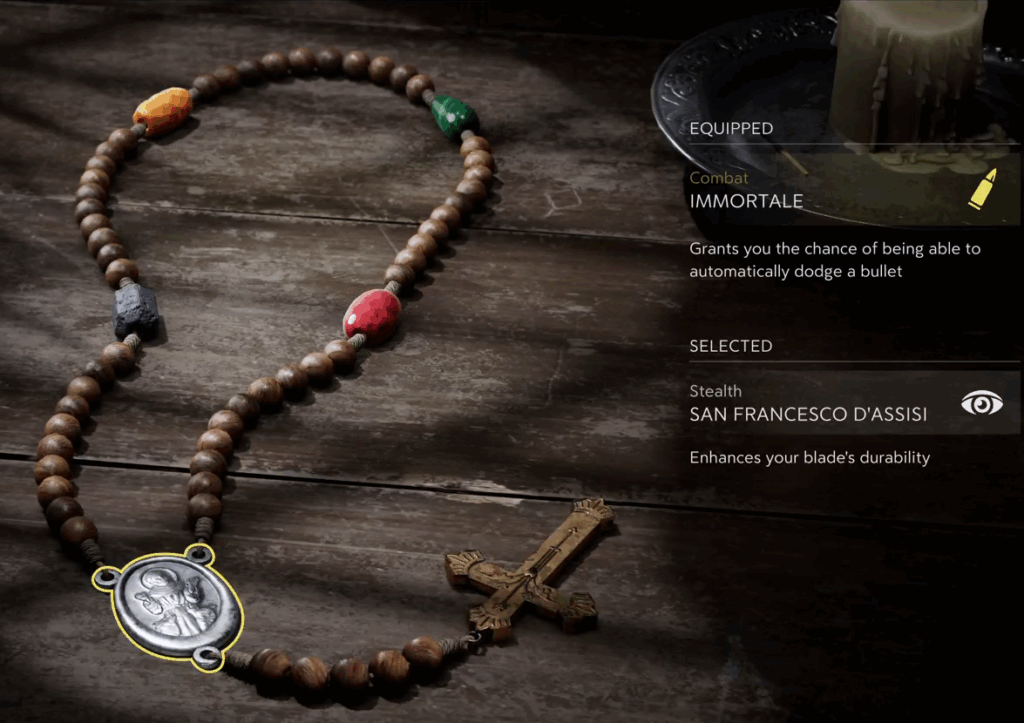
The heavy influence of Catholicism in the Mafia, as seen in the initiation ritual, is gamified in the “perk” system, which upgrades Enzo’s abilities. Players can find bead charms throughout the game that they can swap into Enzo’s rosary to hold more ammunition, have better aim or give knives more durability. Spending money to upgrade the crucifix with finer metals, such as silver and gold, allows the rosary to hold more beads and give Enzo more perks.
For all the religious traditions that the Mafia observes, there are moments in The Old Country where sacrilege is not out of the question if it fills the boss’s wallet and gives him an edge over his enemies.
And that is one thing the Mafia series does well: It does not glorify organized crime. The Old Country illustrates that the Mafia’s honor is a thin veneer concealing selfish ambition and greed. From the beginning, the player feels uneasy as Don Torrisi’s generosity is offset by subtle signs of fear among the workers on his estate. Enzo receives vague warnings about becoming too friendly with Torrisi’s daughter, Isabella, whose father sees her only as a pawn for cementing alliances among the elite.
The Old Country captures the Sicilian Mafia authentically — without romanticizing — while still offering a satisfying gameplay experience reminiscent of the streamlined, cinematic games of the 2000s. With reviews summing up to “mostly positive” according to the game’s page on Steam, a PC gaming platform, the future bodes well for the Mafia series.
Perhaps Hangar 13 will place their bets on another unique setting desired by fans: Mob-era Las Vegas.
Feedback or questions? Email blog@themobmuseum.org