




- Home
- /
- Events
- /
- It’s Not Always Sunny in Philadelphia: Organized Crime in the City of Brotherly Love
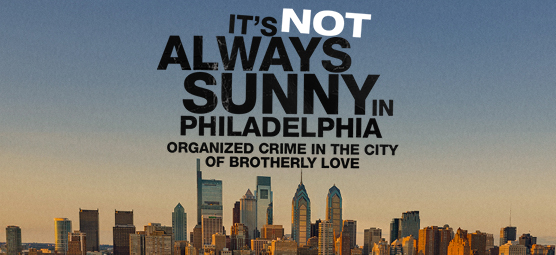
It’s Not Always Sunny in Philadelphia: Organized Crime in the City of Brotherly Love
Date: April 25, 2024
Time: 7 to 8:30 p.m.
Cost: Free for Museum Members or with Museum Admission
Watch
Organized crime in Philadelphia is often overshadowed by underworld intrigues 100 miles up the road in New York, but the City of Brotherly Love has a rich Mob story of its own. A panel of authors, experts and a former underworld racketeer will break down the history of organized crime in Philadelphia, from Angelo Bruno and Phil Testa to Nicky Scarfo and a notorious Irish burglary crew, as well as the city’s deep ties to Atlantic City.
A book signing will follow the program. Click here to pre-order Blood and Honor by George Anastasia. Click here to pre-order Confessions of a Second Story Man by Allen M. Hornblum.
Featured Speakers
George Anastasia
George Anastasia, who spent more than thirty years reporting on crime for the Philadelphia Inquirer, is the grandson of Sicilian immigrants who settled in South Philadelphia. He is the author of six books of nonfiction, including Blood and Honor: Inside the Scarfo Mob—the Mafia’s Most Violent Family (which Jimmy Breslin called the “best gangster book ever written”); The Last Gangster; and The Summer Wind: Thomas Capano and the Murder of Anne Marie Fahey. He lives in southern New Jersey.
George Martorano
George Martorano’s one-of-a-kind story begins in 1950’s South Philadelphia. Son of “Long John” Martorano and godson to Angelo Bruno (“The Docile Don”) he was not meant to follow into the family business. Nevertheless, George fell into a circle of friends involved in marijuana. He was a small-time player at first but would soon earn the nickname “The Cowboy”- a moniker picked up from FBI wiretaps. In 1982, he was arrested in connection with the seizure of a truck load of marijuana. The government labeled him a “kingpin”- head of a $75 million smuggling operation. George’s legal case soon turned political. He had to deal with a compromised defense attorney and an overzealous judge – all against the backdrop of a bloody Philly mob war involving “Little Nicky” Scarfo. Under false pretenses, George was talked into pleading guilty. George expected a maximum 5-10 years prison time (federal sentencing guidelines called for 3-5 Years) George was sentenced to life in prison without parole on September 20, 1984. Observers suspected that this harsh sentence was leverage to force George to flip on Philly mob members – people with whom George had no criminal connection.
James J. Leonard Jr.
James J. Leonard Jr. started his own practice, the Leonard Law Group at the age of 28, specializing in aggressive criminal defense litigation. In 2003, Mr. Leonard won two high-profile jury trials that established his reputation as a highly skilled trial attorney and made him one of the most sought-after criminal defense attorneys in the State of New Jersey.
In early 2008, Mr. Leonard was retained to represent a North Jersey man named Edwin “Money” Spears, described by then Attorney General Anne Milgram as a “5 Star General” and boss of the Nine-Trey Bloods street-gang in a racketeering case that involved both members of the Bloods and members of the Lucchese Crime Family. In April of that year, Mr. Leonard would be retained to represent a Philadelphia man named Anthony Nicodemo, described by the FBI as a solider in the Bruno / Scarfo La Cosa Nostra Crime Family and a close associate of jailed mob leader Joseph “Skinny Joey” Merlino on racketeering charges stemming from a $60 million-dollar gambling / loan sharking ring that was operating inside the Borgata Hotel and Casino in Atlantic City.
After twelve months of aggressive plea negotiations, Mr. Leonard was able to convince the Judge to suspend Mr. Nicodemo’s 5 Year sentence over the vehement objection of the Deputy Attorney General and Mr. Nicodemo was not sent to state prison. The case would be featured on Philly.Com’s Mob Talk hosted by Philadelphia Inquirer crime reporter George Anastasia.
In May of 2010, Mr. Leonard was retained to represent Nicodemo Scarfo Jr., son of jailed Philadelphia / Atlantic City mob boss Nicodemo “Little Nicky” Scarfo on racketeering charges based out of Morris County. Later that year, Mr. Leonard was retained by Joe and Melissa Gorga to handle their contract negotiations with the Bravo TV network regarding the Gorga’s joining the popular reality television show The Real Housewives of New Jersey. Rich and Kathy Wakile, who like the Gorga’s, joined The Real Housewives of New Jersey, also retained Mr. Leonard, as did Rosie Pierri, another RHONJ personality.
In 2012, Mr. Leonard was featured prominently in the best-selling true crime book Mafia Prince: Inside America’s Most Violent Crime Family And The Bloody Fall of La Cosa Nostra, written by former Philadelphia / Atlantic City mob underboss Philip “Crazy Phil” Leonetti, the nephew of jailed for life mob boss Nicodemo “Little Nicky” Scarfo.
Allen M. Hornblum
Allen M. Hornblum was born and raised in Philadelphia and has become a noted chronicler of some of the more contentious and hair-raising chapters in the city’s and nation's history. For more years than he cares to admit, however, he had more footballs, tennis racquets, and track shoes than books. That would eventually change.
A product of the Philadelphia Public School System, he would go on to attain degrees from Penn State, Villanova, and Temple Universities and develop a healthy appetite for good books, solid research, and respect for investigative journalists and chroniclers of American history. Before devoting all his time to researching and writing about the people and events he felt had been neglected over the years, Allen was more the public activist than solitary, library-based scholar. Between these polar opposites was an eclectic professional life that included stints as a prison literacy instructor, congressional staffer, advocate for the dispossessed, with additional turns as a transit lobbyist, cable television host, law enforcement administrator, and college lecturer.
He made contributions in each of these positions, some of them substantial. In the criminal justice arena, for example, he would champion many reform policies and procedures while serving as the Chief-of-Staff of the Philadelphia Sheriff’s Office, a member of the Pennsylvania Crime Commission, and the Pennsylvania Commission for Crime & Delinquency amongst others. Crime and punishment, and the history of imprisonment would be become permanent interests of his and he would go on to visit such infamous institutions as Strangeways, Mountjoy, Le Sante and Regensdorf Penitentiaries.
His years as a prison worker and political organizer helped nurture a pronounced distaste for injustice and interest in the plight of the downtrodden. Much of Allen’s research and policy interests would focus on the exploited and leveling the political and economic playing field. It was his passion for revealing social inequities and instances of outright abuse that resulted in his leaving his position in the Sheriff’s Office to research and chronicle the history of the Holmesburg Prison medical experiments, which he had personally witnessed earlier in his career. Acres of Skin, Allen’s groundbreaking investigation of this dark chapter in American medical history - and the complicity of many penal systems across the country - has now become the classic work on the subject and a recipient of considerable media attention. The book has been featured on a host of national news shows including, Good Morning America, the CBS Evening News, CNN, the BBC, and the front page of the New York Times. His other books have also garnered extensive print and electronic coverage.
In addition to teaching at Temple and Drexel Universities, Allen has also lectured widely and to a diverse audience of scholars, physicians, and average citizens. He has presented his research to the National Institutes of Health, the British Medical Association, the Fox Chase Cancer Center, and a host of medical schools including Temple, Drexel, and East Carolina. He is often asked to give presentations at colleges and universities and has addressed students and faculty at many universities including Columbia, Brown, Penn State, St. Josephs, and Villanova.