

Skip to content
The Mob Museum - National Museum of Organized Crime and Law Enforcement
 
The Mob Museum
  The Underground
Sunday Sun. 9 a.m. to 9 p.m.   11 a.m. to 11 p.m.
Monday Mon. 9 a.m. to 9 p.m.   11 a.m. to 11 p.m.
Tuesday Tues. 9 a.m. to 9 p.m.   11 a.m. to 11 p.m.
Wednesday Wed. 9 a.m. to 9 p.m.   11 a.m. to 11 p.m.
Thursday Thurs. 9 a.m. to 9 p.m.   11 a.m. to 11 p.m.
Friday Fri. 9 a.m. to 9 p.m.   11 a.m. to midnight
Saturday Sat. 9 a.m. to 9 p.m.   11 a.m. to midnight
*Hours are subject to change. Click here for early closures.
  • Visit
    DOWNLOAD MOBILE APP
    FOR ENHANCED
    VISIT
    • Plan Your Visit
    • Buy Tickets
    • Ticketed Experiences
    • Museum Hours
    • Group Visits
    • Getting Here
    • Museum Directory
    • Accessibility
    • Mobile App
    • Audio Tours
    • Frequently Asked Questions
    • Shop
  • Explore
    BROWSE EXHIBITS
    • The Building
    • Battle for Las Vegas
    • Blog
    • Exhibits
    • Videos
    • Artifacts
    • Notable Names
    • Nickname Generator
    • Community Resources
    • Education and Senior Outreach
    • St. Valentine’s Day Massacre
    • Prohibition History
    • Inside the Life Podcast
  • Events
    BOOK YOUR PRIVATE EVENT
    • Upcoming Programs
    • Past Programs
    • Book a Private Event
    • Book a Wedding
    • Live Music
  • Support Us
    JOIN THE FAMILY
    • Donate
    • Become a Member
    • Partner
    • Volunteer
    • Community Giving
    • Commemorative Giving
    • Charitable License Plates
  • Speakeasy
BECOME A MEMBER DONATE
BUY TICKETS DONATE

Popular Searches

The Speakeasy Hours and Early Closures Charitable License Plates
This Building of Ours Logo
The Mob Comes to Town The Chicago Outfit Joins the Party Lefty and Tony Come Aboard State Resists Rosenthal Licensing Law Enforcement Ramps Up Mob on the Run The Aftermath
chapter 1 slide 1 of

Battle for Las Vegas

43 items | Updated December 30, 2025 11:29 pm

The Mob Comes to Town

Credit: The Mob Museum
The Battle For Las Vegas

How local, state and federal law enforcement banded together to root out the Mob

Credit: Special Collections & Archives, University Libraries, University of Nevada, Las Vegas
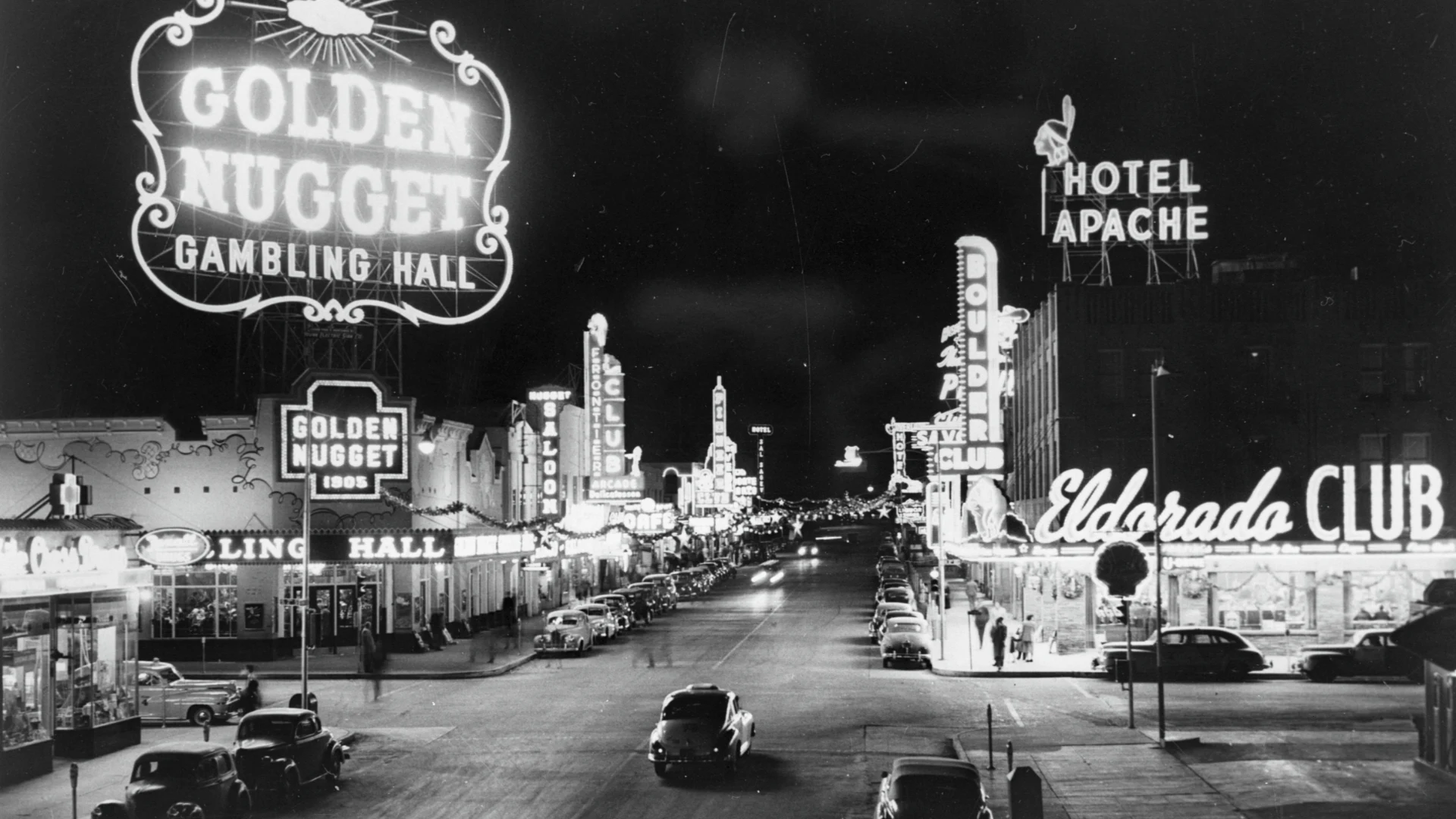
Fremont Street in the late 1940s, with Guy McAfee’s Golden Nugget on the south side of the street and the Eldorado Club and Boulder Club on the north.

THE MOB COMES TO TOWN

Mobsters started moving to Las Vegas in the 1940s. They flocked to the small desert city to escape troubles in their hometowns, to take advantage of the dramatic wartime growth of Las Vegas, and to run casinos without having to constantly look over their shoulders.

Credit: Special Collections & Archives, University Libraries, University of Nevada, Las Vegas
Credit: McAfee and Page: UCLA Library Special Collections; Scherer and Hicks: Las Vegas Review-Journal Archives
From left: Guy McAfee, Tutor Scherer, Farmer Page, Marion Hicks. Clockwise from top left: Guy McAfee, Tutor Scherer, Marion Hicks, Farmer Page.

The first wave of organized crime figures migrated to Las Vegas from Southern California, including Guy McAfee, Tutor Scherer, Farmer Page and Marion Hicks.

Credit: Composite Image Courtesy of the California State Library and UCLA Charles E. Young Research Library, Department of Special Collections.
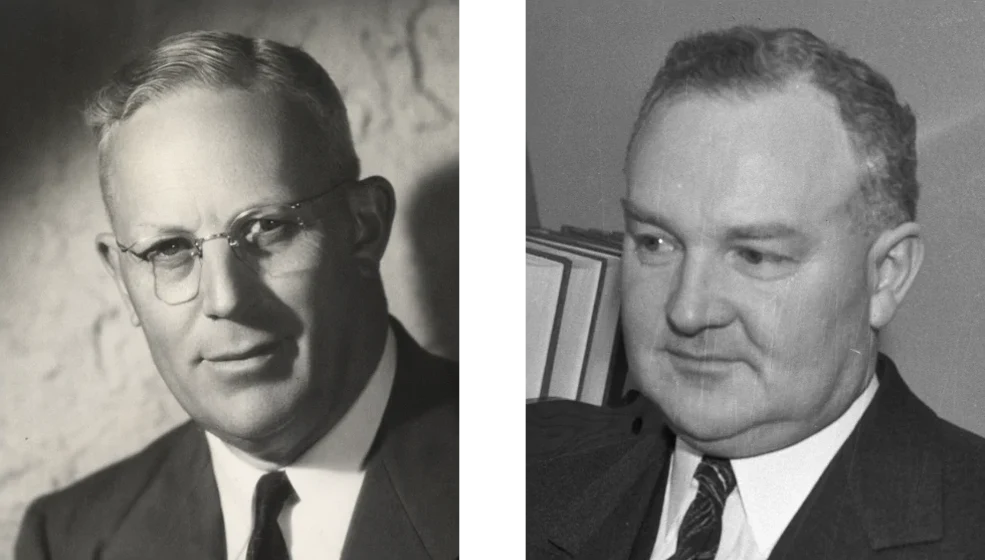
From left: Earl Warren, Fletcher Bowron.

They were fleeing a political reform movement led by California Attorney General Earl Warren, who took on the gambling ships parked off the coast, and Los Angeles Mayor Fletcher Bowron, who cracked down on vice in the city.

Credit: Composite Image Courtesy of the Library of Congress and UCLA Charles E. Young Research Library, Department of Special Collections.
From left: Meyer Lansky, Benjamin “Bugsy” Siegel.

In 1945, mobsters from New York, including Meyer Lansky and Benjamin “Bugsy” Siegel, planted their flag in Las Vegas by purchasing El Cortez hotel-casino on Fremont Street.

Credit: Courtesy of William Wilkerson
Billy Wilkerson was the first developer of the Flamingo Hotel. He later partnered with mobsters to finance the project.

A year later, Lansky and Siegel took a bigger step when they partnered with Los Angeles nightclub owner Billy Wilkerson in the development of the Flamingo Hotel on what would become the Las Vegas Strip. Siegel eventually pushed Wilkerson out and took full control of the project.

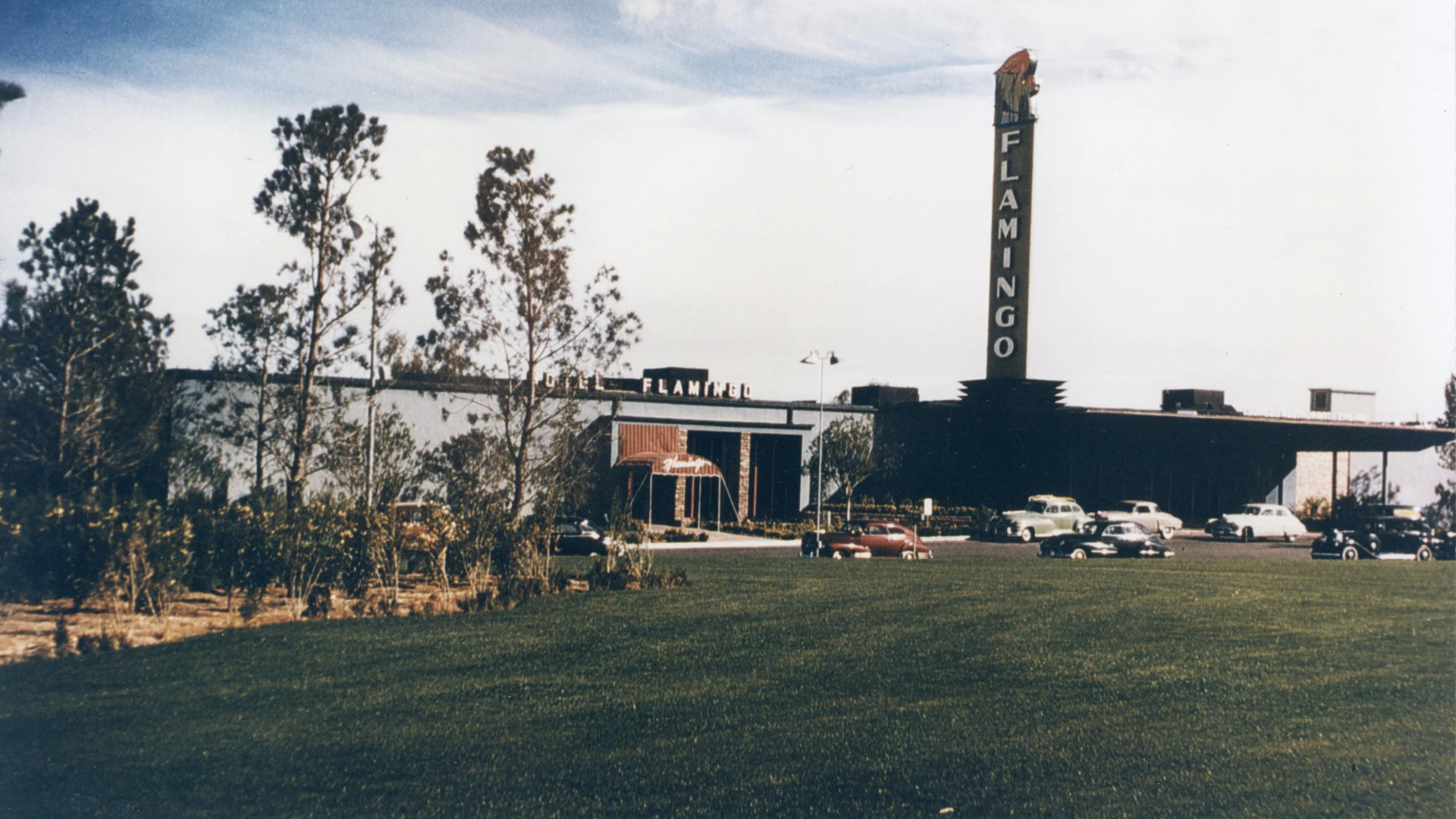
Credit: Mike Skelton/Museum of Gaming History
The Flamingo opened on December 26, 1946 – before the hotel rooms were completed.

The Flamingo’s success sparked a casino building boom in Las Vegas in the 1950s, and mobsters from all over the country were involved with many of the resorts. Las Vegas was regarded as an “open city,” meaning there were no territorial restrictions on who could invest in the city.

Credit: Mike Skelton/Museum of Gaming History

The Chicago Outfit Joins the Party

Credit: Special Collections and Archives, University Libraries, University of Nevada, Las Vegas

The Riviera Hotel, with a nine-story tower, was the first high-rise in Las Vegas.

THE CHICAGO OUTFIT JOINS THE PARTY

The Chicago Outfit’s first foray into Las Vegas came at the Riviera Hotel in 1955. Although the Riviera was built by Mob-connected investors from Miami, it soon came under the Chicago Mob’s control.

Credit: Special Collections & Archives, UNLV Libraries
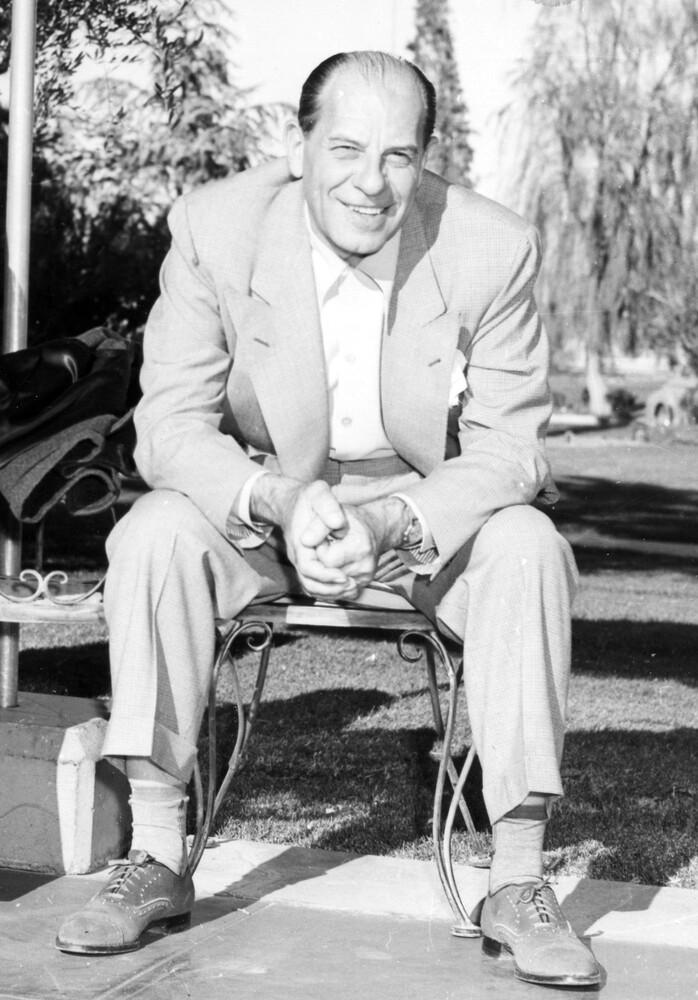
Gus Greenbaum reluctantly came out of retirement to run the Riviera.

Chicago placed Gus Greenbaum in charge, and he operated the Riviera successfully until he and his wife were murdered in Phoenix in 1958.

Credit: Las Vegas Review-Journal Archives
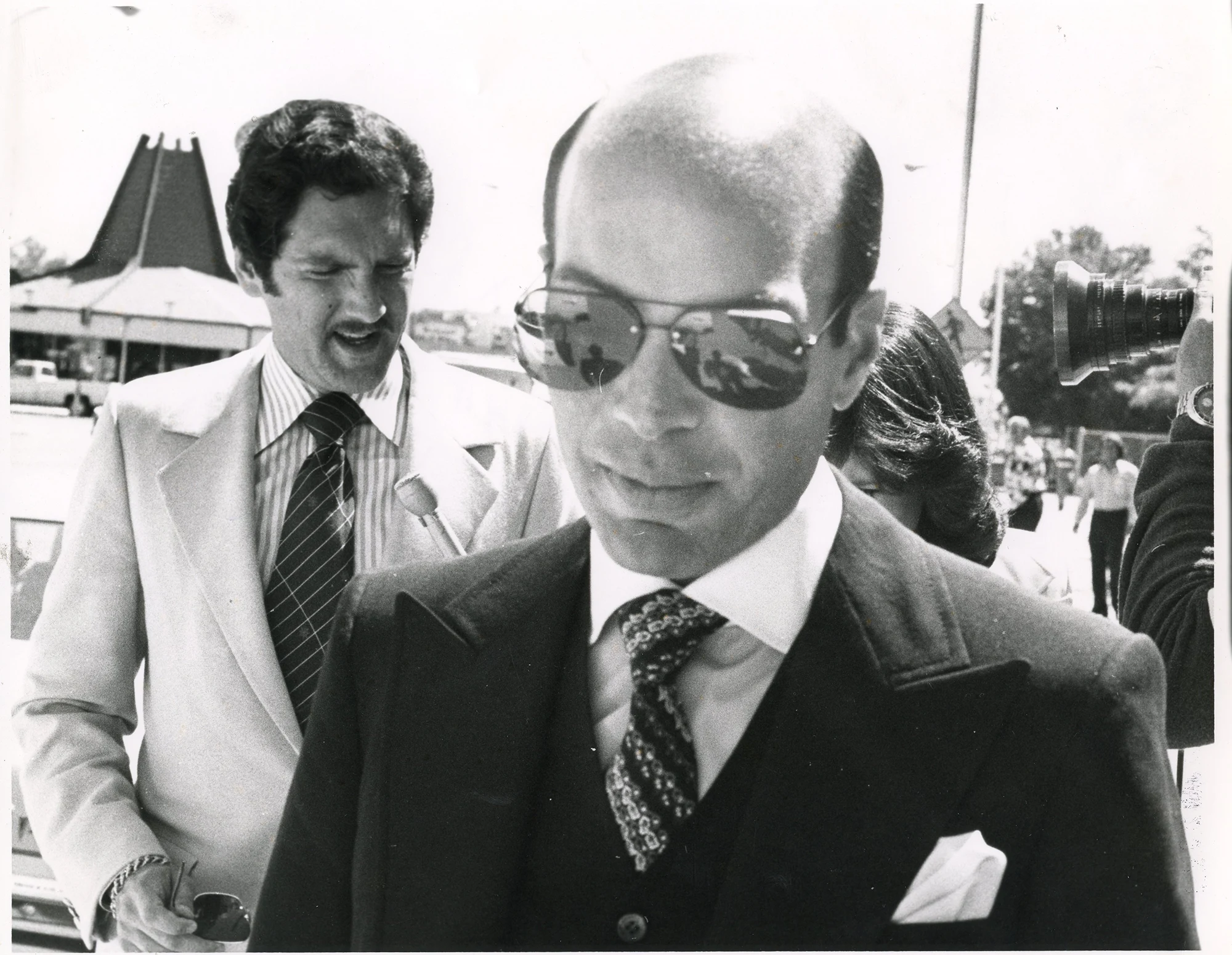
Allen Glick’s purchase of four Las Vegas casinos in 1974 set in motion a Mob drama that would last into the next decade.

Chicago mobsters lost control of the Riviera in the late 1960s. Their grand return to Las Vegas occurred in the following decade after San Diego real estate investor Allen Glick purchased the Stardust, Hacienda, Fremont and Marina hotel-casinos. Glick’s casino company was the Argent Corporation.

Credit: LVCVA News Bureau
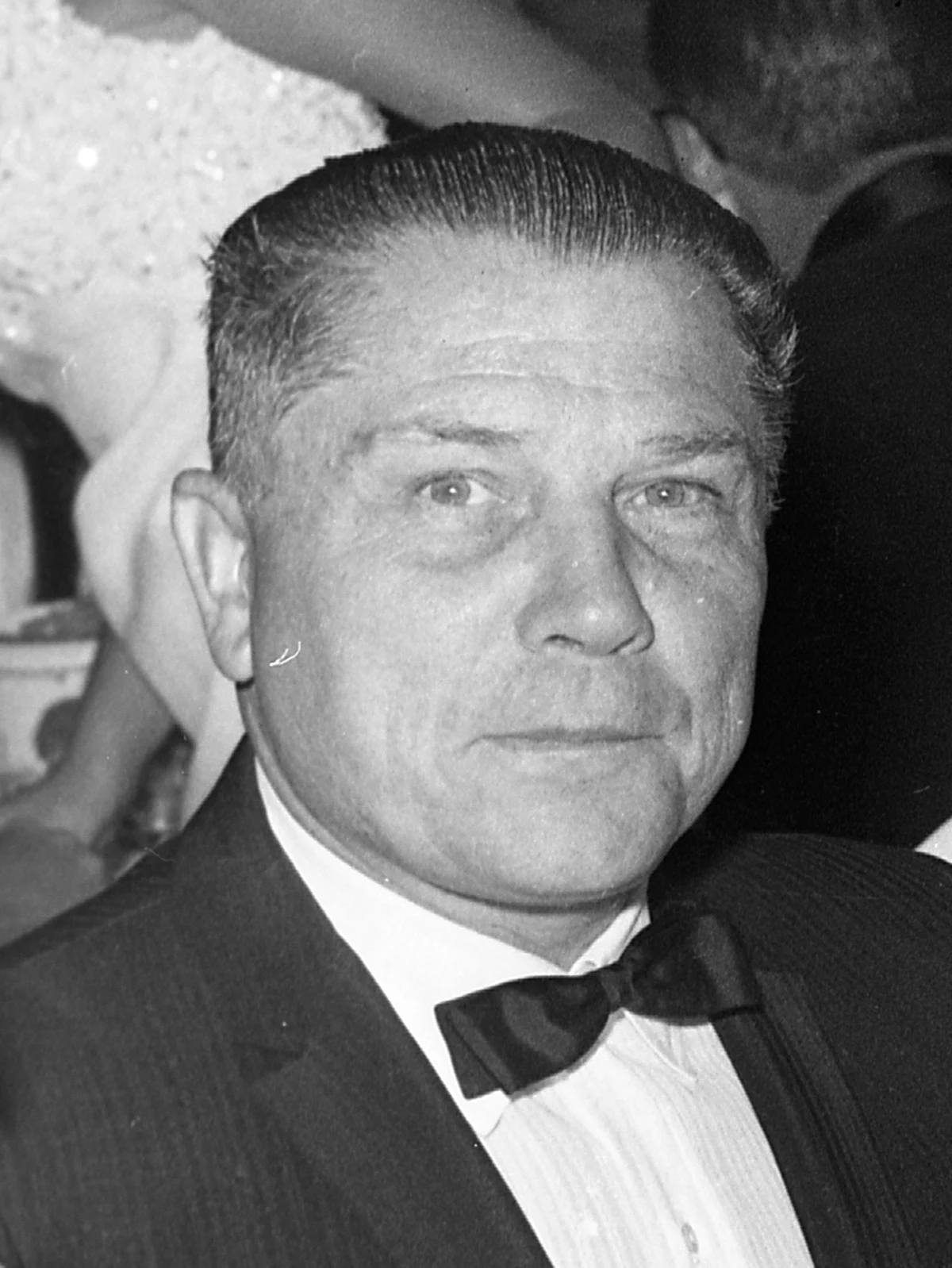
Jimmy Hoffa was a regular visitor to Las Vegas in the late 1950s and early 1960s.

In order to purchase and upgrade the Las Vegas properties, Glick obtained a $63 million loan from the Teamsters Union’s Central States Pension Fund. Teamsters President Jimmy Hoffa created the pension fund in 1955, and he used it to finance Mob-connected casino projects in Las Vegas.

Credit: Public Domain
Allen Dorfman

After Hoffa went to prison in 1967, the pension fund came under the supervision of Allen Dorfman, who was closely connected to the Chicago Mob. As a result, Glick’s acceptance of the Teamsters loan meant the Mob effectively controlled his properties.

Lefty and Tony Come Aboard

Credit: Bettman/Corbis/Getty Images
Frank “Lefty” Rosenthal moved to Las Vegas in the late 1960s. He later ran the Argent casinos for the Chicago Outfit.

LEFTY AND TONY COME ABOARD

Chicago crime bosses Tony Accardo and Joey Aiuppa installed a notorious sports bettor named Frank “Lefty” Rosenthal to run Glick’s casinos. Rosenthal’s primary duty was to ensure that the skim — a portion of the casino’s revenue removed before any official tallies — occurred without any hiccups.

The skim from the Argent casinos was divided among the Mafia families in Chicago, Kansas City, Milwaukee and Cleveland.

Credit: Public Domain
Jay Vandermark went missing in 1976. His body has never been found.

The Mob skimmed from the casinos in multiple ways. Stardust slot manager Jay Vandermark orchestrated one operation using manipulated scales to count coins. That scheme fleeced an estimated $7 million to $15 million between 1974 and 1976.

When state gaming investigators discovered what Vandermark was doing, he disappeared, a suspected murder victim to ensure he did not speak to authorities. His body has never been found.

Credit: The Mob Museum
Tony Spilotro was the most notorious mobster in Las Vegas from the mid-1970s through the mid-1980s.

Rosenthal was the Chicago Outfit’s man on the inside. Its outside man was Tony Spilotro, whose job was to address any problems that might interfere with the skim. Spilotro did that, as well as running an array of traditional criminal rackets in Las Vegas, including robberies, burglaries, bookmaking and loansharking.

Credit: John Binder Collection
The bodies of Billy McCarthy and Jimmy Miraglia were found in the trunk of a car in Chicago in 1962. From left: Billy McCarthy, Jimmy Miraglia.

Spilotro was widely regarded as a ruthless killer, a reputation he earned on the streets of Chicago before he came to Las Vegas. In 1962, Spilotro allegedly murdered Billy McCarthy and Jimmy Miraglia after that duo killed a couple of Outfit-connected men in a bar. The so-called “M&M murders” include the grim detail that Spilotro put McCarthy’s head in a vise and squeezed it until his eye popped out.

Credit: The Los Angeles Times
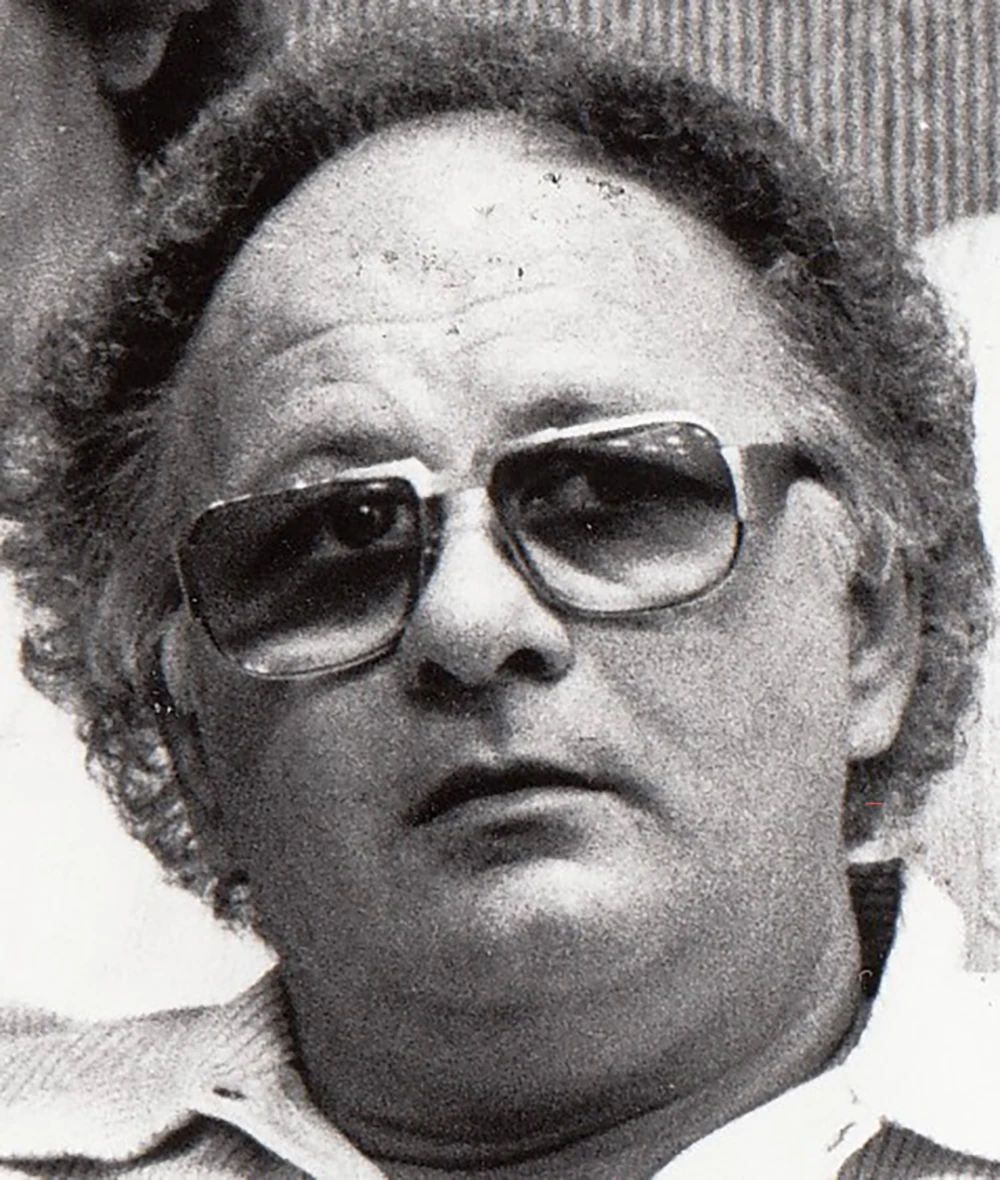
Initial news reports of Tamara Rand’s murder did not mention possible connections to Las Vegas.

After Spilotro moved to Las Vegas in 1971, he was suspected in a number of murders, including those of William “Red” Klim in 1973, Marty Buccieri in 1975 and Tamara Rand in 1975. Rand had invested in Glick’s casinos. When she filed a lawsuit against Glick for breach of contract, she was murdered in her San Diego home. Spilotro never was prosecuted for any of these murders.

Credit: Las Vegas Review-Journal Archives
Frank Cullotta came to Las Vegas in the late 1970s to work with Tony Spilotro.

Spilotro also led a burglary crew that gained the nickname the “Hole in the Wall Gang,” because it often punched holes in walls and roofs to avoid security systems built into doors and windows. The Hole in the Wall Gang was led by Frank Cullotta, a childhood friend of Spilotro.

State Resists Rosenthal Licensing

Credit: KLAS Channel 8
Frank Rosenthal confronted Nevada Gaming Commission members at a public meeting, claiming unfair treatment.

STATE RESISTS ROSENTHAL LICENSING

Although Rosenthal was effectively running Glick’s Argent casinos, state gaming regulators were reluctant to grant him a license for the top position. Haunted by his past record as a sports fixer, Rosenthal was forced to hold lesser positions such as food and beverage manager and entertainment director.

Credit: The Mob Museum
Frank Rosenthal had a number of A-list guests on his late-night TV show, including Frank Sinatra.

As part of Rosenthal’s campaign for licensing and legitimacy, he created and hosted a late-night television talk show. Aired locally in 1977 and 1978, the show featured entertainers and athletes as guests, including Frank Sinatra, Don Rickles, Burt Reynolds, O.J. Simpson and Tina Turner. Rosenthal also used the show to complain about state gaming regulators who refused to give him a license.

Credit: Las Vegas Review-Journal Archives
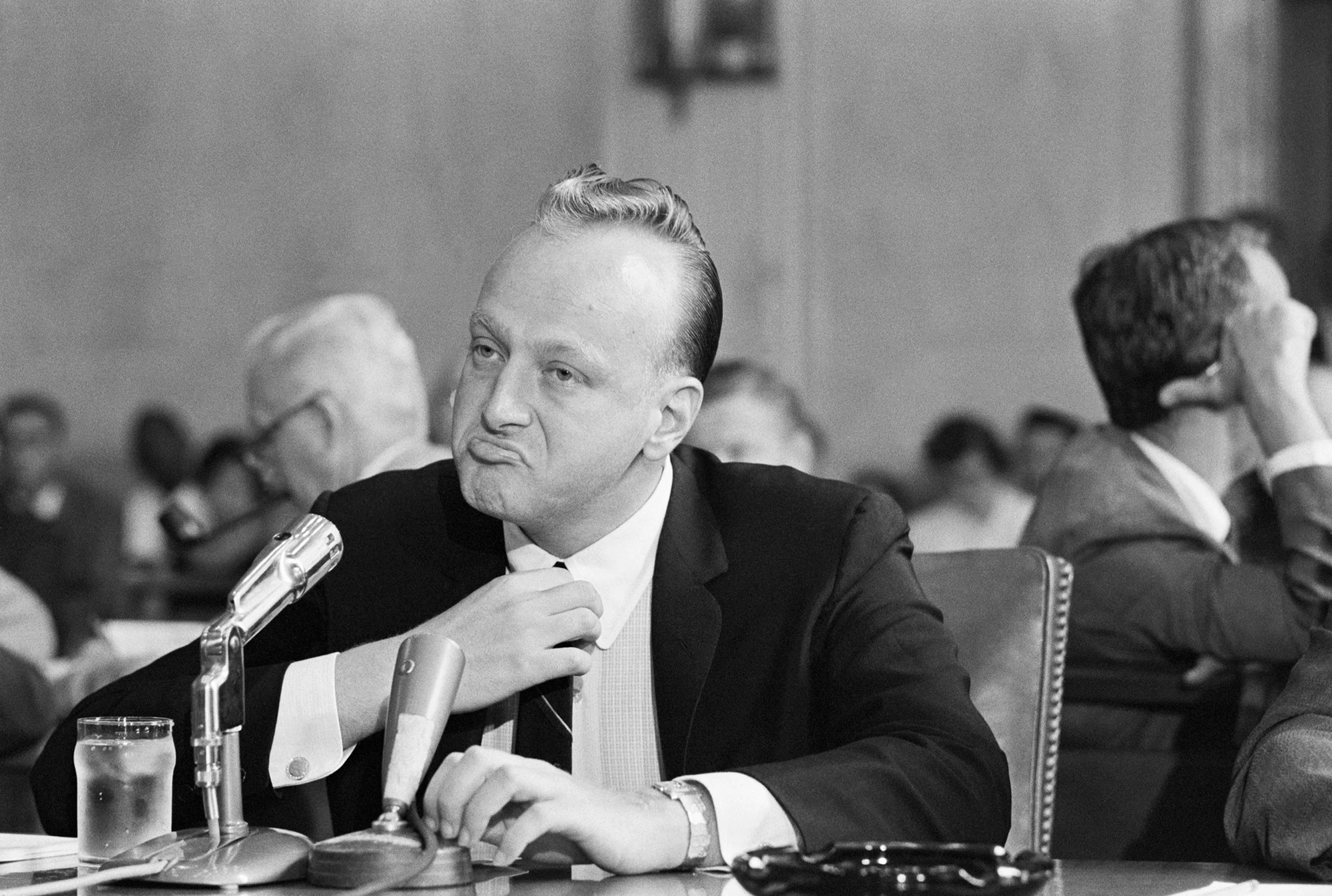
Oscar Goodman was the high-profile attorney representing Rosenthal and Spilotro in a range of legal matters.

Las Vegas defense attorney Oscar Goodman represented Frank Rosenthal and Tony Spilotro in all their dealings with state gaming regulators and criminal courts in the 1970s and ’80s. Goodman was a bold and effective advocate. He kept his clients out of jail, but he could not keep them out of Nevada’s Black Book, the list of individuals banned from the state’s casinos.

Credit: Las Vegas Review-Journal Archives
The scandal surrounding police officer Joe Blasko caused a rift between local police and the FBI.

In 1978, FBI wiretaps captured conversations indicating that Joe Blasko, a Las Vegas Metropolitan Police Department detective, was tipping off mobster Tony Spilotro about law enforcement’s plans. Blasko even provided Spilotro with the identities of undercover agents and informants. Metro fired Blasko and his partner, Phil Leone. Leone retired, but Blasko went to work for Spilotro.

The Blasko revelations created a rift between Metro Police and the FBI, which lost confidence in the police department’s ability to keep a secret.

Law Enforcement Ramps Up

Credit: Las Vegas Review-Journal Archives
Nevada Governor Mike O’Callaghan appointed Harry Reid to lead the Nevada Gaming Commission and take on organized crime.

LAW ENFORCEMENT RAMPS UP

In the mid-1970s, Nevada Governor Mike O’Callaghan started hiring a new crop of gaming regulators who brought a more aggressive approach to exposing organized crime influence in the casino industry. His appointees included Shannon Bybee, Harry Reid and Jeff Silver.

Silver, a 29-year-old Gaming Control Board member, soon found himself interrogating Frank “Lefty” Rosenthal in a public hearing. Silver had unearthed extensive records of Rosenthal’s sports-fixing exploits in the 1960s.

Credit: Las Vegas Review-Journal Archives
Joe Yablonsky

In the late 1970s, the FBI, Justice Department and Metro Police ramped up their efforts to investigate the Mob in Las Vegas.

The FBI first had to clean house. The Las Vegas Field Office’s agents had developed a reputation for accepting comps – free meals and shows – from local casinos. The agency brought in hard-charging Joe Yablonsky as its special agent in charge. Then it added agents Emmett Michaels, Charlie Parsons, Dennis Arnoldy and Gary Magnesen to target organized crime.

Credit: Las Vegas Review-Journal Archives
From left: Stan Hunterton, John McCarthy.

Meanwhile, the Justice Department’s Organized Crime Strike Force added attorneys in Las Vegas to coordinate the investigations and prosecutions, including Geoffrey Anderson and Stan Hunterton.

Metro, under the new leadership of Sheriff John McCarthy, beefed up its organized crime squad, promoting Kent Clifford to Intelligence Bureau commander. Clifford assigned five officers to full-time duty investigating Tony Spilotro.

Credit: Las Vegas Review-Journal Archives
David Groover, left, and Gene Smith were Metro Police intelligence detectives who surveilled organized crime figures all over Las Vegas.

In 1980, two of Clifford’s intelligence detectives, Gene Smith and Dave Groover, were surveilling Spilotro’s gang when they spotted a 1979 Lincoln with Illinois plates parking in front of the Upper Crust pizza parlor, owned by Spilotro associate Frank Cullotta. As the driver left the pizzeria, Smith and Groover followed him. The driver started speeding and driving recklessly. When they pulled him over, they suspected he had a gun. The detectives said that when the driver aimed the gun at them, they opened fire.

Credit: Las Vegas Review-Journal
Frank Bluestein, known as “Frankie Blue,” was regarded as an organized crime associate.

The detectives killed Frank Bluestein, who was a Spilotro associate. A coroner’s jury ruled the shooting to be justified, but Bluestein’s family, as well as defense attorney Oscar Goodman, contended it was an excessive use of force. The family filed a civil lawsuit against the police department. The police department, represented by Las Vegas attorney Walt Cannon, won the case.

Credit: Las Vegas Review-Journal Archives
Metro Police Intelligence Commander Kent Clifford’s trip to Chicago may have prevented a Mob hit.

The lawsuits, however, were the least of Smith and Groover’s worries. The FBI informed Intelligence Commander Kent Clifford that it had gathered credible information that the Chicago Outfit planned to take out the detectives who had shot Frank Bluestein.

Clifford and another officer flew to Chicago to confront the Mob bosses directly. They went to the homes of Joe Aiuppa, Joe Lombardo and Tony Accardo but none of them was home. They did meet with Allen Dorfman, the insurance broker who controlled the Teamsters Union pension fund.

After the Dorfman meeting, Clifford received a call that same afternoon from a lawyer representing the mobsters. Clifford told the lawyer, “If you kill my cops, I’ll bring 40 men back here and kill everything that moves, walks or crawls around the houses I visited today.” After delivering the message, the lawyer called Clifford back and assured him that his officers had nothing to worry about.

Mob on the Run

Credit: Las Vegas Review-Journal Archives
Members of the Hole in the Wall Gang. In the front row, from left, are Frank Cullotta, Leo Guardino and Wayne Matecki. In the back row, from left, are Lawrence Neumann, Joe Blasko and Ernie Devino.

MOB ON THE RUN

The Hole in the Wall Gang’s demise unfolded on July 4, 1981, when it tried to pull off its biggest heist to date. The gang planned to burglarize the Bertha’s Gifts & Home Furnishings on East Sahara Avenue, believing the store’s safe contained upwards of $1 million in jewelry and cash. But Spilotro, Cullotta and the other members of the burglary crew did not know that one of their own, Sal Romano, was a police informant.

FBI agents and Metro officers staked out Bertha’s and waited for the gang to gain entrance to the store through the roof. When that happened, they jumped into action and arrested the burglary crew.

Credit: Las Vegas Review-Journal Archives
Frank Cullotta became a government witness after FBI agents told him that Tony Spilotro planned to have him killed.

In 1982, Frank Cullotta was convicted of charges of possession of stolen property. He also was still facing a heavy sentence for the Bertha’s burglary. Then the FBI reached out to let him know that it had become aware that the Chicago Outfit wanted him dead. Cullotta decided to switch sides and become a government witness. In exchange for a shorter prison term, he entered the federal Witness Protection program and testified against his former partners.

Credit: Las Vegas Review-Journal Archives
Frank Rosenthal escaped with cuts and bruises from a car bombing in a parking lot on East Sahara Avenue.

On October 4, 1982, Lefty Rosenthal left Tony Roma’s restaurant on East Sahara Avenue and got into his Cadillac Eldorado. When he turned the key in the ignition, the car exploded. C-4 explosives had been placed under the trunk next to the gas tank.

Rosenthal was lucky. His Cadillac came equipped with a steel plate under the driver’s seat that prevented him from feeling the full effects of the blast. He had time to climb out of the car before the gas tank exploded. He had cuts and bruises but no other injuries.

Credit: Las Vegas Review-Journal
Frank Rosenthal

Rosenthal left Las Vegas soon after the car bombing. He first moved to Orange County, California, and later to Florida, where he ran a bar and a sports betting website. Police investigated multiple potential suspects in the car bombing, but no one was ever arrested.

Credit: The Mob Museum
Geri Rosenthal’s glamorous life in Las Vegas came crashing down in the early 1980s.

Frank Rosenthal’s ex-wife, Geri, met an untimely end not long after the car bombing. Following her affair with Tony Spilotro and breakup with Frank, Geri moved to Los Angeles. On November 6, 1982, she collapsed on the floor of a Sunset Boulevard motel. She fell into a coma and died three days later at a hospital. The coroner said she died of an accidental drug overdose, but some, including the late Metro Commander Kent Clifford, suspected foul play.

Credit: Las Vegas Review-Journal
The two Strawman trials effectively ended the Mob’s involvement in Las Vegas casinos.

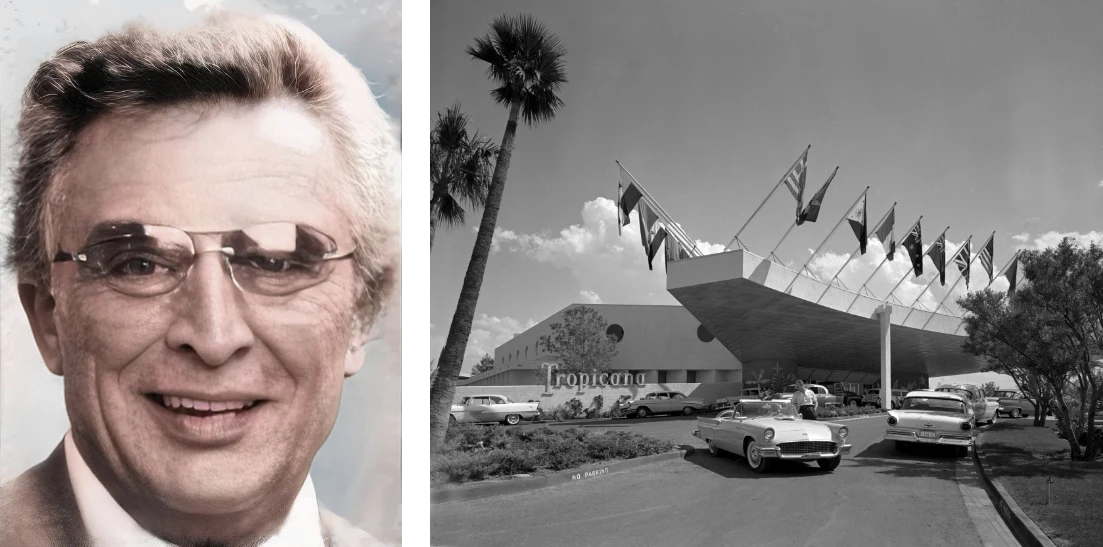
The FBI and Justice Department investigation of skimming in Las Vegas was known as Operation Strawman. The investigation, led by Strike Force prosecutor David Helfrey, resulted in two trials, known as Strawman I and Strawman II.

Credit: AP / Wide World Photo
Carl DeLuna’s written records of the skim were a key piece of evidence in prosecuting the skim at the Tropicana Hotel.

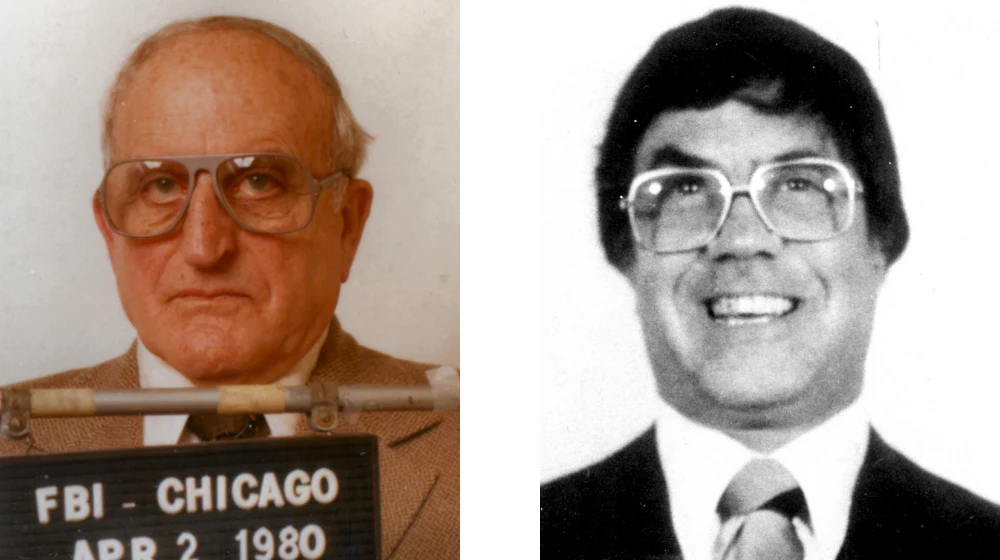
Strawman I exposed the skim at the Tropicana Hotel, an operation led by the Kansas City Mafia. Bugs placed in a Kansas City house where mobsters met to discuss criminal business revealed the skim in detail. A search of Kansas City mobster Carl DeLuna’s house in 1979 turned up detailed written records of the skim operation. A 1983 trial resulted in seven convictions.

Credit: John Binder Collection
The Strawman II case took down Chicogo Mob bosses Joey Aiuppa and Joey “The Clown” Lombardo.

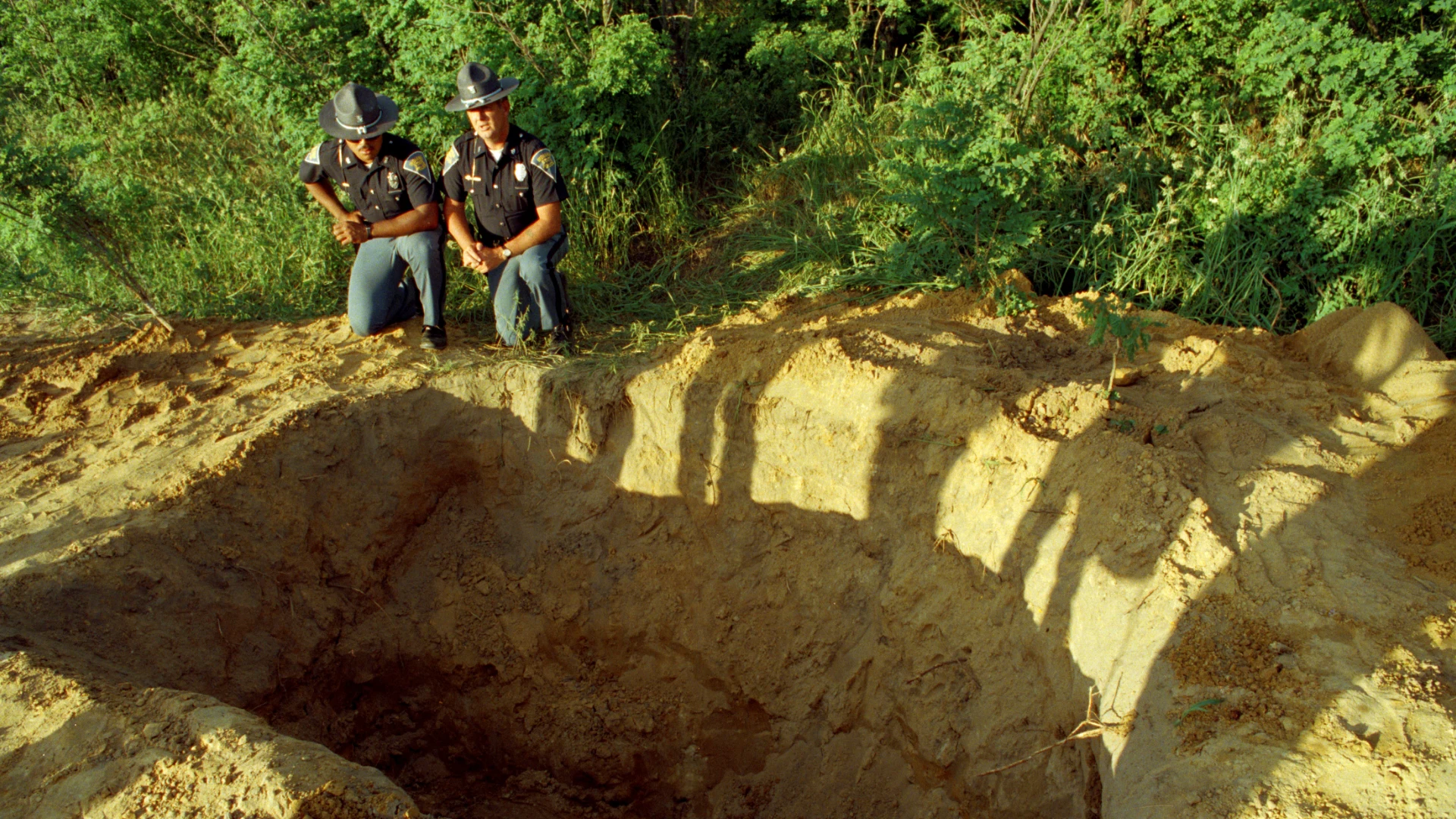
Strawman II exposed the skim at the Argent casinos, an operation controlled by the Chicago Outfit. A 1985 trial resulted in convictions and guilty pleas for a number of high-profile Chicago mobsters, including Joey Aiuppa and Joey “The Clown” Lombardo.

The Aftermath

Credit: Associated Press
The bodies of the Spilotro brothers were discovered in a recently filled grave next to an Indiana cornfield.
Credit: Associated Press
Credit: Courtesy of Frank Calabrese Jr.
From left: Tony Spilotro, Michael Spilotro.

THE AFTERMATH

In June of 1986, brothers Tony and Michael Spilotro went missing. Eight days later, their bodies were discovered buried in a shallow grave in an Indiana cornfield. Officials speculated at the time that the Spilotros had been beaten at the scene and perhaps buried alive. No suspects were arrested.

Credit: The Mob Museum
Nick Calabrese

During the Family Secrets trial in Chicago in 2007, testimony from Mob hit man Nick Calabrese revealed what actually happened to the Spilotro brothers. A large group of Chicago Outfit members beat them to death in the basement of a home in Bensenville, a Chicago suburb. Their bodies were transported to the Indiana cornfield and buried.

The Outfit bosses came to believe that Tony Spilotro had generated too much heat in Las Vegas and had to go. They took out his younger brother, too, to prevent him from exacting any sort of revenge.

Credit: The Mob Museum
Frank Rosenthal never faced charges for his role in the skimming operations at the Argent casinos.

For years, people wondered why Frank “Lefty” Rosenthal was not indicted in the Strawman case. After all, he orchestrated the skim of millions of dollars from the Stardust and other casinos. In 2008, Las Vegas Review-Journal reporter Jane Ann Morrison, based on three former law enforcement sources, provided the answer: Rosenthal was an FBI informant.

Credit: Special Collections & Archives, UNLV Libraries
From left: Mirage Hotel, Excalibur Hotel, MGM Grand Hotel.

By the late 1980s, the traditional Mob had been rooted out of the Las Vegas casino industry. Entrepreneurs and corporations took center stage as the megaresort era began with the openings of The Mirage in 1989, the Excalibur in 1990 and the MGM Grand in 1993.

Credit: Universal Pictures
Robert De Niro, Sharon Stone and Joe Pesci starred in the 1995 film Casino, which was inspired by the Battle for Las Vegas.

In 1995, Martin Scorsese released the movie Casino, starring Robert De Niro, Joe Pesci and Sharon Stone. The movie, co-written by Nicholas Pileggi, is a fictionalized depiction of the rise and fall of Lefty Rosenthal and Tony Spilotro in Las Vegas.

The Chicago Outfit's Last Big Swindle in Las Vegas

The Chicago Outfit's Last Big Swindle in Las Vegas

How local, state and federal law enforcement banded together to root out the Mob

Details

Title
The Chicago Outfit's Last Big Swindle in Las Vegas
Credit Line
The Mob Museum

THE MOB COMES TO TOWN

The Mob Comes To Town

Mobsters started moving to Las Vegas in the 1940s. They flocked to the small desert city to escape troubles in their hometowns, to take advantage of the dramatic wartime growth of Las Vegas, and to run casinos without having to constantly look over their shoulders.

Details

Title
The Mob Comes To Town
Credit Line
Special Collections & Archives, University Libraries, University of Nevada, Las Vegas

Guy McAfee, Tutor Scherer, Farmer Page and Marion Hicks

The first wave of organized crime figures migrated to Las Vegas from Southern California, including Guy McAfee, Tutor Scherer, Farmer Page and Marion Hicks.

Details
Title
Guy McAfee, Tutor Scherer, Farmer Page and Marion Hicks
Credit Line
McAfee and Page: UCLA Library Special Collections; Scherer and Hicks: Las Vegas Review-Journal Archives

Earl Warren, Fletcher Bowron

They were fleeing a political reform movement led by California Attorney General Earl Warren, who took on the gambling ships parked off the coast, and Los Angeles Mayor Fletcher Bowron, who cracked down on vice in the city.

Details

Title
Earl Warren, Fletcher Bowron
Credit Line
Composite Image Courtesy of the California State Library and UCLA Charles E. Young Research Library, Department of Special Collections.

Meyer Lansky, Benjamin “Bugsy” Siegel

In 1945, mobsters from New York, including Meyer Lansky and Benjamin “Bugsy” Siegel, planted their flag in Las Vegas by purchasing El Cortez hotel-casino on Fremont Street.

Details

Title
Meyer Lansky, Benjamin “Bugsy” Siegel
Credit Line
Composite Image Courtesy of the Library of Congress and UCLA Charles E. Young Research Library, Department of Special Collections.

Billy Wilkerson

A year later, Lansky and Siegel took a bigger step when they partnered with Los Angeles nightclub owner Billy Wilkerson in the development of the Flamingo Hotel on what would become the Las Vegas Strip. Siegel eventually pushed Wilkerson out and took full control of the project.

Details
Title
Billy Wilkerson
Credit Line
Courtesy of William Wilkerson

The Flamingo 1946

The Flamingo’s success sparked a casino building boom in Las Vegas in the 1950s, and mobsters from all over the country were involved with many of the resorts. Las Vegas was regarded as an “open city,” meaning there were no territorial restrictions on who could invest in the city.

Details

Title
The Flamingo 1946
Credit Line
Mike Skelton/Museum of Gaming History

THE CHICAGO OUTFIT JOINS THE PARTY

The Riviera Hotel

The Chicago Outfit’s first foray into Las Vegas came at the Riviera Hotel in 1955. Although the Riviera was built by Mob-connected investors from Miami, it soon came under the Chicago Mob’s control.

Details
Title
The Riviera Hotel
Credit Line
Special Collections and Archives, University Libraries, University of Nevada, Las Vegas

Gus Greenbaum

Chicago placed Gus Greenbaum in charge, and he operated the Riviera successfully until he and his wife were murdered in Phoenix in 1958.

Details
Title
Gus Greenbaum
Credit Line
Special Collections & Archives, UNLV Libraries

Allen Glick

Chicago mobsters lost control of the Riviera in the late 1960s. Their grand return to Las Vegas occurred in the following decade after San Diego real estate investor Allen Glick purchased the Stardust, Hacienda, Fremont and Marina hotel-casinos. Glick’s casino company was the Argent Corporation.

Details
Title
Allen Glick
Credit Line
Las Vegas Review-Journal Archives

Jimmy Hoffa

In order to purchase and upgrade the Las Vegas properties, Glick obtained a $63 million loan from the Teamsters Union’s Central States Pension Fund. Teamsters President Jimmy Hoffa created the pension fund in 1955, and he used it to finance Mob-connected casino projects in Las Vegas.

Details

Title
Jimmy Hoffa
Credit Line
LVCVA News Bureau

Allen Dorfman

After Hoffa went to prison in 1967, the pension fund came under the supervision of Allen Dorfman, who was closely connected to the Chicago Mob. As a result, Glick’s acceptance of the Teamsters loan meant the Mob effectively controlled his properties.

Details

Title
Allen Dorfman
Credit Line
Public Domain

LEFTY AND TONY COME ABOARD

LEFTY AND TONY COME ABOARD

Chicago crime bosses Tony Accardo and Joey Aiuppa installed a notorious sports bettor named Frank “Lefty” Rosenthal to run Glick’s casinos. Rosenthal’s primary duty was to ensure that the skim — a portion of the casino’s revenue removed before any official tallies — occurred without any hiccups.

The skim from the Argent casinos was divided among the Mafia families in Chicago, Kansas City, Milwaukee and Cleveland.

Details

Title
LEFTY AND TONY COME ABOARD
Credit Line
Bettman/Corbis/Getty Images

Jay Vandermark Missing

The Mob skimmed from the casinos in multiple ways. Stardust slot manager Jay Vandermark orchestrated one operation using manipulated scales to count coins. That scheme fleeced an estimated $7 million to $15 million between 1974 and 1976.

When state gaming investigators discovered what Vandermark was doing, he disappeared, a suspected murder victim to ensure he did not speak to authorities. His body has never been found.

Details

Title
Jay Vandermark Missing
Credit Line
Public Domain

The Spilotros

Rosenthal was the Chicago Outfit’s man on the inside. Its outside man was Tony Spilotro, whose job was to address any problems that might interfere with the skim. Spilotro did that, as well as running an array of traditional criminal rackets in Las Vegas, including robberies, burglaries, bookmaking and loansharking.

Details

Title
The Spilotros
Credit Line
The Mob Museum

Billy McCarthy and Jimmy Miraglia

Spilotro was widely regarded as a ruthless killer, a reputation he earned on the streets of Chicago before he came to Las Vegas. In 1962, Spilotro allegedly murdered Billy McCarthy and Jimmy Miraglia after that duo killed a couple of Outfit-connected men in a bar. The so-called “M&M murders” include the grim detail that Spilotro put McCarthy’s head in a vise and squeezed it until his eye popped out.

Details

Title
Billy McCarthy and Jimmy Miraglia
Credit Line
John Binder Collection

 Tamara Rand’s Murder

After Spilotro moved to Las Vegas in 1971, he was suspected in a number of murders, including those of William “Red” Klim in 1973, Marty Buccieri in 1975 and Tamara Rand in 1975. Rand had invested in Glick’s casinos. When she filed a lawsuit against Glick for breach of contract, she was murdered in her San Diego home. Spilotro never was prosecuted for any of these murders.

Details
Title
Tamara Rand’s Murder
Credit Line
The Los Angeles Times

Frank Cullotta

Spilotro also led a burglary crew that gained the nickname the “Hole in the Wall Gang,” because it often punched holes in walls and roofs to avoid security systems built into doors and windows. The Hole in the Wall Gang was led by Frank Cullotta, a childhood friend of Spilotro.

Details

Title
Frank Cullotta
Credit Line
Las Vegas Review-Journal Archives

STATE RESISTS ROSENTHAL LICENSING

Frank Rosenthal

Although Rosenthal was effectively running Glick’s Argent casinos, state gaming regulators were reluctant to grant him a license for the top position. Haunted by his past record as a sports fixer, Rosenthal was forced to hold lesser positions such as food and beverage manager and entertainment director.

Details

Title
Frank Rosenthal
Credit Line
KLAS Channel 8

Frank Sinatra on the Rosenthal Show

As part of Rosenthal’s campaign for licensing and legitimacy, he created and hosted a late-night television talk show. Aired locally in 1977 and 1978, the show featured entertainers and athletes as guests, including Frank Sinatra, Don Rickles, Burt Reynolds, O.J. Simpson and Tina Turner. Rosenthal also used the show to complain about state gaming regulators who refused to give him a license.

Details

Title
Frank Sinatra on the Rosenthal Show
Credit Line
The Mob Museum

Oscar Goodman

Las Vegas defense attorney Oscar Goodman represented Frank Rosenthal and Tony Spilotro in all their dealings with state gaming regulators and criminal courts in the 1970s and ’80s. Goodman was a bold and effective advocate. He kept his clients out of jail, but he could not keep them out of Nevada’s Black Book, the list of individuals banned from the state’s casinos.

Details
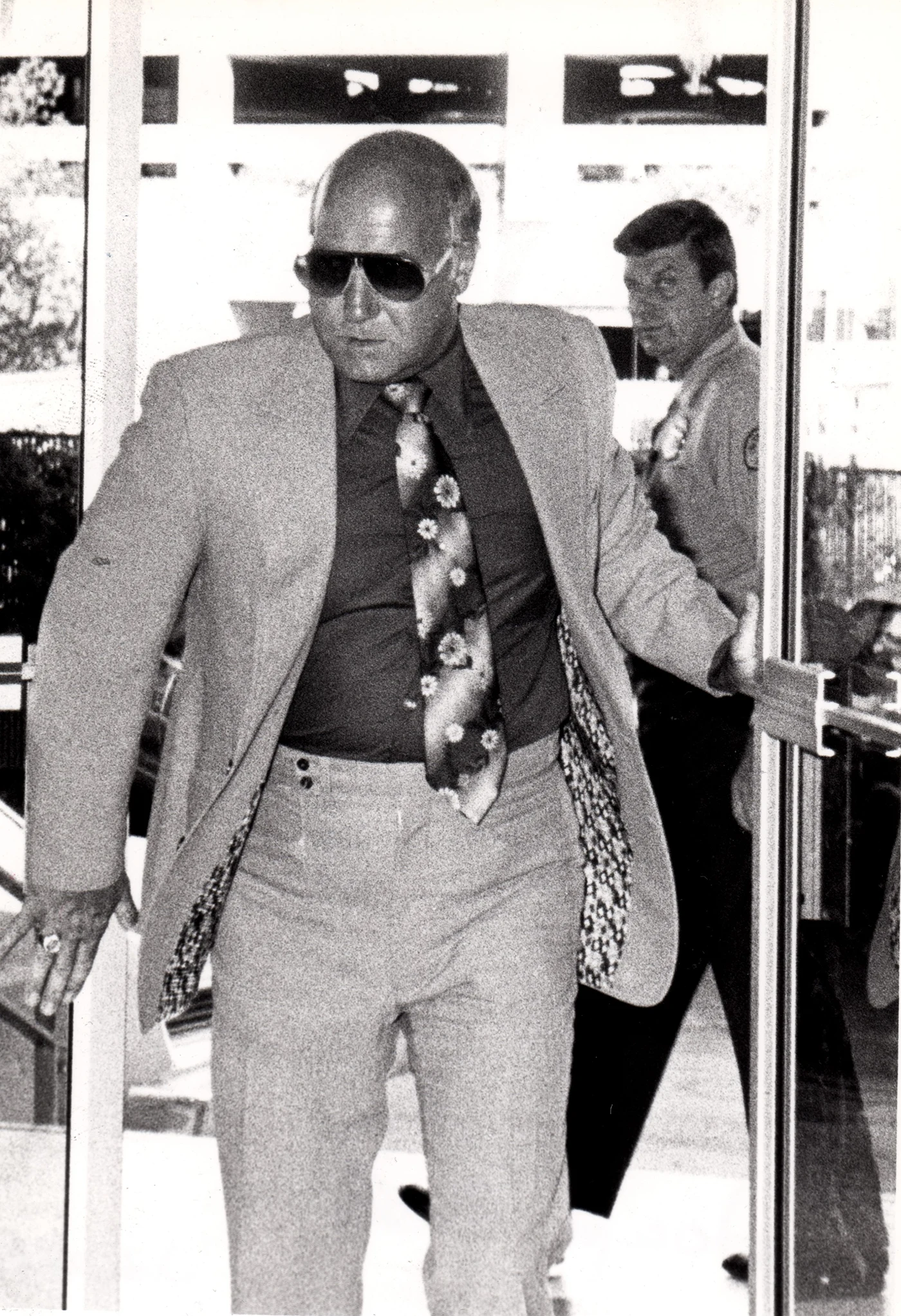
Title
Oscar Goodman
Credit Line
Las Vegas Review-Journal Archives

The Joe Blasko Scandal

In 1978, FBI wiretaps captured conversations indicating that Joe Blasko, a Las Vegas Metropolitan Police Department detective, was tipping off mobster Tony Spilotro about law enforcement’s plans. Blasko even provided Spilotro with the identities of undercover agents and informants. Metro fired Blasko and his partner, Phil Leone. Leone retired, but Blasko went to work for Spilotro.

The Blasko revelations created a rift between Metro Police and the FBI, which lost confidence in the police department’s ability to keep a secret.

Details

Title
The Joe Blasko Scandal
Credit Line
Las Vegas Review-Journal Archives

LAW ENFORCEMENT RAMPS UP

Harry Reid to lead the Nevada Gaming Commission

In the mid-1970s, Nevada Governor Mike O’Callaghan started hiring a new crop of gaming regulators who brought a more aggressive approach to exposing organized crime influence in the casino industry. His appointees included Shannon Bybee, Harry Reid and Jeff Silver.

Silver, a 29-year-old Gaming Control Board member, soon found himself interrogating Frank “Lefty” Rosenthal in a public hearing. Silver had unearthed extensive records of Rosenthal’s sports-fixing exploits in the 1960s.

Details

Title
Harry Reid to lead the Nevada Gaming Commission
Credit Line
Las Vegas Review-Journal Archives

Joe Yablonsky

In the late 1970s, the FBI, Justice Department and Metro Police ramped up their efforts to investigate the Mob in Las Vegas.

The FBI first had to clean house. The Las Vegas Field Office’s agents had developed a reputation for accepting comps – free meals and shows – from local casinos. The agency brought in hard-charging Joe Yablonsky as its special agent in charge. Then it added agents Emmett Michaels, Charlie Parsons, Dennis Arnoldy and Gary Magnesen to target organized crime.

Details
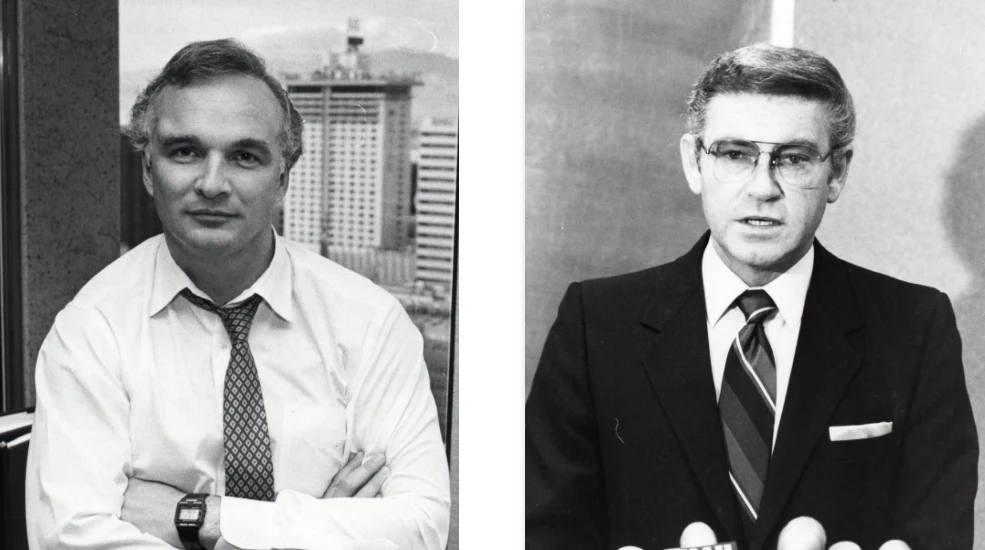
Title
Joe Yablonsky
Credit Line
Las Vegas Review-Journal Archives

Stan Hunterton, John McCarthy

Meanwhile, the Justice Department’s Organized Crime Strike Force added attorneys in Las Vegas to coordinate the investigations and prosecutions, including Geoffrey Anderson and Stan Hunterton.

Metro, under the new leadership of Sheriff John McCarthy, beefed up its organized crime squad, promoting Kent Clifford to Intelligence Bureau commander. Clifford assigned five officers to full-time duty investigating Tony Spilotro.

Details

Title
Stan Hunterton, John McCarthy
Credit Line
Las Vegas Review-Journal Archives

David Groover and Gene Smith

In 1980, two of Clifford’s intelligence detectives, Gene Smith and Dave Groover, were surveilling Spilotro’s gang when they spotted a 1979 Lincoln with Illinois plates parking in front of the Upper Crust pizza parlor, owned by Spilotro associate Frank Cullotta. As the driver left the pizzeria, Smith and Groover followed him. The driver started speeding and driving recklessly. When they pulled him over, they suspected he had a gun. The detectives said that when the driver aimed the gun at them, they opened fire.

Details

Title
David Groover and Gene Smith
Credit Line
Las Vegas Review-Journal Archives

Frankie Blue

The detectives killed Frank Bluestein, who was a Spilotro associate. A coroner’s jury ruled the shooting to be justified, but Bluestein’s family, as well as defense attorney Oscar Goodman, contended it was an excessive use of force. The family filed a civil lawsuit against the police department. The police department, represented by Las Vegas attorney Walt Cannon, won the case.

Details

Title
Frankie Blue
Credit Line
Las Vegas Review-Journal

Kent Clifford

The lawsuits, however, were the least of Smith and Groover’s worries. The FBI informed Intelligence Commander Kent Clifford that it had gathered credible information that the Chicago Outfit planned to take out the detectives who had shot Frank Bluestein.

Clifford and another officer flew to Chicago to confront the Mob bosses directly. They went to the homes of Joe Aiuppa, Joe Lombardo and Tony Accardo but none of them was home. They did meet with Allen Dorfman, the insurance broker who controlled the Teamsters Union pension fund.

After the Dorfman meeting, Clifford received a call that same afternoon from a lawyer representing the mobsters. Clifford told the lawyer, “If you kill my cops, I’ll bring 40 men back here and kill everything that moves, walks or crawls around the houses I visited today.” After delivering the message, the lawyer called Clifford back and assured him that his officers had nothing to worry about.

Details

Title
Kent Clifford
Credit Line
Las Vegas Review-Journal Archives

MOB ON THE RUN

Hole in the Wall Gang

The Hole in the Wall Gang’s demise unfolded on July 4, 1981, when it tried to pull off its biggest heist to date. The gang planned to burglarize the Bertha’s Gifts & Home Furnishings on East Sahara Avenue, believing the store’s safe contained upwards of $1 million in jewelry and cash. But Spilotro, Cullotta and the other members of the burglary crew did not know that one of their own, Sal Romano, was a police informant.

FBI agents and Metro officers staked out Bertha’s and waited for the gang to gain entrance to the store through the roof. When that happened, they jumped into action and arrested the burglary crew.

Details
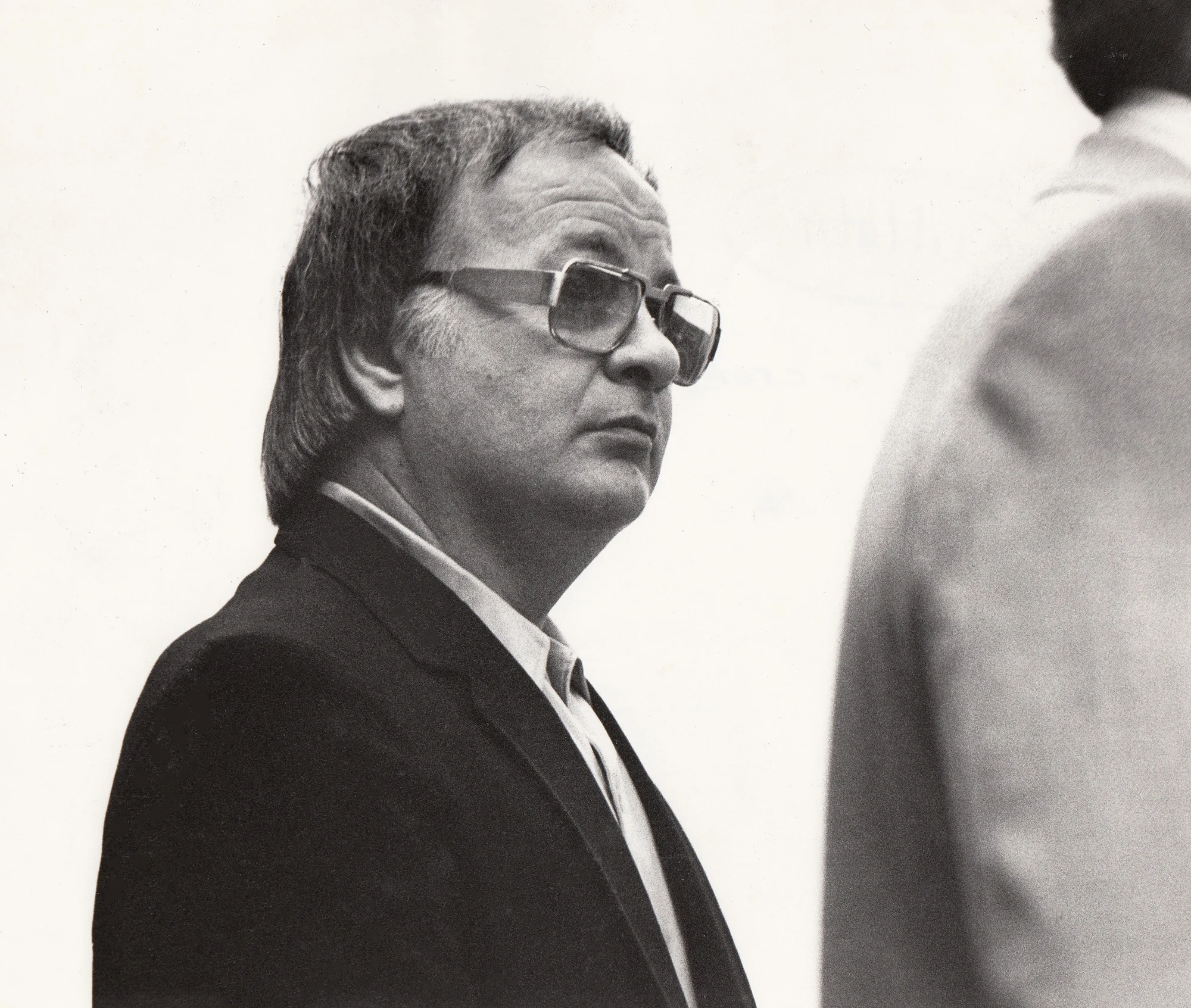
Title
Hole in the Wall Gang
Credit Line
Las Vegas Review-Journal Archives

Frank Cullotta

In 1982, Frank Cullotta was convicted of charges of possession of stolen property. He also was still facing a heavy sentence for the Bertha’s burglary. Then the FBI reached out to let him know that it had become aware that the Chicago Outfit wanted him dead. Cullotta decided to switch sides and become a government witness. In exchange for a shorter prison term, he entered the federal Witness Protection program and testified against his former partners.

Details

Title
Frank Cullotta
Credit Line
Las Vegas Review-Journal Archives

Frank Rosenthal Escapes

On October 4, 1982, Lefty Rosenthal left Tony Roma’s restaurant on East Sahara Avenue and got into his Cadillac Eldorado. When he turned the key in the ignition, the car exploded. C-4 explosives had been placed under the trunk next to the gas tank.

Rosenthal was lucky. His Cadillac came equipped with a steel plate under the driver’s seat that prevented him from feeling the full effects of the blast. He had time to climb out of the car before the gas tank exploded. He had cuts and bruises but no other injuries.

Details

Title
Frank Rosenthal Escapes
Credit Line
Las Vegas Review-Journal Archives

Frank Rosenthal

Rosenthal left Las Vegas soon after the car bombing. He first moved to Orange County, California, and later to Florida, where he ran a bar and a sports betting website. Police investigated multiple potential suspects in the car bombing, but no one was ever arrested.

Details
Title
Frank Rosenthal
Credit Line
Las Vegas Review-Journal

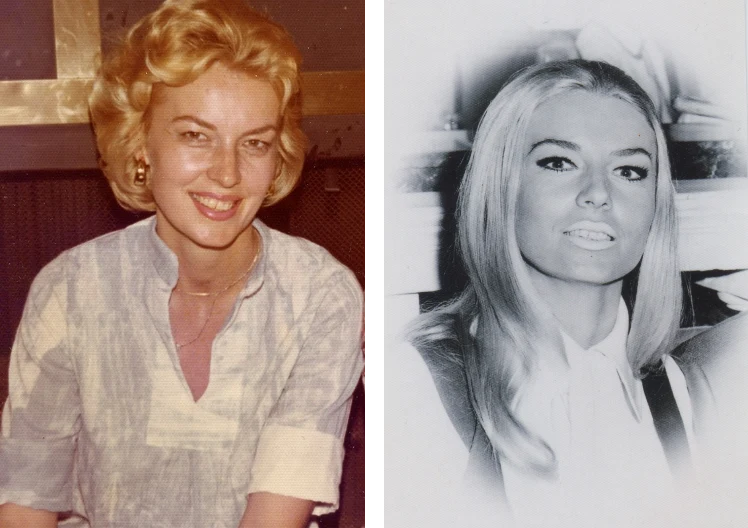
Geri Rosenthal

Frank Rosenthal’s ex-wife, Geri, met an untimely end not long after the car bombing. Following her affair with Tony Spilotro and breakup with Frank, Geri moved to Los Angeles. On November 6, 1982, she collapsed on the floor of a Sunset Boulevard motel. She fell into a coma and died three days later at a hospital. The coroner said she died of an accidental drug overdose, but some, including the late Metro Commander Kent Clifford, suspected foul play.

Details

Title
Geri Rosenthal
Credit Line
The Mob Museum

The Strawman Trials

The FBI and Justice Department investigation of skimming in Las Vegas was known as Operation Strawman. The investigation, led by Strike Force prosecutor David Helfrey, resulted in two trials, known as Strawman I and Strawman II.

Details
Title
The Strawman Trials
Credit Line
Las Vegas Review-Journal

Skim at the Tropicana Hotel

Strawman I exposed the skim at the Tropicana Hotel, an operation led by the Kansas City Mafia. Bugs placed in a Kansas City house where mobsters met to discuss criminal business revealed the skim in detail. A search of Kansas City mobster Carl DeLuna’s house in 1979 turned up detailed written records of the skim operation. A 1983 trial resulted in seven convictions.

Details
Title
Skim at the Tropicana Hotel
Credit Line
AP / Wide World Photo

Joey Aiuppa and Joey Lombardo

Strawman II exposed the skim at the Argent casinos, an operation controlled by the Chicago Outfit. A 1985 trial resulted in convictions and guilty pleas for a number of high-profile Chicago mobsters, including Joey Aiuppa and Joey “The Clown” Lombardo.

Details
Title
Joey Aiuppa and Joey Lombardo
Credit Line
John Binder Collection

Spilotro Brothers Bodies Discovered

Details

Title
Spilotro Brothers Bodies Discovered
Credit Line
Associated Press

THE AFTERMATH

Tony Spilotro, Michael Spilotro

In June of 1986, brothers Tony and Michael Spilotro went missing. Eight days later, their bodies were discovered buried in a shallow grave in an Indiana cornfield. Officials speculated at the time that the Spilotros had been beaten at the scene and perhaps buried alive. No suspects were arrested.

Details

Title
Tony Spilotro, Michael Spilotro
Credit Line
Courtesy of Frank Calabrese Jr.

Nick Calabrese

During the Family Secrets trial in Chicago in 2007, testimony from Mob hit man Nick Calabrese revealed what actually happened to the Spilotro brothers. A large group of Chicago Outfit members beat them to death in the basement of a home in Bensenville, a Chicago suburb. Their bodies were transported to the Indiana cornfield and buried.

The Outfit bosses came to believe that Tony Spilotro had generated too much heat in Las Vegas and had to go. They took out his younger brother, too, to prevent him from exacting any sort of revenge.

Details

Title
Nick Calabrese
Credit Line
The Mob Museum

Frank "Lefty" Rosenthal

For years, people wondered why Frank “Lefty” Rosenthal was not indicted in the Strawman case. After all, he orchestrated the skim of millions of dollars from the Stardust and other casinos. In 2008, Las Vegas Review-Journal reporter Jane Ann Morrison, based on three former law enforcement sources, provided the answer: Rosenthal was an FBI informant.

Details

Title
Frank "Lefty" Rosenthal
Credit Line
The Mob Museum

Mirage Hotel, Excalibur Hotel, MGM Grand Hotel

By the late 1980s, the traditional Mob had been rooted out of the Las Vegas casino industry. Entrepreneurs and corporations took center stage as the megaresort era began with the openings of The Mirage in 1989, the Excalibur in 1990 and the MGM Grand in 1993.

Details

Title
Mirage Hotel, Excalibur Hotel, MGM Grand Hotel
Credit Line
Special Collections & Archives, UNLV Libraries

Scene from the film Casino

In 1995, Martin Scorsese released the movie Casino, starring Robert De Niro, Joe Pesci and Sharon Stone. The movie, co-written by Nicholas Pileggi, is a fictionalized depiction of the rise and fall of Lefty Rosenthal and Tony Spilotro in Las Vegas.

Details
Title
Scene from the film Casino
Credit Line
Universal Pictures

CH_7-SL_7-BFLV

Details

Title
CH_7-SL_7-BFLV

This exhibit received generous financial support from the Commission for the Las Vegas Centennial.
This project is funded by the sales of the Las Vegas License Plate.

The Mob Museum

The Museum is a 501(c)3 nonprofit organization with a mission to advance the public understanding of organized crime's history and impact on American society.

Donate Contact Us

Location

300 Stewart Avenue
Las Vegas, NV 89101
Steps From Fremont Street
702.229.2734 | info@themobmuseum.org
View Parking

Hours

The Mob Museum
Daily: 9 a.m. to 9 p.m.
The Underground speakeasy and distillery:
Sunday–Thursday: 11 a.m. to 11 p.m.
Friday and Saturday: 11 a.m. to midnight
View Early Closures

The Museum

  • Mission Statement
  • About
  • Executive Team
  • Board of Directors
  • Advisory Council
  • Careers

Support Us

  • Become a Member
  • Become a Donor
  • Donate Artifacts
  • Partnership
  • Volunteer
  • Museum Donors

Book an Event

  • Weddings
  • Private Events
  • Underground Events
  • Group Tickets
  • Group Activities

Resources

  • Awards and Accolades
  • Frequently Asked Questions
  • Education and Senior Outreach
  • Community Services
  • Press Kit
  • Media/Filming Requests

Follow Us

Free Mobile App

Download The Mob Museum from Apple
Download The Mob Museum from Google Play

© 2025 The Mob Museum.
  • Privacy & Security
Back To Top